$2 million, with authorized real-person performances, Higgsfield has produced another AI film, and its valuation is poised to directly reach $5 billion.
Following the open-sourced 95-minute, $500,000 AI feature film Hell Grind that premiered at Cannes earlier this year, Higgsfield, one of the world's largest AI creation platforms, has just launched another 110-minute AI film The Cully Hill Boys with a budget of 2 million US dollars.
This time, Higgsfield has also brought authorized real-life personas into AI-native films. The cast includes not only fictional characters generated from scratch, but also actors from the real world.
Founded in 2023 by Alex Mashrabov, former Head of Generative AI at Snap, and Yerzat Dulat, an AI video researcher, the company officially launched its AI video generation application platform Higgsfield in March 2025. In less than two years, its ARR (Annual Recurring Revenue) surpassed the 500 million US dollar mark in June this year. The company is currently in talks for a new round of financing, with a reported valuation of up to 5 billion US dollars.
01
Four Weeks, 2 Million USD, Starring Licensed Celebrity Personas
AI Films Help Actors Expand Their Revenue Streams
The Cully Hill Boys is an action comedy that follows three little-known rappers in London who accidentally get caught up in a chaotic drug war while trying to make a name for themselves. It is a fast-paced, laugh-out-loud, dynamic crime film that explores loyalty, friendship, and the refusal to live an obscure life.

This is how Higgsfield's official website introduces its latest AI film. Earlier on August 5, the film held its global premiere in New York. This 110-minute feature is the world's first AI-generated film using licensed personas of real celebrities.
The four artists who performed with their licensed portraits include: UFC champion Quinton "Rampage" Jackson, MMA veteran and actor Israel Adesanya, live streamer N3on, and streetball player Matt "MK" Kiatipis.
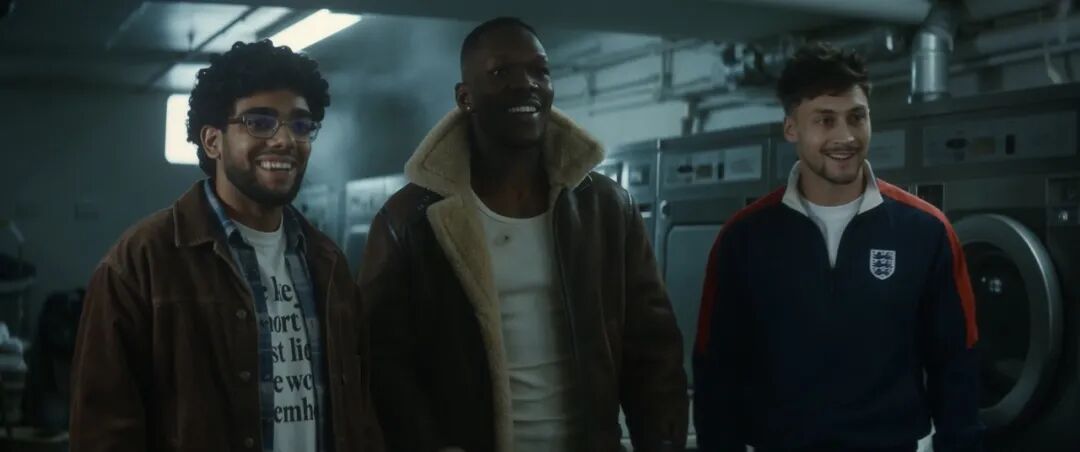
According to Higgsfield's disclosure, the total production budget of the film is about 2 million US dollars, of which about 1 million US dollars is used for AI computing. In just four weeks, the team produced nearly 1,000 assets and 100 AI-generated scenes.
Screenwriter Timothy Planagan spent about five years writing the script, which was shortlisted for the Best Feature Screenplay Award at the 2026 London Independent Film Screenplay Awards. It was also selected for "The Black List", an annual selection of Hollywood's most popular unfilmed screenplays, through which Higgsfield discovered the project and obtained the rights for AI adaptation.
Adopting a horizontal collaborative creation model, nine directors led by two emerging filmmakers Aitore Zholdaskali and Adilet Abish developed each segment simultaneously.
The professional asset department of the 28-person production team brings together experienced film professionals — including costume designers and art directors — as well as newly established technical positions such as generative artists and photo and video editors responsible for optimizing AI-generated footage and maintaining visual consistency.
In the AI persona licensing process, Higgsfield provided a demonstrative attempt. Each actor provided two types of materials: high-definition photos and recordings, all collected under a contract that covers remuneration, scope of use, and script review before production starts. Every actor reviewed the full script and character profile.
Higgsfield stated that all original materials were permanently deleted within 30 days after filming ended, and its contract prohibits the company from retaining, using these data for training, or licensing them to third parties. Higgsfield demonstrates to the public that this approach can generate income for creators.
The market has begun to adjust around this shift. Notably, the premiere announcement pointed out that the agencies of N3on and Kiatipis now offer AI persona licensing in addition to sponsorships and endorsements, treating their clients' AI avatars as a manageable business rather than a potential risk.
Higgsfield pointed out that independent films of the same scale usually take one to two years to complete with a budget of over 20 million US dollars. This cost structure is substantial enough to not be ignored by the CFO of any film studio.
As Timothy Planagan said in the statement announcing the premiere: "Like most screenwriters, you spend years wondering if your script will ever make it to the screen."
In just a few months, Higgsfield has refreshed the record for AI films again.
Previously, the 95-minute full-AI-generated feature film Hell Grind was produced by a 15-person professional team, including directors, directors of photography, and editors, with backgrounds in traditional film production as well as Higgsfield's original productions Arena Zero and Zephyr.
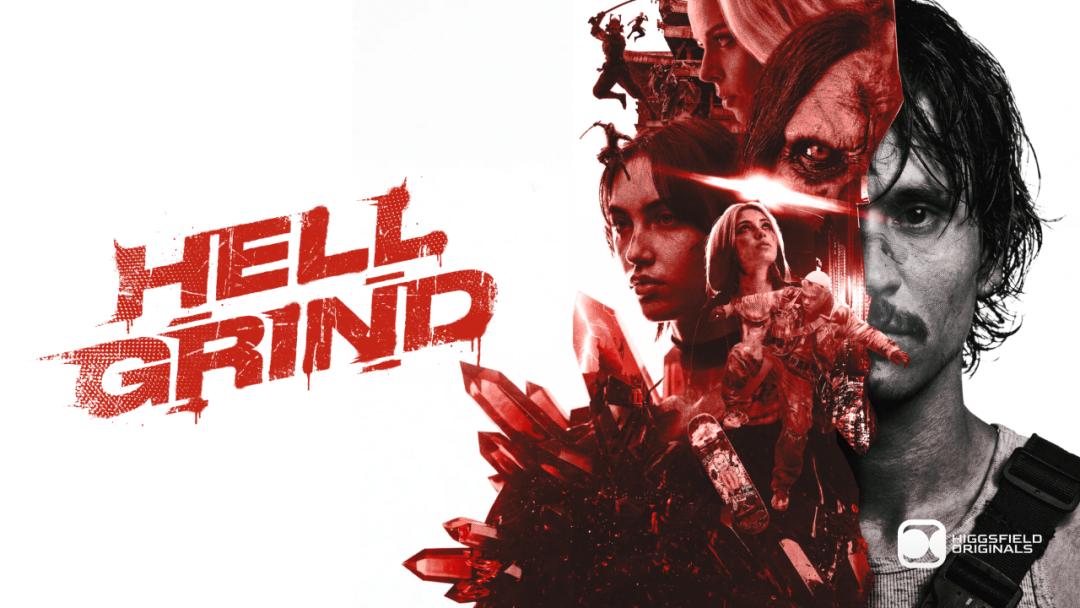
Traditional Hollywood studios typically spend 50 million to 150 million US dollars on VFX-heavy action blockbusters, while Higgsfield completed Hell Grind in just 14 days with a total budget of 500,000 US dollars, including 400,000 US dollars for cloud computing and 100,000 US dollars for labor and the editing team.
Recently, Higgsfield launched a 15-minute animated short film Kök Börü, set in the realm of Central Asian folklore, which premiered at the SIGGRAPH conference. The 10-person animation team completed the production in only two weeks, consisting of three animators, two screenwriters, three sound producers, a sound director, and a colorist. The company also hired local Kazakh actors to dub the characters.

The director believes that stories like Kök Börü rarely make it to the screen because they are often considered too niche or too risky, but artificial intelligence can help break this barrier.
02
Evolution of Tools, Distribution Ecosystem, and Filmmaker Creation Tools at Film Festivals
The Cully Hill Boys will not be released in traditional theaters; Higgsfield says the film was made to showcase its flagship product Cinema Studio 4.0 to studios, agencies, and brands.
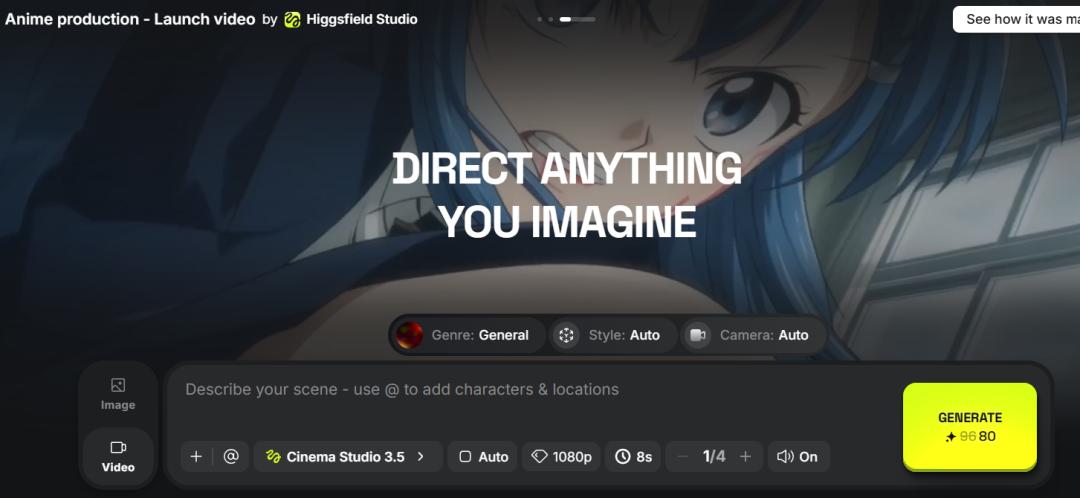
Higgsfield's Cinema Studio video generator provides an independent professional environment for film creation that can simulate a physical film studio, allowing users to control optical, physical, and motion effects. Its design follows the concept of "frame first, then animate": optimize the static image before animating, to ensure that light, shadow, composition, and character details are precisely locked.
Cinema Studio 2.0 extends creative control beyond optics and motion, introducing scene interaction, structured narrative, and character-level direction. Now users can input an image as a 3D scene and explore it in space, or preview various variations in 2x2, 3x3, or 4x4 grid layouts.
Video generation also adds selectable film genres: action, horror, comedy, western, thriller, intimate, and spectacle. The genre selection affects rhythm, motion energy, and camera movement.
At the same time, it also supports structured sequences of up to 6 shots, 1 to 12 seconds per shot, with a maximum duration of 12 seconds and 1080p output resolution. In addition, users can add up to 3 characters in one scene to achieve character consistency, and assign different emotional states to each character.
The upgraded Cinema Studio 2.5 expands features from video generation to post-production, and introduces a built-in Soul Cast integration, allowing users to call saved or newly generated AI actors in their creations. The Soul Cast feature solves the problem of character dubbing errors in AI videos, where users can create fully customizable AI actors and ensure they remain consistent across every generation of work.
The further upgraded Cinema Studio 3.0 introduces a physics-aware generation engine, a film reasoning system that understands story intent solely from reference images, native audio generation capabilities, and stunning output quality that makes the line between AI-generated videos and live-action footage almost indistinguishable.
This is a version designed specifically for AI filmmakers, short-form creators, episode producers, and anyone who wants to make hyper-realistic videos without having to assemble a production team.
In March 2026, Higgsfield launched Higgsfield Original Series, the world's first full AI streaming platform, enriching Higgsfield's AI creation ecosystem and completing the production chain from content creation to release. Here, full episodes are made entirely from scratch with generative AI and released to global audiences.
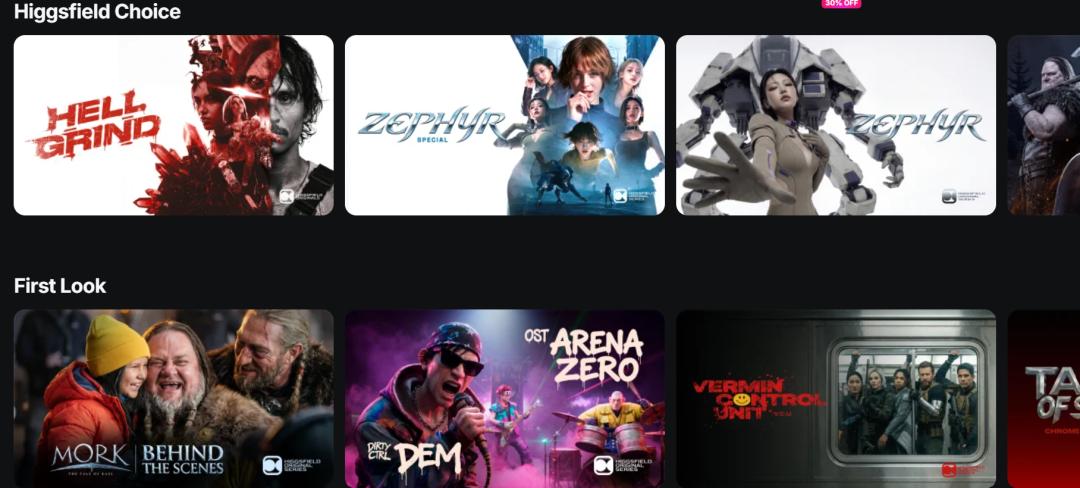
Higgsfield combines AI video generation applications capable of producing cinematic-grade content with the Original Series platform for large-scale distribution, giving AI filmmakers a complete ecosystem all in one place. Anyone can use tools including Cinema Studio, SOUL 2.0, and Soul ID to create works of cinematic quality. The Original Series platform itself is the place where these works are released, a streaming destination for AI episodes to be seen and distributed.
The launch opens with Arena Zero, a 10-minute sci-fi series produced by Higgsfield's creative team. In addition, the Higgsfield team has released 12 trailers covering different themes and worlds, and it is up to the audience to decide which one will get a full episode production.
Recently, the Global Film Festival hosted by Higgsfield officially kicked off, with a total prize pool of 1 million US dollars in cash, and the first prize is 500,000 US dollars. It is open to all Higgsfield subscribers aged 18 and above around the world, requiring that the participating short films be created entirely within the Higgsfield ecosystem and be at least 3 minutes long. Ed Catmull, co-founder of Pixar and former president of Pixar and Walt Disney Animation Studios, has joined the jury of the Higgsfield Global Film Festival.
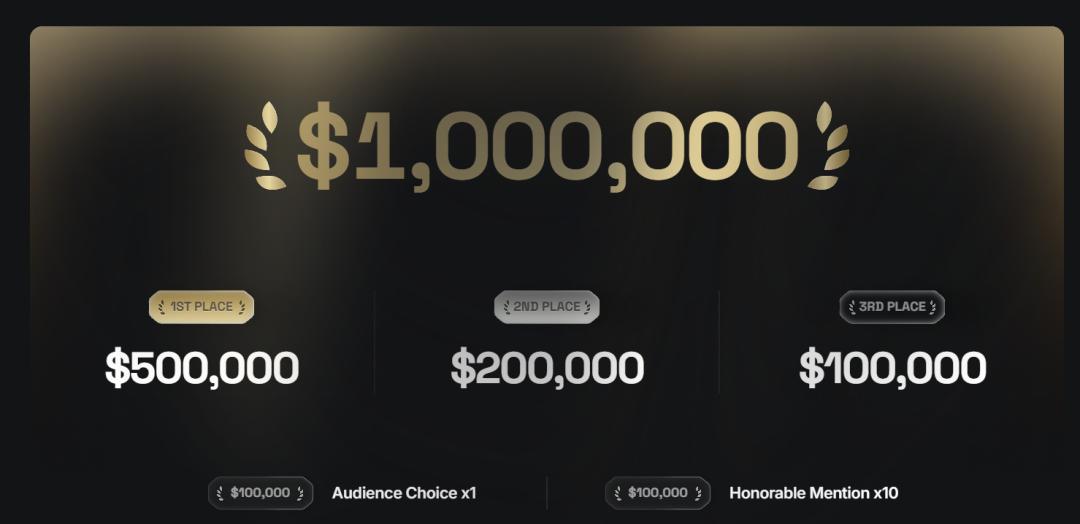
Recruiting this executive, who is closely associated with the greatest era of technological innovation in the history of the field, enables Higgsfield to establish a direct connection between its own generative AI applications and Pixar's CG revolution.
03
78% of Fortune 500 Companies Have Joined In,
How AI Disrupts the Traditional Advertising Production Process
In the field of advertising and marketing, Higgsfield's production tool is Marketing Studio. It starts the same way as most advertising workflows: with a product URL. After pasting the link, the platform reads the product page, extracts images, product names, key features, and pricing information, and generates a script; based on the script, it generates a video with a spokesperson, directly adds native audio and lip sync in the same workflow, and exports the result, which can be directly uploaded to Meta, TikTok, or any platform for ad delivery.
The Click-to-Ad feature is a function that can turn a product page into an ad with one click. Users paste the link of the product page, the system automatically analyzes the page content, refines the brand demands, identifies key visual anchors, and interprets the core selling points of the product; after the product information is identified, the system matches it to a pre-designed trend preset; then generates the final video, which follows the full set of professional standards for camera movement, rhythm control, and style settings in the preset. Since its launch in early November 2025, more than 20% of professional creators and enterprise teams on the platform have started using the Click-to-Ad feature.
Marketing Studio supports mass production. For brands that deliver more than 100 ads per month, a repeatable weekly rhythm can be established: generate 5 variants for a new angle on Monday, generate 5 variants in different formats on Tuesday, review last week's performance to find effective content on Wednesday, generate 5 variants based on this week's winners on Thursday, and generate 10 variants of the best-performing format using Ad Reference on Friday. This structure produces 25 ads per week, 100 ads per month.
In addition, the company has partnered with NVIDIA to launch the enterprise-level agent marketing product Supercomputer, which was showcased at the Cannes Lions International Festival of Creativity in June — the largest and most influential annual event in the global advertising and creative communication industry, known as the "Oscars" of the advertising world.
Supercomputer is an AI agent that can run Higgsfield end-to-end through a single chat interface, directly connecting creation with distribution channels. It has attracted more than 68,000 marketers within 30 days of its launch, and is also called "the enterprise AI marketing agent" by the media.
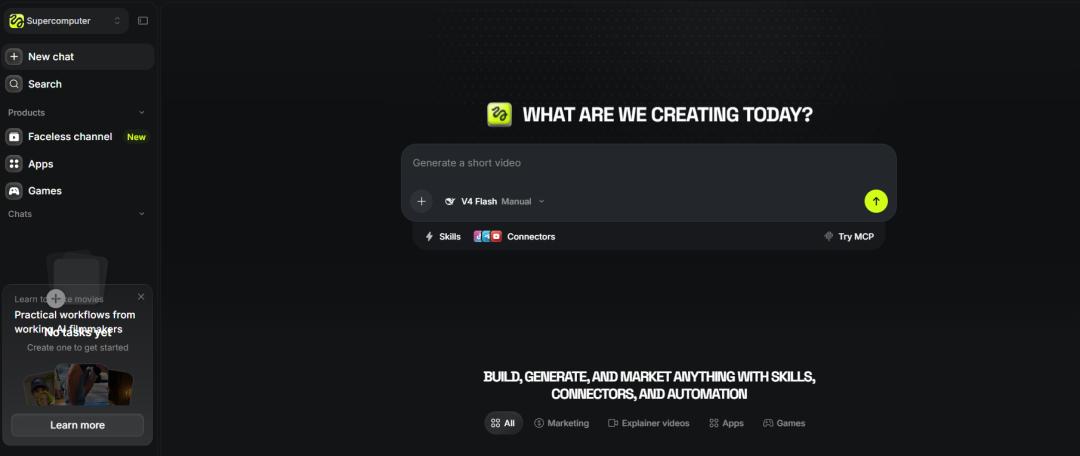
The company claims that 78% of Fortune 500 companies use its platform. If this adoption rate data (which Higgsfield has not yet independently verified through a third-party audit) is true, it will make it one of the most widely deployed AI creative tools in the enterprise marketing space.
In Supercomputer, the agent is responsible for handling all these tasks. Users only need to stay in the chat interface, and the agent completes tool switching, which greatly facilitates users. It can also pull marketing campaign data across platforms, provide brands with a unified dashboard, and automatically reallocate the budget of each ad group after obtaining brand approval.
The CEO of Ridge said: "We went from product concept to launching a video ad in just 15 minutes, a process that used to take weeks." A marketing campaign run by Sephora's skincare brand through