The Two Sides of Fuse Beads: The Safety and Environmental Bill Behind Emotional Value
Perler beads, the viral internet-famous toy that took the market by storm in 2026, has come under strict regulation. On July 17, the State Administration for Market Regulation issued an announcement on issues related to the quality and safety of perler bead products, stipulating requirements for 3C certification, accessory specifications, information labeling and other matters of the products. The announcement directly targets the safety issues brought by the rapid expansion of the perler bead industry, such as incidents of children accidentally swallowing the beads, scalds and other accidents.
Pick up colored plastic beads with tweezers, arrange them one by one on a perforated template according to the pattern, then heat and shape them with an iron. After dozens of minutes, a pixel-style pendant or ornament is finished. This handmade activity, which originated in Sweden in the 1970s and was initially used for the rehabilitation training of the elderly, quickly entered the Chinese consumer market from the end of 2025 to the beginning of 2026, spreading from online tutorials and social media check-ins to shopping malls, cafes and DIY experience stores.
In 2025, the sales revenue of perler beads on mainstream e-commerce platforms reached about 291 million yuan, a year-on-year increase of nearly 9 times; the search volume of perler beads on Taobao platform in the past year increased by nearly 500% year-on-year, and ranked among the top of "Taobao's Top 10 Products of 2025". By 2026, the popularity of perler beads is still continuing: The number of views of related topics on Douyin has reached tens of billions, the number of views of perler bead topics on Xiaohongshu has exceeded 8.6 billion, and there are more than 26 million related discussion notes.
The online popularity quickly spread to offline scenarios. Data from Qichacha shows that as of May 27, 2026, the total number of existing domestic perler bead-related enterprises has reached 1,601, of which over 90% have been established for less than one year, accounting for 97.19%. Perler bead experience stores and pop-up activities have emerged intensively in offline scenarios such as shopping malls, bookstores, cafes and parent-child spaces. A "perler bead exchange activity" once attracted more than 20,000 participants, who discussed iron temperature, pressing techniques and troubleshooting for failed works.
In Beijing alone, there are more than 240 perler bead stores; more than 20 dedicated perler bead stores opened in Shanghai in just one week; even a small third-tier county in Sichuan has rapidly expanded from only one perler bead store during the Spring Festival to 30 to 40 stores.

Offline scene of the perler bead academic exchange conference Source: The Paper
01 Side A: The certainty brought by perler beads
Why are young people fascinated by these small plastic beads?
From the perspective of consumer psychology, perler beads hit several key points of the emotion-driven economy: relatively low price, low entry threshold, instant feedback, and the finished works are very suitable for taking photos and sharing. It is not only a handmade activity, but also a set of emotional repair process.
In addition to decompression and healing, perler beads have another unique attraction: certainty. It does not require painting talent, nor does it need complex tools. As long as you arrange the beads according to the pattern, iron them and cool them down, most people can get a displayable finished product. Compared with the hesitation, misunderstanding and uncontrollability in real interpersonal relationships, perler beads provide clear steps, predictable results and a low-cost sense of achievement.
This also explains a seemingly contradictory phenomenon: many people choose to experience perler beads alone, the core of which is not to completely avoid social interaction; more accurately, it is to retain the possibility of "being seen" while minimizing social pressure.
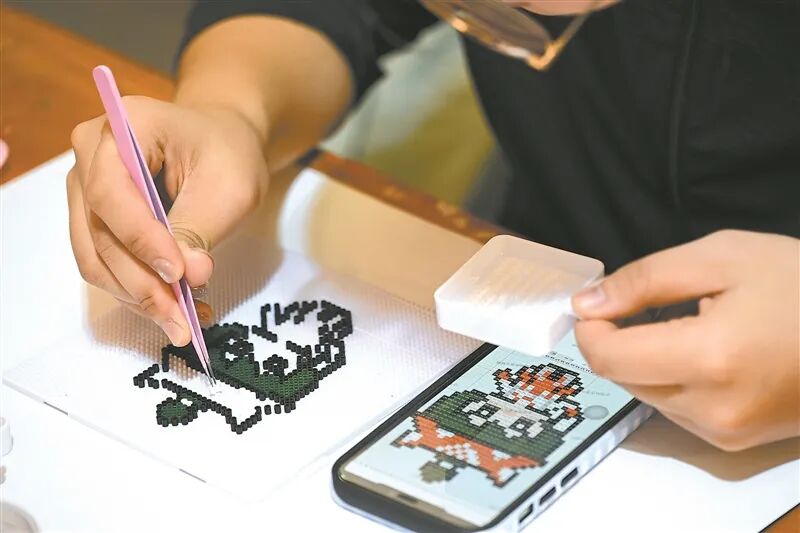
A college student making perler beads on site Source: Xinhuanet
Zhang Xiaoxi, a researcher at the Institute of Economics of the Chinese Academy of Social Sciences, pointed out that perler beads have obvious attributes of "social currency": "As a commodity, perler beads not only have use value, but also exchange value. Most finished perler bead works are highly saturated cartoon images with strong visual impact, which are very suitable for display on social platforms. The social feedback loop of 'posting pictures - getting likes' is the key driving force for its exponential growth."
In physical stores, people can make perler beads alone; on social platforms, finished works can be displayed, liked and reposted. The low social pressure offline and the strong display attribute online constitute an important communication mechanism for the popularity of perler beads.
Therefore, perler beads are not a simple "anti-social" handmade activity. It is more like a new light social carrier: people do not have to speak face to face, but can still express their interests, identities and emotions through their works.
At a deeper level, the popularity of perler beads also reflects the "scarcity of hands-on experience" in digital life. Housework is taken over by machines, communication is compressed by screens, and creation is increasingly dependent on software and algorithms. The more abstract, fast and intangible life is, the more likely people are to re-desire something that can be touched by fingers, confirmed by eyes and completed by themselves.
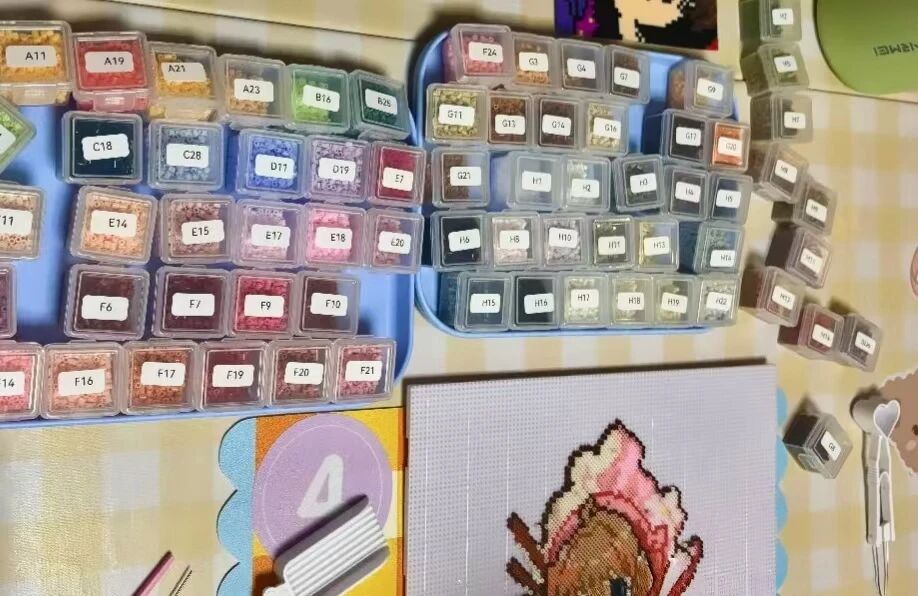
Consumers making perler beads and display of related tools Source: 36Kr
When AI starts to write poems, draw pictures and compose music, and when algorithms predict preferences more accurately than humans, a new kind of anxiety emerges: if many things can be done automatically, how can people confirm their sense of participation? The attraction of perler beads comes exactly from this clumsy but controllable participation.
The "flow" theory proposed by psychologist Mihály Csíkszentmihályi can explain the immersive feeling brought by perler beads. Clear goals, clear rules and instant feedback are all important conditions for the flow experience. In real life, carefully polished plans may be rejected, and planned trips may be disrupted; but in the world of perler beads, as long as you arrange the beads according to the pattern and heat them for shaping, the boundary of failure is relatively clear, and the way to correct mistakes is also relatively simple. This controllability from process to result constitutes a temporary "psychological safe house".
The problem is that when this collective desire for certainty supports a new industry characterized by plastic raw materials and rapid consumption, the bills of health, environment and commercial responsibility have also begun to surface.
02 Side B: The invisible bill
A tiny plastic bead is supporting a market that is expected to reach a scale of 1 billion yuan, and it also tears a gap in product safety and regulatory adaptation.
The China Consumers Association notified that some consumers inhaled a large amount of pungent gas during the high-temperature melting process of perler beads, and then experienced adverse physical reactions such as stinging eyes, dry and itchy throat, red and swollen face, and rashes on their arms. On social platforms, many players also reported that they had discomfort such as dry itchy throat, sore throat, dizziness, itchy skin and nausea after playing with perler beads. Some netizens posted that "I feel that formaldehyde seriously exceeds the standard, there is a stench when pouring out the beads, and I feel chest tightness and heart pain while playing". A perler bead custom-making blogger in Shandong posted that her pet cat died of formaldehyde poisoning. After investigation, she found that the culprit was formaldehyde released by hot-melt perler beads during high-temperature ironing, so she announced to permanently stop accepting orders.
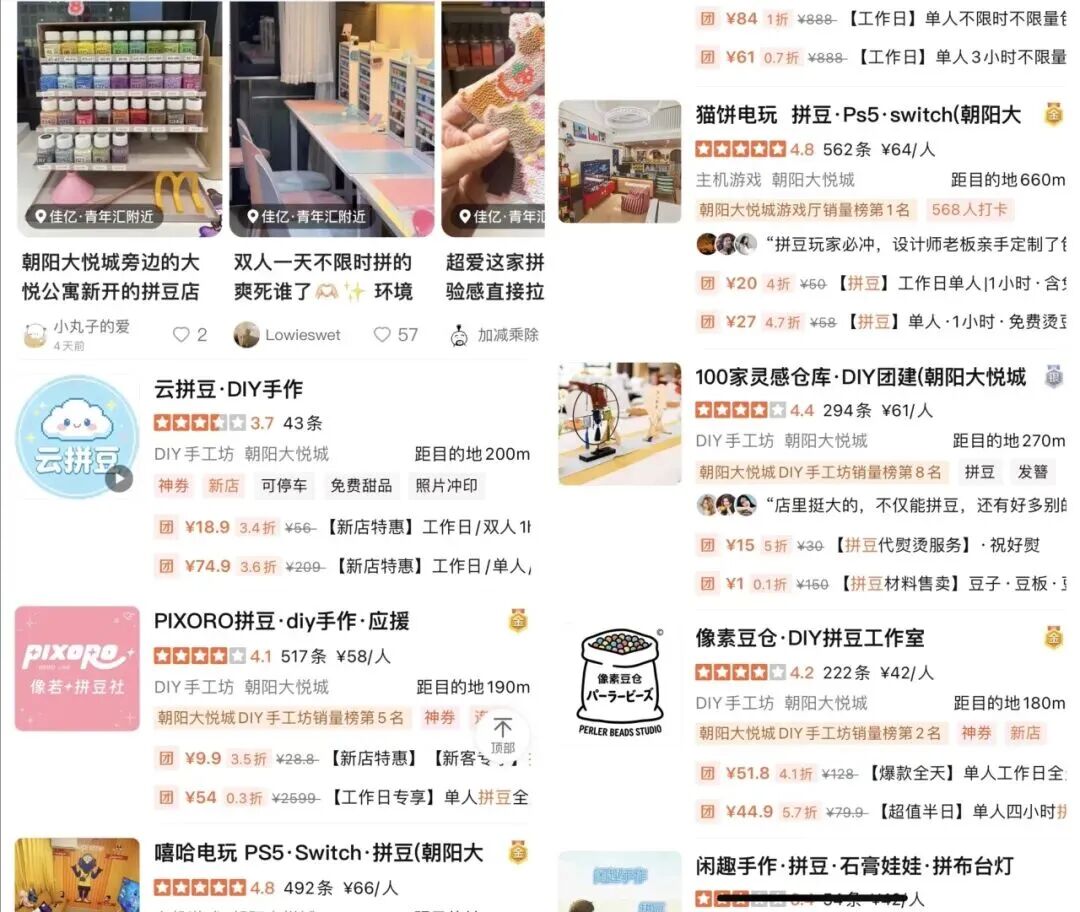
Screenshot of group purchase from perler bead merchant Source: Meituan
In terms of materials, regular perler bead products mostly use PE or EVA materials, and consumers should give priority to products with clearly marked materials, manufacturers, execution standards and test information. The China Consumers Association reminds that inferior products may use ABS or recycled plastics, which will release harmful substances such as formaldehyde, acetaldehyde and carbon monoxide after heating. For cheap perler beads of unknown origin, the risk is not only "strong smell", but also that consumers cannot judge their real materials, additives and production processes.
The supporting iron is a more direct safety hazard. In March 2026, a girl in Guiyang, Guizhou Province, had an electric shock accident during the ironing process while playing with perler beads, and finally died after ineffective treatment. Subsequent reports from media such as CCTV News showed that the special inspection carried out by the Guiyang market supervision department found that some heating devices equipped with perler bead toys were directly connected to 220V mains power, which was far higher than the requirement of "not exceeding 24V" in the national standard "Safety of Electric Toys". In the same period, there was also an accident in Yuncheng, Shanxi, where the iron supporting perler beads caught fire and a child's hand was scalded.
The "3C certification" that consumers often see also has hidden tricks. On a shopping platform, the price of "perler bead toy" sets ranges from 20 to 50 yuan, and the 3C certification image displayed on the page is blurred, making it difficult for consumers to judge. The phenomenon of "one certification for multiple products, cross-product application" also makes it hard to distinguish: some small toy manufacturers print a single compliant 3C certification number on the packaging of dozens of products with different materials and structures in batches, and the parameters of the products filed on the certificate are completely inconsistent with the actual sold products. A more hidden method is split sales: merchants separate perler bead particles from electric irons, and avoid 3C certification qualification review on the grounds of "handmade stationery, non-finished materials". In the special rectification of market supervision in Beijing and Guangdong in April this year, such behavior of splitting and selling internet-famous toys has been included in the key crackdown list of children's toy rectification in 2026.
In addition to health hazards, there is another bill worth pursuing: what kind of impact will an industry with plastic as raw material and "fast-consumption handmade" as its consumption form bring to the environment?
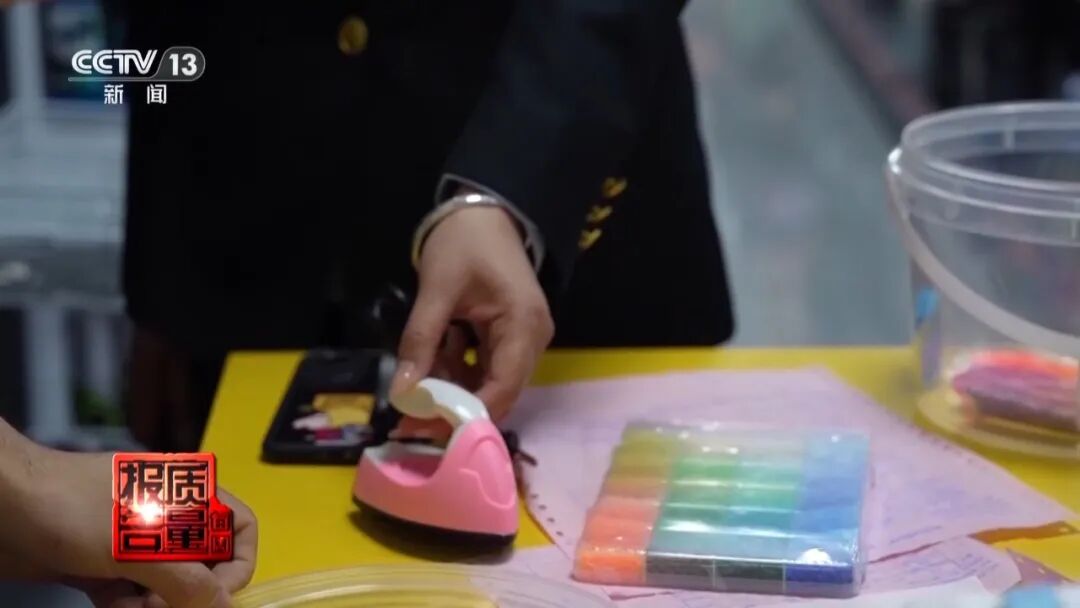
Report on safety hazards of perler beads Source: CCTV News
At the raw material end, regular perler beads mostly use PE or EVA materials, and PE comes from petroleum. Its production process involves crude oil extraction, cracking and polymerization, and every step is accompanied by fossil energy consumption and carbon emissions. At the production end, the plastic processing links in manufacturing clusters such as Yiwu and Ningbo in Zhejiang and Shantou in Guangdong involve the addition of color powders and additives, generating leftover materials and industrial waste. The lack of industry standards means that environmental protection requirements lack rigid constraints. The waste end is a more heavy link: most finished perler bead works are keychains, fridge magnets and ornaments with very short service life, and they become idle after being photographed. After being shaped by hot melting, perler beads form a stable cross-linked structure, which is almost impossible to recycle secondarily, which means that the vast majority of finished perler bead works will eventually go to landfill or incineration.
When the value of a commodity comes more from immediate emotion and its long-term use value is relatively limited, the environmental cost is often easier to be ignored. The number of people who will pursue the destination of an inexpensive plastic bead is destined to be small.
However, the perler bead industry does have room for transformation. There have been explorations in the market in directions such as iron-free, water-soluble adhesion and alternative materials, and some brands have begun to emphasize virgin plastics, test reports and low-odor experience. But whether these attempts can truly reduce safety risks and environmental burdens requires public, verifiable material descriptions, test results and large-scale recycling schemes.
If the perler bead industry continues to expand along the path of "low cost, strong emotion, fast abandonment", in addition to the pixel-style beautiful pictures on social platforms, there may also be untraceable plastic fragments left in landfills and incineration sites. What is more worthy of vigilance is whether other new consumer categories in the emotion economy will repeat the same business logic: realize emotional value quickly first, and then leave the problems of safety, environment and responsibility to the market and regulatory authorities to make up for.
03 A more uncertain future
When a new consumer industry has problems of safety and social responsibility, we can't just stop at moral accusations against individual merchants. The more critical questions are: do producers know the destination of every bead, and do they understand the harm that inferior materials and non-compliant electrical appliances may cause; are leading brands willing to put safety standards, supply chain transparency and industry initiatives before growth; can regulators intervene at the initial stage of the trend to reduce passive rectification after accidents.
Some leading brands have begun to respond to the risks. According to industry media reports, Mingchuang Perler Beads, which has been deeply engaged in the perler bead field for many years, saw a surge in orders after the boom, and is developing next-generation products in the direction of iron-free and water-soluble adhesion. The brand MARD, known by players as the "measurement standard of the perler bead circle", has spent ten years doing two things: first, establishing a 2.6mm standard bead shape and 221-color card system, which is recognized as the general standard by the domestic perler bead circle; second, insisting on using food-grade LDPE virgin plastics and issuing CQC test reports. The industry does not have to rely on low prices and traffic growth, and can also try to build trust through materials, standards and testing.

Comment section on Xiaohongshu Source: Xiaohongshu
However, the coverage of brand self-discipline is still limited. If solutions such as safety irons and water-soluble perler beads are still in the R&D or testing stage, they cannot replace the compliance responsibility of current products; high-priced virgin plastic products are also difficult to cover the wider low-price market. Under the background of a large number of new merchants pouring in, whether the demonstration effect of a single brand can constrain the whole track is still unknown. At least from public information, the perler bead industry still lacks a widely recognized safety standard initiative, quality alliance or systematic response to the problem of "recycled plastic beads".
The safety controversy of perler beads is just a sample that China's consumer market has encountered repeatedly. When a trend appears, a large number of operators pour in, low-price competition intensifies, and product quality and compliance boundaries are