"The importance of stock trading exceeds 60%", we had a talk with South Korean retail investors.
The summer of 2026 in South Korea is scorching yet icy.
It is scorching because the Korea Meteorological Administration announced that a high temperature of 42.5 degrees Celsius was recorded in the southeastern city of Yangsan, setting a new record for the highest temperature in South Korea since the 20th century.
It is icy because the South Korean stock market is full of killing intent. You may have some idea of the recent volatility in the South Korean stock market, but you most likely do not know how tragic this summer has been.
The Korea Composite Stock Price Index (KOSPI) has triggered circuit breakers 10 times this year. The so-called circuit breaker refers to a mechanism that suspends trading for a period of time when the price fluctuation range reaches a certain threshold during trading hours. In the previous decades, KOSPI only triggered circuit breakers 6 times.
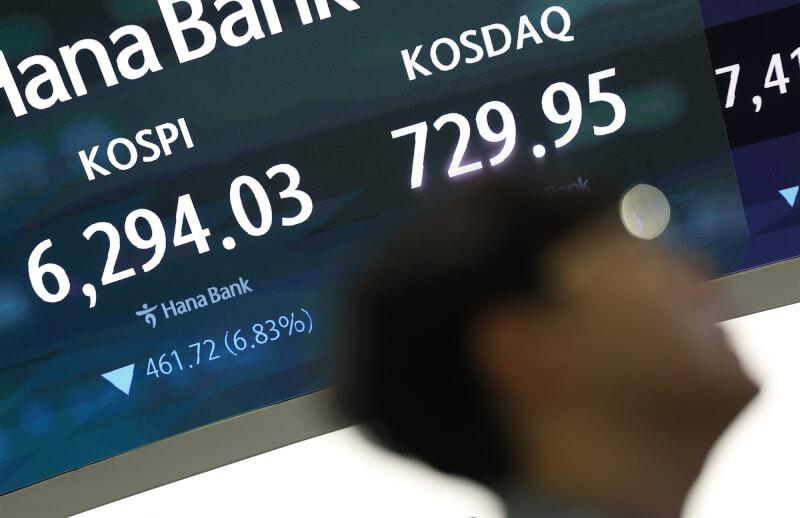
What is even more thought-provoking is that before the end of June 2026, although KOSPI had triggered circuit breakers several times, it remained highly resilient, always quickly recovering and continuing to climb upward. Investors were full of confidence, believing that there was no end to the money they could earn.
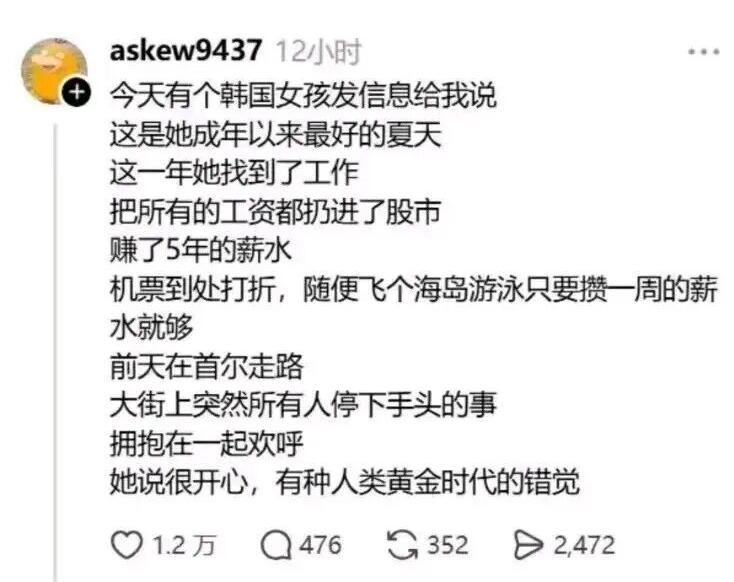
A screenshot titled "Korean Girl" perfectly interprets all of this.
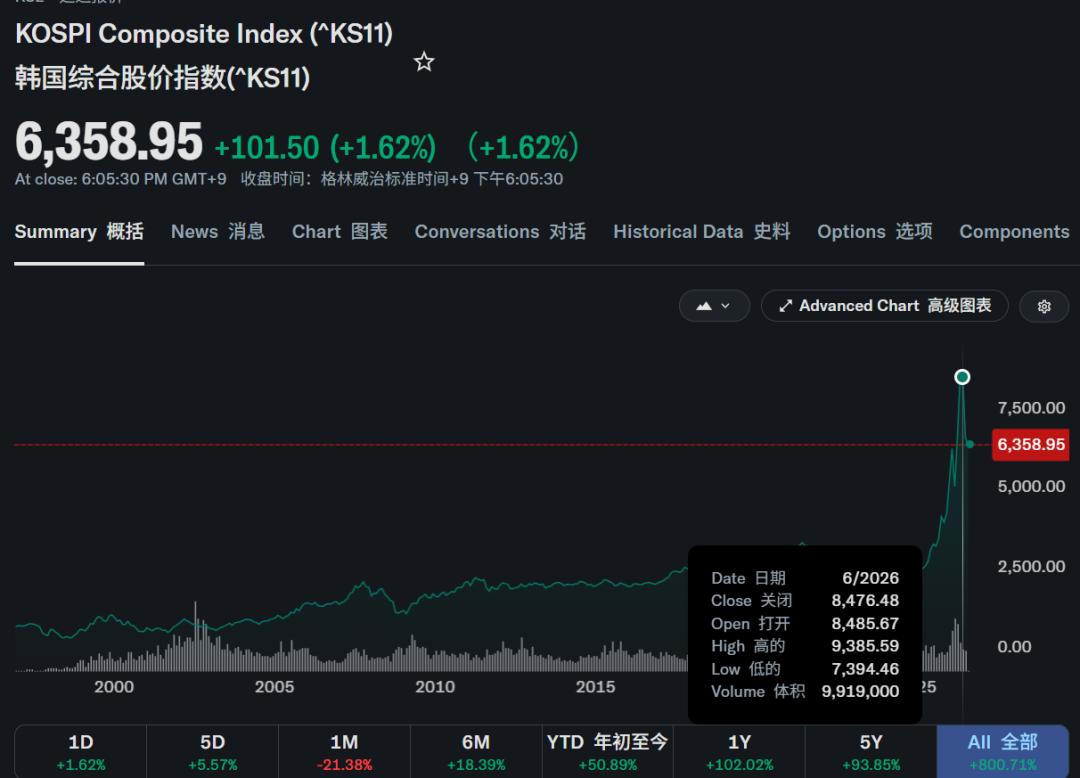
If you look at the KOSPI chart, you can understand their mentality, because this is the stock market peak that no South Korean has ever seen since they were born. The almost straight upward line is enough to drive everyone crazy.
Of course, we already know the ending: KOSPI is now diving downward.
To figure out the earth-shattering changes in the South Korean stock market in just a few months and the real feelings of ordinary South Koreans, we found several South Korean friends who experienced this summer of circuit breakers, and we plan to talk about the craziest summer in South Korea's investment history combined with their investment situations.
The Golden Age
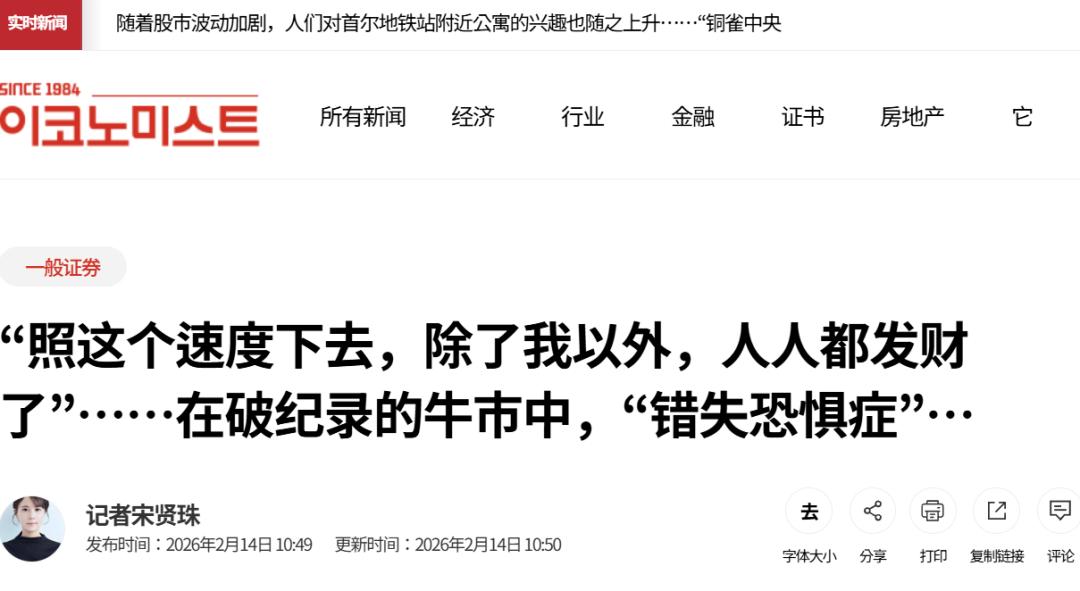
From the start of 2026 to mid-February, large-cap stocks on the KOSPI skyrocketed by 32.85%, Samsung Electronics rose by 51.13%, SK Hynix increased by 35.18%, and Hyundai Motor surged by 68.30%. For all investors who bought stocks earlier, their wealth expanded faster than picking up free money.
In this golden age in the eyes of investors, a sentiment called FOMO hung over everyone. The so-called FOMO, or Fear Of Missing Out, means that everyone is worried about missing the bull market and the opportunity to get a share of the profits.
Online investment communities are flooded with comments such as "The index is rising, but my account is not moving at all" and "It feels like if you don't hold stocks of Samsung Electronics or SK Hynix, you will be eliminated by the market".
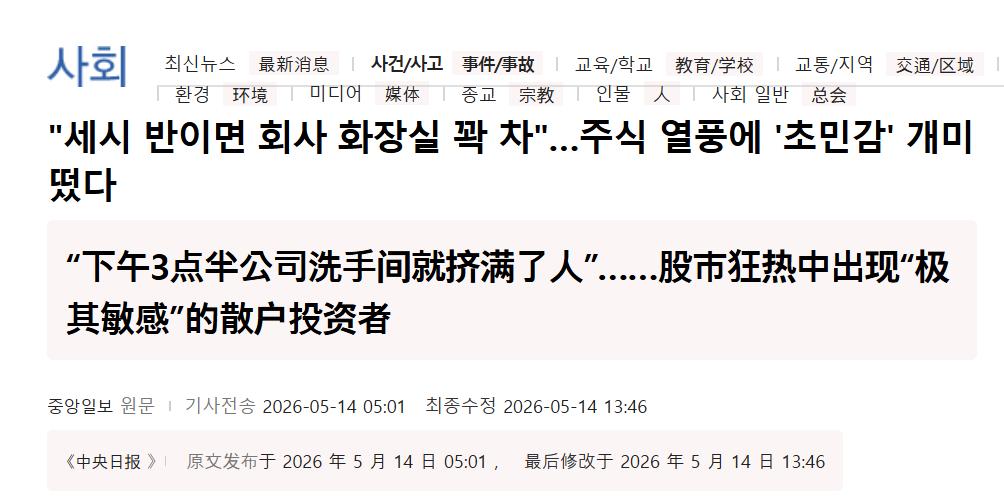
The place that best reflects South Koreans' fanaticism about the stock market is the restroom. According to a report by the Korea JoongAng Daily on May 14, in a department store in Gangnam District, Seoul, the restroom is crowded with people as soon as 3:30 p.m. arrives every day.
It is not because people are in a hurry to use the toilet, but because South Korean stock trading hours are 9:00-15:30 Seoul time. People are eager to know their gains and losses of the day, but are embarrassed to check the stock price outside.
Even if you look away from Seoul, people in rural areas are still keen on the stock market. Ms. Choi, 59, who works as a caregiver in the countryside, arrives at her workplace an hour early every day, because she and her colleagues run the "Auntie Reading Room". Employees with the same working hours gather together in the morning to share their income and discuss stocks.
In South Korea, with a total population of 51.81 million, there are 105 million active stock trading accounts. The number of new accounts opened by people under 18 in 2026 has also increased by nearly 10 times compared with the same period last year. It is no exaggeration to say that the whole nation is speculating in stocks.
According to data from the Korea Securities Depository, the number of shareholders of South Korean listed companies reached 14.56 million last year. Excluding foreign investors and institutions, individual investors account for more than 99%. This means that more than a quarter of South Korean citizens participate in stock investment. If calculated by family unit, it is basically equivalent to every household speculating in stocks.
Looking back now, that screenshot of the "Korean Girl Golden Age" was not a meme at all a few months ago, but reality.
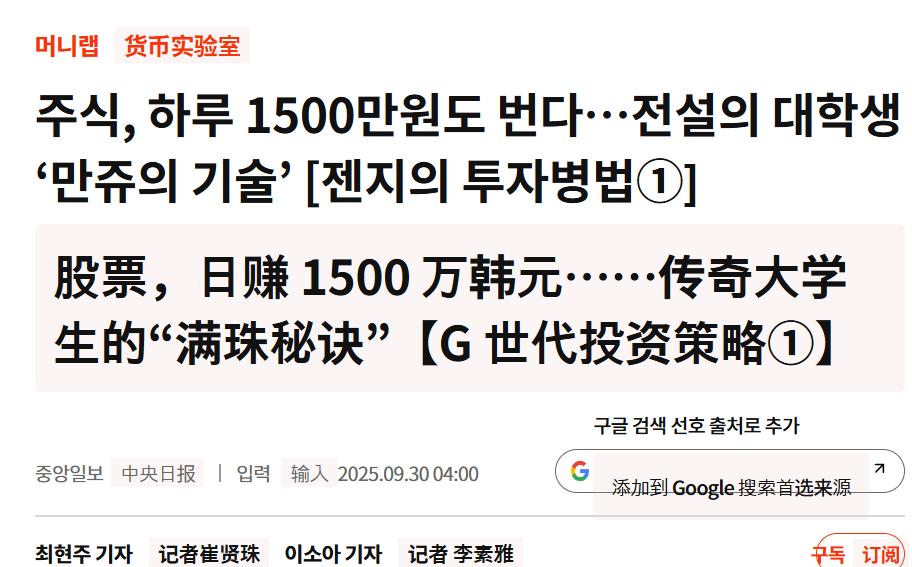
But it is precisely because of this collective madness that the wave of the stock market crashed, sweeping across the entire country.
On June 23, South Korea ushered in Black Tuesday. KOSPI, which had previously broken through 9000 points, plummeted, the circuit breaker mechanism was triggered, and the market trend took a sharp turn for the worse. Foreign investors panicked and sold off. SK Hynix and Samsung Electronics failed to live up to people's hopes, and the stock prices of both companies posted their biggest drops since the 2008 financial crisis.
Korea Today Finance published a report at 3:08 p.m. on June 23, with the title: "Don't you remember the strong rebound after the crash?... KOSPI triggers the circuit breaker, is it an opportunity now?"
Retail investors are full of confusion about the stock market. In the comment section of related flash news, some people are scolding, some are collapsing, and some are acting in reverse.
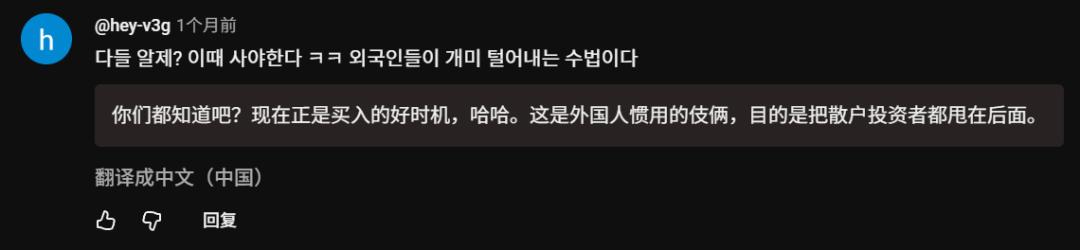
However, no one realized that June 23 was only the beginning of the storm. After all, the South Korean stock market had triggered circuit breakers 3 times in 2026, but KOSPI always recovered quickly.
However, in the following July, the South Korean stock market triggered circuit breakers 4 times. KOSPI has accumulated a decline of more than 30%, and its market value has evaporated by 2116 trillion won — for reference, South Korea's nominal GDP in 2025 was 2663 trillion won.
We interviewed the owner of a chain grilled chicken restaurant near Dangsan Station, which is close to the Han River in Seoul, in late July. He is nearly 50 years old, with an annual income of about 30 million to 45 million won (about 142,000 to 213,000 RMB). After the second circuit breaker in July, his total property shrank by 10%-20%. Although he was uneasy, he still believed that the market would rise again.
"I didn't expect it to fall so much, so I didn't stop the loss in time. Although I am anxious, it doesn't have much impact on my life," the owner said, "I think the government will solve this crisis."
Since the end of his interview, the South Korean stock market has triggered circuit breakers 3 more times.
On July 28, the day the stock market triggered a circuit breaker, Seoul Economic Daily reported at 3:45 p.m. that the government jointly established a "National Suicide Response Office", shifting from a prevention-centered passive response policy to active intervention for high-risk groups such as people attempting suicide. Although the report did not mention the recent stock market turmoil at all, it is difficult for South Koreans not to associate it with this aspect.
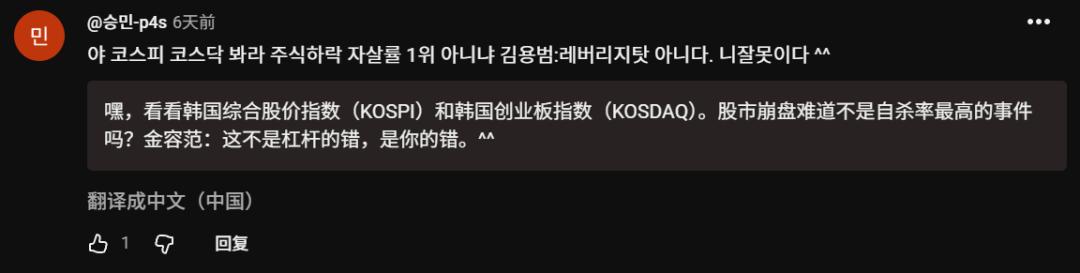
On July 29, the stock market triggered a circuit breaker again, and wreaths were placed outside the National Assembly of South Korea. "I just came back from hell," a retail investor in Seoul said. His friends who used to discuss the stock market every day in the past have become extremely silent.
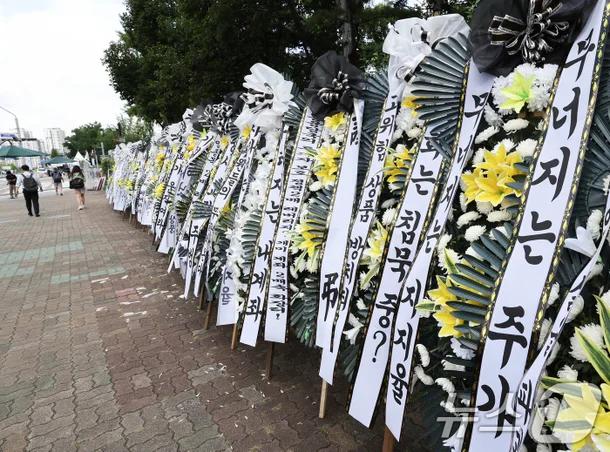
On August 3, the stock market triggered a circuit breaker once again.
Now, I don't know what situation the owner is in.
The Ant Legion
In South Korea, retail investors are also called "gae-mi" (ants). On the one hand, the pronunciation of "gae-mi" (ant) is similar to "gae-in" (individual) in Korean, on the other hand, individual investors are indeed as tiny as ants.
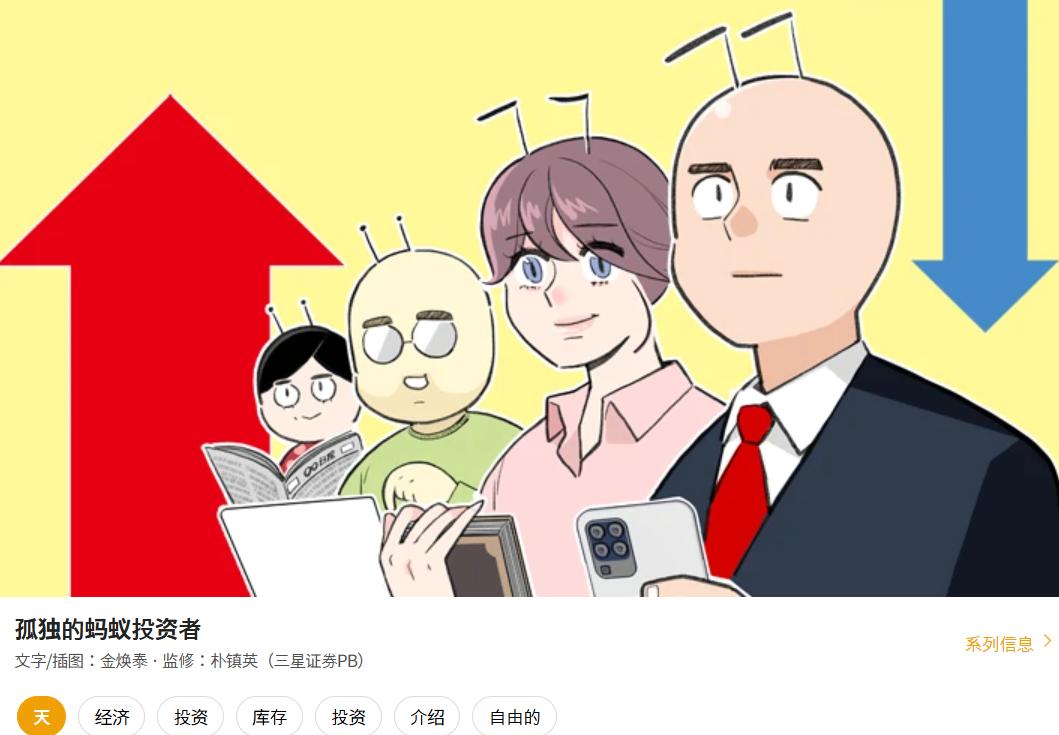
However, compared with "leeks" (retail investors who are easily harvested), the ants (retail investors in South Korea) have a feature: they are united, or can be said to be herd-oriented. When they work hard for a common goal, the legion formed by gathered ants can even become the trend itself.
In March 2020, the South Korean stock market plummeted, foreign capital and institutions sold frantically, while retail investors bought on a large scale. Although their confidence in buying the dip came from national-level stocks such as Samsung Electronics, Hyundai Motor, SK Hynix, Kakao and Naver, in any case, the South Korean stock market finally got back on track and even exceeded the pre-pandemic level.
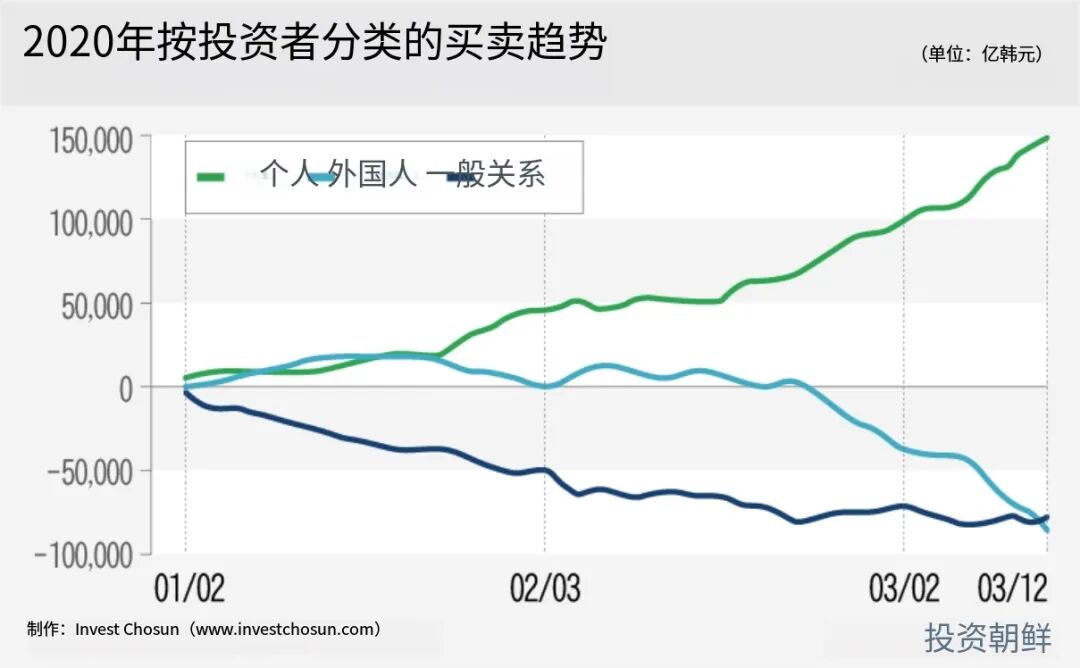
The first half of the story in 2026 is similar to that in 2020.
Since the beginning of the year, foreign capital has been constantly selling South Korean stocks, which the media calls a "selling bomb". In June, the flight of foreign investors became more serious. According to the monthly report released by the Institute of International Finance on July 10, foreign investors withdrew 30.5 billion US dollars from the South Korean stock market, which is the largest capital outflow in 25 years.
In contrast, South Koreans are buying frantically.
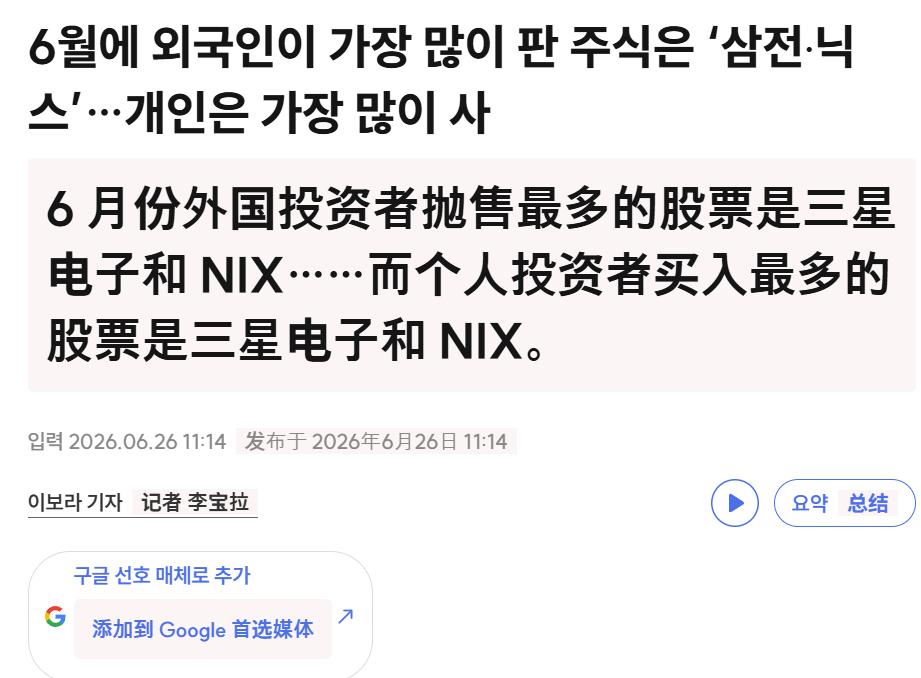
What they trust is not the stock market that has triggered circuit breakers several times this year, but Samsung Electronics and SK Hynix.
In the booming era of AI and memory semiconductors, manufacturers are waving banknotes to snap up the production capacity of South Korean semiconductors, and this boom is reflected in stock prices. From the beginning of 2026 to June 22, Samsung Electronics' stock price rose by 194.83%, and SK Hynix was even more exaggerated, with an increase of 348.39%.
According to the "2026 Corporate Preference Announcement" launched by JobKorea on June 9, SK Hynix and Samsung Electronics ranked the top two most desirable companies for job seekers respectively. In online bookstores, the best-selling exam preparation e-books are the written test preparation materials of SK Hynix for high school and junior college graduates.
A meme picture is also circulating on South Korean online platforms: "The best outfit for a blind date is the uniform of SK Hynix".
