Wang Xingxing's three-year "quotes" during his robotics entrepreneurship, from the stance of "not developing humanoid robots" to a 61 billion yuan valuation.
On the afternoon of August 7, 2026, at the Roadshow Center of Shanghai Securities News, the online investor exchange meeting for Unitree Technology's STAR Market IPO lasted from 14:00 to 19:40. The roadshow originally scheduled for 3 hours was stretched into a nearly 6-hour "marathon" due to the overwhelming enthusiasm of investors. More than 360 questions were thrown to Wang Xingxing, ranging from how the 219x price-to-earnings ratio can be supported, to what DeepSeek's strategic placement of 141 million yuan with a 36-month lock-up period means, to the soul-searching question of "what will the company do if others drive up your stock price".
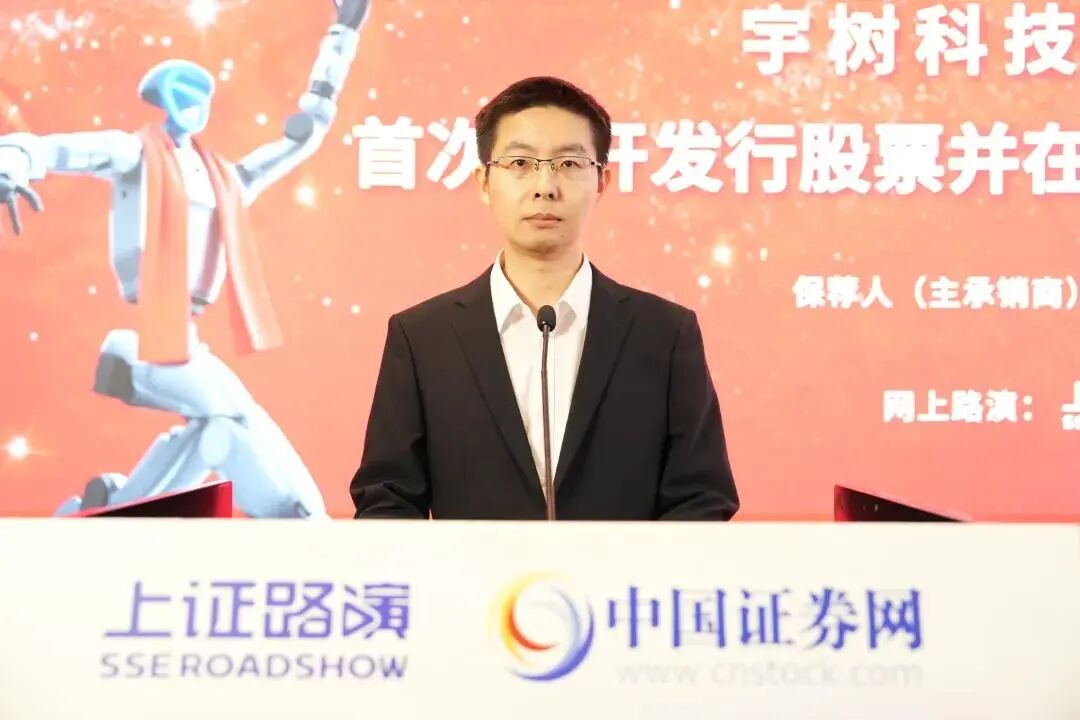
Wang Xingxing responded to every question one by one. He said: "This entry into the capital market is a brand new starting point for Unitree Technology." He also added: "Currently, the entire embodied intelligence industry is still in the early stage of development, similar to the initial stage of home computers in the early years."
This is a typical Wang Xingxing-style expression — at the most glorious moment, he pours a bucket of cold water on himself and the whole industry. But if you look through his public speeches in the past three years, you will find that this contrast of "saying calm words in a heated occasion" is exactly the most consistent trait of this post-90s entrepreneur.
From his frankness that "there is no visible path for commercialization" when H1 was released in H1 2023, to the "ChatGPT moment" definition with the "two 80%" rule put forward at the 2025 China International Import Expo, and then to the fantasy at the 2026 Yabuli Forum that "robots will run 100 meters within 10 seconds and surpass Usain Bolt", Wang Xingxing's public quotations almost form a complete narrative arc of China's humanoid robot industry moving from the laboratory to the capital market.
At this moment, as Unitree Technology lands on the STAR Market at an issue price of 150.80 yuan per share with an issuance market value of nearly 61 billion yuan, these quotations are no longer just personal opinions, but the footnotes of the prospectus of the "first humanoid robot stock".
"We do not make humanoid robots"
A 13-year-long denial, ignited by ChatGPT
Wang Xingxing's attitude towards humanoid robots once went through a long period of denial.
In 2009, Wang Xingxing, who was a freshman at Zhejiang Sci-Tech University, independently developed his first bipedal humanoid robot during the winter vacation. The result was that "he was very disappointed after finishing it". He recalled in a later interview with *China Entrepreneur* magazine: "It was far from meeting my expectations at that time. The core reason was that the control technology of humanoid robots around the world was not particularly ideal at that time, and the insufficient performance made it impossible to see its practical value."
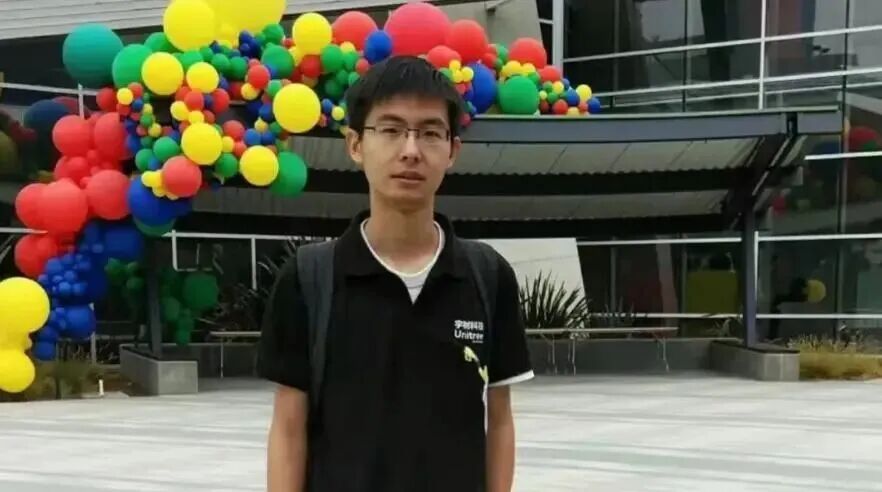
This 19-year-old teenager's 14-degree-of-freedom bipedal robot, which he "handmade" with more than 200 yuan, became the starting point for him to refuse the humanoid track for the next 13 years. Even after founding Unitree Technology in 2016, in the face of investors' question of "whether you will make humanoid robots", Wang Xingxing's answer was always four firm words: "We do not make humanoid robots."
The turning point came at the end of 2022. The debut of Optimus at Tesla AI Day, coupled with the emergence of ChatGPT, made Wang Xingxing realize that "the concept of embodied intelligence combining software and hardware has ignited the industry's enthusiasm for humanoid robots". He revealed in an exclusive interview with China Economic Net that at the end of 2022, although Unitree had not yet started making humanoid robots, some customers had already taken the initiative to come to buy them. "The social consensus, popularity, and customers' expectations for it are all sufficient."
In February 2023, the Unitree humanoid robot project was officially established internally. Only half a year later, in August 2023, H1 was officially released during the World Robot Conference, positioned as "the first full-size general-purpose humanoid robot in China that can run".
From "not making humanoid robots" to launching a product within half a year, Wang Xingxing's decision-making logic has never changed: "Unitree will only make a product when there is market demand." He emphasized on many occasions that he "can clearly distinguish which technologies are just fun and interesting, and which technologies can be commercialized".
This almost cold pragmatism forms an interesting contrast with the public's impression of him as a "romantic engineer" who made robots perform Yangge dance on the Spring Festival Gala stage.
"99,000 yuan" and "end-side lightweight"
Two dimension reduction strikes in 2024
In May 2024, Unitree released the G1 humanoid robot, with the basic version priced at 99,000 yuan. This price was like a bomb, directly bringing the average industry price down from hundreds of thousands of yuan to less than 100,000 yuan.
But Wang Xingxing's ambition is far more than a price war. At the 2024 World Robot Conference, he put forward a view that seemed "against the trend" at that time: "Do not simply pile up high-computing-power chips. Humanoid robots are the collaboration of motion system and AI. It is difficult to achieve landing if you simply pile up large models without considering motion control. The lightweight model suitable for robot end side is the right direction."
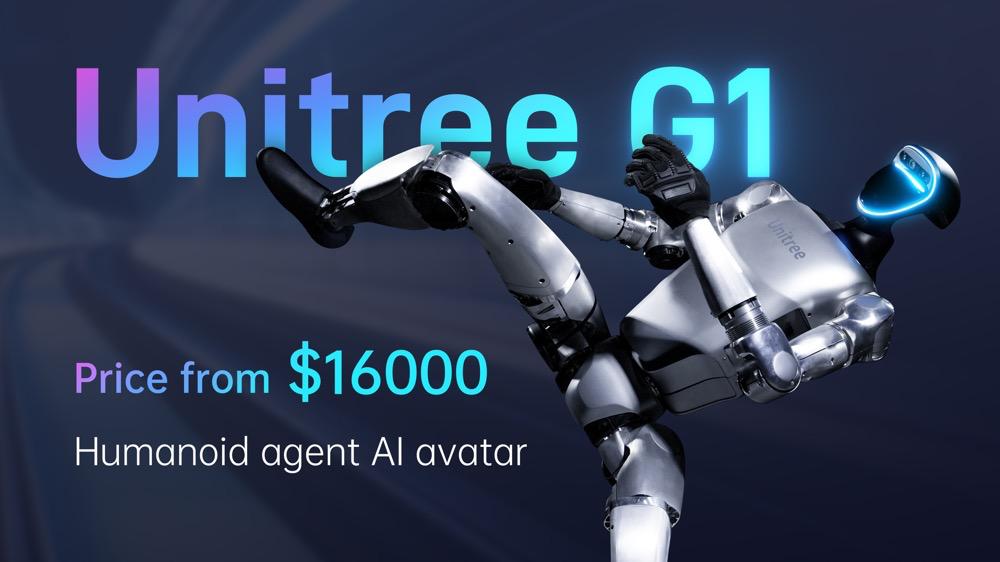
The subtext of this sentence is: When the whole industry is chasing NVIDIA GPUs and cloud large models, Wang Xingxing believes that the real bottleneck of robots is not computing power, but motion control. G1's pricing strategy and the technical judgment at WRC constituted Unitree's "two dimension reduction strikes" in 2024 — using the self-developed motor and reducer capabilities accumulated in the quadruped robot era to suppress the cost to 1/5 or even 1/10 of that of competitors; using the extreme understanding of motion control to avoid head-on confrontation with AI giants in cloud computing power.
Caixin reviewed in its special feature in August 2026 that the release of G1 "refreshed the robot price of the industry, and the basic version was priced at only 99,000 yuan. Before that, the price of humanoid robots in the industry was generally hundreds of thousands of yuan". Unitree's prospectus shows that the torque density of the company's self-developed M107 joint motor reaches 189N·m/kg, and the cost is controlled at 1/5 to 1/10 of that of similar overseas products.
There are few emotional expressions in Wang Xingxing's quotations. But the sentence at the 2024 G1 launch conference that "many people default that humanoid robots must be extremely expensive. G1 hopes to break the price barrier and promote the popularization of the industry" vaguely reveals an engineer's vigilance against industry bubbles.
"Two 80%"
In 2025, Wang Xingxing defined embodied intelligence
2025 was the first year of Wang Xingxing's "national-level popularity".
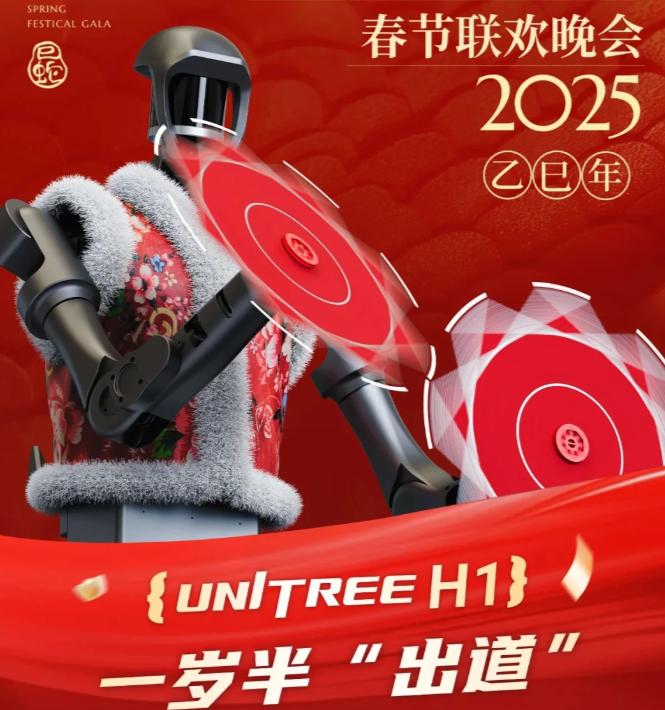
16 H1 robots wearing Northeast Chinese floral jackets performed the "YANG-BOT" show on CCTV Spring Festival Gala, which became a viral hit across all online platforms. Wang Xingxing said in an interview with CCTV News backstage: "Appearing on the Spring Festival Gala is not just a performance. I hope to let more ordinary people see the real progress of China's self-developed humanoid robots. The stage display is the appearance, and the continuous polishing of reliability, safety and motion control algorithms behind it is the long-term core."
In May, he rarely showed his vulnerability in the speech for the May 4th Youth Day held by the Communist Youth League Central Committee: "Many people on the Internet think that Unitree has developed smoothly all the way. In fact, we have experienced technical bottlenecks, and there were months when we could not pay salaries. Passion is the core endogenous driving force for hard technology entrepreneurs to go through troughs."
In July, he stood at the "Strivers on the New Journey" Chinese and foreign press conference held by the State Council Information Office, appearing on the same stage with Liu Baiqi, a commercial aerospace entrepreneur. Facing Chinese and foreign journalists, he said: "The long-term vision of general-purpose humanoid robots: Similar to the steam engine and electricity revolution, the productivity revolution brought by general-purpose robots + general-purpose AI may surpass that of the steam engine and electricity, helping human beings get rid of heavy and dangerous physical labor."
But Wang Xingxing's most iconic point of view in 2025 appeared at the "Humanoid Robot Innovation and Development Cooperation Forum" at the China International Import Expo in Shanghai in November. For the first time, he fully defined the "ChatGPT moment" of embodied intelligence: "Completing 80% of the tasks smoothly after receiving natural language instructions in 80% of unfamiliar scenarios."
This "two 80%" standard is regarded by the industry as the watershed to distinguish "performance-oriented robots" and "practical robots". Wang Xingxing also poured cold water: "The biggest bottleneck at present is not hardware, but the insufficient generalization ability of models. The performance is very good in laboratory scenarios, but the performance drops sharply when the environment changes. This is a common problem for global scientific research. It is expected that a key breakthrough window will come in the next one or two years."
It is worth noting that in an exclusive interview with *People's Daily* in August 2025, Wang Xingxing further expounded his view on industry cycles: "The industry will have cyclical fluctuations. It is sought after by thousands of people today, and may be neglected tomorrow. We should treat industry fluctuations with an open mind and continue to take root in underlying technologies." He added: "There are always people who are smarter and have more resources than you. Only continuous learning can maintain long-term competitiveness."
"Faster than Bolt" and "2 to 10 years"
In 2026, an engineer's fantasy and restraint
In March 2026, Wang Xingxing put forward a shocking prediction: "It is expected that within this year, the 100-meter sprint speed of humanoid robots is expected to break through 10 seconds and run faster than Usain Bolt."
This is not a random statement. Unitree's Unitree H1 robot set the humanoid robot speed record at 3.3 m/s in August 2025, while the domestic robot "Bolt" reached a peak test speed of 10 m/s in February 2026, approaching Usain Bolt's instantaneous speed (10.44 m/s). Wang Xingxing emphasized in his speech: "Motion ability is only the foundation, and the real watershed is still the generalization ability of embodied intelligence."
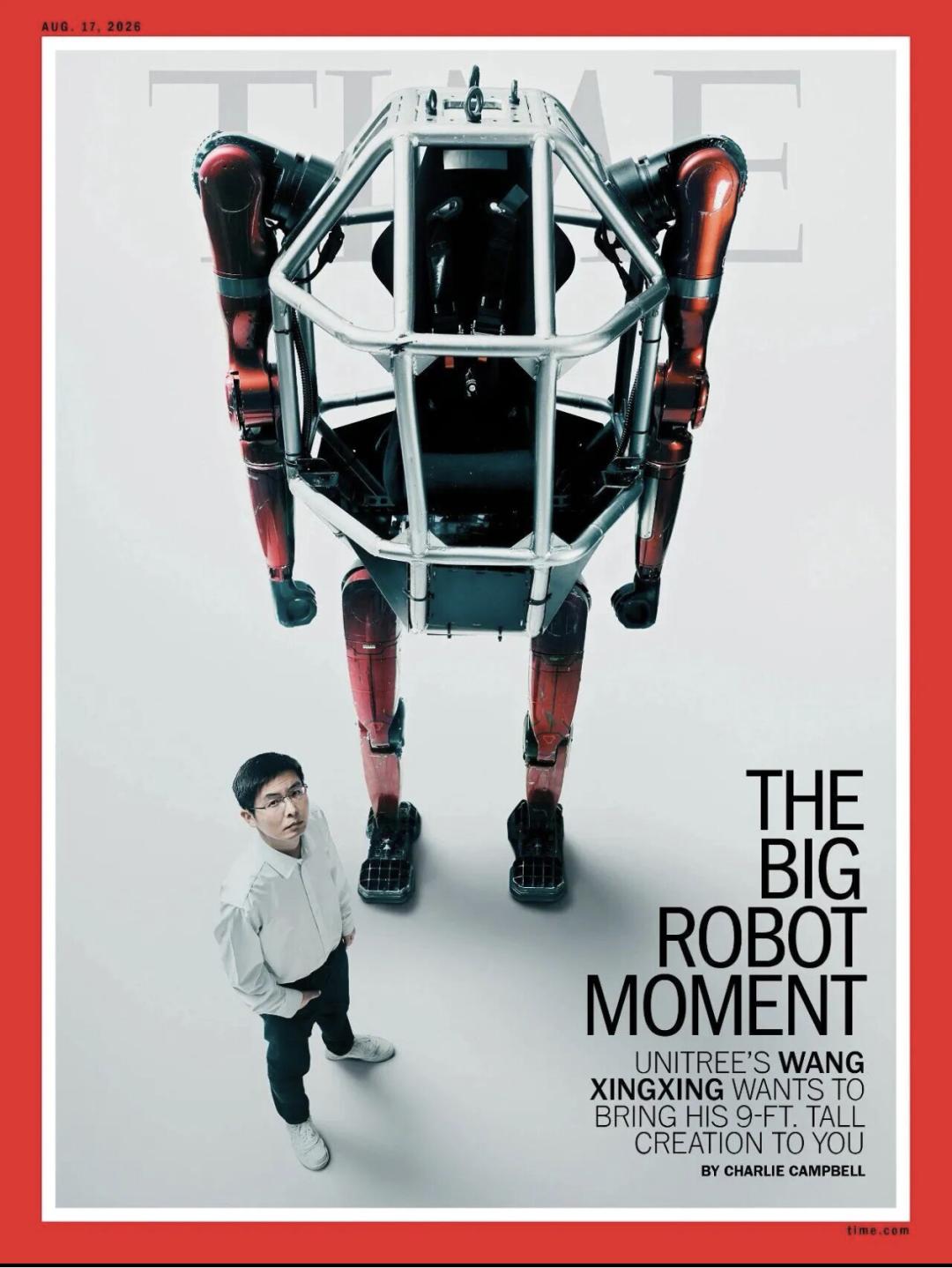
In July, Wang Xingxing appeared on the cover of *Time* magazine, becoming the second Chinese entrepreneur to appear on the cover after Jack Ma after an 8-year gap. In the exclusive interview, he predicted that the inflection point of embodied intelligence's ChatGPT moment will be in the interval of "2 to 10 years". In the same period, he said at the Digital Silk Road Forum of the World Internet Conference: "General-purpose robots have global attributes. Chinese robot enterprises should not only deeply cultivate the domestic market, but also continue to participate in global competition, and build international recognition with products."
IPO Roadshow
The "home computer stage" theory behind 360 questions
The IPO roadshow on August 7, 2026, was the "master collection moment" of Wang Xingxing's quotations.
Facing the valuation question of 219x price-to-earnings ratio, he did not prevaricate with "track dividend" or "AI tuyere", but said: "The embodied intelligence industry is still in its early stage, similar to the embryonic stage of home computers in the early years."
Facing the cooperation with DeepSeek, he disclosed three major directions systematically for the first time. Facing the overseas business risks, he said that "the company's mainstream products have completed FCC and other certifications, and the existing overseas business will not be directly impacted in the short term". Facing the question of when humanoid robots will enter households, he emphasized again that "in the short term, we will prioritize landing in scenarios such as dangerous operations, inspection, scientific research and cultural demonstration; as cost and intelligence capabilities continue to optimize, we will gradually expand to civilian scenarios".
Some investors expressed their love online that "the robot is so cool", and Wang Xingxing replied "thanks for your recognition"; some people even applied for jobs online, saying "your company's logo is great... looking forward to serving your company". These seemingly "ridiculous" interactions just show that Unitree is not just a robot company, but a hard technology target that the whole nation is paying attention to.
From the valuation torture of 219x price-to-earnings ratio, to the strategic cooperation with DeepSeek, from the backing of social security fund to Wang Xingxing's industry judgment of "similar to the initial stage of home computers", this roadshow of more than 3 hours outlines all the expectations and divergences of the capital market for the embodied intelligence track.
Quotations as prospectus
Looking back on Wang Xingxing's public quotations in the past three years, you will find a clear narrative main line:
In 2023, he solved the problem of "whether to do it" — from 13 years of denial to half a year of project establishment, GPT is the igniter; In 2024, he solved the problem of "how to do it" — 99,000 yuan pricing + end-side lightweight, using the technology reuse of quadruped robots to achieve dimension reduction strike; In 2025, he solved the problem of "what level counts as success" — the "two 80%" defines the ChatGPT moment; In 2026, he solved the problem of "whether it is worth investing" — the metaphor of "the embryonic stage of home computers" not only leaves room for imagination for the capital market, but also leaves a safety margin for himself.
The preciousness of these quotations lies not in how many "golden sentences" they provide, but in that they record the real thinking track of a hard technology entrepreneur during the industrial boom: there is not only the fantasy of "surpassing Bolt", but also the frankness of "not being able to pay salaries for months"; there is not only the grand narrative of "steam engine and electricity revolution", but also the technical prag