The Death of Low-cost Data SIM Cards: Young People's Freedom to Access the Internet Is Gone
Overnight, young people have lost their freedom to access the internet.
In the past, a large number of streamers and UP owners on Douyin, Bilibili and various e-commerce platforms sold extremely cheap data SIM cards. With a monthly rent of only 29 yuan, you could get more than 200G of data, which was almost a giveaway price. Once you got one, you wouldn't even bother to connect to Wi-Fi when you were out. However, after August came, all these card sellers vanished in a blink, leaving nothing but empty product shelves.
01
The Death of Low-cost Data SIM Cards
On July 31, the three major telecom operators released exactly the same announcement at the same time: "To protect user rights and interests and data security, starting from August 1, 2026, users can only apply for number cards through official channels such as the operator's official App and official website when ordering number cards through internet channels. Third-party internet channels will no longer provide number card handling related services."
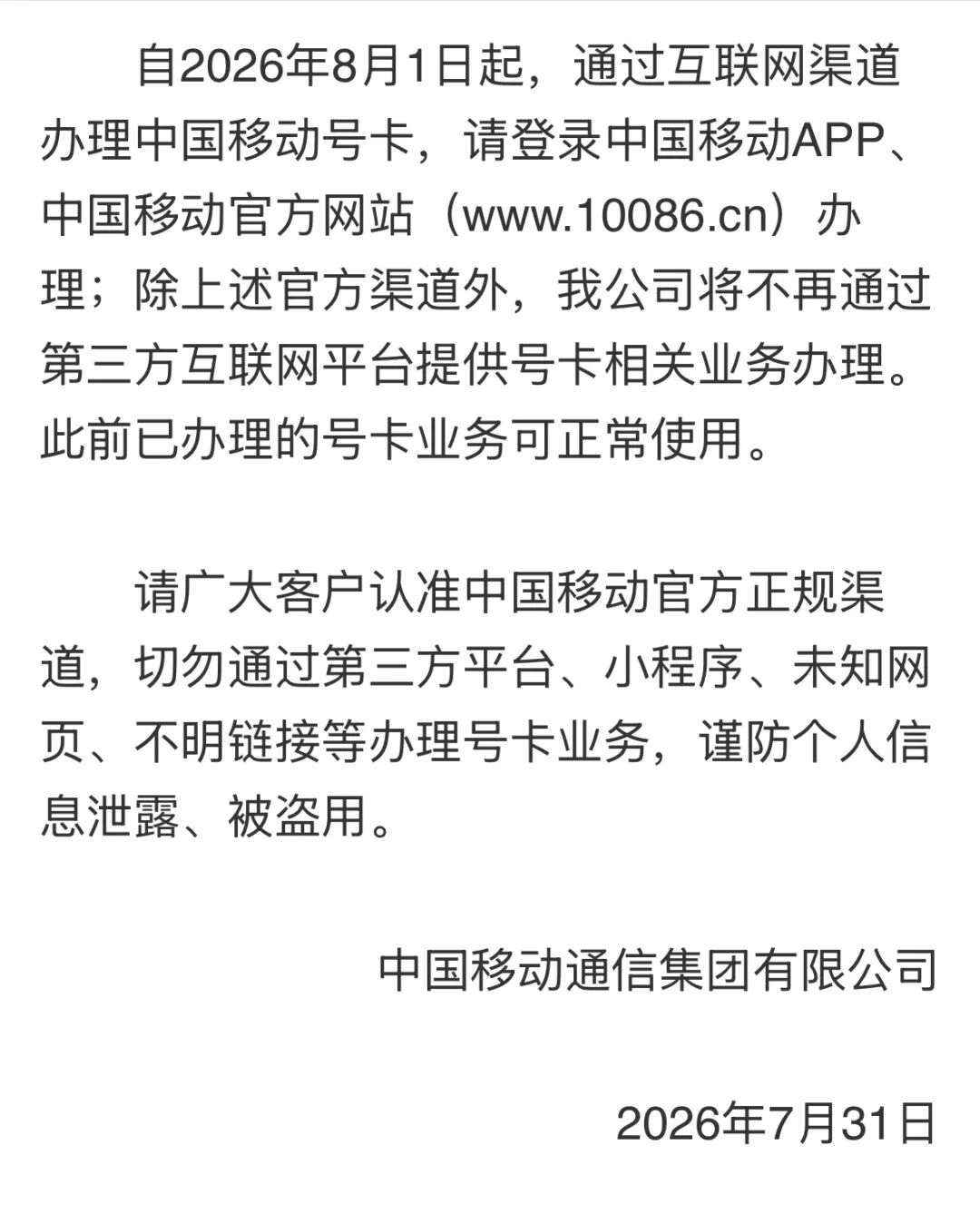
From the release of the announcement to the official implementation, there was only a few hours of interval, which can be described as a blitz-style surprise attack. Even if you rushed to apply for a card immediately after seeing the notice, you might not be able to complete the review process in time.
As a result, amid widespread public outcry, all online data SIM card products were removed from shelves collectively and became out-of-print goods. Now if you want to apply for a new card online, you can only choose the official tariff packages, and the price gap between the two types of packages can only be described as worlds apart.

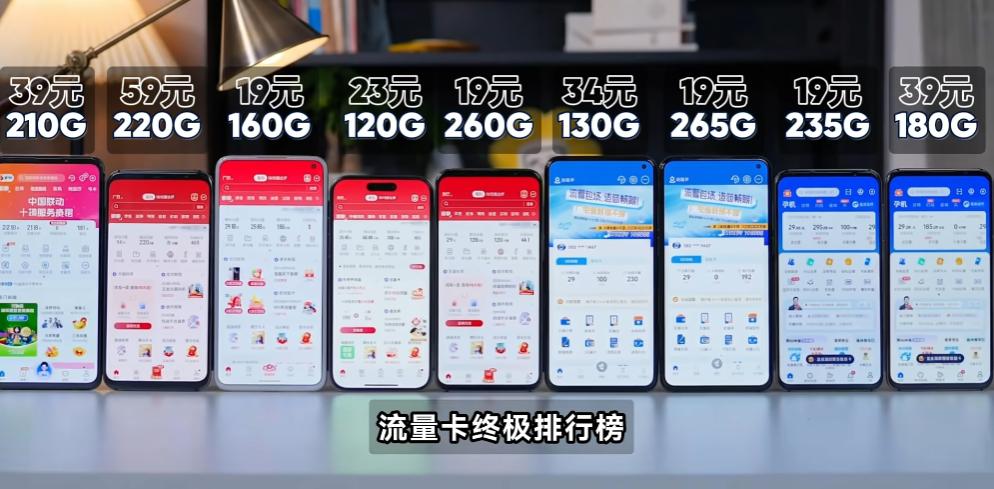
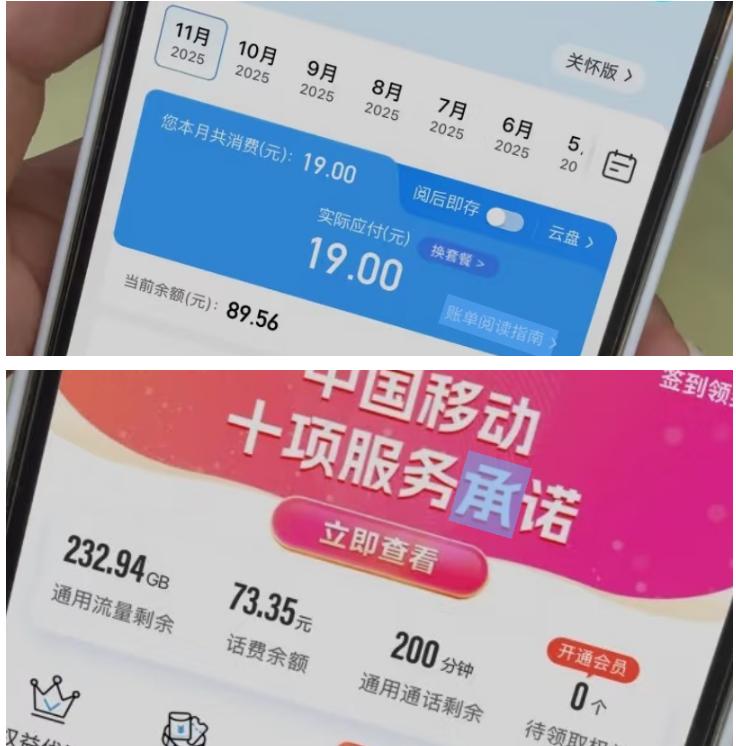
For the data SIM cards sold through online channels in the past, 29 yuan for 200G of data was the norm. For more cost-effective packages, you could even get 265G of data for 19 yuan, which also included call time ranging from 100 to 300 minutes, almost free of charge. If you wanted to pursue the lowest cost, you could even find data SIM cards with a monthly rent of only 9 yuan, which also had 160G of general data available, fully enough for daily outdoor use.
(@Veteran Data Card Insider)
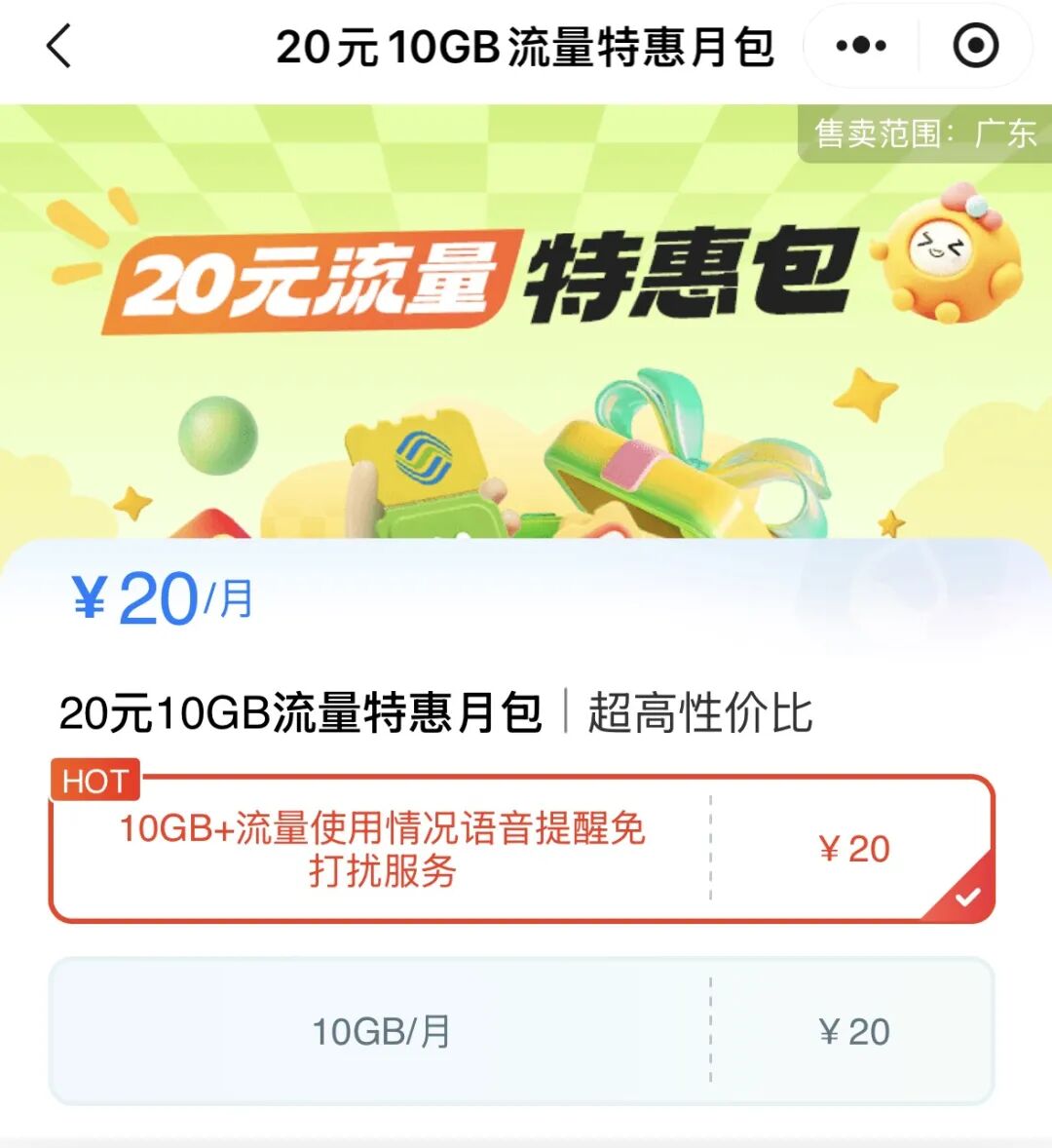
Now the remaining official standard packages only offer 50G of data for 39 yuan, of which 30G is directional traffic, and you can only get 80G of data for 59 yuan, which also includes 30G of directional traffic. It feels like you are paying the price of a Rolls-Royce to buy a Toyota Corolla. They even call the 20 yuan for 10GB data package a "special discount package", which sounds absurd and is almost a dark joke.
Not to mention the high price of the packages, the data volume is so limited that casually watching a live stream or scrolling through a few high-definition videos outdoors will use up your monthly quota, and you have to pay extra for top-up data packages. You even dare not listen to too many songs, after all, a single lossless music track takes up 30MB of data.
In other words, when you apply for a new card in the future, you have to choose between "using your phone less" and "paying several times more money". The former is obviously impossible, so you can only tighten your wallet. For people who often work outdoors such as streamers, Didi drivers and food delivery workers, who cannot connect to Wi-Fi most of the time and use mobile data all day long, their monthly phone bill expenses have suddenly become a bottomless pit.
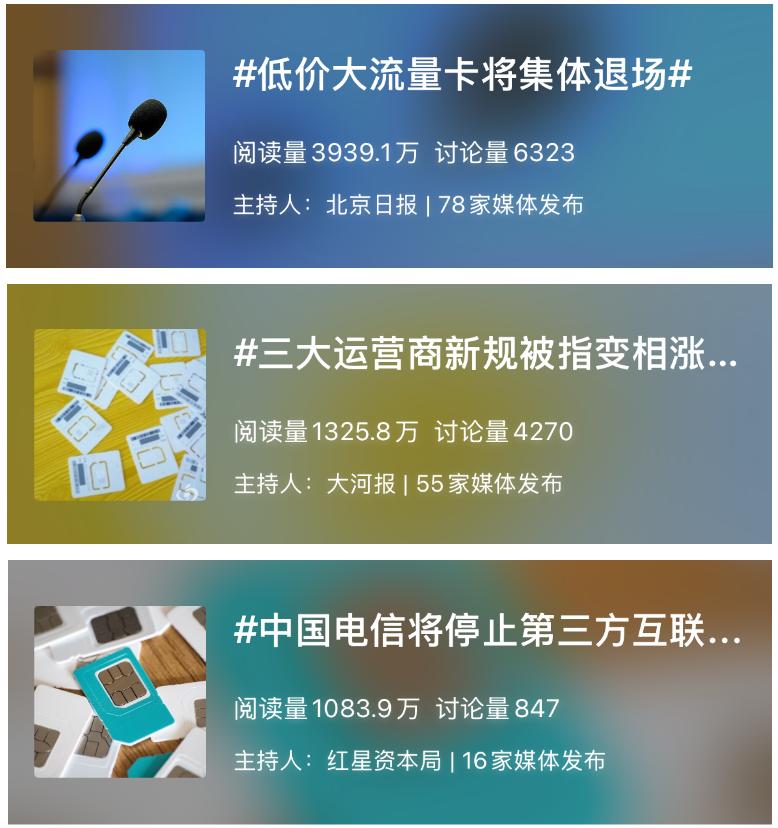
Therefore, this incident immediately became a national explosive news, topping the hot search lists on all platforms. The total number of views of several related topics on Weibo alone has exceeded 100 million.
Such a big impact on people's daily life, but the three major operators gave a very perfunctory rectification reason: "Recently, we found that illegal merchants have used the name of authorized cooperation with operators to release false card sales information, which has brought great risk of information leakage to users..."
The phenomenon they mentioned does exist, but it is not widespread. Most of the cards bought by netizens in live streaming rooms or e-commerce platforms can be used normally, and the data volume is almost the same as they promised. The most frequently reported problems are poor signal and low network speed.
As for privacy, do you even talk about that to Chinese users? Our privacy has long been scraped clean by various apps and web crawlers, right? The three giants using this reason to ban data SIM cards is like banning all street food stalls just because there is gutter oil, which is hardly convincing.
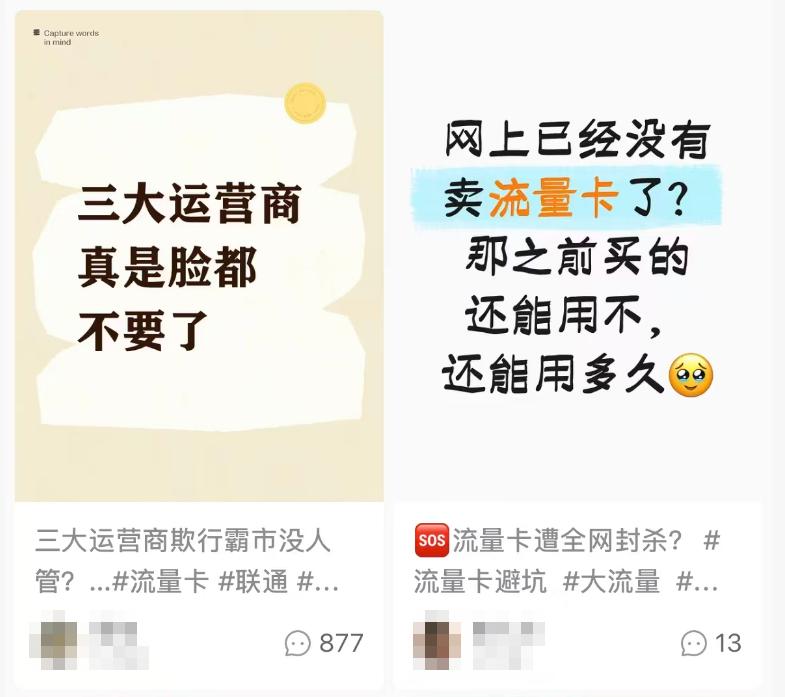
Therefore, the vast majority of netizens believe that the three major operators just found a random excuse to raise prices in a disguised form and harvest users. There are widespread complaints online, and people are shouting that "they have no shame at all". Apart from those who are venting their anger, many people are full of regret. A lot of people who previously doubted the low-cost data SIM cards and didn't apply for one are now kicking themselves for missing the good opportunity.
Because this incident is so influential, many local official media also think the three major operators have done something improper: raising prices substantially with such a perfunctory reason, so they also joined the criticism. Many media even cited the Anti-Monopoly Law, demanding that the operators give the public a reasonable explanation.
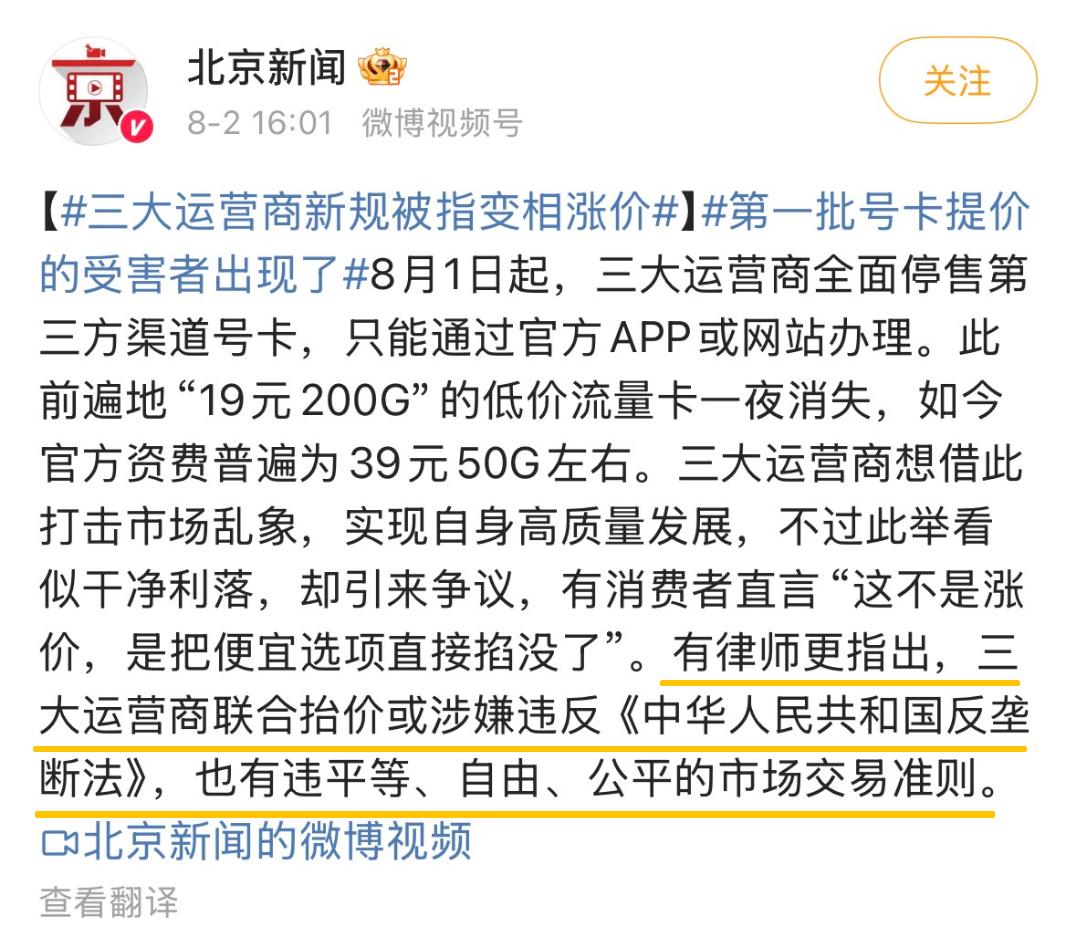
But so far, all three major operators have remained silent, ignoring all the criticism and staying completely unmoved. It seems that low-cost data SIM cards are almost completely dead.
02
The Customer Snatching War Among the Three Giants
To figure out the real cause of death of low-cost data SIM cards, we first need to understand where did they come from?
Back in 2017, the total number of mobile phone users in China reached 1.42 billion, exceeding the total population for the first time, which also marked that the user growth of mobile operators officially entered a bottleneck period. The reason is very simple: there are only so many people in China, a large number of mobile phones are single-card single-standby, and many people find it troublesome to maintain two phone numbers, so the difficulty of acquiring new customers will become higher and higher. In the visible future, mobile phone manufacturers have no plans to launch models with three or five SIM card slots, and the market has already hit its ceiling.

In the stock market with a fixed total user pool, the user growth of one operator often means the user loss of another operator. This is unacceptable for any of the three giants. They are all central SOEs and listed companies. Total number of users, monthly active users and 5G penetration rate are the core indicators that investors value most, and also the key indicators for performance assessment. Once the number of users declines, it will be a serious business risk signal, which may affect the company's stock price and ruin the career of many people.
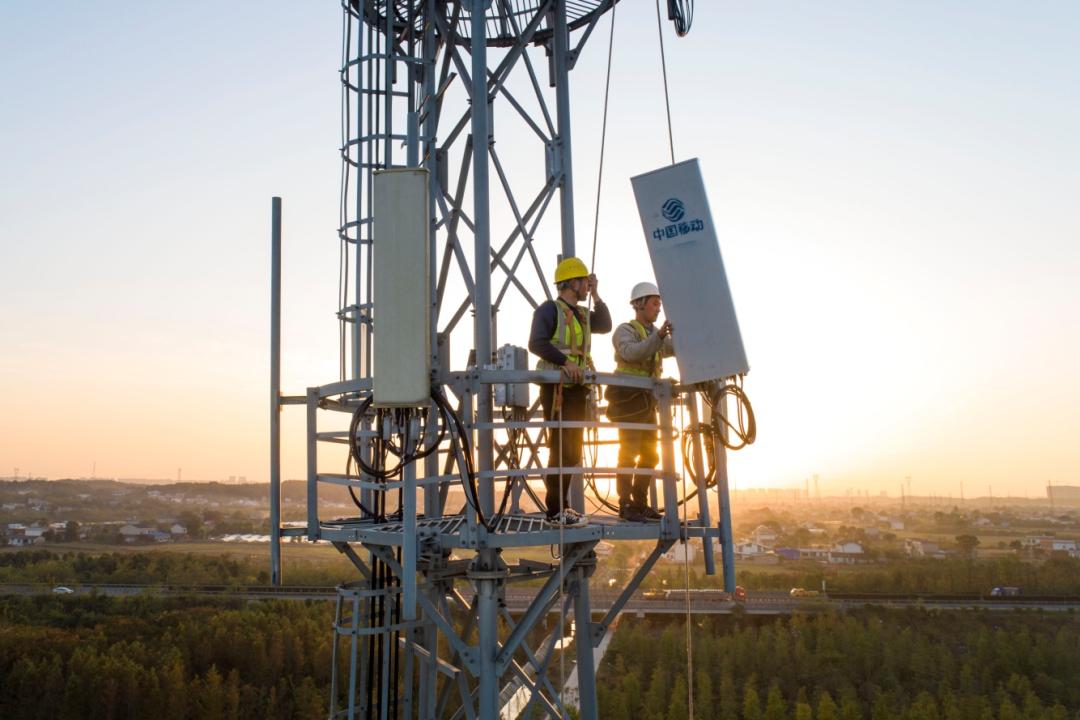
Therefore, a "bloody" customer snatching war broke out, and low-cost data SIM cards were the new type of weapon in this war.
The official packages of operators need to be filed with the Ministry of Industry and Information Technology, with relatively fixed prices that are unified across the country. The headquarters cannot change them arbitrarily, and local branches have no right to modify them without authorization, which is not flexible enough in price wars to quickly adjust to market changes. As a result, local branches began to attract customers through the form of "basic package + free data bonus", which can not only achieve low-price attractiveness, but also avoid modifying the official standard tariff. That's why you will find that the data SIM card package consists of two parts: a small part is the data included in the basic package, and the majority of more than 200G of data comes from various activity giveaways or rebates.
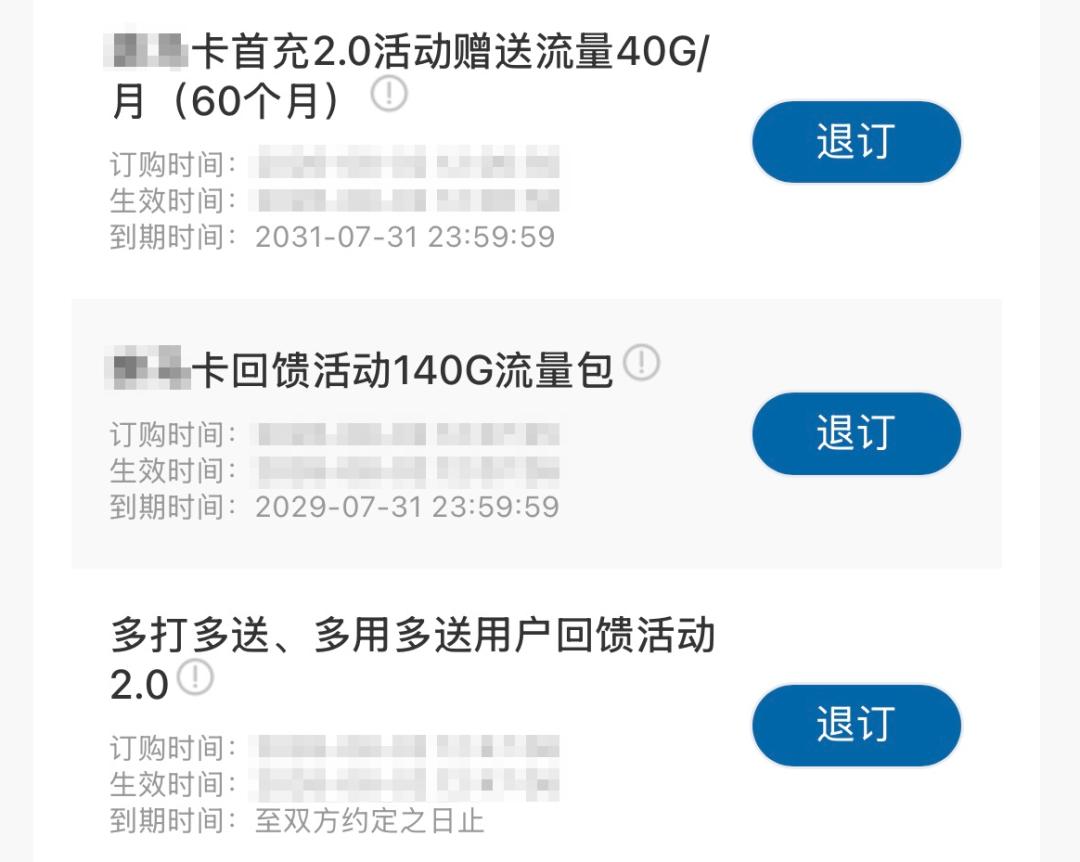
Moreover, the free data bonus has a time limit, the longest is three or four years, and the shortest is only half a year or one year. This can ensure that users are locked in this operator for a specific period of time, contributing to the statistical indicators. At the same time, users cannot use cheap data permanently. When the discount expires, the price will return to the original level, and some people who find it too troublesome to change phone numbers will apply for more expensive packages to continue using, which is equivalent to directly screening out high-value customers.
At the same time, to avoid suspicion, the operators themselves do not sell these cards officially, and the above activities cannot be found in their official Apps. All low-cost data SIM cards are authorized to third-party agents online for handling. Those UP owners who specialize in promoting cards, live streaming rooms, and even people who post promotion posts on Xiaohongshu are agents of different sizes. It is equivalent to the same store selling to old customers at the original price on the surface, while secretly asking people to send coupons to new customers behind the scenes.
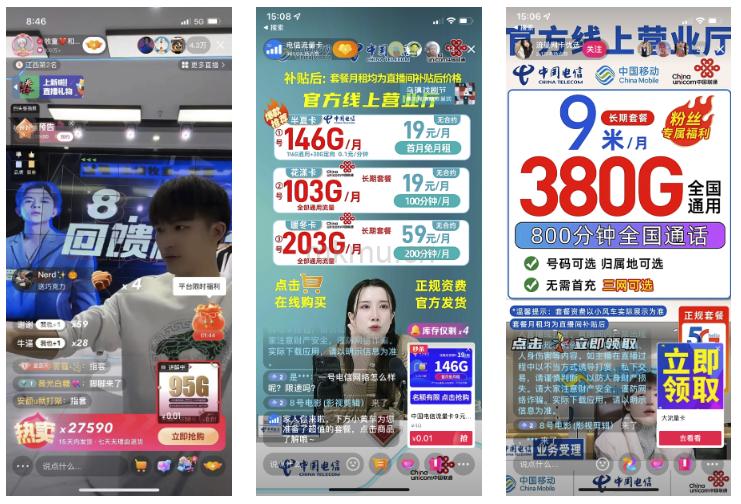
Agents won't work for free, right? So the operators pay high commissions to agents to complete the KPI of acquiring new customers, and there are additional big rewards. This is actually a disguised form of increasing discounts, because the threshold for being an agent is very low and the competition is fierce. Agents often return most of the commissions to users in the form of phone bill rebates, so you will find that most data SIM cards