36Kr Global · Middle East | The CAGR of the biotech market in the Middle East and Africa exceeds 10%, and Qatar is accelerating its biotech industry layout.
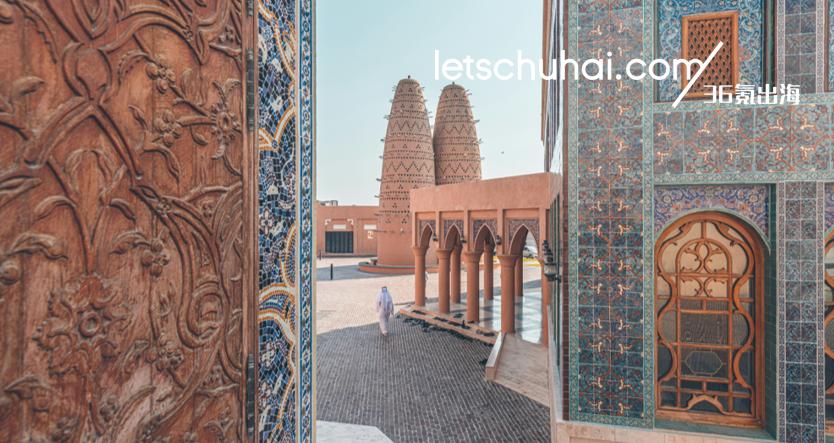
Biotechnology is rapidly emerging as one of the most strategically significant industries in the 21st century. Its influence has long gone far beyond the scope of laboratories, ranging from developing life-saving therapies, ensuring food security, promoting sustainable manufacturing to tackling environmental challenges.
As countries accelerate the construction of more resilient knowledge-based economies, biotechnology continues to grow in importance and plays a key role in shaping the global bioeconomy landscape.
From the perspective of market size, the economic value of the biotechnology industry keeps rising. The global biotechnology market is projected to grow from USD 1.38 trillion in 2025 to USD 4.33 trillion in 2034, registering a compound annual growth rate of 13.6%.
More and more policymakers are realizing that taking a leading position in the biotechnology sector is not only a scientific research goal, but also closely related to national competitiveness, economic resilience and long-term development.

Source: Invest Qatar official website
01 Middle East and Africa: An Emerging Force in the Global Biotechnology Landscape
At present, North America remains the world's largest biotechnology market, while the Asia-Pacific region is expected to achieve the fastest growth. Meanwhile, the Middle East and Africa are becoming an increasingly important emerging force.
With the continuous rise in medical demand, growing R&D investment, increasing emphasis on food security and sustainable development, and the accelerated advancement of national economic diversification strategies, the market size of the Middle East and Africa is projected to increase from USD 51.5 billion in 2025 to USD 125.9 billion in 2034, with a compound annual growth rate of 10.5%, demonstrating its continuously rising status in the global industrial landscape.
At present, the core issue is no longer whether the Middle East and Africa will participate in the global biotechnology economy, but how countries can build a sound industrial ecosystem to translate scientific research breakthroughs into commercial value and social benefits.
02 Gulf States: From Strategic Opportunities to Ecosystem Construction
In the Gulf Cooperation Council (GCC) region, multiple governments are enhancing biotechnology capabilities through dedicated strategies and investments.
Saudi Arabia has launched the National Biotechnology Strategy, the United Arab Emirates is building a life sciences industrial cluster, and Qatar is focusing on precision medicine and biomedical research. All these initiatives reflect the shared commitment of Gulf states to promoting innovation and fostering new growth drivers.
To build global competitiveness, capital investment alone is not enough. A mature biotechnology ecosystem requires world-class scientific research capabilities, sufficient capital support, a friendly regulatory environment, close industrial cooperation and professional talents.
Countries that can effectively integrate these elements will have more opportunities to unlock the economic and social value of this high-growth industry.
03 Qatar: Accelerating the Layout of Biotechnology Ecosystem
Qatar's "National Vision 2030" places health and human development at the core of its national long-term development strategy, and the biotechnology layout is highly aligned with this direction.
In recent years, Qatar has continued to increase investment in scientific research, medical care and scientific infrastructure, with R&D expenditure accounting for about 0.5% to 0.7% of its GDP, and it plans to raise this proportion to 1.5% by 2030.
Meanwhile, Qatar's medical expenditure is projected to grow from about USD 7 billion in 2025 to USD 12.5 billion in 2030, supporting the sustainable development of an innovation-driven medical ecosystem.
This strategic blueprint is built on a solid institutional foundation. Qatar Foundation, Qatar Biomedical Research Institute (QBRI), Qatar Environment and Energy Research Institute (QEERI), Sidra Medicine and a number of top universities are jointly promoting scientific research, clinical development and talent cultivation.
Industrial cooperation is also being implemented at a faster pace. In December 2025, WuXi Biologics and Qatar Free Zones Authority (QFZ) signed a memorandum of strategic cooperation, planning to build the Middle East's first integrated Contract Research, Development and Manufacturing Organization (CRDMO) center in Qatar, covering biopharmaceutical R&D, manufacturing and innovation.
With the accelerating gathering of technology platforms, key suppliers and professional talents, Qatar's biotechnology ecosystem is gradually evolving from the construction of scientific research system to the integration of R&D, transformation and manufacturing.
04 Precision Medicine: Qatar's Differentiated Advantage
Precision medicine and genomics are fields where Qatar has formed remarkable advantages. National-level institutions represented by Qatar Precision Health Institute (QPHI) are advancing projects such as the Qatar Biobank and the Qatar Genome Programme, and continuously conducting large-scale population studies.
At present, more than 40,000 genomes of Qatari and Arab populations have been sequenced, forming one of the largest genome datasets in the Middle East.
These projects are driving disease-specific research, supporting more precise personalized medical solutions, and creating broad space for international scientific research cooperation and innovation.
05 Looking Ahead: From Regional Layout to Global Impact
As biotechnology increasingly becomes a key area of future economic competitiveness, countries that can effectively connect scientific research strength, investment capital and commercial transformation capabilities are more likely to become the next generation of global biotechnology hubs.
A mature and complete industrial ecosystem will not only help improve medical standards and enhance food security, but also unlock new innovation momentum, boost economic competitiveness and foster new sources of growth.
Through continuous investment in scientific research infrastructure, precision health and international cooperation, Qatar is gradually consolidating the foundation of its biotechnology ecosystem and contributing to the next stage of global biotechnology innovation.
Photo | Unsplash
This article is from the WeChat official account "Invest Qatar (ID: InvestQatar)", authorized for reprint by 36Kr Global. For reprint, please contact the original author.
Recent Events
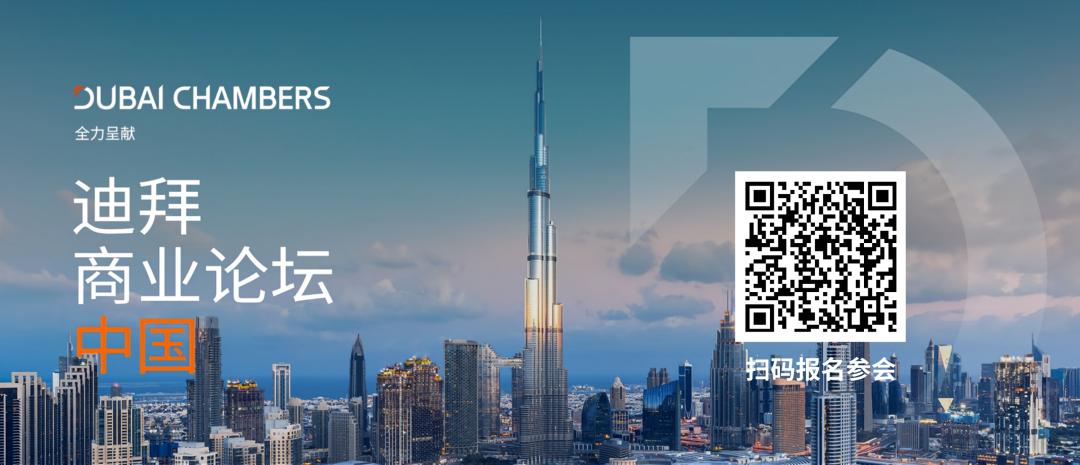
Dubai Business Forum · China, Overseas Guest Lineup Unveiled
On October 14, 2026, the 5th Dubai Business Forum will be held in Shenzhen, with the overseas guest lineup announced. This forum will gather a number of important guests from Dubai government agencies, leading enterprises and the investment sector. They have long been engaged in Dubai's economic development, industrial planning, investment promotion and innovation ecosystem construction, and will share insights on Dubai's economic strategy, key industry trends and future cooperation directions. Up to now, 58 Dubai-based enterprises and institutions have confirmed their attendance, covering key industries such as artificial intelligence, digital technology, advanced manufacturing, cross-border investment, consumer retail, logistics and supply chain. If you hope to gain in-depth understanding of Dubai's industrial opportunities on site, or carry out business exchanges with senior executives of Dubai enterprises, investment institutions and government representatives, it is recommended to submit your attendance application as early as possible. Seats are limited, please scan the QR code below orclick "here" to submit your registration application.
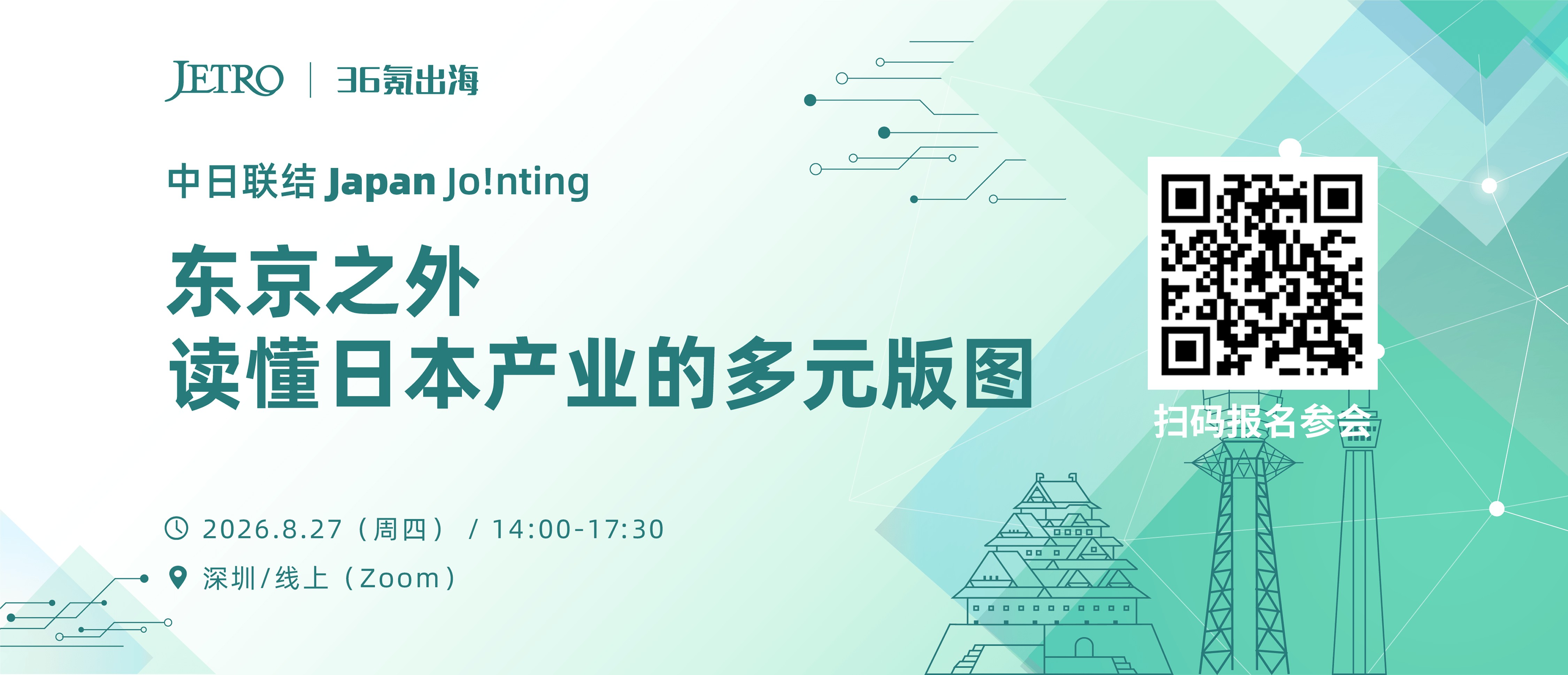
Beyond Tokyo: Understanding the Diverse Industrial Landscape of Japan
When it comes to the Japanese market, apart from Tokyo, a growing number of technology enterprises are turning their attention to local Japanese cities with distinctive industrial clusters. For example, Yokohama has formed a relatively complete industrial ecosystem in the fields of new energy vehicles and mobility; Osaka boasts first-class urban infrastructure and is committed to strengthening cutting-edge technologies and innovative industries; Fukuoka has attracted the attention of international startups with its favorable innovation and entrepreneurship environment and advantages in Asian talents. On August 27, 36Kr Global, together with JETRO, invites representatives from Yokohama, Osaka, Fukuoka and Chinese enterprises to share the development opportunities and landing experiences in different regions of Japan. If you hope to deeply understand the industrial characteristics of various regions in Japan and find the most suitable landing path for your own development, you are welcome to scan the QR code below or click "here" to sign up for this event!
English Services
Service | KrASIA Launches Brand-New English Media Services for Chinese Enterprises Going Global
Against the complex global economic backdrop, English reports are not only an important means to deliver value propositions to overseas clients and consumers, but also a way for enterprises to build global recognition. KrASIA (kr-asia.com), an English-language media, is dedicated to introducing Chinese business and culture to the world. About 60% of the readers on its English website are business people from core Southeast Asian countries. With excellent search engine optimization, professional English content, reliable social media matrix, as well as external inclusion platforms such as Bloomberg Terminal and Dow Jones Factiva, the world's top information and data platforms, KrASIA helps Chinese companies enhance their global brands. If your company has relevant demands for English communication, or hopes to cooperate with KrASIA to provide global expansion services, you are welcome to scan the QR code below or click "here" to fill in the form to get the KrASIA media service rate card and the contact information of our staff.
Community | Welcome to Join 36Kr Global Learning & Exchange Group
At present, the 36Kr Global Learning & Exchange Group has attracted more than 17,000 members who are engaged in global expansion, coming from startups, industry giants, investment institutions at home and abroad. In this community, we select and organize daily global cross-border information for members to help them grasp the latest trends; we regularly organize global expansion exchange activities to connect the global expansion ecosystem and find potential partners. You are welcome to add the WeChat account of 36Kr Global assistant (ID: wow36krchuhai-xzs2) to apply for joining the group, and go global together!