An industrial and commercial energy storage enterprise has secured financing worth tens of millions of yuan, with overseas end-market business accounting for over 80% in the first half of 2026 | HardKr Exclusive First Release
Author | HUANG Nan
Editor | YUAN Silai
36Kr Global has learned that Yilanke recently completed tens of millions of yuan in Series A financing, with this round led by Times Bole with additional investment. The raised funds will be mainly invested in the construction of the Zhongshan manufacturing center, the expansion of overseas localized service networks, as well as the launch and iteration of new products such as AIDC power supplies and SST modules, to comprehensively enhance delivery capacity, technical response and after-sales support.
Founded in December 2021, Yilanke is a core power electronics equipment manufacturer for industrial and commercial energy storage, which has long focused on the industrial and commercial energy storage PCS track. Taking the modular technical route as the core, it provides power electronics equipment and system solutions covering scenarios such as industrial and commercial energy storage and microgrids. Headquartered in Shenzhen, the company has a branch in Hangzhou. Its core team members come from top universities including Tsinghua University and leading power electronics enterprises such as Emerson and KSTAR, with full-chain experience in R&D, production, supply chain management and global delivery.
The industrial and commercial energy storage industry is at a contradictory juncture. In 2025, the shipment volume of China's industrial and commercial energy storage systems reached 24GWh, a year-on-year increase of 100%. In 2026, the global installed capacity of industrial and commercial energy storage is expected to increase by about 40% year on year, among which the overseas market will see a growth rate of over 60%. The growth rate remains impressive, but the underlying logic that once supported the rapid development of the industry is being completely rewritten.
The biggest variable comes from the domestic power market reform. In 2026, the fixed time-of-use electricity price will be fully market-oriented. The foundation of the peak-valley price arbitrage model, which used to be the economic cornerstone of industrial and commercial energy storage, is loosening, and electricity prices will be completely determined by market supply and demand. This means that the profitability of energy storage enterprises no longer depends on policy dividends, but on whether they can create value in diversified real working conditions.
At the same time, the application scenarios of overseas industrial and commercial energy storage are expanding rapidly, extending from peak shaving and valley filling to multiple directions such as photovoltaic consumption, transformer capacity expansion, microgrids, and integrated photovoltaic-storage-charging systems. As scenarios become more segmented and demands more specific, the era of using a set of standardized all-in-one units to adapt to multiple scenarios has come to an end.
This is exactly the underlying logic for Yilanke to propose the modular route.
As early as 2023, Yilanke decoupled the entire energy storage system into three standardized power modules: DC/DC, DC/AC and STS. Customers can freely combine them according to the working conditions of specific projects. If the project requires off-grid backup power, they can match the STS module; if multi-channel MPPT photovoltaic access is needed, they can choose the DC/DC module; some projects that only need basic peak shaving and valley filling can be satisfied with a single module product.
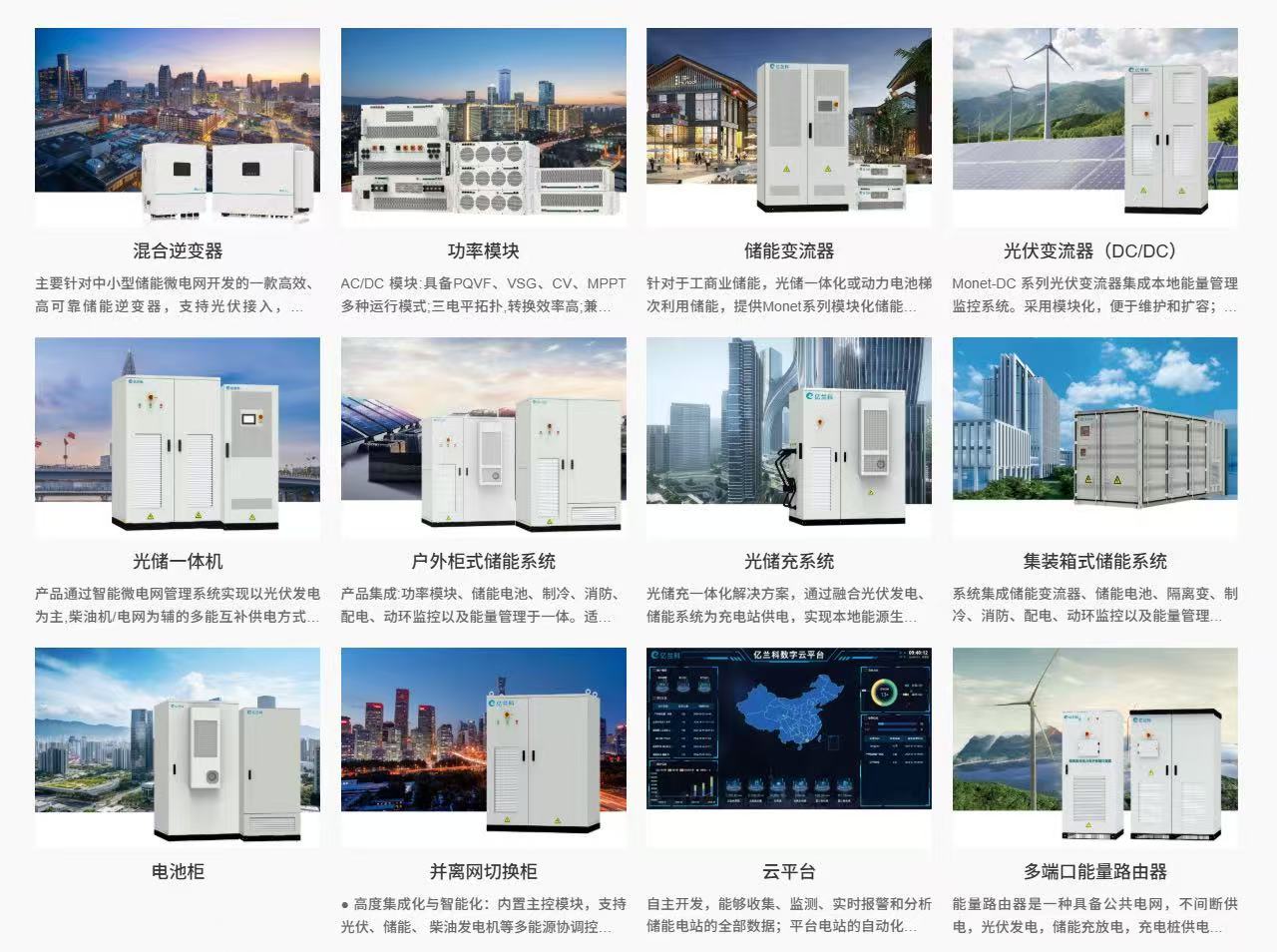
Yilanke industrial and commercial energy storage products (Source/Enterprise)
The value of modularization goes far beyond the flexible combination at the hardware level. What Yilanke aims to solve is not only the problem of "flexible matching" on the customer side, but also to build an evolvable technical framework for itself.
With the rapid iteration of cell technology, the system architecture needs to be adjusted synchronously. Among them, the modular architecture allows the PCS module to be upgraded independently without rebuilding the whole system. In the scenario of multi-machine parallel connection, Yilanke's accumulated software capability for collaborative control between modules, which has been repeatedly polished by a large number of real project working conditions through control algorithms and hardware architectures, delivers comprehensive software and hardware integrated capabilities.
In terms of shipment ranking, this idea is being verified by the market. Relevant data shows that in 2023, Yilanke ranked 7th in the industrial and commercial energy storage PCS track; it jumped to 4th in 2024, and further climbed to the top 3 in the industry in 2025. Its products have been shipped to more than 60 countries and regions around the world.
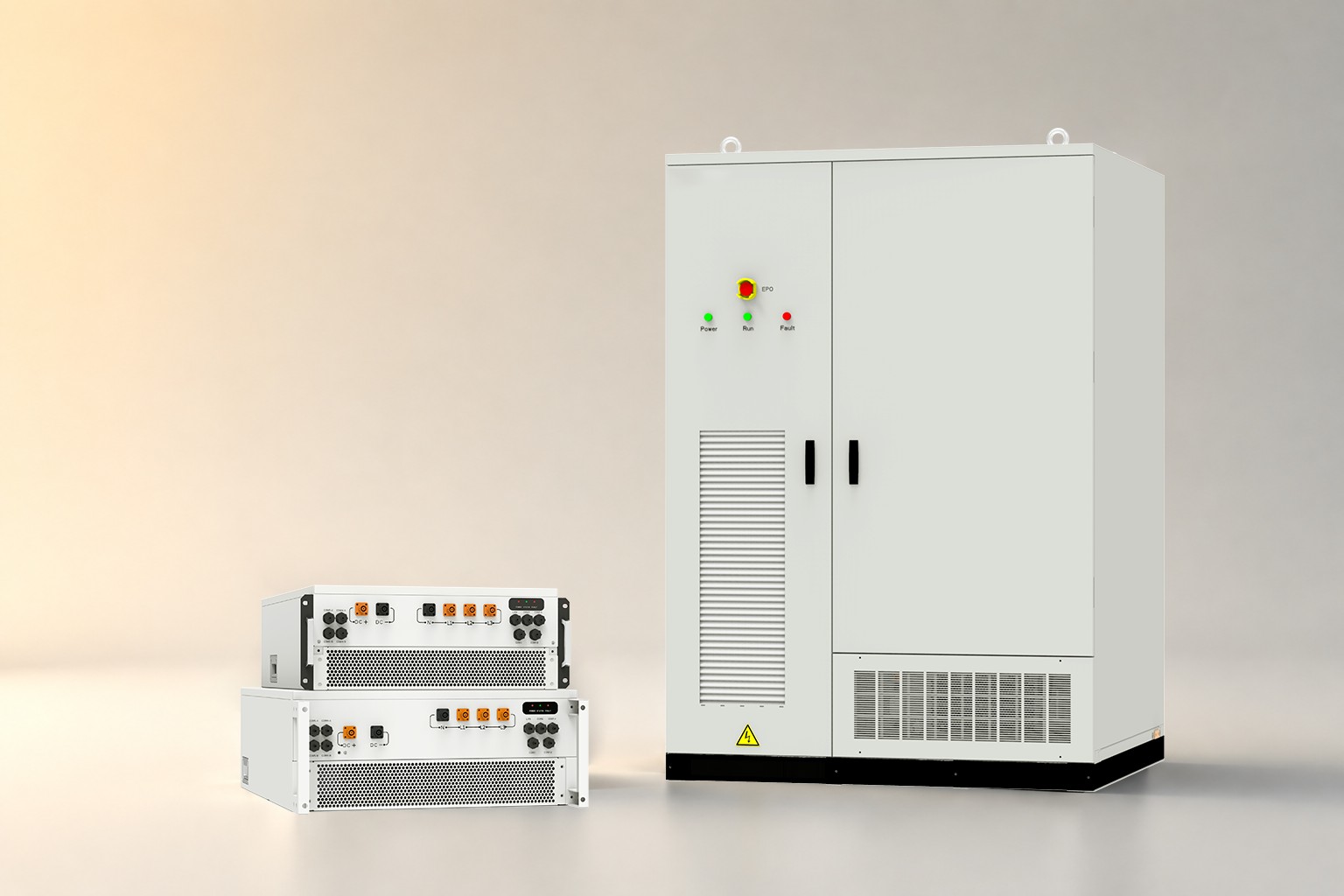
Yilanke industrial and commercial energy storage products (Source/Enterprise)
Expanding into the overseas market is another key strategic choice of Yilanke. Since 2024, the company has made systematic layout in the overseas market, with its overseas end-user business accounting for 75% of its total revenue in 2025, and the figure further rising to 85% in the first half of 2026.
The application environment of overseas industrial and commercial energy storage is far more complex than that in China. A large number of existing photovoltaic systems in the European market adopt 800V architecture, but most string energy storage PCS units on the market are only equipped with 690V AC output as standard. Once coupled with 800V photovoltaics for AC coupling, an additional step-up transformer must be installed. In contrast, Yilanke's 215kW PCS module is natively compatible with 800V photovoltaic busbars, enabling step-up transformer-free direct AC coupling, which has been verified in a 3MW photovoltaic supporting energy storage project in India.
In March this year, targeting industrial, commercial and microgrid scenarios, Yilanke launched its hybrid inverter series. This product highly integrates four functions: photovoltaic MPPT, bidirectional inverter, grid-connected/off-grid switching and energy management system (EMS), realizing a "four-in-one" design.
Facing the all-day power guarantee demand in Europe with high electricity prices, as well as regions with weak power infrastructure in Southeast Asia and Africa, traditional solutions mostly rely on multi-device stacking and complex customized engineering, which feature slow implementation and high cost. In contrast, the hybrid inverter series supports multi-machine parallel connection, millisecond-level grid-connected/off-grid switching, and is compatible with multiple battery types, meeting multiple demands such as self-use of generated power, grid connection of surplus power and backup power guarantee, enabling industrial and commercial energy storage to truly achieve "out-of-the-box use".
Targeting the harsh environments with frequent salt spray and condensation in overseas coastal areas, Yilanke has achieved IP66 high protection level for its models exported to Europe. In response to the weak power grid infrastructure and unstable power supply in Southeast Asia, the company independently developed the STS grid-connected/off-grid switching module, which can switch to off-grid mode at millisecond level when the power grid is cut off, replacing traditional diesel generators.
Up to now, the company has obtained more than 120 global certifications, covering major markets in Europe, Africa and Asia.
In October 2025, Yilanke's Shenzhen production base completed the second capacity upgrade, with a dedicated advanced PCS module production workshop built. At present, the Shenzhen base is operating at full capacity. In July 2026, the Zhongshan manufacturing center was officially put into operation, with a factory area of 30,000 square meters, and a planned annual production capacity of 50,000 PCS modules and 2,000 all-in-one AC cabinets, to provide capacity support for the continuously growing overseas orders.
On the service side, the company has laid out spare parts warehouses in 6 countries across Europe, Africa, Southeast Asia and the Middle East, and will set up 3 major overseas localized service centers in the future.
The following is an excerpt of the interview between 36Kr Global and Yilanke (slightly edited):
36Kr Global: The industrial and commercial energy storage industry faces the pain point of scattered customer scenarios. How does Yilanke's modular PCS solution solve the pain point of multi-scenario adaptation? Compared with the industry's all-in-one unit route, what irreplicable product barriers can this technical route build in the long run?
Yilanke: Different from the relatively standardized residential energy storage and customized engineering of large-scale energy storage, industrial and commercial energy storage is in an awkward middle zone. Its project working conditions are extremely complex, which may be factory parks, commercial buildings, photovoltaic-storage-charging stations, or remote overseas mining areas or island microgrids — each scenario has different load characteristics, power consumption curves and grid connection requirements. If we follow the idea of standardized all-in-one units, it is difficult to cover these fragmented demands; but if we customize from scratch for each project, the cost is high and the cycle is long, which makes large-scale operation impossible.
Our solution is to return to the underlying logic of power electronics equipment, and decouple the energy storage system into three standardized power modules. Customers can freely combine them according to project demands: some are equipped with a single module for pure peak shaving and valley filling, some are added with an STS module for grid-connected/off-grid switching, and some are added with a DC/DC module for multi-channel photovoltaic access. This "Lego-style" construction method turns non-standard engineering into a combination of standard industrial products, greatly reducing the complexity of product development.
However, the real barrier of modularization does not lie in hardware, but in software. Multi-module collaboration involves a series of complex control logics such as power distribution, dynamic response and fault protection. Especially in the scenario of large-scale multi-machine parallel connection, communication synchronization, power equalization and cluster management between modules will become systematic challenges. This software and hardware collaboration capability cannot be achieved overnight, and requires continuous iteration in actual operation.
36Kr Global: At present, the industrial and commercial energy storage cell and PCS technologies are continuously iterated, and industry requirements are constantly improving. What do you think is the core main line of competition for industrial and commercial energy storage PCS in the next three years? What mid- and long-term R&D layouts has Yilanke made in underlying power electronics algorithms and system control?
Yilanke: In the next three years, there will be little room for simply competing on hardware parameters. The real gap will be reflected in three aspects: whether the system can adapt to various scenarios, whether it can operate stably under complex working conditions, and whether it can quickly respond to emerging market demands.
Battery technology is still iterating rapidly, and demands such as large-scale multi-machine parallel connection and off-grid backup power are also growing. Whoever can solve the underlying problems such as multi-battery compatibility, seamless grid-connected/off-grid switching and cluster collaborative management will stand out. These cannot be solved by simply piling up components, and require repeated polishing between hardware architecture, control algorithms and actual operation experience.
We have several development directions. At the hardware level, we will continue to deepen the modular architecture, with the focus on control algorithms, including three-phase independent control, as well as the upper-level global coordinated scheduling. At present, we are also making layouts for AI-assisted control, which realizes impedance adaptive identification, fault prediction and dynamic power adjustment based on on-site operation data, so that the equipment can automatically adapt and self-optimize in complex actual working conditions.
At the same time, Yilanke will also expand into new tracks. AIDC computing power energy storage power supplies and SST modules are both in the pipeline. The universality of underlying power electronics determines that what we can do is far more than energy storage PCS, and application scenarios such as AI computing power backup power are also being promoted synchronously. The key is to ensure sufficiently solid technology, so that our products can be widely applied.