1,000 heavy-duty trucks and 100,000 light-duty trucks: Pony.ai unveils the mass production timetable for Robotruck
Over the past two years, Pony.ai's public narrative has been almost entirely dominated by Robotaxi: dual listing in the US and Hong Kong stock markets as the "first stock", the rollout of a 1,000-vehicle fleet, and the turnaround to positive per-vehicle profitability. Its truck business, by contrast, has rarely been mentioned publicly.
This is not because there is nothing to share, but because the team was waiting for a key milestone.
On August 3, that milestone arrived. Pony.ai held a media briefing, disclosing detailed progress of its Robotruck business to the public for the first time in two years.
Why now? There is only one core reason: the technology and cost are both mature enough, and the business math finally adds up.
Over the past two years, Pony.ai's 7th-generation Robotaxi fleet has exceeded 1,000 units, with the cost of autonomous driving kits dropping by 60%-70%. The sensors and computing platforms for heavy trucks and light trucks are almost identical to those of Robotaxi, directly benefiting from the cost dividend and mass production experience accumulated from Robotaxi development.
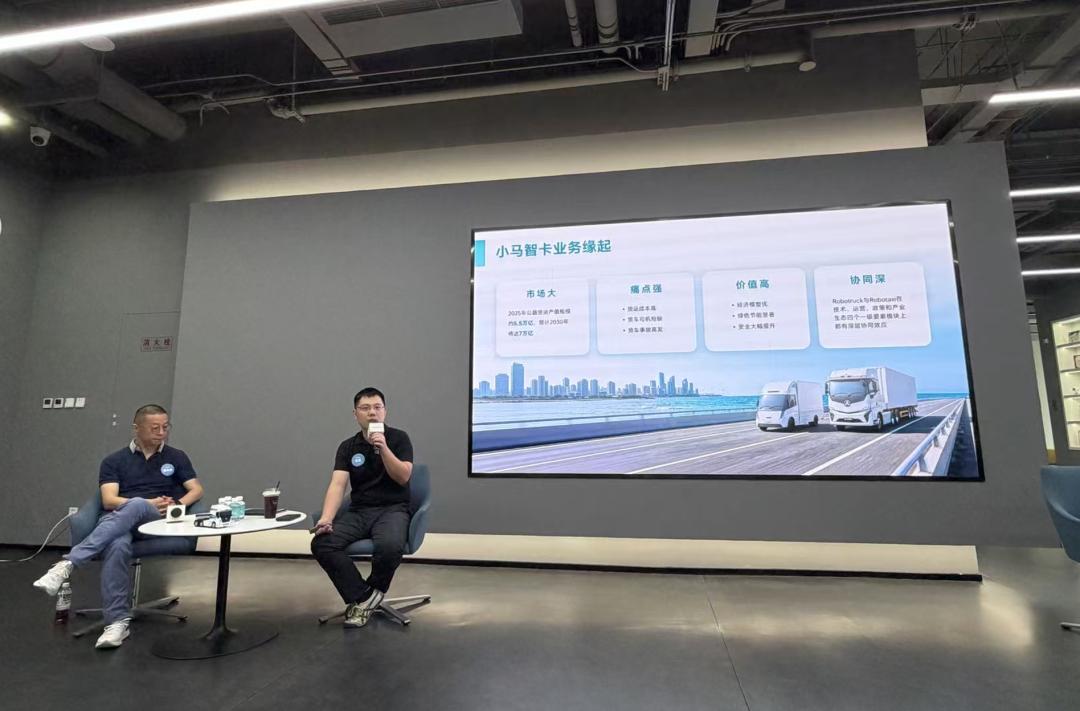
He Xing (right) introducing the latest progress of Pony.ai's truck business
More importantly, Pony.ai has accumulated complete experience in embedding autonomous driving systems in the OEM pre-installation mode. From the perspective of He Xing, Vice President of Pony.ai and Head of its Truck Division, "With this experience, our heavy trucks are now at the stage where we can carry out large-scale mass production trials."
At the same time, the heavy truck industry chain is also maturing, with a number of L2+ products emerging on the market.
This led to the launch of the 4th-generation heavy truck production line, the simultaneous rollout of light trucks, and the targets of 500 to 1,000 heavy trucks and 100,000 light trucks... Pony.ai has completed the transformation from "R&D mindset" to "production line mindset".
01 Eight years, four generations of vehicles: moving from "manual workshop" to mass production on production lines
Pony.ai's heavy truck journey started in 2018.
The first-generation vehicle was a "manual workshop-style" retrofitting solution. After using two prototypes for less than a year, the team realized the problems: the vehicle consistency and reliability were too poor, and technical accumulation could not be effectively replicated, "each vehicle had its own unique hardware faults". At that time, He Xing confirmed that to achieve real large-scale deployment, it was necessary to deeply cooperate with automakers, and vehicles rolling off the official production line would be reliable enough.
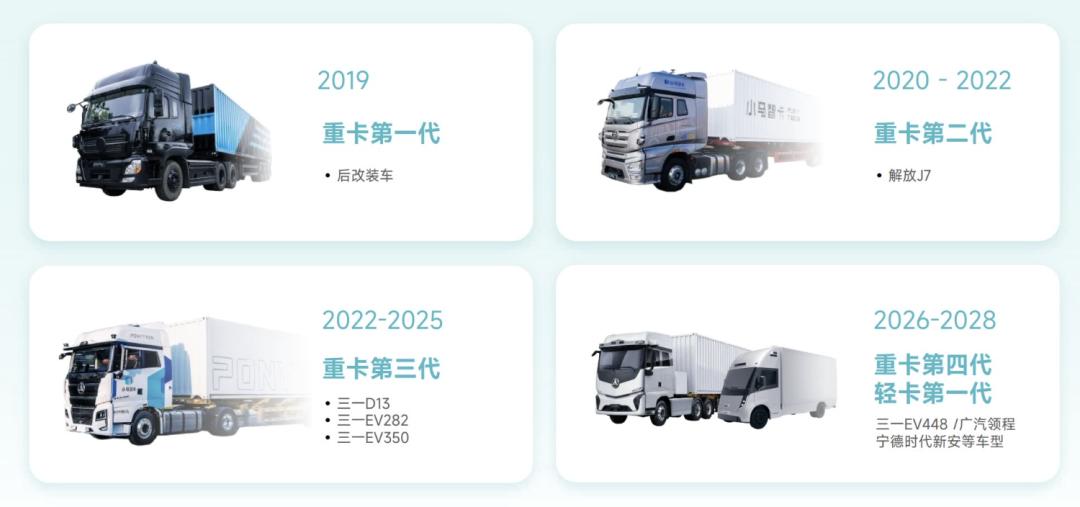
Evolution of Pony.ai's truck products
Then came the second generation.
At the end of 2020, Pony.ai chose the FAW Jiefang J7. Although it did not have redundant configurations at that time and was still powered by diesel, it "solved the biggest pain point in the R&D process". These vehicles served as the main R&D models from 2020 to 2022, supporting the core R&D stage of Robotruck.
A greater turning point came in 2022 with the third generation.
Pony.ai carried out in-depth cooperation with Sany Heavy Truck, and the R&D teams of both sides "sat down to customize Robotruck together", starting the design with pre-installation logic. In November of the same year, the third-generation system was officially released, and the first batch of intelligent trucks was delivered to Qingyun Logistics. This generation of vehicles has both diesel and electric versions, allowing Pony.ai to initially figure out the technical path and operation logic of new energy heavy trucks.
What really accelerated the scaling of the truck business was that Robotaxi first achieved mass production at the 1,000-unit level.
In 2025, Pony.ai's Robotaxi fleet exceeded 1,000 units, and the complete vehicle-grade solution has been verified through large-scale deployment and can be directly migrated to trucks. In November of the same year, Pony.ai announced cooperation with Sany Heavy Truck and Dongfeng Liuzhou Motor to jointly build the 4th-generation autonomous driving truck family. The first two models are based on a pure electric platform, developed for mass production at the scale of thousands of units.
At the 2026 Beijing Auto Show, the 4th-generation heavy truck made its public debut for the first time. The model adopts a pure electric platform, equipped with a battery of more than 400 kWh, and six major redundant systems covering braking, steering, power supply, communication, perception and computing, ensuring that the vehicle can safely pull over to the side of the road when the main system fails, with a 20,000-hour working life. After months of testing and polishing of the production line SOP, the production line has been officially launched, and vehicles will be rolled out in batches in the next few months.
Pony.ai targets three major deployment scenarios: high-speed trunk logistics (in cooperation with Sinotrans, China Post, etc.), northwest China bulk commodity dedicated lines (already operating on routes above 3,000 meters above sea level such as Golmud, Qinghai), and port horizontal transportation (recently won the bid for Shenzhen Mawan Port, which will realize commercial deployment at the scale of dozens of units).
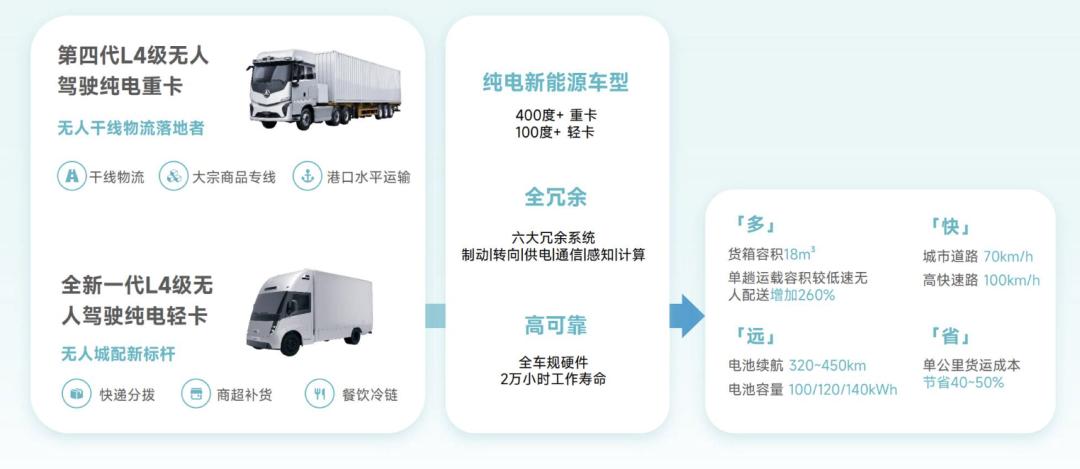
Pony.ai's latest truck products
In addition to heavy trucks, light trucks are also advancing simultaneously. Pony.ai has released a full-vehicle-grade, fully redundant L4-level unmanned light truck with a cargo box volume of 18 cubic meters, a maximum range of 450 kilometers, and 40%-50% lower per-kilometer operating cost than that of human-driven trucks.
The light truck reuses almost 100% of the hardware solution and technology stack of Robotaxi, standing on the foundation of Pony.ai's ten years of urban scenario accumulation from the very first day of its birth. "The new vehicle has recently been rolled off the production line. After several weeks of trial operations, it is now in daily operation, conducting intensive test runs with business partners".
02 "One driver" operating three types of vehicles: Pony.ai's technology reuse logic
"One set of virtual drivers can operate all vehicle models" is Pony.ai's technical strategy, and it is also the underlying logic that allows heavy trucks, light trucks and Robotaxi to share the same technical base.
Since its establishment, Pony.ai has adhered to the principle of "one set of code, one set of methodology to operate all vehicle models". The World Model 2.0 can generate more than 10 billion miles of training data every week, covering heavy trucks, light trucks, passenger vehicles and corner cases from all over the world, which are all fed into the same unified technical base and then output to different vehicle models.
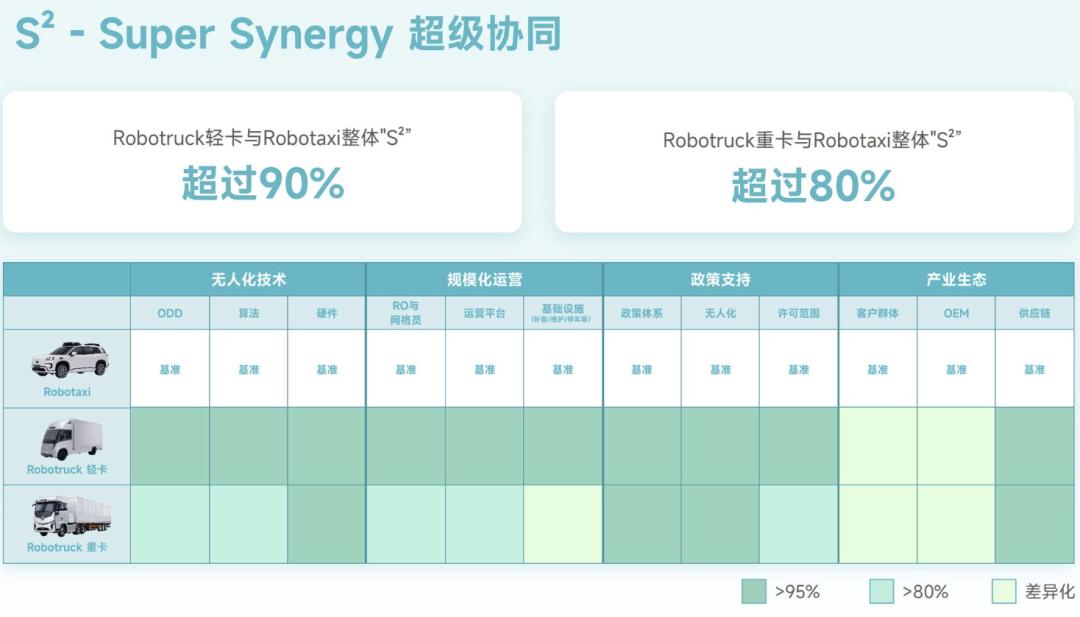
Three vehicle models of Pony.ai cooperate with each other
Based on this technical base, Pony.ai has formed a layout of three vehicle models: Robotaxi for urban passenger transport, heavy trucks for trunk logistics and port operations, and light trucks for urban distribution. The three share the same set of sensor solutions, computing platforms and software systems. The synergy between light trucks and Robotaxi exceeds 90%; the sharing rate of heavy trucks is slightly lower due to different ODD, but it still exceeds 80%.
The business logic of heavy trucks is relatively clear: the trunk logistics market is huge, there is a serious shortage of drivers, and L4 unmanned driving can directly solve these pain points.
However, the light truck business is a new layout, and low-speed unmanned delivery vehicles are already in operation in urban distribution. Why does Pony.ai still want to enter this track? What advantages does it have?
Xiao Ping, Head of Truck Product at Pony.ai, responded with a set of data: In the urban logistics scenario, the number of light trucks in China is nearly 8 million, accounting for 55%-60% of the total number of motor vehicles in urban logistics scenarios, making it the most dominant transport tool for urban distribution. Most of the currently road-legal unmanned delivery vehicles have a cargo volume of 5-6 cubic meters, while Pony.ai's light truck has a cargo box volume of 18 cubic meters, "one unit is equivalent to 3-4 units of ordinary unmanned delivery vehicles".
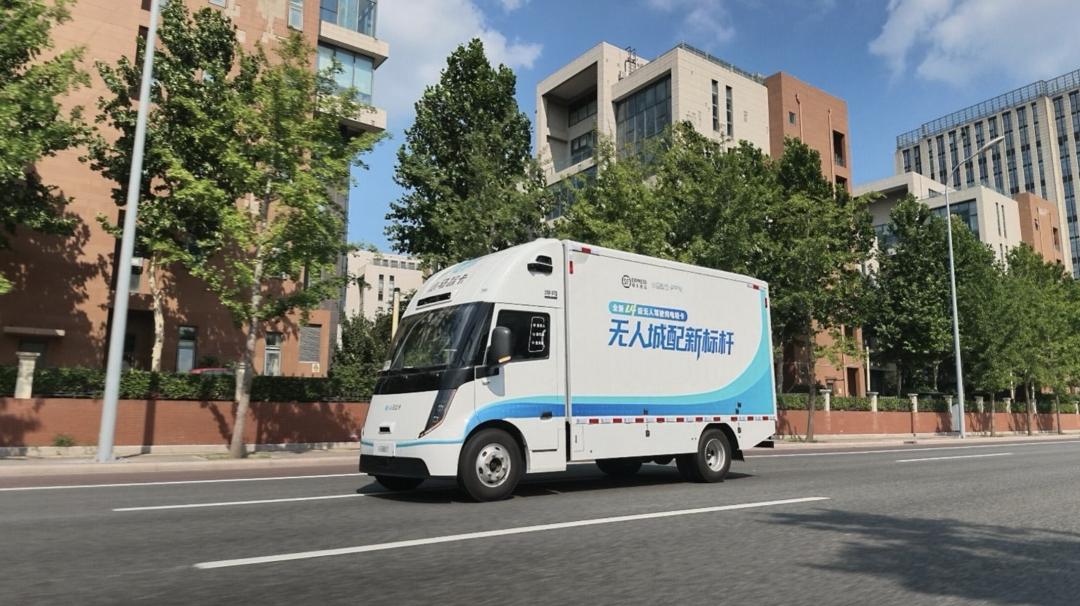
More importantly, there are advantages in road access rights and speed. Light trucks are naturally compliant as N1-class freight vehicles, with a speed limit of 70km/h on urban roads, which Pony.ai's light trucks can reach, and they can also run at 100km/h on urban expressways where the speed limit for trucks is 100km/h. This capability is directly migrated from Pony.ai's ten years of Robotaxi operation experience in urban areas.
This collaborative logic determines that Pony.ai's way of making light trucks is completely different from other players in the industry: it is not creating a new species from scratch, but directly transplanting the urban autonomous driving capabilities that have been verified for ten years to the mainstream transport vehicles for urban distribution.
This also answers another question: why is it difficult for low-speed unmanned delivery vehicle companies to make the same product?
Because the ODD of light trucks is complex urban roads, with peak hour congestion, pedestrians shuttling in urban villages, and low visibility during heavy rain at night. These scenarios require systematic capabilities with in-depth understanding of urban traffic, rather than low-speed operation experience in closed parks. "If you have limited accumulation in the Robotaxi field, you can't even touch the threshold of this track," said He Xing.
In terms of moat, Pony.ai emphasizes system capabilities rather than single-point technologies. In He Xing's view, "If you just pull out a vehicle and run it for one or two years, the moat is indeed limited." The real barrier lies in the system preparation for large-scale operation at the 1,000-unit level: 20-fold heavy redundancy mechanism, vehicle-grade development process, and data closed loop supported by the world model.
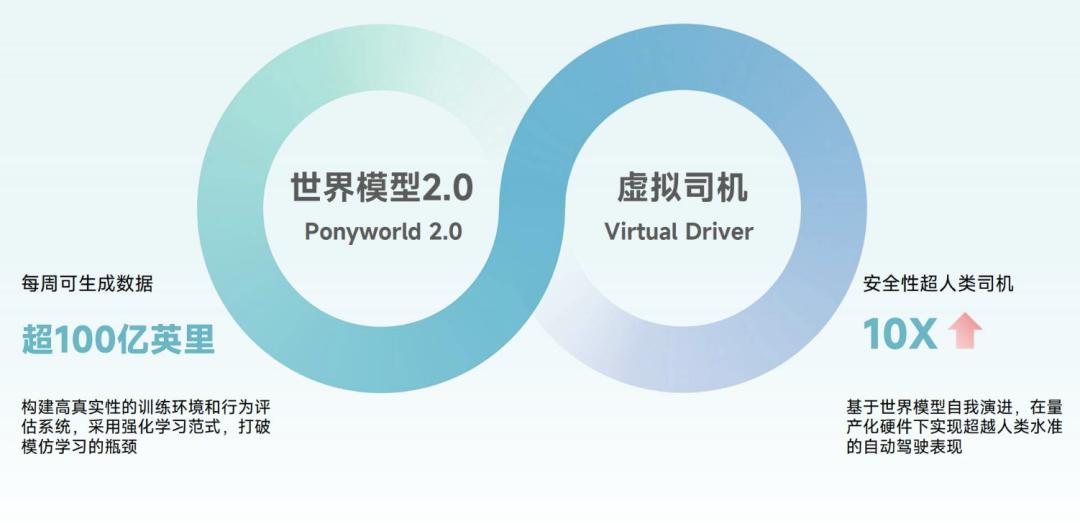
Pony.ai's technical base
"When the scale expands, you can see problems that others can't. For example, when the forward sensor is completely blocked, will the heavy truck slam on the brakes and stop in the lane, or safely pull over to the side of the road?" Xiao Ping added. These "internal skills" have been accumulated by Pony.ai for 10 years.
As for whether it will lay out the Robovan market, He Xing's answer is: no, at least not now. "Light trucks will be our main model in the next stage, and we will gradually deploy them. We will not consider entering the Robovan market before we have made sufficient achievements in the light truck business".
03 Sell technology, or sell transport capacity?
The technical base is already in place, but for logistics companies, the core question remains: can this set of solutions deliver positive business returns?
He Xing pointed out that for some users at present, although L2 products can improve safety and efficiency, the driver is still on the vehicle, the operation time is still restricted by regulations, and the marginal revenue is not enough to offset the cost of the kit. "L4 serves as a labor supplement under the background of labor shortage, and it can create great value just by calculating the business math."
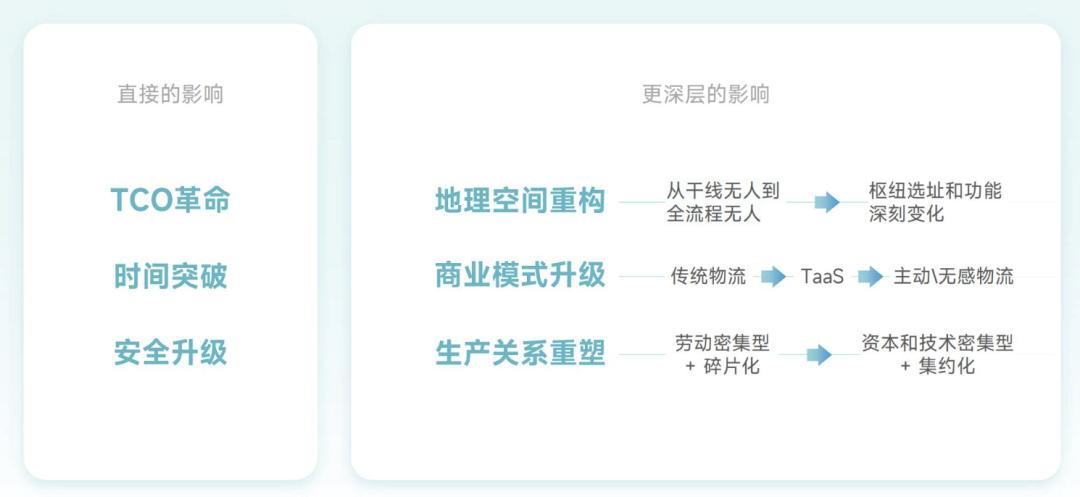
Autonomous driving technology will transform traditional logistics
The change of unmanned driving to the cost structure is all-round: the labor cost is directly reduced to zero, the energy cost of the pure electric platform is much lower than that of diesel, and the vehicle can operate 24 hours a day without being limited by the physiological limit of the driver, greatly improving the timeliness of delivery.
Xiao Ping also provided a specific reference: the annual insurance premium for a single light truck is about 15,000 to 20,000 yuan. In the future, unmanned driving will be safer, and the insurance premium will drop significantly, which can save more than 10,000 yuan per year.
In terms of vehicle cost, the hardware cost of the 4th-generation heavy truck is about 70% lower than that of the previous generation, and the light truck shares the same cost reduction curve with Robotaxi. This is also why Pony.ai chose this node to start the large-scale market promotion of Robotruck.
Specifically, the quantitative target given by Pony.ai is: to achieve large-scale deployment of 500-1000 heavy trucks in the next 2-3 years; the progress of light trucks will be faster, "plans to achieve a scale of 100,000 units before 2030".
However, to get customers to accept this new solution, market cultivation is needed. He Xing frankly said: "The emergence of any new product must go through a process of educating the market and users." Therefore, Pony.ai has designed two parallel paths in its business model.
