Shortly after Weng Li returned to OpenAI, Thinking Machines immediately unveiled its brand-new model.
After the debut of the first model Inkling, the brand new AI has once again gone viral across the industry!
Today, Thinking Machines officially releases its second blockbuster model — Inkling-Small.
276B total parameters, 12B activated parameters, native multimodality, 1 million token context window
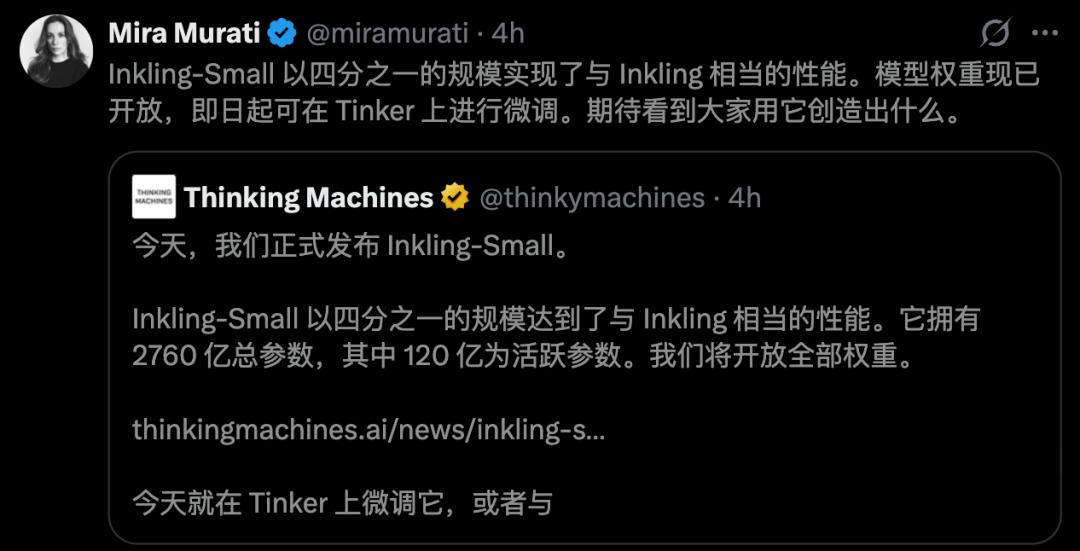
Half a month ago, the first open-source 975B Inkling was launched, which caused a huge stir in the AI community.
With only a quarter of the size, Inkling-Small directly outperforms the "trillion-parameter big brother" in performance.
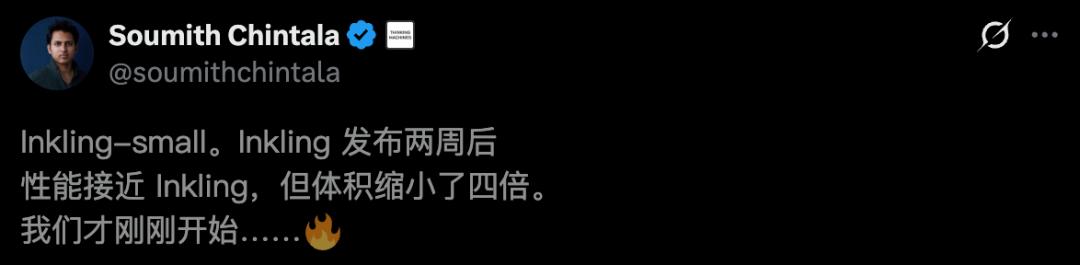
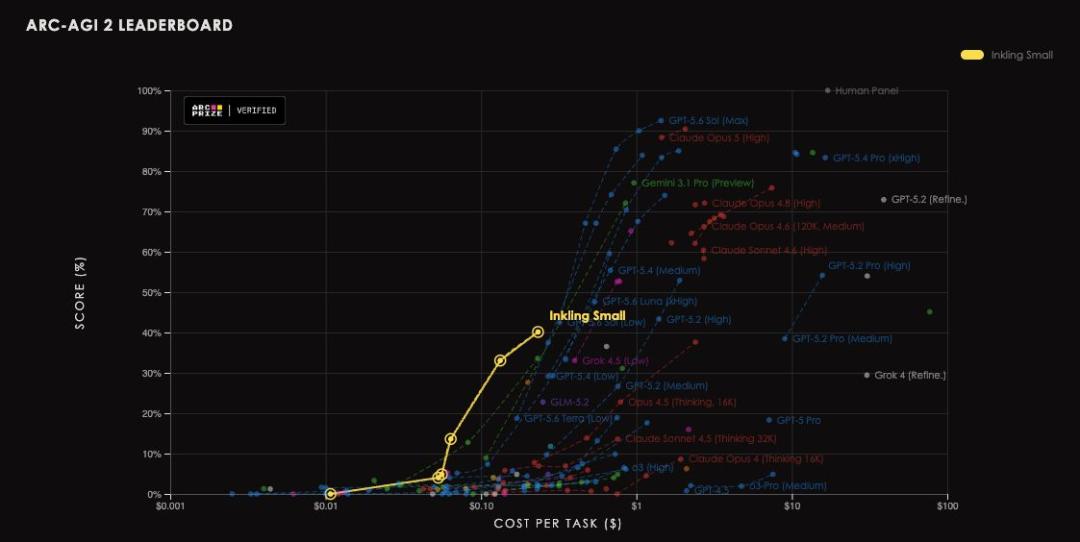
On ARC-AGI-2, Inkling-Small refreshes the open-source SOTA record
Looking back at Thinking Machines in recent days, the development of events has been full of twists and turns.
Just two days after co-founder Li Weng officially announced her departure, OpenAI confirmed her return — leading the team to tackle "Recursive Self-Improvement" (RSI).
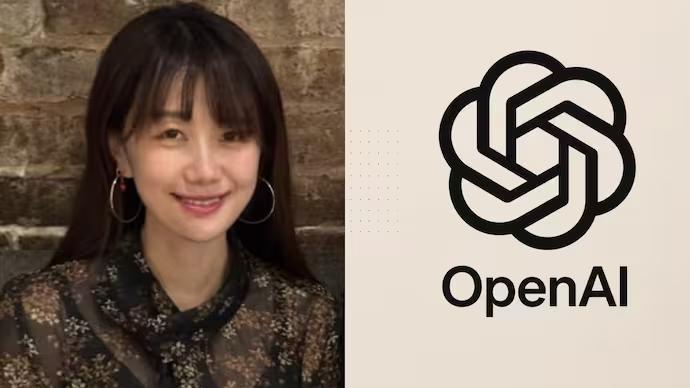
Only on the third day, this company which had just lost a core key figure directly released the full weights of its new model.
The brand new Inkling-Small is here, 276B beats trillion-parameter models
According to the official announcement, Inkling-Small is a model with MoE architecture, with a total of 276 billion parameters and 12 billion activated per inference.
Compared with the first-generation Inkling, its size is directly reduced to a quarter.
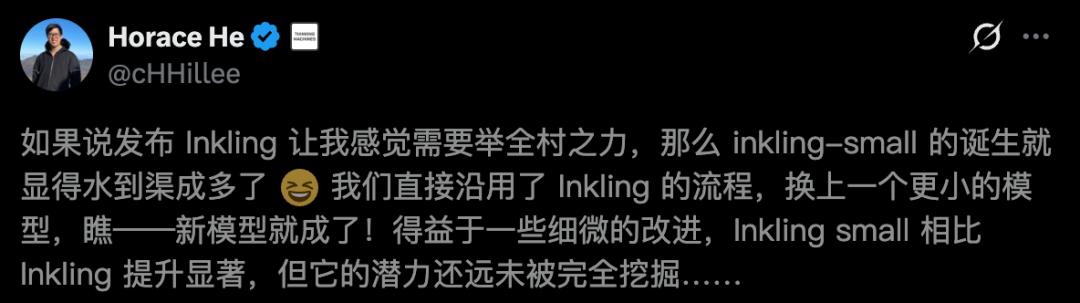
As Horace He, the Pytorch guru, put it, "Inkling-Small doesn't need to mobilize all resources, it can be built by directly reusing the previous generation of technologies."
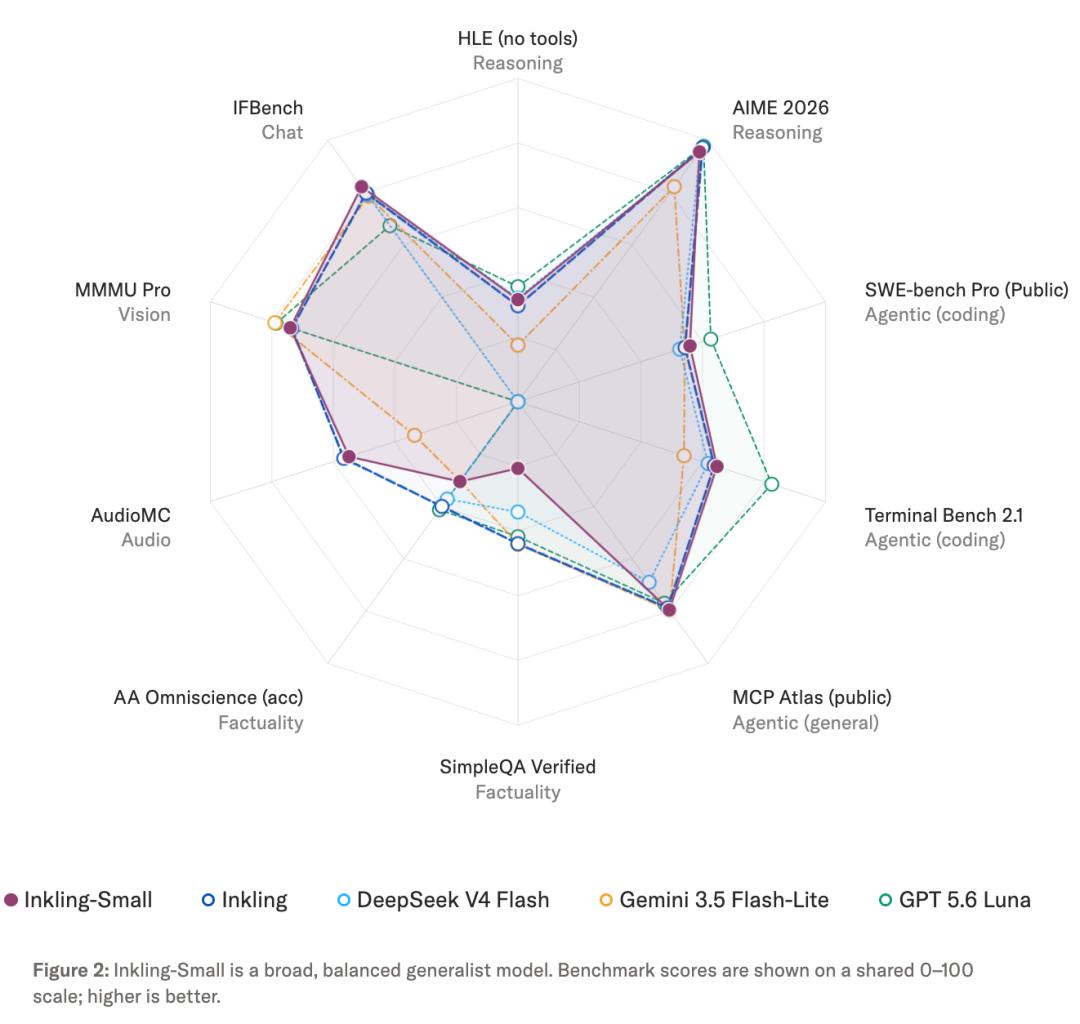
The most impressive part is that although its size is reduced, its overall capability has been significantly improved.
In benchmarks of mathematics, reasoning, agent coding and multimodality, Inkling-Small is comparable to or even surpasses Inkling and DeepSeek V4 Flash.
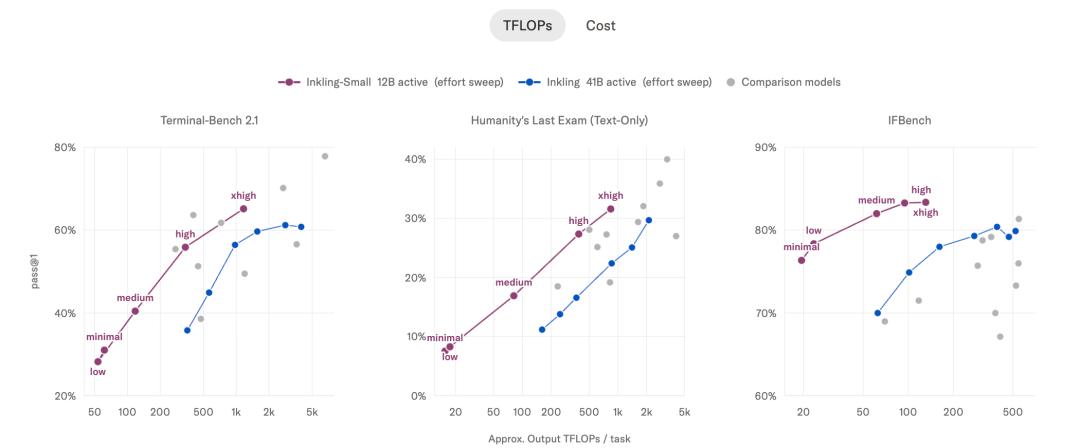
In the three core indicators of HLE, Terminal-Bench and IFBench — Inkling-Small delivers higher performance per FLOP than Inkling.
It can be seen that the curve of Inkling-Small is completely above that of Inkling throughout the process.
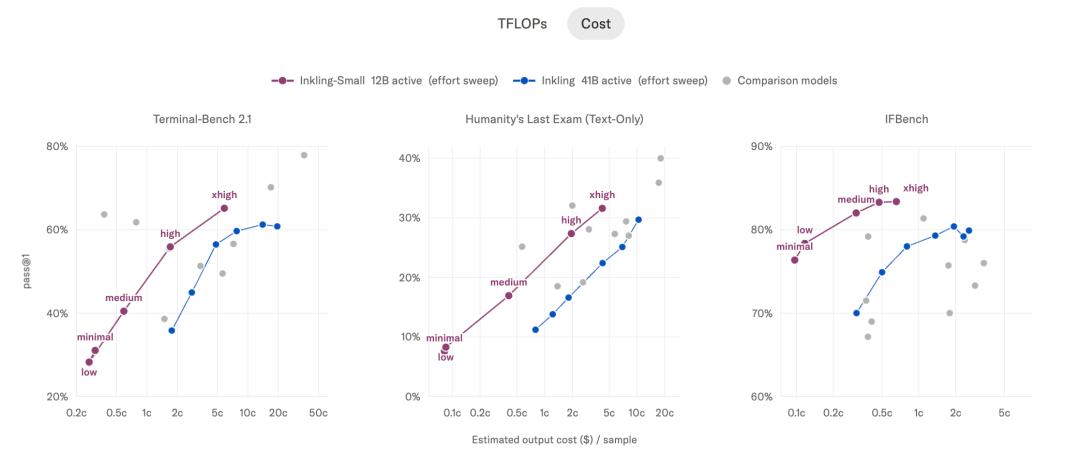
It hardly falls behind in multimodal tasks either. In chart understanding, visual reasoning, speech understanding and long audio reasoning, Inkling-Small is "close" to the original version in evaluation, but at a much lower cost.
The results of other benchmark tests are as follows:
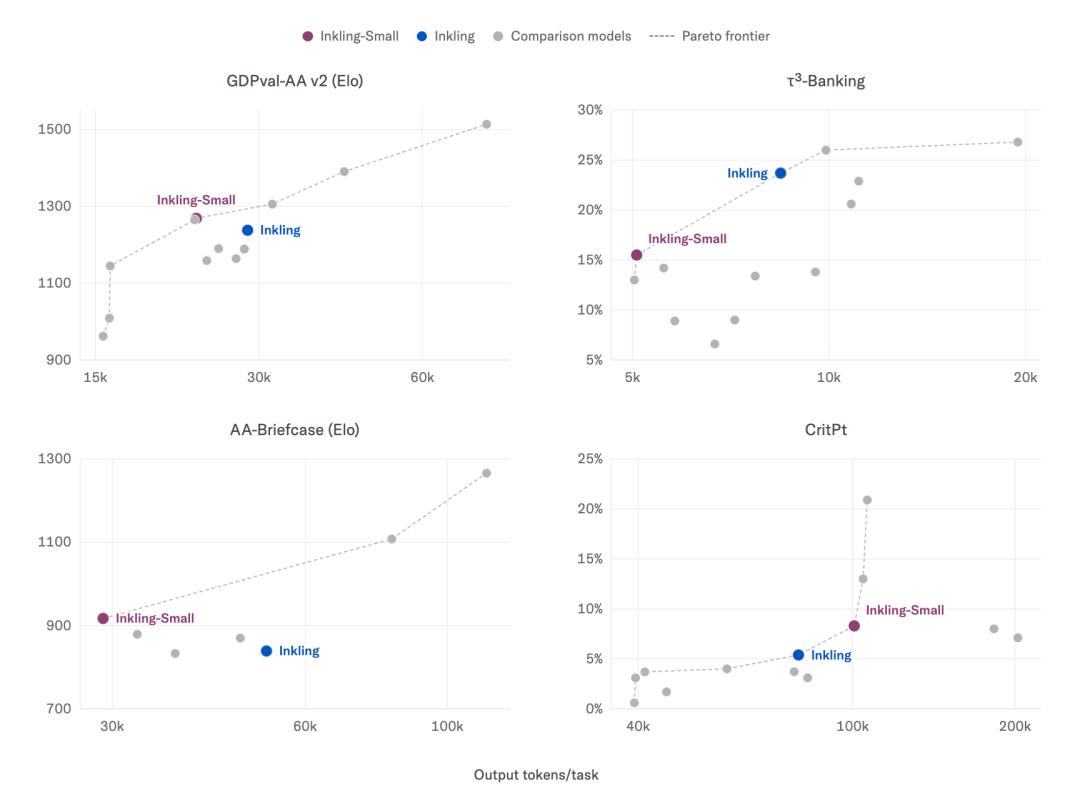
A model with only a quarter of the size completely outperforms its older brother in reasoning and agent tasks.
All post-training details are made public
As for how this is achieved, the official has described the method in great detail, and there are two key steps.
The training of Inkling-Small started later than that of Inkling, so it fully learned from all the pitfalls encountered in the previous round —
The ratio of pre-training data was adjusted, and the machine learning recipe was further refined.
More importantly, there are two operations.
The first step is to use Inkling as the teacher for on-policy distillation, to generate a preview checkpoint first.
The second step is to run agent coding reinforcement learning for a full two weeks from this checkpoint. Thus the result of "the student surpasses the teacher" is achieved.
It only took two weeks to close the gap and even overtake.
This means Thinking Machines has directly established a production line that can iteratively launch new models. The first model is a work, and the second one is proof of production capacity.
12 Billion Activation Parameters, the Real Watershed
For the vast majority of developers, what they really care about is whether they can actually use it.
The original Inkling has a very high threshold. The minimum requirement for BF16 checkpoint is 2TB of aggregated video memory —
The sample configuration is 8 B300s or 16 H200s; even if switched to the NVFP4 quantized version, it still requires at least 600GB.
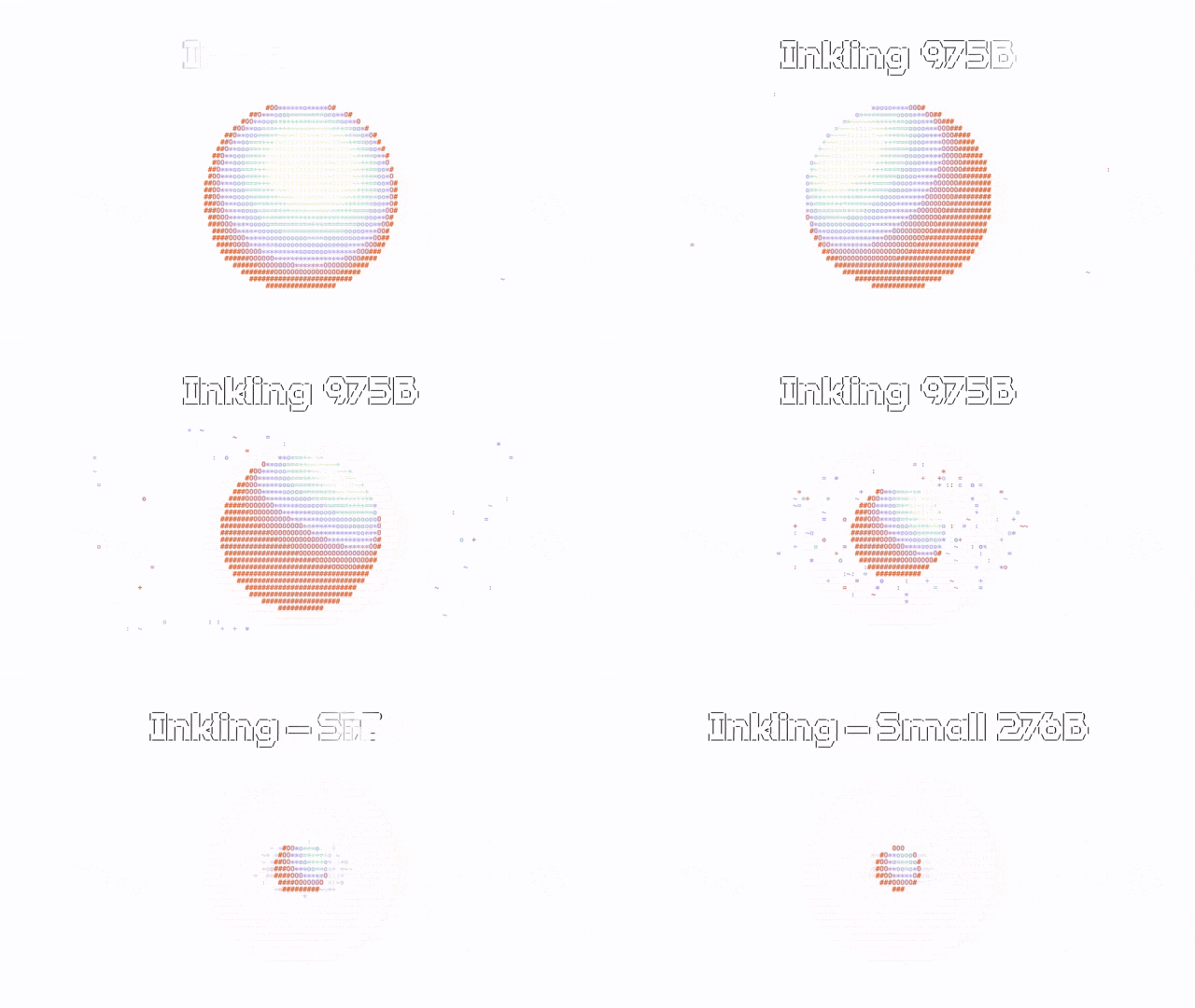
Inkling-Small has significantly lowered this threshold.
LMSYS put it straightforward: 276B total parameters with 12B activation is the sweet spot for reinforcement learning, making both LoRA and full-parameter training "accessible".
Model customization that used to be exclusive to large tech companies can now be truly trained into their own assets by a medium-sized team.
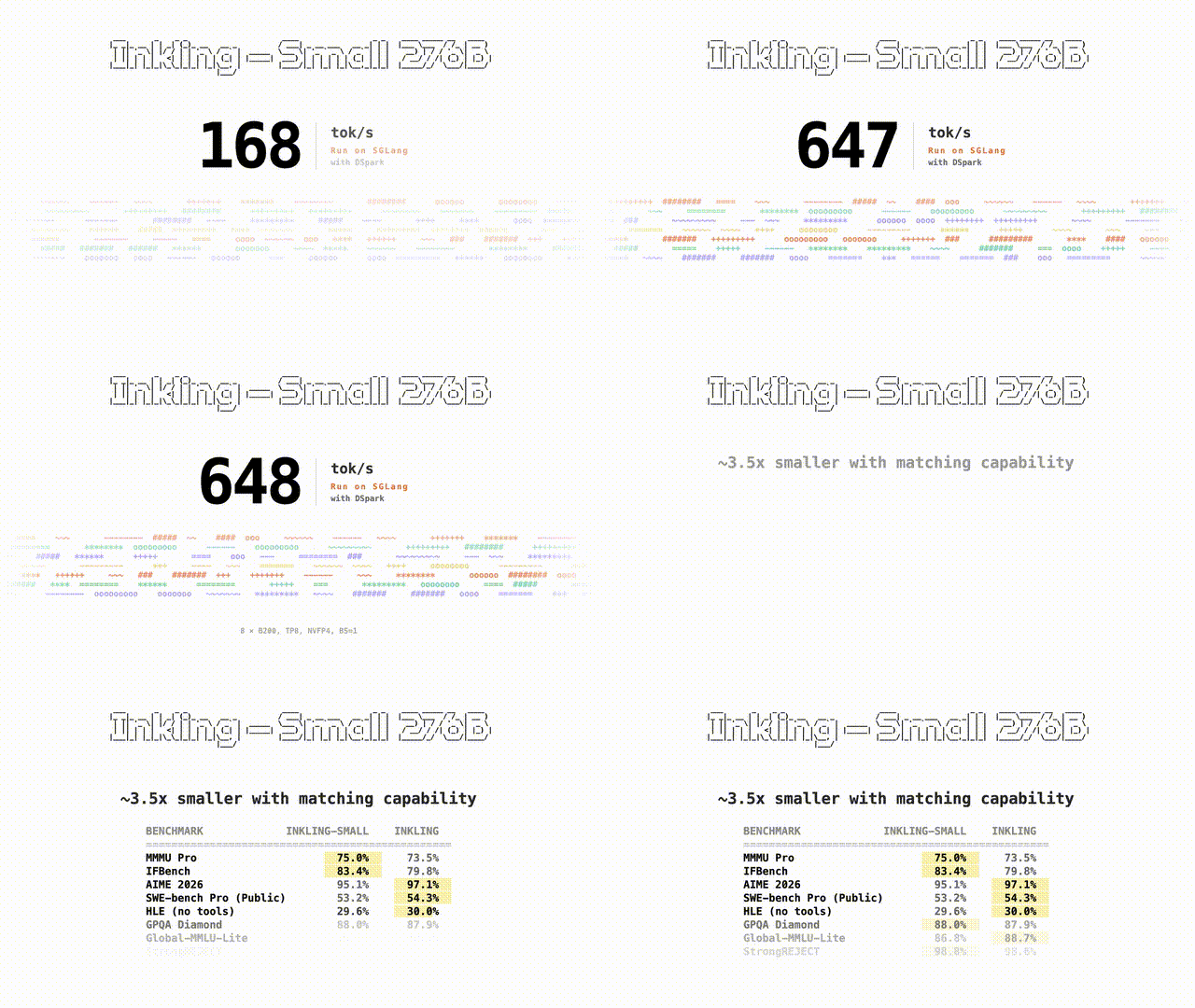
Actual tests show that in the same environment with 8 B200, TP8, NVFP4 and batch size 1, running Inkling-Small with SGLang can reach 648 tok/s decoding speed with DSpark enabled, and 288 tok/s without it.
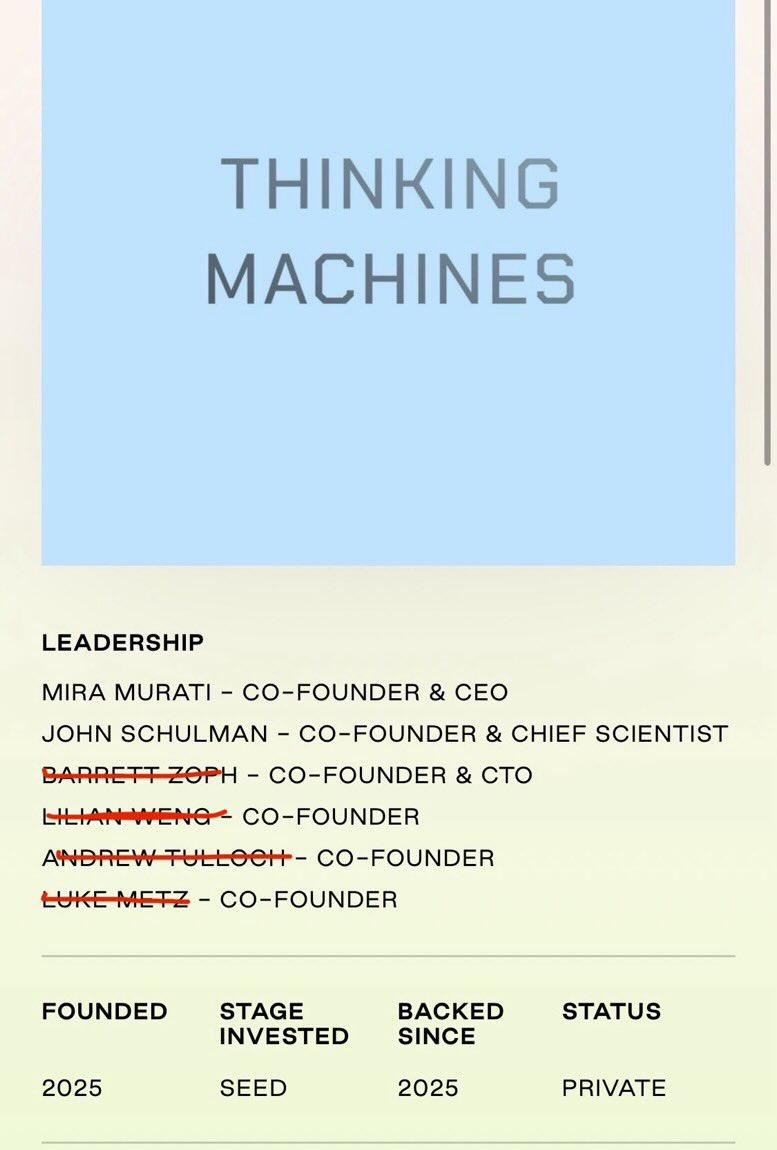
Four of the six co-founders have left, but models are being launched faster and faster
In February last year, Thinking Machines made a stunning debut with a six-person "OpenAI Dream Team" roster:
Mira Murati, John Schulman, Barret Zoph, Li Weng, Andrew Tulloch, Luke Metz.
At that time, they held an incredible seed round of 2 billion US dollars with a valuation of 120 billion US dollars.
No one could have imagined that the $500 billion valuation financing round in January this year eventually fell through, marking the beginning of a turning point.
Now, only Murati and Schulman remain in the six-person team.
More interestingly, among the four who left, Zoph and Metz successively returned to OpenAI, and now Li Weng has become the third one.
A company founded by OpenAI "rebels" ultimately failed to prevent its core talents from being pulled back by OpenAI's gravitational field.
But what's really full of drama is the team's response when facing turmoil.
On July 15, Thinking Machines, which had been silent for 17 whole months, finally released its first large model Inkling.
Less than two weeks later, Li Weng announced her departure; just three days later, the second open-source model with full weights was launched right after.
Talents are leaving at an accelerated pace, while models are being iterated at an accelerated pace.
These two diverging curves have become the most representative scene in the AI industry.
Perhaps this is the only way leading to ASI: no matter how few people are left, the wheel of machines moving forward will only spin faster and faster.
References:
https://thinkingmachines.ai/news/inkling-small/
This article is from the WeChat official account "AI Era", author: ASI Revelation, published with authorization from 36Kr.