Eliminating 320,000 weeds with lasers in one hour: Chinese agriculture no longer needs to envy the United States
Ever since the emergence of farming, weed control in fields has become an essential task.
With the passage of time and the advancement of agricultural technology, this arduous work has gradually evolved from manual weeding to mechanical weeding and chemical weeding.
Recently, laser weeding has been promoted across China.
The technological content of China's agriculture is getting increasingly higher.
Laser Weeding
Simply put, laser weeding refers to the use of high-energy laser beams to precisely remove weeds in farmland.
The working principle of laser weeding is not complicated, which is essentially burning weeds.
Different from the earliest slash-and-burn cultivation, laser weeding features precise targeted burning that follows the logic of "identification first, then burning".
Equipped with a high-definition camera, the laser device scans the farmland in real time, and accurately distinguishes crops from weeds within milliseconds through an AI deep learning model.
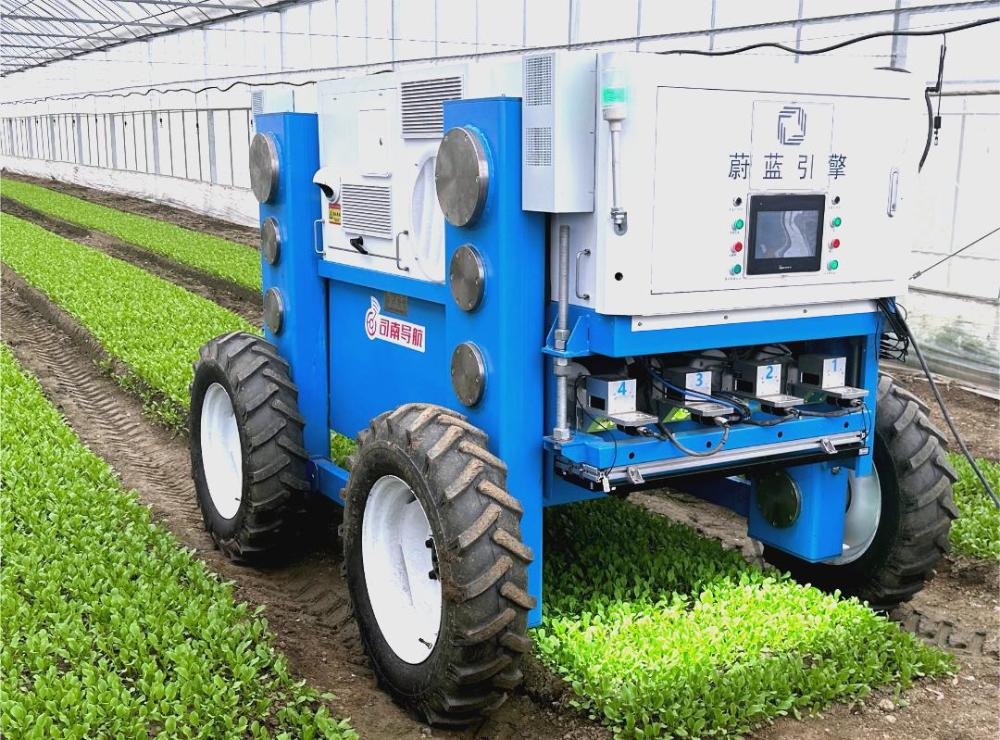
Laser weeding device in operation
After identifying the targets, the high-energy laser beam sweeps the weeds within 50 or 100 milliseconds.
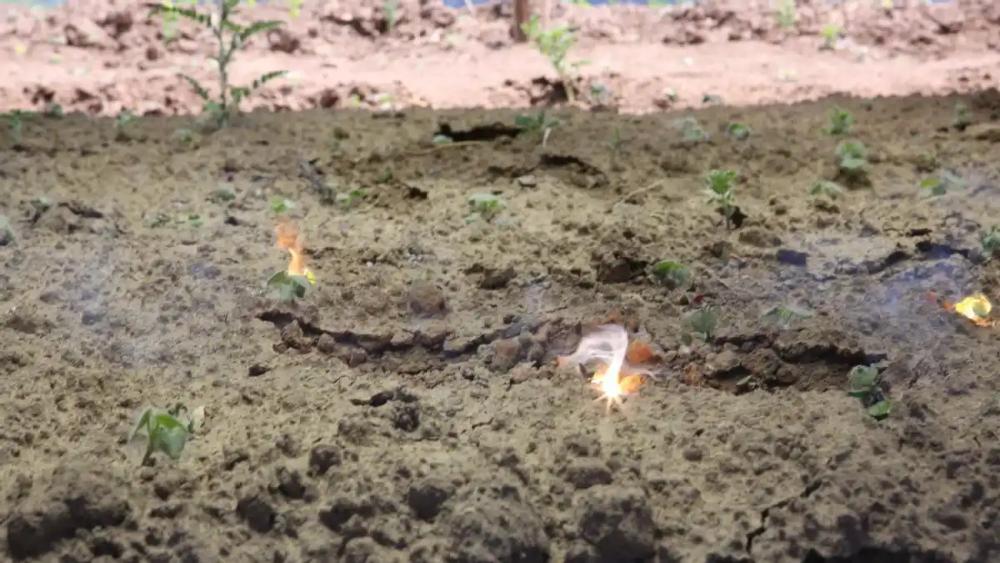
High-performance unmanned laser weeding robot from Inner Mongolia Bazhua Intelligent Technology Co., Ltd. performs high-precision removal of weeds
The huge energy of the laser instantly evaporates and gasifies the moisture in weed cells, destroying chlorophyll and cell structures and causing the weeds to die.
The entire process causes no harm to crops or soil at all.
Many sci-fi movies have similar scenes of "lightsaber" cutting, and similar examples also exist in real life.
In 2023, a video of "power supply bureau using laser cannons to prune branches" went viral on the internet. The machine in the video emitted blue light, and the branches in the distance broke off immediately. Many netizens said it was "science fiction coming into reality".
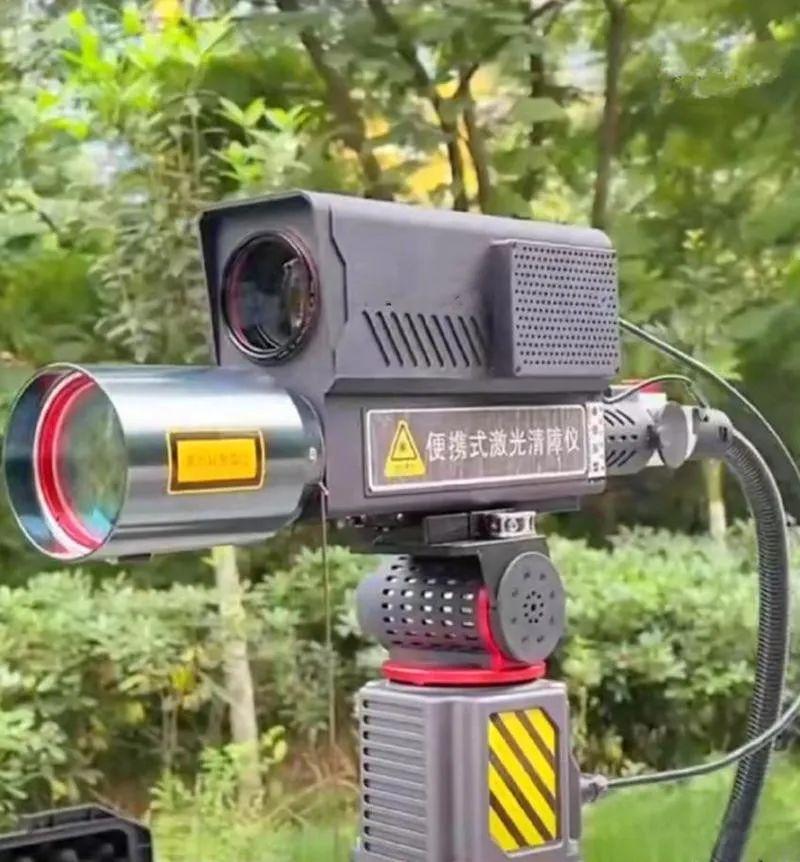
Portable laser obstacle remover for cleaning dead branches and pruning branches
The application scenarios of laser in farmland are not limited to weeding. In Changji, Xinjiang, the world's first cotton laser topping robot was officially unveiled this month.
This cotton laser topping robot, developed by Xinjiang University in cooperation with Xinjiang Jimu Robot Technology Co., Ltd., is equipped with a solid-state LiDAR system and integrates leading LiDAR and vision fusion technology, making a major breakthrough in navigation accuracy and environmental adaptability, and pushing the technology of cotton topping robots to a new level.
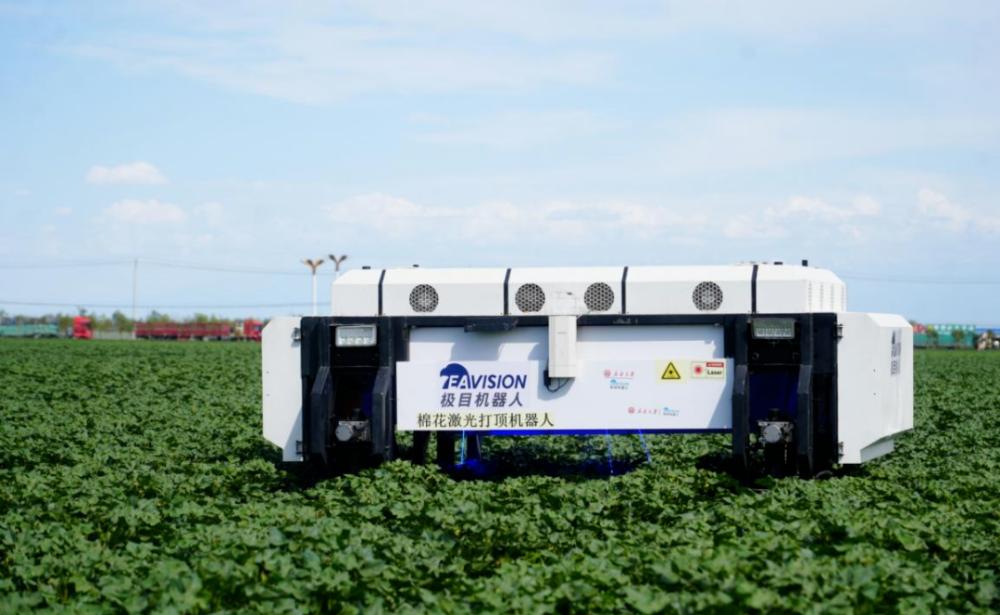
Cotton laser topping robot performing topping operation on cotton
Laser weeding devices have high accuracy and good efficiency.
In terms of precision, the weed removal rate has generally stabilized at over 95%, while the seedling damage rate is lower than 0.1%, far lower than that of traditional mechanical weeding. The entire process from image input to laser weeding only takes 5 milliseconds.
In terms of efficiency, a device with a single laser head can remove about 10,000 weeds per hour.
If the number of laser heads is increased to 32, 320,000 weeds can be removed per hour. In large-scale operations, the complete set of equipment has achieved the excellent result of completing weeding work on nearly 100 mu of land within one day.
Compared with traditional weeding methods, laser weeding overcomes three long-standing problems of severe chemical pollution, high labor cost and high seedling damage rate of mechanical weeding at one stroke, and also has the advantages of high efficiency and no residue.
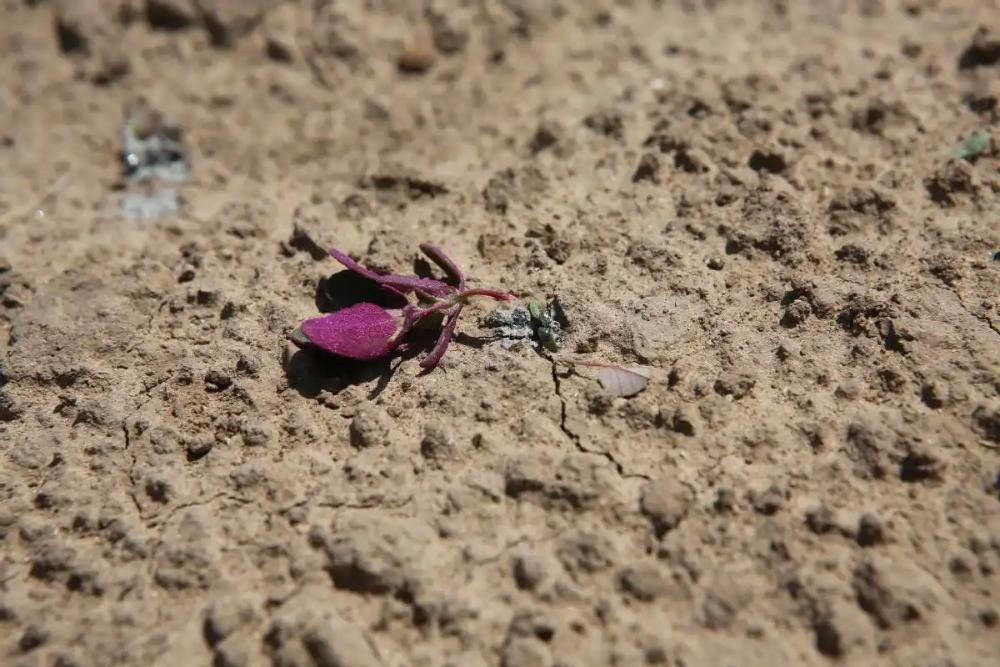
Weed seedlings cut off by laser near the root
It not only avoids disturbing the soil, but also protects soil structure and microorganisms, and is especially suitable for high value-added organic crops and cash crops such as Chinese medicinal herbs.
More impressively, laser weeding is not affected by factors such as weather, and supports 24-hour all-weather operation.
Despite the large initial investment, the device can quickly adapt to the environment through the evolution of AI algorithms, which greatly reduces the cost on the whole.
Growing from Scratch
The history of laser weeding is not long.
In 2022, the US company Carbon Robotics officially launched the automatic laser weeder, marking that this technology has officially entered the stage of commercial application.
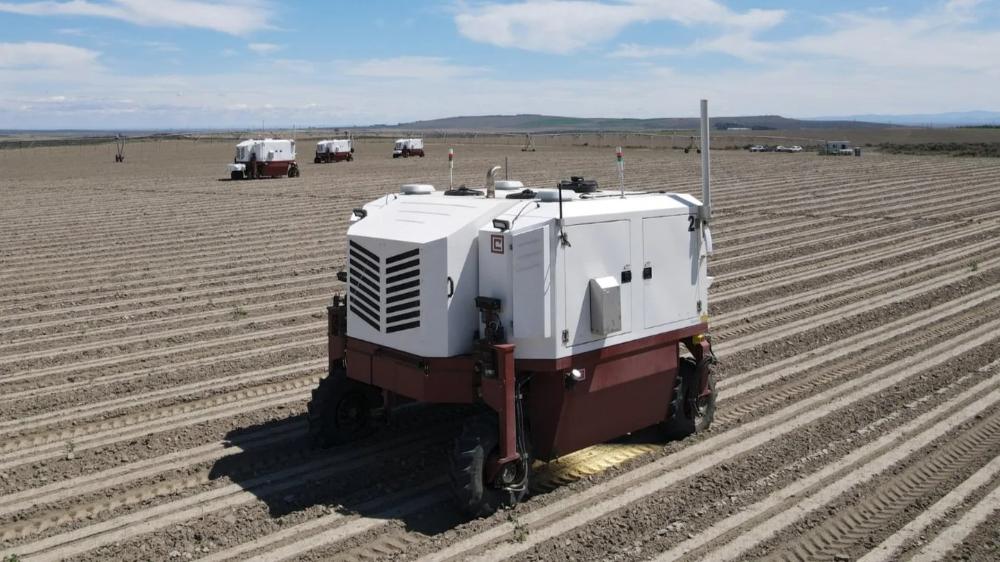
Intelligent laser weeder manufactured by US company Carbon Robotics
Similar products in the US are not only priced as high as 1.8 million US dollars, but also banned from being sold to China.
In the same year, HGTECH cooperated with the State Key Laboratory of Robotics and System of Harbin Institute of Technology to develop domestic laser weeding robots, launching the localization process in this field.
In June 2024, China's first all-weather intelligent laser weeding robot jointly developed by the two sides carried out field trials in Aihui District, Heihe City.
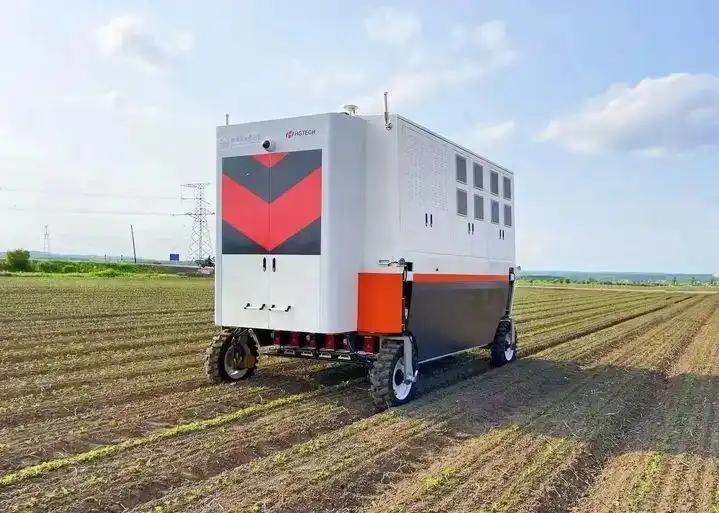
China's first laser weeding robot
Last week, the AI laser weeding robot from HGTECH has been officially put into large-scale production and application in Mingshui County, Suihua City, Heilongjiang Province.
Adopting the integrated technology of "laser + AI + robot", this device marks the key implementation of China's smart agricultural equipment in the field of organic planting.
At present, the global laser weeding market has formed a multi-competition pattern where the US and Europe are the pioneers, and China is a strong follower.
In 2025, the global market sales of laser weeding robots reached 133 million US dollars. It is expected to reach 247 million US dollars by 2032.
As a large agricultural country, the scale of China's weeding robot industry has huge potential.
In the Northeast China region alone, for 237 million mu of corn planting, the market demand for laser weeding equipment is expected to be between 700,000 and 1.4 million units, and the industrial scale is expected to exceed 100 billion RMB.
Growing from scratch, Chinese enterprises have poured into this track in the past three years.
The reason why China's laser weeding technology can develop so fast is that we have taken a clear path of key technology breakthroughs by scientific research institutions and industrialized implementation through university-enterprise cooperation.
In July 2023, Changchun University of Science and Technology and Ningbo Yibin Electronic Technology Co., Ltd. launched the farmland laser weeding equipment project.
In November 2023, the first-generation laboratory prototype was successfully manufactured. In May 2026, the fourth-generation all-electric driven, modular designed engineering prototype was finalized. Combined with AI visual recognition technology, the crop recognition rate exceeds 99.5%, the dynamic positioning accuracy reaches 2mm, and the operation efficiency is more than 50 times that of manual work. With excellent field test results, it is expected to be mass-produced by the end of this year.
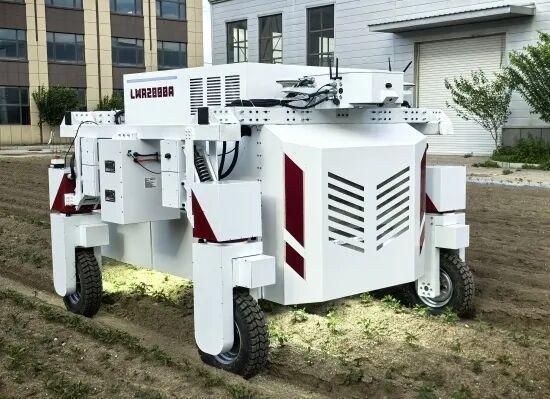
The fourth-generation intelligent laser weeder jointly developed by Changchun University of Science and Technology and Ningbo Yibin Electronic Technology Co., Ltd.
On January 11 this year, the Shunda laser weeding robot and new high-magnesium alloy material project, with core technical support provided by Nanjing Institute of Agricultural Mechanization, officially started construction in Jingjiang, Jiangsu Province. The project plans a total investment of 1.01 billion yuan, with an expected annual output of 1,000 sets of laser agricultural robots, as well as other high-magnesium alloy parts, agricultural machinery and molds.
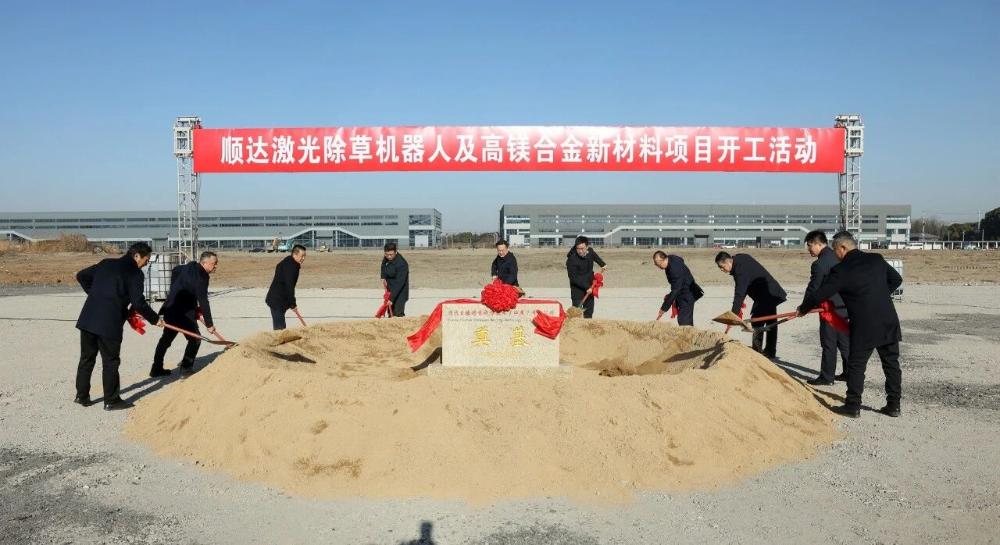
Project groundbreaking site
Chinese R&D teams have also overcome technical difficulties one by one in accurately distinguishing crops and weeds, achieving precise aiming and efficient operation.
Guan Zhuohuai, associate researcher of Nanjing Institute of Agricultural Mechanization, once introduced that most of the laser weeding robots developed by domestic manufacturers use semiconductor lasers. Compared with CO₂ lasers that may cause large-area burns, their wavelength is more easily absorbed by weed chlorophyll, enabling targeted killing of individual weeds.
With the help of laser scanning positioning ablation and meristem 3D positioning technology, the machine can achieve "shooting while moving" during operation.
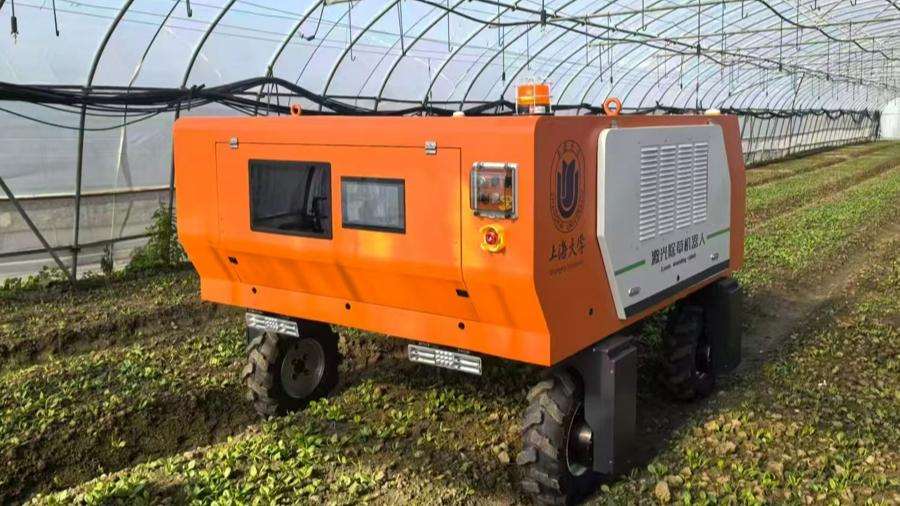
Intelligent laser weeding robot developed by the team of Shanghai University
For different farming scenarios of different crops, Chinese teams have also developed different models suitable for large farms covering thousands of mu and small and medium-sized farmers.
After technological breakthroughs, to enable the equipment to quickly move from the laboratory to mass production, ultimately, it still relies on China's strong precision manufacturing and supply chain integration capabilities.
Relying on the mature industrial chain, the price of domestic equipment has been greatly reduced.
A complete set of US laser weeding machines is quoted at 1.1 to 1.6 million US dollars. The price of domestic equipment is controlled within 1 million RMB. Cuiling Agri-Tech has even launched a rental mode of laser weeding equipment, which only costs 50 yuan per mu of land in one planting cycle. This price is only a quarter of the 200 yuan per mu cost of manual weeding.
Compared with chemical weeding, the cost of laser weeding is equal to the cost of herbicides at 30-50 yuan per mu, but spraying herbicides also requires labor or machinery, which incurs additional costs.
If long-term factors such as environmental protection and soil purification are taken into account, the advantages of laser weeding become even more prominent.
With technical strength and price advantages, domestic laser weeding equipment has opened up overseas markets.
In early July this year, Laser Weeder H8, China's first self-developed towed large-field intelligent laser weeding robot from HGTECH's subsidiary HG Agri-Tech, officially departed for Australia, marking a zero breakthrough in the large-scale export of complete machines of domestic high-end intelligent agricultural machinery in the physical weeding track.
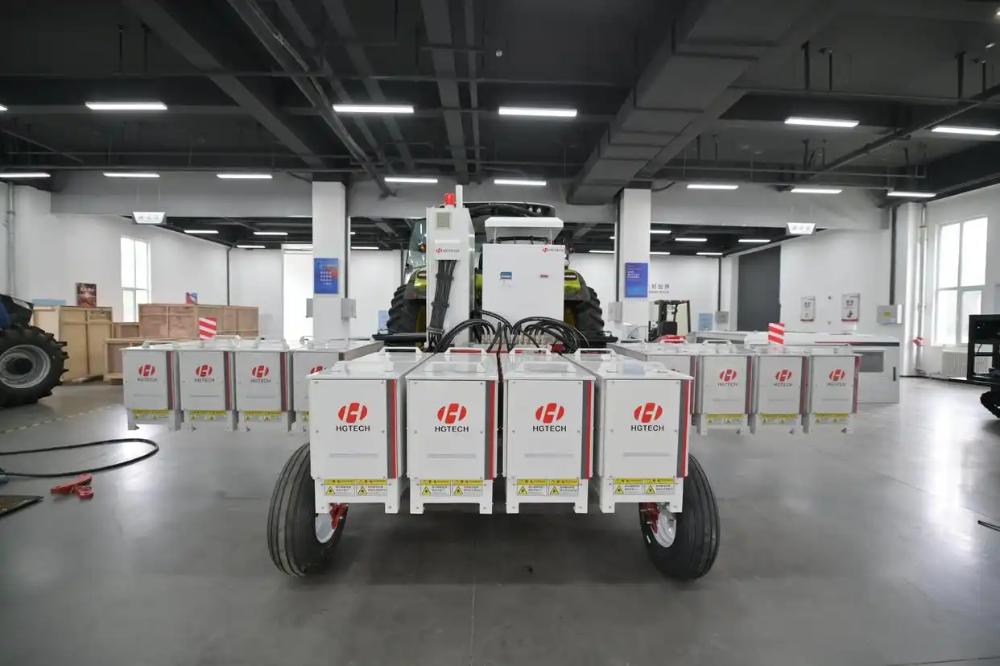
Laser Weeder H8 ready for export
Relying on the huge market, China's supply chain advantages have been brought into full play. Once the technology breaks through, the cost of laser weeding robots will drop rapidly. The reduction of cost further stimulates the application of the market, and the demand expands again, forming a positive cycle.
Technological Content
The vigorous development of laser weeding technology and related equipment is an epitome of China's agricultural technology wave.
From the proposal of accelerating the use of information technology to build modern agriculture in 2013, to the emphasis on developing digital agriculture in 2019, and then to the deployment of the No.1 Central Document in 2023 to strengthen the support of agricultural science, technology and equipment and build an agricultural powerhouse, the government's policies on agricultural technology advancement have been implemented step by step.
In 2025, the development of new quality productive forces in agriculture in light of local conditions was written into the No.1 Central Document for the first time.
In 2026, the No.1 Central Document further required promoting the integration of artificial intelligence and agricultural development, and expanding application scenarios such as drones, the Internet of Things and robots. The laser weeding robot is the direct embodiment of this policy in farmland.
The increase in technological content is obvious to all.
The contribution rate of China's agricultural scientific and technological progress