Among the five provinces and municipalities in Southwest China, almost only the medical enterprises in Chengdu can secure financing.
The medical investment and financing landscape in Southwest China is undergoing tremendous changes.
Exclusive data provided by Tianyancha to Yixian Insight shows that from January 1, 2026 to July 29, 2026, a total of 19 public medical investment and financing events occurred in the five provincial-level administrative regions (provinces/autonomous regions/municipalities directly under the central government) of Sichuan, Yunnan, Guizhou, Tibet and Chongqing, with 19 public medical medical investment and financing events in total.
Among them, 18 financing events took place in Chengdu, Sichuan, and 1 in Luzhou, Sichuan.
There were 0 financing events in Yunnan, Guizhou, Tibet and Chongqing.
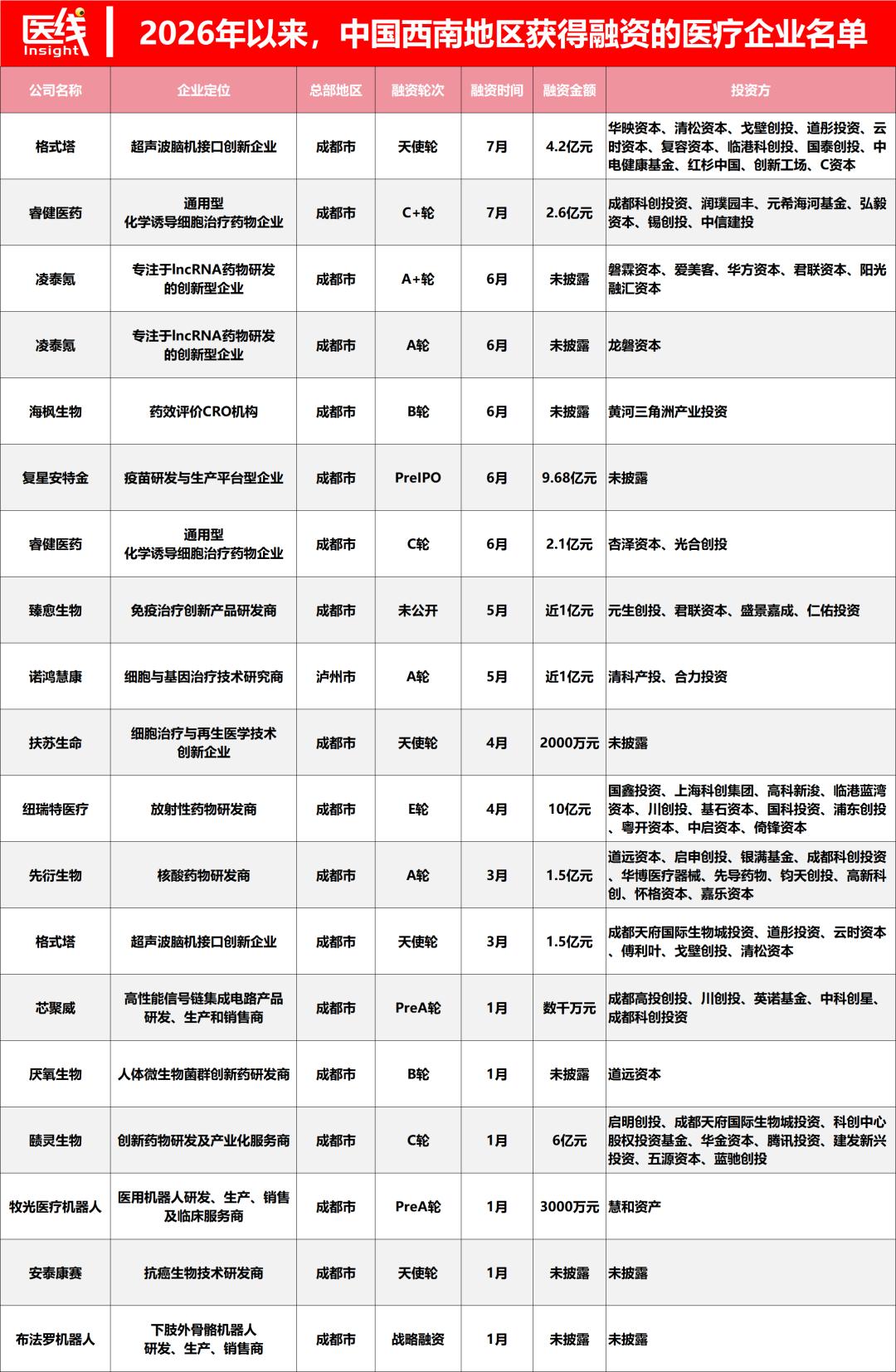
Information Source: Tianyancha
What is more notable is the direction of capital flow. Gestalt secured 420 million yuan in financing to cut into the field of ultrasound brain-computer interface, Newray Medical completed 1 billion yuan in Series E financing, Letaik focuses on lncRNA nucleic acid drugs, Rigene Pharma advances iPSC-derived cell therapy, and medical robot and smart device projects have also attracted widespread attention at the same time.
This financing list thus goes beyond the significance of amount and quantity. For medical enterprises to go through laboratory research, animal experiments, clinical trials, regulatory approval and market application, they require long-term relay support from scientific research, clinical practice, industrial platforms and professional capital.
By investing capital in medical innovation enterprises in Chengdu, the capital market is essentially voting for this relay mechanism.
Then why can Chengdu stand out far ahead of other cities in Southwest China? And how will it support these projects facing the next ten years?
Financing Profile: Popular Medical Tracks All Light Up in Chengdu
Looking through the financing list of the first 7 months of 2026, you will find that brain-computer interface, nucleic acid drugs, cell therapy, radiopharmaceuticals, medical robots and smart devices all appear on the list at the same time.
It can be seen that the narrative of Chengdu's medical industry is shifting from "resource concentration" to "innovation agglomeration".
First, let's look at the brain-computer interface field.
As a cutting-edge enterprise established only on January 1 this year, Gestalt, the first domestic enterprise focusing on ultrasonic brain-computer interface, completed 150 million yuan in angel round financing and 420 million yuan in angel+ round financing in March and July respectively.
Brain-computer interface is regarded as an important direction for the intersection of artificial intelligence and life sciences. The whole world is still in the early exploration stage, and multiple technical routes are competing with each other.
Compared with the invasive path, the ultrasonic brain-computer interface tries to realize more accurate and safer human brain regulation and interaction with the help of ultrasonic technology. The cutting-edge nature of this technology has opened up new imagination space for Chengdu's medical technology sector.
The team background of Gestalt is also very notable. Its founding team includes Peng Lei, as well as Chen Tianqiao, founder of Shanda Group and founder of Tianqiao Institute for Brain Research.
It is worth mentioning that Gestalt has two headquarters — the Chengdu Global Headquarters and the Shanghai Headquarters. The Shanghai headquarters is positioned as the NeuroAI Innovation Center, focusing on the R&D of AI brain foundation models, integration of global innovation resources, and continuous connection of global brain science and artificial intelligence innovation resources.
While the Chengdu Global Headquarters is positioned as the R&D and production center, focusing on the core technology R&D, clinical transformation and equipment manufacturing of ultrasonic brain-computer interface, and it is adjacent to the Incubation Park of Chengdu Tianfu International Bio-city, Liandong U Valley·Tianfu International Bio-city Industrial Complex and other industrial carriers.
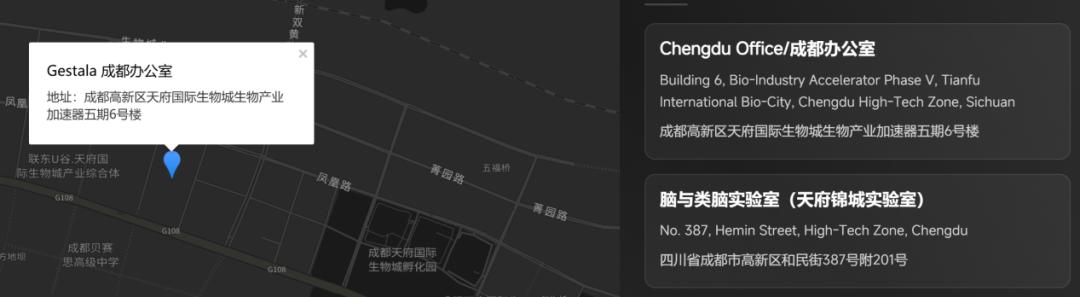
Schematic diagram of the geographical location of Gestalt's Chengdu office, Image Source: Gestalt official website
This sends a clear signal that Chengdu has begun to undertake the exploration of next-generation medical technologies by top industrial talents across the country. The brain science entrepreneurship landscape that used to be more concentrated in Beijing and Shanghai is extending to the western region.
Next, let's look at the biomedical field.
Innovative drugs are the touchstone of the maturity of a city's medical industry. They have long R&D cycles, large capital investment and highly uncertain results, and every link requires the support of scientific research, clinical practice and long-term capital.
In Chengdu's financing list this year, innovative drug enterprises occupy an important position.
Letaik, which announced the consecutive completion of Series A and Series A+ financing in June this year, is a typical scientist-founded enterprise focusing on lncRNA nucleic acid drug R&D.
After mRNA vaccines promoted the whole world to re-recognize nucleic acid drugs, competition in the industry has gradually deepened, and delivery, safety and commercialization have become more critical industrial thresholds.
Letaik focuses on the development of long non-coding RNA drugs and deploys related technology platforms, hoping to break through the key bottlenecks in the R&D process.
Up to now, Letaik has built three major platforms: a novel transdermal delivery platform, a highly specific pan-tumor targeted delivery platform, and a central nervous system (CNS) delivery platform. It is expected to launch the first clinical trial in 2026, and plans to complete human POC verification in 2027.
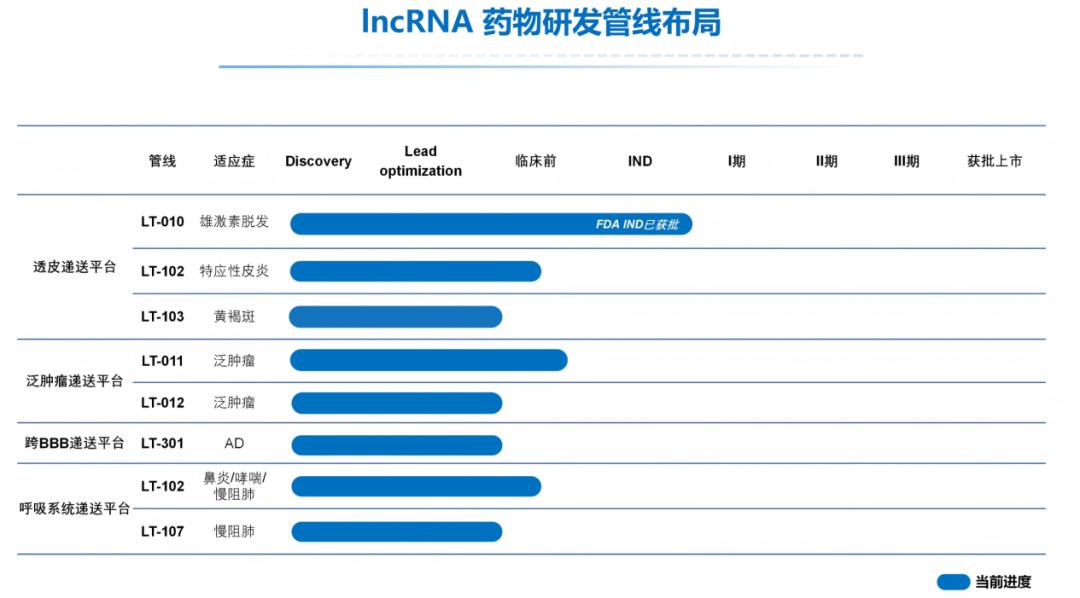
Layout diagram of Letaik's drug R&D pipeline, Image Source: Letaik official website
Rigene Pharma, which secured 210 million yuan in Series C1 financing in early June this year and then obtained 260 million yuan in Series C+ financing in early July, represents Chengdu's exploration in the direction of cell therapy.
Founded in 2017, Rigene Pharma focuses on the R&D of iPSC-derived cell therapy products. Its representative pipeline NouvNeu001 has been granted the Fast Track Designation (FTD) and Regenerative Medicine Advanced Therapy (RMAT) designation by the US FDA.
From CAR-T to stem cell therapy, the global life science industry is extending from traditional small-molecule drugs to cell and gene therapy. The capital's attention to Rigene Pharma also reflects its evaluation of whether Chengdu can participate in the next round of competition in the life science industry.
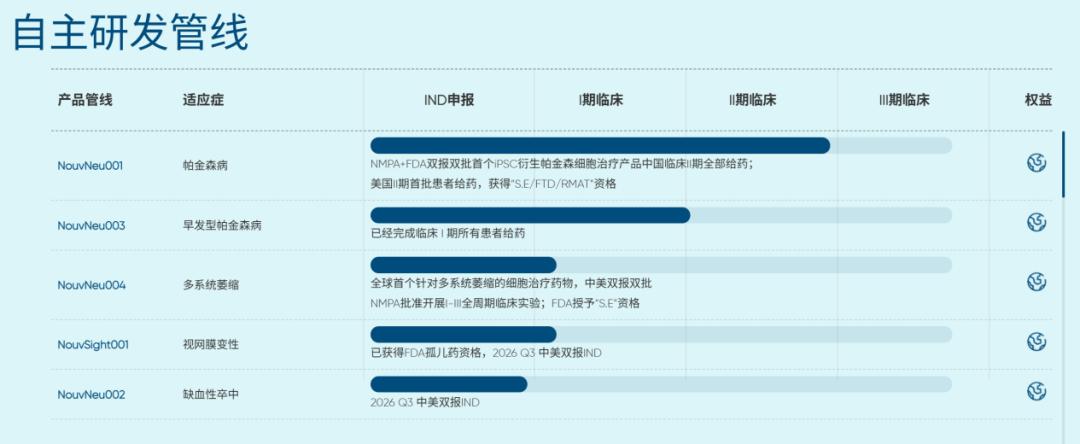
Part of Rigene Pharma's self-developed pipelines, Image Source: Rigene Pharma official website
With nucleic acid drug and cell therapy projects obtaining financing one after another, Chengdu's city label is expanding from a traditional medical center to a life science innovation center.
The radiopharmaceutical track also has a representative enterprise — Newray Medical. This enterprise focuses on radiopharmaceuticals and completed 1 billion yuan in Series E financing at the beginning of this year.
Radiopharmaceuticals connect precision diagnosis and precision treatment, and are of great value in the field of tumor treatment. This track is highly dependent on nuclear technology foundation, scientific research talents, production capacity and clinical resources, and its growth logic comes from long-term accumulation.
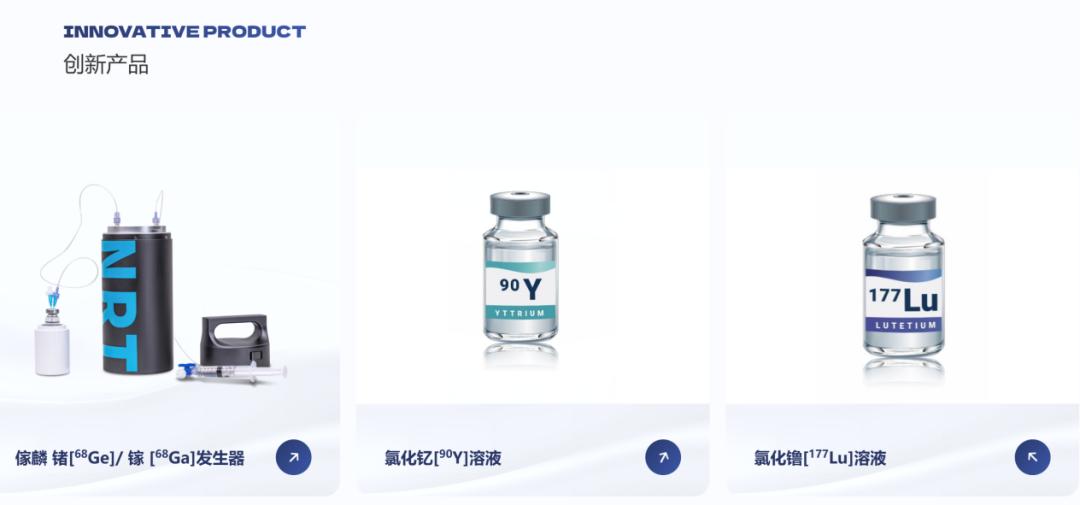
Part of Newray Medical's innovative products, Image Source: Newray Medical official website
Chengdu has the scientific research foundation of the nuclear industry, and also gathers resources of large medical institutions. Newray Medical has thus become a representative sample: the existing scientific research system is looking for commercial outlets, and long-term technological accumulation has begun to be transformed into industrial value.
Finally, let's look at the field of medical-engineering integration.
Muguang Medical Robot, which obtained nearly 30 million yuan in financing in January this year, takes the three core technologies of intelligent robot, stereo vision and 3D AI as the cornerstone, builds three product matrices of medical imaging, intraoperative navigation and surgical robot, and has launched the world's first intelligent ophthalmic optometry imaging robot.
It is understood that the core advantage of Muguang Medical Robot's ophthalmic imaging robot lies in its "non-contact, fully automatic, full-scenario" robotic design, which realizes "locked scanning". Patients can complete the examination without verbal communication or specific postures, no matter they are sitting, lying, held in arms or even lying prone.
It is not difficult to find that the convergence of brain-computer interface, biomedicine, medical-engineering integration and other fields on the same financing list makes Chengdu's medical industry path present stronger integration characteristics.
Consensus of Capital: Willing to Bet on Long-cycle Tracks
Putting the above-mentioned enterprises that obtained financing in Chengdu together, you can see a common point: they all need a long development time.
Brain-computer interface requires long-term R&D, innovative drugs need to go through years of clinical verification, and medical robots need continuous technological iteration.
Financing events are the results. What is really noticed by the capital market is a group of enterprises worthy of long-term betting, as well as the urban environment that supports their growth.
Based on this, the outline of Chengdu's medical innovation ecosystem is gradually taking shape in these long-cycle projects.
First, the scientific research foundation.
Medical innovation is naturally dependent on clinical practice. For a technology to move from discovery to commercialization, it often goes through laboratory research, animal experiments, clinical trials, regulatory approval and market application.
If there is a gap in any link, the growth cycle of the enterprise will be prolonged. Top medical resources therefore constitute the most important infrastructure for a medical innovation city.
Chengdu has a medical resource system with outstanding strength in Southwest China, and West China Medical Center of Sichuan University has long been in the first echelon of the domestic medical field.
The West China system gathers a large number of clinical resources and has long participated in major national medical scientific research projects. For innovative enterprises, this means that technical sources, verification scenarios and cooperation objects can be connected more efficiently within one city.
Taking innovative drugs as an example, discovering therapeutic targets is only the starting point. Subsequently, doctors need to participate in disease research, hospitals need to carry out clinical trials, and patient resources need to support product verification.
These conditions come from long-term construction, so Chengdu has the foundation to support the growth of innovative medical enterprises.
Second, the transformation mechanism.
Hospitals and universities provide resources, and the achievement transformation determines whether resources can be developed into industries. How scientists start businesses and how laboratory technologies are commercialized has always been one of the most difficult links to cross in the medical industry.
In recent years, Chengdu has begun to complete this industrial chain. A number of industrial carriers represented by Chengdu Tianfu International Bio-city, Chengdu Medical City and Tianfu Traditional Chinese Medicine City have undertaken the role of connecting scientific research and industry. They provide office space, and also help scientific research teams establish enterprises, connect capital, enter the industrial chain, and promote innovative products to the market.
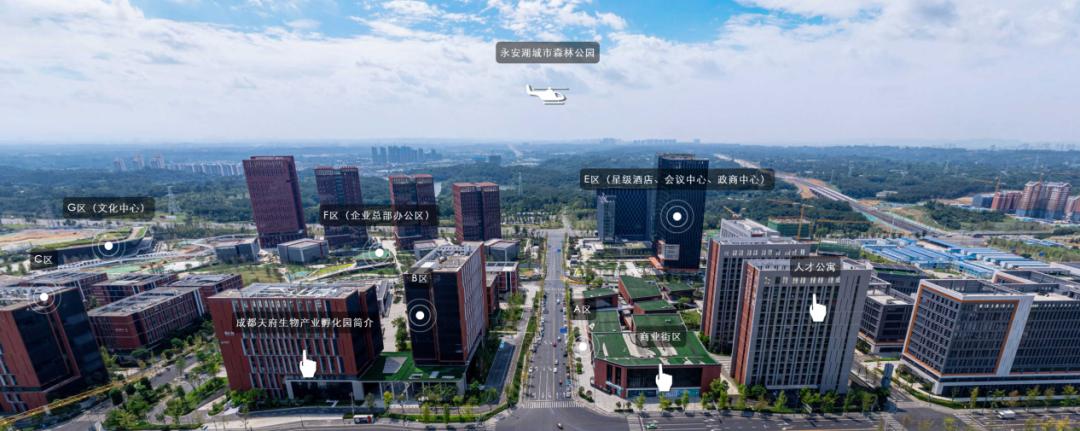
VR aerial photo of Chengdu Tianfu International Bio-city, Image Source: official WeChat account of Chengdu Tianfu International Bio-city
Among them, Tianfu International Bio-city has the most remarkable development momentum in recent years and has become the core area with the most active industrial activities. However, only 5 years ago, this area was still in its initial stage, sparsely populated, forming a sharp contrast with today's prosperous scene.
The emergence of a large number of enterprises such as Gestalt, Letaik, and Rigene Pharma is exactly the result of the gradual maturity of the transformation mechanism: scientific research teams have the opportunity to walk out of the laboratory, companies can obtain financing, products can enter clinical practice, and enterprises can advance to the next stage.
Chengdu is moving from a medical resource center to a medical innovation transformation center.
Third, industrial support capacity.
Future medical development requires life sciences as well as engineering capabilities. Brain-computer interface involves chips, signal processing, artificial intelligence and algorithm models; medical robots rely on mechanical manufacturing, software systems, sensors and clinical applications.
The interdisciplinary collaboration ability is determining the upper limit of a city's medical innovation.
The long-formed foundation of electronic information, biomedicine and advanced manufacturing in Chengdu provides supporting conditions for this integration.
Enterprises such as Gestalt, Corejv, and Muguang Medical Robot have attracted capital attention at the same stage, showing that an integrated medical industrial system of "medicine + engineering + AI" is growing.
Fourth, capital upgrading.
The cycle of medical innovation is often measured in decades. It may take more than ten years for an innovative drug enterprise from its establishment to the launch of its products.
Enterprises need investment institutions that understand the value of technology, and capital that can bear long-term risks and continuously provide industrial resources.
This year's financing list shows that the role of capital in Chengdu is changing. More and more local industrial capitals participate in early-stage medical technology investment, and national investment institutions are paying attention to Chengdu's projects.
Judging from the investment frequency of investment institutions, this change has taken on a more specific outline. In the first 7 months of 2026, a total of 65 investment institutions participated in the financing of medical and health enterprises in Chengdu, making 75 cumulative investments.
At the top of the list are local capitals such as Chengdu Science and Technology Innovation Investment, Chuan Venture Capital, and Chengdu Tianfu International Bio-city Investment, as well as national institutions such as Legend Capital, Gobi Partners, Tsingsong Capital, and Detong Capital.
Among them, Chengdu Science and Technology Innovation Investment ranks first with 3 investments, another 8 institutions have made 2 investments, and the remaining 56 institutions have only made 1 investment. This structure shows that Chengdu's medical projects have obtained extensive capital attention.
<