Develop a diving suit for cockroaches, and then claim that this is to save humanity?
Would you accept being rescued by a swarm of cockroaches if you were in a critical emergency?

Most people would probably choose to meet their maker right away, but now a group of scientists say they have tried to deploy "cyborg cockroaches" in post-disaster rescue operations. Even to make them adapt to all kinds of environments, scientists have recently designed a full set of diving suits for them.
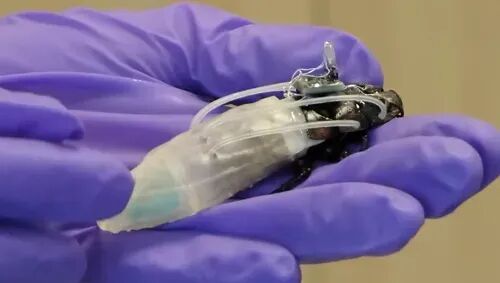
Netizens were stunned after seeing this: cockroaches already have top-tier survival skills and can sneak into every crack, and now they can move freely underwater too. What's the difference between this and making mosquitoes adapt to winter?
01: The Diving Suit for Cyborg Cockroaches
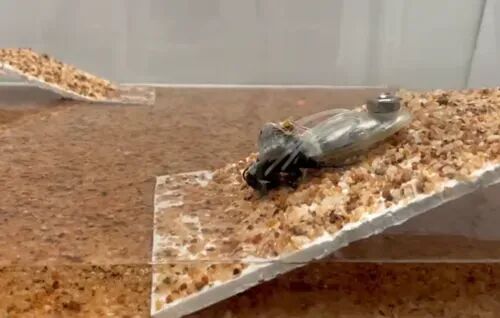
Behind this technology is a team from Nanyang Technological University, Singapore, that has been conducting "cyborg insect" research for more than ten years. The diving equipment they co-developed this time with Waseda University in Japan allows the 6cm-long Madagascar hissing cockroach to survive and move underwater for up to 3 hours.
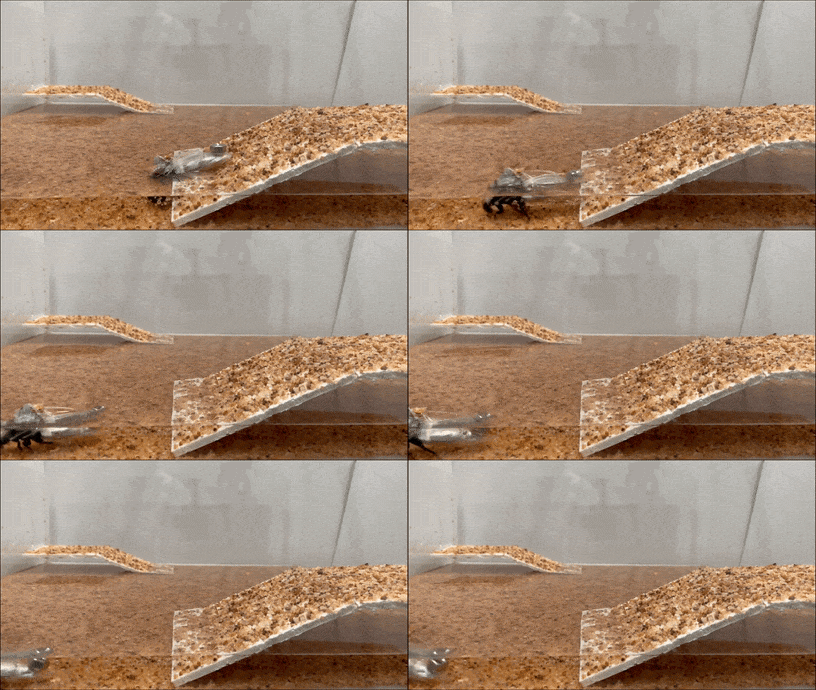
This is almost like equipping them with a cheat code: without this set of equipment, cockroaches can only last a few minutes underwater before suffocating.
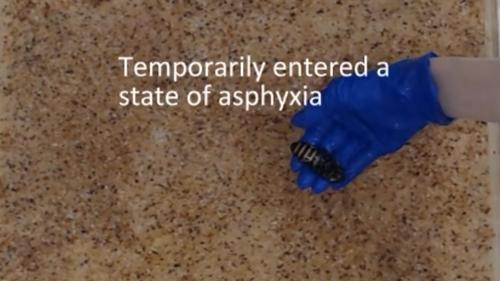
Terrestrial cockroaches have been literally transformed into amphibious cyborg creatures. I always said SpongeBob SquarePants is a "documentary".

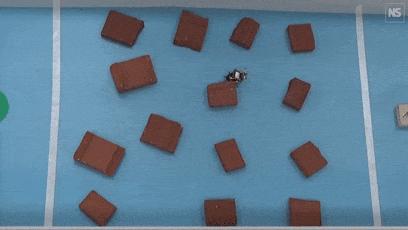
Simply put, the so-called "cyborg cockroach" is a cockroach fitted with a backpack-like electronic controller, which can remotely control its movement through mild electrical stimulation. It is designed to enrich post-disaster search and rescue methods, and they can be remotely controlled to participate in rescue work in narrower spaces.
In fact, "remote-controlled cockroaches" have been running around for many years, but the problem is that previous modifications were only used on the ground and could not go underwater. However, real disaster scenarios are often more complex, with a large number of flooded areas. So to make up for this shortcoming, the research team designed this set of diving equipment.
So what does this diving suit look like? It can't be that they are carrying an oxygen tank underwater, right?
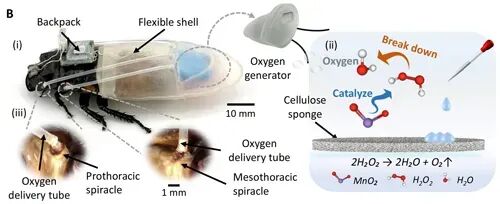
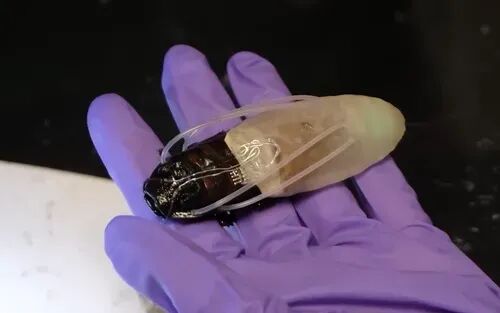
The core components of the full diving suit are three parts: a waterproof shell, an oxygen generator, and four tubes responsible for delivering oxygen. The shell part is 3D printed, very lightweight, and can seal and wrap the cockroach's abdomen like a raincoat, which is waterproof and does not restrict movement.
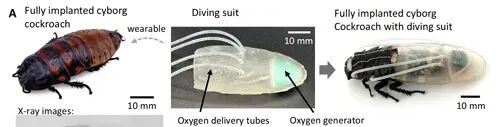
In addition, the cockroach also needs to carry a remote control backpack responsible for receiving operation information, with a total weight of about 5 to 7g. The maximum load-bearing capacity of the Madagascar hissing cockroach is 15g, so there is no problem for it to go underwater with this set of equipment.
Well, the cockroach looks like it's wearing a rainproof sleeping bag.
So how does this set of equipment work? Remote control of cockroaches is not a new method, the common way is to stimulate them with electricity.
Generally speaking, electrodes will be implanted in some parts of the cockroach during the preparation stage, and instructions will be sent to the "remote control backpack" on it during operation. That is, give it an electric shock if it goes off course. For example, stimulating the antennae will make it think there is an obstacle and then turn, while stimulating the cerci will trigger an escape response and make it move forward.
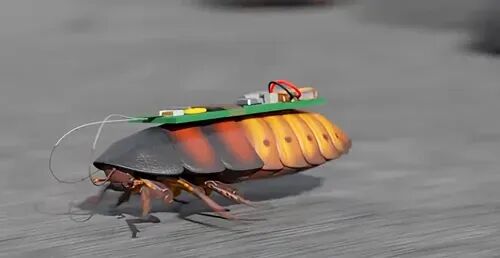
The cockroach being zapped back and forth: I feel like I've run into a ghost.

After you can control the cockroach, you can get ready for underwater breathing.
The oxygen generator is located at the end of the shell, with a sponge coated with manganese dioxide inside. The researchers inject a certain amount of hydrogen peroxide into the oxygen generator before entering the water, which will react with the manganese dioxide powder in the sponge to continuously supply oxygen.
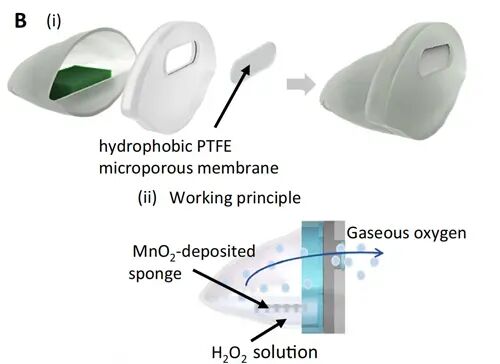
Cockroaches breathe by sucking in air through the spiracles on the sides of their bodies, so after the oxygen generator works, four oxygen tubes are responsible for delivering oxygen to the two pairs of spiracles, which is similar to humans putting on a diving suit and an oxygen mask.
They also designed corresponding oxygen delivery pipeline solutions according to the structural characteristics of different spiracles of cockroaches. For example, small tubes are directly inserted into the position of closed spiracles, and a wrap-around mask is designed for spiracles with open structures.
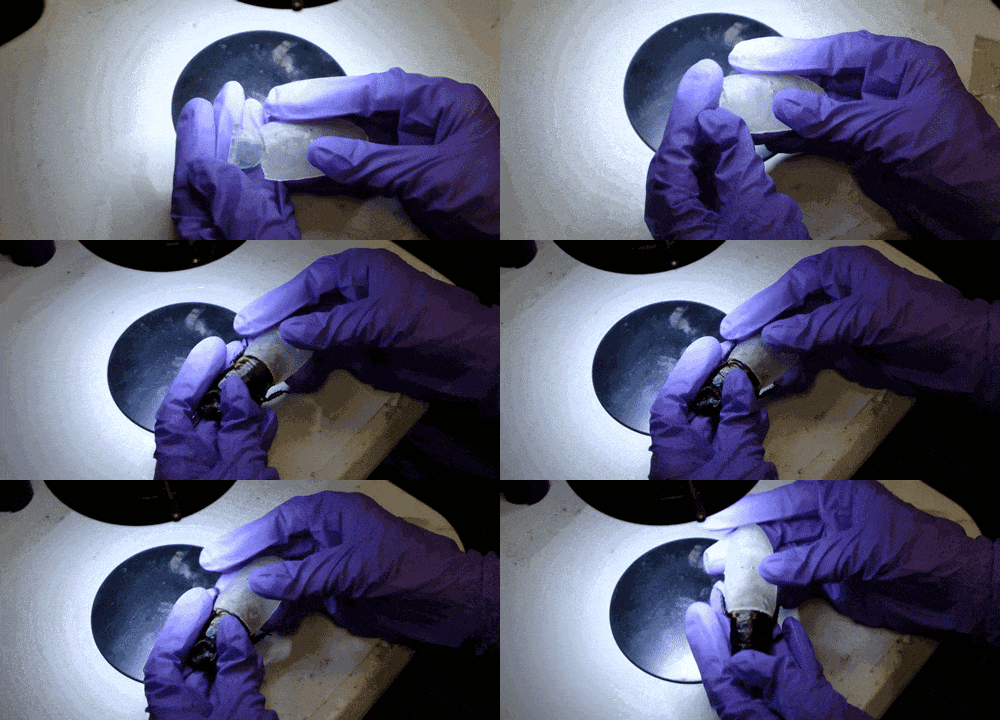
The experimental team conducted multiple tests on the waterproof quality. For example, after soaking in water for 30 minutes and bending back and forth, the equipment did not leak. They also tested the drop resistance: when dropped into the water from a height of 1 meter, the diving suit was not damaged.
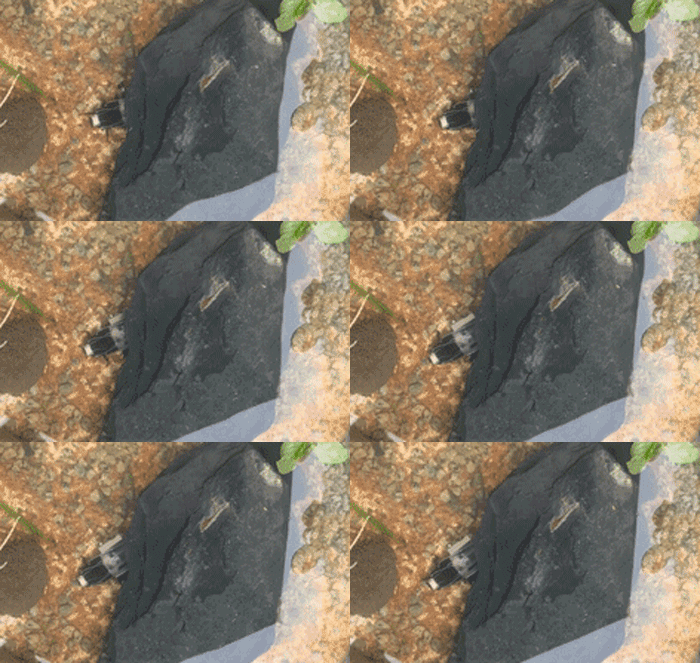
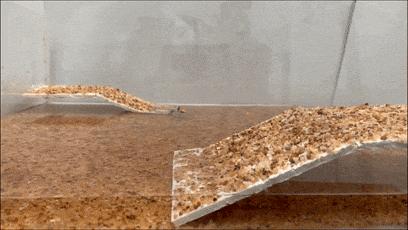
After putting on the equipment, the cockroach can move and operate at a depth of 50cm underwater. This depth may be relatively shallow for humans, but compared to its body size, it can indeed be regarded as a kind of "seabed" exploration.
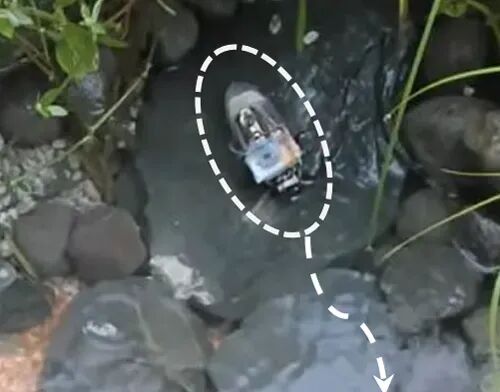
After putting on the equipment, the cockroach's movement speed is not slow, it is only slightly affected compared to on land, and even faster than some centimeter-level amphibious robots.
However, after 3 hours, the battery life can't keep up. It's not that there isn't enough oxygen, but that the cockroach is tired from running.
Moreover, after the cockroach is stimulated with electricity for a long time, it will become more or less numb, which means the sensitivity of control will decrease. This is also a traditional shortcoming of cyborg insects.
The research team's idea is to regard such cyborg cockroaches as a "search and rescue platform". They have good load-bearing capacity, so there is still room to add other equipment, such as cameras, gas detectors, auxiliary positioning devices and other equipment, which can be replaced according to the needs of the environment.
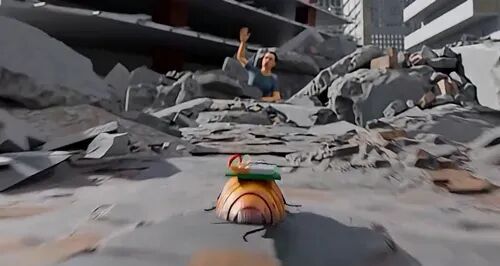
In daily use, they can also be responsible for pipeline inspection, which I think is a more reliable direction, because cockroaches originally move around in pipelines.
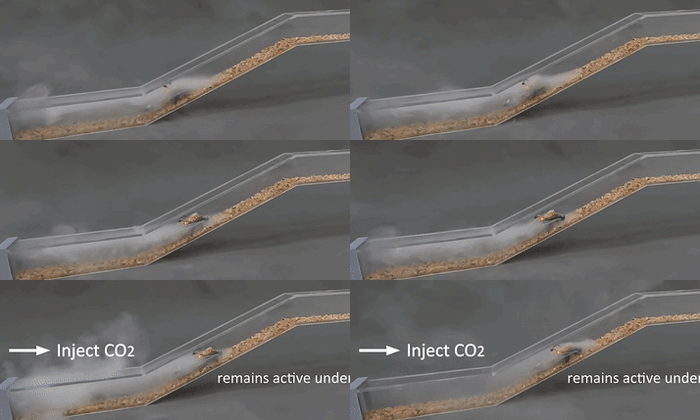
The research team also carried out simulation environment experiments, such as letting cockroaches explore "toxic" pipelines. After all, they are equipped with oxygen generation equipment, so it should be no problem to "run away from poison". They released carbon dioxide in the pipeline, ordinary cockroaches fainted within a few seconds after entering, but the cockroaches wearing the equipment were not affected, could pass through easily, and maintain stable breathing and normal movement.
The research team said that this diving suit can improve the search and rescue capability and scope of cyborg insects, and at the same time put forward a more sci-fi vision, hoping to have the opportunity to apply it to space exploration in the future, such as for Mars surface detection.
They may also test more extreme environments such as radiation, high temperature and low temperature in the future, working towards the direction of cyber cockroach spacesuits.
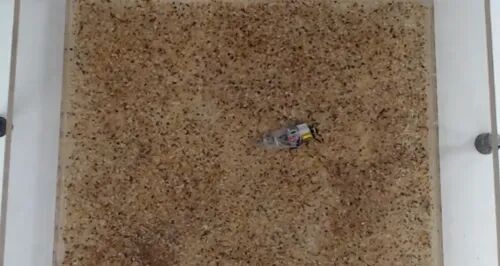
This plot sounds familiar, and I'm somewhat looking forward to the day when cockroaches return to Earth from Mars. Of course, space agencies are unlikely to support plans to send cockroaches to Mars