From Following to Defining: What Makes Chinese Robots Land on the Cover of *Time*
Eight years on, Chinese tech entrepreneurs have once again landed on the cover of *Time*. From Robin Li of Baidu to Wang Xingxing of Unitree, from search engines to manned mechs, what has changed is not only the protagonists and the industry tracks, but also a historic leap of China's industries from following global trends to defining new development directions.
One cover marks the divide between two generations.
In 2018, Robin Li of Baidu appeared on the cover of *Time*, where he was dressed in a formal suit with the headline reading "Helping China Win the 21st Century". That was the most vibrant era for China's internet industry, and a moment when a latecomer demonstrated its extraordinary speed to the whole world.
In July 2026, Wang Xingxing of Unitree Robotics graced the cover of the same magazine, with the theme of this issue set as "The Age of Robots Is Coming". In the photo, the 2.7-meter-tall mass-produced manned mech GD01 takes up almost the entire page, with Wang Xingxing standing beside it. *Time* described him as an atypical prophet in the AI era.
Two covers, separated by eight years. From search engines to manned mechs, from Robin Li to Wang Xingxing, behind them lie two completely different development tracks, and even more a historic leap of China's tech industry from catching up to leading the definition of the new era. The protagonist on the cover can be replaced, but the underlying logic of the industry track behind the cover has been completely transformed.
Behind One Cover: The Collective Breakthrough of the Entire Industry Track

Put the two covers side by side, and you can understand the eight-year transformation of China's tech industry. When Robin Li of Baidu appeared on the cover in 2018, he was labeled as a representative of internet innovation, showing the world China's speed in catching up with the information age; eight years later, Wang Xingxing of Unitree, standing on the cover with mass-produced manned mechs, represents that China's hard technology sector has begun to participate in defining the next era.

This is not just a single company gaining widespread public attention, but a collective breakthrough of the entire industry track. In 2025, the output of humanoid robots in China reached about 20,000 units, and the figure exceeded 40,000 units in the first half of 2026, with the full-year output expected to break 100,000 units. There are more than 400 different humanoid robot products manufactured by domestic players, accounting for over half of the global total. The global market share of Chinese quadruped robots is even close to 70%. The industrial boom did not happen overnight, it is the natural outcome of years of accumulation, and Unitree just happened to stand in the spotlight at this moment.
Take a broader view, the entire industrial chain is moving upward. In the quadruped and humanoid robot sectors, Unitree shipped more than 5,500 units in 2025, accounting for over 32% of the global market, and completed its STAR Market IPO in July 2026, setting a new record for the fastest listing review approval in 73 days. UBTech's U1 series orders have exceeded 13,000 units, and its founder Zhou Jian said straightforwardly that "Chinese companies have already had global discourse power in scenario application". In the industrial robot track, Estun surpassed foreign brands for the first time in 2025 and took the first place in the Chinese market with a 10.6% market share, and has realized large-scale application in 107 scenarios and more than 370 factories. In the field of logistics robots, Geek+ has ranked first in the global AMR market share for seven consecutive years, with its business footprint extending from North America to Europe and Southeast Asia, serving about 950 large global clients.
Looking further upstream, breakthroughs in core components are equally critical. GreenHarmony's market share in the humanoid robot harmonic reducer market has risen to 80%-90%, with orders scheduled all the way to 2027. SKF, the century-old Swedish industrial giant, announced in July 2026 that it will establish a joint venture with GreenHarmony, betting on the most critical transmission component for humanoid robots. A European company founded in 1907 is placing its future on a Chinese firm, a signal that carries more weight than any publicity.
From complete machines to components, from quadruped robots to industrial robots, every segment has competitive players, and every segment is making upward breakthroughs. It is not a single point that runs fast, but a tiered advancement of the entire industrial chain. This is the most solid foundation for China's robotics industry.
The Divide Between Two Development Paths: Mastering Discourse Power Through Practical Implementation
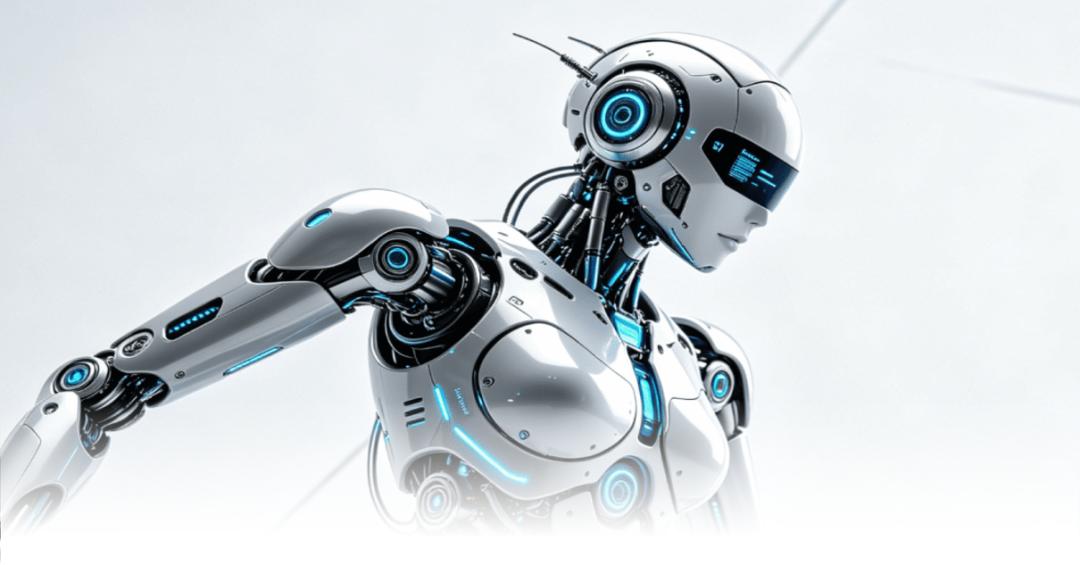
The global humanoid robot track has formed two clear development paths. The first is the mainstream overseas cutting-edge technology path, which started earlier and has deep accumulation. Leading players including Boston Dynamics' Atlas and Tesla's Optimus all entered the mass production sprint stage in 2026. Their logic is: first polish top-level technical capabilities, then gradually penetrate into commercial scenarios.
The other path is the practical implementation efficiency path adopted by Chinese enterprises. Technological iteration is also advancing simultaneously, but Chinese enterprises have focused more on a more realistic issue from the very beginning: how to realize mass production of robots as soon as possible, how to adapt to real scenarios, and how to reduce costs to a level that customers can afford. Both paths lead to mass production in the end, but their starting points and priorities are completely different.
Looking back at real application scenarios, the pragmatic approach of Chinese enterprises is indeed being verified. Pudu Robotics' delivery robots have entered more than 80 countries around the world, with cumulative shipments exceeding 120,000 units, widely used in catering, retail, hospitality and other industries. Yunji Technology's hotel service robots have served more than 40,000 hotels, completing over 750 million service tasks in total by 2025. In the factories of BYD and CATL, domestic industrial robots operate stably 7*24 hours a day, effectively solving the labor shortage and efficiency problems in the manufacturing industry.
For the industrial sector, equipment that can be delivered stably with controllable costs is far more valuable than stunts performed in laboratories. The most obvious change in China's domestic industry in 2026 is that players no longer compete on parameter indicators, but on real implementation cases. Whoever can present real orders, replicable scenarios, and commercial models with clear return cycles will truly get the admission ticket to the industry.
After fully disassembling Unitree's G1 robot, Japan's Nikkei xTECH team admitted that China's robot R&D has gone beyond the stage of only demonstrating products, and it is unrealistic for Japan to narrow the gap in the short term. The gap is not only reflected in individual technologies, but also in systematic engineering maturity and mass production efficiency.

It is this pragmatic capability that allows Chinese enterprises to master the discourse power in the implementation end. While overseas players are still repeatedly proving what robots can do, China has been answering in batches where robots can be applied.
Supported by Three Core Advantages: The Unreplicable Industrial Cluster Barrier

China's robotics industry has achieved today's success not by sudden overtaking in a single technology, but by the full-chain industrial advantages that are hard for overseas players to replicate.
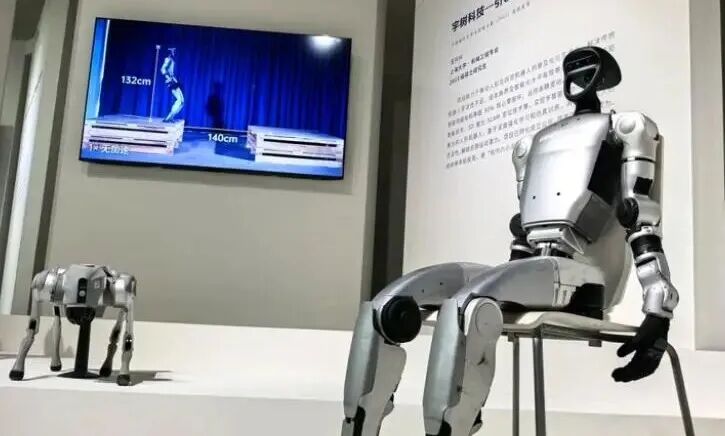
First, the complete supply chain system. China has the world's most comprehensive precision manufacturing and electronic supporting industries. Almost all core links, from reducers and servo motors to chips and structural parts, can be supported domestically. The localization rate of Unitree's core components exceeds 90%, and the cost of self-developed parts such as joint motors is only 30-40% of similar products from Western countries. GreenHarmony bypassed patent barriers with its self-developed technology, and reduced the price of harmonic reducers to about half of that of international giants. The cycle from design drawing to mass production can be compressed to an extremely short length, which is a natural advantage that overseas teams do not possess.
Second, abundant application scenarios. China has the world's largest manufacturing market and the most diverse business environment. Real demands from different industries with different levels of complexity provide sufficient space for robots to be tested and iterated. Public data shows that in 2025, China's export volume of industrial robots exceeded import volume for the first time, making China a net exporter of industrial robots; in the first half of 2026, exports reached 6.29 billion RMB, up 18.6%, selling to 141 countries and regions around the world. Technologies are continuously polished in real scenarios, and data feeds back to rapid product upgrades, forming a positive cycle where scenarios drive technological progress. This is a growth speed that pure laboratory R&D paths cannot match.
Third, strong engineering capabilities. There are countless engineering details between a prototype and a stably mass-produced commercial product. Unitree spent only a few years from its first-generation consumer quadruped robot to the mass-produced manned mech. In 2023, the revenue proportion of humanoid robots of the company was only 1.88%, which rose to 51.78% in 2025, becoming the largest revenue segment for the first time. The cycle for UBTech from releasing the U1 to starting mass production delivery is also very compact. Geek+ can support more than 5,000 devices to operate collaboratively in one single warehouse, and has successfully delivered a project with nearly 1,000 robots in one warehouse in Europe. This capability to quickly transform laboratory technologies into reliable commercial products and realize large-scale collaborative deployment is the core strength of Chinese enterprises.
Single-point technologies can be broken through by a small number of geniuses, but the rise of an entire industry must be the victory of a complete system. This complete industrial cluster covering the whole upstream and downstream chain is the most solid moat for China's robotics industry.
One cover is the recognition of China's strength by the global industry, and even more the starting point of a new journey.
From following overseas standards in the past, to now taking our own pragmatic path and participating in defining the direction of the new era, China's robotics industry has gone through decades of development. This is not the highlight moment of a single person, but the result of countless practitioners along the entire industrial chain working step by step.
The script of the era is always written by doers. The curtain of the robotics era is slowly opening, and this time, Chinese people are standing in the front row to define the rules.
References:
*Time* Magazine, July 2026 Issue
Geek+ Prospectus, July 2025
MIR DATABANK, 2025-2026 China Industrial Robot Market Data
Nikkei xTECH, *Disassembly of Walking Robots from Chinese Emerging Enterprises: Japan Cannot Catch Up*, July 2026
CLS, "Ke Jixin, Vice Minister of the Ministry of Industry and Information Technology: The Output of Humanoid Robots May Exceed 100,000 Units This Year", July 17, 2026
Securities Times, "GreenHarmony Establishes Joint Venture with SKF, Focusing on High-precision Bearing Components", July 7, 2026
This article is from the WeChat Official Account "Tech New Knowledge" (ID: kejixinzhi), written by Yating, edited by Jiuli, authorized for release by 36Kr.