Hard Krypton Exclusive | Fudan University professor and former Intel chief scientist develop end-side embodied brain, "Moushen Intelligence" completes nearly 100 million yuan in additional Pre-A round financing
Author | QIAO Xiaofen
Editor | YUAN Silai
36Kr has learned that Motion Brain has completed a nearly 100 million-yuan follow-up Pre-A round of financing. Investors in this round include an industrial investment platform jointly established by a leading Chinese property service company, a Hong Kong consortium, and multiple listed companies - Jin Yue Investment, Chuanghehui Capital, as well as the existing shareholder Xuhui Capital.
This marks another round of financing secured by Motion Brain within two months, following its 300-million-yuan Pre-A round in May 2026. In addition, the company's nearly 500-million-yuan Pre-A+ round is currently in the closing process. The company revealed that since the first half of this year, Motion Brain's valuation has surged over 10 times, making it one of the fastest-growing embodied brain enterprises in the industry.
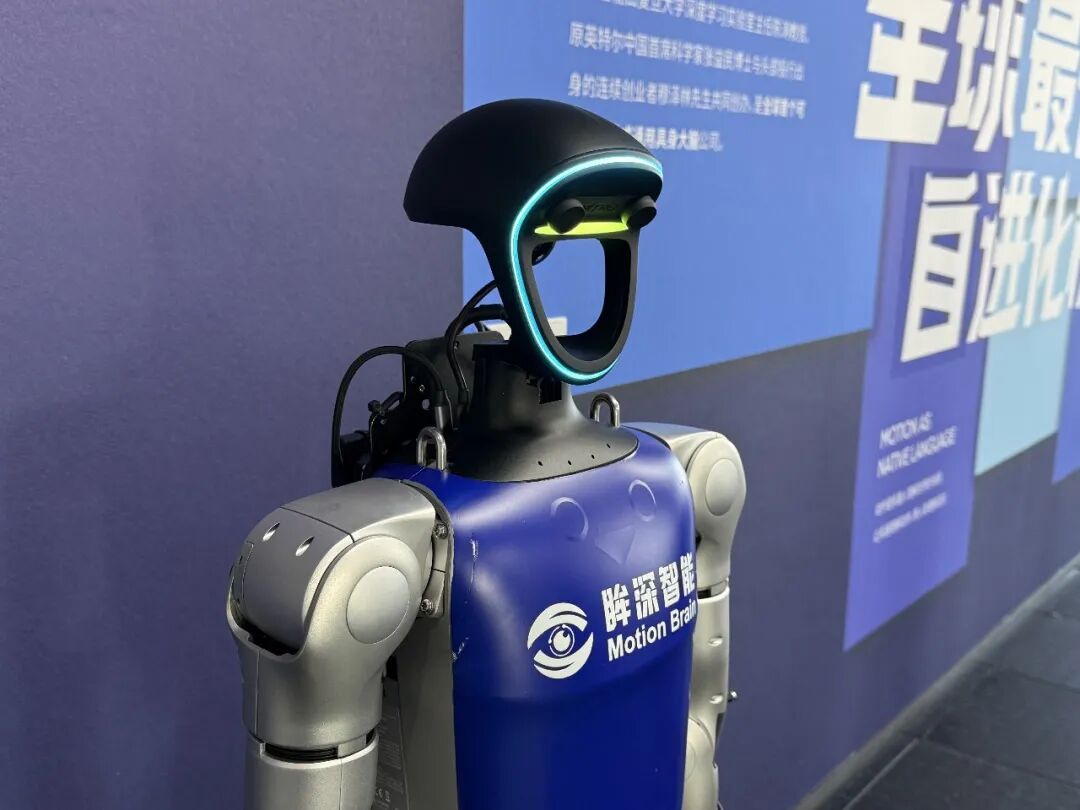
Founded in January 2025, Motion Brain positions itself as the world's leading self-evolving embodied brain company with the deepest expertise in motion, dedicated to "installing a native general brain for 1 billion robots".
The company was co-founded by Professor CHEN Tao, Director of the Deep Learning Laboratory at Fudan University, Dr. ZHANG Yimin, former Chief Scientist of Intel China, and MU Zelin, a serial entrepreneur. The core team comprises talents with backgrounds from three major chip giants - HiSilicon, Intel, and NVIDIA, making it one of the few embodied large model teams in China with operator-level adaptation capabilities.
Although officially registered in 2025, Motion Brain's technology accumulation dates back to 2022. In terms of technical routes, Motion Brain has chosen a distinct path different from mainstream VLA (Vision-Language-Action) models - a motion-centric "World Motion Model".
(Source: Enterprise)
Since 2022, the Motion Brain team has released MLD (Motion Latent Diffusion Model). At that time, the mainstream industry approach treated motion as discrete signals, resulting in stiff and less diverse generated movements. The Motion Brain team was the first in the world to propose mapping motion to the Latent Space and introduce the Diffusion Model.
MLD essentially enables AI to generate motions "self-taught": instead of teaching robots how to walk frame by frame, the model restores natural and coherent human postures from a mass of random noise, just like a painter denoising an image.
If MLD solves the problem of "how to generate motions", Motion Brain further focuses on how to "direct motions". In September 2023, the team creatively launched MotionGPT. Analogous to the basic strokes of Chinese characters, the team disassembled human postures into approximately 3,000 "motion primitives". Just as Large Language Models (LLMs) generate sentences by predicting the next token, MotionGPT generates complex behaviors by predicting the next "motion token".
This discretization processing method for continuous motions not only greatly improves the model's understanding of long-sequence tasks, but more importantly, endows robots with Zero-Shot generalization capabilities - they can understand and execute unseen motion instructions by recombining motion vocabularies. This is also the world's first embodied large model that tokenizes motions, published at NeurIPS 2023.
By 2026, the team had cumulatively released 7 generations of models. Building on the aforementioned accumulation, the Motion Brain team further launched the STI-WM (Space-Time Integrated World Motion Model) embodied large model.
The STI-WM Space-Time Integrated World Motion Model is a native embodied intelligence framework fully built for robot long-sequence planning, online closed-loop control, and real physical interaction, achieving four-dimensional integration and unification of spatial structure, temporal evolution, physical consistency, and execution robustness.
According to introductions, the core breakthrough of STI-WM lies in completely breaking away from the traditional VLA (Vision-Language-Action) model's heavy reliance on massive real robot data. It adopts a training recipe of "80% internet videos + 10% motion capture data + 10% real robot data", and uses the motion dictionary established by MotionGPT to learn physical laws from massive unlabeled videos, then calibrates biomechanical features with a small amount of motion capture data, and finally completes closed-loop alignment using only 10% real robot data.
In other words, this brand-new data training paradigm reduces real robot data requirements by 90% while increasing motion accuracy to 99%.
Meanwhile, the T²MB (Task*Task Motion Brain) proposed by the Motion Brain team this March also endows robots with offline self-evolution capabilities. After the model is deployed to the edge side, it can continuously optimize performance solely through local interaction without needing to connect to the internet to upload data, with maximum task execution accuracy improved by 25%, solving the pain point that robots have to be sent back to the factory for upgrades when bugs are discovered after deployment.
It is worth noting that NVIDIA's DAIR Laboratory cited two original technologies from Motion Brain - MLD and MotionGPT - in its latest ARDY model. This marks the fourth citation of the company's technical route by NVIDIA's third-generation motion model in the past two years.
However, besides the technical route, the edge-side computing power cost is another factor that truly determines whether this brain can be scaled up, which is also a major competitive barrier for Motion Brain. According to introductions, Motion Brain has simultaneously advanced two directions since its first-generation model - model compression and domestic chip adaptation.
On one hand, through engineering solutions such as model distillation and redundant parameter compression, Motion Brain has compressed trillion-parameter-level models to the hundred-billion-parameter level, reducing the parameter count by approximately 75% in specific scenarios and lowering edge-side inference latency from about 200ms to around 10ms. On the other hand, it has simultaneously adapted to domestic chip platforms including HiSilicon (Ascend 310/910), Horizon Robotics, and Enflame (Enflame S60), achieving low-power, high-real-time, and ultra-low-cost edge-side inference.
This hardware-software synergy approach directly results in the model's edge-side inference cost being reduced from 200,000 yuan to 10,000 yuan, the battery life of the brain increased by 10 times, while accuracy and performance remain uncompromised. This compression work also helped the team win the IJCAI 2025 Global Best Paper Award, making it the only team from mainland China to receive this award in the past five years.
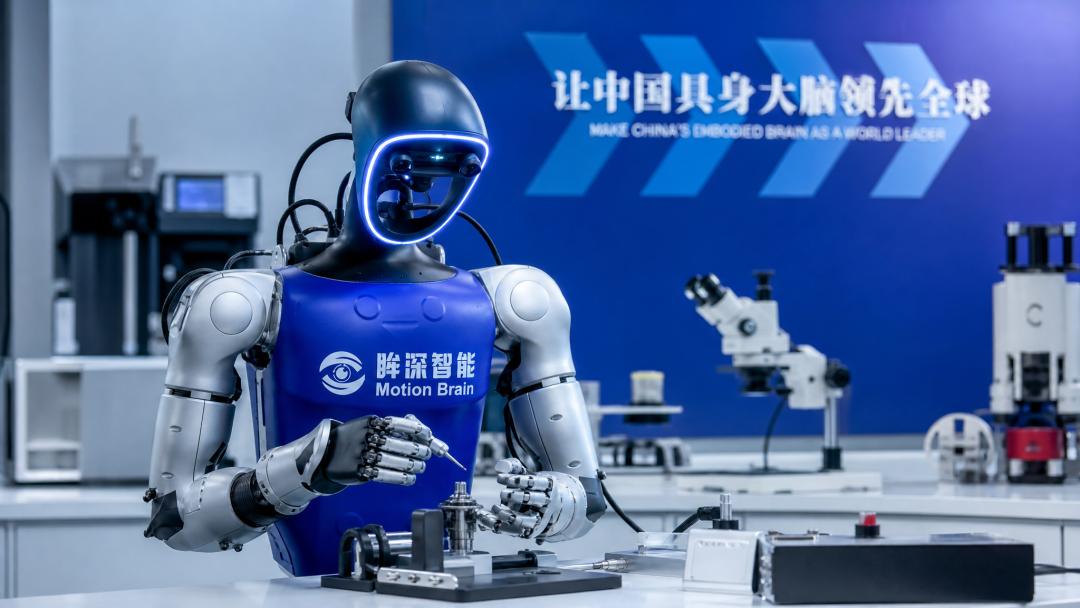
Leveraging this capability, Motion Brain can complete the adaptation of an embodied large model from one robot body to another within two weeks, including self-developed bodies such as Fudan University's "Guanghua No.1", Unitree G1, and the Shanghai Humanoid Robot Innovation Center's "Qinglong" and "Linglong".
(Source: Enterprise)
MU Zelin, Founder and CEO of Motion Brain, stated that the domestic embodied intelligence industry generally adopts the scheme of training on foreign chips and then porting and adapting to domestic chips, which leads to prominent performance loss and compatibility issues. In the future, Motion Brain will natively develop the entire process of model training and inference based on domestic computing power chips to achieve fully independent and controllable technology stacks.
In terms of commercialization, Motion Brain is also one of the few embodied intelligent brain companies in China with revenue. MU Zelin told 36Kr that its audited returned revenue in 2025 reached 10 million yuan, and the revenue in the first half of 2026 was 30 million yuan, with the annual revenue expected to exceed 50 million yuan this year.
Currently, the company's clients cover scenarios such as industrial inspection, property management, and environmental sanitation. In the first quarter of 2026, Motion Brain has delivered robot products to a Hong Kong-listed property management company and a leading A-share listed environmental sanitation enterprise. It is also advancing R&D for humanoid robot deployment scenarios with leading chain retail groups and leading white goods factories.
The following is an edited transcript of the conversation between 36Kr and MU Zelin
36Kr: How do motions become Tokens? Is this a technical difficulty in the industry?
MU Zelin: It is indeed a bottleneck in the industry. We can understand motion as "digitized postures": just like each page of a flip book is a static posture, flipping the pages continuously creates an animation. In the early stage, our team of dozens of people manually annotated tens of thousands of postures, defining over 3,000 basic motion Tokens, similar to the 3,000 commonly used Chinese characters, whose combinations can cover all human behaviors.
More critically, we let the model learn the correlations between motions: just as large language models master the arrangement rules of words by learning massive amounts of text, we let the model watch millions of hours of internet videos (TV series, surveillance footage, Vlogs, etc.) to learn causal motion logic such as "the hand will be raised to the mouth when drinking water" and "the arms will most likely be unfolded after crossing the chest". Combined with 10% motion capture data and 10% real robot data for calibration, we finally achieve end-to-end generation of motion Tokens - supporting the transformation from text, images, and 3D point clouds to motions, which is the native multimodal capability.
36Kr: Won't the combination of motion Tokens lead to an explosion in computing power demand? How do you optimize it?
MU Zelin: We don't need to exhaust all motions, but learn the arrangement rules of motions. Optimization mainly has two directions: first, at the data level, 80% of the data comes from internet videos (which have been pre-filtered by physical priors to ensure compliance with real-world laws), reducing reliance on high-cost motion capture/real robot data; second, at the model compression level, we have deep accumulation in edge-side deployment and have won best paper awards at global top conferences - through technologies such as Token pruning, quantization, and dynamic optimization, we can reduce edge-side computation by 62 times, compress inference latency from 200ms to 10ms, and reduce model parameters by 80% while accuracy does not drop but even rises (improved by 3%-6% in some tasks).
36Kr: The current embodied intelligence field sees divergent technical routes, with some focusing on memory while you focus on motion. How do you view this divergence?
MU Zelin: Returning to first principles: the essence of the success of large language models is that the Transformer architecture realizes the permutation and generation of Tokens. Embodied intelligence should also follow this logic, with the core being solving the "execution layer" problem - enabling robots to stably complete tasks.
For more underlying issues such as memory optimization, I believe it is difficult for startups to make breakthroughs in the short term, which requires long-term exploration by giants like DeepSeek and OpenAI in chip storage and computing-in-memory architectures. We are more pragmatic: we solve the execution problem of new tasks through the Zero-Shot generalization capability of motion Tokens. For example, if a robot has learned to hold a mineral water bottle but not a mobile phone, it can still complete the task with 80% accuracy through motion sequence migration, and the remaining 20% can be calibrated through a small amount of post-training or reinforcement learning.
36Kr: Why did you choose to adapt to domestic computing power instead of using more mature NVIDIA GPUs?
MU Zelin: In the long run, domestic GPUs are an inevitable choice - NVIDIA GPUs will become increasingly expensive and supply-constrained. Our core advantage is "understanding chips": our team has backgrounds from three major chip giants - HiSilicon, Intel, and NVIDIA, making us the only embodied large model team in China with operator-level adaptation capabilities. We have already achieved deployment on domestic chips such as Enflame S60 and Ascend 310/910. Our goal in the second half of the year is to overcome thousand-card-level domestic cluster training and realize a fully localized large model training solution.
This not only solves the supply chain security problem, but also improves capital efficiency: for example, while others need 10,000 cards and spend 500 million yuan for one training session, we can complete it with 1,000 cards and 50 million yuan through operator optimization, similar to DeepSeek's low-cost training logic.
36Kr: Where are the opportunities for embodied intelligence chips? Will you develop your own chips?
MU Zelin: Edge-side embodied chips are indeed a huge opportunity. Currently, more than 20 companies in China are making layouts (such as NExT-CHIP, Light and Star, etc.), but most of them target 200TOPS of computing power (similar to NVIDIA Orin). We believe that future models will need to process multimodal signals such as tactile, sensor, and 3D point cloud data, and the computing power demand will rapidly increase to 1000-2000TOPS - if chip companies mass-produce 200TOPS products now, they may fail to keep up with the model iteration speed by the time the tapeout is completed.
We will not develop our own chips unless the company's scale reaches hundreds of billions in the future. At this stage, we are more focused on "hardware-software synergy": we optimize operators to make models adapt to existing chips, and cooperate with chip companies instead of reinventing the wheel.
36Kr: What will the industrial division of labor look like in the future? Will general suppliers emerge separately for brains and robot bodies?
MU Zelin: Robot bodies may have different characteristics like the automotive industry (e.g., higher load capacity, more lightweight), but the brain sector will most likely form a "one superpower with multiple strong players" pattern - the R&D threshold for general brains is extremely high, and there are very few teams in China with real R&D capabilities. Our goal is to become that "super general brain", while allowing other teams to focus on niche scenarios (such as express sorting and power inspection).
In 5-10 years, there will be no scenario where every robotics company develops its own brain - the R&D investment in brains (talent, computing power) far exceeds that of robot bodies, and startups have more opportunities to make breakthroughs, just as OpenAI was not incubated by a large enterprise. Large enterprises have advantages in pure software scenarios, but embodied intelligence requires deep integration of hardware and software, where the flexibility and focus of startups are more advantageous.
Homepage Image Source | Provided by the Enterprise
Typesetting | FAN Xinya

end