Google invests in A24, the production studio behind *The Backrooms*: The hardest thing for AI to learn is not to rush to optimize.
As a venture capitalist who has spent years scouting projects in Silicon Valley, I can barely listen to a startup pitch without running into one word: friction.
One extra tap during payment is friction. Making programmers write their own tests is friction. Having sales teams spend half a day organizing customer records is also friction. Identify it, then eliminate it with software. Over the past two decades, many of Silicon Valley's most successful businesses have been built this way.
As Marc Andreessen, co-founder of top Silicon Valley VC firm a16z, famously put it: Software is eating the world. And software often begins its conquest by erasing these very points of friction.
This formula has worked reliably in Silicon Valley for a long time. After enough success, people naturally get trigger-happy, itching to optimize everything they see. But cinema simply cannot withstand this kind of overzealous optimization.
This past June, Google DeepMind announced a long-term research partnership with film studio A24, alongside an approximately $75 million investment in the company.
Founded in 2012, A24 has made its name cultivating niche, artistically distinctive films. Its landmark works include Oscar Best Picture winners *Moonlight* and *Everything Everywhere All at Once*, the global box office hit *The Brutalist*, and this year's breakout horror hit *Backrooms*. Over 14 years, A24 has transformed its studio name into a brand: the three letters "A24" have become a guarantee of audience appeal.
The most surprising detail of this deal is that Google did not gain access to A24's entire film library. By typical Silicon Valley spending habits, this is more than a little unusual.
At first glance, it seems obvious Google would covet A24's years of accumulated high-quality film footage. Google is placing a massive bet on Veo, while competing video models like Sora and Kling are rapidly closing the gap. Having Veo learn from films like *Moonlight* and *Everything Everywhere All at Once* sounds perfectly logical.
Yet public filings confirm Google has no access to A24's film and television catalog, and cannot use that content for model training. A24's filmmakers are under no obligation to use Google's tools, either. The actual scope of their partnership lies in the creative process itself: DeepMind researchers will collaborate directly with filmmakers to test, iterate, and develop new tools.
With the film library explicitly off the table, the value of this transaction lies elsewhere. What Google is seeking from A24 may well be a capacity for judgment that models have yet to master:
Which frictions in filmmaking should be eliminated, and which frictions must be preserved?
01 AI Video, Finding Willing Payers
AI video has long passed the stage of "will anyone use this?"
In the U.S., according to an enterprise customer survey Runway released this July, one global advertising group cut the social content production cycle for a major U.S. insurance brand's mascot from two to three months down to just 3 hours — a workflow covering video generation, voice cloning, and lip-sync alignment.
Compressing production timelines from months to hours unlocks video demands that were never feasible under traditional budgets. One of my early portfolio companies, Higgsfield, hit roughly $50 million ARR last September; by this June, reports show its ARR has surpassed $500 million. Ten months, 10x growth. Novelty drives traffic, but only integration into the regular budgets of brands and agencies can produce that kind of revenue trajectory.
Commercialization is also accelerating in the Chinese market. By June 2026, Kling had exceeded 100 million global users, with nearly 50,000 enterprise clients; its revenue in the first quarter of this year surpassed RMB 650 million, representing year-over-year growth of over 300%.
AI video is moving beyond model demos and entering actual production pipelines, maturing into a large-scale, viable business.
Product boundaries are also advancing rapidly. Google's Flow has evolved from single-shot generation to full character control, scene expansion, and story orchestration. This past June, Adobe extended Creative Agent across Firefly, Premiere, Photoshop, and Frame.io, letting users go directly from a single concept to full storyboards, then generate finished video from those boards.
This path is deeply familiar in Silicon Valley. Code models once only auto-completed the next line, then gradually moved on to breaking down tasks, editing files, and running tests. As capabilities mature, products naturally migrate upstream along the workflow. The earlier a tool enters the decision-making process, the better chance it has of becoming the default entry point for that entire workflow.
Over the past two years, I have continuously tracked and participated in early-stage investments in AI video projects in Silicon Valley. The most common demo format is inputting a text prompt and getting back a decent-looking ad spot in minutes. Demos typically end the second the final clip renders — but the hardest part of real production is just beginning: Why this version? What tradeoffs were made? And who ultimately decides?
Models can churn out answers one after another, but human teams still must take responsibility for every single creative choice.
This past May, San Francisco-based AI film production platform Flick closed a $6 million seed round, with True Ventures, GV, YC, and Lightspeed all on the investor roster. Its product is built entirely around preserving the director's continuous creative control: iterating through tradeoffs, maintaining consistent characters and narrative, and letting tools support the latter half of the creative process. In my view, Silicon Valley capital has begun to explicitly price judgment as a standalone value.
Creative tools are undergoing this same shift. AI once only executed intentions that were already fully thought through. Now it enters the picture while intentions are still fuzzy. A screenwriter types a one-line logline, and the system instantly generates character bios, visual style references, and storyboards. A director with nothing more than a vague hunch can see near-final footage just minutes later.
Efficiency has undoubtedly improved. The trouble is, machines are turning in their work faster and faster — while humans haven't even finished figuring out the problem. Someone who hasn't fully defined their goal, suddenly handed an 80% complete "A-" answer, will almost never have the heart to throw it away.
02 Judgment Takes Shape Within Friction
There are, of course, plenty of frictions in filmmaking that absolutely deserve to be eliminated.
Chroma keying, transcoding, asset search, shot matching, and repeatedly adjusting aspect ratios are expensive, time-consuming tasks that rarely generate new creative meaning. When AI takes these over, creators gain more time and lower costs for experimentation.
Google's own work has already proven this.
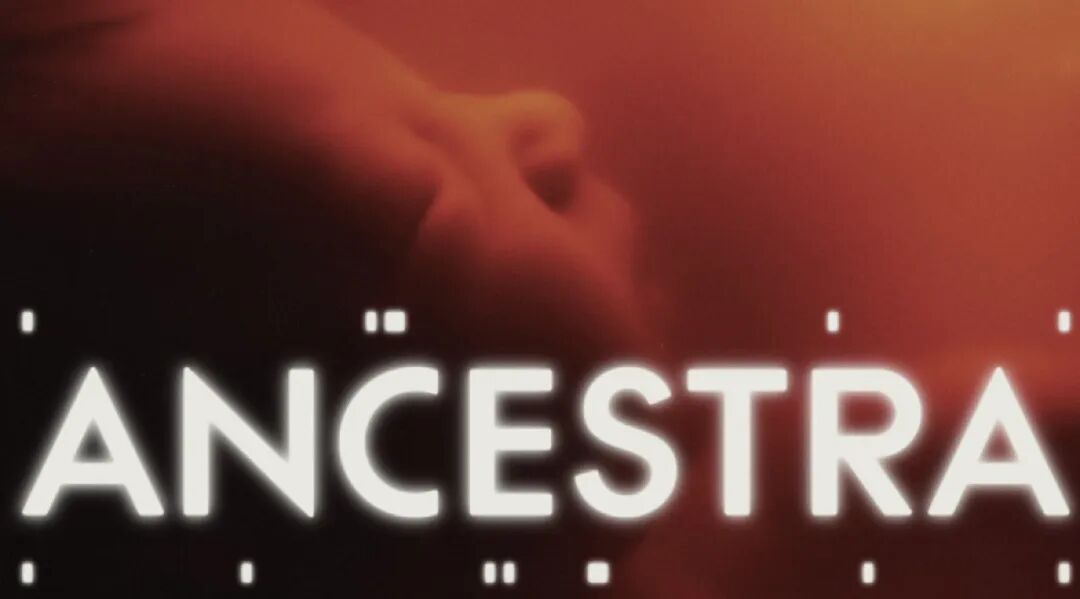
Darren Aronofsky's *ANCESTRA*, a short film created using Veo | Image credit: YouTube
In 2025, DeepMind partnered with Primordial Soup, the production company founded by director Darren Aronofsky, to create the short film *ANCESTRA*. Using Veo, they accomplished motion matching and localized scene generation that traditional CGI would have struggled to produce quickly. Google disclosed that more than 200 traditional film professionals still worked on the short, alongside live-action crews, editors, VFX artists, sound designers, and composers.
The model compressed certain high-cost execution steps — but it did not replace the team's judgment across the entire film.
There is another category of friction that exists before judgment ever solidifies. Why a character chooses silence, which beautiful shot needs to be cut, and whether an awkward pause is a performance mistake or the most authentic moment in the entire film. There are no clear procedures here, no way to encode these moments into efficiency KPIs. Creators must linger among multiple half-baked versions, and sometimes endure stretches of work that feel plainly "ugly."
In creative work, some friction is cost — but some friction is R&D.
Silicon Valley product teams are conditioned to treat user hesitation as blockage, and uncertainty as a pain point to be resolved. But when a work is still unformed, that hesitation itself generates information. It is precisely by following paths that lead nowhere that creators discover where they actually need to go.
If a system delivers a highly polished version too early in the process, that entire exploratory phase gets cut short. A pretty concept art piece quickly becomes the team's visual anchor; a structurally complete draft makes every subsequent discussion revolve around patching up what already exists. These versions are simply the first ones to appear — yet because they are tangible, they feel like the result of deliberate choice.
03 The 80% Perfect Answer Is the Hardest to Reject
AI's impact on creativity has already revealed a warning sign worth taking seriously.
In a 2024 experiment published in *Science Advances*, 293 participants were asked to write short stories with and without generative AI assistance, then evaluated by 600 readers. Stories created with AI were, on average, more readable — with the largest improvements seen among less experienced writers. But at the same time, those stories became far more similar to one another.
Experiments focused on visual design have observed the exact same pattern. After working with AI-generated imagery, participants become anchored to the initial examples they see, producing fewer total ideas, with less variation and lower overall originality.
These studies have limited sample sizes, and cannot draw definitive conclusions for the entire film industry. But the mechanism they reveal is critical: AI assistance raises the average quality of individual outputs, while pulling every creator toward a similar, local optimum.
Bad ideas are easy to dismiss. What is truly hard to reject is that 80% complete, "good enough" version that lets you check the box today.
Models have absorbed massive libraries of proven narrative structures. They know how to get viewers into the action faster, how to flesh out character motivations, and how to make an image feel more like what people describe as "cinematic." These suggestions are genuinely professional. But once a creator accepts those first few plausible answers, every subsequent iteration might get technically better — while moving further away from the truly original work that hasn't been discovered yet.
Many projects don't die from a clear "no." They get slowly sanded down by a long series of well-intentioned, technically correct revisions.
04 A24: Don't Optimize That Yet
A24 does not follow a single, consistent visual formula. If you place *Moonlight*, *Everything Everywhere All at Once*, and *The Zone of Interest* side by side, you cannot distill a unified visual style. What ties them together is that the elements that would have been erased by traditional optimization pipelines were deliberately allowed to stay in the final cut.
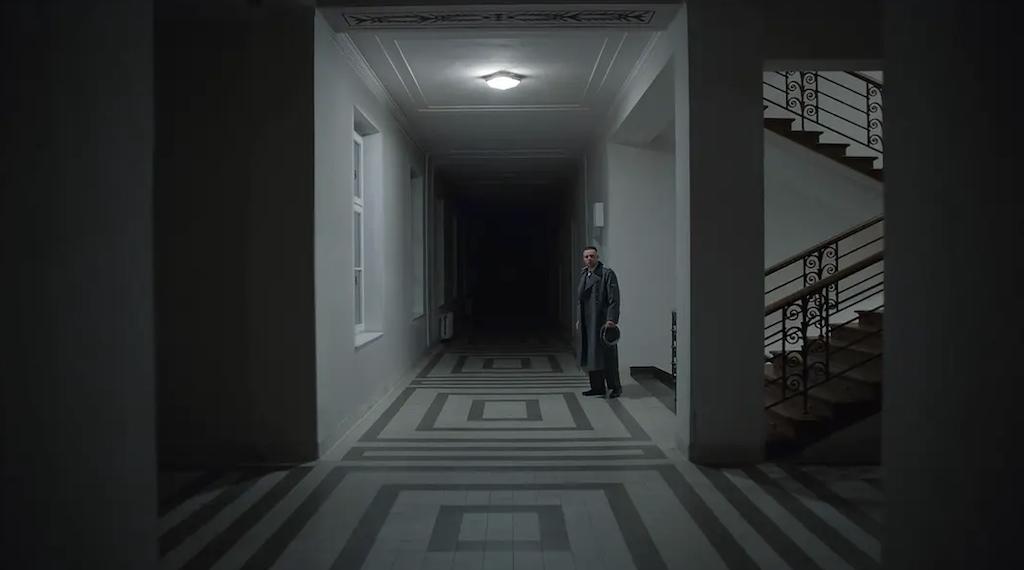
Still from *The Zone of Interest* | Image credit: douban
*The Zone of Interest* keeps almost all the violence of the concentration camp off-screen. The audience only sees the domestic life of a family on one side of the wall, while horror seeps in entirely through sound. If you set "maximize emotional impact" as your optimization target, an AI system would logically recommend adding more explicit, direct footage. The narrative would become more "complete" — but the film's entire power would vanish.
A24's value is no unfathomable mystery. At a handful of critical moments, it is willing to let choices that feel awkward, unclear, or even unmarketable linger for a little longer. Most studios fear unfinished work. A24 sometimes fears work that becomes finished too quickly.
A24 is no stranger to venture capital itself. It was a startup that grew up entirely on VC funding: early backers included Eldridge, with Stripes and Neuberger Berman taking stakes in 2022, followed by Thrive Capital — led by Josh Kushner, supermodel Karlie Kloss's husband — in 2024.
Seen in that context, the Google–A24 partnership matters far more than "AI learning film aesthetics." What Google actually needs to research is the timing of judgment: when generation helps, and when you should preserve blank space; when feedback elevates a work, and when it only pulls that work back toward the average.
05 Rewriting the Interface for Creative Detours
Today's mainstream generative products are still built around a linear text input box. The user submits a request, the model returns a result, then the user edits it again. Exploration, selection, and production are all mixed into the same conversation thread — every response pushing the user to converge as quickly as possible.
The actual creative process almost never works that neatly. It branches, backtracks, and puts problems on hold for two weeks. Early stages demand expanding possibilities; only later stages call for stable execution. These two phases shouldn't even use the same kind of AI behavior.
When a direction is still unclear, tools can help creators build wildly divergent branches, rather than immediately spitting out a polished final image. Certain questions can be marked "do not solve yet," preserving contradictions and ambiguity. Once production begins, the system takes over consistency, asset management, and repetitive edits — while continuously remembering the project's boundaries.
This memory shouldn't only store what the creator wants. The choices they explicitly rejected are equally important: don't explain this ending, don't force reconciliation between characters, don't use the score to tell the audience when to feel sad. If a rejection is forgotten in the next generation, the creator only has prompt engineering control — not real creative control.
From an investment perspective, I no longer treat single-pass generation quality as a durable moat. Model leaderboards shift every few months, but the set of tradeoffs, rejections, and collaborative habits a team builds across a project are extremely hard to replicate. Whoever can understand a creator's long-term intentions, preserve their full decision history, and adapt their interaction model to the right stage of work will truly own the creative workflow.
What A24 can offer is precisely that body of experience that has never been successfully softwareized.
06 In the Discarded Drafts Lies the Blueprint of Judgment
Of course, there is another side to the Google–A24 partnership.
Google being locked out of A24's finished film library sounds like it protects the most important asset. But the drafts filmmakers submit, abandoned storyboards, edit trails, and rejection rationales may contain far higher concentrations of judgment. They show how creators kill nine out of ten viable versions.
Public disclosures have not yet fully addressed who owns this process data, whether it will be used to train general-purpose products, and whether filmmakers can opt out project by project. If "co-development" ends up meaning artists provide high-value feedback for free, and the platform packages that into a feature available to everyone, this partnership will only accelerate the industrialization of aesthetics.
A better outcome is still possible. Google could use A24's real-world workflow to calibrate the boundaries of when tools intervene, letting the model take over execution costs while leaving the full exploration path and final decision rights to creators.
Silicon Valley has built machines that are better and better at giving answers. But the next capability creative software needs to develop is recognizing when a question shouldn't have an answer yet.
Hold on. Don't optimize that.
It isn't finished growing yet.
This article originates from the WeChat public account "GeekPark" (ID: geekpark), author: Bryan, editor: Jing Yu, republished with permission from 36Kr.