100,000-Step Trek at WAIC: 10 Questions to Uncover the Next Stage of the AI Industry — From Chatting to Competing for "Physical Bodies" to Get Work Done
From July 17 to 20, 2026, the main forum of the 2026 World Artificial Intelligence Conference and the Global Governance of Artificial Intelligence High-Level Meeting (WAIC 2026) was officially held. As an annual grand event for the AI industry, this year's conference still gathered large model companies, AI application and hardware manufacturers from home and abroad. The AI new media "Lei Tech AGI (leikejiagi)" under Lei Tech (ID: leitech) also dispatched a reporting team to Shanghai for on-site coverage.
The most eye-catching presence at this WAIC is undoubtedly robots. A few casual movements from them in the exhibition hall can draw three layers of surrounding audiences. However, what truly remains in our minds are several sets of less bustling scenes: Leju Robot continuously moving boxes on a simulated production line, Qianjue Robot slowly folding a paper box, Ubtech Robot wearing a yellow vest providing guidance in the venue, and the camera behind the Honor phone extending out and actively turning to look at people.
According to the official data of the conference, this WAIC covers three locations with four pavilions, an exhibition area of over 100,000 square meters, more than 1,100 enterprises, 3,000 exhibits, and 300 global debut products. But the truly important feature of this WAIC lies not in "scale", but in "hardcore technology".
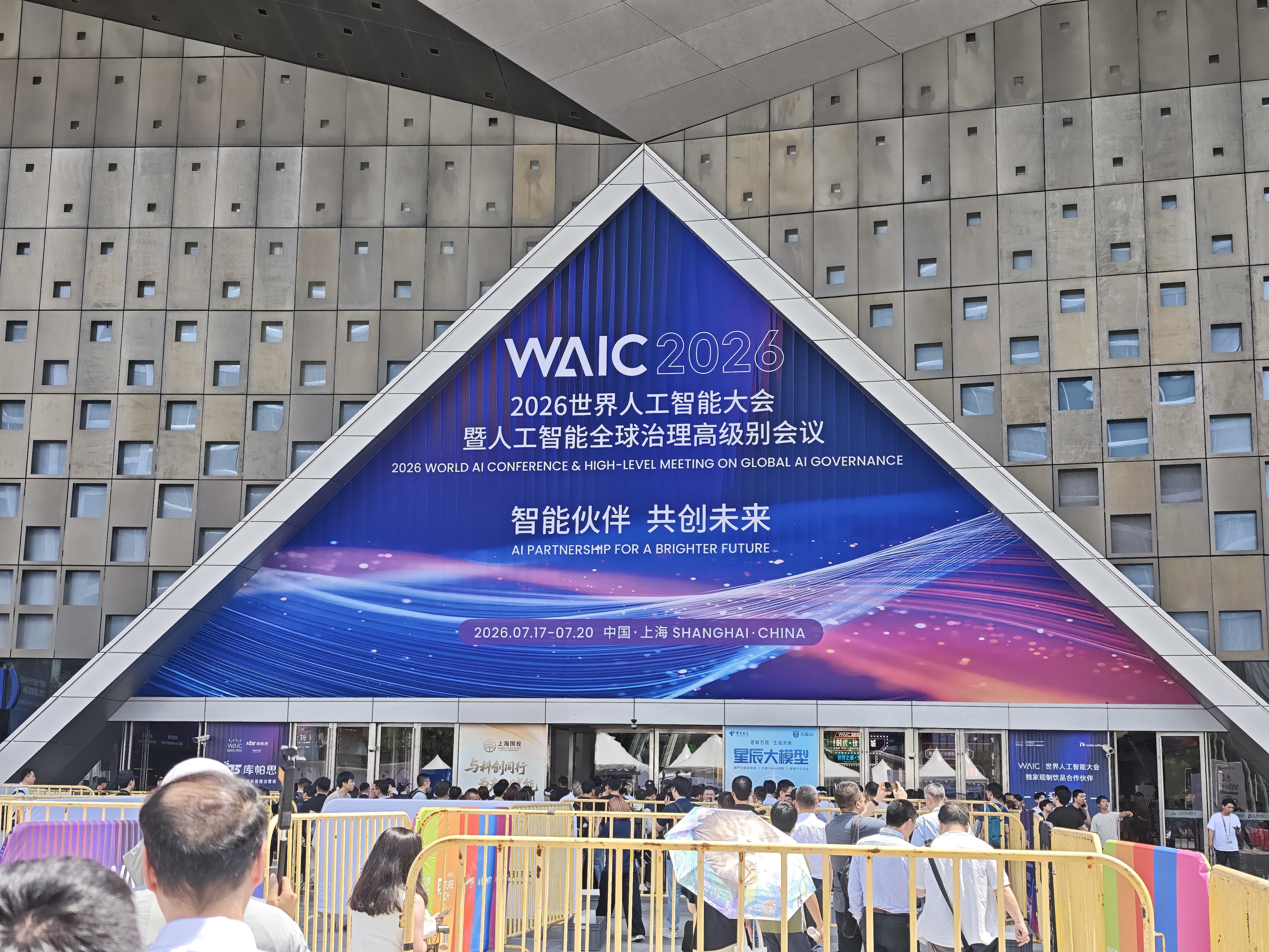
Image Source: Lei Tech
Models are still here, and chatbots have not disappeared. Instead, AI is no longer satisfied with question-and-answer interactions on the screen. It has begun to embed itself in mobile phones, glasses, computers, cars and robots, taking over sensors, invoking applications, controlling mechanical structures, and finally reaching out to touch the real world.
It can be said that this is the "most hardcore" WAIC in its nine editions, and it is also the first time that AI has moved towards the real world so intensively through hardware carriers such as humanoid robots, agent-enabled smartphones, AI glasses, and Agent Computers.
I. What is the level of hardcore technology at this WAIC?
"Hardcore" is first of all visible to the naked eye.
Smartphones are starting to grow mechanical structures, glasses are competing for operating systems, robots are moving from exhibition booths into factories, and cars are arriving at the AI conference with world models and agents. Going further, domestic AI chips no longer only display a single card, but bring super nodes, 100,000-card clusters, near-memory computing, and robot development boards into the exhibition hall together.
AI is looking for different "bodies". Smartphones have mature computing power, screens, applications, and payment systems, making them the most accessible carriers for personal agents at this stage; glasses are close to human eyes and ears, serving as the most natural first-person perspective entry point; robots and cars are equipped with actuators that can directly change the physical world.
Even computers are evolving. Traditional AI PCs mainly emphasize NPU computing power and local models, while the Agent Computer (AC) and Agent PC appearing at WAIC further focus on "execution". Products such as the Agentic Computer and Agentic Box demonstrated by Xinchip Technology attempt to enable end-side devices to simultaneously undertake model inference, task orchestration, permission management, and data auditing.
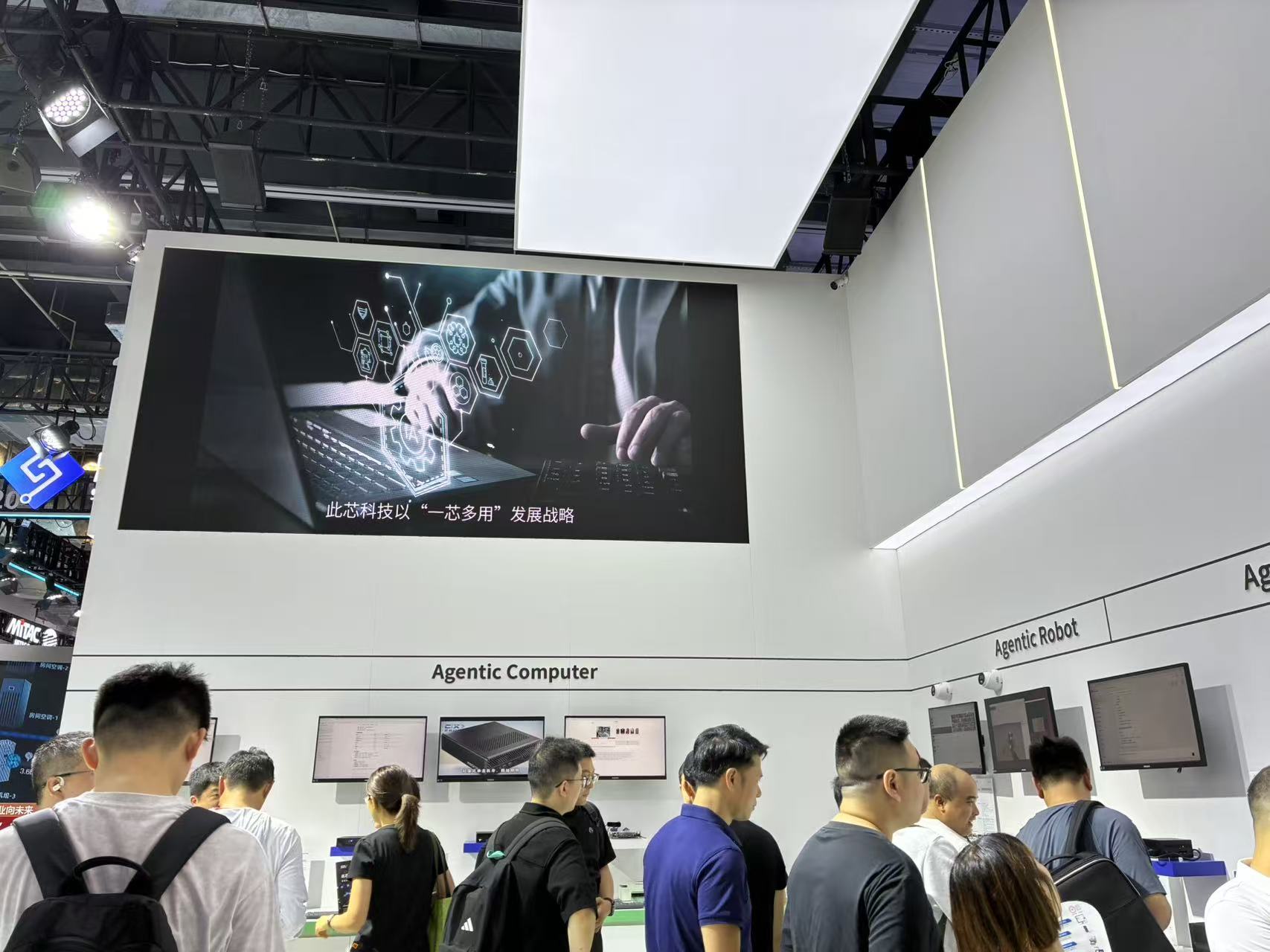
Image Source: Lei Tech
Similarly, the Agent PC solution from Liulian Intelligence also integrates CPUs, GPUs, NPUs, local models, and enterprise management systems into the same delivery chain.
This makes the "integration of AI and hardware" no longer just adding a dialog box to a device. The model needs to recognize the environment seen by the camera, mobilize local computing power and cloud services, complete operations across applications, and allow users to confirm at key steps. When it comes to robots and cars, it even needs to take responsibility for every braking, grasping, and movement.
However, the more hardware there is, the harder it is to hide AI errors. Therefore, the "hardcore" nature of this WAIC not only comes from hardware, chips, and robotic arms, but also from a complete system covering latency, reliability, permissions, security, cost, and delivery, which has begun to replace simple performance benchmarking and become a mandatory requirement for AI products.
II. Which consumer electronics products are the most impressive?
At this WAIC, the two clearest main lines of consumer electronics are agent-enabled smartphones and AI glasses.
The Nubia NaviX Ultra, which is the second-generation Doubao phone, to a certain extent continues the GUI Agent path: it understands the screen, simulates human clicks, swipes, and inputs, and completes operations such as price comparison, ticket booking, and food ordering across different apps. In theory, AI can attempt any interface that humans can operate.
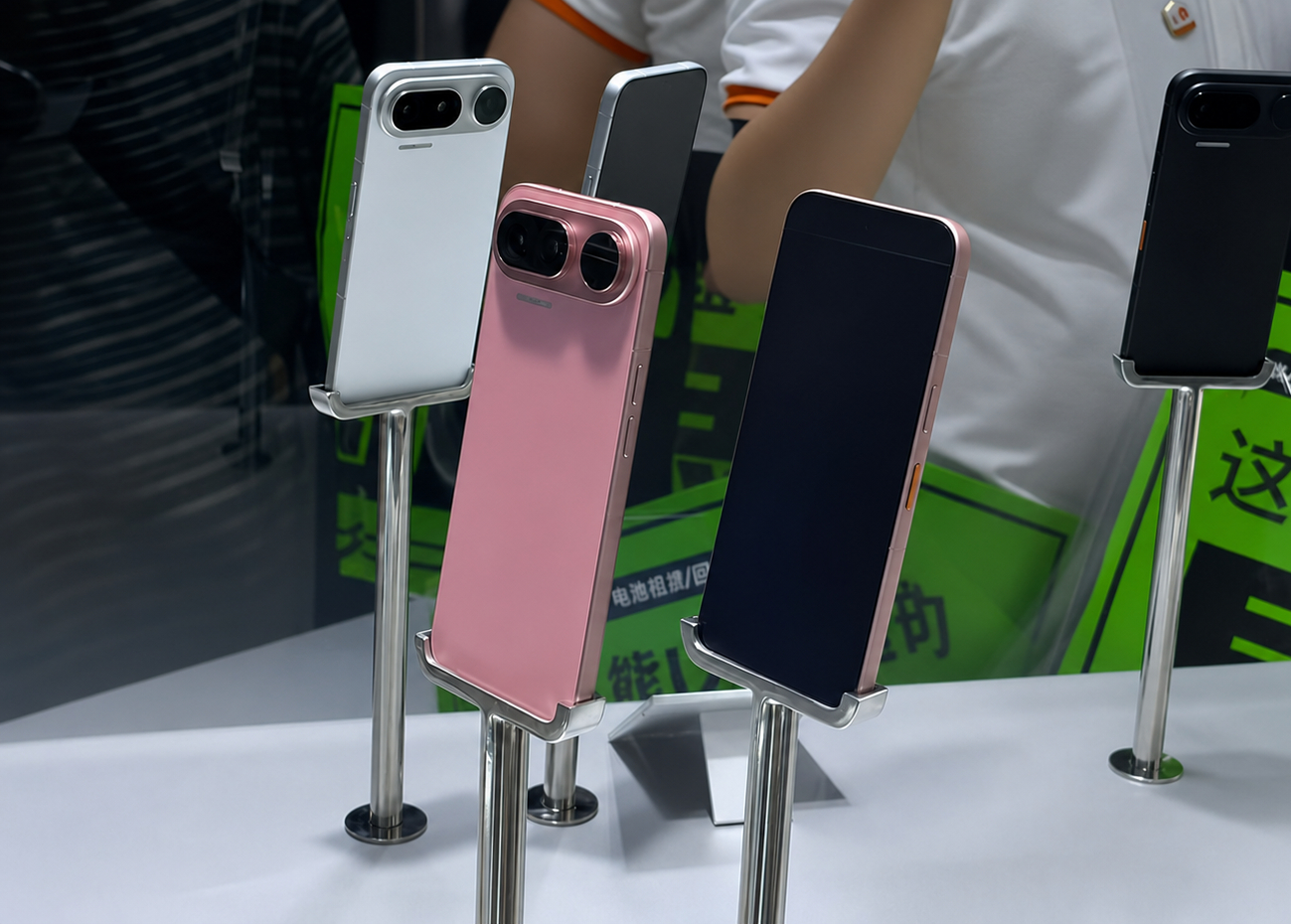
Image Source: Lei Tech
However, the NaviX Ultra not only adopts the design of a mass-produced flagship phone and a new independent AI button, but also is not limited to GUI. As pointed out in earlier articles by Lei Tech, it accesses some large platform applications through standard interfaces such as A2A and MCP, allowing the application's own agent to complete further operations or processing.
In contrast, StepStar STEPX Neo chose to redesign the smartphone, placing the personal agent Amoo at the main interaction entry point. Users do not need to figure out whether to open a map, Meituan, Ctrip, or Alipay. They only need to clarify their goals and preferences, and Amoo will plan tasks and schedule services. The underlying Step AOS will uniformly manage end-side and cloud models, CPU/GPU/NPU computing power, cross-application semantic memory, and system permissions, and split capabilities such as communication and files into atomic services that the Agent can call.
As for the relatively special Honor Robot Phone, it also has certain agent capabilities, but focuses more on active perception. It uses a motorized gimbal that can extend out of the device and rotate freely, allowing the camera to actively track people and observe the environment, adding a sense of "physical presence" for follow-shot, video calls, and situational judgment. This form is the most eye-catching, but it also faces problems such as mechanical durability, power consumption, and privacy boundaries for continuous observation.
While the NaviX Ultra and STEPX Neo are already discussing how to handle tasks across applications, the Robot Phone is more like exploring what new senses agent-enabled smartphones can acquire.
Not just agent-enabled smartphones, we can also see changes in AI glasses at this WAIC. Alibaba's Qwen announced at WAIC that the Qwen AI glasses will be upgraded with Skill and Agent capabilities in the future. They will not only provide answers after hearing questions, but also call third-party services based on user intentions.
With first-person perspective, voice, and environmental information, glasses are naturally suitable for translation, navigation, recording, and object recognition; once connected to payment, travel, and life services, they are likely to become the closest entry point to users in Alibaba's agent ecosystem.
Rokid went a step further by focusing on the platform. The new-generation Rokid AR supports 6DoF spatial positioning, gesture recognition, spatial audio, and dual-camera perception, and adds independent spatial computing capabilities; YodaOS aims to organize models, cameras, displays, spatial coordinates, and third-party services into a unified glasses system.
This path is not easy. Every glasses company wants to build the "Android for the glasses era", but the real problem is whether developers will come, whether applications can stay, and whether weight, battery life, and privacy can withstand daily use.
Putting these products together, they are ultimately competing for the same position: who can perceive user needs the earliest and deliver results through the shortest path.
III. Robots are everywhere. What are some impressive demonstrations?
In terms of quantity alone, robots are undoubtedly the absolute protagonists of WAIC. But the most valuable change this year is that manufacturers are finally less obsessed with dancing, fighting, and backflips.
Ubtech is one of the most representative players. 60 Ubtech robots were directly put into conference operations, undertaking services such as guidance, patrols, interaction, and unmanned retail. They are no longer just exhibits, but have become part of the exhibition's infrastructure. Ubtech also built a 3C production line close to the real production environment at the booth, demonstrating the Elf G2 series performing material loading/unloading, inspection, and box packing.
A set of data provided by Ubtech well illustrates the industry's focus: 8 robots ran continuously on a tablet quality inspection line for 105 days, with a task success rate of 99.99% and an efficiency of about 80%-90% of manual labor; the first deployment took about 4 months, and the second was shortened to one week.
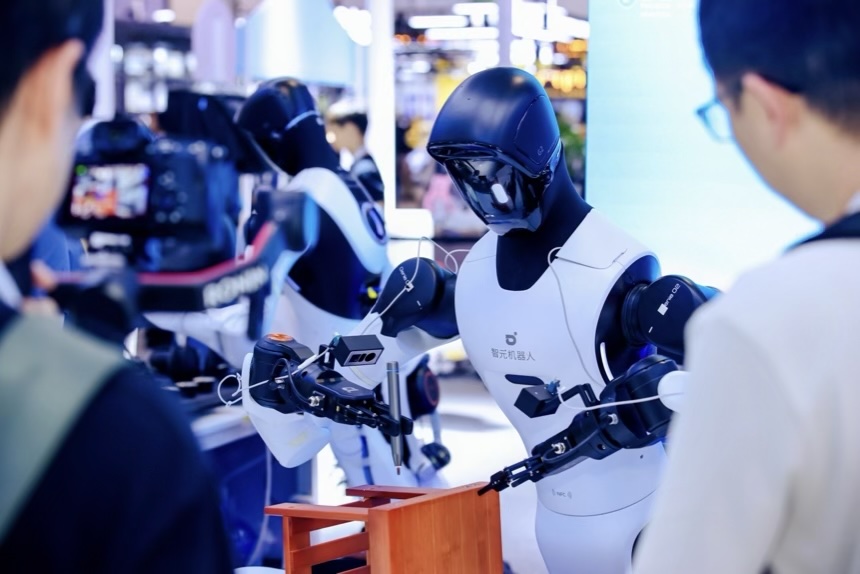
Image Source: Ubtech
Another impressive aspect is "tactile perception". At the WAIC site, Qianjue Technology allowed a robot to slowly fold a paper box and continue the action after being disturbed by external forces. Vision can tell the robot where the paper box is, but it is difficult to judge whether the fingers are holding it firmly or whether the paper surface has been folded in place. For operations like inserting headphones, plugging in connectors, and organizing flexible objects in these "last few centimeters", tactile perception often determines whether the task can be truly completed.
Leju replicated a production line on site, allowing robots to continuously carry and destack goods for hours. Mifeng did not bring more eye-catching humanoid robots, but demonstrated grippers and vision devices for collecting real operation data. The former answers "can it work", while the latter addresses "where do robots learn to work".
From observations at the WAIC site, embodied intelligence is collectively breaking through some real bottlenecks that have previously plagued the industry: first, stability; second, high-quality data; third, input-output ratio. Language models can obtain massive text from the Internet, but it is difficult for robots to obtain physical interaction data of the same scale and quality. Even if the technology is available, enterprises will still question equipment depreciation, maintenance, production line transformation, and the saved labor costs.
Therefore, the success or failure of the robotics industry will not be decided in the exhibition halls. The real report card will depend on whether a robot can work continuously in a factory for several months after leaving the spotlight, and whether customers are willing to purchase a second batch.
IV. After "Lobster" made Agents popular, how prominent are Agents at WAIC?
In early 2026, OpenClaw quickly became popular. It showed more ordinary people for the first time that AI can not only chat, but also read files, call tools, operate computers, and continuously execute tasks. At WAIC, Agents are no longer an independent track, but have seeped into almost all exhibition areas.
Agents in smartphones call applications, Agents in glasses call Skills, Agents in computers process local files, Agents in cars connect vehicle control and services, and robots can be regarded as Agents in the physical world.
Moreover, Tencent brought the AI Buddy matrix covering office work, programming, global expansion, and content creation. Baidu exhibited its "Companion" agent, and Alibaba simultaneously demonstrated the Qwen glasses and Alibaba Cloud Bailian agent platforms.
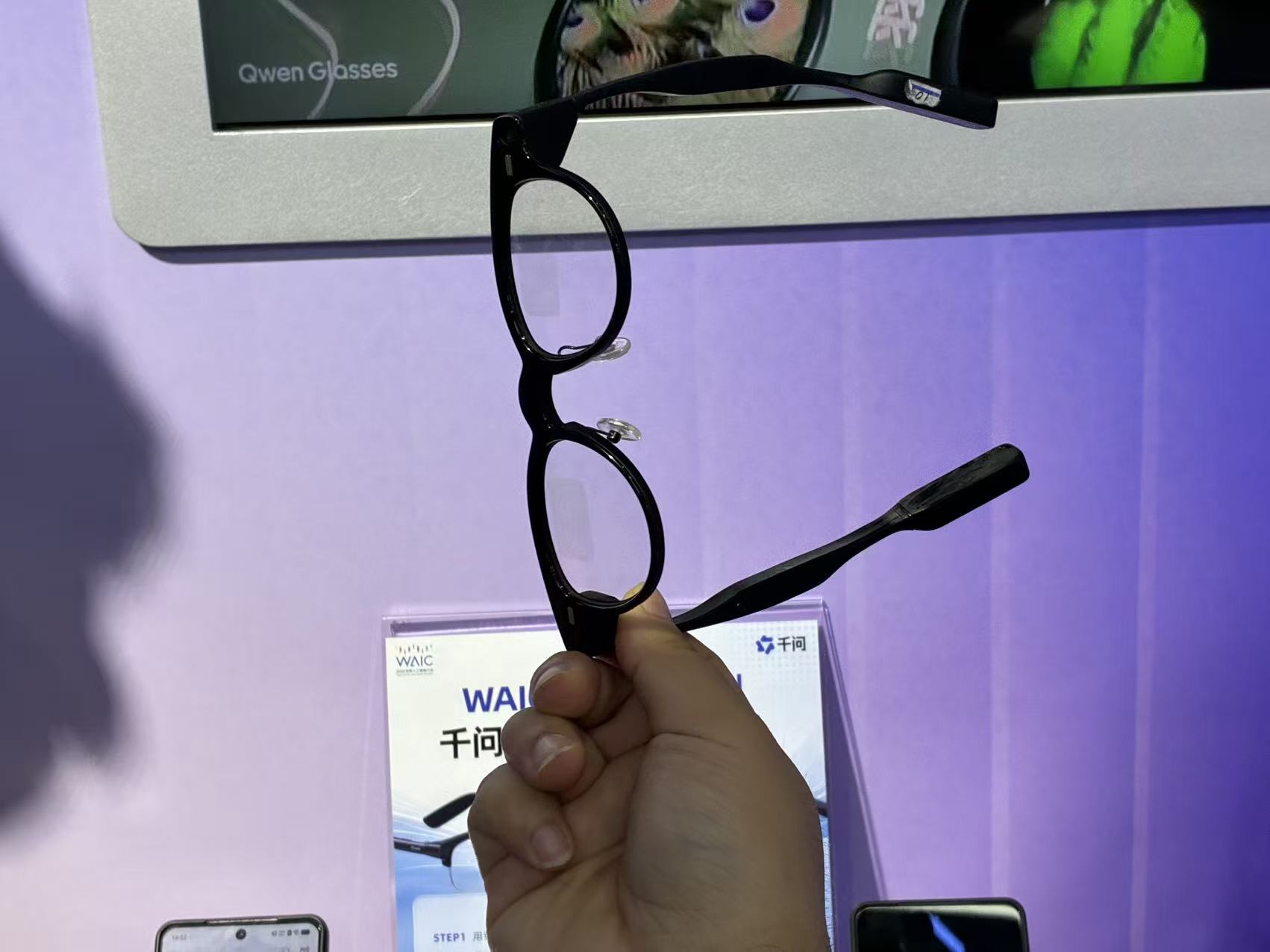
Image Source: Lei Tech
WPS Lingxi Professional Edition also introduced Agents into daily office scenarios. At the WAIC site, WPS Lingxi Professional Edition can manage context and user preferences on a "project" basis, call document, spreadsheet, browser, and code capabilities, and finally deliver editable and traceable native Office files. WPS Comate for organizations further handles enterprise knowledge, collaboration, and permissions.
The competition for office Agents has advanced from "help me write a paragraph" to "deliver a result that can still be modified continuously".
However, Agents have high permissions such as file reading/writing, system commands, and API calls. The stronger their capabilities, the greater the risks of data leakage, misoperation, and prompt injection. After Agents take over terminals, the intelligence of the model is only the starting point. Permission grading, key operation confirmation, operation isolation, log auditing, and responsibility boundaries are the foundation for the popularization of products.
Therefore, Agents are very prominent at this WAIC, but they are no longer standing in the center of the booth like last year's large models. They are more like a new layer of operating system, quietly hidden under every device and service.
V. Enterprise-level AI implementation and industrial applications are undoubtedly top priorities.
What impressive demonstrations or solutions have been seen?
Enterprise customers rarely pay for a single impressive response. What they actually purchase is a system that can connect to business, manage permissions, retain data, operate stably, and be maintained by people.
The full-stack AI terminal solution demonstrated by Liulian Intelligence at WAIC precisely hits this dividing line. At the WAIC site, it integrates mobile AI PCs, workstations, servers, local models, Agent execution, computing power scheduling, and enterprise management into a unified system, attempting to fill the gaps between computing power selection, software and hardware adaptation, and industry applications.
Liulian Intelligence's SIXCLAW AI OS is responsible for model management, Agent execution, and computing power scheduling, and discusses computing power adaptation and the ISV ecosystem with partners such as AMD, China Academy of Information and Communications Technology, and Foxit Software through industry connection meetings.
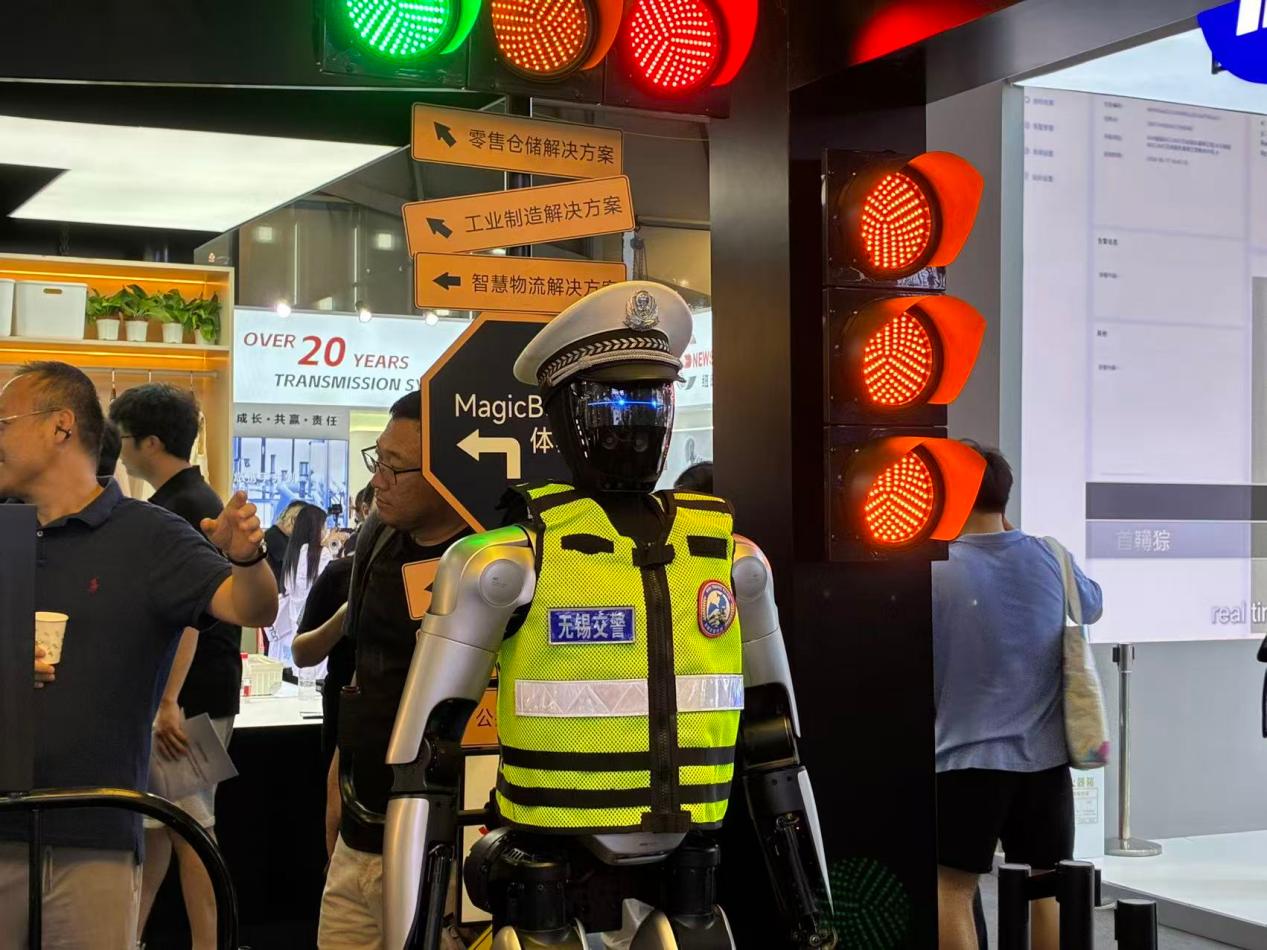
Image Source: Lei Tech
The core point is that what enterprises need is not a pile of parts, but a complete solution that can be deployed, managed, and delivered. The Agentic Computer and Agentic Box demonstrated by Xinchip Technology also apply local inference and data auditing