WAIC2026: The giants are standing at the same starting line, yet there is a huge gap in their starting speeds
Introduction:
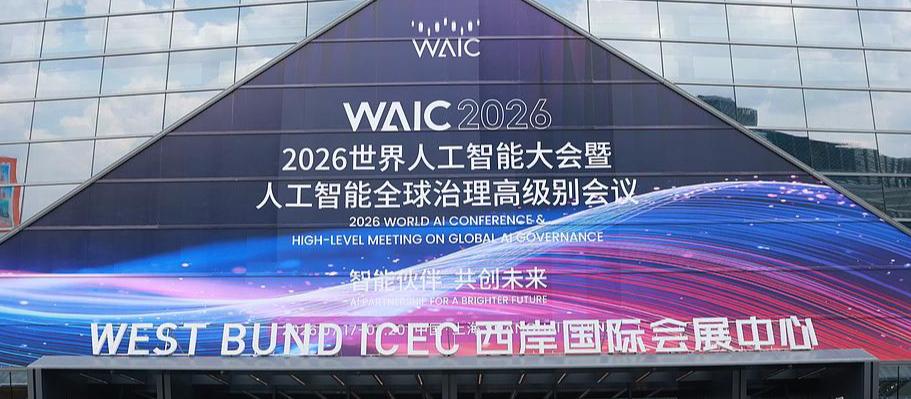
In July's Shanghai, waves of heat and crowds surged into the World Expo Exhibition & Convention Center together.
At the 2026 World Artificial Intelligence Conference, the exhibition area exceeded 100,000 square meters for the first time, with over 1,100 enterprises showcasing more than 3,000 exhibits, and over 300 products making their global debut.
The figures are striking, but what truly draws visitors in with high expectations are the AI technologies that are no longer "theoretical": robots capable of dispensing medicine in pharmacies, intelligent agents that can command computers to work with a single sentence, and ultra-large computing power clusters that can support the simultaneous operation of 100,000 domestic chips......
Two years ago, the focus of WAIC was still on the "hundred-model battle" and parameter competition; a year ago, the industry was still mired in debates over computing power anxiety and the difficulty of launching viable applications. However, WAIC 2026 has sent a far clearer signal: AI is accelerating its transition from the cloud into the physical world. From computing infrastructure to intelligent agent applications, from embodied robots to home terminals, the tracks of tech giants are becoming more specific, and their competition more pragmatic.
Yet even on the same track, paces vary. Some have secured an early foothold with 100,000-card clusters, some have turned intelligent agents into products with tens of millions of DAUs, and others have successfully brought robots into real pharmacies and households. The starting line may be aligned, but the gaps in running speed are rapidly widening.
Writer: Yubai; Article Architect: Jiajia; Produced by: Giant Finance
01. Computing Infrastructure: From "Single-Card Competition" to "System Warfare"
Entering Hall H2 of the Shanghai World Expo Exhibition & Convention Center, the computing power-themed exhibition area is almost the most crowded spot in the entire venue.
The physical machine of Sugon 8000 (Dengfeng) brought by Sugon made its first public appearance and was selected as one of the top ten "Treasures of the Exhibition" at WAIC. This is China's first fully domestic 100,000-card AI supercluster, adopting the "super-intelligence integration" technical route, supporting full-precision computing from FP64 to INT8, and covering scenarios such as scientific computing, large model training and inference, and industrial simulation. It is reported that the system has been deployed in more than 20 fields and connected to the National Supercomputing Internet. A 100,000-card cluster is regarded as the standard threshold for next-generation AI infrastructure. As large model parameters move from the hundred-billion level to the trillion level, no single card, no matter how powerful, can shoulder the entire workload alone.
The "Zhenwu M890 × Panjiu AL128 Supernode" exhibited by Alibaba was also named a "Treasure of the Exhibition". The Zhenwu M890 adopts a parallel computing architecture independently developed by T-Head, with built-in 144GB high-bandwidth memory, and inter-chip interconnect bandwidth reaching 800GB/s, with overall performance 3 times that of the previous-generation Zhenwu 810E. The Panjiu AL128 is equipped with the ICN Switch 1.0 interconnection chip independently developed by T-Head, with almost all key hardware self-developed. From chips to servers and then to cloud platforms, Alibaba is striving to build a full-link closed loop at the computing power layer.
Baidu demonstrated its self-developed breakthrough with the domestic supernode "Tianchi". The Tianchi 256 supernode is entirely self-developed by Baidu, from the underlying XPU-Link interconnection protocol, switching and complete machine architecture to liquid cooling heat dissipation, realizing a complete closed loop for domestic computing power to evolve from "single-point availability" to "system-level, large-scale availability". According to on-site information, the throughput performance of Tianchi 256 is 25% higher than the previous generation, and model inference efficiency is improved by 50%. It has been adapted to mainstream models such as Wenxin, DeepSeek, GLM, and MiniMax. Baidu also announced multiple AI infrastructure advances, including the Kunlunxin 10,000-card cluster and the construction of a gigawatt-level AIDC.
Lenovo showcased its Wanquan Heterogeneous Intelligent Computing Platform V5.0 and supernode solutions in a prominent position at its booth. Leveraging nine core technologies including cluster training and inference acceleration technology and core model compilation optimization technology, the platform achieves full-scenario coverage from hundreds to tens of thousands of cards. A single Lenovo Tianwen supernode can be equipped with 40 GPUs. Lenovo also publicly displayed the Lenovo Tianwen WR5219 G5 server based on an open-source architecture for the first time.
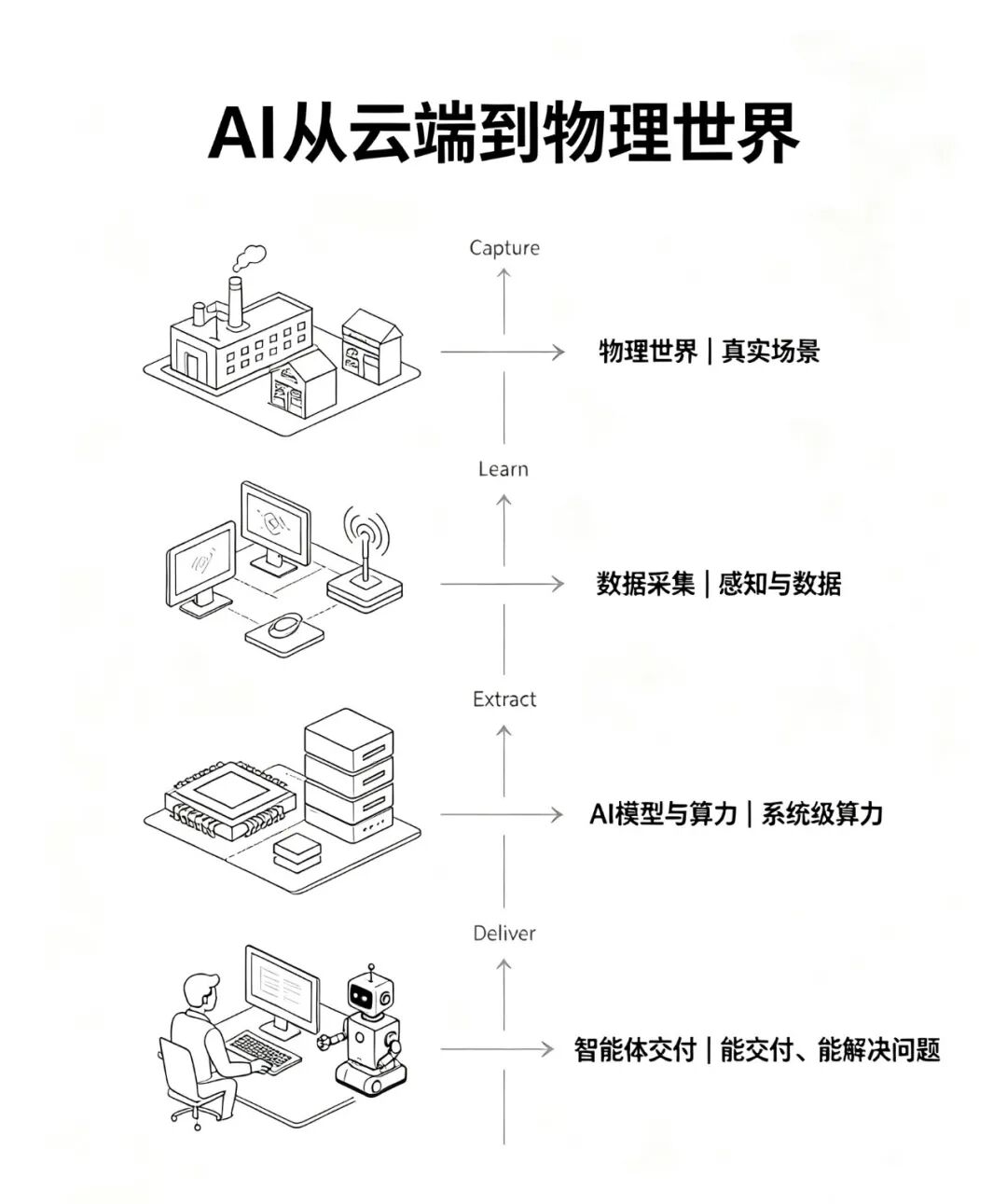
From competing over single-chip parameters to focusing on the overall efficiency of supernode systems, the integration capabilities of domestic computing power vendors are becoming a new decisive factor for success. Sugon has claimed the label of the "first 100,000-card cluster", while Alibaba and Baidu have each demonstrated their strengths in the depth of system self-development. On the computing power track, the gaps in starting speed have already formed distinct tiers.
02. Intelligent Agents: From "Being Able to Answer" to "Being Able to Deliver"
Computing power is the muscle of AI, while intelligent agents are its brain. The most notable change at this year's WAIC is that intelligent agents are beginning to move toward large-scale deployment and profitability.
Data shows that among the over 100 forums at this WAIC, more than 10% of the sessions are themed around intelligent agents, and 4 of the 10 "Treasures of the Exhibition" are intelligent agent products. This is not only a signal from the conference but also the direction that tech giants are collectively betting on.
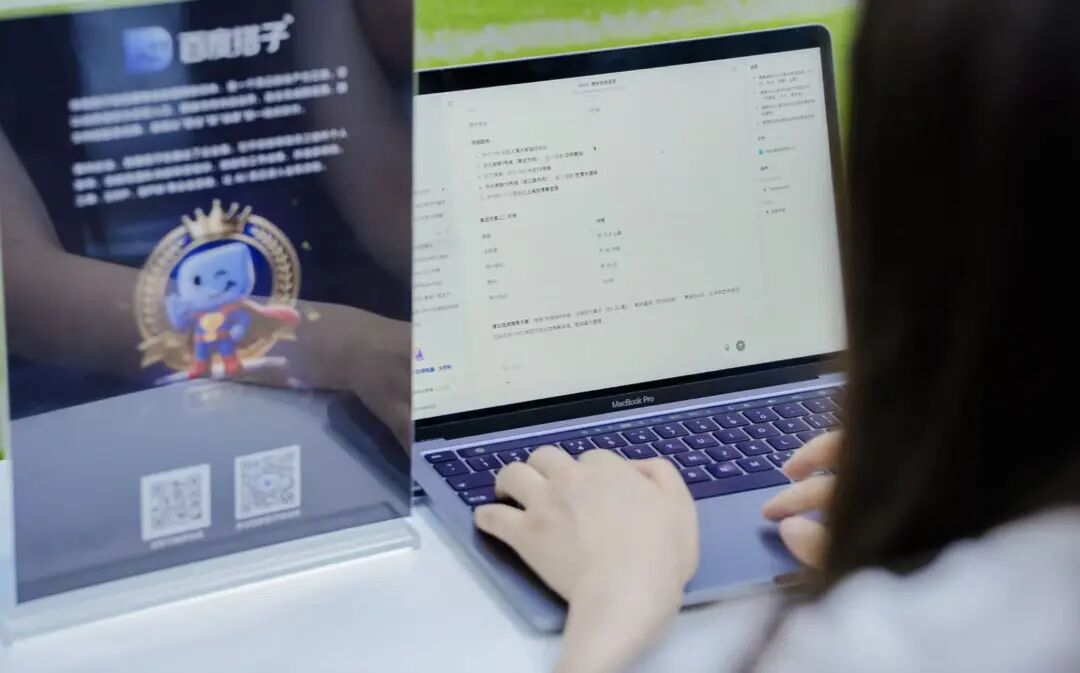
Baidu's general-purpose intelligent agent "Baidu Buddy" was selected as one of the top ten "Treasures of the Exhibition", making it the only product of its kind to receive this honor. Positioned as a productivity tool for office scenarios, users only need to clearly state their goals, and it can understand requirements, break down tasks, call tools, and complete complex work across applications and files. Since its launch, the average daily number of queries has increased 20 times. Baidu also concentrated on upgrading and releasing multiple intelligent agent products: the no-code development platform Miaoda, the digital human intelligent agent Baidu Yijing, and the general-purpose intelligent agent GenFlow 4.0 (with over 100 million monthly active users). Baidu Yijing also debuted a two-digital-human conversational video podcast, with significant improvements in production cost and content expressiveness.
Tencent, with the theme "Hey, My AI Buddy", participated in the exhibition for the ninth consecutive year. Since its launch in March this year, its WorkBuddy has exceeded 20 million monthly active users and over 13 million daily active users, becoming the office efficiency intelligent agent with the highest DAU in China. Its core concept is to go from "a single sentence" to "delivery", not limited to conversations, but capable of independently breaking down tasks, planning processes, calling tools, and completing deliveries. Tencent also launched Marvis, a personal AI assistant at the operating system level, which allows users to control their phones and computers using natural language after installation. In addition, the China Academy of Information and Communications Technology and Tencent jointly released "AI Navigator +" built on WorkBuddy, providing localized decision support covering seven countries for enterprises expanding overseas.
SenseTime has built a "Future Lab" and launched its flagship new product, SenseNova U1 Pro. Positioned as a delivery-level native multi-modal intelligent agent base for long-horizon tasks, this product realizes the native unification of "Understanding · Generation · Action", pushing AI-assisted creation from "being able to generate" to "being able to deliver". The user base of SenseTime's "Office Raccoon" has exceeded 20 million, serving tens of thousands of enterprise users; its video creation Agent Seko has gathered over one million creators and 1,300 enterprise clients.
Alibaba officially proposed "Agent Native Cloud" during the conference and launched products such as Agent Teams and Agentic Computer. Its BaiLian inference platform has served 5 million global users, including 1.2 million paying users. The DAMO Academy also launched the "Damo Lingzhu" scientific research intelligent agent platform and opened it for public testing. Previously, with the assistance of this platform, the scientific research team has predicted 68,000 potential superconducting materials, 4 of which have been synthesized and confirmed to have superconductivity.
From chat boxes to workbenches, from answering questions to delivering outcomes, the forms of intelligent agents are converging. Behind this lies a simple business logic: enterprises are willing to pay for AI that "solves problems", rather than AI that "just chats".
03. Physical World AI: The "Implementation Race" for Robots, Smart Glasses, and Homes
Computing power and intelligent agents solve the problem of "thinking", while physical world AI addresses the problem of "acting". They are stepping out of exhibition booths and into real industries and daily lives.
JD.com made its appearance with the theme "AI Enters the Physical World". The most eye-catching part of the exhibition area is JoyInside "AI Home", a model home "armed" with AI. The JZAO AI projection desk lamp can complete multi-modal problem correction and all-subject tutoring, the smart tea bar machine can automatically adjust the water temperature based on the command "a little thirsty", and the smart sleep mattress continuously records sleep signs and generates health reports. JoyInside has partnered with over 200 brands, and it is expected to connect to more than 10 million terminal devices in 2026. JD.com also systematically demonstrated its JoyAI model matrix oriented to the physical world for the first time, and released the JoyAI-Talker speech model. In the logistics sector, the "Flying Wolf" drones and the "Wolf Pack" robot legion cover the full chain of "storage, picking, handling, transportation, and delivery". Relying on the "Super Brain" large model 2.0, they can plan the "fastest current" routes for hundreds of millions of parcels nationwide in 3 minutes.
The smart robot pharmacy of Ant Group was also selected as a "Treasure of the Exhibition". Three robots with different configurations are all equipped with the Lingbo self-developed cross-ontology embodied base model, capable of independently dividing labor to complete the entire process of order receiving, medicine picking, and packaging. On-site timing shows that it takes about 90 seconds from placing an order to completing packaging. This solution has been put into actual operation at the Shanghai branch of Guoda Pharmacy, making it one of the very few robot projects at this conference that has truly achieved a commercial closed loop.
Tencent released its embodied intelligence base model during the conference, systematically opening up the closed loop of "Perception — Body — Action" for the first time. The massage robot on display can adjust the contact point and strength in real time according to the force applied by the human body, attracting many visitors to stop and experience it.
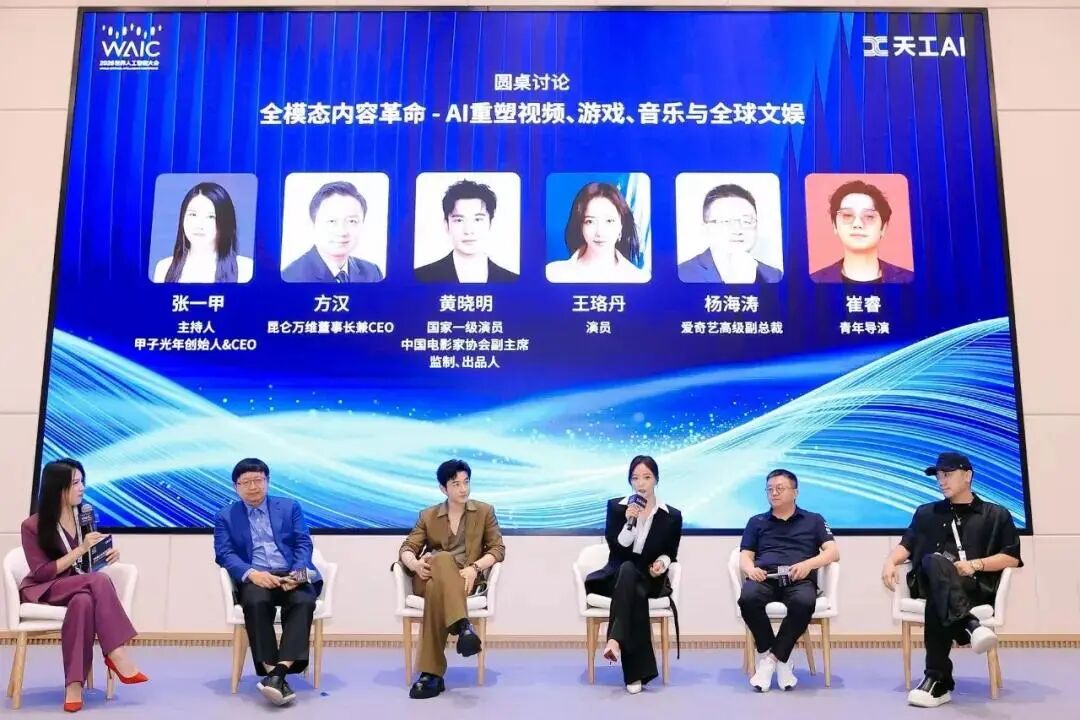
Kunlun Wanwei held a special forum themed "World Models and Multimodal Paradigm Shift". Fang Han, Chairman and CEO, officially declared 2026 the "First Year of the World Model". The forum released four core models including the Matrix-Game 3.5 world model and the Mureka v9.5 music model, covering four major fields: world models, video generation, music creation, and embodied intelligence. The Riemann-1.0 robot model demonstrated by its subsidiary Riemann Dynamics has attempted to complete tasks such as folding clothes and clearing tableware in home scenarios.
Kuaishou's Keling AI released the "Dynamic Canvas" creative workbench during the conference. This function integrates an infinite visual space, intelligent creation assistance, and multi-person real-time collaboration, supporting up to 5 people to create collaboratively.
Every robot, every smart home, and every implementation case on display is translating the concept of AI into tangible reality. JD.com has embedded AI into homes and logistics, Ant has made robots truly "go to work" in pharmacies, and Kunlun Wanwei has set its sights on the more distant world model. Undoubtedly, the closer one is to real scenarios, the faster one can run.
04. Reflections from Giant Finance: The Same Test Question for Tech Giants
After visiting WAIC 2026, one feeling is particularly strong: AI is shedding its coat of technical showmanship and entering a more pragmatic phase that also tests patience.
When a technology no longer needs to rely on parameter competition to attract attention, when it begins to integrate into production lines, pharmacies, offices, and homes, when it evolves from a "miracle moment" at press conferences to a "default configuration" in daily work, that is precisely when the technology truly begins to mature.
Data from the Ministry of Industry and Information Technology shows that the scale of China's AI core industry has exceeded 1.2 trillion yuan, with more than 6,200 enterprises. The AI application penetration rate among industrial enterprises above the designated size has exceeded 30%. The BCG AI Radar 2026 report shows that 94% of global CEOs say they will persist in AI investment even if there are no immediate returns, but only 15% of "pioneer" enterprises have truly achieved AI-driven revenue growth. This means that there is a chasm called "scenario validation" between "having AI" and "making money with AI".
This chasm is precisely what every enterprise at WAIC 2026 is trying to cross. The same conference, the same starting line. The difference is that some are already building momentum for the next lap, while others are still looking for their starting blocks.
When AI is no longer treated as an independent business, but quietly connected to every wire, every device, and every industry like electricity, the first to complete "scenario validation" will get the admission ticket for the next round of competition.
References
1. "WAIC Preview | The Top Ten Treasures of the Exhibition at the 2026 World Artificial Intelligence Conference Officially Announced"
2. "Baidu Buddy Named WAIC 2026 'Treasure of the Exhibition', Full Suite of Intelligent Agents to Make a Collective Appearance"
3. "Multiple Baidu Intelligent Agents Make Collective Appearance at WAIC 2026, Accelerating the Large-Scale Implementation of Intelligent Agents"
4. "For All Industries and Cutting-Edge Scientific Research, Alibaba Will Showcase Multiple Intelligent Agent Platforms at WAIC"
5. "Tencent Unveils the Full Suite of 'AI Buddy', AI Officially Enters the 'Capable of Getting Work Done' Era"
6. "Lenovo Debuts at WAIC 2026: Let Every Token Unleash Its Value"
7. "JD.com Appears at WAIC 2026, Showcasing AI Home and Full-Link Embodied Intelligence Applications"