Brain-Computer Interface: From Decoding the Brain to Empowering Industries

The value of brain-computer interface is not only reflected in a single application scenario, but also lies in the precipitation of a set of underlying technical capabilities that can empower different industries.
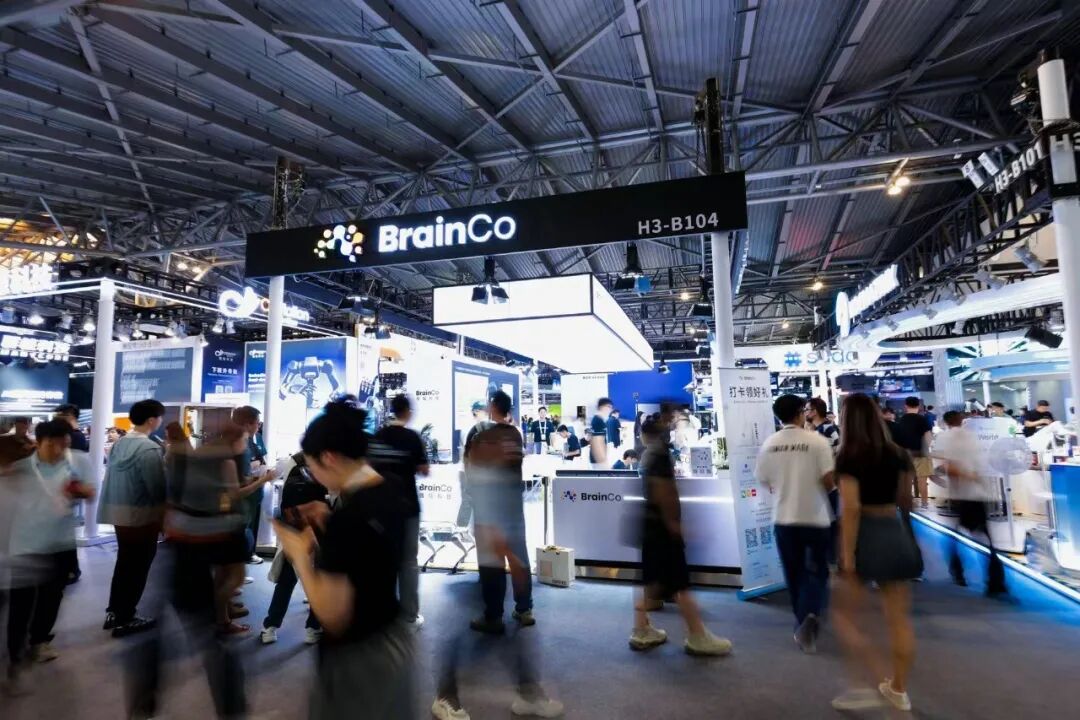
On July 17, 2026, the 2026 World Artificial Intelligence Conference (WAIC 2026) officially opened at the Shanghai World Expo Exhibition & Convention Center. General Secretary Xi Jinping attended the opening ceremony and delivered a keynote speech. Han Bicheng, Founder and CEO of BrainCo, was invited to attend the opening ceremony. During the conference, BrainCo's globally launched BrainCo Brain-Controlled Robot Training Platform, BrainCo Dexterous Manipulation Data Collection Matrix and a number of new-generation brain-computer interface products were showcased in the exhibition area, concentrating on demonstrating the latest explorations of brain-computer interface technology and its broad application prospects as an underlying technical capability.

Integrated Brain-Controlled Robot AI Research Platform, Unlock "Mind-Controlled" Robot Operation in 10 Minutes
With the rapid development of artificial intelligence today, smart devices are continuously gaining capabilities of perception, understanding and execution. More natural and efficient human-computer interaction has become a key direction for the next stage. As a critical technology connecting human intentions and intelligent systems, brain-computer interface is constantly expanding its application boundaries, deeply integrating with technologies such as artificial intelligence and embodied intelligence, to provide new interaction methods for fields including robotics, consumer electronics and smart terminals.
At this WAIC, the integrated brain-controlled robot AI research platform released by BrainCo — the BrainCo Brain-Controlled Robot Training Platform — is exactly the exploration achievement developed around this proposition.
The core of the brain-controlled robot training platform is to allow humans to directly command robots to complete actions through electroencephalogram (EEG) signals. After the user wears the EEG cap, the platform will collect task-related EEG signals in real time, identify intention-related patterns through algorithms, and convert them into specific instructions sent to the robot for execution. The entire process does not rely on any physical limb movements.
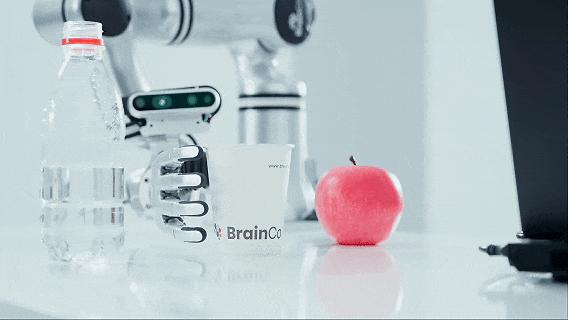
The platform adopts an integrated design. Even R&D personnel without a brain-computer interface background can unlock "mind-controlled" robot operation in 10 minutes. Currently, it supports access to a variety of third-party devices such as humanoid robots, robotic arms, and quadruped robots. At the exhibition site, a robotic arm was used as the carrier for demonstration. After recognizing the user's intention, it can drive the robotic arm to complete actions such as grabbing a water cup and picking up an apple.
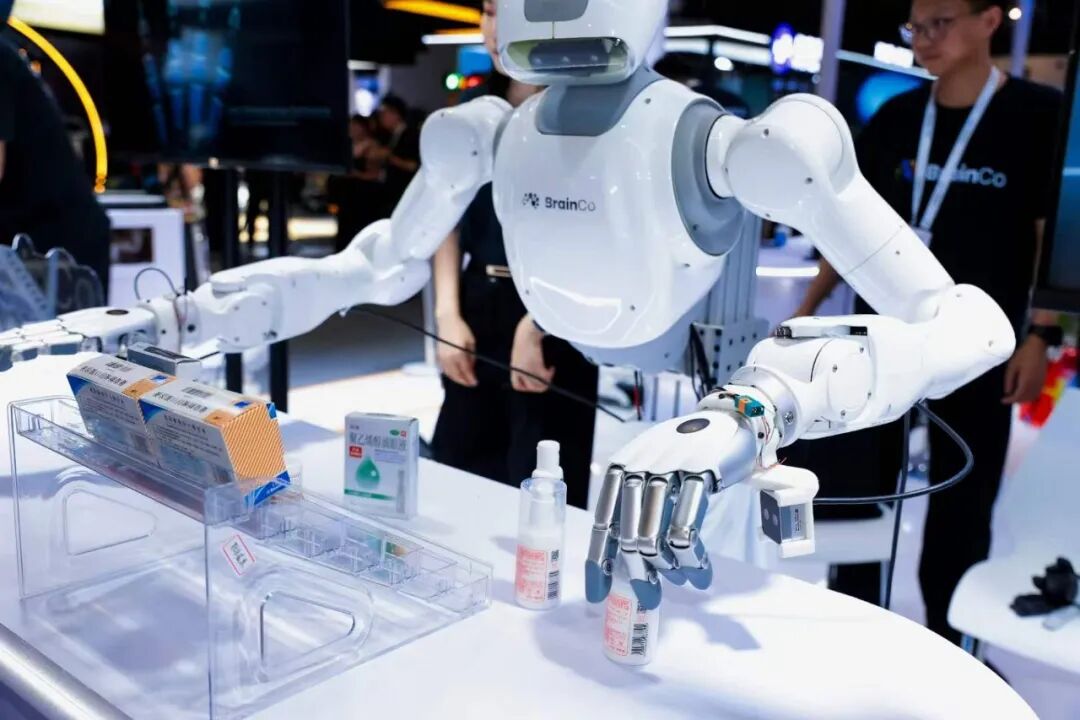
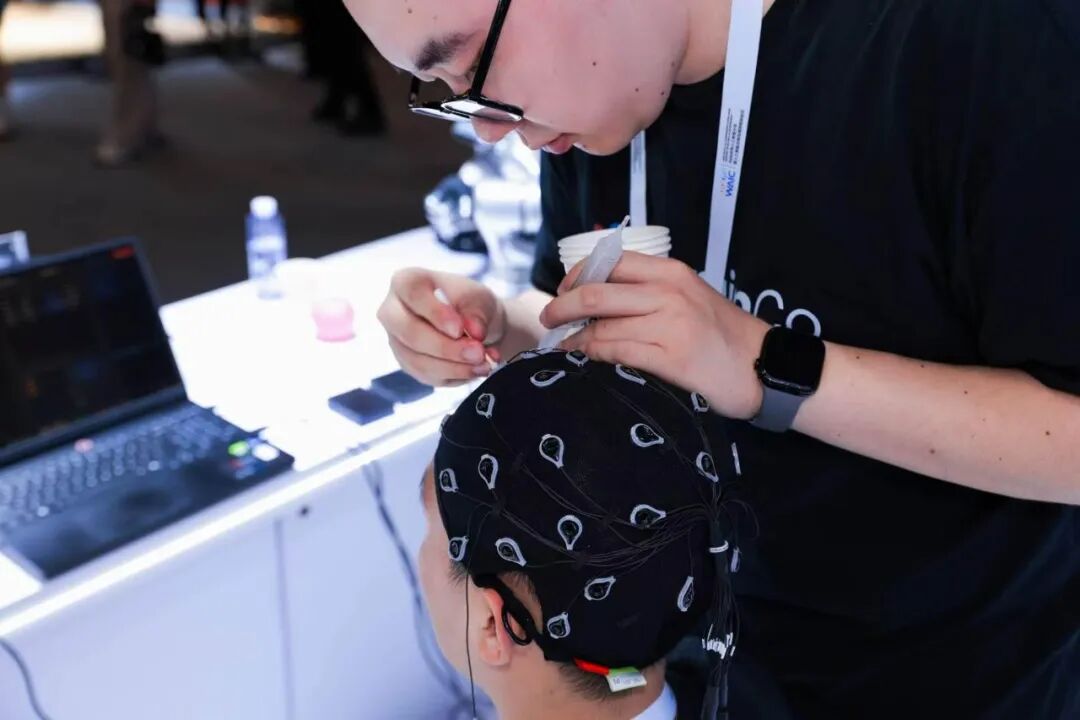
This direction continues BrainCo's long-term technical accumulation in the application of brain-computer interfaces in the medical rehabilitation field, and further extends it to embodied intelligence scenarios, which is the recently discussed industry concept of "Tripartite Intelligence": the brain-computer interface is responsible for intention decoding and output, artificial intelligence is responsible for enhancing decoding capabilities and task decomposition, and embodied intelligence is responsible for physical execution. The collaboration of Neuro-Embodied-AI (brain-computer interface + artificial intelligence + embodied intelligence) covers the complete technical closed loop from EEG signal collection, intention decoding to robot execution.

BrainCo Dexterous Manipulation Data Collection Matrix Released Simultaneously to Build a High-Quality Data Foundation
If the brain-controlled robot answers the question of "how robots understand humans", the simultaneously released BrainCo Dexterous Manipulation Data Collection Matrix solves the problem of "how robots learn dexterous manipulation". Centered on the "dexterous manipulation" scenario, this solution integrates three sources: real-person demonstration, real-machine execution and simulation generation, covering three dimensions of real machine, real-person perception and virtual simulation, to provide a one-stop data solution for dexterous manipulation training of embodied intelligence.
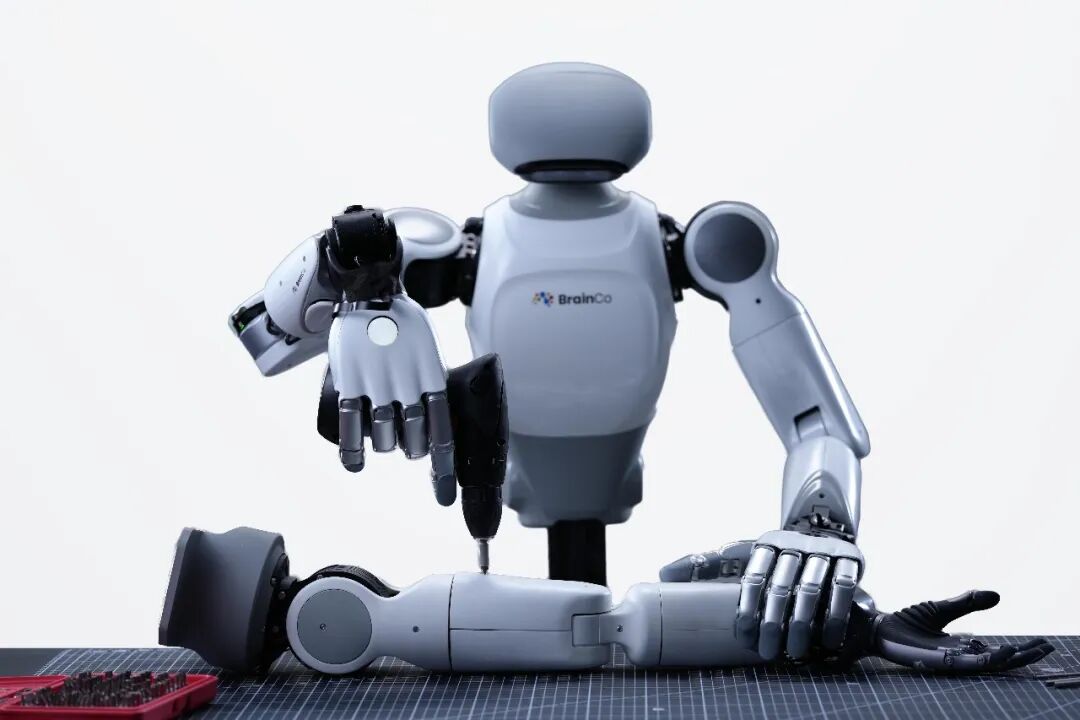
One of the execution end effectors used in the solution is the Revo 3 dexterous hand, which has 21 degrees of freedom with full direct drive and back-drivability. The entire palm is covered with tactile perception, and the fingertips are integrated with visual-tactile sensors, providing a movement and perception base close to the human hand for the data collection process. Such a hardware foundation makes the dexterous manipulation data collected by the solution closer to the movement logic of real human hands.
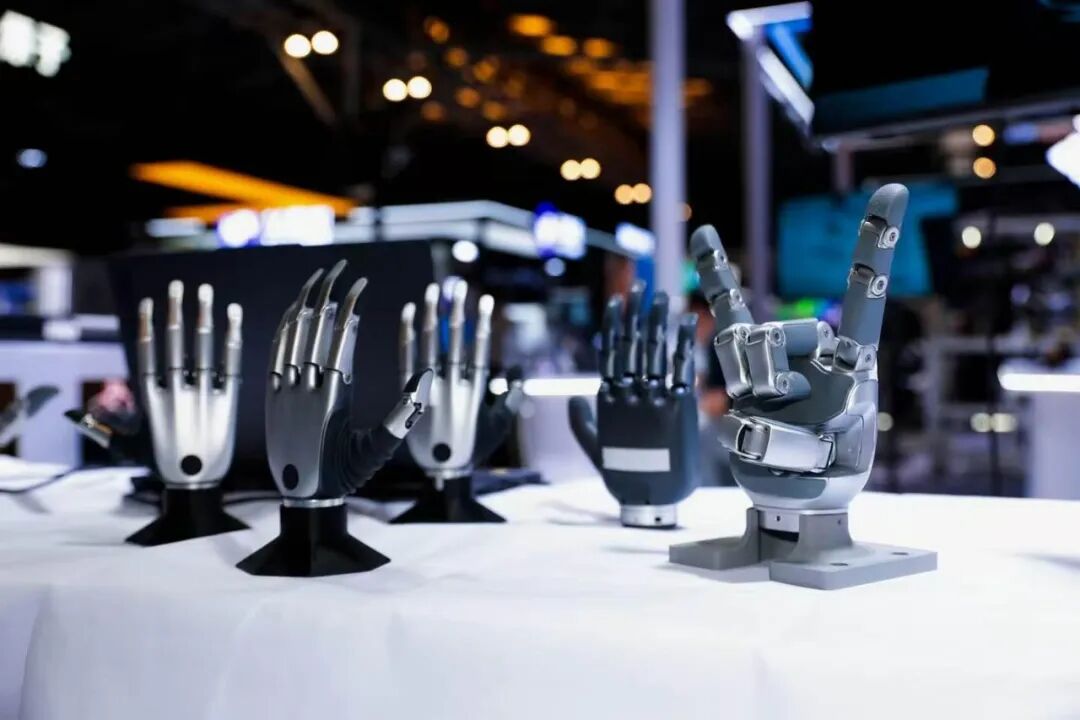
At the same time, the solution is also equipped with the RevoHuman exoskeleton human data collection glove. Adopting a side-mounted exoskeleton design, it minimizes the impact on the natural operation of the human hand while simultaneously collecting hand posture, tactile and wrist first-view data, converting the dexterous manipulation of real people in real scenarios into trainable multi-modal data. RevoHuman and Revo 3 real-machine collection complement each other, opening up the data link between natural human demonstration and robot learning.
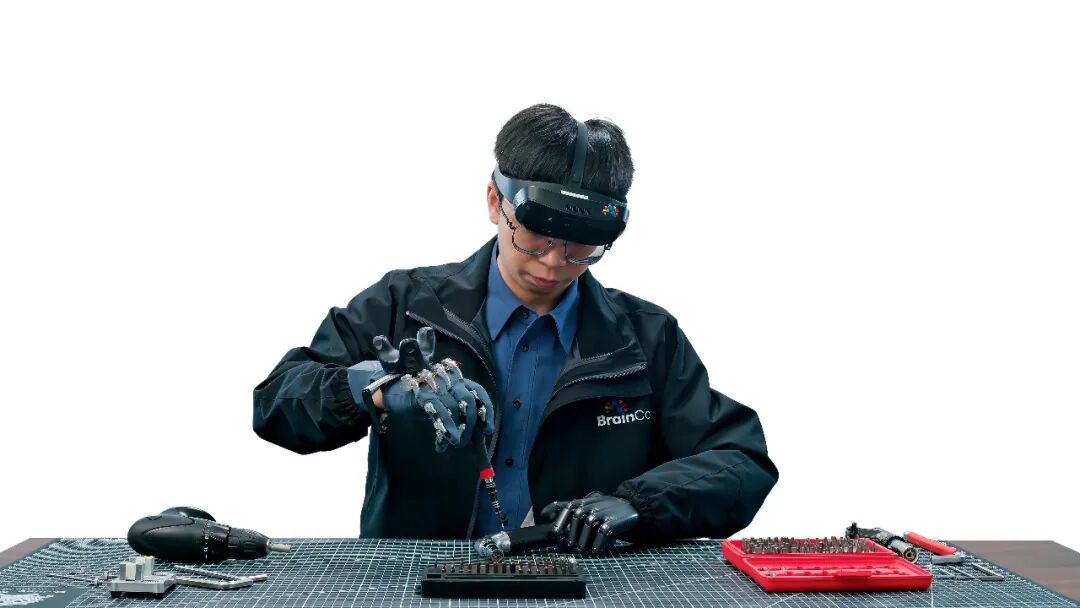
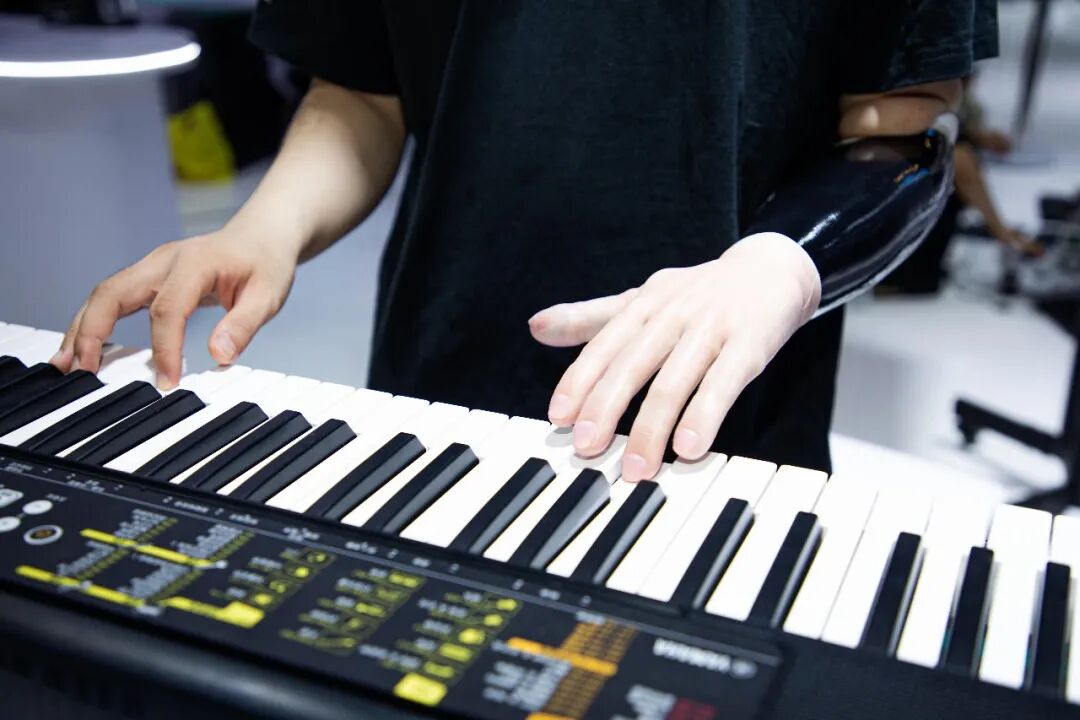
The booth also showcased a new-generation intelligent bionic hand. Compared with the previous generation, it is smaller and lighter, and can be paired with a bionic hand skin to improve the wearing appearance and tactile experience.

The Next Proposition of Brain-Computer Interface Technology
At this WAIC, BrainCo showcased the latest explorations of brain-computer interface technology in different directions, using the BrainCo Brain-Controlled Robot Training Platform, BrainCo Dexterous Manipulation Data Collection Matrix and new-generation bionic hand as carriers. These achievements cover multiple key links such as EEG collection, neural decoding, intelligent control, and data collection, jointly outlining the development direction of brain-computer interface as an underlying technical capability continuously extending to more industries.
The value of brain-computer interface is not only reflected in a single application scenario, but also lies in the precipitation of a set of underlying technical capabilities that can empower different industries. With the continuous maturity of core capabilities such as signal collection, neural decoding, and intention recognition, this technology is continuously extending to more fields such as robotics, consumer electronics, and smart terminals, providing a new technical foundation for the next generation of intelligent interaction. BrainCo will continue to promote the integrated innovation of core brain-computer interface technologies with more product forms and more application scenarios, so that the underlying technical capabilities can continuously release value, build a more natural and efficient connection between humans and smart devices, and continue to explore the development direction of the next generation of human-computer interaction.

In-depth, Sharp, Forward-looking, Capturing business opportunities for the top 1%
A curated official account under 36Kr
👇 Sincerely recommend you follow us 👇