Crafting a "New Formula" for Romance
The core of modern romance dramas has always been "dream-making for young audiences", but the way of dream-making is iterating, shifting from floating romantic fantasies to imagination of intimate relationships grounded in reality. The diversity of professional settings and thematic expansions gives romantic fantasies a tangible anchor, the enhancement of visual romanticism delivers immersive escapism, and the reinterpretation and reshaping of intimate relationships allow audiences to feel a sense of identification and resonance with their longing for love.
In June, *Love Has Fireworks* and *Blazing Summer* premiered, while in July *Wild Dog Bones* and *Bright as Stars* went head-to-head in the same broadcast window. A batch of other romance dramas including *This Second Overheats* and *Sunshower Today* are also waiting for release. Judging from the number of series and performance data, this year's modern romance dramas have delivered outstanding results in the crucial summer schedule.
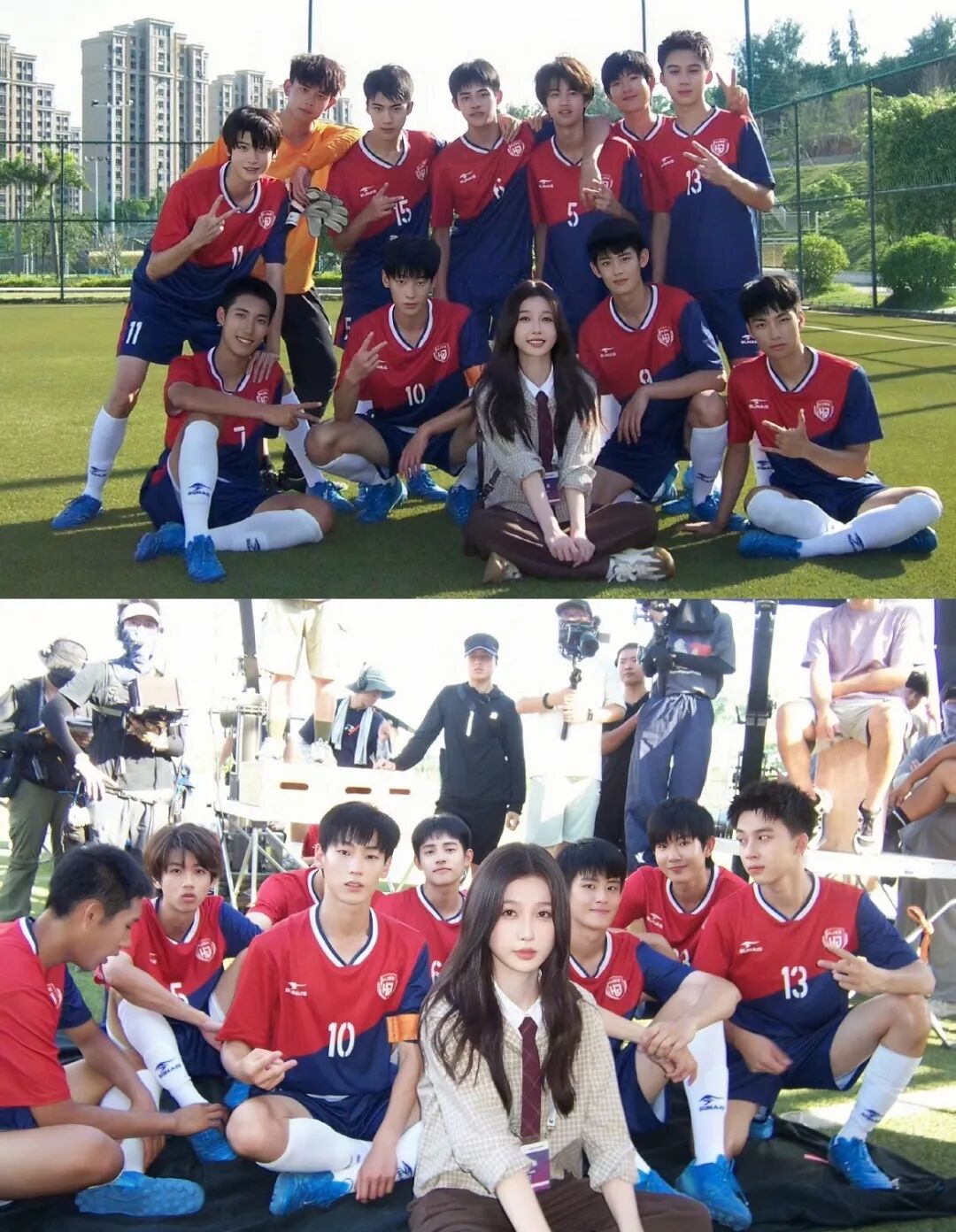
*Wild Dog Bones* tells the story of two "pseudo-siblings" with no blood ties, played by Song Weilong and Zhang Jingyi, who redeem each other in the damp, oppressive atmosphere of a run-down old house in a small southern town. Its peak viewership rating at premiere exceeded 0.66, setting the highest debut viewership record for a 2026 TV drama. *Bright as Stars* features Yu Shuxin as a sports equipment custodian who leads a group of "troubled teens" to play football, and gradually develops romantic feelings for the football coach played by Chen Jingke. On its first broadcast day, the series' in-platform popularity on iQiyi surpassed 7400, taking the top spot for highest opening-day popularity among modern romance dramas in the past five years.
The essence of the modern romance genre remains providing young audiences with romantic imagination about love. As audiences' understanding and expectations of love and intimate relationships evolve, this "time-honored" drama category is also updating its modes of expression across dimensions of themes, characters, audio-visual presentation, and relationship portrayal.
The protagonists' occupations are now set as regular office workers with credible behavioral logic. The genre is also incorporating additional elements to expand narrative boundaries, refining camera language to make emotions tangibly perceptible. This extends the audience's imagination of intimate relationships from "who falls in love with whom" to "how two people find strength in each other and grow into better individuals". Modern romance dramas have found a new "formula", beginning to craft more specific, credible, and immersive dreams.

Evolution of Themes: Giving Fantasies Tangible Coordinates
The most intuitive entry point for the realistic grounding of modern romance dramas lies in the protagonists' professional settings. For a long period, male leads in modern romance dramas were limited to two archetypes: elites and overbearing CEOs. In recent years, their occupations have been depicted with increasing specificity. The closer the connection between a profession and the character's fate, the more the occurrence of love breaks away from the screenwriter's subjective wishful thinking and becomes reasonable and convincing.
For example, *The Blizzard Time* tells the story of a talented snooker player and a 9-ball billiards girl. To make the identity of "snooker player" authentic, the production team invited coaches from the national snooker team to train the actors on set, and the actors dedicated themselves to professional practice for their roles. More importantly, the profession is not just background noise for romance, but the driving force of the character's fate: the male lead retires unjustly, and his life trajectory is altered by career-related trauma. Under this setting, the relationship between him and the female lead, from meeting and mutual understanding to healing each other, every step follows the logic of "how two professional athletes understand each other's glory and pain", creating a fated sense of falling in love and the redemptive feeling audiences crave, built on mutual understanding and recognition.
Similarly, *Spring Fever Lover* sets the male lead as a mortician, a profession inherently tied to themes of life and death. This professional identity not only brings freshness, but also directly deepens the emotional depth of the series. His hesitation towards intimate relationships and attitude towards separation all stem from this professional setting, bringing a realistic texture that cannot be diluted by romance.
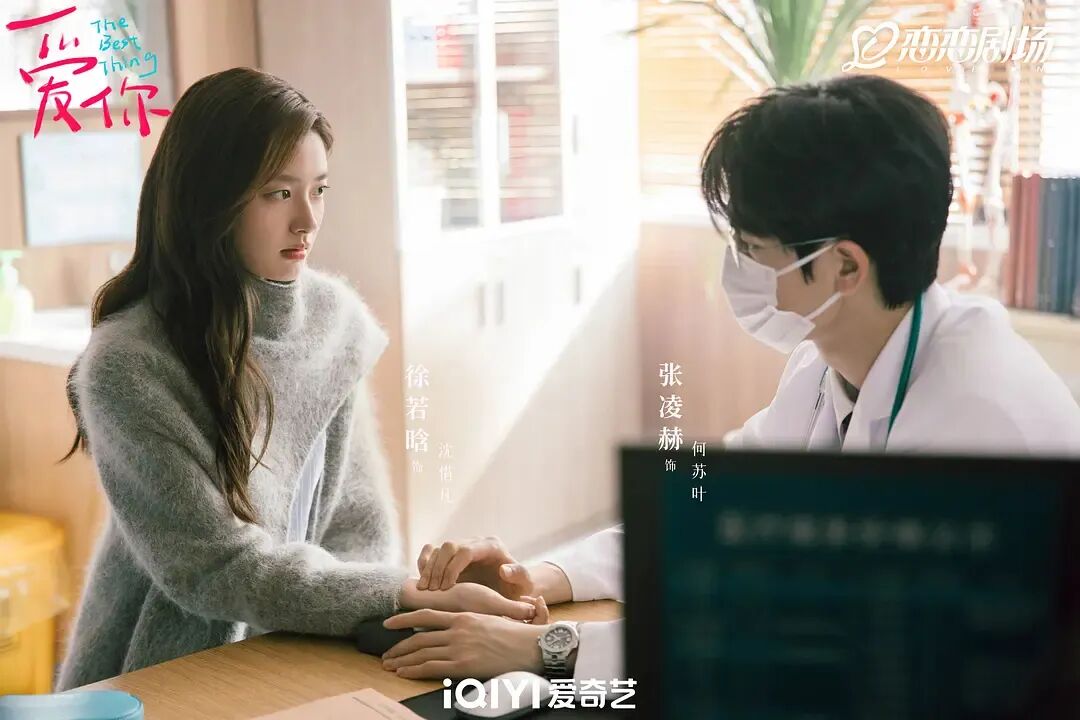
*Love You* makes a more "niche" choice: the male lead is a traditional Chinese medicine practitioner, who can even "heal" the female lead at a pathological level. The TCM concepts of "observing, listening, questioning, and pulse-taking" and "nourishing regulation" directly shape his patient, meticulous, and gentle attitude towards the female lead. Meanwhile, the female lead works as a hotel staff, a relatively rare setting in previous romance dramas. Their sweet love aligns more closely with audiences' imagination of encountering true love in daily work and life.
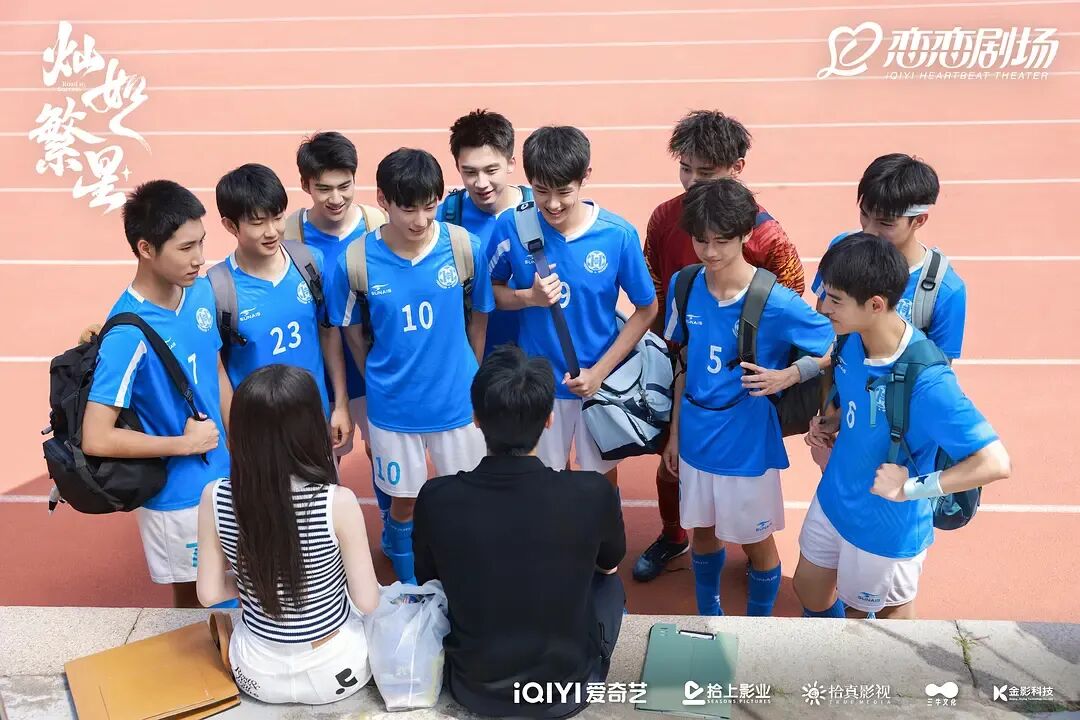
At the same time, modern romance dramas are expanding their narrative boundaries through "genre addition", allowing love stories to carry more layered emotions. *Bright as Stars* is a typical example of the hybrid "modern romance + sports competition + psychology". In the series, Lin Wanxing observes team members through a psychological lens, understands each person's behavioral motivations, and uses professional methods to help them break through psychological barriers. The show also addresses topics including the original family trauma, adolescent confusion, and lack of self-worth of several football-loving teens. The inclusion of competitive sports provides a stage for "ensemble portrayal": football is a sport that cannot be won by individual heroism. Themes like teamwork, trust building, and the achievement of shared goals naturally resonate with the core of the female lead's mission to "rebuild relationships".
The genre fusion makes *Bright as Stars* feel more like a youth sports film, discussing what kind of relationship helps the protagonist stand back up when they hit rock bottom, with romance as just one naturally developing narrative thread. When audiences are moved to tears by the teens' growth on the football pitch, what touches them is no longer just sweet love, but individual growth and the beautiful connections between people.
*Derailment* adds time-space suspense elements, making "identity dislocation" the core driving force for relationship development. *Filter* uses a magical bracelet to create abundant comedic moments and situational dislocations. Thematic fusion extends the narrative of modern romance from "how people fall in love" to "under what circumstances people fall in love" and even "why people need love". Using the shell of different genres provides richer narrative space for love stories, making "sweetness" less one-dimensional, and "heart-wrenching" plots more solidly grounded.
In romance dramas that are closer to reality, audiences see more specific, humanistic life itself, and the romantic fantasies generated thereby have real-life origins — precisely the irreplaceable advantage of this content genre.
Audio-Visual Language Amplifies Emotional Intensity
In recent years, from lighting design and camera scheduling to environment construction and details of costume, props and sets, it is evident that creators are turning "atmosphere" from an adjective into a set of actionable methodologies.
The environment itself has become a narrative tool. For example, *Wild Dog Bones* was filmed on location in Huizhou, Guangdong. The mottled residential buildings, damp rainy atmosphere, and cramped feeling of the small town all contribute to creating a "precarious" mood. The production team of *Meet Yourself* set their cameras on the ancient villages in Yunnan, where the female lead Xu Hongdou leaves the city, moves into "Windy Courtyard", slows down in this environment to find herself again, and then encounters love, piecing together a "Xanadu-style" romance.

Lighting is also the most direct emotional translator. In *Wild Dog Bones*, the childhood timeline and adult timeline have distinct tonal differences: the former has a retro aesthetic that fits the damp vibe of the southern town, matching the hazy affection of the protagonists during adolescence; the latter uses cold, low-saturation colors, which better convey the restraint and emotional tug after their separation and reunion. Through different lighting styles, audiences can quickly perceive the shifts in the two characters' emotional states.
When director Yu Zhongzhong of *Dual Tracks* handled the rooftop kissing scene between the male and female leads, he used constantly changing, even "logically unreasonable" lighting to create the feeling that when two people's emotions burn so intensely that they forget themselves, the world around them ought to transform. What the creators pursue is an "aesthetic sense" and "worldbuilding", making visuals break away from pure realism and become a rhetoric of emotions. In our past conversation, he also mentioned a working method: prepare all costumes, props, art designs and lighting equipment in advance, then place the actors in this environment — "Once the credibility of the physical environment is established, the breeding of emotions has fertile soil."
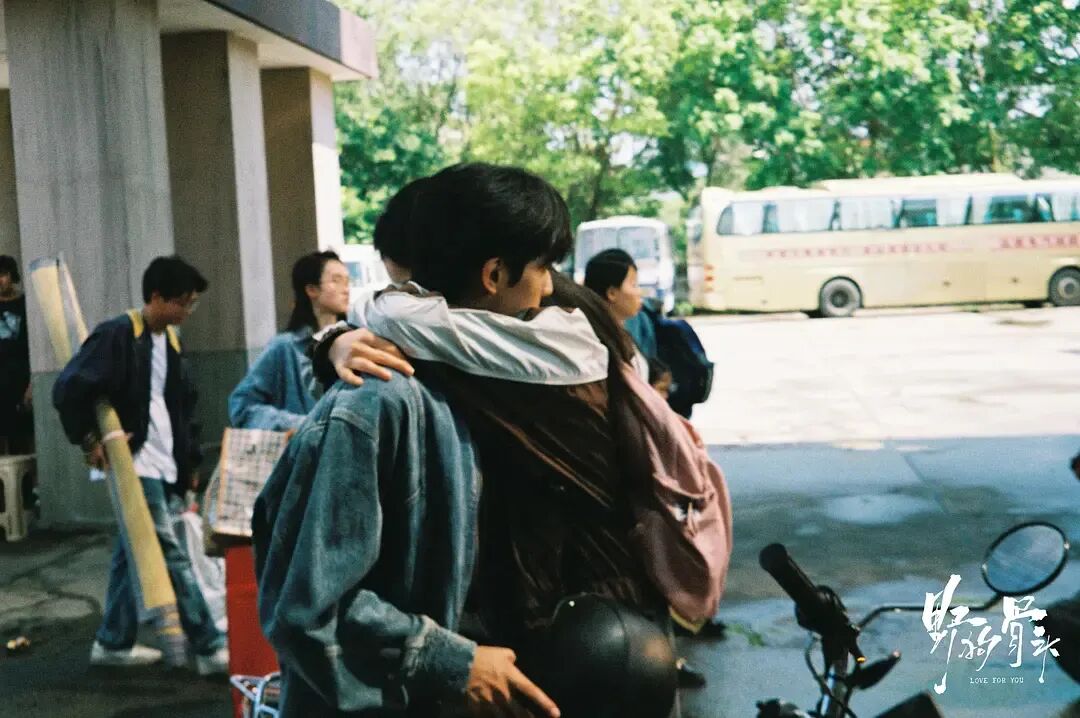
Meanwhile, more effort is put into crafting a sense of fate through camera language. In *Wild Dog Bones*, when the female lead is abandoned by her mother again, she walks out of the station alone, passes through the crowd and sees the male lead sitting on a motorcycle. As their eyes meet, the camera "travels through time and space", cutting back to the scene where the two first met at the station when they were kids. The two timelines overlap in the same physical space. The sense of fate is not expressed through explicit lines, but "brewed" jointly by the environment, lighting and editing. This "visual rhetoric of interwoven timelines" allows audiences to directly "see" the decades-long bond between the two characters.
Audiences may not analyze these technical details frame by frame, but the "deeply touched" impression will linger in their minds — which is exactly the key to making a modern romance drama captivating. As Yu Zhongzhong said, the "authenticity" he pursues is not the realism of the story's setting, but "the sense of certainty at the moment emotions arise". On this point, creators of romance dramas have been doing increasingly solid work.
Reshaping the "Relationship" in Intimate Relationships
The deeper transformation of modern romance dramas lies in their understanding of intimate relationships, directly pointing to the fundamental motivation of audiences watching romance dramas: what kind of love I want to see, how I hope to be treated, or in other words, what kind of person I want to become in a relationship.
The first evolution is seen in male characters. The traditional overbearing CEO archetype has not disappeared — wealthy and good-looking male characters are still a standard element of romance dramas, but the definition of what makes an overbearing CEO "charming" has changed. In *The Sun is Bright*, the male lead played by Song Weilong is called a "guiding partner". When facing the female lead's difficulties, he does not take over everything and spend money to solve all problems for her. Instead, he gives her space to confront the challenges, provides spiritual support, and acts as a reliable safety net, embodying the shift from "I'll handle everything for you" to "I support you to try, and I'll be your backup".
In real life, omnipotent redeemers are rare, and reliable "companions" are closer to the audience's imagination of an ideal partner. Many "stable" and "domestic" male characters are widely welcomed precisely because this "unoppressive sense of companionship" is the emotional relationship that young people today crave more.
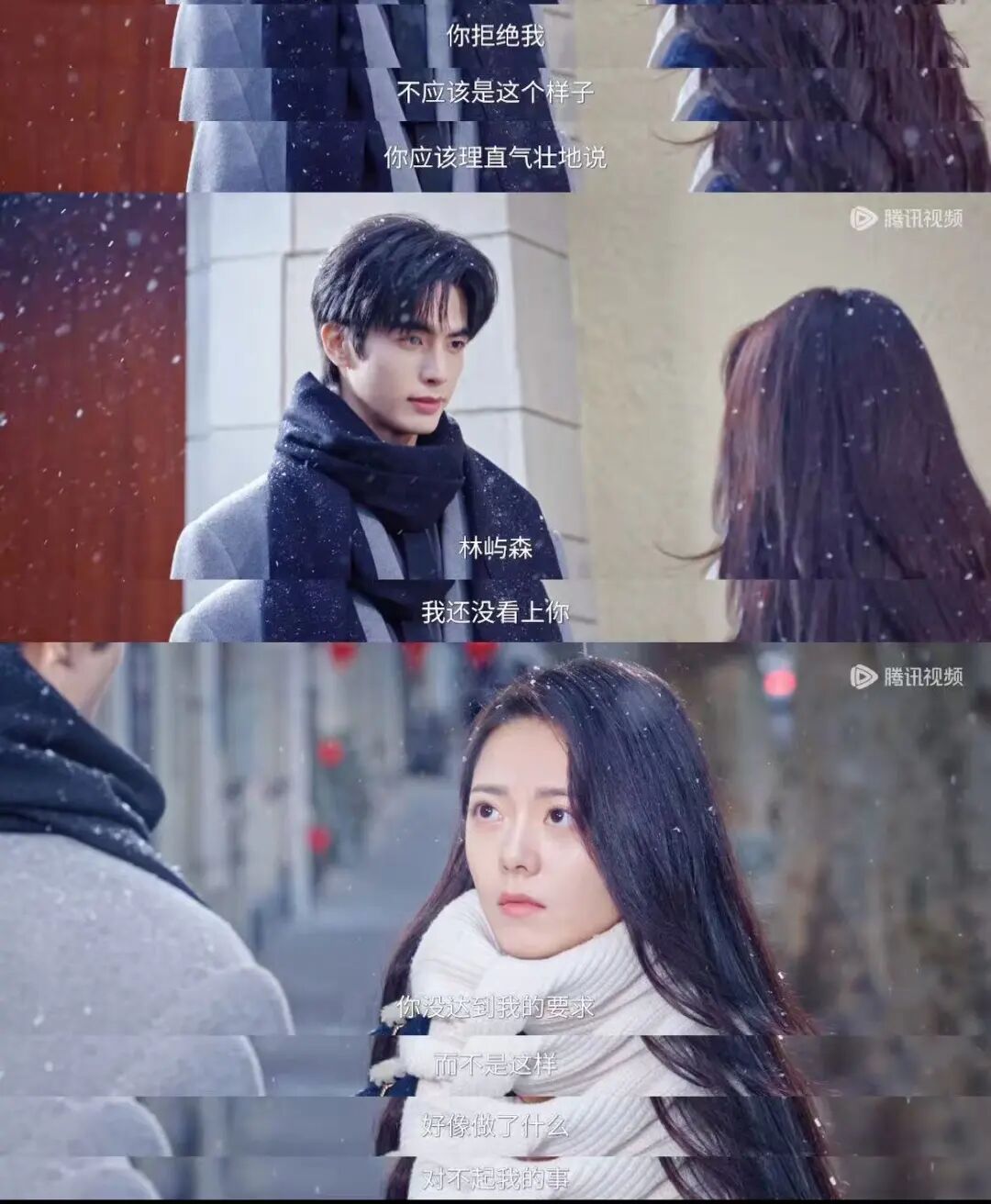
Correspondingly, the female perspective is being deepened. The female lead is not only a character for the audience to identify with, but also a perspective to examine the male lead. Through the female lead's eyes and spiritual needs, the charm of male characters is redefined. As a result, modern romance dramas are intentionally shaping the vulnerable sides of male leads, presenting their growth arcs, turning "mutual redemption" from a mere label into a tangible relational dynamic. In *Wild Dog Bones*, two young people scarred by their original families support each other. The male lead is a fierce, unruly "wild dog" with a soft heart, while the female lead is a gentle but stubborn "bone". What makes "mutual redemption" so touching is that it is not one-sided charity, but two incomplete people piecing each other into a whole. What audiences root for is not just sweet interactions, but the sense of growth that "because I met you, I have become a better version of myself".
The expansion of intimate relationships is also reflected in the connections with people around the protagonists. In the past, many romance dramas only focused on the male and female leads, plus the female lead's best friend and the male lead's buddy, with plots revolving around romantic tug-of-war and misunderstandings between the couple. Nowadays, modern romance dramas are broadening the definition of "intimate relationship" from a narrow romantic template to all profound connections between people.
In *Bright as Stars*, the relationship between the two leads and the football team members becomes one of the core emotional storylines. The female lead's core dilemma is not a romantic problem, but how to rebuild trust with others and how to "enter" a relationship again. The male lead, due to his past experience as a coach in the UK, is initially unwilling to invest genuine emotions in the group of teen footballers. Through long-term running-in and coexistence, they build sincere bonds and heal past traumas. Intimate relationships are no longer equivalent to romantic relationships — they also include teamwork, teacher-student affection, and camaraderie, essentially answering a more fundamental question: what kind of emotional connections do people need to sustain their lives?
Modern romance dramas are turning "love" from an abstract ending into a specific, multi-layered process that requires joint construction by two people. It is no longer a fairy tale ending of "the prince and the princess live happily ever after", but a realistic narrative of "how two flawed ordinary people find strength in each other and grow into more complete individuals". This transformation responds to the real situation of young audiences: having seen too many imperfect relationships, and too many romantic templates that are so beautified they cannot be emulated, what they need is an imagination of relationships that "can be worked on even if it's not perfect".
The foundation of modern romance dramas has never wavered — it always provides young audiences with romantic imagination about love. But the definition of romance is changing. Love no longer belongs exclusively to princes and princesses; ordinary people in real life still have the possibility to experience heart-fluttering, romantic moments. When a romance drama allows audiences to see the desired, attainable version of love in other people's stories, it has fulfilled the core mission of this genre.
This article is from the WeChat public account