The hardware is ready, but the software is starved: Amid the flood of hot money, who is vying for the "soul" of robots?
When humanoid robots can walk steadily on two legs and grasp deftly with both hands, the industry has reached a clear watershed.
Data shows that in the first half of 2026, nearly 440 billion yuan of capital poured into China's embodied intelligence track. Meanwhile, a striking structural shift occurred: more than half of the funds flowed to "brain-focused" companies, while robot body manufacturers received less than 20% of the total investment.
In fact, in the current embodied intelligence field, the "cerebellum" of motion control has become highly mature. The "brain" responsible for understanding the world and autonomous planning remains tightly constrained by massive scene data shortages and technical bottlenecks.
When physical capabilities are no longer a threshold, the brain becomes the ultimate upper limit. From VLA large models to edge-side computing chips, from world models to data infrastructure, a full-scale battle for dominance over robot brains has already begun.
When the "Brain" Becomes the Decisive Factor
In May this year, on the eve of the Scottish Premiership season, a one-of-a-kind fully autonomous 3V3 humanoid robot football match kicked off first. On site, multiple humanoid robots chased a football. They had no remote controls and no pre-set trajectories, relying entirely on their own "brains" to perceive the on-field situation in real time, independently plan movement routes, and decide whether to pass or shoot.
Although their movements were occasionally slightly clumsy, every step was "thought up" by the machines themselves. Three years ago, such a scenario only existed in laboratory conceptualizations.
At that time, the industry was racking its brains over whether humanoid robots could stand steadily and walk. But by 2026, the landscape had changed drastically. As products from manufacturers such as Unitree, UBTECH, and Fourier Intelligence can now walk stably, transport materials, and even perform fine tasks like unscrewing bottle caps, motion control at the robot "cerebellum" level has become highly mature.

However, there still seems to be an insurmountable chasm between walking steadily and thinking clearly.
To achieve general autonomous capabilities, a qualified robot brain requires at least tens of millions of hours of high-quality real interaction data. In reality, by the start of 2026, the total compliant and usable robot data worldwide was only 500,000 hours, representing a gap of over 99%.
The scarcity of data directly manifests as the "immaturity" of the brain. Today's robots can skillfully assemble parts in structured factories, but once they enter open scenarios such as homes and supermarkets, facing messy desktops, suddenly intruding pets, and ever-changing user demands, they often find themselves in a predicament.
Perhaps precisely because they have spotted this fatal shortcoming, capital has begun to "vote with their feet".
According to incomplete statistics from QbitAI, in the first half of 2026 (as of June 12), financing in China's embodied intelligence track reached nearly 438 billion yuan, approaching 80% of the approximately 554 billion yuan recorded for the whole of 2025. At this pace, the full-year figure for 2026 will undoubtedly set a new record.

But what is more thought-provoking than the total amount is the flow of funds. Out of nearly 440 billion yuan in financing, more than half went to "brain-focused" companies; pure "body-focused" manufacturers only received about 12.8% of the share, a figure even lower than the 14.4% accounted for by core component enterprises that produce dexterous hands, sensors, and joint modules.
Divisions within the brain track are equally stark. VLA (Vision-Language-Action) models took 42% of the funds, world models accounted for 27%, data infrastructure for 20%, and edge-side chips for 11%. Many brain-focused companies have financing rounds so frequent that they average one round per month, with some enterprises having an interval of just two weeks between two rounds.
At the same time, tech giants and cloud vendors have also entered the arena. Huawei, Tencent, Baidu and others have all increased their layout of robot brains, launching an all-out ecosystem battle.
Among them, Huawei launched the CloudRobo platform, attempting to connect robots to its Ascend computing power matrix; Tencent positions itself as a "titanium screw" in the industrial ecosystem, using its open-source Hunyuan large model to solve robots' thinking problems. Major companies have collectively chosen to develop brains rather than robot bodies. Apart from effectively avoiding price wars over hardware, the more critical reason is that this path allows them to leverage their core strengths in massive computing power, simulation environments, and multimodal large model foundations.

As the threshold for physical capabilities is gradually lowered, the barriers surrounding the brain are growing higher and higher. With the rules of the embodied intelligence competition rewritten, this battle for the "soul" has only just fired its starting gun.
Who Is Defining the Robot Brain?
At present, the embodied intelligence brain track has formed a multi-pronged development pattern.
Among them, the "in-house model development" faction takes VLA and world models as their core moat, following the path of models defining brains. This is the camp with the largest financing scale and the fastest valuation growth. Qianxin Intelligence is one of the fastest runners in this field.
This company, founded only in January 2024, saw an astonishing surge in financing in 2026. In February, it secured two consecutive rounds totaling nearly 20 billion yuan, with investors including top-tier institutions such as Yunfeng Capital and Sequoia Capital; in March, it obtained another 10 billion yuan in financing, pushing its valuation to 200 billion yuan; then it raised an additional 15 billion yuan, accumulating 45 billion yuan in just three months.
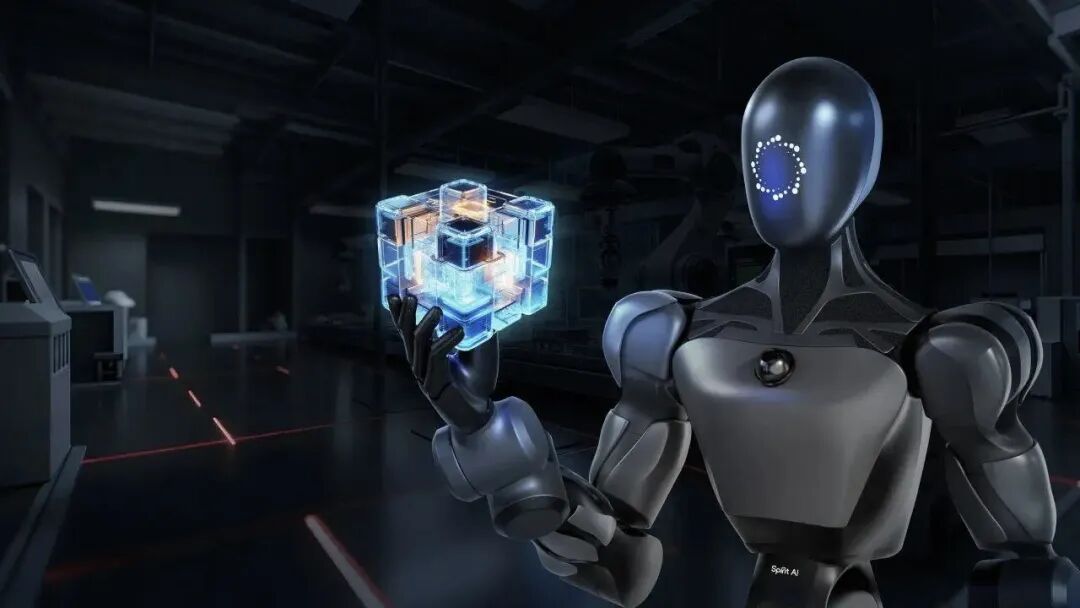
Figure / Qianxin Intelligence Official WeChat Public Account
What makes capital so enthusiastic is a landmark technological breakthrough the company has achieved. In January this year, Qianxin Intelligence's open-source model Spirit v1.5 outperformed the Pi0.5 model of leading US company Physical Intelligence, becoming China's first open-source model to achieve this milestone. At the same time, its technical value was quickly verified in industrial scenarios such as retail and manufacturing.
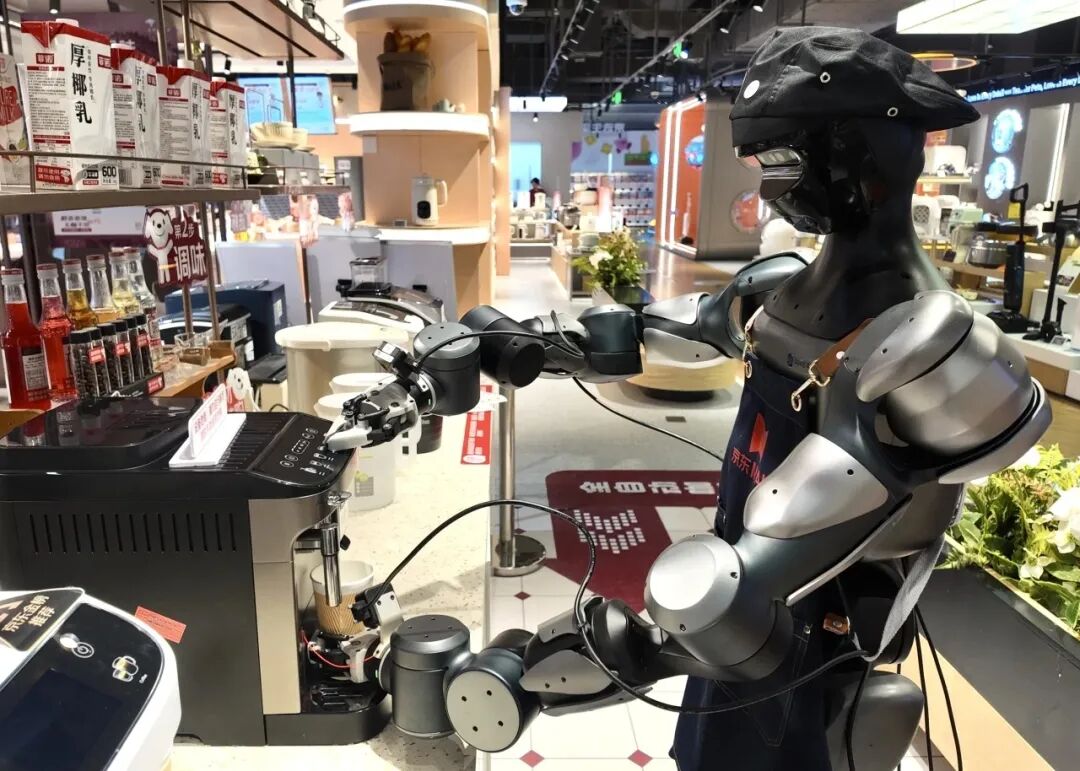
Figure / Qianxin Intelligence Official WeChat Public Account
Another model-focused company, Wujie Power, bets on the dual-drive approach of latent space world models and reinforcement learning. Its logic is to enable robots to understand the physical laws governing the operation of the world, rather than merely memorizing scenes. This means robots can walk through any previously unseen door, instead of only moving around familiar locations.
In June 2026, Wujie Power's MWA™ embodied general brain topped the global RoboCasa GR1 TableTop list jointly launched by institutions including Stanford University, surpassing multiple mainstream models such as ACE-EGO-0 and DIAL.
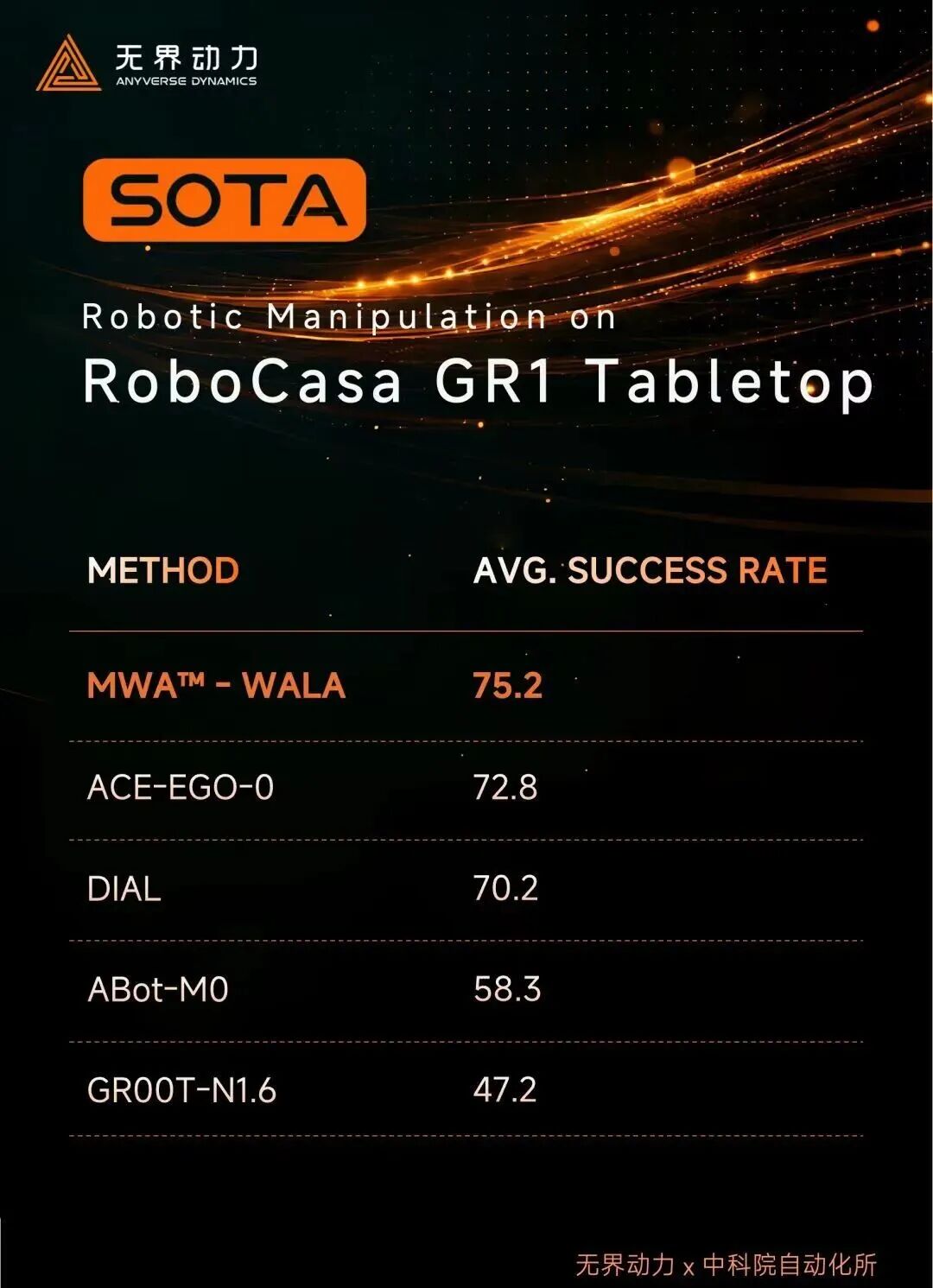
Figure / Wujie Power Official WeChat Public Account
The "edge-side computing power" faction cuts in through the edge-side deployment of high-computing-power large models, emphasizing local real-time decision-making and mass production delivery capabilities. In this camp, Ruyi Power, a subsidiary of Zhixing Technology, is worth noting.
Ruyi Power is deeply engaged in the robot brain field. Drawing on the technology stack and engineering mass production experience accumulated by Zhixing Technology in the autonomous driving domain, it has completed initial technical and engineering verification. Its core product, the robot AI Box edge computing device, offers computing power ranging from 80, 128 to 560 TOPS, which can drive embodied intelligence edge-side algorithms to shift toward model-driven approaches. At the same time, by combining VLN (Vision-Language-Navigation) and VLA (Vision-Language-Action) model architectures specifically optimized for edge-side deployment, robots can break free from absolute dependence on the cloud and efficiently complete real-time perception, reasoning, and decision-making locally.
Currently, Ruyi Power's technical capabilities have been verified in multiple real-world scenarios. In addition to the football match mentioned earlier, at this year's Beijing Yizhuang Humanoid Robot Half Marathon, the Ruyi Power team developed and deployed autonomous navigation and obstacle avoidance algorithms, enabling the robot to successfully finish the race in less than two hours. Its self-developed AI BOX product iRC100P (with 128TOPS of AI computing power) has also received large-scale mass production orders from leading domestic embodied intelligence enterprises, with the first batch of deliveries and deployments completed.
Furthermore, the "body + brain integrated" faction, which possesses both top-tier models and self-developed robot bodies, attempts to form a closed loop through hardware-software collaboration. The core logic of this faction is to control both the "body" and the "soul" simultaneously. Xinghaitu is a typical representative of this approach.
However, while this logic sounds appealing, the costs are obvious. Since they need to give consideration to both models and robot bodies, requiring capital and teams for both lines, the cash flow pressure on integrated faction enterprises usually exceeds that of pure software or pure hardware companies. Therefore, whether this path can be successfully followed depends on whether the enterprise can strike a balance between financing rhythm and product implementation.
The "brain-inspired architecture" faction attempts to bypass the data bottleneck of traditional VLA and reconstruct the brain architecture from the bionics grassroots level. Zhipingfang is a pioneer in this direction.
In 2026, the company released the world's first brain-inspired embodied intelligence system, NeuroVLA, drawing on the three-level system of the human cerebral cortex-cerebellum-spinal cord. Unlike traditional large models that continuously rely on massive data and computing power, NeuroVLA, based on the working mechanism of the human brain, enables robots to complete learning and decision-making with far less data.
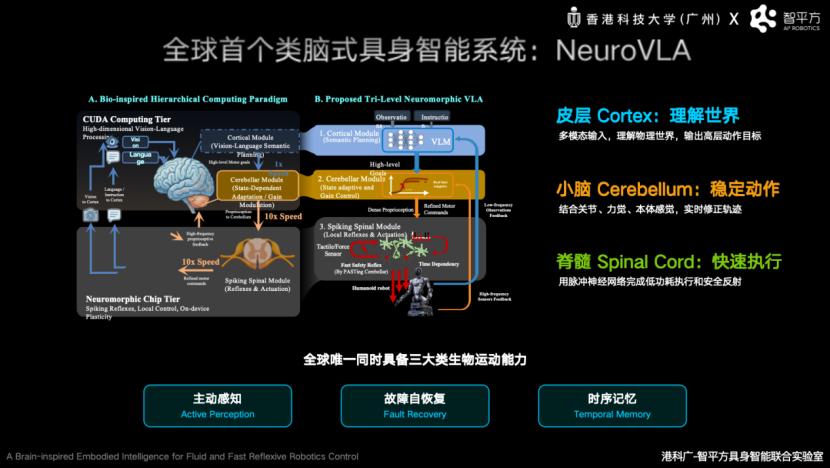
Figure / Zhipingfang Official WeChat Public Account
Of course, the multiple prongs of development all lead to the same destination.
The VLA faction pursues the ultimate breakthrough in model capabilities, the edge-side faction seizes the engineering high ground of computing power deployment, the integrated faction attempts to build a closed loop through hardware-software collaboration, and the brain-inspired faction reconstructs the brain architecture from the bionics grassroots level. All players are heading for the same end point: enabling robots to truly understand the world.
In the future, whoever can successfully run through the commercial closed loop from models to scenarios before technology converges will be expected to define the thinking mode of the next generation of robots.
Where Is the Next Stop?
Capital is pouring in, and talent is surging forward. But a more fundamental question remains: how big is this market exactly? Which link in the value chain will the capital eventually flow to?
The report "Ten Major Tracks of Future Industries in 2026" from the CCID Research Institute points out that the global embodied intelligence market will register a compound annual growth rate of 73% in the next five years, and the market size is expected to reach 238.8 billion US dollars by 2030. GGII has also predicted that by 2030, the domestic humanoid robot market will approach 38 billion yuan, with sales volume rising to 271,200 units.
The numbers are large, but what truly deserves attention is not the scale, but the structure.
In the past two years, capital was mainly concentrated in the hardware body and motion control segments. However, as the capabilities of robot bodies mature and homogenization intensifies, the center of gravity of the value chain is gradually shifting upstream toward the brain. This judgment is also confirmed at the policy level.

Both the 2026 Government Work Report and the 15th Five-Year Plan have clearly designated embodied intelligence as a national strategic industrial direction. On the policy chessboard, the brain has been assigned the strategic role of defining the upper limit of products. It is no longer just a technical module in the upper reaches of the industrial chain, but has been elevated to the mid-stream intelligent base, occupying the most price-dominant niche in the entire value chain.
So, in what direction will this intelligent base evolve?
At the technical architecture level, industry consensus is evolving from a single VLA model toward the integration of the information-physical-cognitive three domains. The world model is no longer a competing route for VLA, but a core puzzle piece within the VLA system, responsible for conducting deductions in high-dimensional space; while VLA is responsible for converting deduction results into specific actions. The brain and cerebellum are expected to evolve from operating independently to collaborative co-evolution.
At the model capability level, current robot brains are still in the passive execution stage, requiring you to provide an instruction before they find a way to complete it; the next generation of brains will have the capabilities of active deduction and self-evolution, growing smarter with use, with stronger environmental adaptability and complex task processing capabilities.
At the deployment level, the brain cannot stay in the cloud forever. After all, scenarios such as homes, supermarkets, and hospitals do not have stable network environments, and cannot tolerate even millisecond-level latency. By deploying high-computing-power large models on the edge side, robots can gradually break free from dependence on the cloud and complete real-time perception and autonomous decision-making in the real