What cutting-edge technologies have been used in this World Cup?
This year's World Cup is drawing to a close!
I wonder how many matches you've watched? I didn't catch a single live broadcast—all I saw were replays. There's no way around it; as I get older, I simply can't pull all-nighters anymore. Staying up late even once takes me several days to recover from.
Honestly, as an "old-timer" from the post-80s generation, I barely recognize any of the current active players. While watching the games, the tech elements on the pitch ended up grabbing my attention far more—especially as someone who runs a tech-focused media channel.
This World Cup is the most tech-savvy one in history. A huge amount of cutting-edge digital technology has been integrated both on and off the stadium grounds, covering fields like 5G, the Internet of Things, VR/AR, cloud computing, digital twins, and artificial intelligence. These digital innovations haven't just improved the accuracy of refereeing decisions—they've also transformed the viewing experience for audiences watching from home.
In today's article, I'll break down all the cool, cutting-edge tech being used at this year's World Cup in detail.
Match Ball Equipped with IMU Chip
Let's start right on the pitch, beginning with the official match ball.
The soccer ball used in this World Cup is called "Trionda," made by Adidas.
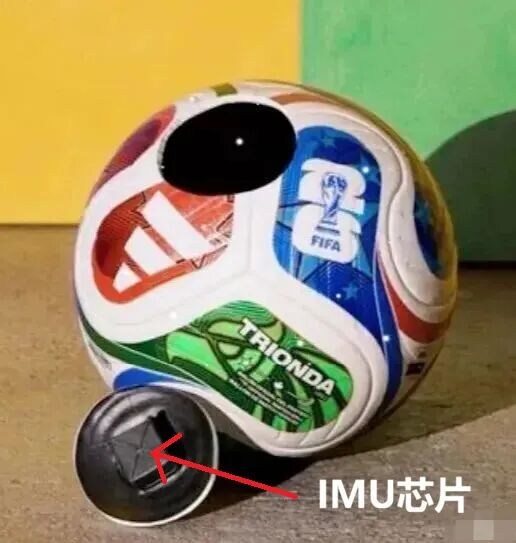
This ball is assembled from four panels using a thermal bonding process. Embedded in the inner layer of one of these panels is a mere 14-gram IMU (Inertial Measurement Unit) chip.
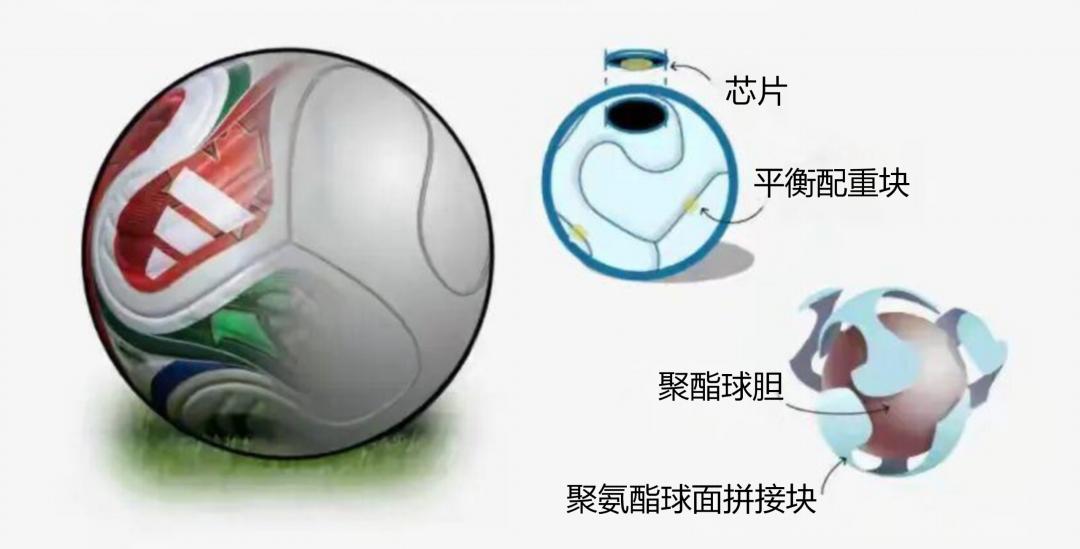
Inside the chip are an accelerometer and a gyroscope, which can capture the ball's motion data in real time 500 times per second—including metrics like speed, rotation angle, and acceleration.
500 times per second works out to once every 2 milliseconds. When a player takes a shot, the contact time between their foot and the ball is roughly 10 to 20 milliseconds. At 500Hz, the chip can easily capture 5 to 10 sampling points, pinpointing the exact moment of contact with extreme precision.
IMU chips are already found in our smartphones and cars, but the IMU inside the Trionda has far stricter technical requirements.
It must maintain attitude calculation errors at the centimeter level even when the ball is traveling at 100 km/h. For shock resistance, it has to withstand instantaneous acceleration of over 50g—close to the acceleration of a cannonball leaving the barrel. That's something ordinary IMU chips simply can't handle.

The chip also boasts exceptional battery life. It takes about 90 minutes to charge wirelessly, and a full charge supports up to 6 hours of continuous use—more than enough to cover the full duration of a match, including extra time and penalty shootouts.
The data collected by the chip is transmitted synchronously to UWB base stations on the sidelines using UWB (Ultra-Wideband) technology, then sent via fiber optic cables to servers in the data center.
The IMU chip is supplied by KINEXON, a company based in Munich, Germany. They specialize in industrial IoT and sports tracking solutions, serving not just the World Cup but also major events like the NBA, NFL, and Olympic Games.
Aside from the IMU chip, there's also an NFC chip embedded in the valve base of the Trionda. This has nothing to do with refereeing, and is mainly used for anti-counterfeiting verification of genuine products and fan interaction for commercial operations.
It's worth noting that putting chips inside a soccer ball isn't exactly a new idea.
Back at the 2018 Russia World Cup, the official match ball "Telstar 18" first came with an NFC chip, designed to interact with smartphones, provide data queries, and enable social sharing—without any involvement in refereeing decisions.
The official match ball for the 2022 Qatar World Cup, "Al Rihla," was the first to carry an IMU chip. Back then, the chip was suspended at the center of the ball for better symmetry and balance, but it had limitations in data transmission latency and shock resistance.
For the Trionda at this US-Mexico-Canada World Cup, the IMU chip has been moved from the center to a side panel (the other three panels have added counterweights to maintain flight balance). Combined with AI compensation algorithms that calibrate environmental interference like rain, wind, and turf conditions, it achieves further improved precision (at the 10-centimeter level) and faster processing speeds (under 25 seconds).
Semi-Automated Offside Technology (SAOT)
The ball alone isn't enough to support refereeing. As everyone knows, the most controversial scenarios in soccer matches involve "offsides."
Offside decisions are notoriously difficult. They depend on the positional relationships between the attacking player, defending player, and the ball, and they happen in the blink of an eye—making accurate judgments with the naked eye nearly impossible.
That's why FIFA widely adopted Semi-Automated Offside Technology (SAOT) at the 2022 Qatar World Cup, to help referees make more accurate calls.
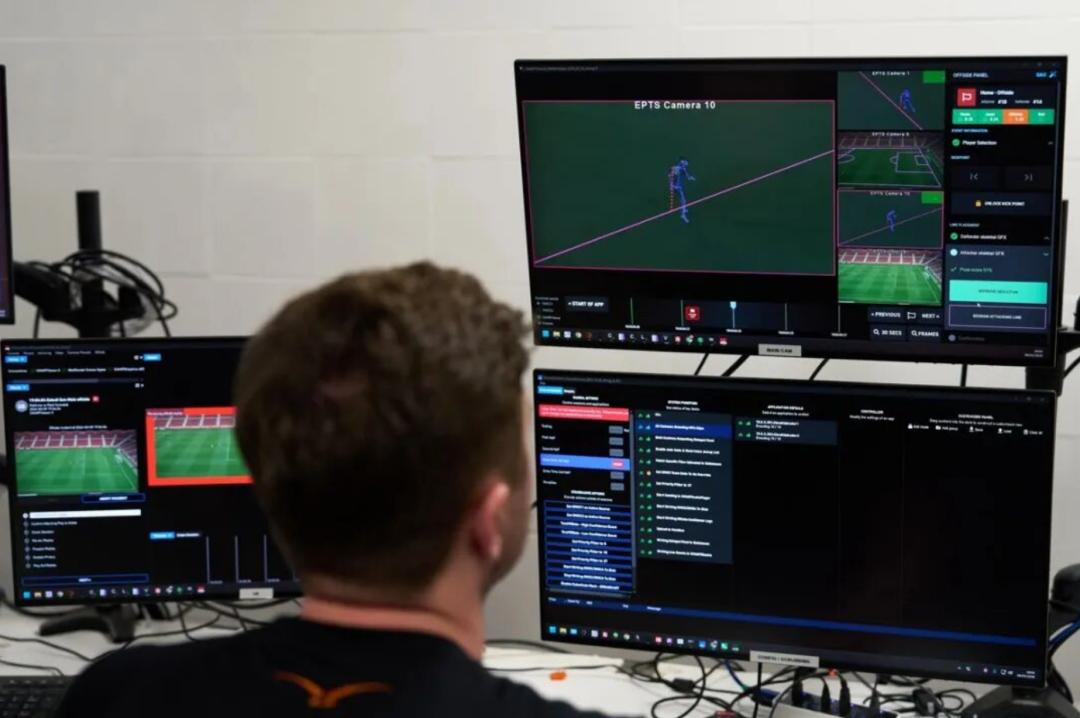
Image sourced from FIFA
The term "semi-automated" means the system automatically locates positions, sends alerts, and generates decision animations—but it doesn't directly determine the final outcome. The ultimate authority for making calls still rests with the VAR (Video Assistant Referee) and the head referee.
SAOT is a massive system. The Trionda we just mentioned is actually part of it.
Beyond the Trionda, SAOT also includes 16 specialized optical tracking cameras distributed along the stadium roof, plus a backend computing and processing system.
Each of these specialized optical tracking cameras captures 50 frames per second, tracking 29 key body points on every player on the pitch in real time to continuously collect their positional data.
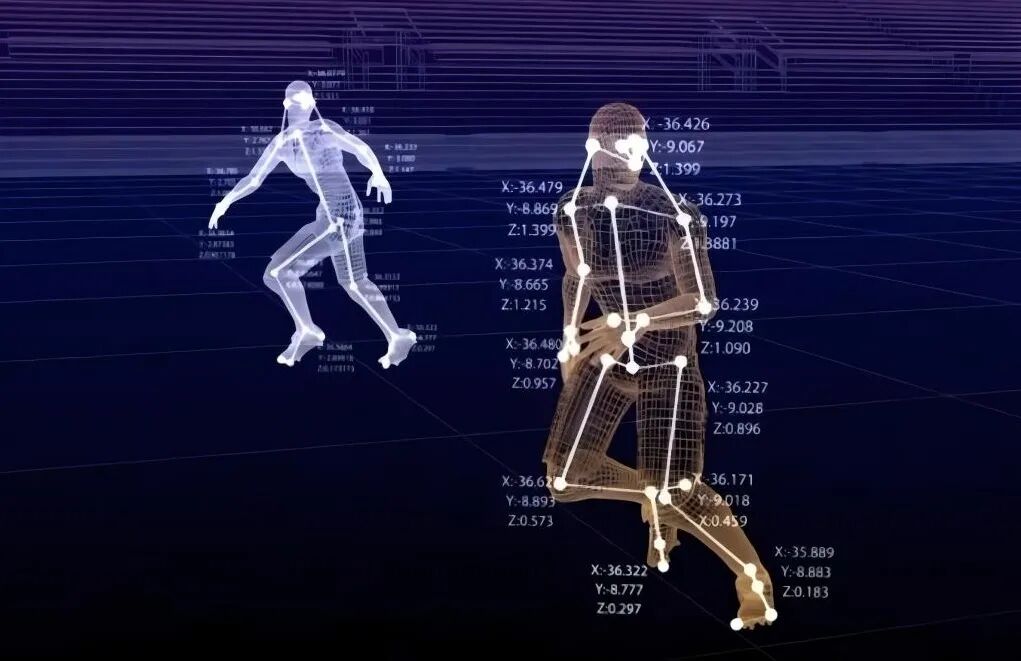
By combining footage from all 16 camera angles, the system generates over 95,700 3D coordinate values every second. Over the course of a single match, it collects up to 150 million data points, occupying 7.2TB of storage.
Combined with the ball contact point data transmitted by the soccer ball's IMU chip, the SAOT system uses AI algorithms to automatically generate 3D virtual player models and offside dividing lines within seconds, clearly showing the position of every part of a player's body relative to the offside line to assist referees in making their final decisions.
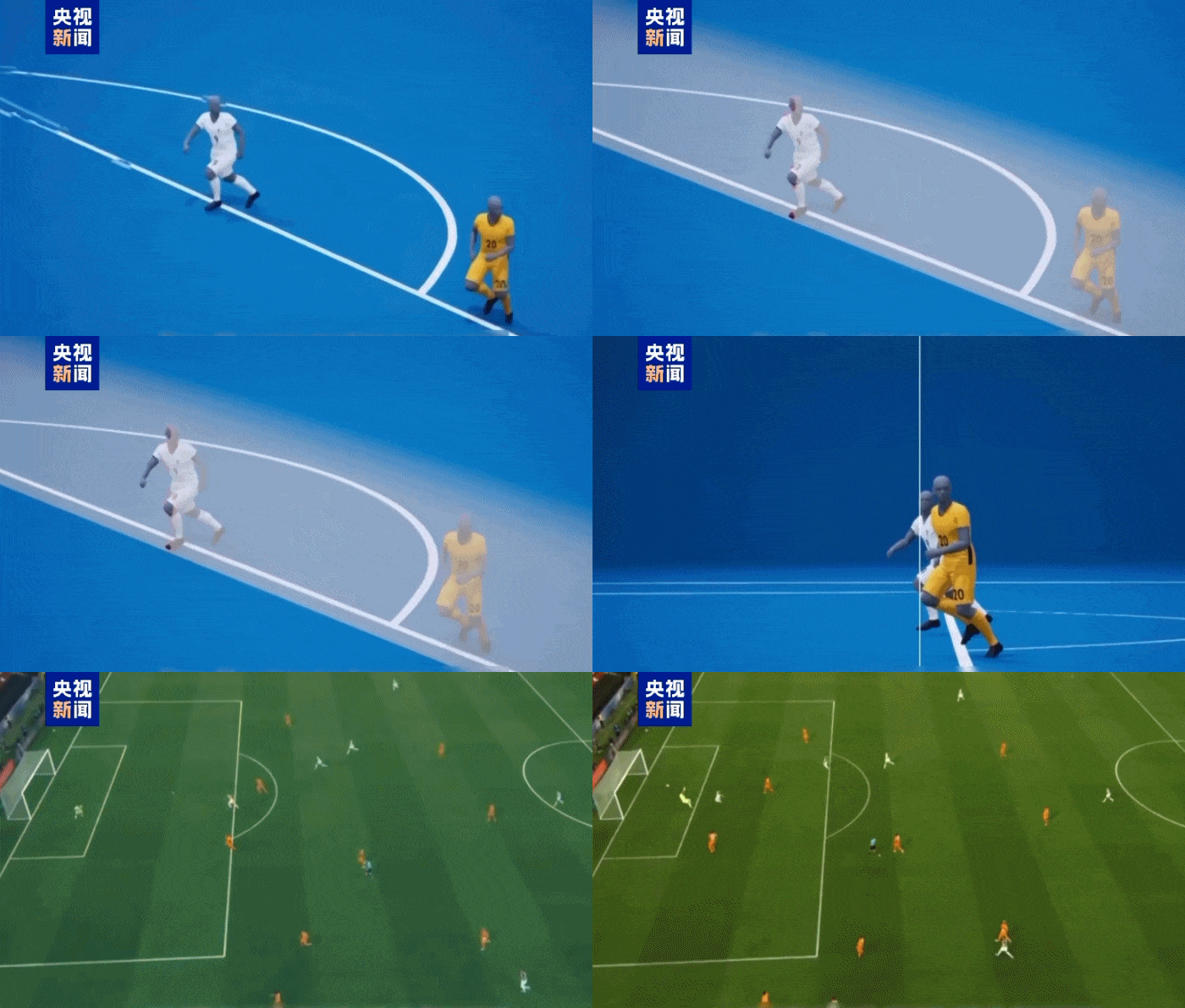
The 3D visualization effects for this World Cup's SAOT system were provided by Lenovo.
Before the tournament even kicked off, Lenovo's team spent 12 days completing full-body 3D scans and digital modeling for all 1,263 players across the 48 participating teams.
Scanning a single player on site only takes roughly 1 second. After synchronously capturing 36 images from multiple angles, the data is uploaded directly to the cloud for automated modeling. The modeling process for one digital avatar takes about 2.5 hours, with precision down to the millimeter level.
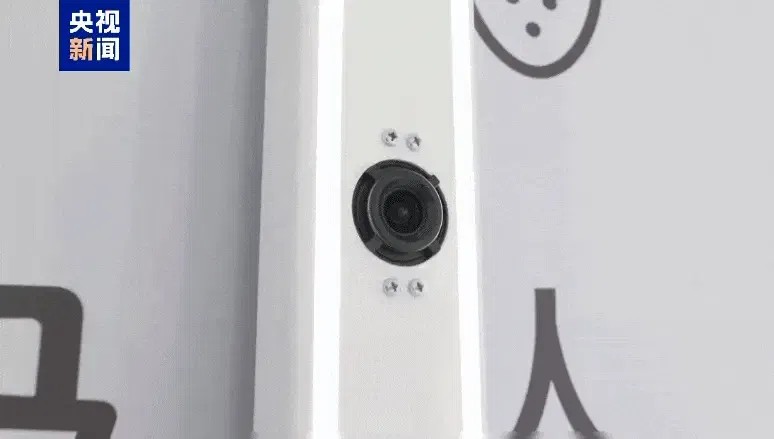
In the past, manual VAR operations required referees to review footage frame by frame and draw lines by hand, taking over 70 seconds to complete a check. The SAOT system cuts that decision time down to an average of under 25 seconds, drastically reducing match interruptions.
Audiences dislike VAR mainly because it breaks the excitement and flow of the game. The introduction of SAOT strikes a far better balance between fairness and smooth gameplay.
It's also worth noting that at the 2022 Qatar World Cup, the SAOT system would first send alerts to the VAR. This year's version has been improved: for offside calls, the system can directly alert the assistant referee on the pitch, allowing them to raise their flag faster. This prevents players from wasting energy on runs that will be ruled invalid.
Head-Mounted Cameras
Now let's take a look at the cutting-edge tech worn by the head referee.
The head referee is the most authoritative enforcer on the pitch. Their field of vision and judgments have a decisive impact on the outcome of the match.
At this World Cup, referees are essentially "geared up with tech from head to toe." First and most noticeably, they're wearing head-mounted cameras.
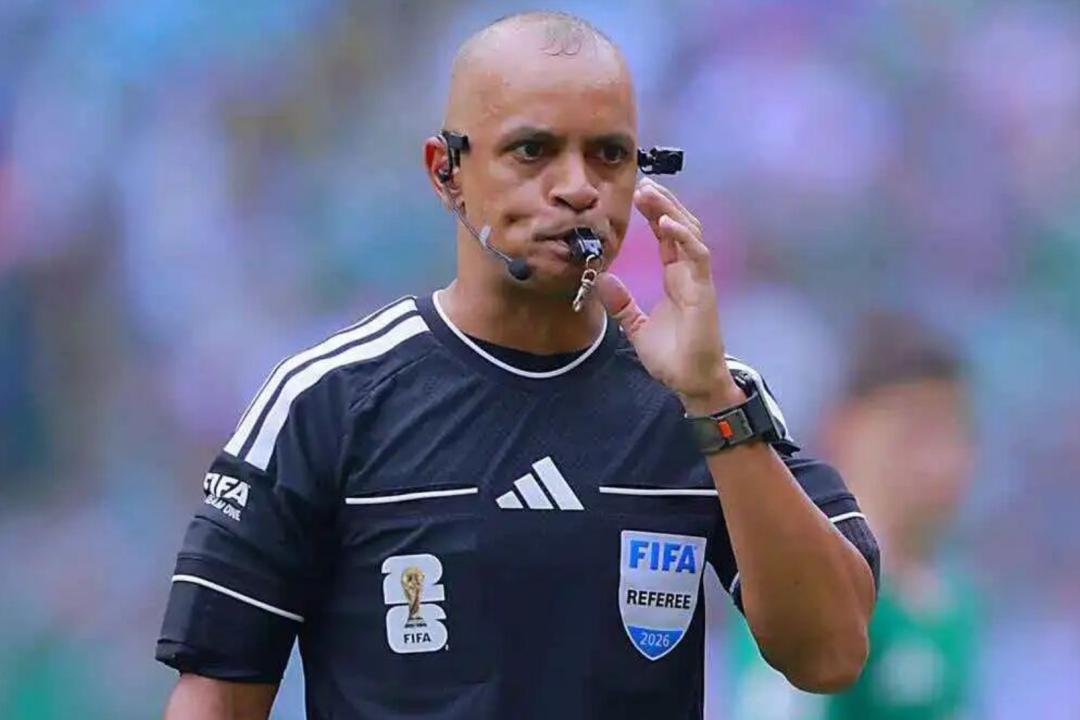
This camera is called the RefCam (Referee Body Camera), made by Riedel—a German company headquartered in Wuppertal, founded in 1987.
The RefCam weighs only about 14 grams, supports 1080p 50/59.97 output, and is worn on the referee's ear (integrated with their headset). It doesn't interfere at all with running, turning their head, or blowing the whistle. It's also waterproof and shock-resistant, capable of withstanding sweat, rain, and accidental collisions on the pitch.
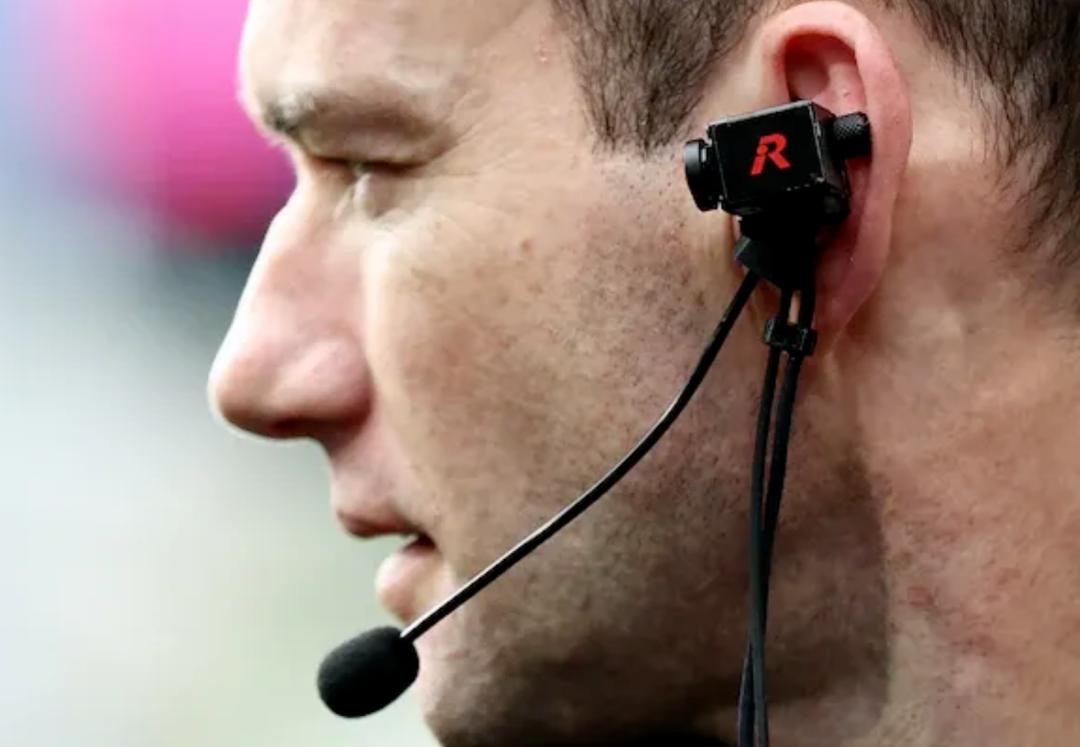
The main purpose of the RefCam isn't to assist with refereeing—it's to capture and record footage from the "referee's first-person perspective" throughout the match. This gives audiences a unique viewing angle on one hand, and provides visual evidence for post-match reviews and controversial decisions on the other.
In fact, the original purpose behind the creation of the RefCam was for referee training.
Due to size and weight constraints, the RefCam doesn't have powerful computing capabilities or the ability to transmit live footage in real time. It transmits data via a wired connection to a portable Beltpack device worn on the referee's waist or upper arm.
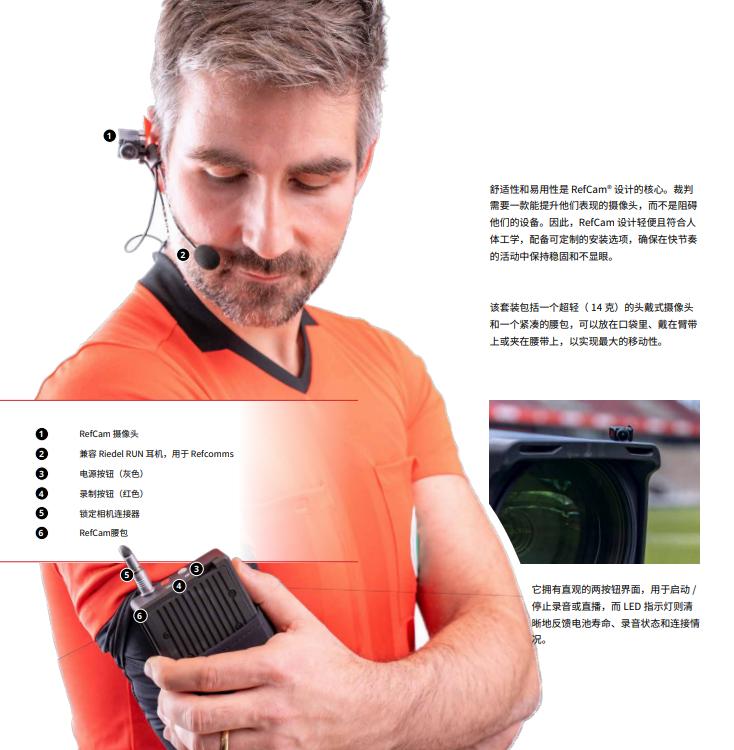
The Beltpack handles video encoding while recording a redundant backup to a local SD card. Then, the footage is transmitted in real time over a 5G private network to the video operation room at the edge of the stadium.
The biggest challenge with wearable cameras is image stability. When referees are sprinting at high speed and moving through intense action, the footage inevitably shakes violently, ruining the viewing experience. That's the main reason this kind of technology hasn't been widely adopted in previous matches.
The RefCam used at this World Cup addresses this issue: on one hand, it has built-in Electronic Image Stabilization (EIS), optimized with Riedel's self-developed anti-shake algorithm. On the other hand, off the pitch, it's paired with an AI anti-shake algorithm provided by Lenovo for real-time processing.
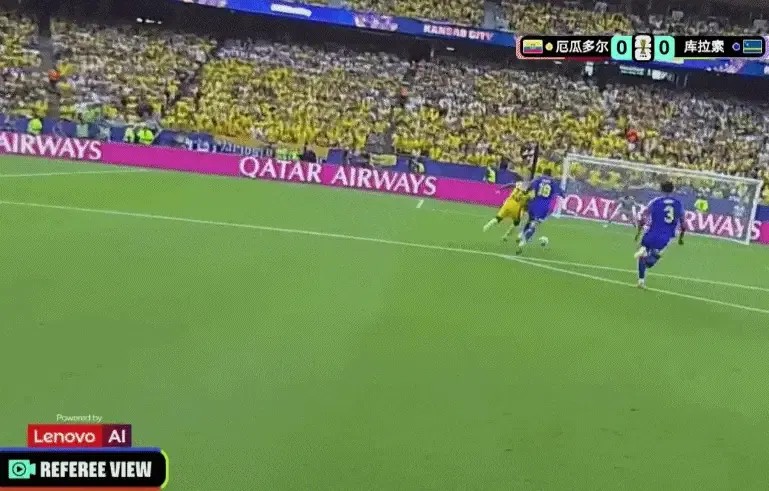
The actual anti-shake effect works pretty well
Interestingly, Lenovo states that the data from the RefCam's portable devices is transmitted via satellite communication links to the receiver at the International Broadcast Center, then processed on Lenovo ThinkPad Workstation P16 units (with 96-core CPUs and 3 professional graphics cards) for AI image stabilization and video enhancement, before finally being sent to the broadcast partner HBS for live production.
However, other online sources note that Riedel's own Easy5G lightweight private 5G network solution is being used instead.
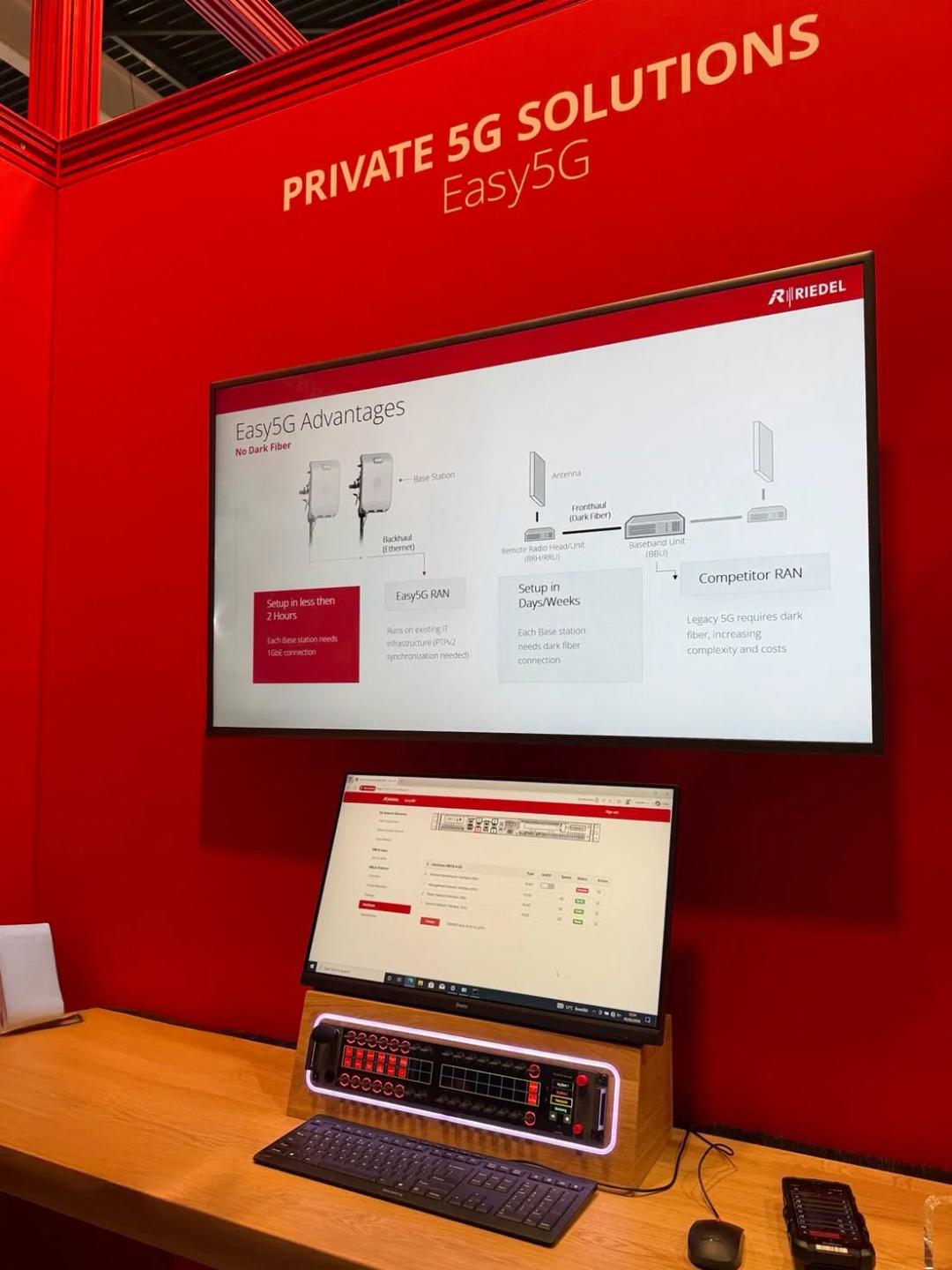
Different from carrier public network slicing, Easy5G is a fully independent private 5