Across the Lakeshore, AI "Runs Into" Real Life on Yangcheng Lake Peninsula
From July 3 to July 4, the first "Crossing the Lakeshore, Evolving to New Life" AI Carnival of Yangcheng Lake Peninsula Tourist Resort was successfully held in Suzhou Industrial Park.

This summer, the appeal of the Yangcheng Lake lakeshore has gained a new interpretation.
For AI entrepreneurs and OPCs, Yangcheng Lake Peninsula is far more than a picturesque resort. It boasts a 50-kilometer lakeshore line, 8 square kilometers of ecological inner lakes, as well as high-frequency offline scenarios including Bicester Village Shopping Centre, hotel clusters, a tennis center, wellness communities, and pet-friendly spaces. More importantly, Yangcheng Lake Peninsula received 9.5 million tourist visits in 2025. This means that this location itself is a sufficiently authentic, rich, and fully open traffic field.
Is an AI product user-friendly? Are users willing to stop and experience it? Will scenario partners continue to cooperate? These questions can hardly be answered solely through PPT presentations. AI applications require repeated testing in offline communities and commercial blocks to become increasingly mature.
This is exactly where the value of Yangcheng Lake Peninsula lies. Tourists will pause for a novel experience, sports enthusiasts are willing to try new training methods, while families with children, pet lovers, wellness-focused individuals, and hotel guests form a diverse cross-section of daily life. For an AI enterprise, such scenarios can truly generate valuable feedback.
From a broader industry perspective, AI is shifting from the phase of "whether it can be developed" to "whether it can be practically applied". Daily scenarios such as cultural tourism, sports, wellness, and pets precisely provide entry points for AI implementation. The Suzhou Industrial Park behind Yangcheng Lake Peninsula also offers a solid industrial foundation for AI deployment.
As an industrial park developed through China-Singapore cooperation, Suzhou Industrial Park has formed industrial clusters including new-generation information technology, high-end equipment manufacturing, biomedicine, nanotechnology applications, artificial intelligence, new energy, and green industries. The park is home to over 1,900 enterprises related to artificial intelligence and the digital industry, with an output value exceeding 100 billion yuan. A total of 9 large language models have passed the generative AI service filing of the Cyberspace Administration of China. The park is also further promoting "AI+" innovative demonstration applications, and has formed a "3+N" AI application system with demonstrations of "AI+Manufacturing", "AI+Scientific Research", and "AI+Government Services". The province's first "Model Innovation Space" has settled in the park, enabling "AI+" services to evolve from individual service points to a more comprehensive and all-dimensional service ecosystem.
From July 3 to 4, the first AI Carnival of Yangcheng Lake Peninsula Tourist Resort was held here. Over the two days, an OPC gathering, mech hiking, tennis challenge, scenario market, and the "AI+Cultural Tourism & New Consumption" Forum were launched sequentially. At the carnival site, AI was no longer an abstract and empty concept. Hundreds of participants experienced and felt AI by hiking on the morning trails and swinging rackets on the clay tennis courts, with these experiences ultimately being distilled into insights for the iterative improvement of AI products.
The AI+ Five Scenarios Market set up at this carnival also made this sense of authenticity more intuitive.
In the sports scenario, ULS Robotics brought the VIATRIX extended-range power exoskeleton robot, while AceRobot brought the Acemate S10 AI tennis robot. The former serves to enhance human physical capabilities, and the latter acts as an intelligent training partner for tennis. The pet scenario is closer to daily life: Lingyu Technology and Paqi Pet applied AI to pet health management, Tuya Smart provided AIoT platform capabilities, while Yilu Biotechnology and Leimeng Technology brought bionic robotic cats and emotional smart trendy toys to the site, offering more intelligent imagination for pet-friendly destinations.
The wellness scenario is another key application direction. Enterprises including Digital Huaxia, Bangbang Robot, Xingcan Intelligence, Zhimengke, and Yinling Zhihu entered the field through humanoid robots, smart wheelchairs, smart mobility, smart sleep, and emotional companionship, breaking down "AI+Care" into more specific products and services.
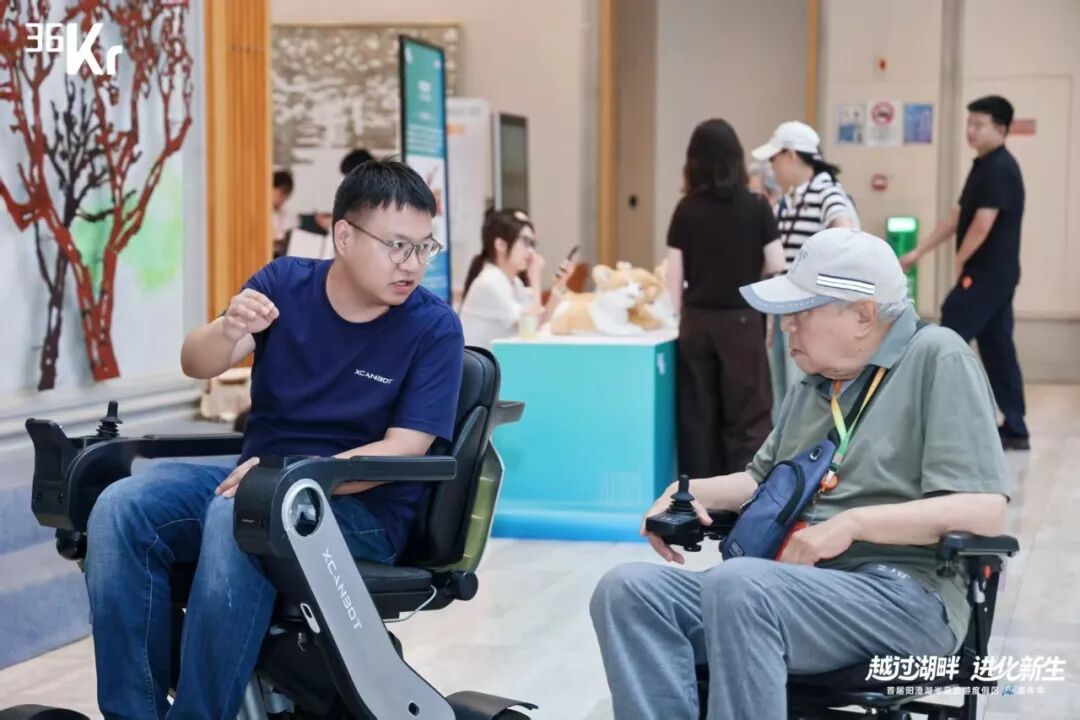
Taikang Home "AI+Wellness" Scenario Market
In the shopping and new consumption scenario, enterprises including Wujie Fangzhou, Gezhi Qiongyu, Hive Tech, and COFE+ brought AI early education, talent-demand matching, smart glasses, and robotic coffee to tourists. In the art and cultural creativity field, interactions such as AIGC generation, digital collectibles, and customized souvenirs added a touch of technological memory that visitors could take away from their lakeside trip.
In just two days, Yangcheng Lake Peninsula did not merely showcase AI projects. It had a greater ambition: to integrate cultural tourism, sports, wellness, consumption, and entrepreneurial communities into the same real space, allowing technologies to find users, products to find scenarios, and enabling OPCs and AI startups to discover a lighter, faster, and more market-aligned implementation path.

A Gathering That Lets Interesting People Find Each Other First
On the night of July 3, the "OPC Wild Release Event" first kicked off the atmosphere of this AI Carnival.
That evening, a fairly heavy rain fell over Yangcheng Lake Peninsula. Logically, such weather would have deterred some attendees, but the site did not lose its vibrancy. More than 300 people registered for the event, and the venue remained full late into the night. Outside was the pattering sound of rain, while inside was a heated discussion, which gave this "wild gathering" an intimate feeling of being spontaneously brought together.
Compared to formal conferences, this night was more like an unscripted entrepreneurial open mic. The opening self-introduction session already demonstrated the diversity of the group. They traveled from all over the country, including AI developers, college students, and investors, coming from many different industries such as healthcare, food and beverage, publishing, and public welfare education.
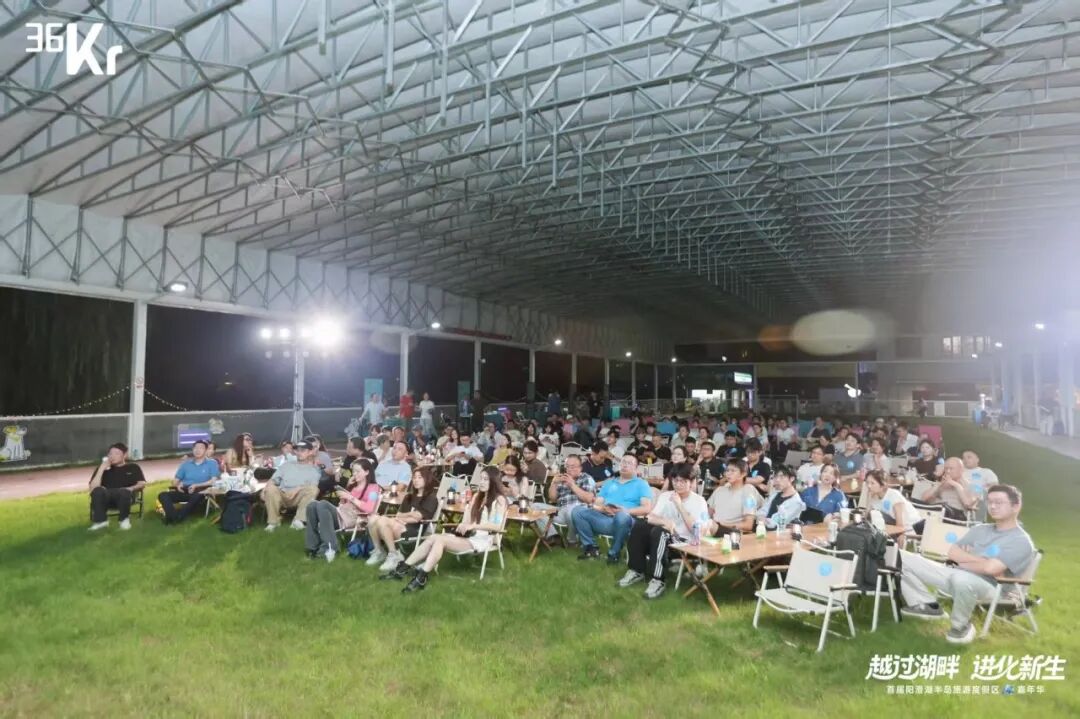
OPC Wild Release Event Site
Some were looking for co-founders, some for distribution channels, some to learn about Suzhou Industrial Park policies, and some hoped to integrate their AI products into real scenarios such as cultural tourism, wellness, and education. A staff member from the local industrial authority directly extended an invitation, stating that anyone interested in settling in the park or launching scenario cooperation with the resort's cultural tourism resources could communicate with him on site.
The short self-introductions became social cues. Some perked up to note names when "AI+Healthcare" was mentioned, while others were interested in overseas markets, short video generation, and AI games. By the free communication session, small groups had already formed for lively chats: some exchanged WeChat contacts, others demonstrated their products on the spot, and many shared their ongoing projects with new acquaintances.
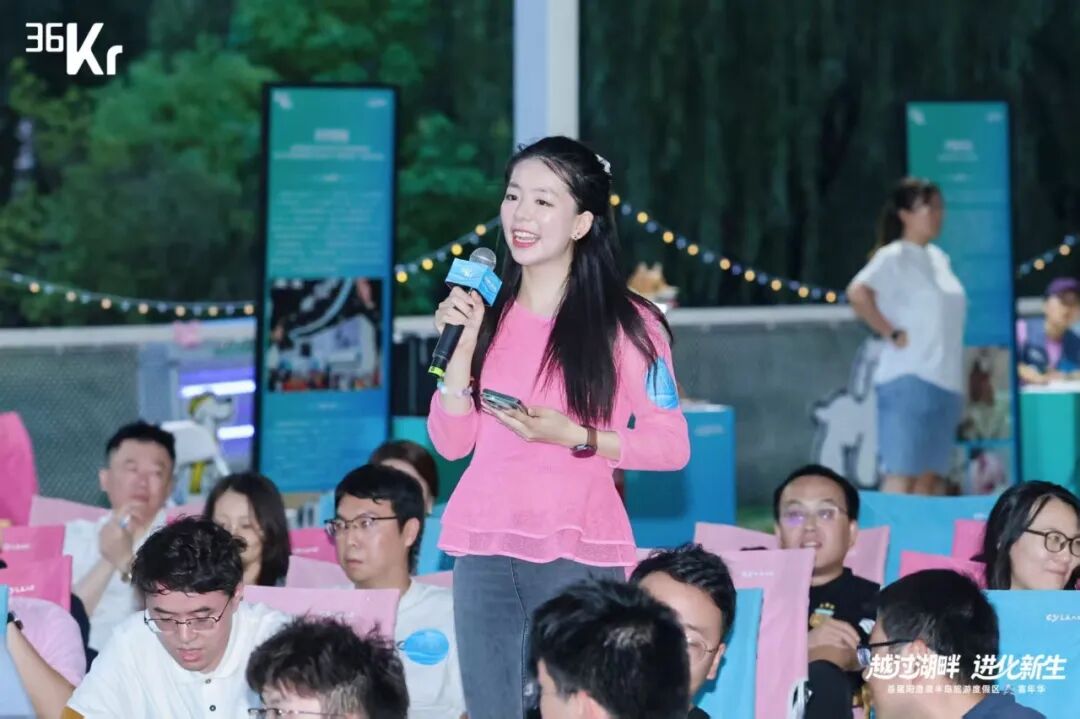
The 8 OPCs who took the stage shared their experiences and insights as OPCs.
A post-2000s entrepreneur who started a business after taking a leave of absence from school shared his experience building enterprise agents. In his view, having a demo does not mean having a product, and having a product does not equate to a viable business model. Last year, enterprises might have been willing to pay high prices for AI projects, but today clients care far more about the actual output the product can deliver. For early-stage entrepreneurs, being technically skilled is no longer sufficient—they must also understand who will buy the product, why they will buy it, and who will take charge after the purchase.
A seasoned serial entrepreneur focused on "productivity equalization". His vision is to make Chinese manufacturing as accessible as computing power, enabling global creators to turn ideas into commodities faster. What he aims to bridge is precisely the gap between creators and the manufacturing end.
Another entrepreneur presented an AI smart jump rope. Since exercising is inherently counterintuitive for many, he gamified the experience. Through boss challenges, rhythm variations, and AI data feedback, jump roping is no longer just mechanical counting, but becomes a "one more round" experience. Many attendees' first reaction after the presentation was to want to try it out themselves.
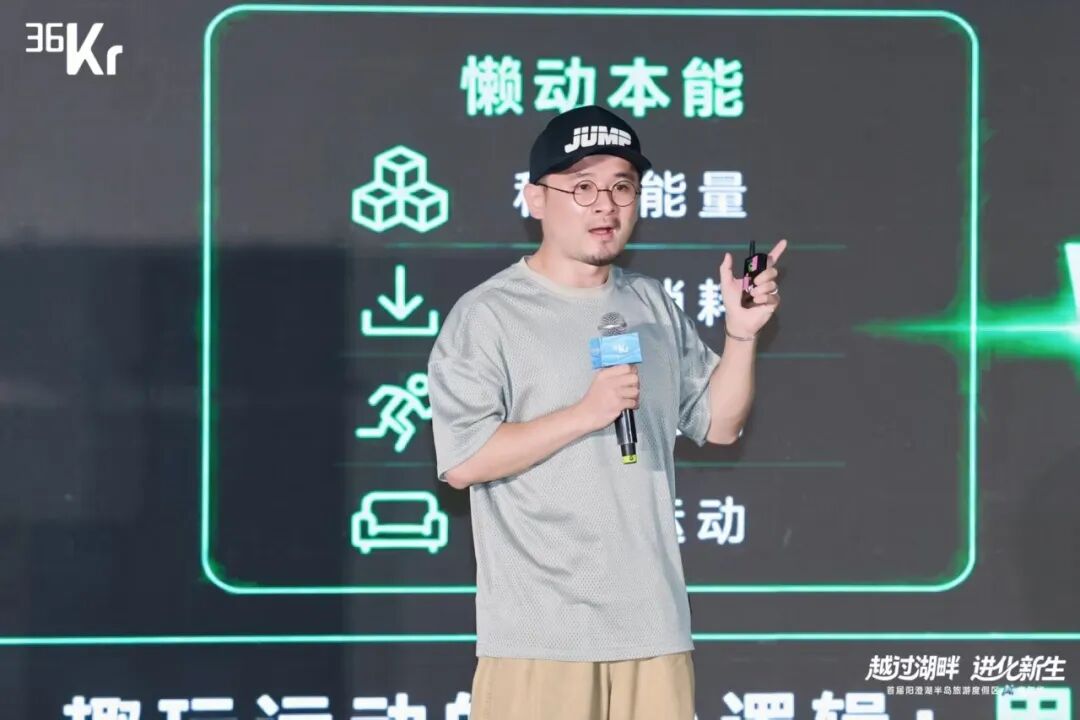
More aligned with cultural tourism scenarios is an AI social hardware device. The device emits light and vibration alerts based on interest matching: if someone nearby shares a common interest with you, both devices will light up the same color. This project has already been tested for urban roaming, exhibitions, and cultural tourism check-in activities.
Some speakers did not discuss specific hardware, but addressed a commonly overlooked aspect for early-stage OPCs: trust. The AI+Marketing presenter reminded everyone that many projects fail not due to technical issues, but because users do not understand why they should trust the product. This viewpoint resonated strongly at the site, as many attendees came precisely to introduce themselves to others.
This is precisely the most fascinating part of the gathering. It does not demand that every project be mature, complete, and flawless. On the contrary, many projects are still in progress, searching for scenarios, partners, and the first batch of willing trial users. But it is precisely this that makes the event feel so vibrant.
Whether the rain had stopped seemed irrelevant. The lively conversations in the venue continued. For OPCs, the appeal of Yangcheng Lake Peninsula lies exactly in its open scenarios, people willing to listen to project pitches, abundant industrial resources, and a sufficiently relaxed community atmosphere. Scenarios are nearby, resources are on-site, and strangers can quickly become partners for future collaborations.

Mech Hiking, Robotic Serving: AI Applications Arrive at Real Sites
On the morning of July 4, the AI experience at Yangcheng Lake Peninsula moved from indoors to outdoors.
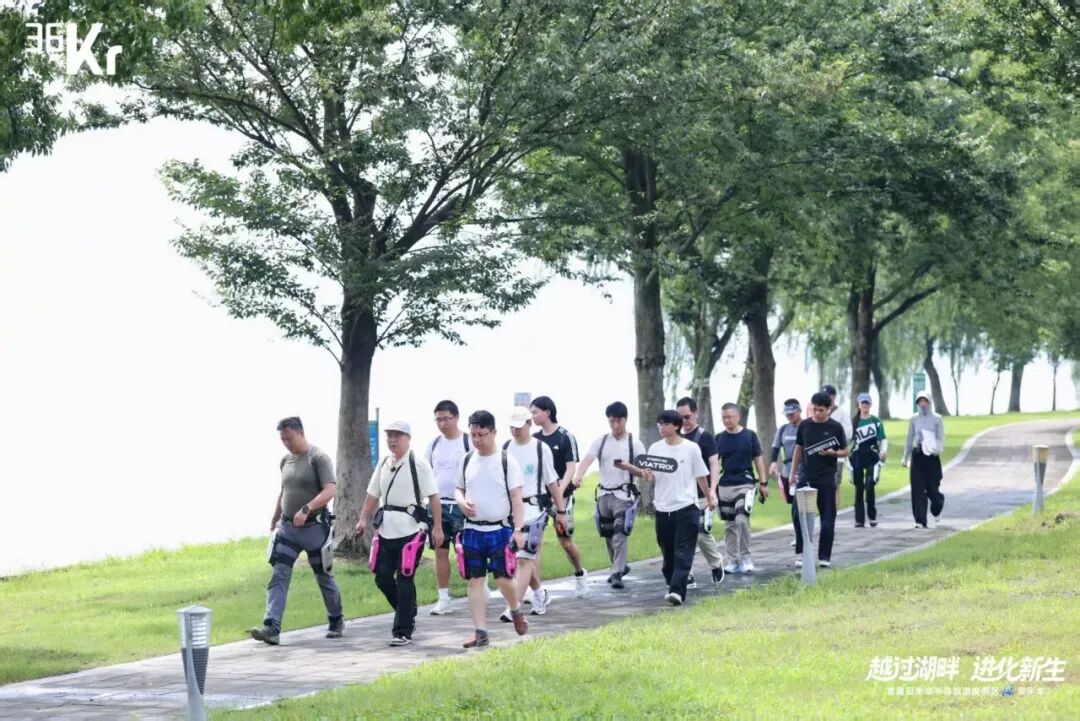
The "Cyber Hiking" event initiated by ULS Robotics started at the outdoor plaza of Yangcheng Lake Sheraton Hotel. After putting on the devices, completing debugging, warming up, and going through safety briefings, attendees who were initially onlookers were quickly drawn to the equipment. Once the hike began, the atmosphere grew even more enthusiastic. The group advanced along the lakeside trails and scenic viewpoints. With the breeze blowing over Yangcheng Lake and the wide open trails, participants wearing exoskeletons walking in the team became a striking sight in themselves.
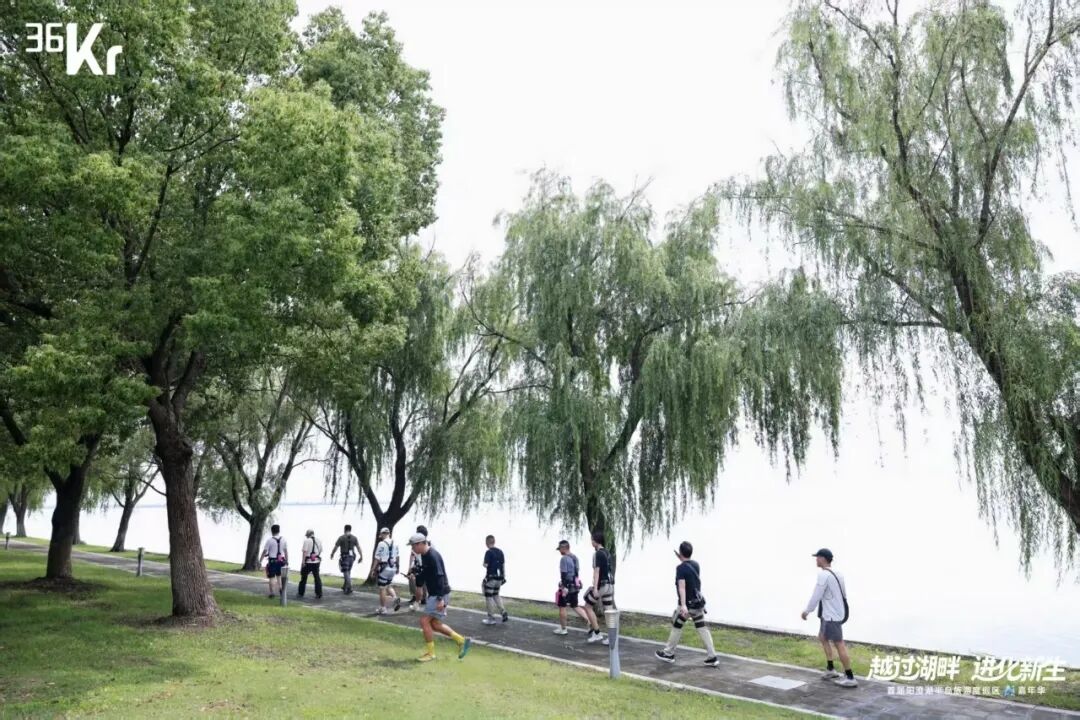
ULS Robotics "Cyber Hiking" Event
The ULS VIATRIX extended-range power exoskeleton robot is designed for consumer-grade scenarios, aiming to solve physical energy consumption issues in activities like outdoor walking and mountain hiking. This lakeside journey perfectly transformed product introductions into physical experiences: participants could quickly judge for themselves whether walking felt effortless, the gait was smooth, and the power assistance felt natural.
On the other side, at Court 10 of the Peninsula International Tennis Club, the Acemate 40-Ball Challenge presented by AceRobot attracted widespread attention. On the clay court, an AI tennis experience open to the general public was underway.
The challenge had a low barrier to entry: whether advanced players who play frequently or beginners holding a racket for the first time could sign up to compete in a 40-ball practice session with the tennis robot. The event drew many tennis enthusiasts to participate.
Acemate S10 is an AI tennis robot independently developed by AceRobot (Shenzhen) Co., Ltd. It can not only feed balls continuously and stably, but also capture the user's return trajectory through visual recognition, actively move to catch and return the ball, achieving continuous rallies just like a real human practice partner. For participants, this highly interactive experience easily sparked a competitive spirit. The 40-ball session did not take long, but was enough to get people quickly into the zone.
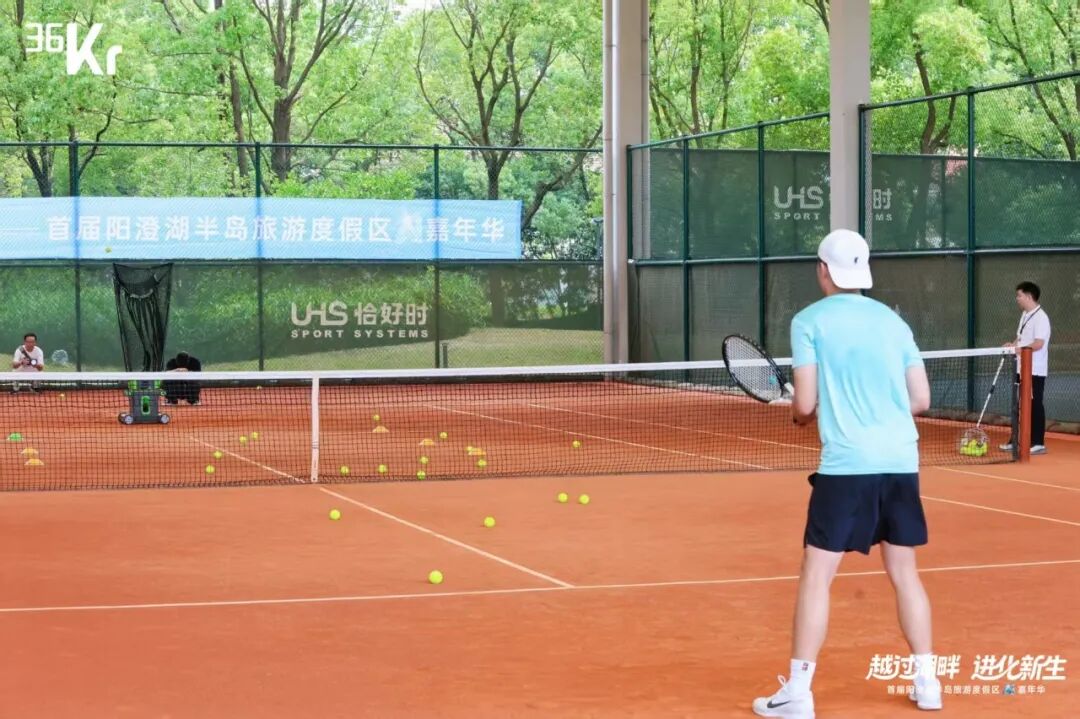
AceRobot "Acemate 40-Ball Challenge"
After the challenge, what everyone cared most about was the analysis results generated by AI. Swing data and training feedback, which were previously mostly seen in professional training scenarios, were now brought to the public experience site.
Yangcheng Lake Peninsula already boasts excellent tennis court resources and a solid event foundation. The addition of Acemate further integrates intelligent practice partners and instant feedback into the local sports scenarios.
Both events proved that "AI+Sports" does not need to be overly complicated. Put on the exoskeleton for a walk, play a round of tennis with a robot, and your body will give the answer first.