Leading AI players are venturing into the pharmaceutical sector, but the capital market cannot wait for a decade.
In the past few months, three major AI companies have successively elevated the strategic priority of life sciences to a more prominent position.
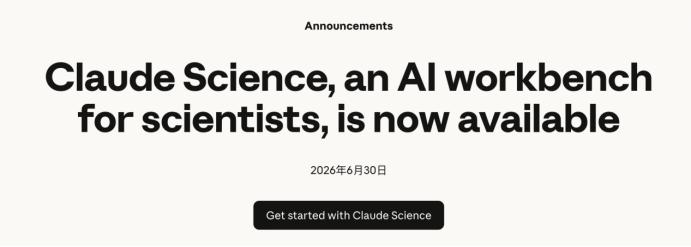
On local time June 30th, Anthropic launched Claude Science. This is an AI workspace designed specifically for scientists: it can connect to scientific research databases, run code, analyze data, generate charts, visualize protein structures, and save the entire research process as auditable and reproducible records.

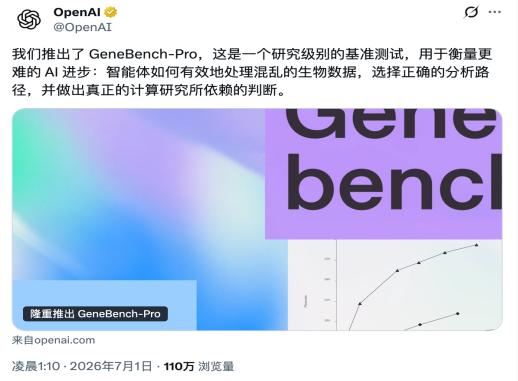
Almost simultaneously, OpenAI introduced GeneBench-Pro, a benchmark dedicated to evaluating whether AI Agents can process ambiguous data and complete multi-step decision-making in real scientific research tasks such as genomics and quantitative biology.
Google, which embarked on this path earlier, has already advanced from AlphaFold to drug design. Its subsidiary Isomorphic Labs is building an AI-powered drug design engine and plans to advance its first batch of candidate drugs into clinical trials.
The battlefield for AI companies is shifting from office environments to laboratories.
Previously, coding and mathematics were the most favored competency assessment scenarios for major AI firms: whether code can run successfully or whether a proof holds true can yield immediate results. Pharmaceuticals, however, follow a completely different timeline: AI can accelerate target discovery, molecular screening, and early R&D, but subsequent stages still require experiments, clinical trials, and regulatory approvals.
While models can iterate to a new generation within a few months, a drug may take a decade to validate its therapeutic value.
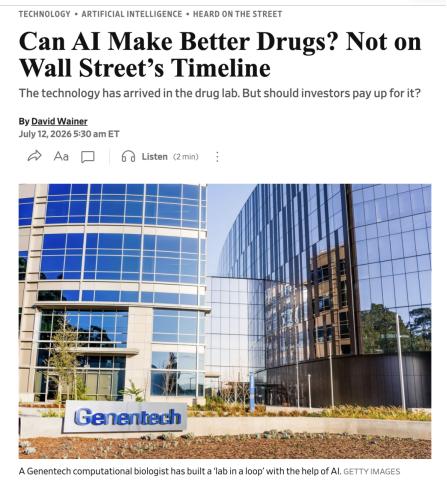
On July 12th, The Wall Street Journal put forward a thought-provoking observation: If AI ultimately revolutionizes drug discovery, the biggest winner may not necessarily be OpenAI, Anthropic, or Google. It is far more likely to be large pharmaceutical corporations that hold proprietary datasets, experimental capabilities, and global clinical infrastructure.
At present, the three major AI companies have chosen distinct entry points: Google is moving from structure prediction to drug design, OpenAI is betting on life science reasoning models, and Anthropic is integrating its Claude Code-style workspace into scientific research workflows.
The critical question remains: will the capabilities they build eventually become their own proprietary moat in pharmaceuticals, or evolve into new tools that large pharmaceutical companies can procure, integrate, and customize?
Anthropic's Scientific Research Workspace
Claude Science is not Anthropic's first foray into the life sciences sector—the company has been advancing along this trajectory for quite some time.
In May 2025, Anthropic launched the AI for Science Program, providing free API credits to high-impact scientific research projects, with a specific focus on biology and life science domains. That October, Anthropic further introduced Claude for Life Sciences, integrating Claude with research tools and databases including Benchling, BioRender, PubMed, and 10x Genomics, enabling it to operate in practical scenarios such as lab notebook management, literature review, single-cell analysis, and spatial omics analysis.
By January this year, Anthropic expanded Claude for Life Sciences again, adding connectors for ClinicalTrials.gov, Open Targets, ChEMBL, bioRxiv, medRxiv, Medidata and other platforms, extending its life science capabilities further into healthcare and clinical development stages.
It is evident that Claude has already been integrated into the workflows of pharmaceutical companies and research institutions, though these capabilities were previously scattered across connectors, tool calling functionalities, and enterprise client use cases.
For instance, Novo Nordisk utilized Claude Code to build NovoScribe, which automatically generates regulatory-compliant content including clinical study reports, device protocols, and patient-facing materials. Genmab partnered with Anthropic to deploy Claude-powered agents to support data processing, analysis, and documentation in clinical development. Bristol Myers Squibb also collaborated with Anthropic to roll out Claude to tens of thousands of its employees, targeting workflows spanning research, drug development, manufacturing, commercial operations, and medical affairs.
The defining difference of Claude Science is that Anthropic has consolidated all these disparate capabilities into a single, clearly defined product entry point.
According to Anthropic, Claude Science is positioned as "an AI workspace built for scientists". It can connect to scientific research databases, run code, analyze data, generate charts, visualize 3D protein structures, genome browser tracks, and chemical structure diagrams. It also preserves the code, runtime environment, natural language annotations, and message history of an entire research session, producing auditable and reproducible research outputs.
If your academic background is related to biology—even at the undergraduate level—you would likely recognize why this type of "workspace" delivers tangible value.
My undergraduate thesis heavily focused on bioinformatics analysis, and I even wrote a simplified BLAST usage tutorial for underclassmen after graduation. Back then, most of my work involved navigating between disjointed tools: querying gene sequences in the CAZy database, translating raw nucleic acid sequences into protein sequences using NCBI ORF Finder, performing sequence alignment with BLAST, and critically, organizing massive Excel spreadsheets that took ages to load in Jupyter Notebooks. With AI assistance, researchers no longer need to learn coding from scratch just to complete data analysis tasks.
And this only represents a tiny fraction of work encountered during undergraduate thesis research. Once you enter full-time scientific research, the complexity of switching between different tools only intensifies.
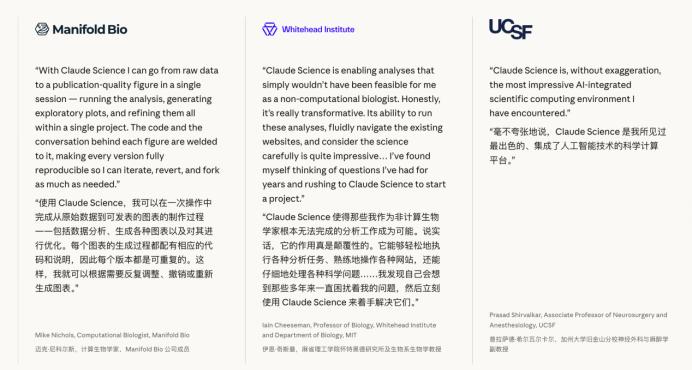
Claude Science is designed to consolidate all these cumbersome, fragmented steps into a unified workspace.
In a sense, it mirrors the product logic of Claude Code adapted for scientific research scenarios: just as Claude Code integrates into software engineering workflows including code repositories, terminals, pull requests, and code reviews, Claude Science embeds itself into core research workflows involving databases, code execution, computational analysis, visualization of evidence, and report generation.
First and foremost, Claude Science can read, run, and iteratively modify existing Python, R, and Shell workflows, eliminating the need for laboratories to rebuild their entire code pipelines from scratch. It also supports persistent Python and R kernels, ensuring variables, data frames, and preloaded models remain accessible throughout the entire analysis session.
Additionally, Claude Science can operate on laptops, local Linux machines, HPC login nodes, or cloud virtual machines. It supports submitting and managing cluster tasks via SSH, and can connect to Modal accounts to scale computational resources on demand.
Laboratories' existing internal APIs, electronic lab notebooks, and custom pipelines can also be integrated through dedicated connectors.
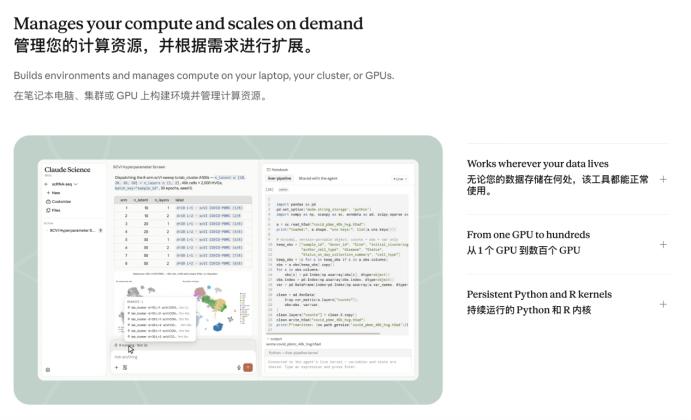
Secondly, Claude Science features an integrated scientific renderer that enables direct visualization of protein structures, sequence alignments, genome tracks, chemical structures, and PDF documents—no extra installation of dozens of specialized tools is required.
For example, during protein structure analysis, it can retrieve predicted structures, overlay functional domains and clinical variants, and support interactive 3D visualization. In chemoinformatics and molecular design workflows, it can search bioactivity datasets, calculate molecular properties and similarity metrics, and even support drawing and modifying molecular structures within a 2D structure editor.
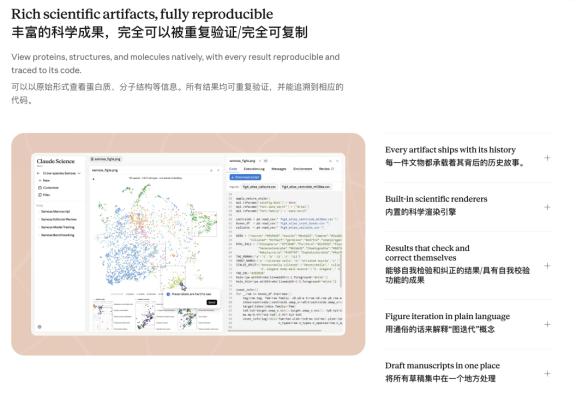
Furthermore, all charts, tables, and notebooks generated by Claude Science are automatically bundled with their corresponding source code, runtime environment, natural language annotations, and full conversation history. This means a single chart is no longer an isolated element pasted into a report—users can fully trace back to the exact datasets, code, and procedural steps that produced it.
Anthropic specifically emphasizes that its backend review system will flag untraceable numerical values, misattributed citations, and visualizations that are inconsistent with their underlying source code.
Anthropic also states that it has completed pre-configurations for all major life science domains including genomics, single-cell omics, proteomics, structural biology, and chemoinformatics, with native connectivity to over 60 scientific databases and domain-specific open-source models.
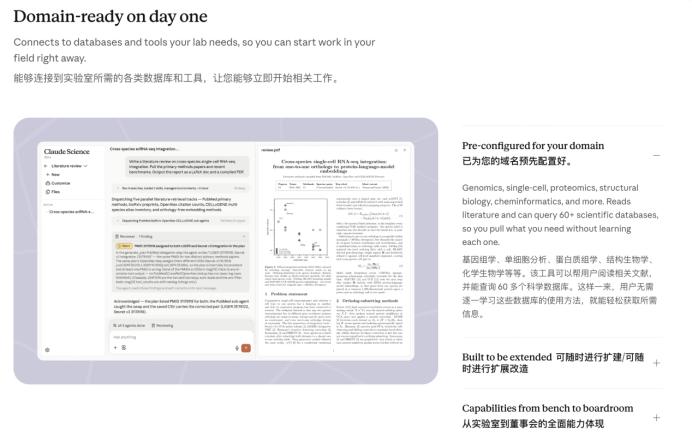
From database querying, literature review, and script execution to chart generation, draft manuscript writing, and preservation of reproducible records, as well as integration with laboratories' existing data and computational resources, Claude Science essentially connects the entire end-to-end scientific research workflow.
Additionally, according to reporting from The Verge, Anthropic also plans to develop its own proprietary drugs, with a particular focus on "neglected" diseases. Over the past year, the company has been actively recruiting biologists and establishing its own in-house wet laboratories. Eric Kauderer-Abrams, Anthropic's Head of Life Sciences, also noted that the company will prioritize therapeutic areas that receive insufficient commercial interest from traditional pharmaceutical companies but carry substantial unmet disease burden.
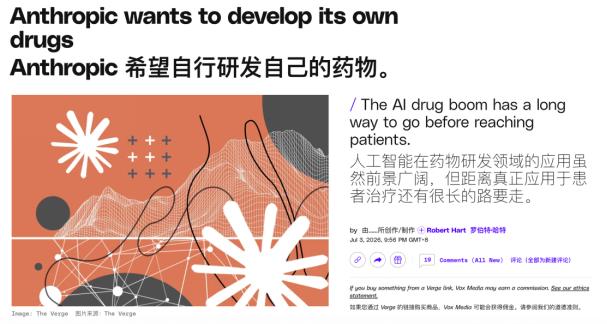
Previously, Claude's deployment in pharmaceutical companies primarily focused on improving efficiency in documentation, data processing, clinical operations, and R&D workflows. Now Anthropic aims to push Claude further upstream into foundational scientific discovery, and even validate the entire early-stage drug discovery process independently.
Three Companies, Three Distinct Healthcare Trajectories
Taking a broader perspective, pharmaceuticals and life sciences have emerged as the most critical vertical within the AI for Science landscape. Google, OpenAI, and Anthropic are all advancing aggressively in this direction, but their strategic approaches differ significantly.
Google was the first to gain widespread recognition in this space, and the first to extend its capabilities into a fully operational AI-powered pharmaceutical enterprise.
Its landmark achievement is AlphaFold. In 2020, AlphaFold 2 delivered a breakthrough in protein structure prediction, and later the AlphaFold Protein Structure Database made millions of predicted structures openly accessible to researchers worldwide.
Protein structures form one of the foundational pillars for understanding biological processes, identifying drug targets, and designing candidate molecules. The 3D conformation of a protein often dictates how it functions, and directly determines whether a drug molecule can successfully bind to it.
With AlphaFold 3, this trajectory advanced another major step: the model attempts to predict the structures and interactions between diverse biomolecules including proteins, DNA, RNA, and small-molecule ligands. And one of the core challenges in drug discovery is precisely achieving specific binding between a candidate molecule and its target protein.
Google DeepMind stated at the time that AlphaFold 3 outperforms existing methods by at least 50% in predicting interactions between proteins and other biomolecules, doubling accuracy in several critical categories.
Isomorphic Labs carries forward this strategic roadmap, directly positioning Google deep within the pharmaceutical R&D industrial chain.
Founded in 2021, Isomorphic Labs is an AI-driven drug discovery firm spun out of Google DeepMind, with the core mission of building an AI-native drug design engine.
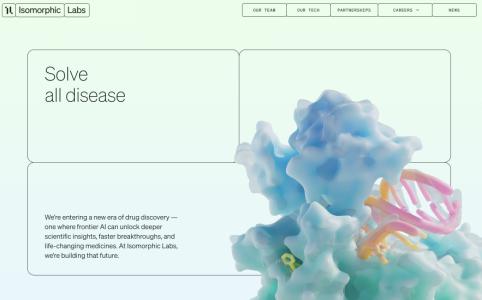
Reuters reported in May this year that Isomorphic Labs completed a $2.1 billion new financing round. Demis Hassabis stated that the funds will be used to massively scale up its drug design engine and advance toward the long-term vision of "solving all diseases". The report also noted that Isomorphic is on track to initiate its first batch of clinical trials by the end of 2026.
What makes Google unique is that it first delivered a discrete, industry-defining scientific breakthrough like AlphaFold, then extended those capabilities into a dedicated AI pharmaceutical entity like Isomorphic Labs.
Its strategic path follows solving foundational problems in structural biology first, then advancing to molecular interaction prediction, and ultimately pushing forward into drug design and preclinical pipeline development.
OpenAI has pursued a completely different approach.
It does not have a singular landmark breakthrough like AlphaFold that has become a global life science infrastructure, but it possesses extremely powerful general reasoning models.
OpenAI aims to demonstrate that state-of-the-art reasoning models can also become highly effective collaborative assistants for life science researchers.
This April, OpenAI launched GPT-Rosalind, positioning it as a cutting-edge reasoning model tailored for life science research, designed to support studies in biology, drug discovery, and translational medicine. According to OpenAI, GPT-Rosalind is optimized for scientific workflows, with enhanced tool-using capabilities and deep domain understanding across chemistry, protein engineering, genomics, and related fields.

GPT-Rosalind essentially functions as a dedicated "reasoning hub" purpose-built for the life science ecosystem. OpenAI itself acknowledges that the challenges of life science research extend far beyond individual scientific questions, encompassing the inherent