Stepping through a Narrow Gate, Zhipu AI Bets on Four New Answers
The placement announcement and the completion of the share offering took a total of 4 days. This inevitably turned the internal letter released in between into a strategically oriented document with clear directional implications.
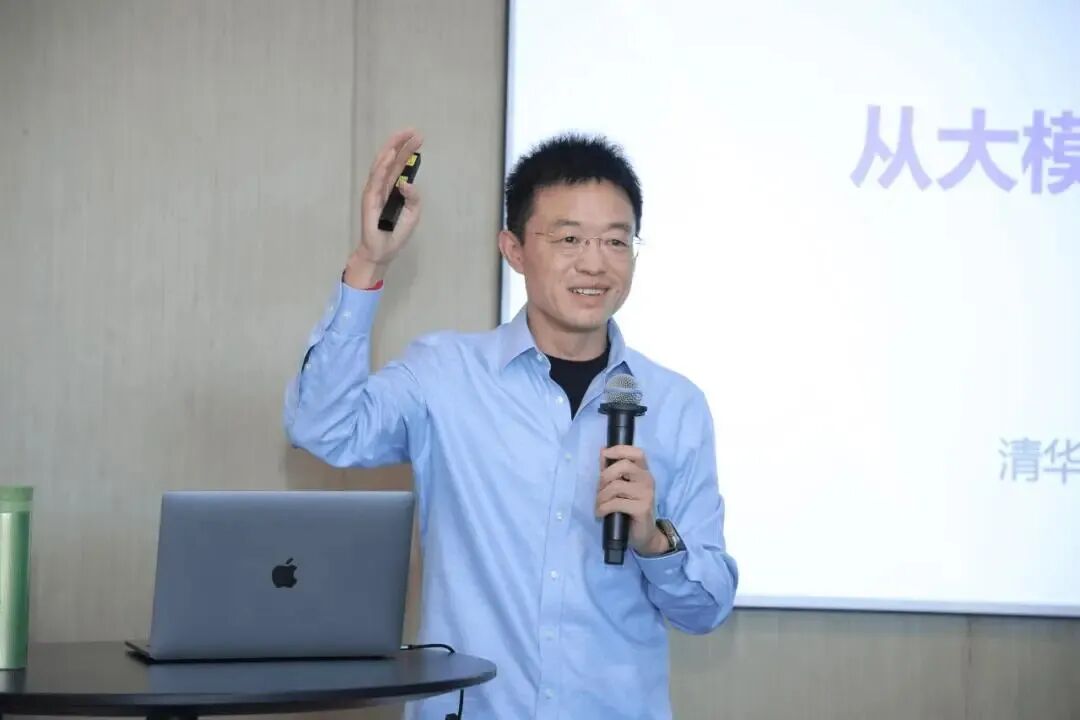
On July 11, Tang Jie, founder of Zhipu AI and professor at Tsinghua University, issued an internal letter titled *The Huge Wave Has Arrived*. In this letter, instead of discussing the placement price or profit timeline, he proposed the "Touch High"
initiative for the next two years.
In the letter, Tang Jie first defined Zhipu AI with three keywords: "essence, counter-intuition, and focus", then explained his judgment on technological trends, and laid out the company's strategic choices for the next two years. He stated: "Over the next two years, we plan to make strategic investments — we will not pursue short-term application monetization, but directly target the next high ground of AGI."
The letter also noted that these investments will focus on four core engines, namely Long Horizon Task, Autonomous Agent System, Fully Self Training, and Extreme Security Governance.
Tang Jie
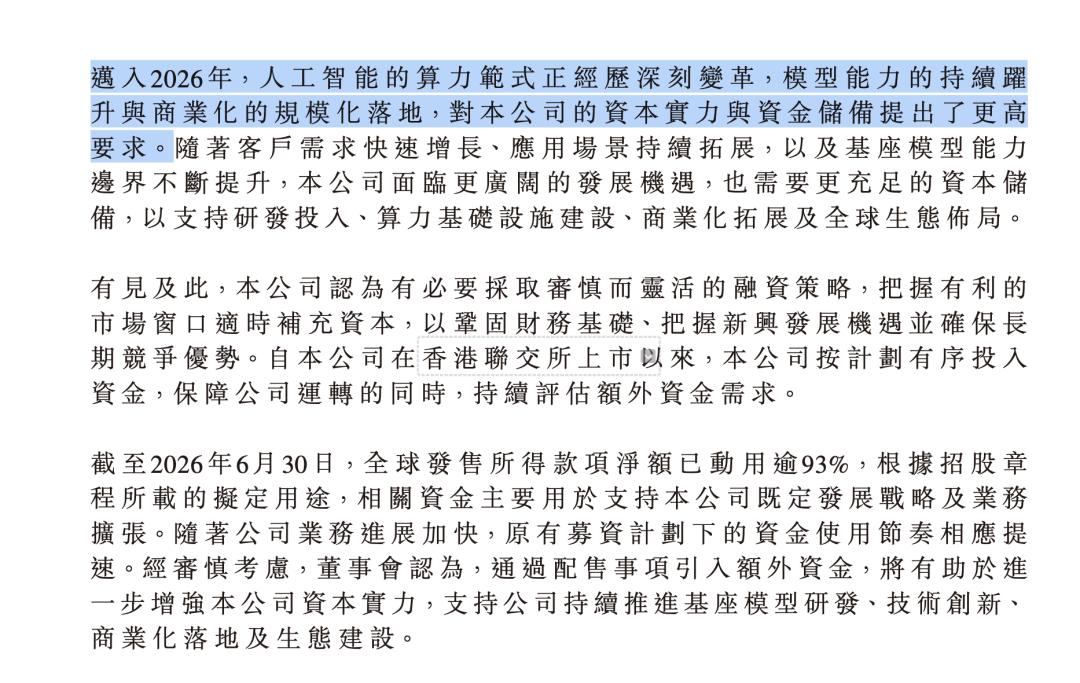
On July 9, Zhipu AI released an announcement disclosing that the company had signed a placement agreement with CICC Hong Kong. The agreement shows that Zhipu AI will place up to 19.78 million new H shares at HK$1588 per share. The total gross proceeds from the placement are expected to be approximately HK$31,410.64 million, while the net proceeds (after deducting commissions and estimated expenses) are expected to be around HK$31,374.95 million.
On July 13, Zhipu AI announced the completion of the placement: all 19.78 million new H shares were allotted at HK$1588 per share, with total gross proceeds of approximately HK$31.411 billion, and net proceeds after deducting commissions and expenses of about HK$31.375 billion.
On one hand, the company stated it would "not pursue short-term application monetization", and on the other hand, it completed a multi-billion-dollar placement just half a year after its listing. At a time when technological roadmaps are being rewritten on a monthly basis while capital demands rapid commercial returns, Zhipu AI is simultaneously facing two "clocks" running at different speeds.
Looking at its past track record, Zhipu AI has indeed successfully bet on several key opportunities at critical moments. For example, GLM retained general training capabilities, MaaS captured the first batch of API users, and the related work of Zhipu AI and its research network linked to Tsinghua University reserved reusable technical interfaces for the subsequent shift to coding and agents. However, this time the company needs to advance four parallel paths at once.
Two letters in half a year, facing two different clocks
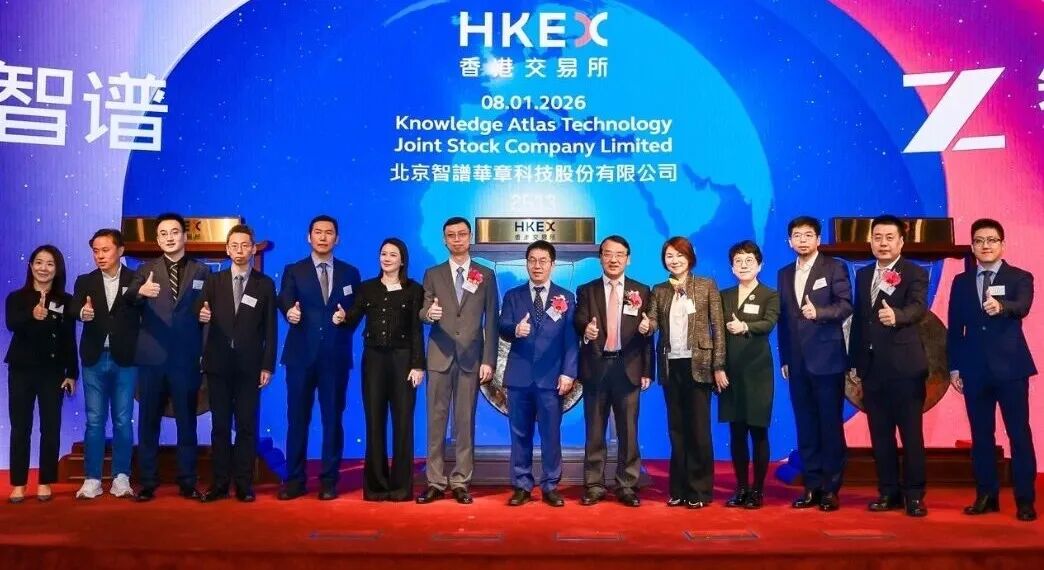
The previous internal letter was released on January 8, when Zhipu AI was listed on the Hong Kong Stock Exchange. Tang Jie titled it *Pursue AGI with the "Coffee" Mentality*.
The letter opens with a chance encounter in the lobby of the Hong Kong University of Science and Technology: during a short visit, Tang Jie ran into Yang Qiang at a café, and they talked about drinking too much coffee and whether they should quit. Yang Qiang asked in reply: if doing research could be as addictive as drinking coffee, why would anyone worry about failing to make progress in research?
Starting from the concept of "addiction", the letter then defined the positions of technology and business. He wrote: "We always insist on developing AI technologies that users can truly put into practical use." Later, when reviewing the period from 2023 to 2024, he directly admitted: "We might have made mistakes back then, both in technology and business."
Half a year later, in *The Huge Wave Has Arrived*, technology became the absolute protagonist, and the tone of the letter also changed accordingly.
Tang Jie defined Zhipu AI as a company built on "essence, counter-intuition, and focus", announcing that it would move upward to "Touch High" while the rest of the industry is generally accelerating commercial monetization. At the same time, he emphasized that "we will not pursue short-term application monetization".
Interestingly, the "placement agreement" announced on the Hong Kong Stock Exchange on July 9 listed "large-scale commercial implementation", customer demand, business expansion and ecosystem construction as the reasons for fundraising, and the use of funds also covers R&D, mergers and acquisitions, and working capital.
Screenshot of the placement agreement
The differences between the two internal letters and the placement agreement do not mean that Zhipu AI is debating whether to pursue commercialization, but rather who should determine the technological direction: immediate orders, or the capability ceiling of the next-generation model.
In January, Tang Jie used the scale of developers and the publicly disclosed ARR of the MaaS platform to prove that the bet on coding was not just a form of self-satisfaction for researchers; in July, he asked the organization to temporarily refrain from letting short-term monetization set the upper limit of research. Here, commercial feedback has not disappeared — it has just been moved from the steering wheel to the dashboard.
In fact, all leading model companies are simultaneously facing two clocks running at different speeds.
On one hand, the "technology clock" is running faster and faster: in January 2025, DeepSeek-R1 was released; in April of the same year, Qwen 3 was launched; three months later in July, GLM-4.5 was released. Since then, significant updates to cutting-edge domestic models have occurred on a monthly rather than annual basis. Meanwhile, the "business clock" demands more concrete results at every step: when contracts will be signed, whether inference costs will decrease, whether API prices can be raised, and when gross profit can cover more R&D expenses.
The former requires taking research risks when evidence is insufficient, while the latter requires translating these risks into observable operational results.
The internal letter on January 8 already revealed the dilemma of this dual time test.
On that day, Zhipu AI was listed with an issue price of HK$116.2 per share. Tang Jie did not frame the bell-ringing ceremony as an end point, but instead announced plans for the next-generation GLM-5, a brand new model architecture, more general reinforcement learning, continuous learning and autonomous evolution, and established X-Lab for cutting-edge exploration. In addition, the same letter used data on developers, platform revenue and overseas business to show that the previous round of bets on coding had already received positive feedback.
At this important capital node of going public, Tang Jie's narrative was not like a celebration of success, but the starting point for redefining technological problems.
The actions outlined in the July internal letter follow a similar logic. The only difference is that this time, the four paths are advancing in parallel, the scale of funds is larger, and external requirements have shifted from investor judgment before listing to continuous market valuation for a public company.
However, leading AI enterprises have no ready-made templates to copy.
Internet companies can develop products first and then expand infrastructure, and traditional software companies can arrange versions according to customer needs; but cutting-edge model companies have to invest in training clusters, data and talents in advance, even before new capabilities emerge and applications are clearly defined.
The two clocks do not contradict each other — they must run simultaneously. What they are truly competing for is not just the benchmark score of a certain generation of models, but a decision-making mechanism that can continuously correct errors even when no clear answers exist.
Do not seal the door before the answer emerges
Zhipu AI's earliest critical choice was not a bet on coding or agents.
On March 18, 2021, Tang Jie and other authors submitted a paper titled *GLM: General Language Model Pretraining with Autoregressive Blank Infilling*.
At that time, pre-trained models still had clear "division of labor": the BERT model was more like a test-taker doing reading comprehension, GPT was more like an author writing continuously based on previous context, and TBA handled conditional generation through an encoder-decoder structure. The original design intention of GLM was to enable the same "student" to fill in blanks, continue writing, and complete full texts according to given requirements.
GLM used "autoregressive blank infilling" to try to make a single framework handle natural language understanding, conditional generation and unconditional generation at the same time. This is like installing a set of universal sockets on the technical foundation, rather than guessing in advance which type of electrical appliance will be the most popular in the future. Of course, this paper belongs to Tsinghua's research lineage and cannot be directly attributed to Zhipu AI, but it still reflects the early technical orientation style of Tang Jie and his team.
From the end of 2021 to 2022, this orientation evolved from academic research into explicit corporate decisions.
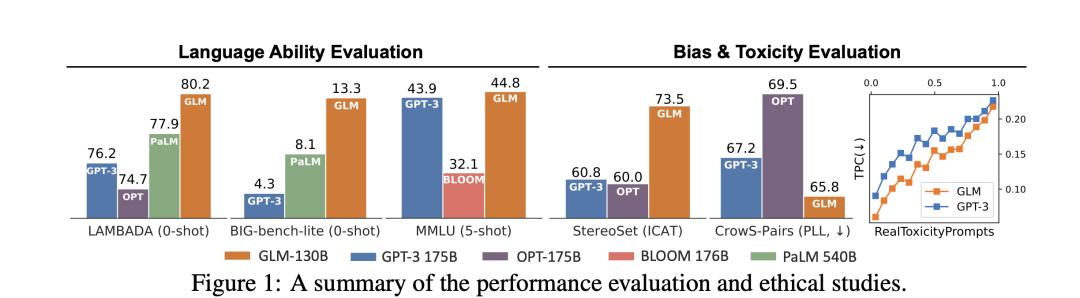
Records of the GLM-130B project show that the team began training the 130-billion-parameter model on May 6, 2022, using 96 servers, each equipped with 8 A100 40GB GPUs. Zhipu AI provided computing power for the project and participated in the construction of evaluation and demonstration systems.
Source: *GLM-130B: AN OPEN BILINGUAL PRE-TRAINED MODEL*
To avoid disrupting the overall development rhythm, Zhipu AI set up two small teams at the same time: one team trained GLM-130B, while the other built the MaaS platform.
With this arrangement, the same venture was equipped with two stopwatches. Whether or not this was a deliberate design by the management, the two teams effectively formed two separate feedback lines: one verifying the technical ceiling, and the other verifying market demand.
Tang Jie left a detail in the letter: the two small teams might not even know each other's existence at that time. In mid-2022, GLM-130B achieved phased training results. Later, the project was publicly released and open-sourced, while bigmodel.cn was launched and obtained its first batch of API users.
However, this arrangement did not achieve the ideal balance, nor did it eliminate mistakes for Zhipu AI.
From 2023 to 2024, the "Hundred Models Battle", price wars and the wave of AI assistants emerged simultaneously, and Zhipu AI was also seeking revenue from MaaS, localized deployment, enterprise models and agents. By 2024, the company's revenue reached RMB 312 million, of which localized deployment revenue was RMB 264 million, accounting for 84.5%. The revenue structure at that time still relied heavily on heavy localized deployment, with a cumbersome delivery model.
In its listing letter, Tang Jie did not portray this period of history as a series of correct decisions, but admitted that there were mistakes in both technology and business.
He wrote: "We might have made mistakes back then, both in technology and business." He directly pointed out the problems of "short-term gains and short-term hype". Immediately afterwards, he added: "The subsequent emergence of DeepSeek alerted us." At that time, Zhipu AI's model performance did not meet expectations, and the company needed to find a sufficiently narrow breakthrough point.
In the end, coding became that narrow door.
In September 2022, a joint team of Tsinghua University, Zhipu AI and Huawei had already opened the code, weights, API and editor plugins of CodeGeeX.
The CodeGeeX paper submitted in 2023 shows that this 13-billion-parameter model used 850 billion tokens up to June 2022, covering 23 programming languages. At the same time, the team also expanded the original Python-focused HumanEval benchmark to C++, Java, JavaScript and Go.
The paper revealed that the relevant plugins generated approximately 4.7 billion tokens every week for tens of thousands of active users at that time, and 83.4% of respondents believed that it improved their programming efficiency.
In other words, the focus on coding was not a last-minute decision. Before DeepSeek shifted the industry's attention, Zhipu AI's relevant teams had already connected code models, cross-language evaluation, editor plugins and user feedback into a single pipeline.
Coding was not a natural fruit growing on the GLM tree — it was a branch that had been half-built for a long time before being opened to traffic with concentrated resources. After the exploratory release of GLM-4.1 in April 2025, Zhipu AI launched GLM-4.5 on July 28, integrating reasoning, coding and agent capabilities into the mainline of a single model.
Connecting these nodes together, Zhipu AI's past decision-making logic gradually becomes clear.
Retain general capabilities and task interfaces when trends are unclear, narrow down the front after external signals emerge, and then use evaluation, user feedback and revenue to decide whether to increase investment further. This does not mean that the company can accurately predict the future every time — it is more like a capability to quickly adjust its choices.
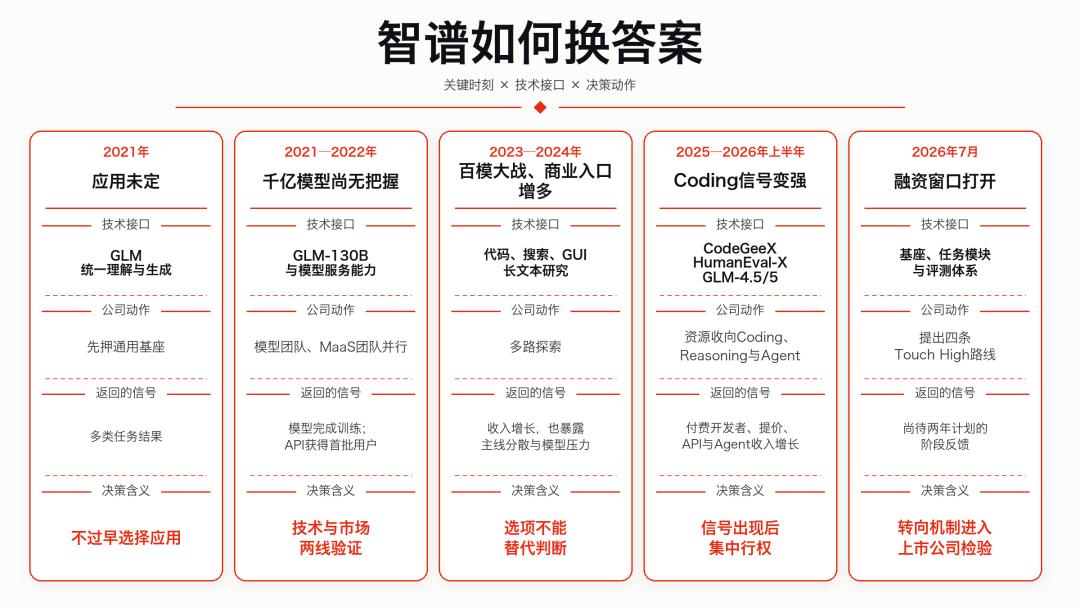
Illustration: HeFen CaiJing
The capability to adjust choices
If you list all the papers published by Zhipu AI, Tsinghua University THUDM and its partner institutions, "technical options" can easily turn into a numbers game. But what truly matters for corporate decisions is not how many papers there are, but whether these technical achievements can be reassembled when trends change.
Based on public materials, the technical accumulation formed by Zhipu AI and its associated research network is already like a factory with complete basic capabilities.
GLM, GLM-130B and the subsequent GLM-4.5/5 are the engine and production line, solving general modeling, large-scale training, MoE and post-training; CodeGeeX, WebGLM, CogAgent, LongWriter and others are different workstations, enabling the model to enter the fields of code, search, GUI interaction and long-form output; HumanEval-X, AgentBench and LongBench are the instruments and quality inspection lines, used to measure whether capabilities have truly improved.
