When rings can read minds and earrings understand emotions? The future of technology is all worn on your body
Have you ever wondered what AI products of the future will look like?
Imagine: Waking up in the morning without reaching for your phone, getting meeting minutes automatically just by entering the conference room, receiving quiet navigation guidance through your earring on a foreign street, and being silently accompanied by a smart ring as you fall asleep late at night.
Over the past decade, when we talked about wearable devices, we were essentially referring to a type of "external-attached tool". Smart bands track your steps, smart watches push notifications, and TWS headphones block out noise—they hang on your wrist, tuck into your ear canal, or rest on the bridge of your nose, constantly reminding you "I am an electronic product."
Image source / Shetu Image Network
But today in 2026, the tide has turned.
Xiaomi's first AI glasses, weighing only 40 grams, aim to become your "portable encyclopedia" and payment portal; LightSail AI's full-sensory headphones hide dual cameras inside an 11-gram earhook, allowing the headset to "see and hear"; Apple's rumored iRing smart ring, priced around 2000 yuan, fills the gap in nighttime monitoring left by the Apple Watch; Lumia 2 compresses sensors into a "coffee bean" weighing less than 1 gram, serving as a replaceable back support for an earring; The NUNA AI smart pendant, with its 17-gram pebble-shaped body, quietly records your emotional fluctuations.
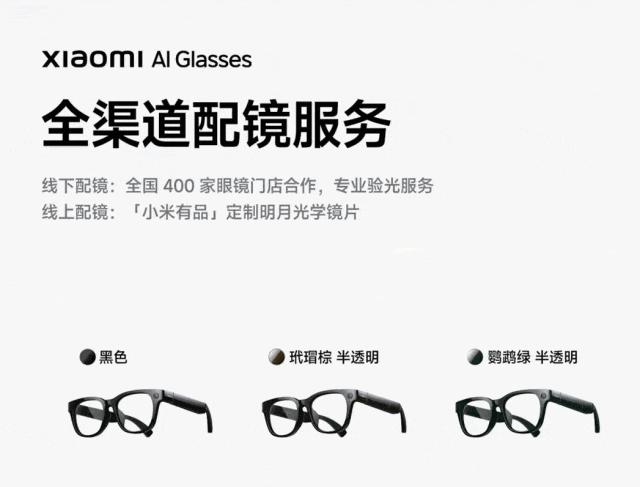
Image source / Xiaomi Official Website, LightSail AI Official Website, Lumia Official Website, NUNA Official Website
They are all doing the same thing: It's no longer about you operating AI, but about AI starting to perceive you. It knows what you see, what you hear, how well you sleep, and even that your emotions are changing. For the first time, technology is beginning to understand the human body, rather than waiting for your input.
Three Major Changes in Wearable Devices
The new competitive stage for wearable AI: Moving from the "era of tools" to "body narrative". Behind this, there are at least three transformative shifts.
The first change: Evolving from "external-attached devices" to "body organs".
Looking back at the past ten years, wearable devices were caught in a "functional arms race"—bigger screens, more sensors, longer battery life. But the new products of 2026 tell us: The real breakthrough does not lie in stacking hardware specs, but in making the device a natural extension of the human senses.
The electrochromic technology in Xiaomi AI glasses is highly representative. A quick two-finger swipe on the temple completes a four-level color transition in 0.2 seconds. This is not just a gimmick, but designed to let the glasses respond instinctively to ambient light, just like a pupil. When you walk from indoors into bright sunlight, it automatically darkens; when you enter a dark room, it instantly becomes clear. This kind of interaction has gone beyond the scope of "tools" and entered the realm of "organs".
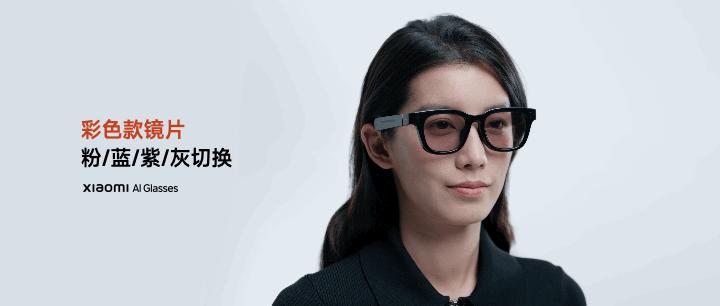
Image source / Xiaomi
The second change: AI starts to actively understand you, instead of waiting for your commands.
All smart devices in the past followed one logic: You give a command, and then it starts working. But today, AI is shifting to proactive services. Based on your location, eye movements, voice, and physical state, it anticipates what you need: automatically generating meeting minutes during a conference, providing real-time translation while traveling, and comparing prices for products you see. Even, when it detects changes in your sleep, heart rate, or emotions, it will alert you in advance, before you notice any problems. The most advanced level of intelligence is never about answering every question correctly, but about understanding what you need before you even speak.
The proactive AI service of LightSail AI's full-sensory wearable device. It no longer waits for your commands, but actively delivers continuous services in specific scenarios based on five dimensions of information: vision, voice, location, schedule, and messages. It automatically recognizes PPTs to generate meeting minutes during work, reminds you of crowded subway stations during your commute, and pushes price comparison information when you look at products—It's like a close personal assistant, detecting your needs even earlier than you do.
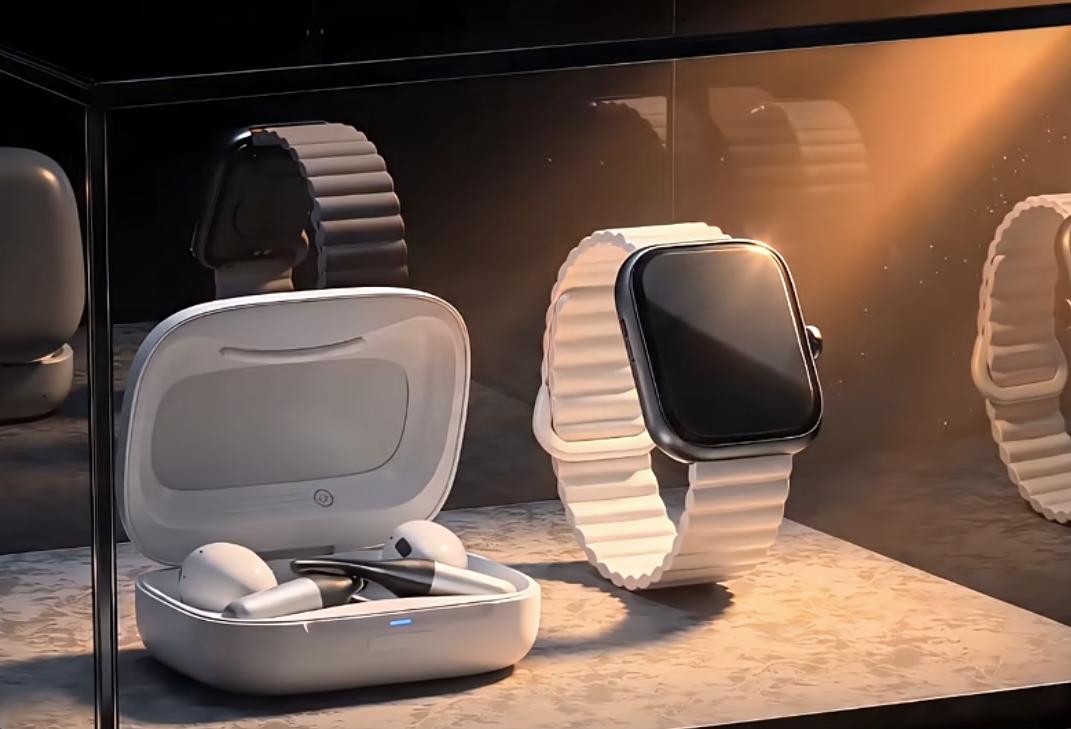
Image source / LightSail AI
The third change: Consumers are purchasing a new lifestyle.
Wearable devices are breaking away from the limitations of working in isolation, and becoming key nodes in a personal smart ecosystem.
Buying an AI ring means you're getting 24/7 health management;
Buying an AI pendant means you're getting emotionally supportive companionship for inner self-awareness;
Buying an AI earring means you're getting the tech sensibility hidden in a piece of jewelry.
Technology, fashion, and lifestyle are converging, and consumers no longer want to choose between technology, health, and style.
The exposure of the Apple Ring reveals Apple's far-sighted strategy: It will not replace the Apple Watch, but instead form a "day-night complementary" system with it—Use the watch during the day to track workouts and notifications, and switch to the ring at night to monitor sleep and resting vital signs. Data from the two devices converges in the iPhone's Health app to build a complete personal health database, and in the future, it will even connect with Vision Pro to enable spatial gesture control.
Who Is Driving This Transformation? New Demographics and New Motivations
"Full-Time Digital Natives": The Generation That Rejects Being Offline
Gen Z and Gen Alpha are reshaping the usage logic of wearable devices. For them, being "offline" is not a right—it's a source of anxiety. They need devices that stay with them throughout their entire day: commuting, working, socializing, exercising, and sleeping, but they hate bulky hardware and frequent charging reminders.
This is exactly why the Lumia 2 adopts a "hot-swappable battery" design—when the battery runs out, you can directly replace it with a spare one, keeping the sensor unit on your body at all times to achieve 24/7 continuous monitoring. This is also why the Apple Ring follows a "screen-free lightweight" path, sacrificing display functionality for multi-day battery life. This group of users doesn't want the most feature-packed device—they want a device that's always online and completely unnoticeable.
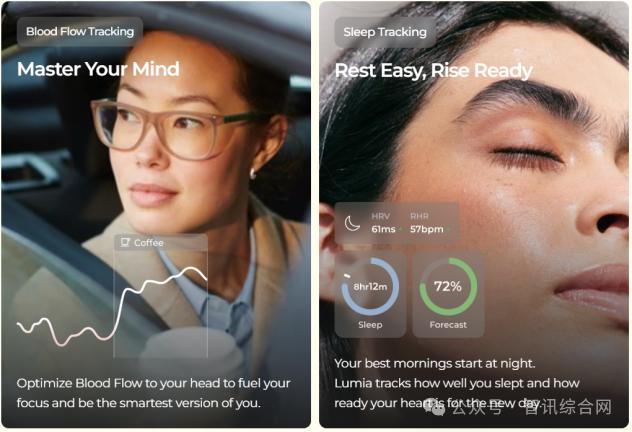
Image source / Lumia Official Website
"Pleasure-Oriented Health Managers": From Treating Illness to Preventing It
Today's health management motivation is shifting from "focusing on metrics" to "focusing on feelings". People no longer only fixate on step counts and calories burned—they pay more attention to their body's real feedback and subtle emotional changes. But traditional "stress scores" and "sleep ratings" are often too rigid and lack a human touch.
The NUNA AI pendant perfectly addresses this pain point. It doesn't use a universal emotional evaluation standard; after the user wears it for seven days, it generates a personal baseline, and all states are compared only to the user's own past data. This design philosophy of "inner self-awareness" caters to current consumption trends of "self-care" and "emotion first". Users aren't buying a monitoring tool—they're buying a ritualistic carrier that helps them embrace self-acceptance.
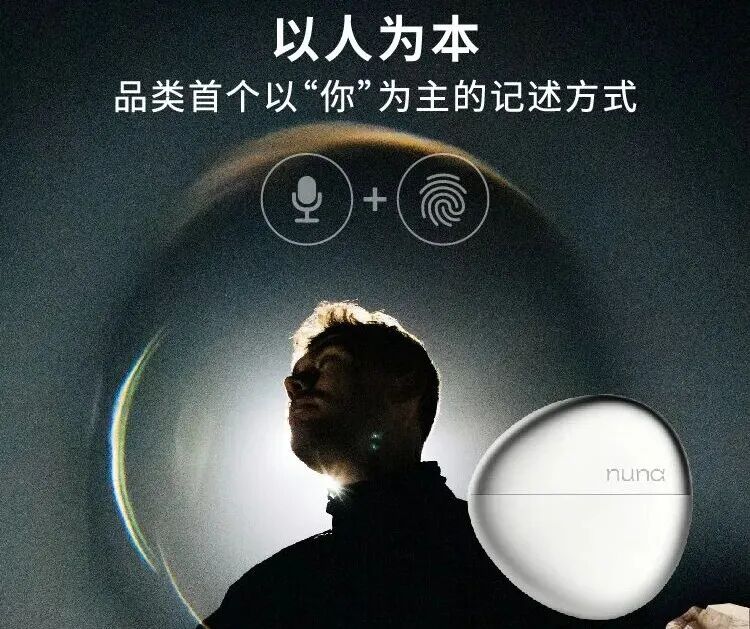
Image source / NUNA Official Website
"Aesthetic-Driven Tech Consumers": Appearance Is Attitude
When a wearable device becomes your "second skin", its aesthetic attributes become just as important as its functionality. This group of people refuses to choose between fashion and technology—they want medical-grade monitoring accuracy as well as jewelry-level design aesthetics.
The success of Lumia 2 confirms this point. It raised $1.3 million in crowdfunding within 5 days of launch, and backers weren't just rushing to buy a health tracker—they were getting a piece of "black tech hidden inside an earring". It supports multiple wearing options including stud earrings, ear cuffs, and on-ear rings, with gold, silver, and transparent colorways, making a tech product have the "social attributes of jewelry" for the first time. When a woman wears the on-ear ring style of Lumia 2 on a date, she's not showing "I'm monitoring my health"—she's showing "I have great taste, I understand tech, and I care about myself"—that's the real meaning of "body narrative".
The Next Focus: Four Major Trends for Wearable Devices
From the ring on your fingertip to the earring behind your ear, technology is integrating into life with an unprecedented level of subtlety. This shift toward "body narrative" is no accident—it's the inevitable result of multiple overlapping factors. Following this line of thought, we've identified four key trends for wearable devices.
Trend 1: Ultimate Invisibility of Form Factor
Wearable devices will no longer be "put on"—they will exist naturally, just like your skin or nails.
The future competitive focus won't be "who has more features"—it will be "who has the least presence". With Xiaomi AI glasses at 40 grams, LightSail headphones at 11 grams, and Lumia 2 under 1 gram, we are getting closer and closer to the goal of "unnoticeable wearing". The next breakthrough will come from materials science—the maturation of flexible electronics, biocompatible materials, and self-powering technologies will allow devices to truly merge with the human body.
Imagine: In 2030, you might be wearing a pair of contact lenses as transparent as your cornea, which automatically adjusts diopters, filters harmful blue light, and reminds you to rest when your vision declines; a sensor thinner than a film sticks to your nail, monitoring your nutrient intake and drug metabolism 24 hours a day.
This is not science fiction. The Skinsight electronic skin, co-developed by MIT and AmorePacific, is already in development. It can monitor skin firmness and UV exposure 24 hours a day, and recommend skincare solutions via AI. When electronic skin moves from the lab to your vanity table, the ultimate form of wearable devices—the "second skin"—will truly become a reality.
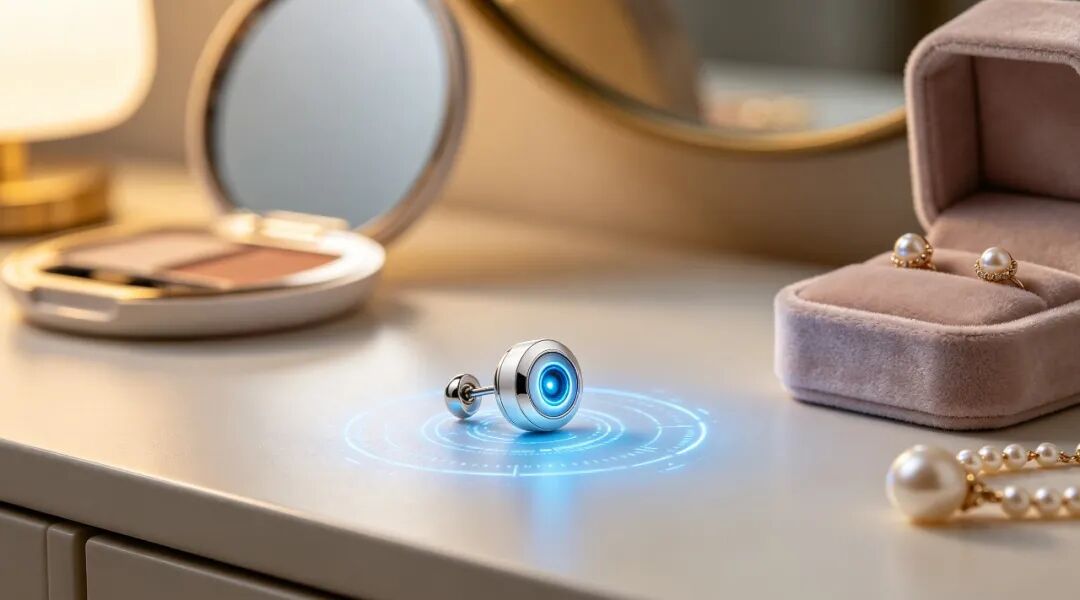
Image source / AI Generated
Trend 2: Seamless, Unnoticeable Interaction
We are saying goodbye to the era of "looking down at the screen and tapping buttons". The interaction logic for new-generation wearable devices is: Let the device perceive you, instead of you operating the device.
Xiaomi AI glasses' voice intelligence already allows you to complete payments just by speaking a soft phrase; LightSail headphones' always-on AI wake-up lets you use functions without taking out your phone; the NUNA pendant's gentle tap on the center activates a soothing vibration, an almost instinctive tactile interaction.
The exposed "spatial gesture control" of the Apple Ring foreshadows this future: Tiny finger movements can manipulate the spatial interface of Vision Pro. When you draw a circle in the air with your ring to switch songs, or pinch your finger to answer a call, interaction completes the leap from "operating a device" to "expressing an intention". Future wearable devices will understand what you want even better than you do.
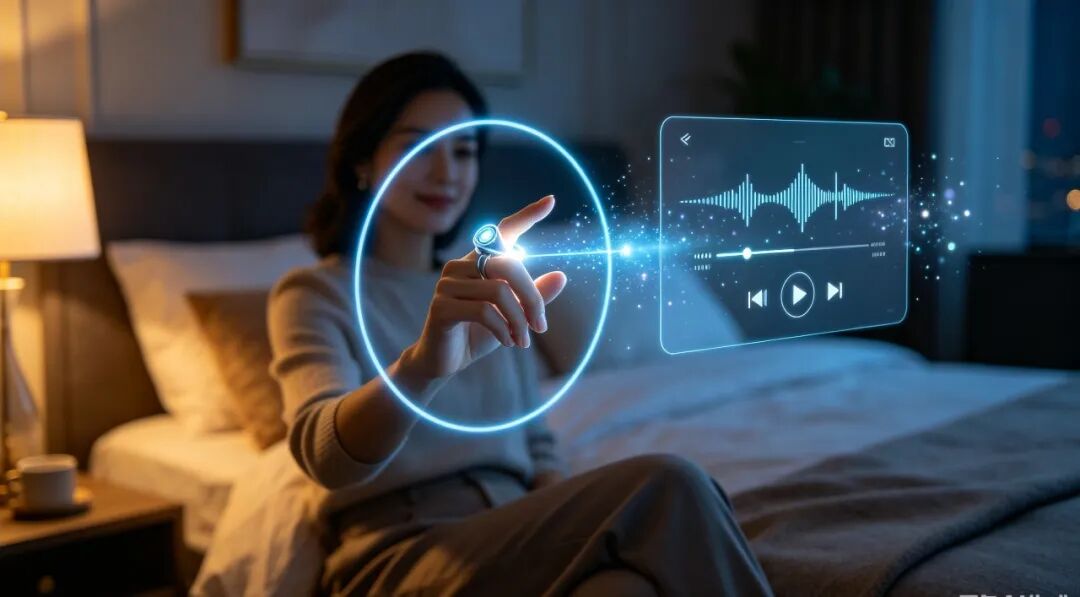
Image source / AI Generated
Trend 3: Proactive Data Utilization
Wearable devices of the past decade were essentially "digital diaries"—they faithfully recorded how long you slept yesterday and how many steps you took today. In the future, users don't need a perfect health report—they need early warnings before a health crisis occurs.
Lumia 2's head blood flow monitoring is a great starting point. By tracking blood flow to the brain, it can detect early risk signals of fainting or stroke. But the real breakthrough lies in algorithm evolution—when wearable devices connect to large AI models, they can piece together scattered physiological data into a "health story", telling you "your resting heart rate has risen 8% over the past week. Combined with your sleep quality and schedule, it is recommended to reduce caffeine intake tomorrow".
Future wearable devices will become your "digital twin". It builds a virtual model in the cloud that matches your physiological characteristics, simulating the impact of different lifestyles on you in real time. Wondering "What happens if I stay up late tonight"? It will give you a personalized prediction based on your historical data, instead of a generic statement like "staying up late is bad for your health". Shifting from a "recorder" to a "prophet"—this is a qualitative leap in the value of data.