The wave of price hikes has arrived, forcing automakers to reveal their "final cards".
In the first half of 2026, a new atmosphere of anxiety has permeated China's automotive market.
In July, rumors of a price increase for the new generation Li L6 spread like wildfire. This speculation was not unfounded: from the decisive price adjustments of Harmony Intelligent Mobility in March, to the simultaneous upward shifts in pricing by Tesla, NIO, GAC Aion, Avatr, and Zeekr in May, a new energy vehicle price surge covering the entire industry has officially kicked off.
According to incomplete statistics from *Connecting Mobility*, the per-vehicle price increase among the aforementioned automakers ranges from 2,100 yuan to 20,000 yuan. Rivals who had fought fiercely in the price war have almost simultaneously put down their price-cutting cards.
Cui Dongshu, Secretary-General of the China Passenger Car Association (CPCA), published a statement noting that in May 2026, the average price of new energy passenger vehicles reached 169,000 yuan, representing a year-on-year increase of 7,000 yuan.
This dramatic reversal is far more than a simple fluctuation in market sentiment. Its underlying logic stems from the global competition for chip and battery material production capacity triggered by the AI industry boom, the return of lithium carbonate prices to elevated levels, and a new proposition facing all industry players — when policy dividends, capital patience, and consumers' initial novelty-seeking impulses have all peaked, what exactly should new energy vehicle competition focus on?
Players are still exploring the answer to this question, but the past three years of price wars have taught the industry one lesson: sales gained through subsidies and price cuts cannot ultimately retain users.
Price increases represent a passive cost pass-through, but also an active industry reshuffle. When low prices are no longer the sole attraction, when new energy penetration rates rise year after year, and the market shifts from incremental to stock competition, the underlying logic of competition is being rewritten.
The outcome of this competition will directly determine who secures a ticket to the next round of the race.
Farewell to Price Wars: New Energy Automakers Raise Prices Collectively
In July, discussions about price adjustments for the Li L6 continued to heat up within industry circles.
According to reports from *Leiphone*, the new L6's battery capacity has been increased from 36.8kWh to 51kWh. Combined with the sharp rise in lithium carbonate costs, the battery alone adds over 8,000 yuan to production expenses; memory costs have risen by nearly 4,000 yuan, and the Qualcomm 8797 chip is expected to cost over 2,000 yuan more.
With these three factors combined, the overall per-vehicle cost increase exceeds 14,000 yuan. Based on the L6's estimated 160,000 units sold in 2025, maintaining the original price would erode over 2.2 billion yuan in profits for this single model alone.
In March this year, Li Auto President Ma Donghui stated that the company would "try its best to absorb external price pressures internally," while acknowledging that it would "comprehensively consider component costs and user value to determine pricing for new models."
Although officials have not confirmed the final price adjustment for the L6, the situation indicates that this star model, which carries the main weight of Li Auto's sales, is undergoing a deliberate re-evaluation of its value.
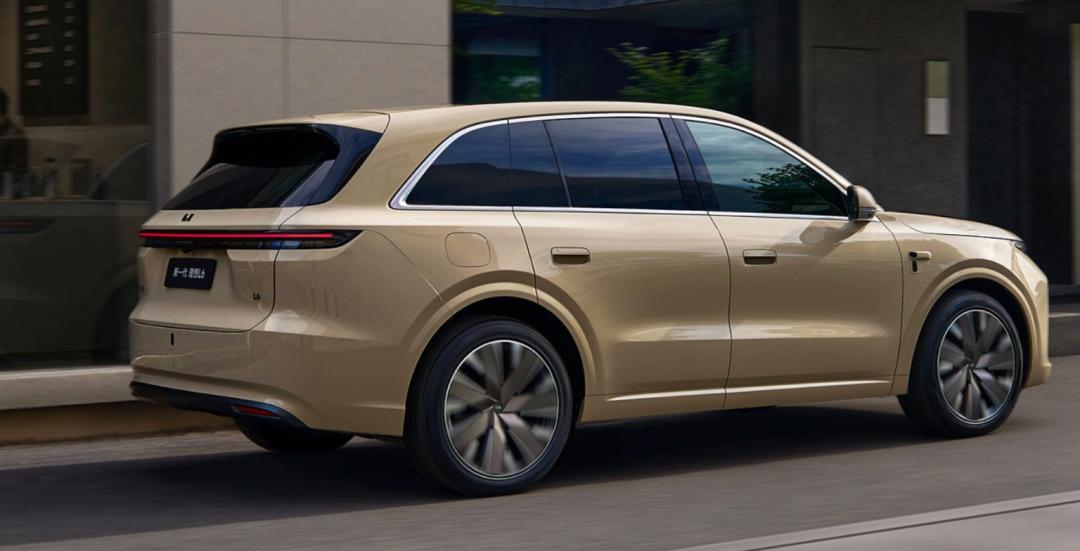
Image source: Li Auto official website
The Li L6 price hike rumors are merely the latest footnote to this industry-wide price surge. The prelude to new energy vehicle price increases sounded as early as March this year.
On March 4, the AITO M9 saw its new model guide price rise by 10,000 yuan, equipped with a new generation of LiDAR and an upgraded HarmonyOS intelligent driving system; around the same time, some versions of the Zunjie S800 were adjusted, with the Starlight Premium Edition increasing from 788,000 yuan to 808,000 yuan.
Shortly after, on March 19, Xiaomi launched the new generation SU7, raising prices across the entire lineup by 4,000 yuan. The final prices for the Standard, Pro, and Max versions are set at 219,900 yuan, 249,900 yuan, and 303,900 yuan respectively. Xiaomi founder Lei Jun admitted at the launch event that material costs alone rose by roughly 20,000 yuan, and the final 4,000 yuan price increase was a decision made after careful consideration.
Entering April, price hikes moved from tentative steps to widespread implementation. On April 28, BYD officially announced that starting May 1, the "God's Eye B" assisted driving LiDAR version, available as an optional upgrade for select models under its Dynasty, Ocean, and Fangchengbao lines, would see its price rise from 9,900 yuan to 12,000 yuan — a 2,100 yuan increase.
Two days later, Changan Qiyuan announced that the guide price for the Qiyuan Q07 Tianshu Intelligent LiDAR version produced after May 7 would be raised by 3,000 yuan.
When leading automakers like BYD, whose competitive edge has long been "equal pricing for gasoline and electric vehicles" or even "electric vehicles cheaper than gasoline cars," adjust their pricing, it sends a clear signal: cost pressures have broken through the protective firewall built by economies of scale.
It was May, traditionally a peak season for auto sales, that truly pushed this price surge to new heights, becoming the month with the most concentrated price hikes in 2026.
At the beginning of May, NIO adjusted prices for its core 2026 models including the ES6 and ET5, with increases ranging from 5,000 to 10,000 yuan, while simultaneously canceling the basic free battery swap benefit.
GAC AION raised the terminal prices of models such as the AION Y Younger and AION S Plus by 3,000 to 6,000 yuan.
The pre-sale price of the Avatr 12 extended-range version rose by 30,000 yuan to 299,900 yuan compared to the previous model, while the pure electric version increased by 20,000 yuan to 309,900 yuan.
On the other hand, while XPeng launched a limited-time vehicle price reduction, it raised the price of its XNGP full-scenario high-level intelligent driving optional package by 2,000 yuan and canceled lifetime free benefits. Zeekr and Avatr implemented "hidden price increases" by scaling back zero-interest financing policies for car purchases.
According to incomplete statistics, by mid-May, over 15 automotive brands had completed price adjustments or tightened terminal discounts, with the maximum per-vehicle price hike reaching 20,000 yuan.
By this point, the full picture of this sweeping price surge has emerged clearly: it is not an isolated action by a few companies, but a chain reaction.
To simply define this round of price hikes as a universal industry-wide increase would be superficial; we must recognize that the underlying logic and manifestations of this trend vary significantly.
The first category is direct price increases, such as GAC Aion's straightforward upward adjustment of guide prices, which transparently reflects rising manufacturing costs. The second is technology-driven price increases, as seen with BYD and Harmony Intelligent Mobility, which raise prices for high-value optional features like intelligent driving systems, making consumers pay a premium for technological upgrades. The third is benefit-based price increases, exemplified by NIO's cancellation or reduction of free battery swap and charging benefits, converting previously complimentary services back to paid products to achieve an equivalent price rise.
Regardless of the form it takes, this price surge marks the end of an old era. Just a year ago, the entire industry was mired in the most brutal price war in history. Only half a year later, the tide has turned, and rivals who once fought fiercely in the price arena have almost simultaneously laid down their price-cutting cards.
This also signals a shift in industry competition. In the past, automakers competed to drive prices as low as possible and trade losses for market share; today, all brands stand on the same new starting line. Navigating a cycle of rising costs while preserving pricing power, retaining users, and maintaining profitability is the shared challenge for all automakers.
Behind Cost Pressures: Each Player Holds Different Cards
This test of raising prices to protect profit margins is far more difficult than anyone anticipated.
Unlike past price hikes driven by raw material fluctuations, this is a full industrial chain cost restructuring triggered by the AI industry boom.
Historically, cost fluctuations in the automotive industry mostly stemmed from changes in the prices of bulk commodities such as steel, oil, and rubber. This time, the epicenter of the storm is artificial intelligence. Massive demand from generative AI, large model training, and AI-powered terminals like AI phones and AI PCs acts as a giant black hole, absorbing global advanced production capacity — and new energy vehicles happen to compete with these AI devices for core component manufacturing capacity.
The first to be impacted is the rising cost of raw materials such as storage chips and lithium carbonate.
According to reports from *CCTV Finance*, between March and June 2026, the overall price of automotive-grade storage chips in China rose by 180%, with some high-end DDR5 models seeing price increases exceeding 300%. At present, intelligent features are key for automakers to compete in the high-end market, and storage chips are core hardware for smart cockpits, high-level intelligent driving, and vehicle infotainment systems. The higher the level of intelligence, the greater the demand for storage capacity. UBS estimates that the storage chip price hike alone has increased per-vehicle costs for mid-to-high end new energy models by 4,000 to 7,000 yuan.
In addition to the structural shock in the chip sector, the rebound in lithium carbonate prices has also created clear cost pressures. At the end of 2025, the spot price of lithium carbonate was only 75,000 yuan per ton, but it continued to rise in 2026, breaking through 200,000 yuan per ton by mid-May, with a cumulative year-to-date increase of over 160%. Based on a February 2026 research report from CITIC Securities, every 10,000 yuan per ton increase in lithium carbonate adds 318 yuan to per-vehicle production costs.
To a certain extent, this cost restructuring has gone beyond the control of automakers, meaning that traditional strategies of relying on cyclical commodity price corrections to ease cost pressures no longer apply.
What makes the situation even more challenging is that the automotive industry's current cost-side pressure coincides with a profitability trough, squeezing automakers from both ends. Data released by the National Bureau of Statistics shows that the auto industry's profit margin in 2025 was 4.1%. Cui Dongshu noted in a post that "from January to March 2026, the auto industry's sales profit margin further dropped to 3.2%, with a 3.7% margin in March — a historically low level."
Automakers are at a crossroads: either hold prices steady and watch their already meager profits erode, or raise prices to defend their survival while risking market pushback.
Clearly, automakers have chosen the latter. But how to proceed, and how far to go, depends on the cards each manufacturer holds. Facing the same cost storm, different players have submitted vastly different responses, reflecting a comprehensive competition involving cash reserves, technological moats, economies of scale, and in-house R&D capabilities.
Li Auto adopted a strategy of absorbing costs first and raising prices later, using hundreds of billions in cash reserves to secure a strategic window. While more than ten mainstream brands raised prices intensively from March to April, Li Auto kept all its model prices unchanged, absorbing rising costs internally. The company even invested 500 million yuan of its own funds to fully cover the additional user costs caused by the adjustment of new energy vehicle purchase tax from full exemption to a 50% reduction.
Li Auto's confidence stems from its robust cash reserves. As of the end of Q1 2026, Li Auto's cash and cash equivalents reached 42.871 billion yuan, with total capital reserves exceeding 90 billion yuan.
For Li Auto, rising costs are not a passive crisis, but an opportunity for product iteration. By enhancing product value for family users through configuration upgrades, paired with reasonable price adjustments, the company maintains user goodwill while absorbing cost pressures. This strategy of leveraging product cycles to offset cost fluctuations is the result of Li Auto's long-term deep cultivation in the family user market.
NIO has simultaneously upgraded configurations and raised prices, using its service moat to hedge against cost increases. Behind NIO's adjustments are comprehensive upgrades to intelligent driving hardware, cockpit systems, and chassis performance, resulting in a clear improvement in overall vehicle product strength compared to older models.
On the surface this appears to be a price hike, but in reality it translates to enhanced service value. While users of other brands still worry about charging, NIO users can complete a battery swap in 3 minutes. This experiential difference forms the foundation of NIO's confidence to raise prices, as users are willing to pay a premium for the "chargeable, swappable, and upgradable" experience.
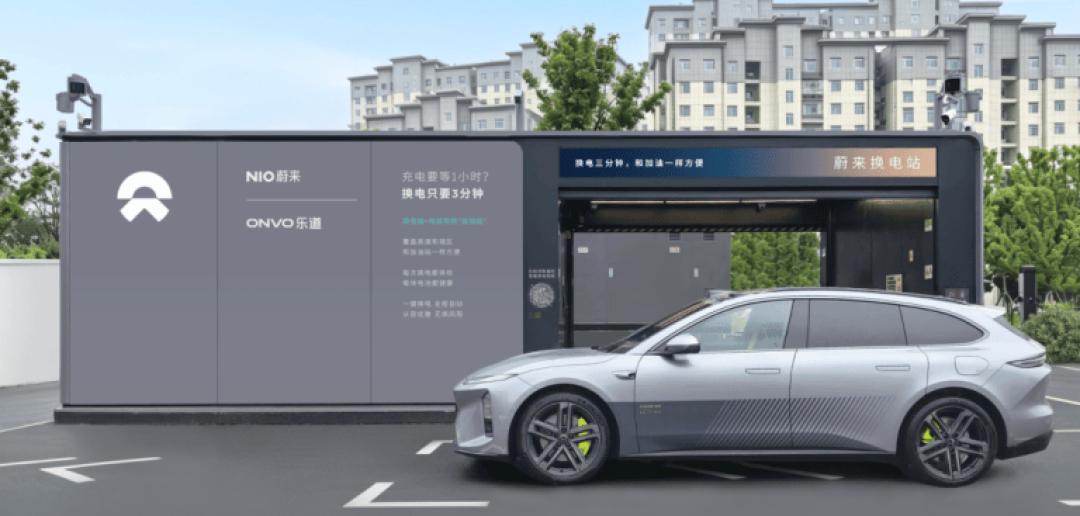
Image source: NIO official website
Amid the industry-wide price surge, BYD is one of the few brands that has kept its base vehicle guide prices unchanged, only adjusting the price of its high-level intelligent driving optional package. This composure comes from its full industrial chain vertical integration capabilities.
As the world's only automaker that achieves full in-house R&D and production across the entire chain "from lithium mines to finished vehicles," BYD's self-sufficiency rate for core components generally ranges from 75% to 85%. This vertical integration capability is key to its ability to withstand external shocks from supply chain fluctuations.
In addition to vertical integration, economies of scale form another core advantage for BYD. In June this year, BYD's monthly sales exceeded 400,000 units, with cumulative first-half sales surpassing 1.8 million units. This sales scale continuously spreads R&D, manufacturing, and supply chain costs across a larger volume of vehicles.
Notably, Leapmotor is one of the few automakers that has not raised prices for end users in this round of adjustments. For cost-effective brands like Leapmotor, which prioritize affordability, rising cost pressures are inherently severe. The ability to avoid raising prices relies heavily on the cost control brought by in-house R&D.
In April this year, Leapmotor founder Zhu Jiangming revealed that the company's in-house R&D and self-manufacturing ratio for core components exceeds 65%. Based on the industry average 15% gross margin for suppliers, this in-house ratio delivers a 10% cost advantage. Leapmotor has temporarily kept prices steady, absorbing cost pressures through internal R&D and close collaboration with suppliers.
But the tradeoff is obvious: Leapmotor's Q1 2026 gross margin dropped to 9.4% from 14.9% in the same period of 2025. In-house R&D can compress costs, but it cannot eliminate them entirely. Zhu Jiangming also admitted that if material prices continue to climb, future price adjustments remain possible.
In reality, no matter which strategy is adopted, all advantages ultimately point to the same direction: whoever can stabilize their pricing system and preserve user trust amid the cost storm will secure a ticket to the next round of competition. The price war era