Exports surged 43.2% in half a year, and the extreme heat in Europe has made the entire Chinese air conditioner industry chain hugely profitable.
"I swore I arrived in Germany, not hell," a Chinese student studying in Germany posted on her social media feed. At that moment, she had been baking under Germany's rare extreme heat for an entire day.
Starting in late June, Europe faced an unprecedented heatwave test: temperatures in Germany, France, Italy and other regions consecutively broke historical records, with multiple locations exceeding 40°C. Roads melted, schools suspended classes, hospitals were overwhelmed, and funeral homes ran at full capacity...
Under the scorching heat, Europeans frantically snapped up air conditioners. Carrefour CEO Alexandre Bompal confirmed that on June 22 alone (by 18:30), Carrefour sold 30,000 air conditioners and electric fans — roughly 1,000 times its usual sales volume. At the peak of the heat, air conditioners priced at 999 euros were marked up to 4,999 euros by scalpers; on second-hand trading platforms, nearly-new portable air conditioners sold for up to three times the price of brand-new units. On social media, the scenes of people scrambling for air conditioners were comparable to a real-life version of *Train to Busan*. Many parts of Europe even saw air conditioner theft incidents and scams specifically targeting people seeking to buy AC units.
The imbalance between supply and demand is the root cause: according to statistics, Europe's local annual air conditioner production capacity is around 3.2 million units, while the 2026 market demand exceeds 10 million units. Even operating at full capacity, local production can only meet less than one-third of the market demand, leaving a supply gap of up to 6.8 million units.
Chinese air conditioners have become the core force filling this gap. Data from the General Administration of Customs shows that in the first half of 2026, China's air conditioner exports to the EU reached 3.76 billion U.S. dollars, a year-on-year increase of 43.2%, hitting an all-time high for the same period. In June alone, air conditioner exports to Europe soared 72.8% year-on-year; the export growth of the niche category of no-installation portable air conditioners also exceeded 70%.
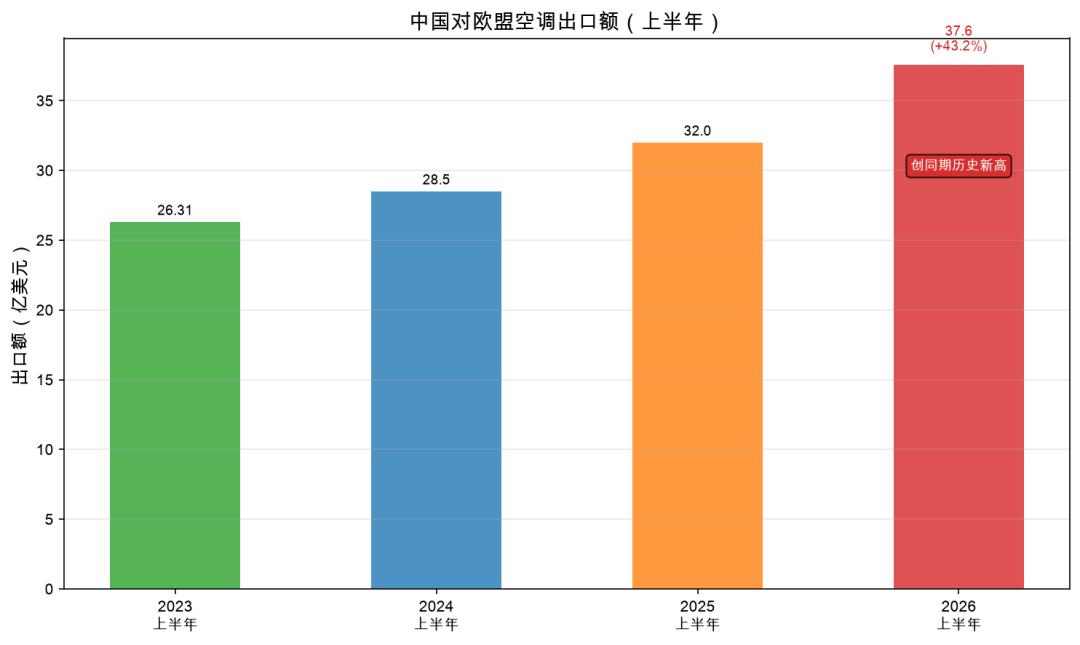
The market share of Chinese brands in Europe jumped from 27% in 2023 to 41% today, making them the largest source of air conditioner supply in Europe for the first time. Leading brands such as Midea and Haier are the main export drivers, and the entire Chinese air conditioner industrial chain — from finished appliance brands to core components, upstream raw materials, and even cross-border e-commerce platforms and international logistics distribution — is reaping the benefits of this heatwave boom.
01
The Biggest Winner
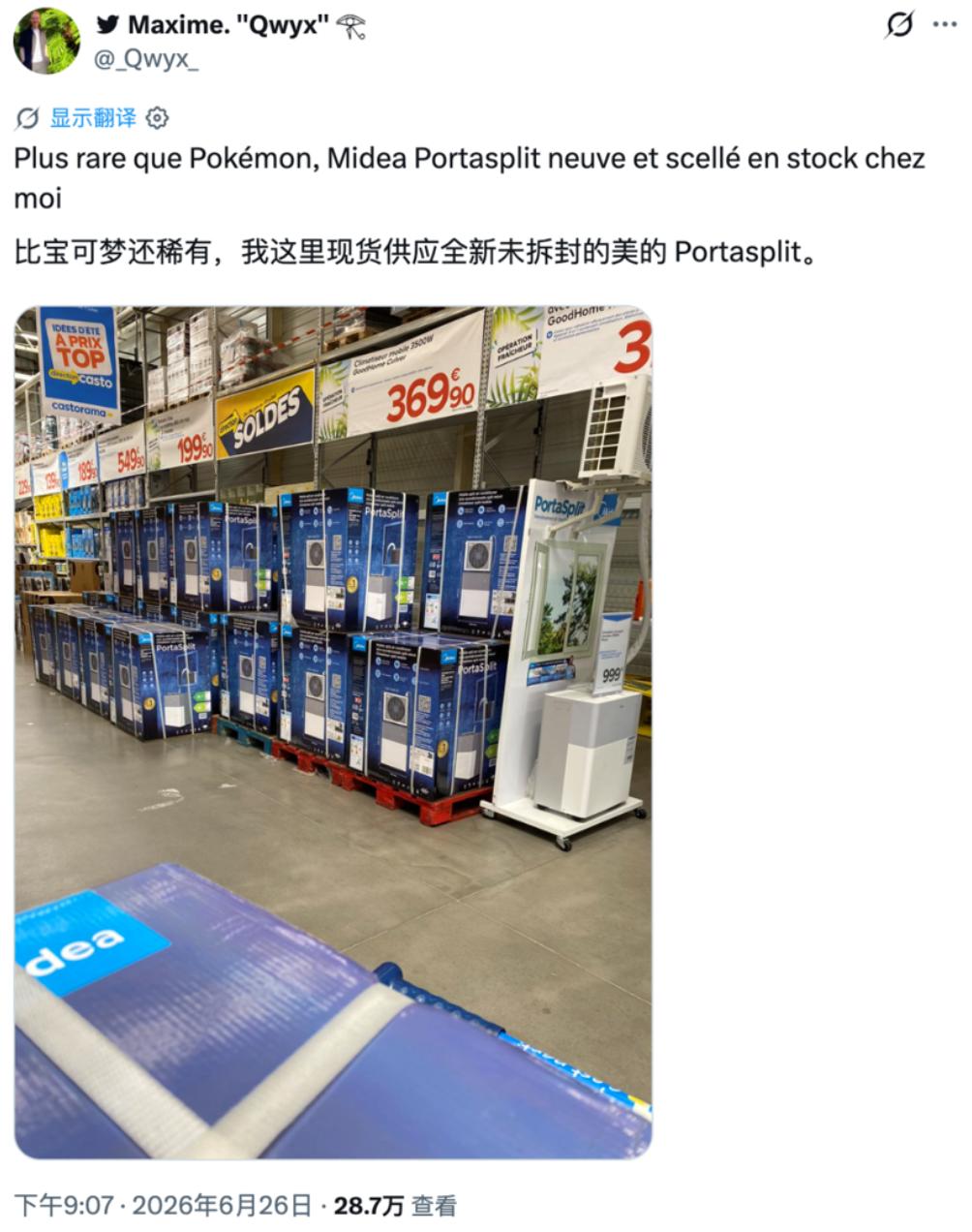
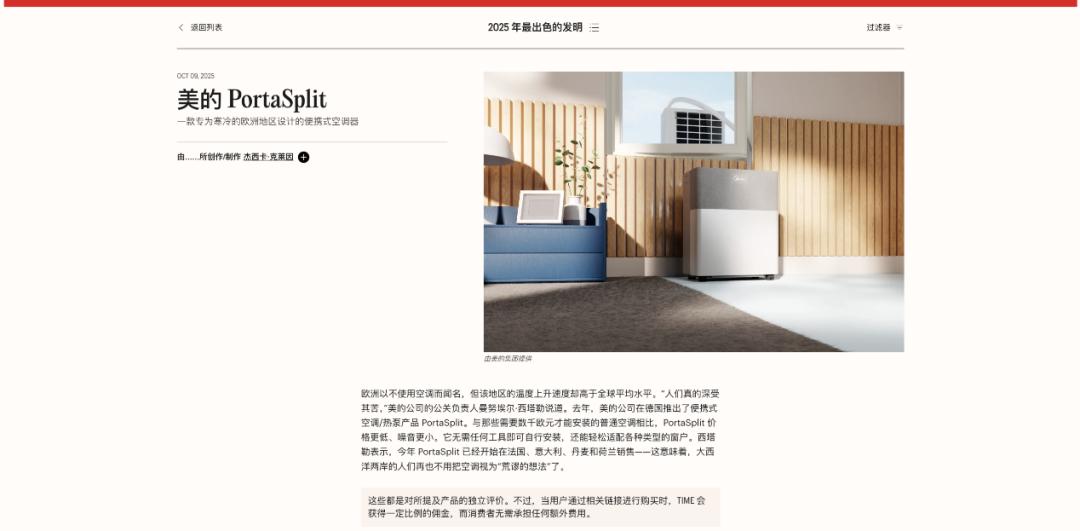
In this market upswing, Midea is the most standout performer. Its portable split air conditioner PortaSplit was once sold out completely, becoming a phenomenal product that was nearly impossible to get.
To buy one, an Austrian netizen spent two full days: deploying three AI agents to monitor inventory around the clock, he finally tracked down the last unit in the country in Linz (an Austrian city) and drove 200 kilometers to bring it home. He posted multiple updates on social media praising the air conditioner, saying it was the "first time he felt cold in summer during his six years in Vienna," and even shouted "God bless Midea" in his posts.
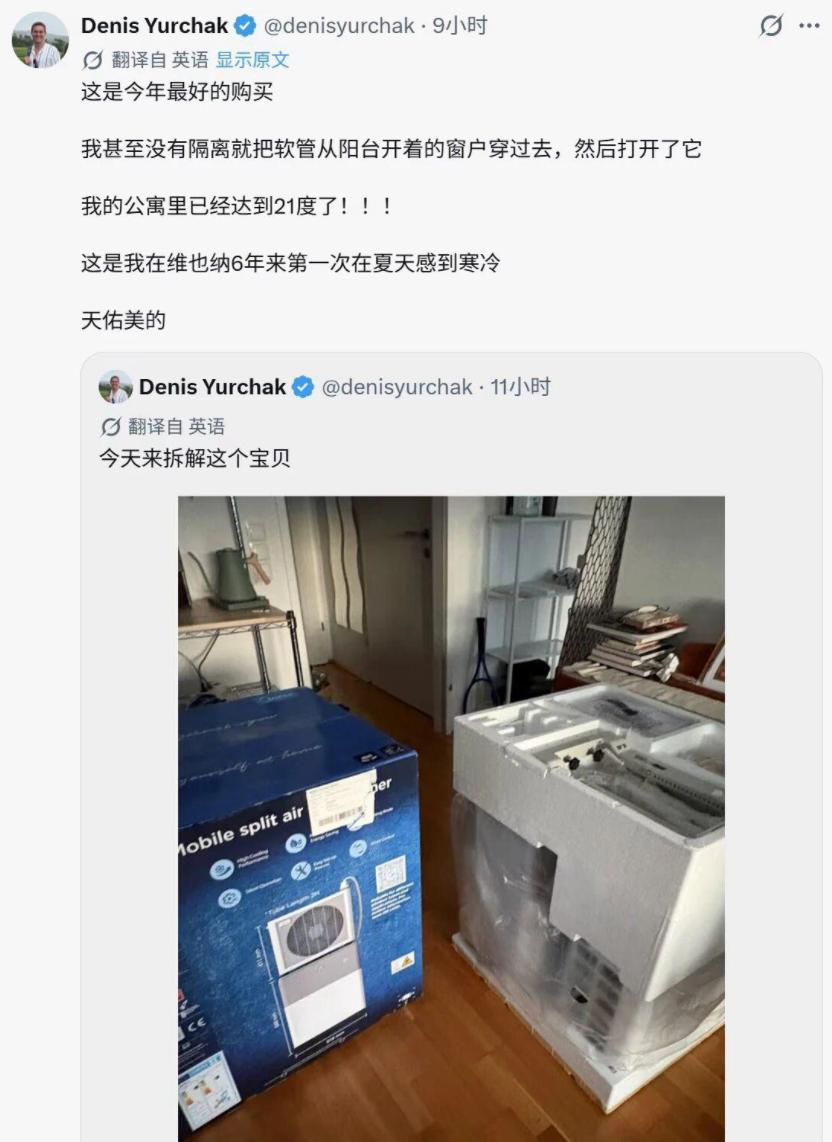
The whole of Europe went crazy over it: on Joybuy (JD's overseas platform), 600 air conditioners sold out in less than a minute; products originally priced at 699-900 euros were marked up to 1,500-5,000 euros (about 1,200-4,000 euros) after selling out, yet people still rushed to place orders. In Germany, someone even built a dedicated website to update inventory in real time and offer paid arrival notification services. A Chinese netizen joked: "The U.S. can't save Europe, but Midea can."
Regarding PortaSplit's explosive popularity, a Midea business leader bluntly said "the traffic is just too huge." He revealed that the PortaSplit single product alone has sold over 60,000 units in the German market in half a year, with a full-year European sales target of 200,000 to 300,000 units. In the first half of 2026, Midea's overall air conditioner sales in Western European markets including Germany, France, the UK and Spain grew by more than 70% year-on-year.
Then the question arises: Europe has not been hot only this year. In the summer of 2003, nearly 15,000 people died from heat in France; in 2022, heat-related deaths across Europe exceeded 60,000. But back then, Chinese air conditioners did not see such explosive growth. In contrast, the number of heat-related deaths recorded in many European countries this year is just over 4,000 (as reported by CCTV News), and the urgency seems less than in previous years. So why this year? Why Midea? Why PortaSplit? The key lies in two points: regional context and timing.
Data from the International Energy Agency (IEA) shows that the household air conditioner penetration rate in Europe is around 20%, with only 5% in the UK and 3% in Germany. Apart from climatic factors, a more important reason is that installing an air conditioner in Europe is notoriously difficult: in Europe, installing an outdoor AC unit involves modifying the building facade, which requires approval from property management and municipal authorities, a process that is cumbersome and lengthy. Traditional split air conditioners also require on-site pipe connection, vacuuming, and refrigerant filling, which must be done by certified technicians. The installation fee for a single unit ranges from 1,500 to 2,000 euros — more expensive than the air conditioner itself. In peak seasons, people even have to wait two months for installation, and by the time their turn comes, the heatwave may have long passed...
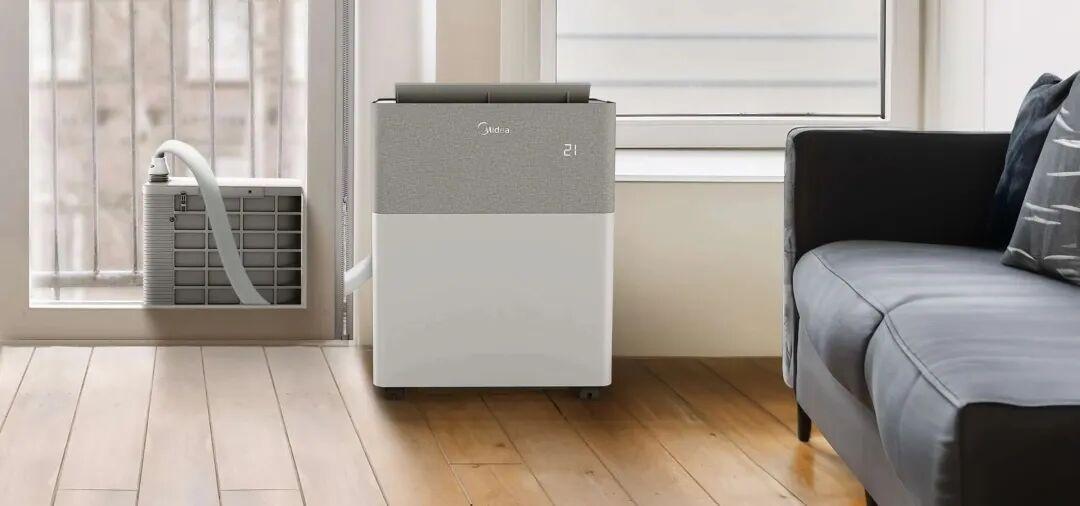
Midea's PortaSplit is designed to require no drilling and no professional installation, directly bypassing the two biggest hurdles to air conditioner installation in Europe, and turning air conditioners from "installation-heavy" products into "plug-and-play" devices similar to small home appliances. Its indoor and outdoor units are pre-connected in advance, so consumers do not need to connect pipes, wires or perform vacuuming, and can finish installation by themselves in just over ten minutes. The outdoor unit weighs less than 10 kilograms, does not need to be mounted on walls or drilled, and is hung on the windowsill with a metal bracket, fully complying with European building regulations, and can even be disassembled and reused when moving. In addition, its energy efficiency, noise level, and refrigerant standards all meet the highest EU specifications... Netizens call it "exploiting a loophole in Europe" and a "gray-area air conditioner."
In fact, this was a well-prepared targeted strike. Note the timing: PortaSplit was launched in 2023 and hit the market in 2024. But as early as 2022, Midea's China-Europe joint team launched a dedicated R&D project for the European market — that year, Europe also suffered a rare extreme heatwave (as mentioned earlier, heat-related deaths across Europe exceeded 60,000 that year). Midea did not simply adapt its mature domestic models to the European market; instead, it spent a lot of time conducting on-the-ground research in multiple European countries, and finally developed this product. In October 2025, PortaSplit was selected for *Time* magazine's "2025 Best Global Inventions" list.
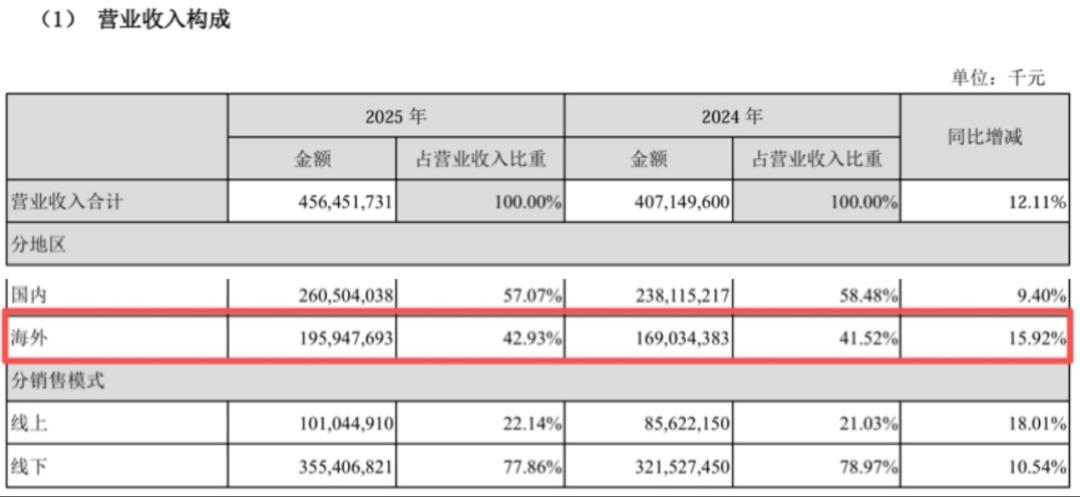
This product insight comes from Midea's deep localized cultivation in overseas markets: Midea has set up 29 R&D centers and 43 major manufacturing bases overseas, with localized self-operated businesses covering 50 major countries worldwide, forming a truly localized production capacity. In 2025, Midea's overseas private brand e-commerce business increased by more than 35% year-on-year, with e-commerce revenue growth exceeding 50% in countries including the UK, France, Italy and South Korea. In addition, according to Midea Group's 2025 annual report, Midea's overseas revenue in 2025 reached 195.948 billion yuan, accounting for more than 42% of total revenue, and its year-on-year growth rate (15.92%) was much higher than that of the domestic market (9.4%).
This also supports Midea's early positioning in technical regulations — the EU will implement new refrigerant policies in 2027, and a Midea overseas air conditioner business leader said "the products have been ready for a long time." It is revealed that Midea is developing next-generation air conditioner products specifically for Europe, focusing on high energy efficiency, AI energy saving, and environmentally friendly refrigerants.
02
"Legion-style" Breakthrough
Beyond Midea, Chinese brands including Haier, Gree, Hisense, TCL, and Changhong are making collective efforts, forming a legion-style breakthrough, each with its own highlights.
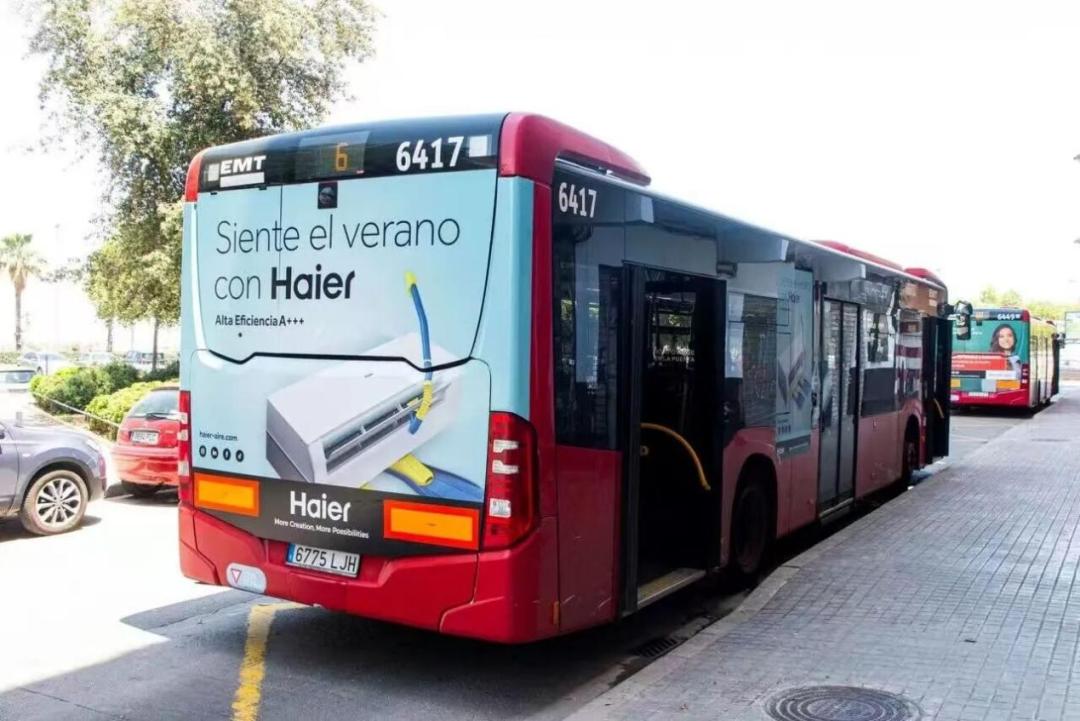
Official data from Haier Smart Home shows that in 2026, Haier's overall air conditioner sales in Europe rose 30% year-on-year, with a 9% market share in Western Europe, ranking second, and a steady first place in the Eastern European market with a 34% share. By country, it ranks second in Germany with a 22.4% share, and takes first place in both private brand sales volume and revenue in Spain, maintaining double-digit share for six consecutive years, with a five-year compound growth rate of 34.5%; in Italy, it ranks first in both the ITS professional channel and multi-split air conditioner sales share...
Haier's path is very similar to Midea's. On the product side, it launched the Expert series easy-to-install air conditioners targeting European market pain points, directly cutting installation time by 50%; in response to high electricity prices and strict energy efficiency requirements, it launched the A+++ grade Pearl Premium series and the Supermatch integrated HVAC solution. This not only makes it popular among ordinary European families, but also wins government orders — the 17th arrondissement of Paris purchased a batch of Haier air conditioners for public schools.
After more than 20 years of "global brand strategy," Haier has achieved full-link localization of "R&D - manufacturing - marketing - service" overseas, and its local warehouse and distribution system in Europe can respond faster to replenishment needs of terminal stores.
Gree's data is also impressive: from January to June, Gree's actual air conditioner sales in France, Italy, Spain and other countries increased by more than 40% year-on-year. Especially in France, terminal sales grew by 50% year-on-year, with wall-mounted air conditioner orders overflowing and installation schedules postponed to the end of August. But at the general meeting of shareholders on June 30, Dong Mingzhu, Chairman of Gree Group, bluntly said that "the transformation of overseas sales channels is imminent."
Comparison reveals the gap. According to data from EMI, a European home appliance monitoring agency, Gree's overall share in the European residential air conditioner market is only 2% to 5%. Combined with customs export breakdown statistics, Gree accounts for about 12% to 15% of China's total air conditioner exports to the EU, ranking after Midea and Haier in scale. At the same time, the proportion of Gree's overseas revenue has never exceeded 20% in the past few years — in 2025, Gree's export revenue was 27.375 billion yuan, accounting for only 16.06% of total revenue. In the same period, Midea's overseas revenue accounted for more than 42%, Haier's over 50%, and Hisense Home Appliances also reached 43.13%.
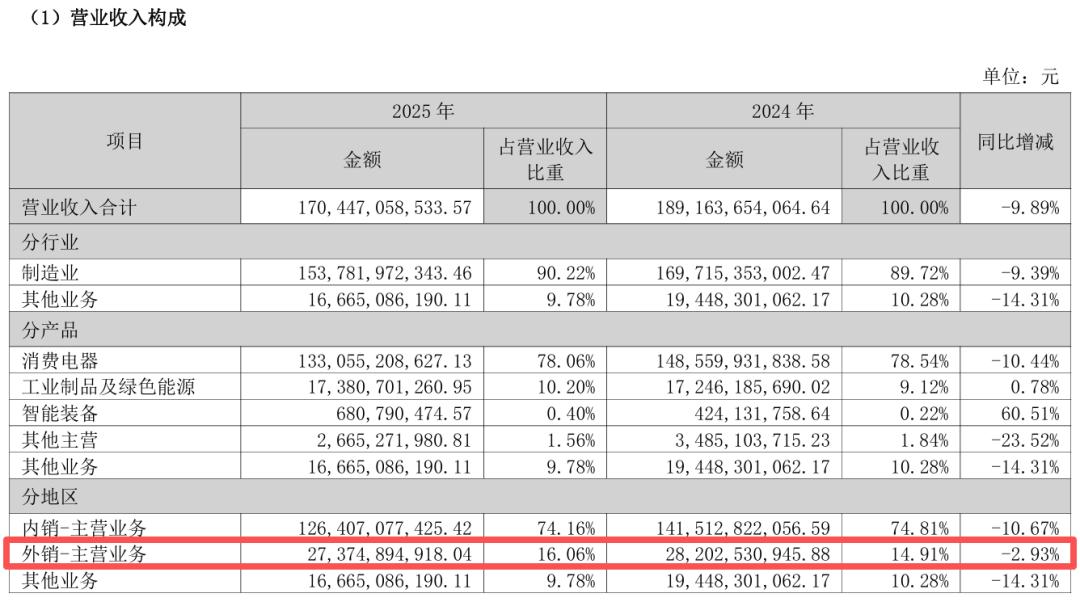
Source: Gree Electric 2025 Annual Report
Hisense Group disclosed its 2026 first-half air conditioner business data for the European market on June 29: Western European market sales increased by more than 20% year-on-year, of which the French market growth exceeded 100%, and the Italian market grew 30% year-on-year in June. Its U6 series split air conditioners, developed to address pain points such as difficult drilling and troublesome installation in old European houses, have 35% higher installation efficiency than conventional models. In the first six months of this year, 113,000 units were sold in Europe, a year-on-year increase of 117%, of which sales in France grew 900% year-on-year.
In the second quarter of this year, TCL's overall performance in the Western European market increased by more than 27% year-on-year, of which France and the Nordic regions saw a year-on-year growth of over 300%, Spain's sales doubled, and portable air conditioners in core markets such as the UK and Germany were once sold out. To keep up with order demand, TCL compressed its production cycle from the original 30-40 days to 10 days, and uses the China-Europe Railway Express for cargo transportation, saving nearly half the time compared with traditional sea freight. At the TCL Air Conditioner Industrial Park in Jiujiang, Jiangxi, more than 20 supporting enterprises are operating simultaneously to ensure the rapid ramp-up of export production capacity.
Changhong, Aux, M