Just now, the GPT-5.6 "Solar System" full suite was launched, and Codex is gone.
OpenAI has finally made the full GPT-5.6 "family suite" available to everyone. Meanwhile, ChatGPT and Codex have been fully merged, and the brand-new AI productivity powerhouse ChatGPT Work is taking the industry by storm.
The moment we've all been waiting for is here!
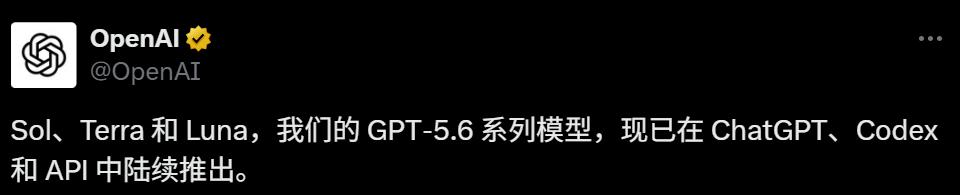
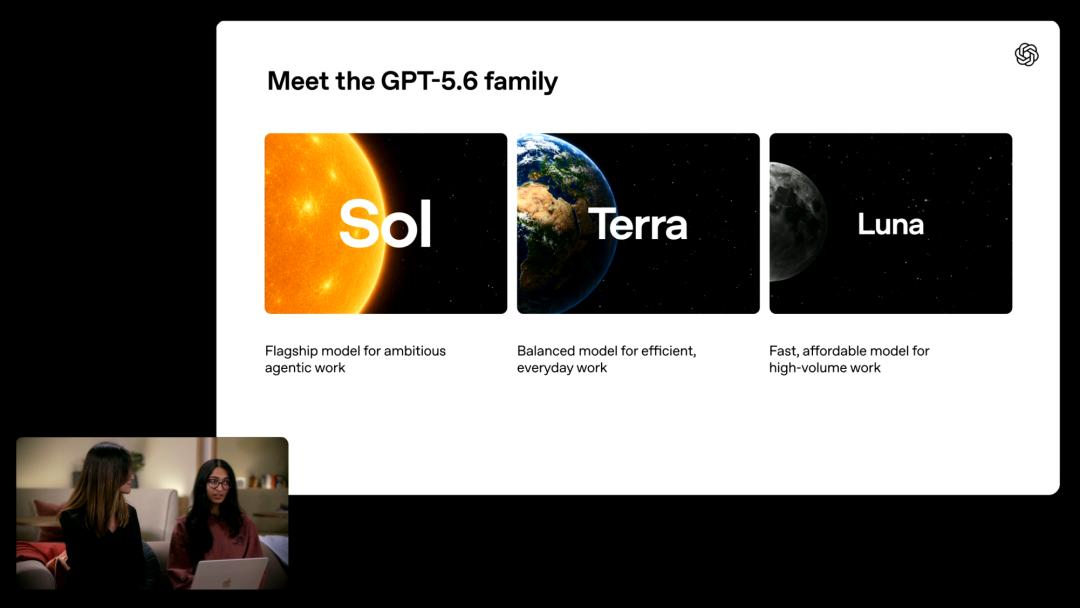
Just now, OpenAI has released the entire GPT-5.6 "family suite" — Sol, Terra, Luna all at once.
It's no exaggeration to say that Sol is directly targeted at Claude Fable 5 this time:
· Agents' Last Exam: Sol scores an impressive 53.6%, pulling 13.1 percentage points ahead of Fable 5;
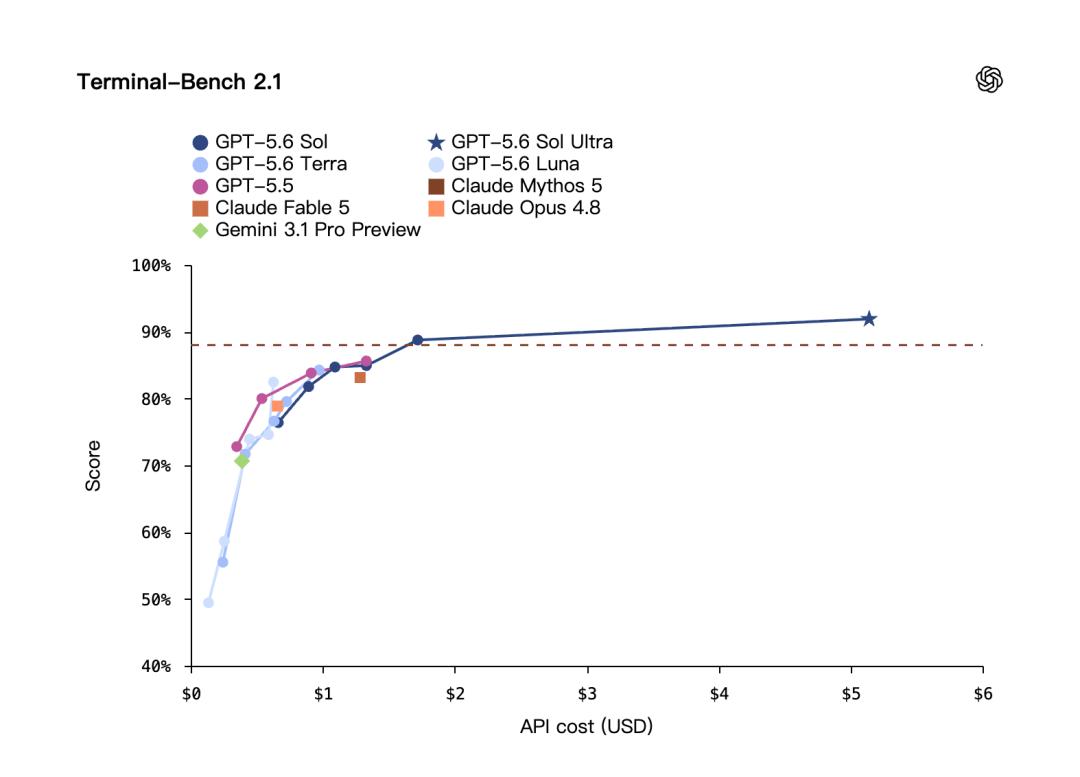
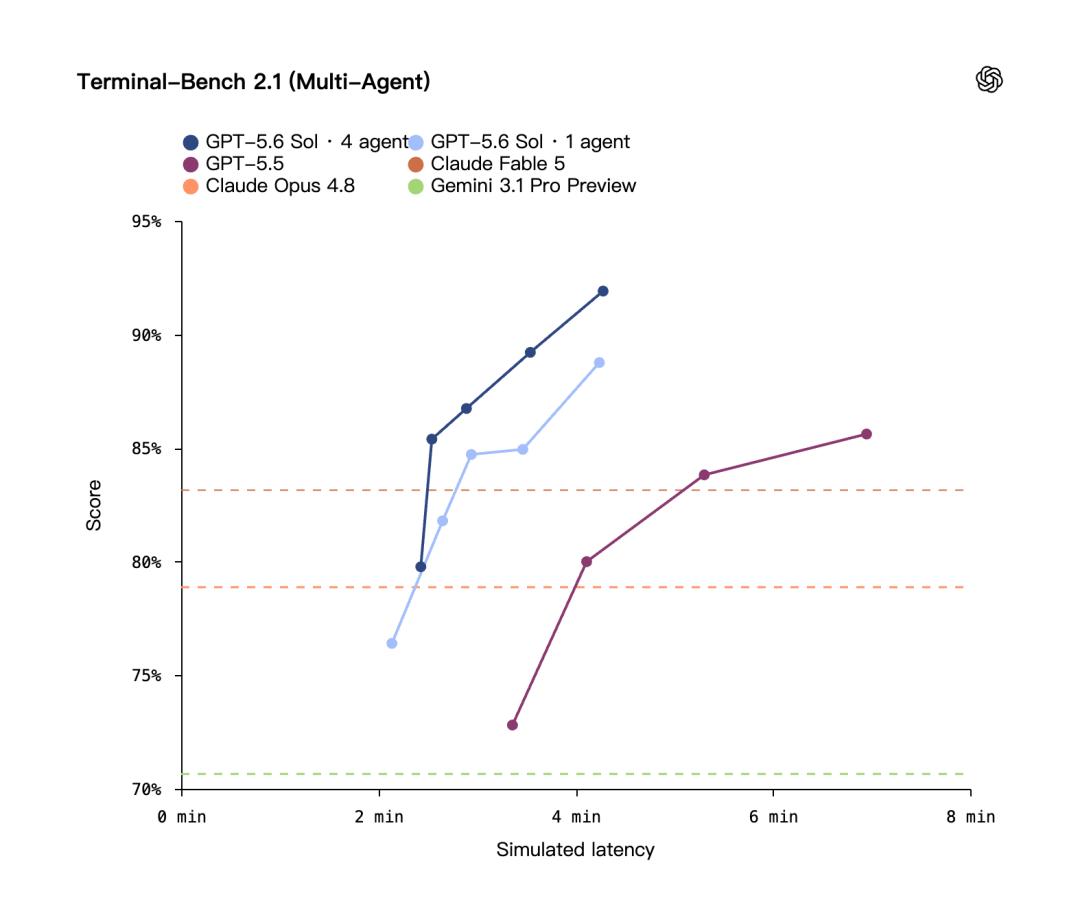
· Terminal-Bench 2.1: Sol achieves 88.8%, and with Ultra mode enabled, it hits 91.9%, while Fable 5 only reaches 83.1%;
· Coding Agent Index: Sol secures 80 points to set a new state-of-the-art record, outperforming Fable 5 by 2.8 points.
Even more exciting is the pricing —
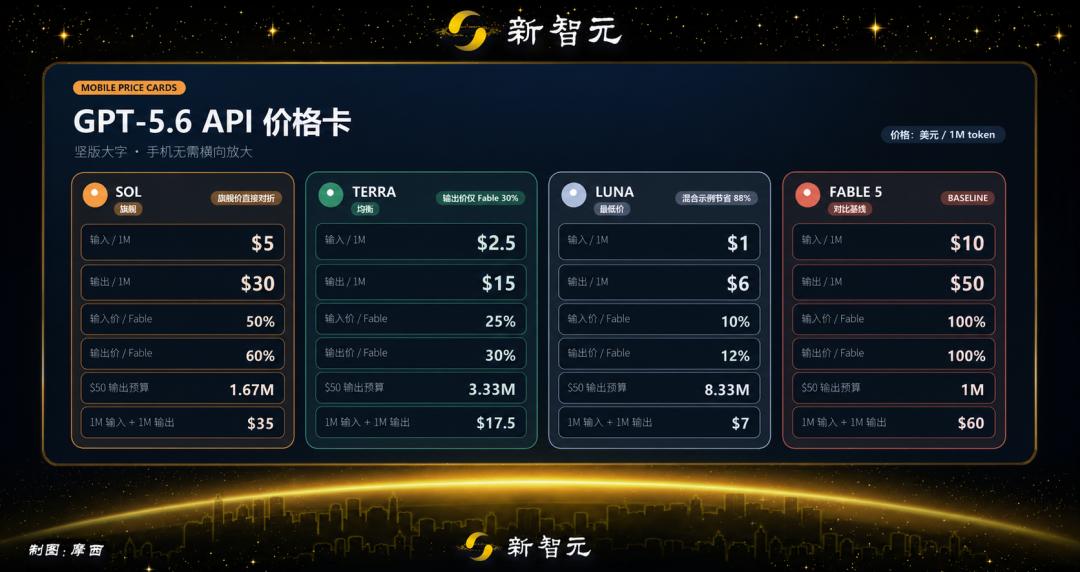
Fable 5 costs $10 per million input tokens and $50 per million output tokens;
Sol cuts those prices in half directly, at just $5 for inputs and $30 for outputs. Terra halves them again to $2.5 and $15, while Luna is priced at only $1 and $6.
Also today, ChatGPT and Codex have finally completed their integration, and OpenAI's "super app" is officially here.
From now on, there is only one unified ChatGPT application.
GPT-5.6, Fully Launched
Since its first debut on June 27, GPT-5.6, which the entire industry has been eagerly anticipating, is finally in users' hands.
Sol, Terra, and Luna — all three models are fully accessible to every user without exception.
Flagship Sol (Sun): Specializes in tackling the toughest challenges in hardcore coding, knowledge work, cybersecurity, and scientific fields, earning its title as the most powerful model on the planet.
Terra (Earth) + Luna (Moon): Focus on delivering extreme cost-performance, allowing users to experience exceptional capabilities at a far lower cost.
Outperforming Fable 5, the New Coding Champion Arrives
Starting with the most demanding coding benchmarks, OpenAI explicitly refers to Sol as "the most powerful coding model to date."
On the Artificial Analysis Coding Agent Index, Sol scores 80 points with max reasoning enabled, setting a new state-of-the-art record that is 2.8 points higher than Fable 5.
Additionally, it uses less than half the output tokens, takes less than half the time, and costs roughly one-third less.
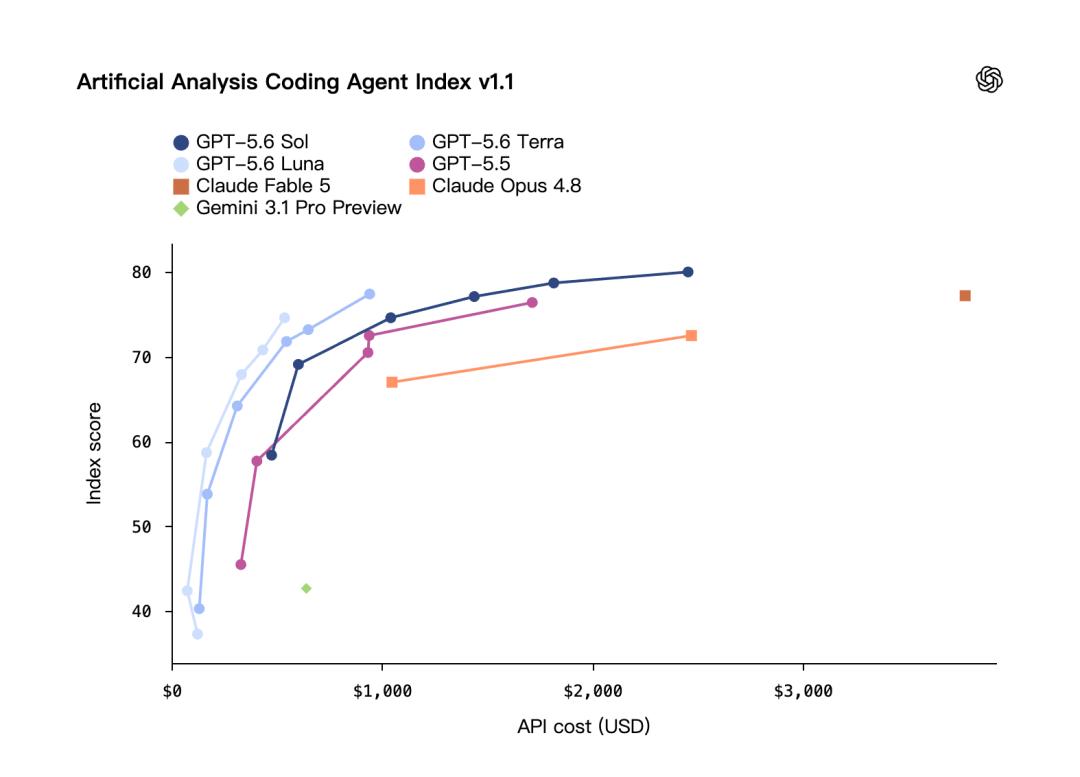
This overwhelming advantage runs through the entire product line: Terra slightly outperforms Fable 5, while Luna directly surpasses Opus 4.8.
Each of these models completes tasks with roughly one-third the runtime, around half the output tokens, and about one-quarter the cost. For the same workload, OpenAI achieves far more with significantly fewer resources this time around.
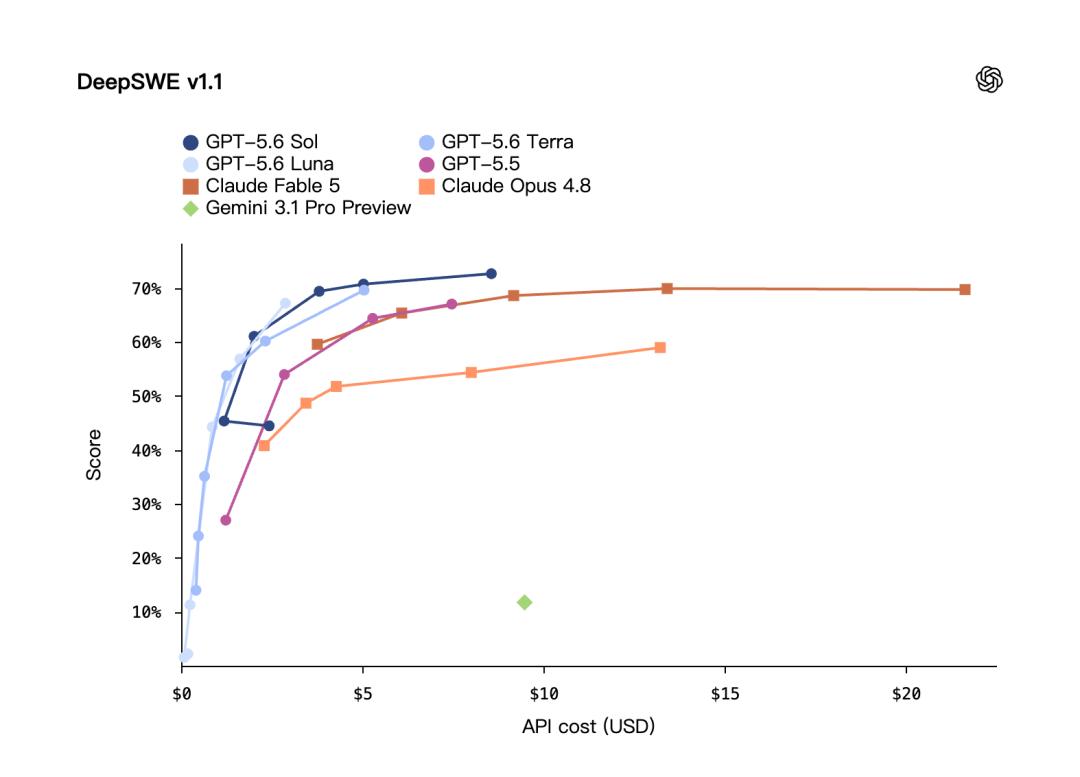
In Terminal-Bench 2.1 and DeepSWE, which test long-horizon command-line engineering capabilities, Sol also sets new state-of-the-art records.
Four Agents Working in Parallel, Ultra Mode Launches
If one model isn't enough, deploy four.
This time, GPT-5.6 introduces two new high-performance settings —
max mode: Grants the model more reasoning time than the previous xhigh setting;
ultra mode: By default, deploys four agents to work in parallel, with support for up to sixteen agents for heavy-duty tasks.
More tokens are used to deliver stronger results and faster task completion speeds.
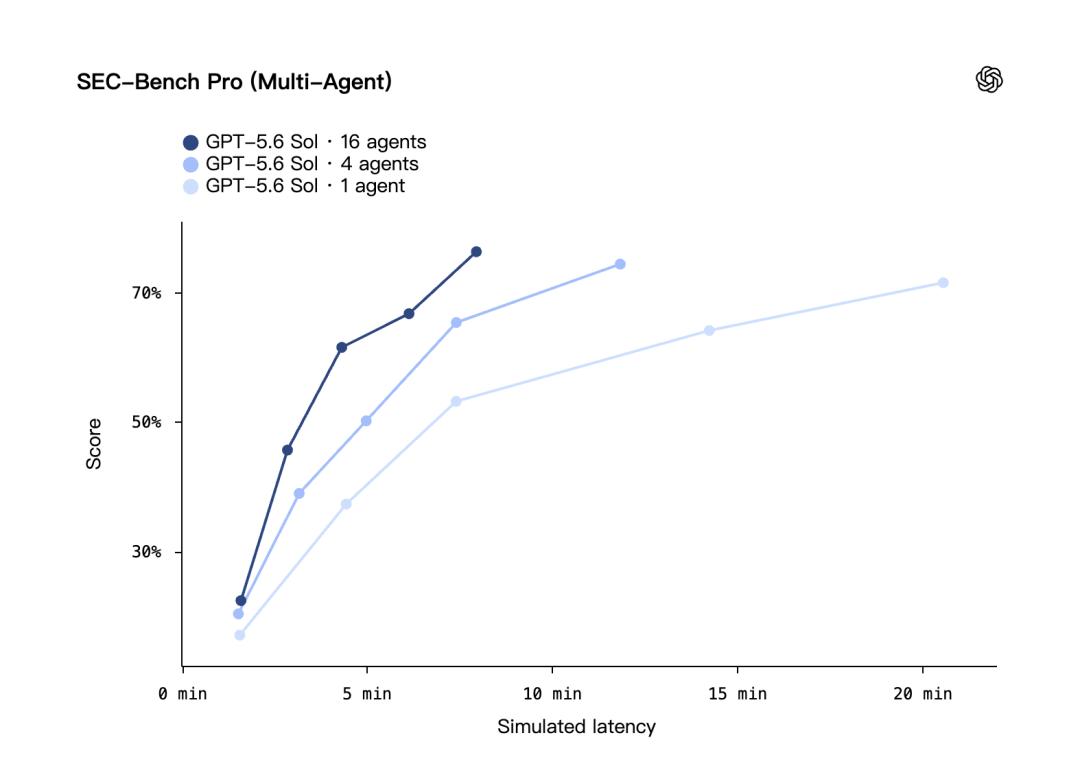
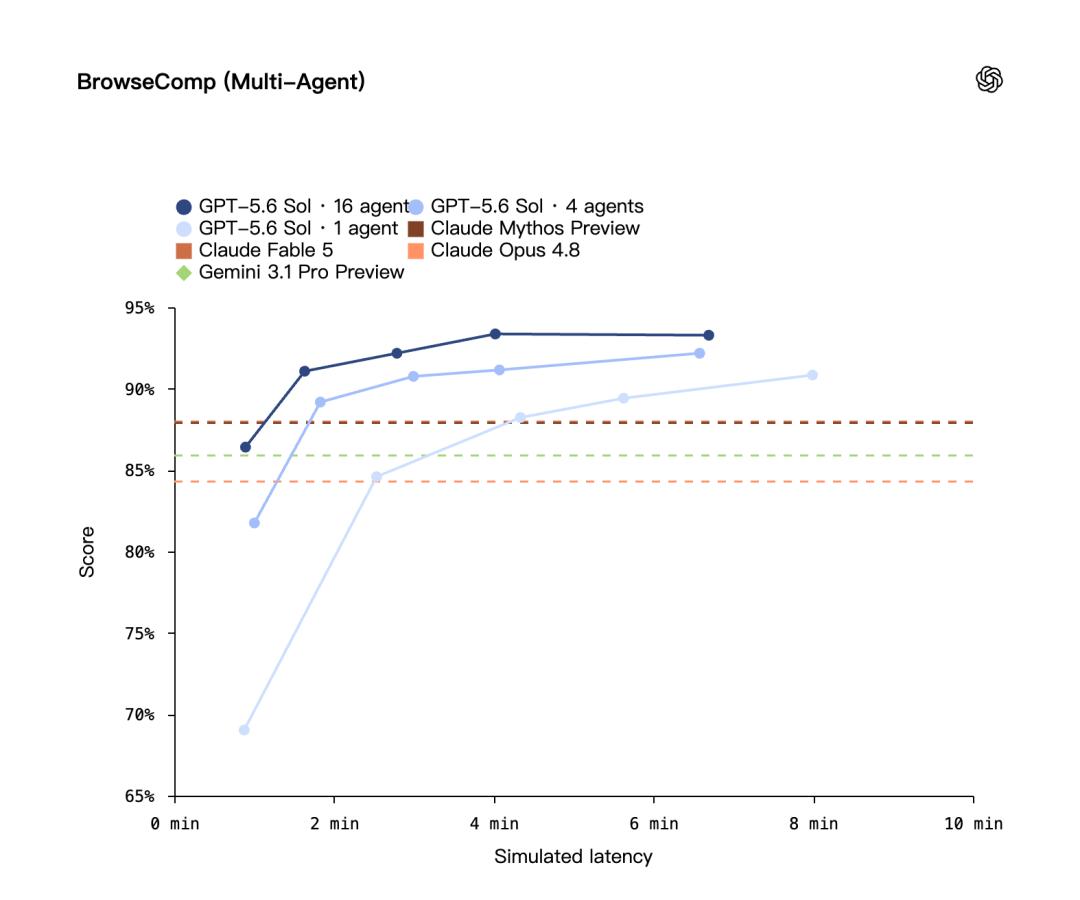
Across three benchmarks: BrowseComp, SEC‑Bench Pro, and Terminal‑Bench 2.1, after enabling parallel agents, the overall "score-runtime" curve shifts upward and to the left — higher scores, achieved faster.
This generation of GPT‑5.6 also quietly addresses a long-standing weakness — design aesthetics.
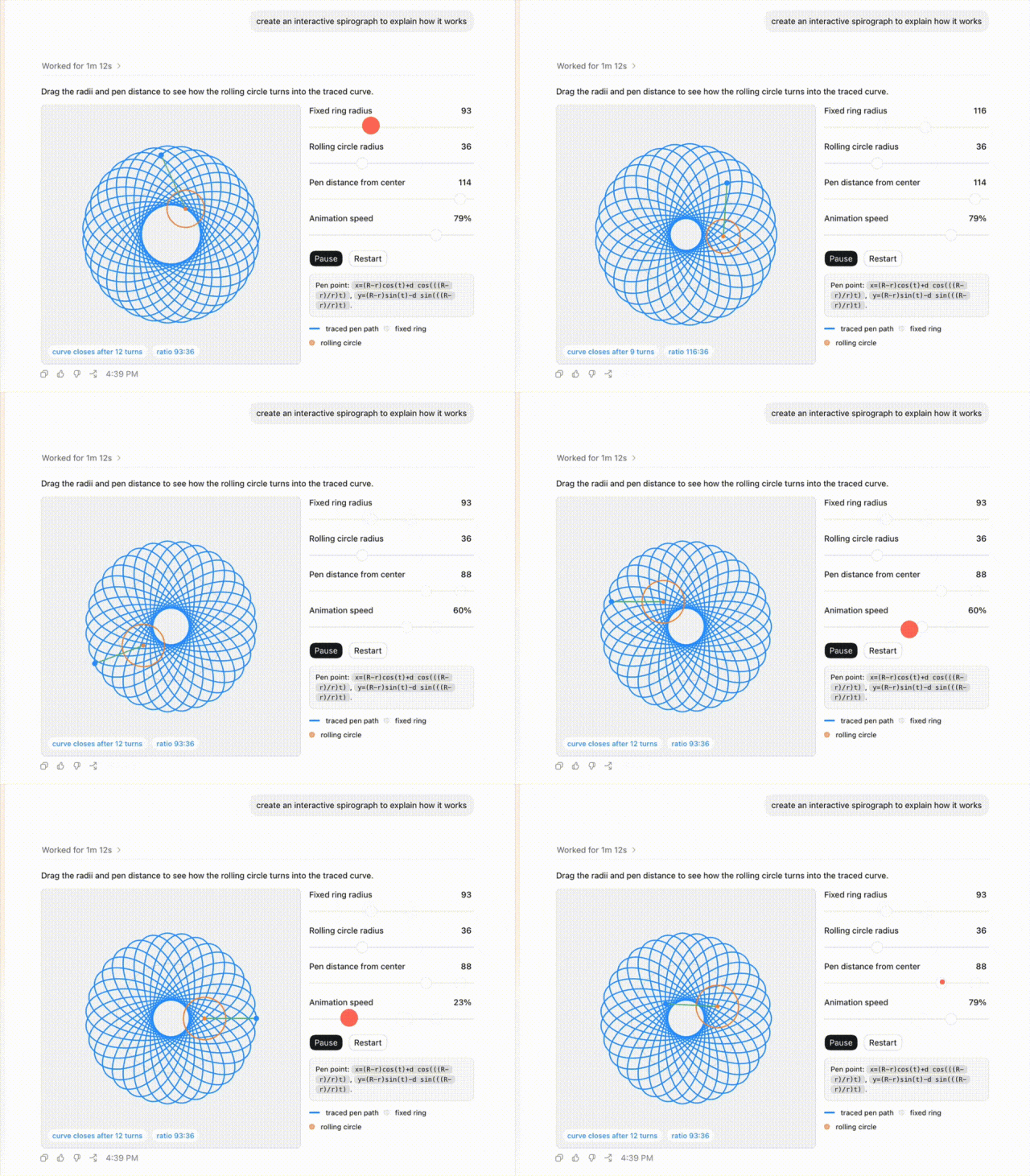
It can actively "view" the rendered output, detect visual and functional flaws, make corrections independently, and finally deliver the finished product to you.
As demonstrated below, the sailing mini-game, museum website, and interior design showcase created by GPT‑5.6 all reflect a qualitative leap in its design capabilities.
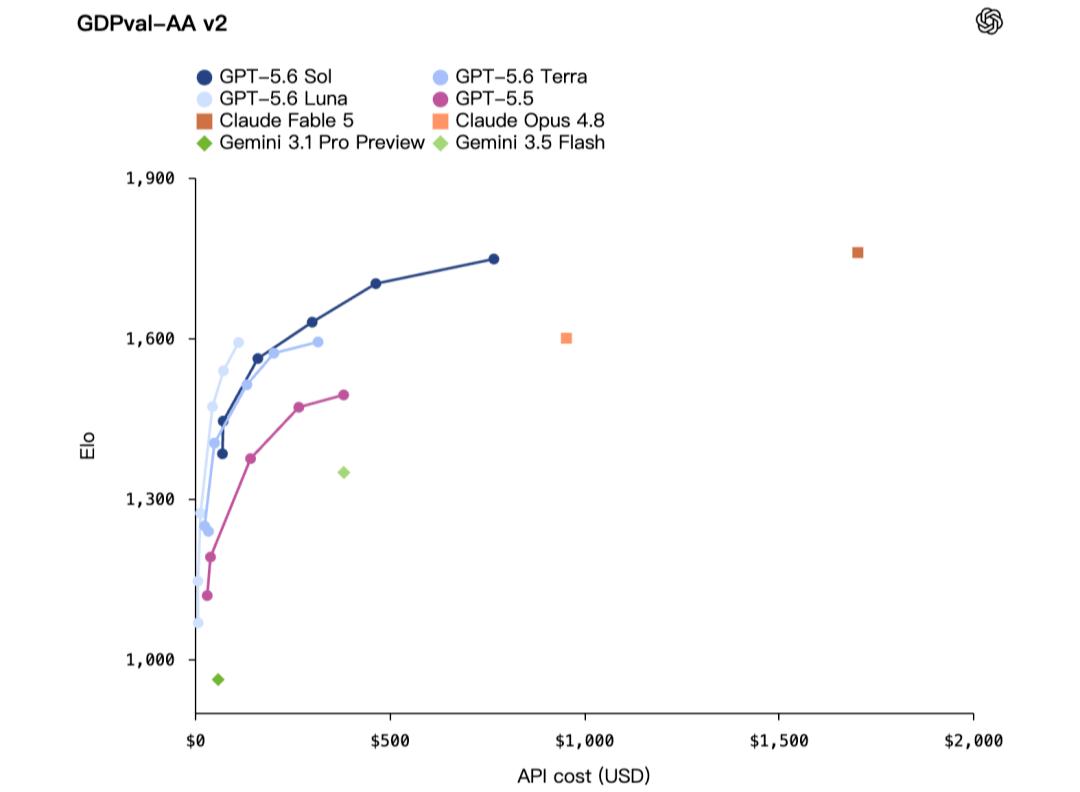
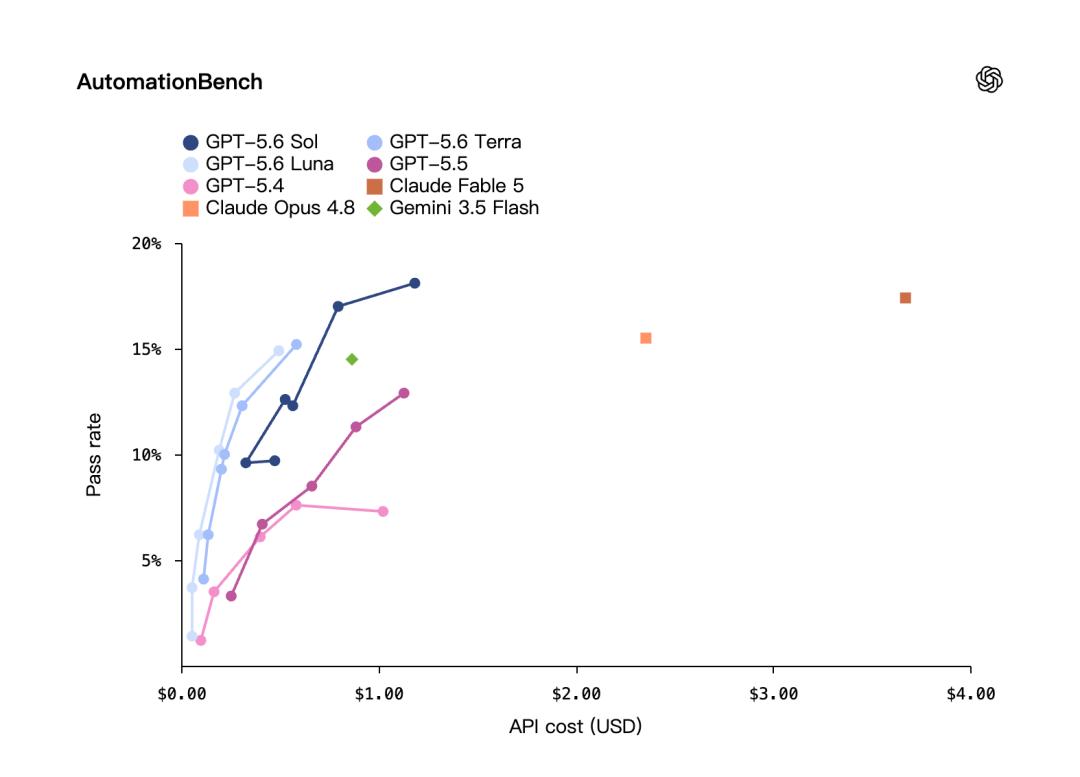
GPT-5.6 also delivers impressive performance in "end-to-end knowledge work".
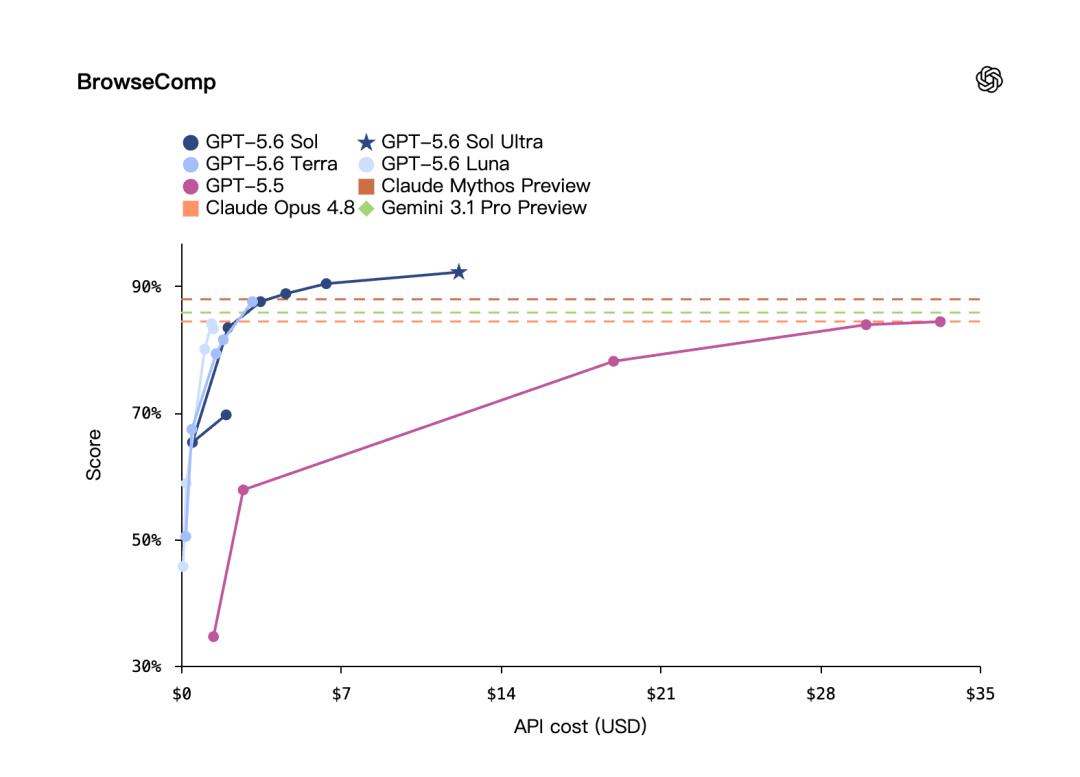
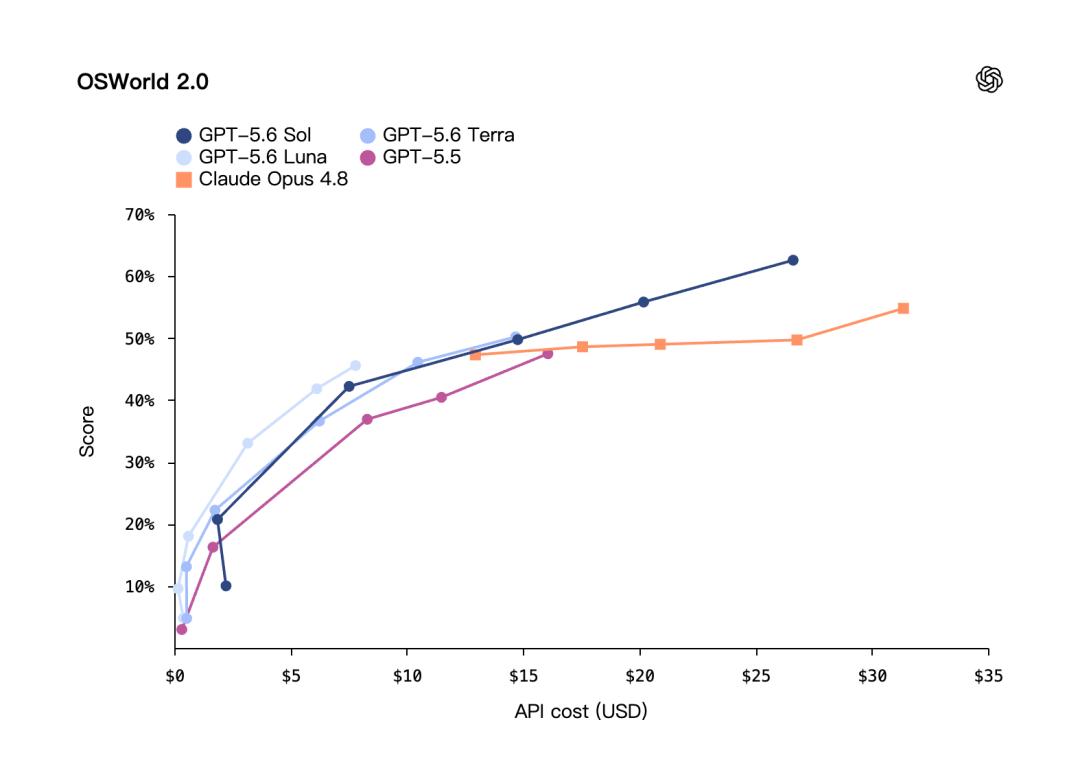
Sol achieves 92.2% on BrowseComp and 62.6% on OSWorld 2.0, both setting new state-of-the-art records.
Especially on OSWorld, while surpassing Opus 4.8, it uses 85% fewer output tokens.
GPT‑5.6 Forges Itself
OpenAI's "AI Perpetual Motion Machine" Becomes a Reality
The most futuristic feature of GPT‑5.6 is hidden within OpenAI's own operations.
OpenAI states officially that GPT‑5.6 is their model that accelerates AI research more effectively than any previous model.
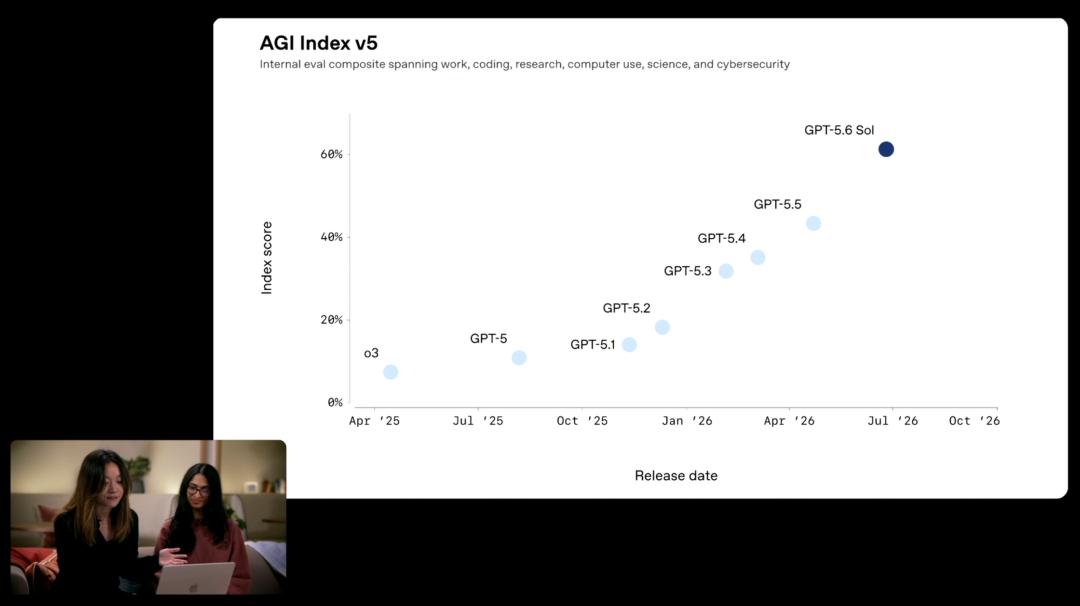
Researchers use it to diagnose issues, optimize training systems, run experiments, and interpret results.
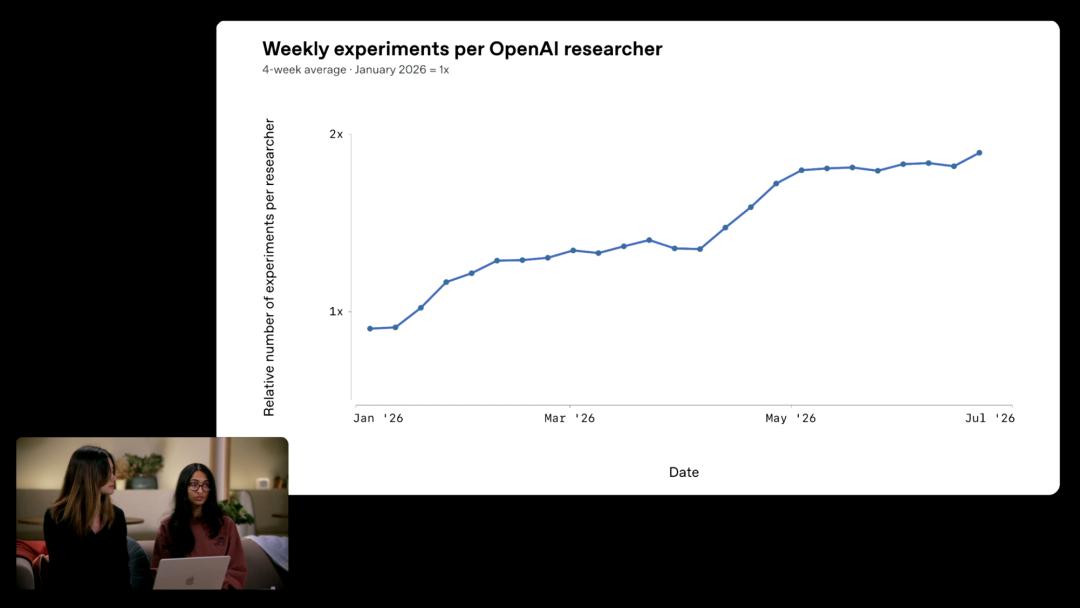
During GPT‑5.6's closed beta period, the average daily output tokens per active researcher was more than double the peak level achieved with GPT‑5.5.
Even more remarkably, over the past six months, the share of research computing resources OpenAI allocated to internal coding reasoning has increased by 100 times, and the token usage of internal agents has grown by approximately 22 times.
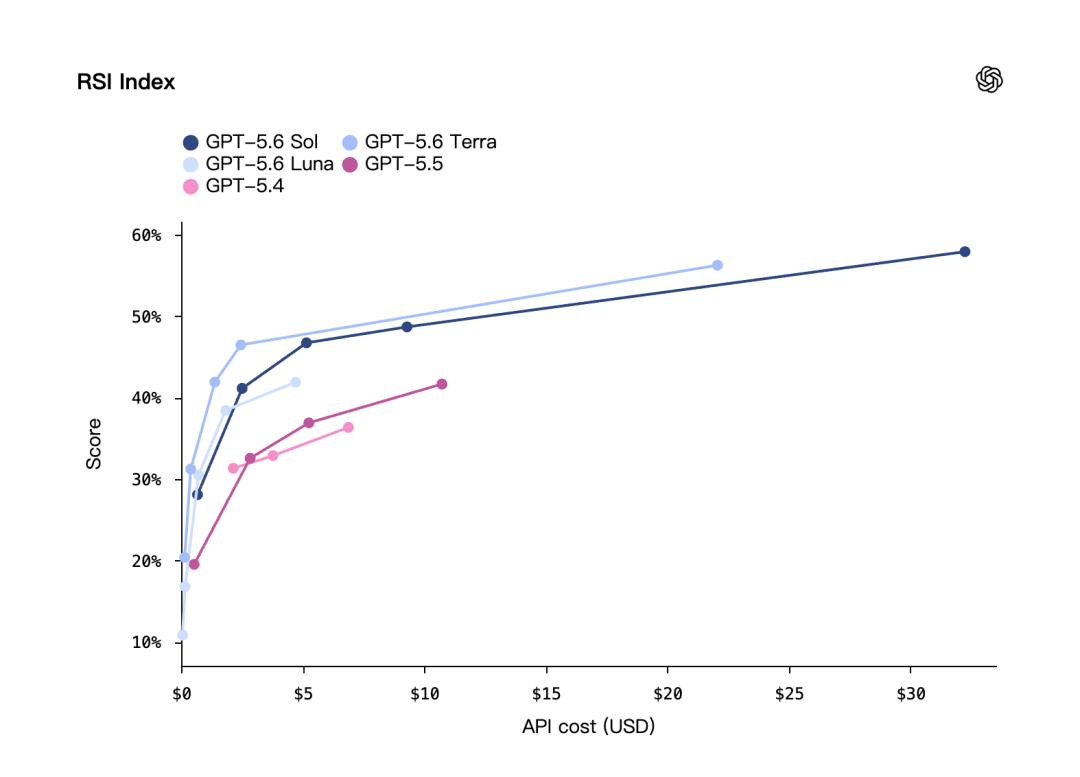
On an internal benchmark measuring "Recursive Self-Improvement (RSI)", Sol outperforms GPT‑5.5 by 16.2 points.
In simple terms, OpenAI is using AI to accelerate the development of the next, more powerful generation of AI.
During the livestreamed launch event, a researcher revealed a critical detail —