Did humans manually create the first living cell? And it's a potato?
A couple of days ago, while surfing online, I came across a major piece of news that could rival the birth of Dolly the cloned sheep back in the day.
The team led by Kate Adamala at the University of Minnesota announced that they had successfully built the world's first synthetic cell capable of completing a full life cycle.
This creation, dubbed "SpudCell," can surprisingly feed itself, grow, replicate its genes, divide to produce offspring in a petri dish, and even engage in cutthroat competition with its counterparts.
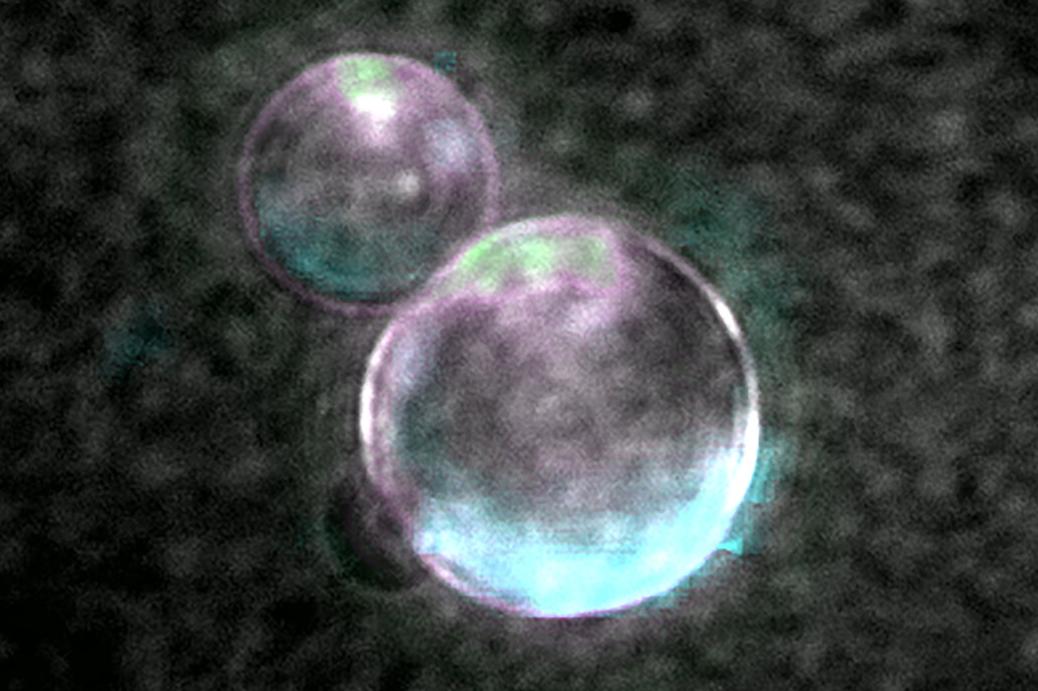
This sounds almost surreal. As soon as the news broke, media outlets went into a frenzy, and some in the academic circle even compared this achievement to the "Wright brothers' first flight moment" in biology, as if humanity was on the verge of mass-producing new life forms in labs overnight.
So we decided to dig in and see what exactly this fully artificially engineered synthetic cell is all about.
As its name suggests, the SpudCell (we'll call it Spud Kid for short) looks lumpy and bumpy under a microscope, just like a real potato.
Meanwhile, the name is also a tribute to the first artificial satellite "Sputnik", as the research team hopes this work will open a new era for biological engineering. Another fun fact is that the lead researcher Kate playfully referenced her Polish heritage — since potatoes are as essential to Polish people as rice is to many others, potatoes have become a playful nickname for Poles across Europe.

In essence, Spud Kid is not a truly living organism.
It only has a total of 90,000 base pairs. For context, humans have 3 billion, and even E. coli has 4.6 million.
These 90,000 base pairs encode 36 genes, which are not assembled into a single complete DNA molecule. Instead, they are scattered across 7 separate DNA fragments like loose parts, which means some genetic information is inevitably lost during each replication cycle.
As a result, Spud Kid has extremely fragile vitality. In experiments, after 5 generations of division, only around 30% of surviving cells still retained a complete genome.
Worse still, because Spud Kid has so few genes, it cannot even synthesize the most basic biological ribosomes — the cellular factories that make proteins. That means it cannot handle the basic metabolic processes required to sustain life on its own.
To keep it alive, scientists had to assign it a dedicated delivery system: tiny feeding liposomes roughly 0.4 micrometers in diameter, packed with nutrients, ribosomes, and ATP. When the outer membrane of Spud Kid comes into contact with these delivery liposomes, the nutrient "drop-off" is completed.
Refueling time
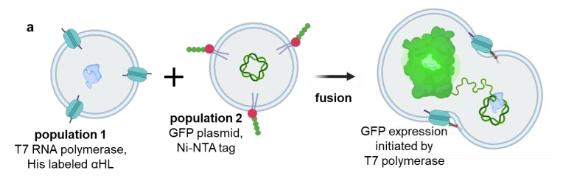
After Spud Kid gets its fill, its internal Phi29 polymerase kicks into high gear, using rolling circle amplification to replicate the full set of 7 plasmid genomes.
Even so, this underperforming Spud Kid still struggles when it comes to reproduction.
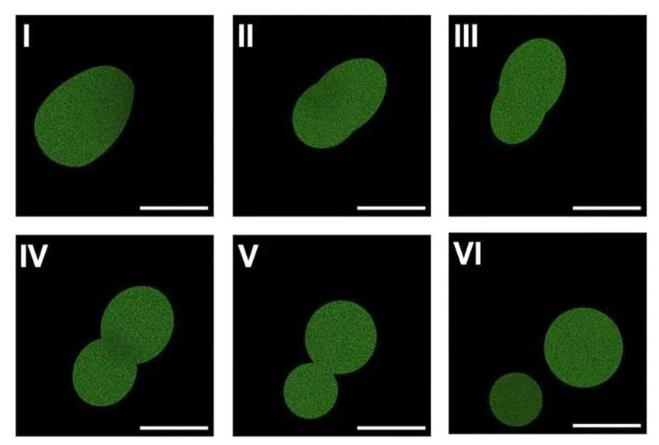
To boost reproductive success rates, scientists adopted a simple yet forceful method: mechanical squeezing, forcing Spud Kid through a membrane filter to manually drive its replication and division processes.
Even more interestingly, the research team set up a real-life Hunger Games scenario for Spud Kids.
They created two batches of cells: a regular version, and an enhanced MAX version with a larger "nutrient storage compartment" that made it far more efficient at absorbing resources from the delivery liposomes.
The results showed that the improved configuration did secure a better ecological niche. After 5 generations of reproduction, the MAX population grew from an initial 50% share to 61%. Even when starting at just 10% of the total population, the MAX variant climbed to 38% after 5 generations.
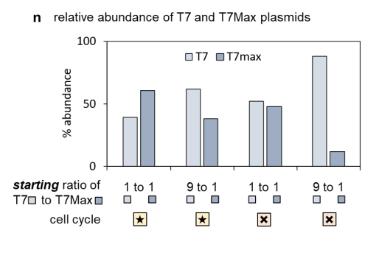
What's more, this advantage became even more pronounced when food supplies grew scarcer. In the most resource-limited trial, where the concentration of nutrient delivery liposomes was just one-tenth of normal levels, the MAX variant nearly monopolized the scarce resources, making up 70% of the total population after 5 generations.
While Spud Kid may seem rough around the edges, its underlying design approach is what has truly stunned the academic community.
Before Spud Kid, nearly all research teams working on synthetic cells followed the top-down design path.
To put it simply, this approach is like playing a game of subtraction: researchers systematically strip genes from existing natural cells or bacteria to identify which genes are absolutely essential for life, then build their work around those minimal components.

Back in 2016, synthetic biology pioneer Craig Venter took a living Mycoplasma mycoides bacterium and kept stripping away its genes until he created the cell with the smallest known genome at the time, containing only 473 genes.
This sounded like a solid breakthrough, but nature threw a critical curveball: even after Venter reduced the genome to just 473 genes, the specific functions of 149 of those genes still remained completely unknown.
This is like getting your hands on a decades-old, barely functional legacy codebase that has been patched and modified countless times. Even after you streamline it, there are still huge chunks of black-box logic you don't understand, and any small adjustment could cause the whole system to crash.
Spud Kid took the exact opposite approach: it adopted an extremely bold bottom-up design path. Instead of modifying existing living organisms, the team built the entire system from scratch using nothing but pure chemical components, like stacking building blocks one by one.

The research team constructed the entire system from the ground up using non-living purified enzymes, synthetic lipids, and a cell-free protein synthesis system called PURE.
This means the entire system is 100% transparent: scientists know the exact identity and concentration of every single component inside. Shifting from discovery science that relies on random natural findings to fully controllable, intentional engineering design is what makes this work so groundbreaking.
However, it is precisely this unorthodox, rule-breaking approach that has made Spud Kid somewhat unpopular in traditional academic circles.
The research team first submitted their paper full of confidence to the top journal Cell, only to get a rejection. One reviewer bluntly stated that Spud Kid is not even real biology — and to be fair, it does look a lot more like a civil engineering project than a traditional biological study.
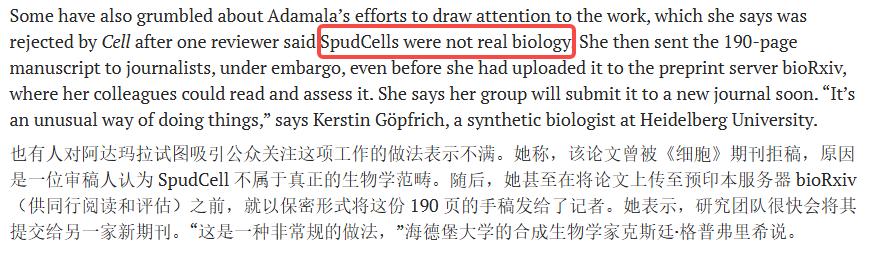
The paper has now been uploaded as a preprint on bioRxiv, and it still needs to go through formal peer review before it can be officially published.
But before uploading the manuscript, lead researcher Kate Adamala prematurely distributed the full paper to journalists from major tech media outlets.
This unorthodox tactic of "generating media hype first, then going through peer review" left a bad impression on many professionals in the field.
Since Spud Kid is not a truly living organism and is far from perfect, what practical uses could it possibly have?
The core reason is that all naturally evolved life on Earth carries this kind of messy, legacy "spaghetti code" in their genomes. Every time scientists try to use gene editing to fundamentally adjust something, they inevitably run into unforeseen side effects, or face public backlash and controversy.

The emergence of Spud Kid represents the very first fully synthetic, pure-blood biological system that humanity has built piece by piece, starting from basic chemical components.
Its functions are admittedly extremely rudimentary, but every line of its underlying architecture and the exact concentration of every component are fully known to us. If we use this as a starting point to reverse-engineer cells and life, humanity could truly become the master of all living things.
And in a far more practical move, the Spud Kid research team has already taken action: they have partnered with researchers from Stanford University to found a non-profit organization called Biotic, which has secured seed funding in the order of 10 million US dollars.
Their ultimate goal is to follow the model of the Linux operating system and fully open-source this foundational biological platform.
Could the 21st century truly become the century of biology?
It's still too early to say for sure. For now, let's just wish this little potato all the best in surviving the rigorous scrutiny of peer review and getting published in a top journal.
Image and source credits:
Science: Lab-created 'SpudCell' marks 'stunning' step toward building life from scratch
The New York Times: Scientists Made a Cell With Most of the Hallmarks of Life. Here's What to Know.
A Chemically Defined Synthetic Cell Capable Of Growth And Replication
This article is from the WeChat official account "Negative Review X.PIN", written by Bajie, edited by Jiang Jiang & Mian Xian, and published with authorization from 36Kr.