Can OpenAI ultimately turn a profit?
Recently, both OpenAI and Anthropic have launched IPO plans, and the latest market valuations for these two AI large model vendors are approaching the trillion-dollar mark, reflecting strong investor optimism about their future profit prospects. Given the broad application prospects of AI large models and the enormous revenue growth potential of large model vendors, this investor optimism is entirely understandable.
However, revenue growth does not necessarily lead to profit growth, nor does it guarantee that a company will become profitable. To date, no vendor has achieved independent profitability in their large model business. Theoretically, whether a vendor can achieve sustainable profitability depends on whether it possesses high competitive barriers and stable pricing power, which in turn is determined by the industry's market structure and competitive landscape.
Research findings show that the current large model API calling market exhibits a monopolistic competition pattern, with a large number of vendors and very low market concentration. Although market demand is growing exponentially, due to low entry barriers, the supply side of large models is also expanding rapidly. This means vendors have not been able to achieve profitability alongside the expansion of market demand, but instead face increasingly fierce competition. Under this landscape, some vendors can achieve product differentiation through technical advantages or scenario adaptation, thereby earning short-term excess profits; however, due to limited technical barriers, high price elasticity of demand, and weak user stickiness, even if excess profits are achieved, they are difficult to sustain.
In the long run, vendors that sustain long-term losses will be forced to exit, driving the large model API market to evolve from monopolistic competition to oligopoly. However, under the oligopolistic landscape, the profitability of vendors remains uncertain, as it depends on whether vendors engage in price competition or quantity competition. Without coordinating competitive strategies or establishing effective differentiation barriers, oligopolistic vendors may not necessarily achieve sustainable profitability, and their massive upfront R&D investments may not be recovered either.
In summary, despite the undisputed technical value and demand growth of large models, large model vendors that simply "sell tokens" are not guaranteed to be profitable. Therefore, investors need to calmly examine the valuations of large model vendors like OpenAI, while vendors must carefully select their own business models and market segments. Regardless of the business model adopted, if a vendor can establish differentiation barriers in model capabilities, industry adaptation, enterprise workflows, or application ecosystems, it can reduce user price sensitivity, gain pricing power in niche markets, and achieve sustainable profitability. Given that the "AI+" model embeds AI features into existing products or services to enhance their value to users, and strengthens existing differentiation barriers and customer stickiness, it has the potential to be a business model with sustainable profitability.
Main Text
Recently, both OpenAI and Anthropic have launched IPO plans, and the latest market valuations for these two AI large model vendors are approaching the trillion-dollar mark, with their price-to-sales (P/S) ratios reaching 34x and 21x respectively, reflecting strong investor optimism about their future profit prospects. Given the broad application prospects of AI large models and the enormous revenue growth potential of large model vendors, this investor optimism is entirely understandable.
However, as is well known, high revenue growth does not necessarily lead to high profit growth, nor does it guarantee that a company will become profitable. To date, no vendor has achieved independent profitability (net profit) in their large model business. Taking OpenAI as an example, its annualized revenue grew from $2 billion in 2023 to over $20 billion in 2025, expanding 10-fold within three years, yet the company remains unprofitable 1. Other media reports state that internal OpenAI documents project a $14 billion loss in 2026 2. As for Anthropic, although its revenue has been growing exponentially recently and it is expected to achieve $560 million in operating profit in Q2 this year 3, its net profit may still be negative when high stock-based compensation costs are factored in; furthermore, considering the pressure for rapid iteration in the large model space, its future model training and various R&D costs will remain high, so the sustainability of its operating profit remains to be seen. This means that even for the most leading model vendors, rapid revenue growth cannot guarantee profitability.
According to microeconomic theory, whether a vendor can achieve sustainable profitability does not depend on the size of the market it participates in, but on the market structure and competitive landscape. In a perfectly competitive market, no matter how large market demand is, at equilibrium, vendors can only earn zero profit (referring to economic profit, not accounting profit) or "normal profit," and cannot earn excess profits. Conversely, in a monopoly market, even with limited market demand, vendors can still earn excess profits. Therefore, to assess the long-term profit prospects of large model vendors, we first need to analyze the market structure and competitive landscape of the large model market. This analysis not only helps investors judge whether the capital market valuations of large model vendors are reasonable, but also helps vendors identify and select business models and competitive strategies with long-term sustainable profit prospects.
Overview of Major Large Model Business Models and the API Calling Market
Currently, the commercialization of large models mainly follows four models: subscription-based (for individuals or enterprises, charging monthly or annual fees per seat), API call-based (for developers and enterprises, billing by token usage), contract-based (for government and enterprise customers, providing customized fine-tuning and operation/maintenance services), and the "AI+" model (embedding large model capabilities into existing products or businesses). These four models have different pricing methods and serve different customer groups (Figure 1), effectively opening up four (or more) distinct niche markets. When vendors choose different business models (some choose multiple models), they are essentially selecting different niche markets.
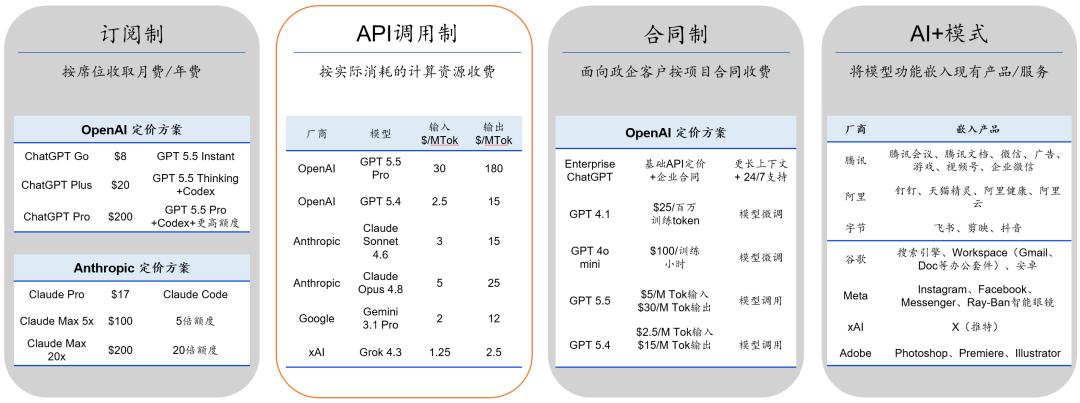
Figure 1: Four Business Models for Large Models
Among the four business models mentioned above, the API call-based model can be simply referred to as the "selling tokens" business model. Since public data on subscription-based, contract-based, and "AI+" models is limited, and they often involve complex product portfolios, customized solutions, or ecosystem strategies that make accurate comparison and quantitative analysis difficult, the API call-based model features public data, transparent pricing, unified measurement standards, and measurable market share, making it highly suitable for microeconomic analysis. Therefore, we select this model to analyze the demand characteristics, market structure, and competitive landscape of the large model API market, and thereby assess the profitability of large model vendors.
In the early days of large model applications, the API market only had a few vendors such as OpenAI and Anthropic, with independent interfaces that required users to integrate separately and pay monthly or by token usage, resulting in high comparison and switching costs between models. As more market participants joined, model aggregation gateways (AI gateways) emerged to meet the demand.
Specifically, a model aggregation gateway is an intermediate service platform situated between users and large model vendors. These platforms are standard two-sided market platforms, with initiators and operators including entities like OpenRouter, Lite LLM Proxy, and Cloudflare. The platform connects to multiple model providers on one side and users on the other, providing users with a unified model API calling interface and charging based on token usage. After users send requests to the gateway platform, the platform routes requests to target models according to user-specified rules or preset strategies; after the models return results, the gateway forwards them uniformly to users (Figure 2). In other words, users only need one interface to call multiple models without integrating with different vendors separately, significantly reducing search, comparison, and switching costs.
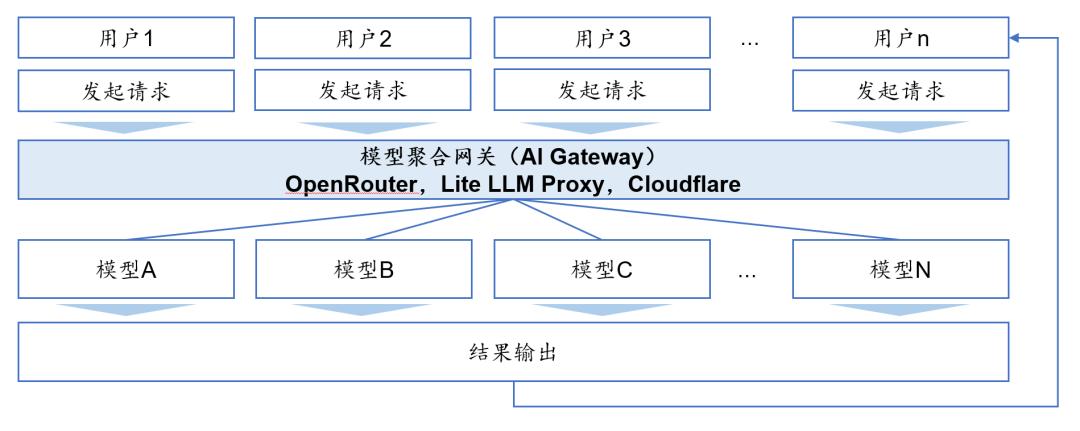
Figure 2: Distribution Process of Model Aggregation Gateway (AI Gateway)
According to data from model aggregation gateways, the large model API market has seen explosive growth in call volume over the past year. Taking OpenRouter as an example, its weekly API usage on the platform increased by over 23 times in less than a year and a half (Figure 3). This is partly due to the transparency and convenience provided by aggregation gateways, and more importantly driven by the recent rise of AI agents. Before the emergence of agents, a single interaction between a user and an AI large model typically corresponded to a single API call; agents, however, break down tasks, perform multi-step planning, and call external tools, converting a single user intent into multiple rounds of model API requests, thereby significantly amplifying token consumption and API call demand.
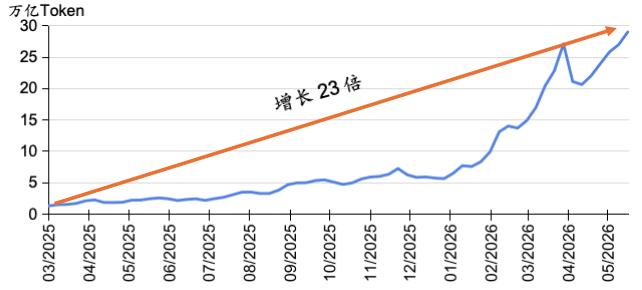
Figure 3: Large Model API Usage on the OpenRouter Platform, Data Source: OpenRouter
The Large Model API Market Exhibits Characteristics of a Monopolistically Competitive Market
As previously mentioned, market demand growth does not necessarily lead to profit growth, nor does it guarantee that a company will definitely be profitable; the profitability of a firm depends on the market structure and competitive landscape of its products.
Given the high R&D costs, large upfront investments, high technical and talent thresholds associated with large models, as well as potential scale and flywheel effects, logically the large model market should have very high entry barriers, easily forming a monopoly or oligopoly. In a monopolistic or oligopolistic market, vendors have strong or relatively strong pricing power, allowing them to enjoy monopoly profits.
However, data from the model aggregation gateway OpenRouter shows that the large model API market has numerous participants, fierce price competition, and no sustainable technical or market share advantages for early-mover vendors or leading models. Clearly, the entry barriers in this market are not as high as imagined, and vendors do not have strong pricing power. These do not align with the characteristics of monopoly or oligopoly markets, but rather resemble monopolistic competition.
Generally, a monopolistically competitive market typically has the following characteristics: (1) A relatively large number of firms in the market; (2) Relatively dispersed market share among firms, leading to low market concentration; (3) High price elasticity of market demand, limiting the pricing power of firms, but due to certain product differentiation, firms have limited pricing power within niche markets; (4) Certain entry barriers exist in the market, but they are not insurmountable. Based on OpenRouter's data, the large model API market largely conforms to these characteristics:
(1) A large number of vendors. According to incomplete statistics, by the end of May 2026, over 500 institutions worldwide were engaged in large model R&D, releasing more than 3,700 models. The OpenRouter platform alone has integrated over 400 large models from more than 70 institutions. Clearly, this market does not fit the characteristics of monopoly or oligopoly (which feature a small number of vendors).
(2) Dispersed market share, low concentration, and frequent ranking changes among top models, making it difficult for leading models to sustain their market share advantages. OpenRouter data shows that between March 2025 and May 2026, the longest period a single model could consecutively maintain the "champion" (highest market share) position was only 12 weeks, and the highest historical market share held by a "champion" was merely 27%. The Herfindahl-Hirschman Index (HHI), which measures market concentration, has been on a downward trend (Figure 4). Calculated by model share, the HHI on OpenRouter has long been below 0.1, currently standing at only 0.03; even calculated by vendor share, it is only 0.12. Referring to the standard criteria used by the U.S. Department of Justice and Federal Trade Commission, these HHI levels typically correspond to moderately to low concentrated markets (Figure 5). Based on this assessment, the large model API market lies somewhere between perfect competition and monopolistic competition.
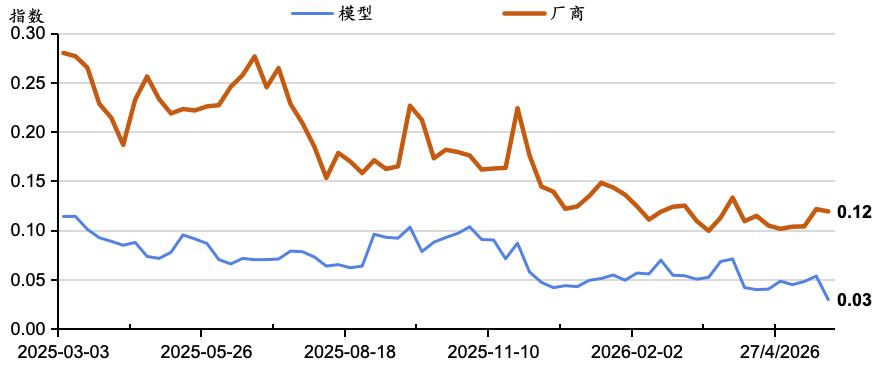
Figure 4: Large Model Market Concentration Index on the OpenRouter Platform, Data Source: OpenRouter
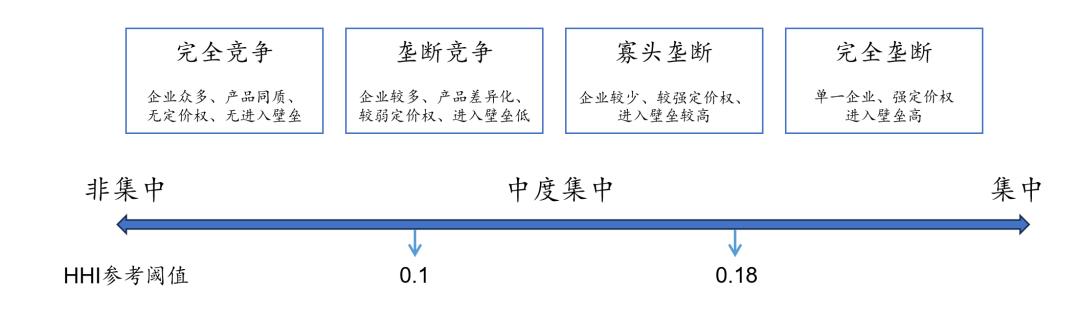
Figure 5: Market Competitive Structure and HHI Reference Thresholds, Data Source: U.S. Department of Justice / Federal Trade Commission 2023 Merger Guidelines
(3) High price elasticity of demand, but not infinitely high; there is differentiation between models, yet vendors have limited pricing power. On OpenRouter, free models (with usage caps) and low-priced models have achieved significantly higher usage volumes, indicating that users have high price sensitivity. However, some high-priced models still capture considerable call volumes, resulting in a U-shaped relationship between model usage and price (Figure 6). Since different models differ in comprehensive capabilities, call costs, and applicable scenarios, models are not completely homogeneous. Data shows that higher-priced models tend to correspond to stronger technical performance (Figure 7), confirming that price differences among large models stem from "quality differences" — the large model market is not homogeneous competition, but features differentiated positioning. Based on this assessment, the large model API market is not a perfectly competitive market, but a monopolistically competitive one.
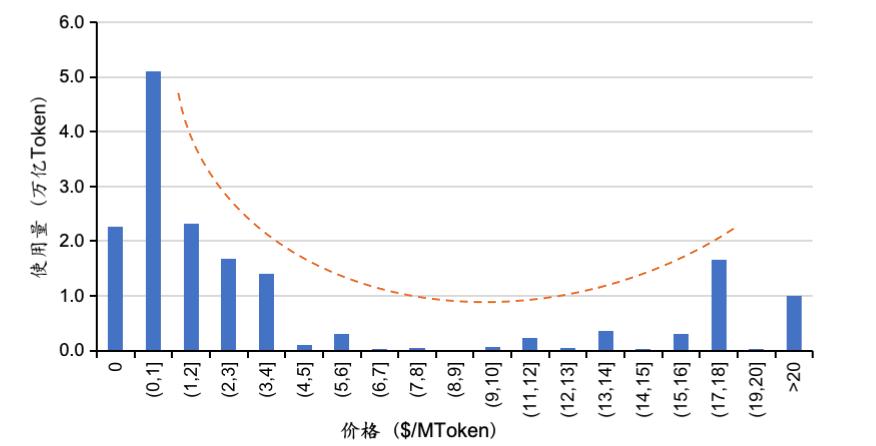
Figure 6: Distribution of Model Usage on the OpenRouter Platform, Data Source: OpenRouter
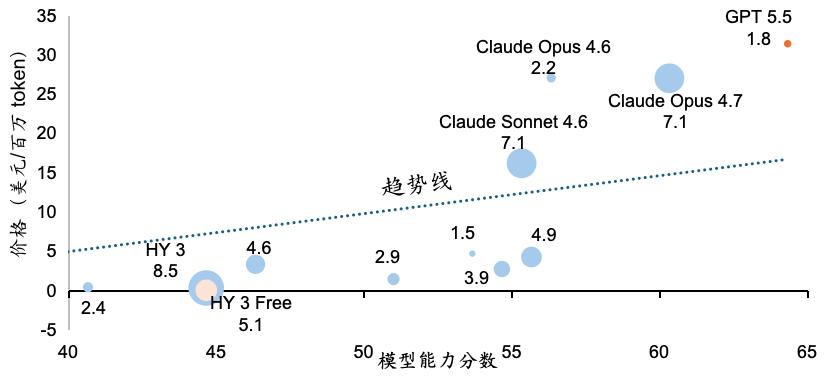
Figure 7: Relationship between Model Pricing and Model Capabilities on OpenRouter, Data Source: OpenRouter, Artificial Analysis. Note: Capability Score = Average (Intelligence Index, Coding Index, Agentic Index); Price = Unit Input Price + Unit Output Price; Bubble size represents model usage (in billions of tokens, May 1 to May 31)
The above data also demonstrates that demand in the API market is not entirely determined by price. Users balance price, capability, and task suitability to select the model with the best "cost-performance ratio"; a considerable number of users are willing to pay a premium for higher performance or better scenario adaptation. However, the emergence of aggregation gateways like OpenRouter, while increasing transparency in the API market, also enhances user sensitivity to model "cost-performance". Once a model with higher "cost-performance" appears on the platform, user