Unitree and UBTECH: Two Commercialization Experiments of Chinese Humanoid Robots in 2026
The Silicon Specter Awakened by Physical Entities
Perhaps in 2006, when Elon Musk outlined the blueprint for future mobility in Tesla's first "Secret Master Plan," there was still a full 15 years before he first showcased the Optimus humanoid robot on stage, portrayed by human dancers.

At that time, whether on Sand Hill Road in Silicon Valley or in cafes in Zhongguancun, the entire tech industry was enveloped in an inexplicable sense of confidence. The ultimate form of artificial intelligence was believed to be a sophisticated piece of software code, a virtual brain with staggering computing power—people assumed that as long as the computing power was sufficiently large and the parameters numerous enough, this cyber brain could solve all of humanity's problems in the virtual world.
In reality, the breakneck surge of generative large models starting in 2023 not only pried open the door to AGI (Artificial General Intelligence) but also quickly led the industry to collide with an insurmountable physical wall: virtual AI behind the screens cannot "tighten screws" for humans, nor can it truly step into real life to ease a person's loneliness.
It was not until today, in 2026, that the global tech community has finally reached a new consensus: AI without a physical form is nothing more than a cyber goldfish. AI must grow limbs and step into the messy physical world—this is "Embodied AI," the ultimate physical form of artificial intelligence that internet users often discuss.
In early July, China's embodied AI track reached a historic crossroads. Unitree passed the STAR Market IPO registration at a record-breaking lightning speed, raising a total of over 4.2 billion yuan, with its full-year shipment target for this year set directly at 20,000 units.
Almost simultaneously, long-established robotics giant UBTECH dropped a tech-history-worthy bombshell in Shenzhen: its newly launched consumer-grade brand "Utopia U1" series of hyper-realistic bionic robots not only crossed the "Uncanny Valley" that has plagued the industry for decades, but also achieved a 1:1 high-fidelity reproduction of even skin pores and subcutaneous blood vessels. Although the top-tier model is priced close to one million yuan, it secured over 13,000 pre-orders from high-net-worth customers in just a few days.

One follows a steel industrial path of "extreme cost-effectiveness, hardcore manufacturing, and lightning-fast listing"; the other takes a Westworld-style route of "hyper-realistic companionship, emotional large models, and luxury consumer-grade offerings."
This is not just a head-to-head battle between two leading Chinese enterprises, but also two commercially oriented experiments led by China's local industrial chain on the eve of embodied AI's commercial deployment—experiments that move in opposite directions yet mirror each other in logic.
01. Unitree's "Fordism": Choking Competitors With Price Warfare
In the tech manufacturing sector, there is an unshakable "China Law": any seemingly lofty, unattainable high-tech product, once thoroughly mastered by China's supply chain and fully localized for production, will eventually become a mass-market industrial good sold by the ton or by the kilogram.
This law has proven itself time and again, from early smartphones and photovoltaic panels to later new energy vehicles. Today, Unitree is bringing this law to the robotics industry.
Unitree's founder, Wang Xingxing, is a typical hardcore engineering talent. In his worldview, there is no room for romantic fantasies or artistic discussions about the "Uncanny Valley"—his eyes are almost entirely fixed on the BOM (Bill of Materials).
Earlier this year, Unitree's G1 robot fleet made a collective appearance on the Spring Festival Gala stage, performing a synchronized set of high-difficulty cyber martial arts. The general public watched for the tech spectacle and fun, while fellow robotics engineers in the audience felt a chill down their spines, stunned by the level of cost control achieved.
True to expectations, Unitree soon announced that the base model G1 robot would be priced at $13,500 (roughly over 90,000 yuan). At that time, this price was nothing short of a dimensionality-reduction nuclear explosion in the global embodied AI field.
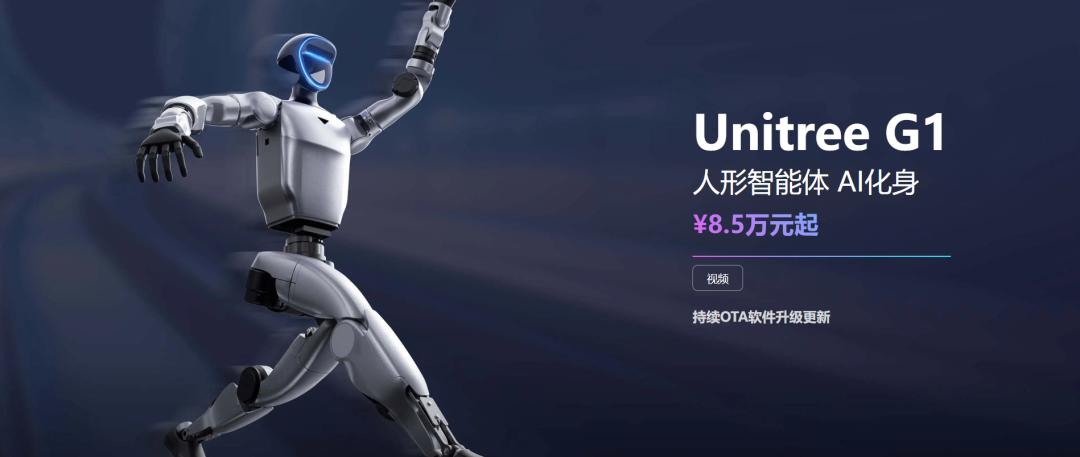
Looking horizontally, Boston Dynamics' Atlas, the world-famous hydraulically powered robot that can perform backflips and parkour, has an estimated R&D and manufacturing cost of millions of dollars per unit according to industry insiders—after its debut, videos of its stunts spread all over the internet. Tesla's Optimus, which Musk has placed high hopes on, has repeatedly claimed it will keep the price under $20,000, but due to the lagging supporting supply chain in North America, the timeline for its large-scale rollout to consumer markets keeps getting pushed back.
Unitree, on the other hand, has directly brought a bipedal humanoid robot with over 30 degrees of freedom, capable of autonomous navigation and complex grasping tasks, down to the price range of a Wuling Hongguang vehicle or a high-end 100-inch large-screen TV.
Why can Unitree act so aggressively? The secret lies in its inherent "quadruped robot (robot dog) DNA."
Before shifting to bipedal humanoid robots, Unitree was already a hidden champion in the global quadruped robot (robot dog) sector. Over the course of shipping tens of thousands of robot dogs worldwide, Unitree repeatedly refined its domestic supply chain for core robotics components such as reducers, high-power-density brushless motors, miniature hydraulic systems, and sensors.
While foreign peers were still using expensive imported custom parts, Unitree had already achieved in-house R&D, self-production, and large-scale bulk sourcing of core components. As a result, when Unitree fully pivoted to bipedal humanoid robots in 2024 and 2025, it did not need to develop motors and algorithms from scratch—the components were already mature, and the assembly processes were already streamlined on its production lines.
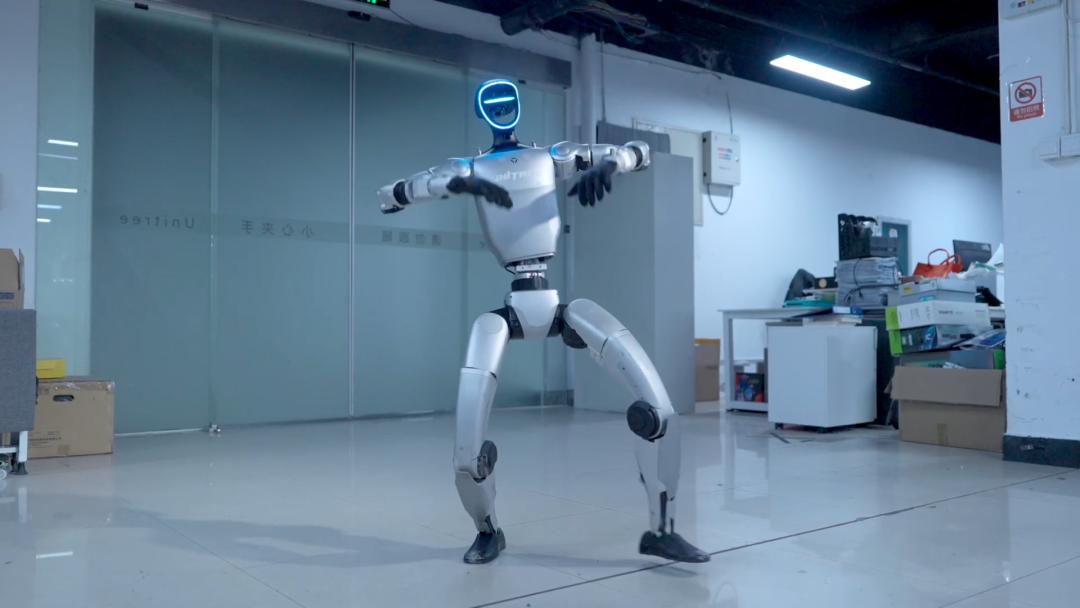
For the 4.2 billion yuan raised from the STAR Market, Unitree wasted no time in allocating all of it to production expansion and R&D. First, it will further expand its "super factory" in the Yangtze River Delta, pushing the annual production capacity of humanoid robots to an industrial scale of tens of thousands of units. Second, it will double down on its latest WVLA2.0 (World-Video-Language-Action) embodied large model to improve the robots' generalized operational capabilities in complex physical environments.
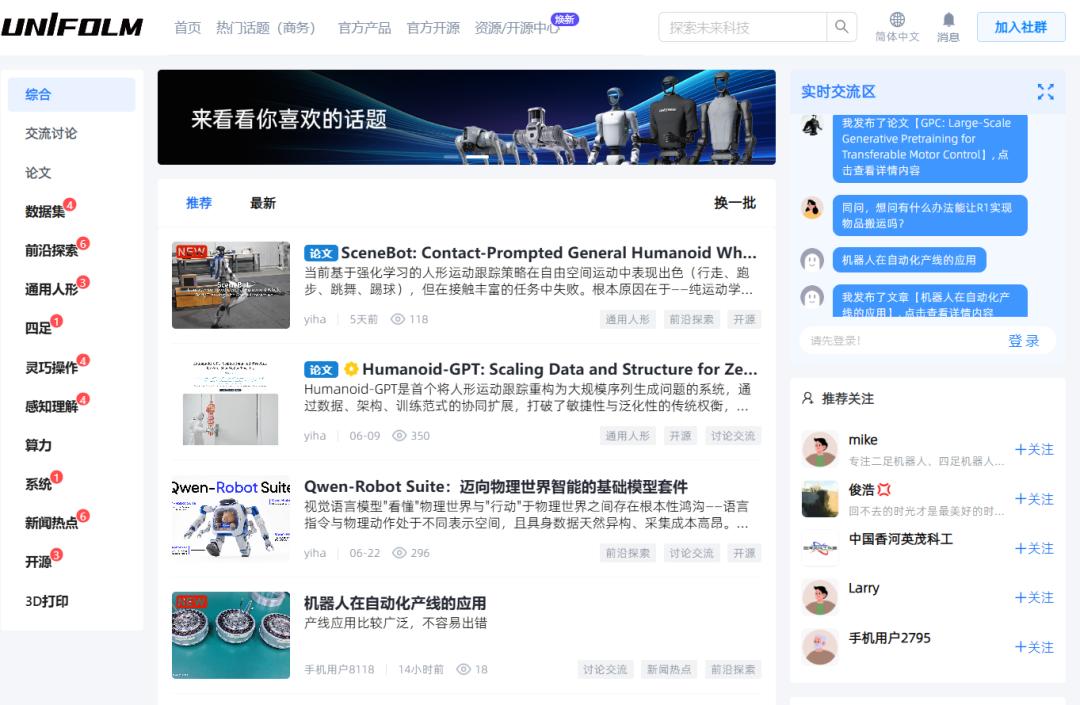
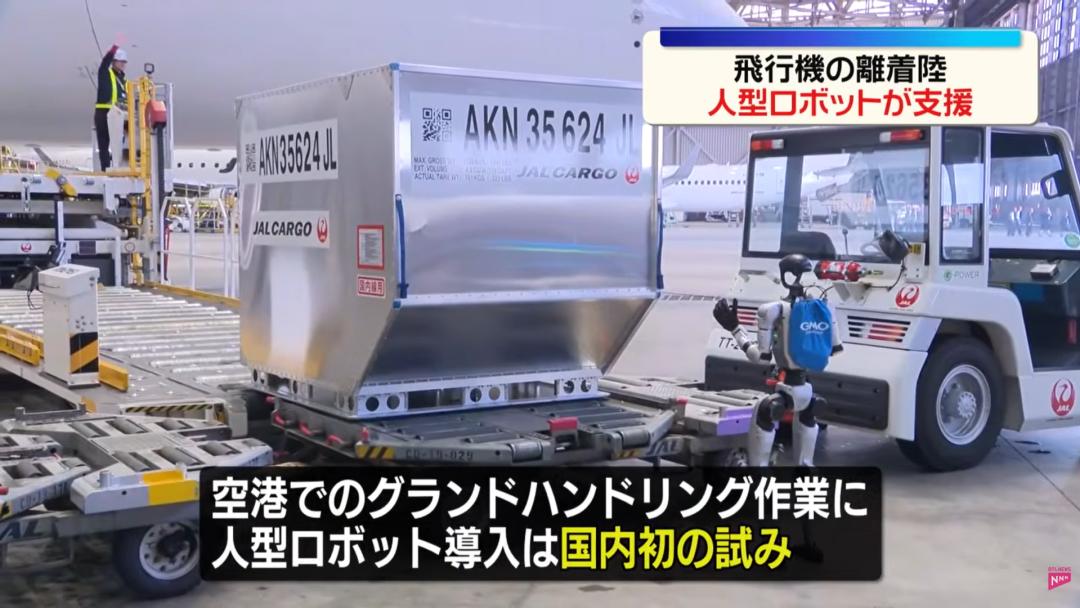
To enhance its R&D capabilities, Unitree has also built an embodied AI community. In closed tests at Tokyo Haneda Airport, Unitree's robots have already started working like tireless mechanical mules, transporting large pieces of luggage between conveyor belts and shelves 24 hours a day.
Unitree's business logic is very straightforward: it has no need for robots to look aesthetically pleasing, let alone have delicate skin or understand the romantic nuances in human poetry and literature. What it wants is robots that are "physically capable, reliably built, and willing to work tirelessly." This is classic "Fordism": using extreme economies of scale to drive costs down to a level that suffocates competitors, and when overseas peers are still debugging in laboratories, leveraging its massive steel production capacity to take over the global industrial and logistics markets.
02. UBTECH's "Hermès Logic": The Ultimate Antidote to the Loneliness Economy
If Unitree is using engineering thinking to build a "cyber Wuling Hongguang," then UBTECH, which made its bold move in mid-2026, has stepped on the accelerator toward becoming a "cyber Hermès," pushing the other side of embodied AI to its extreme.
On June 30, UBTECH held a consumer strategy launch event in Shenzhen, directly shifting the entire industry's tech focus from "industrial manufacturing" to the sci-fi ethics-laden world of "Westworld."
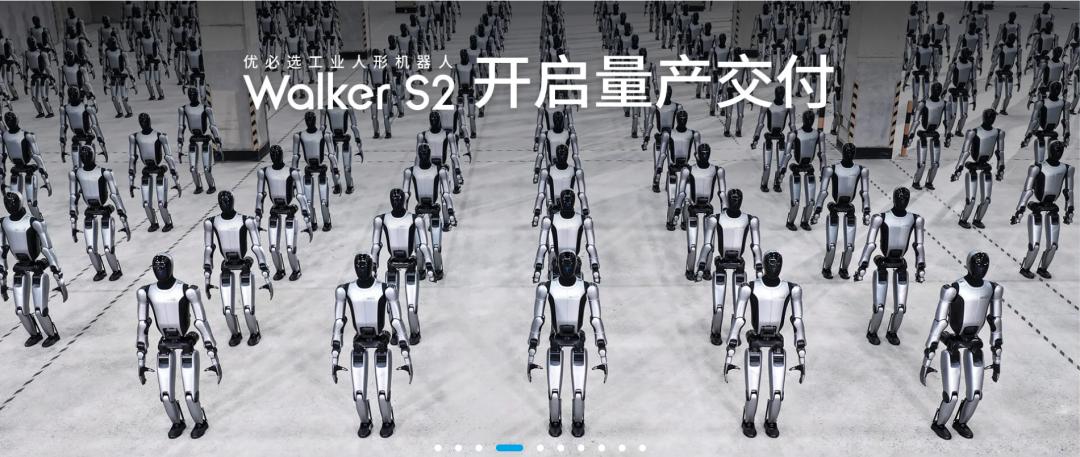
UBTECH chose to directly confront and cross the "Uncanny Valley" that has plagued the entire robotics industry for half a century. These robots have body proportions that perfectly match the human golden ratio (183cm for the male model, 168cm for the female model).
The visual details are unbelievable: when consumers get close to this top-tier flagship robot priced at 990,000 yuan, they will find that its skin uses the latest generation of silicone bionic technology, featuring not only delicate pores and skin textures, but even faint blue subcutaneous capillaries visible under lighting.
The robot's fingers are even covered with unique fingerprints, and when you shake hands with it, you can feel a simulated body temperature slightly higher than room temperature. With 88 high-precision servo-driven joints all over its body, its movements of walking, lowering its head, and raising its hand no longer carry a stiff "mechanical feel," but instead move with fluidity and grace close to that of a human.
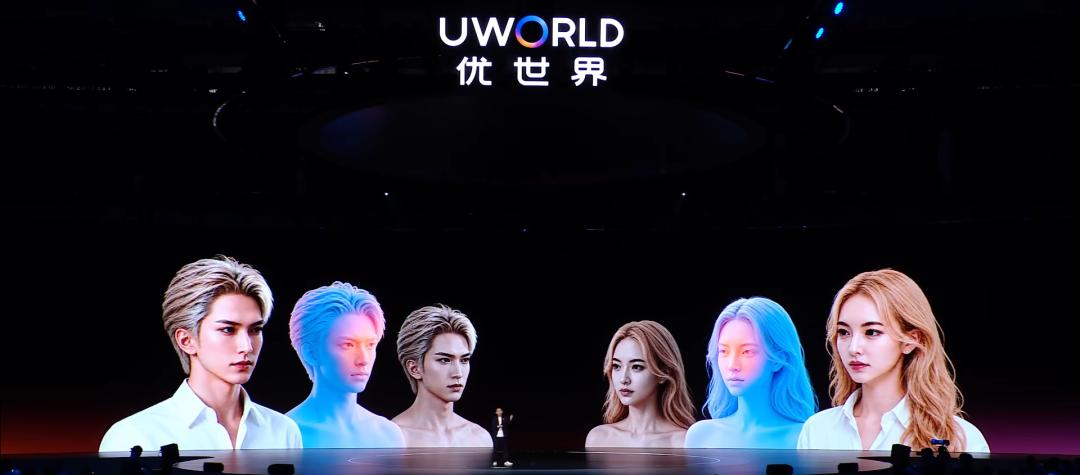
Notably, if UBTECH had only made an elaborate wax figure, it could never have won over the discerning capital and market. Its real core strength lies in its deeply customized emotional perception and multi-modal interaction large model.
In the past, robot speech was cold, pre-recorded audio, but the UBTECH U1 series has compressed the synchronization delay between speech and lip/facial micro-expressions to under 20 milliseconds. Consumers may not have an intuitive sense of this speed—put simply, when you talk to it, you get real-time feedback that matches interacting with a "regular person."
Its onboard perception system can recognize 20 of the most subtle micro-expressions on the user's face in one second, capturing even a 10% hint of disappointment in your tone. When a user sighs after coming home from work, it will not rigidly ask "How can I help you?" like a smart speaker. Instead, it will quietly walk over, hand the user a cup of warm water, dim the living room lights to the coziest warm tone, and say in a gentle, restrained voice fully customized to the user's preferences: "You've worked hard today."
After the launch event, public opinion on the internet immediately split into two polarized sides.
In the eyes of many pragmatists and tech influencers, this is simply the biggest scam of the new era: "990,000 yuan—why wouldn't I buy a Porsche, or a small apartment in a smaller city? What on earth am I getting out of bringing home a silicone robot that blinks?"
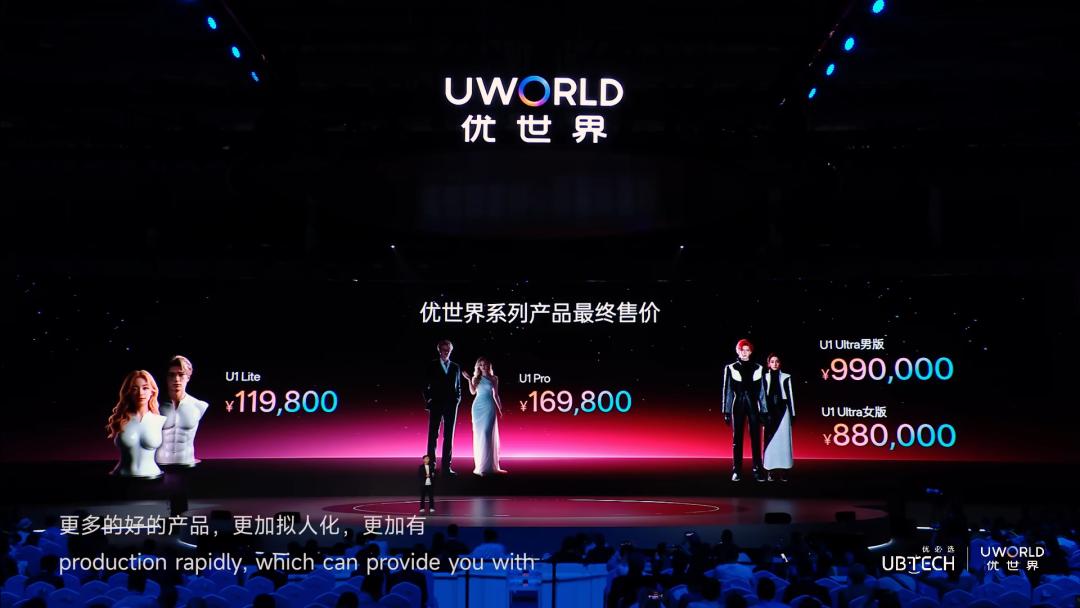
But the subsequent market data silenced the doubters: 13,000 pre-orders were completely sold out in just a few days. The market speculates that most of these orders came from new high-net-worth individuals in first-tier cities, affluent elderly care families, and top-tier luxury clubs. This once again proves to the market that the essence of business is never simply calculating cost-effectiveness—it is selling the scarcest resource of the era.
Unitree solves the problem of "labor shortage," while UBTECH has overnight tapped into the most expensive, hardest-to-obtain luxury of human society in 2026: emotional companionship that never betrays, is absolutely obedient, and provides immense emotional value.
In an era of accelerating population aging and the spread of the "extreme loneliness economy," for many high-net-worth individuals, raising a dog requires taking care of its daily needs, and romantic relationships come with complex human dynamics and the risk of betrayal. But a cyber companion with a nearly perfect appearance, available 24/7, with infinite tolerance and listening skills, delivers psychological healing value that far exceeds the 990,000-yuan price tag in the eyes of wealthy customers.
UBTECH has completely abandoned the strategy of engaging in cutthroat competition with Unitree in the low-margin industrial red ocean. Instead, it has chosen to turn left, sailing directly into the high-luxury blue ocean at the top of the consumerism pyramid, to capture the staggering emotional premium and high profit margins there.
Conclusion
Leveraging the unparalleled hardware manufacturing power of the Yangtze River Delta and Pearl River Delta, Unitree has forcefully driven the cost of humanoid robots down to the $10,000 level. This is not just a numerical breakthrough—it means it holds the trump card to disrupt the global industrial logistics and domestic service markets. If Unitree chooses to, it can follow in the footsteps of how Chinese manufacturing reshuffled the global home appliance market,