Elon Musk Wants Users to Power AI Data Centers, Is the Virtual Power Plant Sector Entering Its Prime Time?
On June 24, the share price of Sunrun, a U.S. residential solar company, surged by 31% within 90 minutes after the market opened, with trading volume reaching 52.6 million shares — nearly 5 times the average daily level of the past three months.
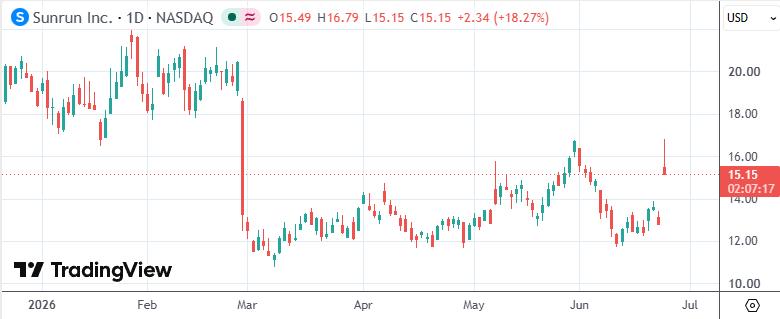
This sharp rally was not triggered by an earnings report or a major order, but by a framework agreement that did not involve any signed power purchase contracts.
Sunrun, in partnership with Tesla and Renew Home, announced that the three parties will aggregate more than 16GW of distributed flexible capacity to market to AI data center operators and power utilities.
16GW is roughly equivalent to the installed capacity of 12 nuclear power plants each with a 1,000,000-kilowatt output. However, this capacity does not come from any single power plant. It is scattered across millions of ordinary households nationwide — rooftop photovoltaic panels, Tesla Powerwall home batteries, smart thermostats, and even idling Cybertrucks.
Virtual power plants (VPPs) have been operational in the U.S. for several years, but their clients have historically been limited to power utilities and grid dispatch agencies.
This time, the buyer has changed to the most urgent, highest-spending, and least patient customer in the world: AI data centers.
01
Breaking Down the 16GW Capacity
To understand this deal, we first need to clarify what each participant brings to the table.
Sunrun is the largest residential solar service provider in the United States. As of the first quarter of 2026, it has cumulatively installed over 251,000 solar-storage systems, with a networked energy storage capacity of 4.3GWh, serving more than 1.1 million household customers.
It operates several of the largest residential battery VPP projects across the U.S. in California, Texas, New England, and Puerto Rico. First-quarter earnings show that 73% of new customers opted for energy storage configurations, up from 69% a year earlier.
Tesla contributes its installed base of Powerwall units and vehicle-to-grid (V2G) capabilities to this agreement.
In February 2026, Tesla launched the "Powershare Grid Support" program for Cybertrucks in the CenterPoint Energy and Oncor service areas in Texas. Vehicle owners can feed surplus electricity from their Cybertruck's 123kWh battery back to the grid during peak demand periods in exchange for electricity bill credits.
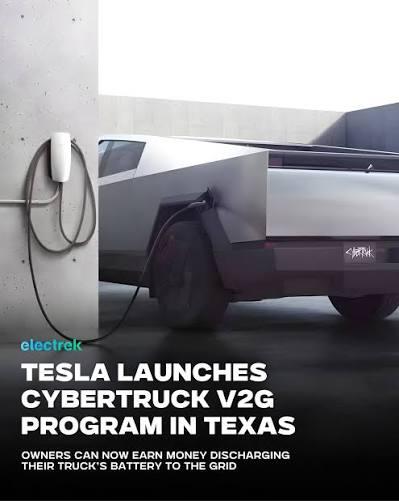
In April, the same functionality was extended to PG&E's service area in California. This is the first V2G project in the U.S. based on AC circuits, with hardware costs far lower than the DC solutions adopted by Ford and General Motors.
Renew Home is the least familiar of the three parties to domestic readers, yet the largest in scale. Its predecessors were Google Nest's smart thermostat service Nest Renew and the California demand response startup OhmConnect.
The two entities merged in May 2024, under the control of Alphabet's affiliated fund Sidewalk Infrastructure Partners, which injected $100 million into the combined company.
The merged Renew Home manages over 8 million smart thermostats and connected devices, and has established partnerships with more than 100 power utilities. In Texas, it has collaborated with NRG Energy to aggregate flexible capacity at the 1GW level.
The combined figure announced by the three parties is "over 16GW of flexible capacity," with supporting infographics specifying 16.8GW. However, this number requires careful interpretation.
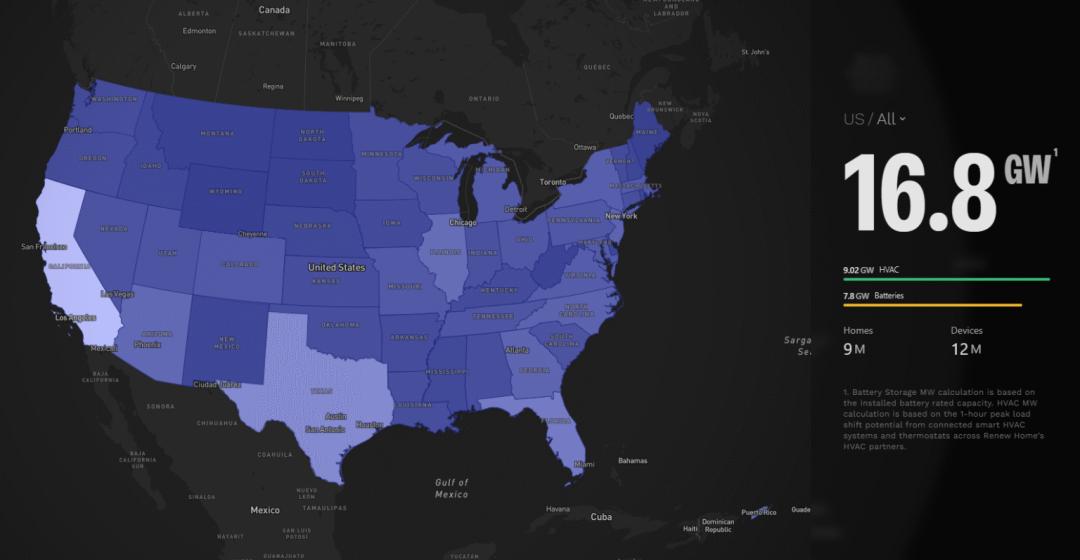
Sunrun President Paul Dickson confirmed in an interview with U.S. energy media Heatmap News that approximately 60% of the 16GW comes from Renew Home's thermostat network. Analysts estimate that dispatchable battery capacity stands at roughly 4GW.
These two resources have fundamentally different implications in the power system: Batteries can inject electricity into the grid, functioning as "power generation," while thermostats reduce air conditioning usage by a few degrees for several hours during peak periods, achieving "lower power consumption."
The former is called dispatchable capacity, and the latter is demand response. For data centers requiring 24/7 continuous operation, these two types of resources cover vastly different scenarios.
Commercial progress also needs careful examination. The official name of this framework agreement is the "capacity-as-a-solution framework." As of the announcement date, no major tech giant has signed a power purchase contract, and capacity allocation follows a "first-come, first-served" principle.
In Virginia's "Data Center Corridor," the three parties state that 300MW of capacity can be deployed immediately, with plans to expand it to 500MW by 2030.
Wall Street's reaction was divided. Barclays believes this opens up a new revenue stream for recurring income, potentially transforming Sunrun from an "installer" into a "grid platform." UBS maintained its "buy" rating but lowered its target price from $23 to $20.
GLJ Research kept its "sell" rating with a $4.63 target price, arguing that part of this narrative was "designed to drive share price movements." Wells Fargo bluntly stated that it does not expect a step-change increase in VPP revenue.
16GW is a PR-stated total, 4GW is the dispatchable capacity recognized by grid engineers, and 0 is the number of signed contracts to date. Which of these three numbers matters more depends on perspective: capital markets focus on narrative shifts, power systems prioritize reliable capacity, and the energy storage industry should pay attention to how the customer base of VPPs is evolving.
02
The Customer Base of Virtual Power Plants Has Changed
Tesla has operated VPPs in California for several years. In 2024, the Tesla Powerwall VPP paid out nearly $10 million in dispatch compensation to participating California users.
In July 2025, California's VPP contributed over 535MW of capacity to the grid in a single dispatch. Sunrun operates the largest residential battery VPP in California, and has collaborated with Tesla in Puerto Rico to promote an automatic VPP registration system.
However, historically, the "clients" of all these VPPs have remained a single type of entity: power utilities and regional grid dispatch organizations (RTO/ISO).
VPPs earn revenue from cleared capacity market payments or demand response program subsidies — essentially auxiliary service income from the power system.
This 16GW framework agreement does something unprecedented in the VPP industry: it replaces grid companies as the primary buyer with data center operators.
Why would data centers purchase this capacity? The problem is not a shortage of power plants, but a backlog in grid interconnection queues.
PJM, the largest regional grid in the U.S., covers 13 states and Washington D.C., serving more than 65 million people. Northern Virginia under its jurisdiction is known as "Data Center Corridor," one of the most densely concentrated data center capacity regions in the world.
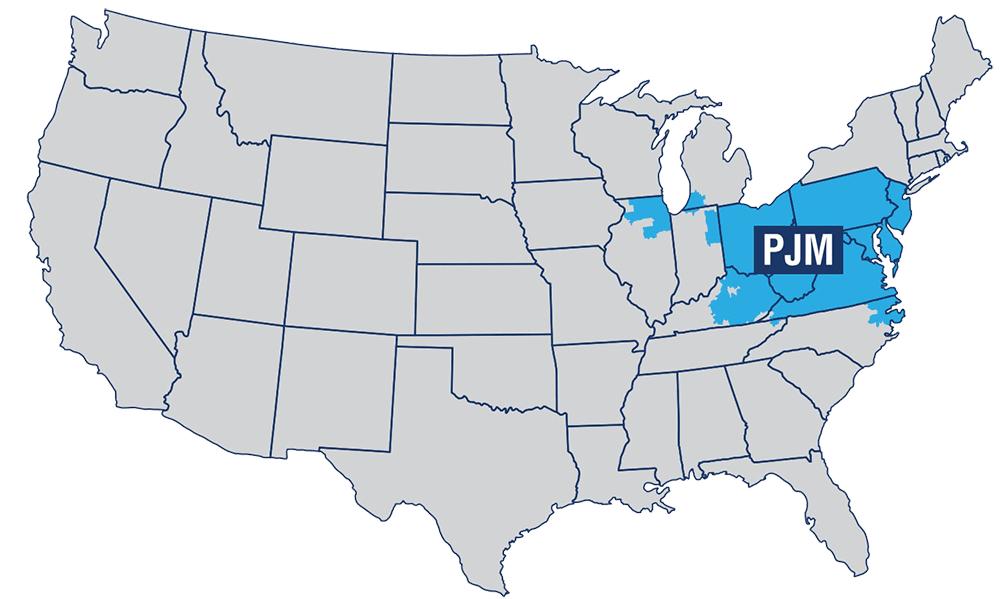
In early 2026, PJM's interconnection queue was backlogged with projects waiting for years, as the approval and construction cycles for new transmission lines and natural gas units far outpace the expansion speed of AI computing power.
Goldman Sachs Commodities Research's May 2026 report provided the latest forecasts: U.S. data center electricity demand will reach 31GW in 2025, 41GW in 2026, and jump to 66GW in 2027.
According to the report's estimates, by 2027, the annual new data center installed capacity in any of the three U.S. power markets — Mid-Atlantic, Texas, and Midwest — will exceed the national total of 2025.
The advantages of distributed resources become very concrete at this point: no need to wait in interconnection queues, no new transmission lines required, no land acquisition, water intake permits or environmental assessments, and deployment can be completed within months.
The repeated emphasis on "in months, not years" in the three parties' announcement directly addresses this pain point.
An earlier reference case can help assess the authenticity of this direction.
On June 2 — three weeks before the Tesla/Sunrun announcement — Google signed a three-year "Bring Your Own Capacity" contract with VPP operator Voltus, aggregating up to 100MW of distributed resources annually to form a Google-funded virtual power plant in the PJM region. Participating users receive compensation from Voltus, while Google obtains certified capacity credits.
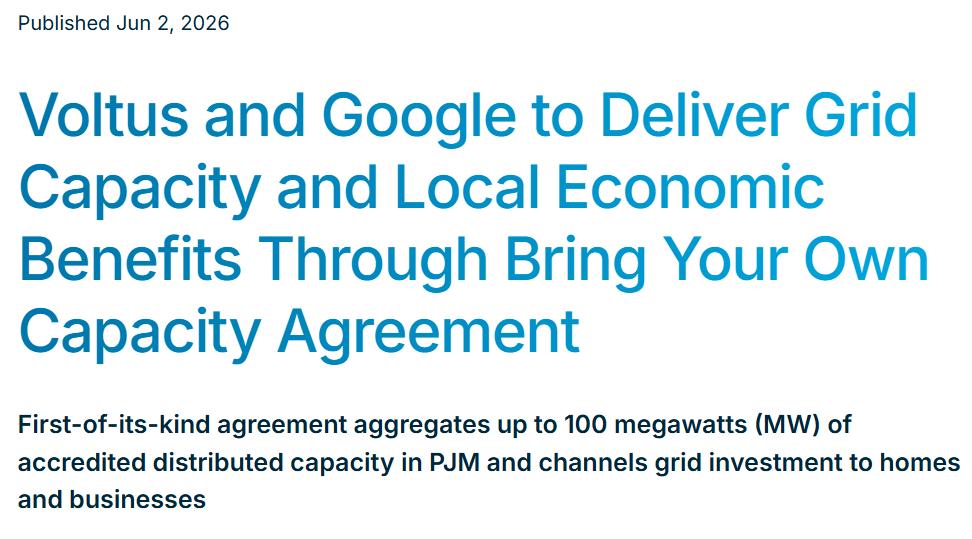
This is the first signed commercial contract in U.S. history where a tech giant directly funds a VPP. Voltus CEO Dana Guernsey described it in the announcement as "a template that large load customers can follow." Michael Terrell, Google's Head of Global Advanced Energy, positioned it as "part of a toolkit to accelerate the building of a flexible energy system."
The Tesla/Sunrun 16GW framework is 160 times larger than the Google-Voltus deal. However, Google-Voltus has a signed contract, a three-year lock-in period, and a clear capacity delivery timeline (2027 capacity year), while Tesla/Sunrun still only has a framework agreement.
Nevertheless, the key to determining whether VPPs can truly integrate into data center power supply systems does not lie in these two transactions themselves, but in PJM's institutional design.
In January 2026, the PJM Board of Directors launched the "Reliability Backstop Procurement," proposing a one-time purchase of approximately 14.9GW of new capacity to cope with the load growth driven by data centers.
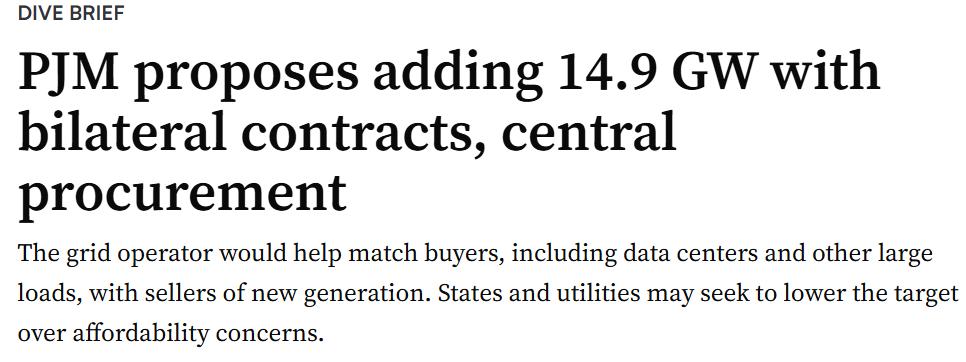
The plan announced in April is divided into two phases: Phase 1 (September 2026 to March 2027) involves bilateral contract negotiations between data centers and power generators; Phase 2 is a centralized auction organized by PJM to cover the remaining gaps.
A key rule in the plan states that demand response and distributed energy resources can participate in bidding in both phases, without being constrained by traditional interconnection queues.
Tesla/Sunrun/Renew Home have already submitted capacity bids exceeding 1GW to PJM. If PJM accepts them, distributed energy storage will obtain the same capacity value recognition as natural gas plants and large-scale battery stations in the U.S.'s largest competitive power market.
This is a more structurally significant variable than the 16GW figure itself.
03
An Alternative Solution in China
On May 14, 2026, an event in Guangdong Province took place that also marked a "first" in China's power industry.
Three large data center clusters — China Unicom Shaoguan Data Center, China Mobile Guangzhou Data Center, and Zhanjiang Data Center — officially participated in electricity energy trading and settlement in the Guangdong spot power market through the "Yue Neng Tou Virtual Power Plant Operation Platform" of Guangdong Power Grid Energy Investment Co., Ltd.
This is the first time a large Chinese data center has accessed the spot power market as a virtual power plant.
The operational logic is "computing follows power dispatch": when spot electricity prices are low, the VPP platform issues instructions to increase non-urgent computing tasks, raising power load to absorb low-cost electricity; when prices rise, it reduces tasks to lower load and avoid high-price periods. The dispatch accuracy reaches the minute level, fully meeting the response standards of the Guangdong spot market.
Zhu Zhenhai, General Manager of the Market Trading Department at Guangdong Power Grid Energy Investment Co., Ltd., put it directly: The inherent nature of data centers has not changed, but through platform-aggregated dispatch, electricity consumption has generated new asset value.
Wang Yongli, Deputy Director of the Energy Internet Research Center at North China Electric Power University, went a step further in his assessment: this marks that data centers are transforming from mere large electricity consumers into new market entities capable of responding to electricity prices and participating in system regulation.
Comparing the Guangdong case with the Tesla/Sunrun 16GW framework reveals that China and the U.S. have adopted nearly opposite approaches to the same problem of "computing power facing power shortages."
The U.S. logic is C-end resources make way for B-end large loads.
Aggregating already installed batteries and thermostats from millions of households to release capacity and reduce residential load during peak data center power consumption periods, freeing up grid headroom so data centers do not have to wait in interconnection queues. In this model, data centers are buyers, and households are resource providers.