The landscape of computing power leasing is about to undergo a drastic transformation.
Last November, Wall Street was in an uproar over the depreciation practices of major computing power giants.
The controversy was sparked by the famous big short Michael Burry, who posted on social media that computing power giants were artificially inflating their profits by extending the depreciation period of AI servers.
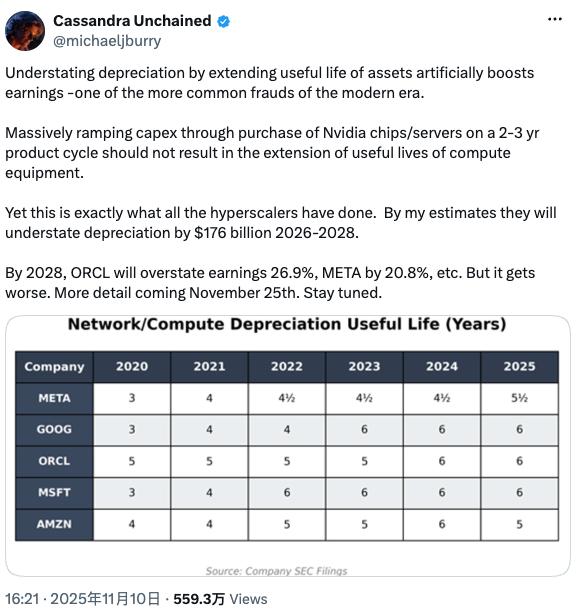
Michael Burry's Tweet
The longer the equipment depreciation cycle, the lower the annual depreciation expense allocated. For example, if you purchase a server for 6 million, depreciating it over 4 years would result in a 1.5 million depreciation charge on the books each year, while extending the period to 6 years would only deduct 1 million, creating an additional 500,000 in reported profit.
Last year, Meta raised its server depreciation period from 4-5 years to 5.5 years, generating a paper profit of 2.9 billion USD, which accounted for 4% of its pre-tax profit that year. Over the past five years, the other four major tech giants have also used this method to boost their profits, and not just once.
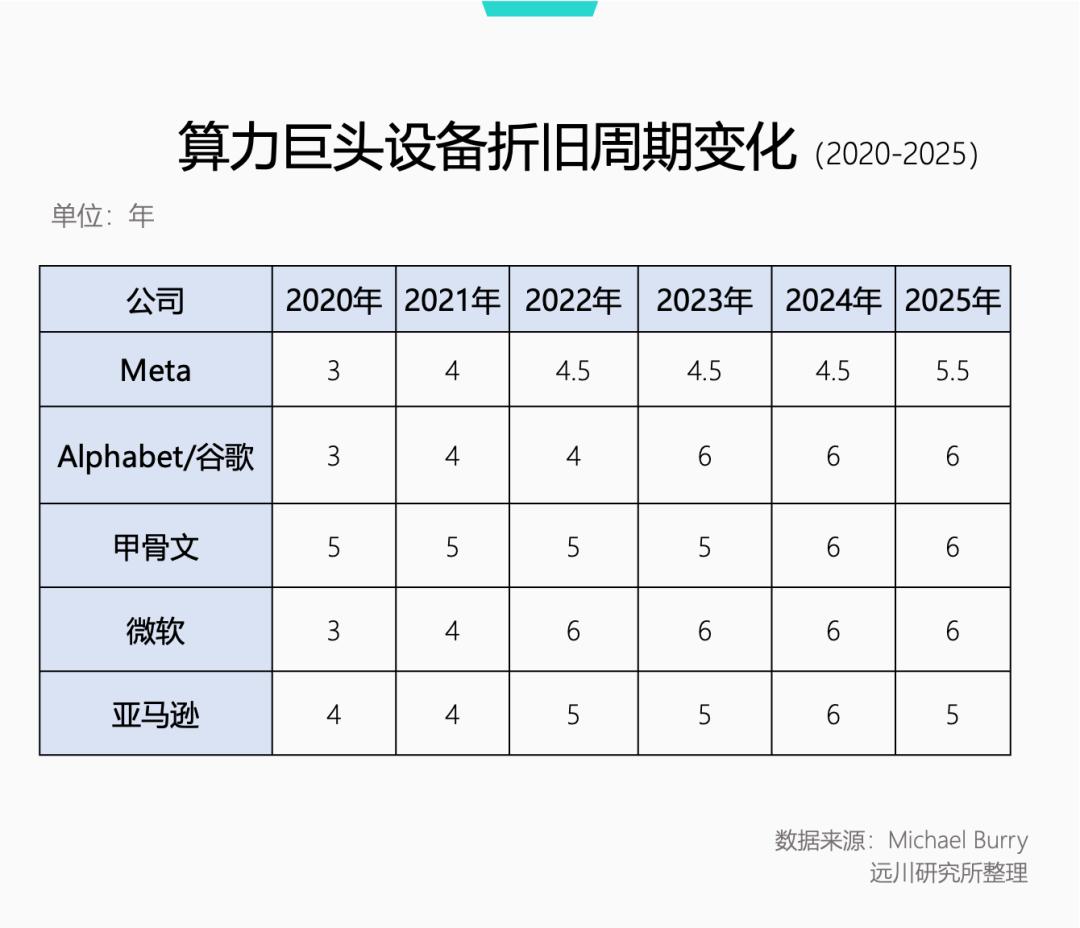
The actual depreciation cycle of AI servers largely depends on the iteration speed of the core component, the GPU. A GPU has a long physical lifespan, but it will be replaced by newer GPUs once it can no longer keep up with evolving model requirements.
As NVIDIA shortened its GPU iteration cycle from 18-24 months to 12 months, the GPU replacement speed should theoretically accelerate. That means the depreciation period should be shortened, not extended.
According to Richard Jarc, an analyst at Uncovered Alpha, the real economic life of a GPU is closer to one to two years [1].
Renowned investor Jim Morrow satirized that the giants are "fully aware" of this, "They have gone to great lengths to revise their accounting treatments and depreciation schedules to get ahead of the game — essentially to avoid having to recognize all these capital expenditures in the income statement [1]."
Based on first-quarter reports, institutions estimate that the total capital expenditure of the five major giants in 2026 is expected to exceed 700 billion USD, and will break through 1 trillion USD next year. With such a huge investment scale, it is understandable that they want to use extended depreciation as a buffer.
However, there is another party that is truly "speculating and profiteering" using GPUs.
Speculation and Profiteering
Not long after the depreciation controversy among computing power giants broke out, a huge loan deal early this reignited the topic.
The borrower was an AI computing company called Coreweave, which started by reselling GPUs and made a fortune renting out GPUs during the peak of crypto mining. In 2022, it claimed to transform into an "AI cloud service provider", but essentially its business remained unchanged — still renting GPUs, except that its tenants shifted from crypto miners to AI companies and cloud giants.
Where did the money to buy GPUs come from? Financing and borrowing. Therefore, how to borrow money and how to borrow more has always been Coreweave's top priority.
In 2023, Coreweave raised 2.3 billion USD for the first time using GPUs as collateral, which sparked controversy at the time.
Generally speaking, collateral for debt loans tends to be assets with stable value and easy liquidity. For example, banks usually prefer real estate such as houses and land. GPUs, as depreciable consumables that are phased out every few years, were almost never considered as collateral before.
This year's early loan also used GPUs as collateral. Apart from the amount being nearly 4 times higher, what made it even more special was that it was rated investment-grade by credit rating agencies Moody's and DBRS, meaning pension funds and insurance companies could even purchase bonds of this rating level.
This indicates that institutions judge the probability of default — the possibility of being unable to repay the loan within the next six years (maturing in 2032) — to be extremely low. Even if Coreweave cannot repay, selling off its existing GPUs would be enough to cover the debt.
This brings us back to the original controversy: How long can GPUs retain their value?
For computing power giants, choosing a three-year or six-year depreciation period is just a matter of how their financial statements look. But for companies like Coreweave that both earn revenue from GPUs and borrow money using GPUs as collateral, this issue is a matter of life and death.
Normally, the launch of a new GPU will directly impact the sales of the previous generation. When NVIDIA released its latest Blackwell architecture GPUs, Jensen Huang half-jokingly and half-seriously said that once Blackwell enters mass production, the previous generation Hopper GPUs might be "unable to be given away for free".
According to statistics from a tracking agency earlier this year, the resale price of a three-year-old used H100 has already dropped to 45% of the price of a new model [2].
As the GPU iteration cycle has significantly shortened, this depreciation rate is also accelerating. GPUs released six years ago are theoretically not far from being classified as electronic waste for today's most advanced AI data centers.
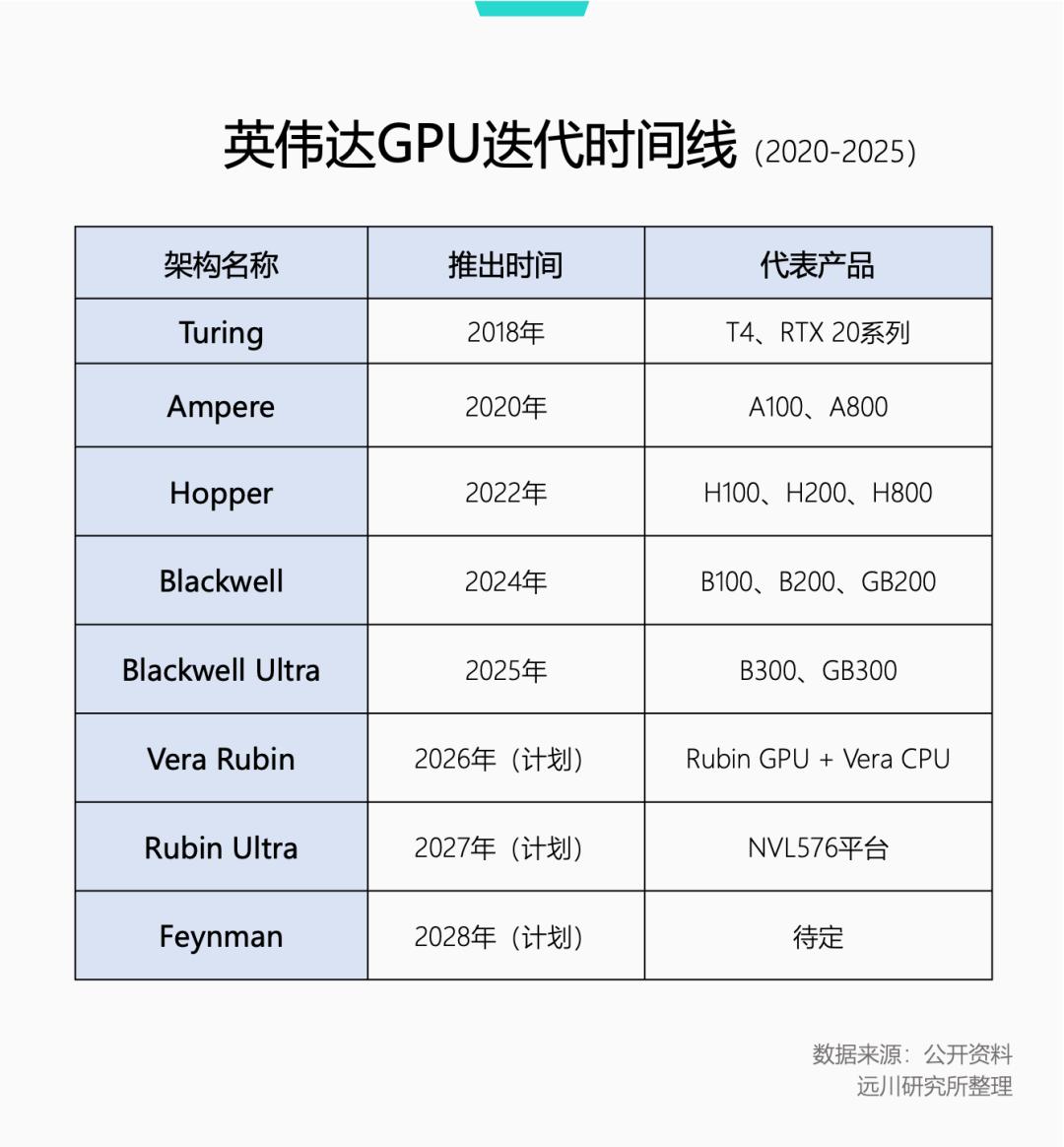
However, in the current market environment of extreme imbalance between supply and demand, these "theories" seem to have started to fail.
Coreweave CEO Michael Intrator revealed last year that all of its A100 chips (released in 2020) have been fully sold, and a new batch of H100 chips (released in 2022) has also been fully booked at 95% of their original price [3].
Regarding the controversy over this 8.5 billion USD loan earlier this year, Intrator was dismissive in an interview with Forbes, "Of course I'm going to borrow money [4]." Another co-founder, Brannin McBee, casually added, "There's no risk at all [4]."
In their view, if everything goes according to plan, Coreweave will not only preserve the value of its GPUs but also generate certain profits.
In February this year, Amazon — the first computing giant to extend the GPU depreciation period — shortened the useful life of some of its servers from six years back to five years, citing a study that found "the pace of technological advancement is accelerating, especially in the fields of artificial intelligence and machine learning."
Other giants have also begun to speak ambiguously. Microsoft stated in its annual report last year that the useful life of its equipment ranges from two to six years. Such a flexible range is certainly not due to a guilty conscience.
But no matter how giants and capital judge the lifespan of GPUs, they cannot stop this wave of speculation from intensifying.
GPU Brokers
If there had been no AI boom, companies like Coreweave would most likely not have survived to this day.
In the early years when Coreweave started its cloud service business, the entire market was already dominated by the three giants Amazon, Microsoft, and Google. At that time, CPUs were still the absolute main component of data center servers.
The sudden AI boom made the GPUs that had been gathering dust in Coreweave's warehouse suddenly become extremely valuable overnight.
Traditional cloud giants did not stockpile enough GPUs — not even enough for their own large model training — leaving AI companies with no access to chips. This made companies like Coreweave the first choice for GPU resources.
As a "Preferred Partner" of NVIDIA, Coreweave and similar companies can get priority access to GPU quotas, with a higher priority even than cloud giants. In 2024, Microsoft, as Coreweave's largest customer, accounted for more than 60% of Coreweave's annual revenue with its orders.
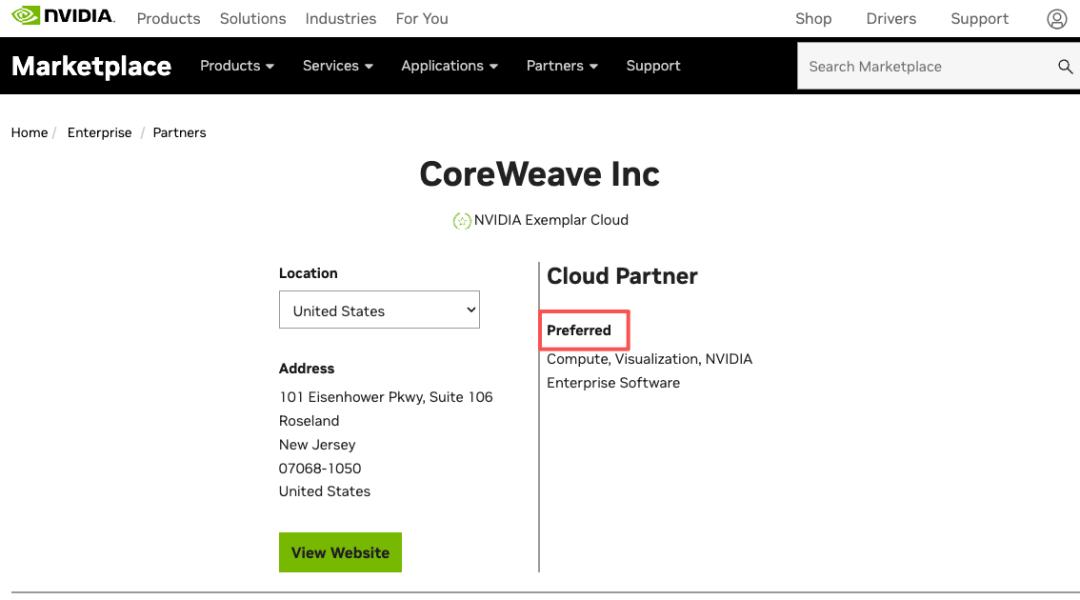
Coreweave is a NVIDIA-certified Preferred Partner
The former "heavy asset junk" has turned into a "new tech favorite", but everyone knows their real core competitiveness — "having a good relationship with NVIDIA".
In March 2025, Coreweave went public successfully, with its stock price surging over 300% within three months. Lambda Labs' valuation skyrocketed from 200 million USD to 6 billion USD within two years, which infuriated senior, well-respected veteran analysts.
Research institution New Constructs slammed Coreweave as "Rotten to the Core" [5], and D.A. Davidson analyst Gil Luria bluntly stated, "If NVIDIA doesn't want it to exist, it cannot continue to exist [4]."
Legendary short seller Jim Chanos argued that Coreweave is not even a tech company, but rather an equipment leasing firm and a financial company. He earnestly warned, "Don't apply magical valuations to mediocre business models [6]."
What most draws Wall Street's criticism towards Coreweave and similar companies is their snowballing, ever-increasing debt and their "never turning positive" net profit.
In the first quarter of 2026, Coreweave's total liabilities skyrocketed from less than 20 billion USD a year earlier to over 50 billion USD. The high interest expenses brought about by these debts have left Coreweave in a loss-making state to this day, with the losses showing a growing trend.
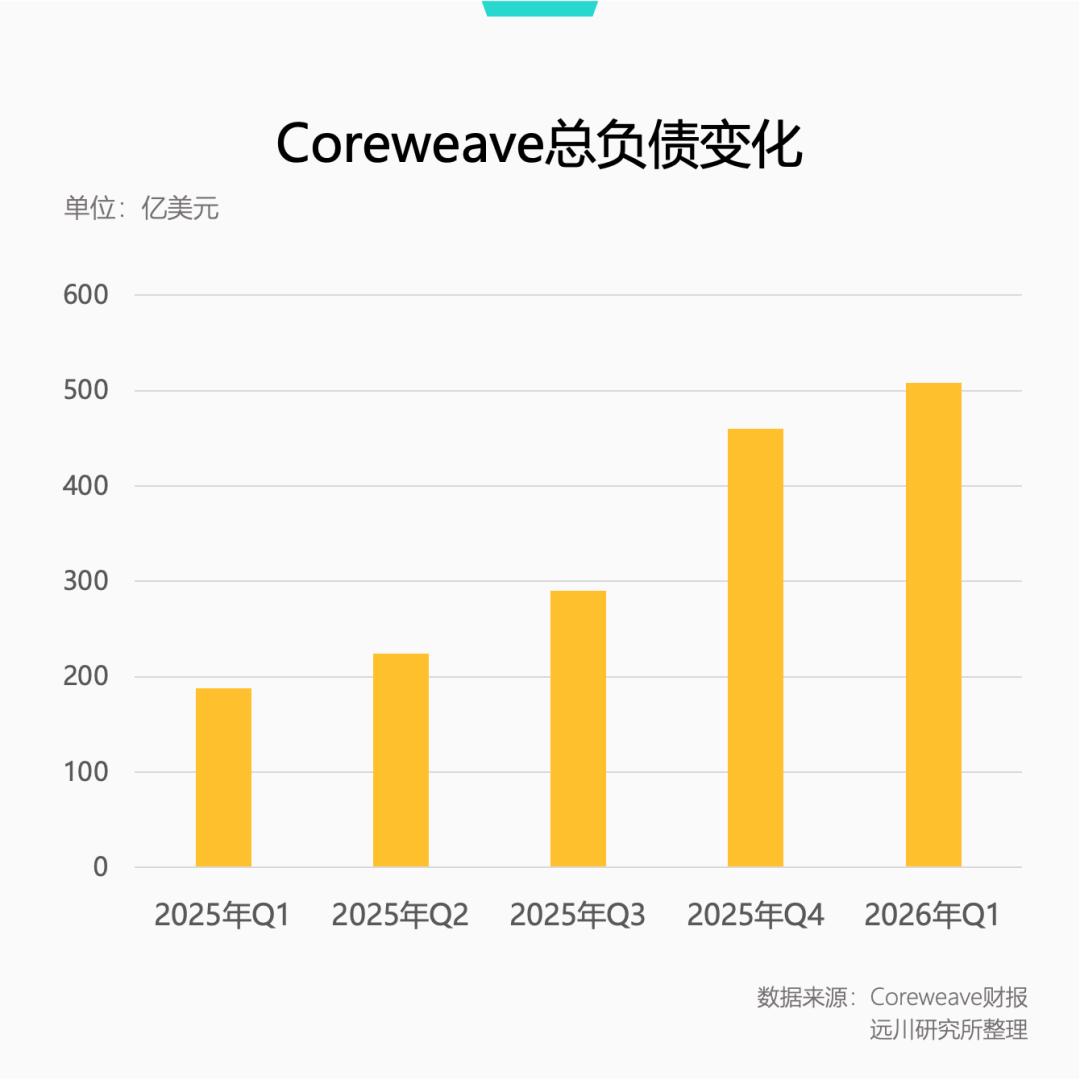
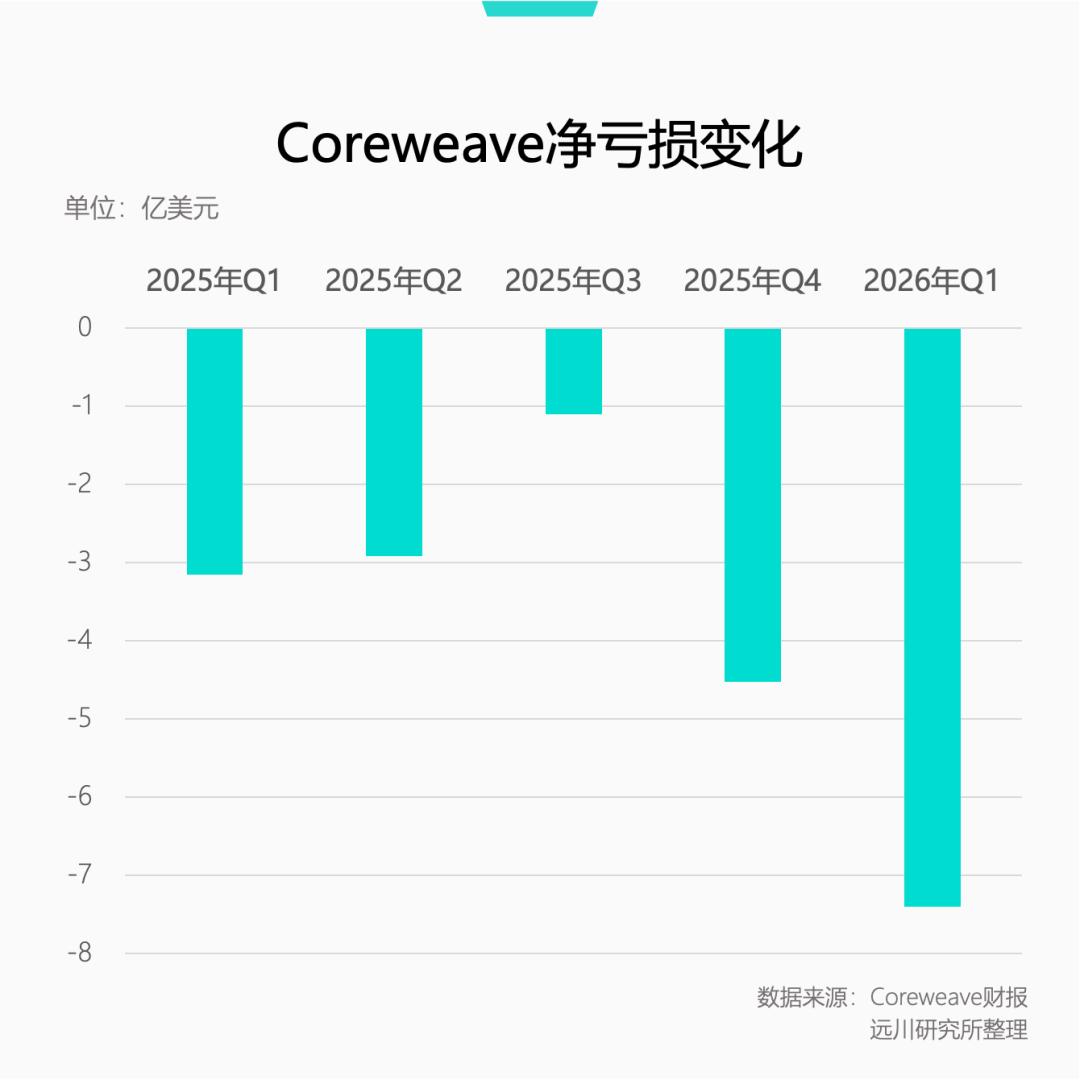
Its counterpart Lambda Labs is also in "continuous strategic losses", and Nebius, the latest entrant, added 4 billion USD in liabilities in a single year to catch up quickly.
The accumulating debt is the price to maintain competitiveness: borrow more money to stockpile more assets, then rent out the assets to earn revenue from the price difference to repay loans, and reinvest. The last industry that operated this way was real estate.
This business model has been described by analysts as the "GPU Debt Trap", where capital requirements keep growing, but the company never reaches the scale needed to achieve profitability.
Chanos argues that this business model of "immediately investing all rental income earned today into the next generation of more expensive hardware" will result in shareholders never seeing real free cash flow dividends. Even in the current situation of extreme supply shortage, the expected pre-tax return on investment for owning data centers and chips is only between 5% and 8% [6].
By the end of the first quarter, Coreweave's remaining performance obligations (RPO) reached an unprecedented 99.4 billion USD, and Nebius also signed a 27 billion USD forward supply agreement with Meta in May. All of these have encouraged Coreweave and similar companies to be bolder in leveraging to purchase more GPUs.
The rental income they received has not even warmed up in their wallets before being poured into the ever-increasing capital expenditures.
CoreWeave set its full-year 2026 capital expenditure at 31 billion to 35 billion USD, more than doubling from 2025. Lambda Labs also explicitly stated that it will use all the billions of dollars from its latest financing to expand its computing power centers.
To be fair, companies like Coreweave are just minor players in the entire industry. Their survival or demise will not affect the overall industry landscape. However, their prosperity projects the illusion of "perpetual scarcity of computing power" brought to the industry by the rapidly expanding market.
Conversely, when this illusion is shattered, these companies will be the first to collapse.
Shattering the Illusion
The one that shattered the illusion of Coreweave and similar companies was Meta.
On the first day of July, foreign media broke the news that Meta planned to rent out its idle AI computing power. Shortly after, a recording of an internal company meeting was leaked, where Mark Zuckerberg admitted that AI R&D progress was slower than expected.
The combined effect of these two pieces of news directly crashed US chip stocks. As the direct targets of the impact, both CoreWeave and Nebius saw their share prices drop by more than 10%.
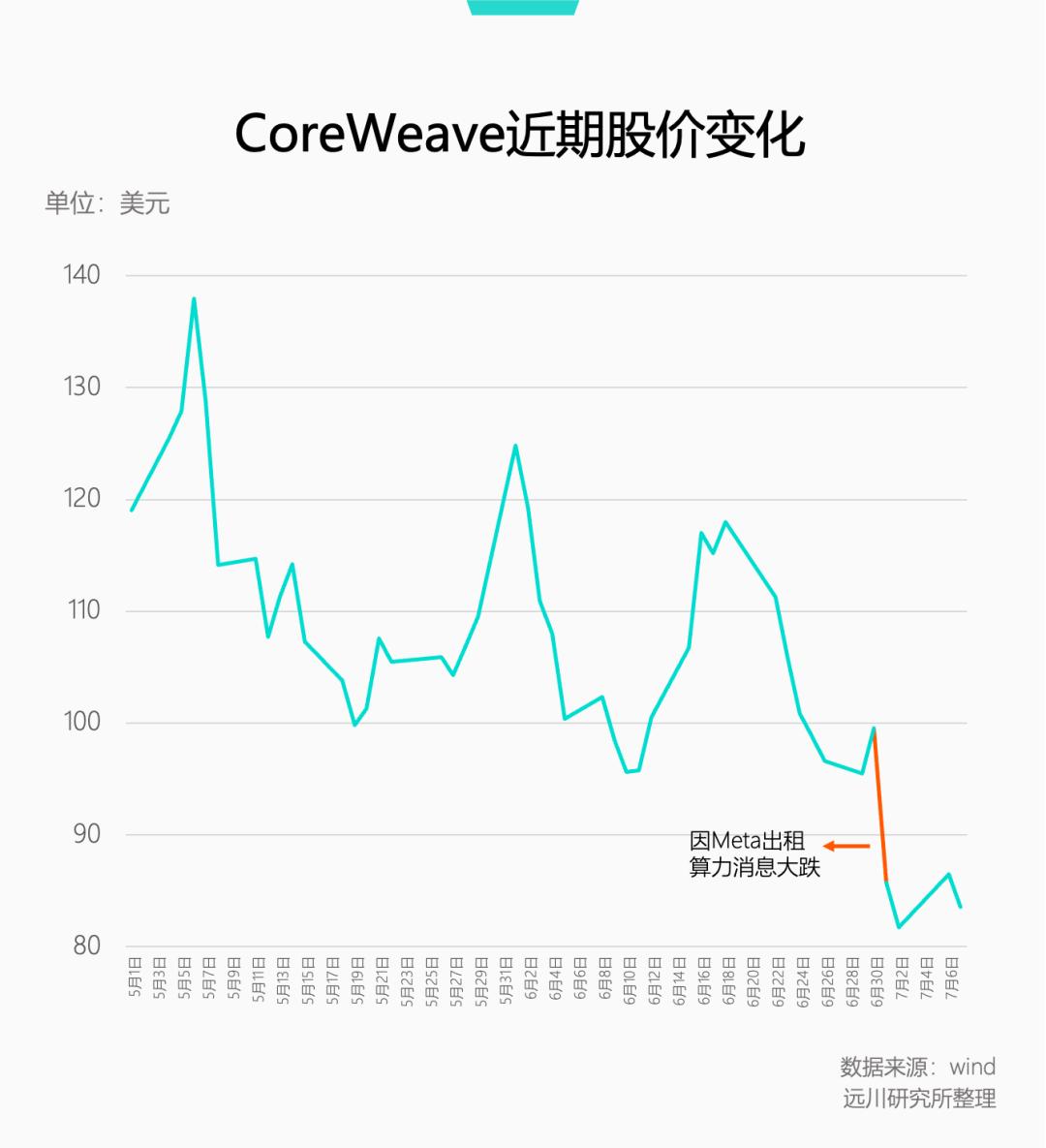
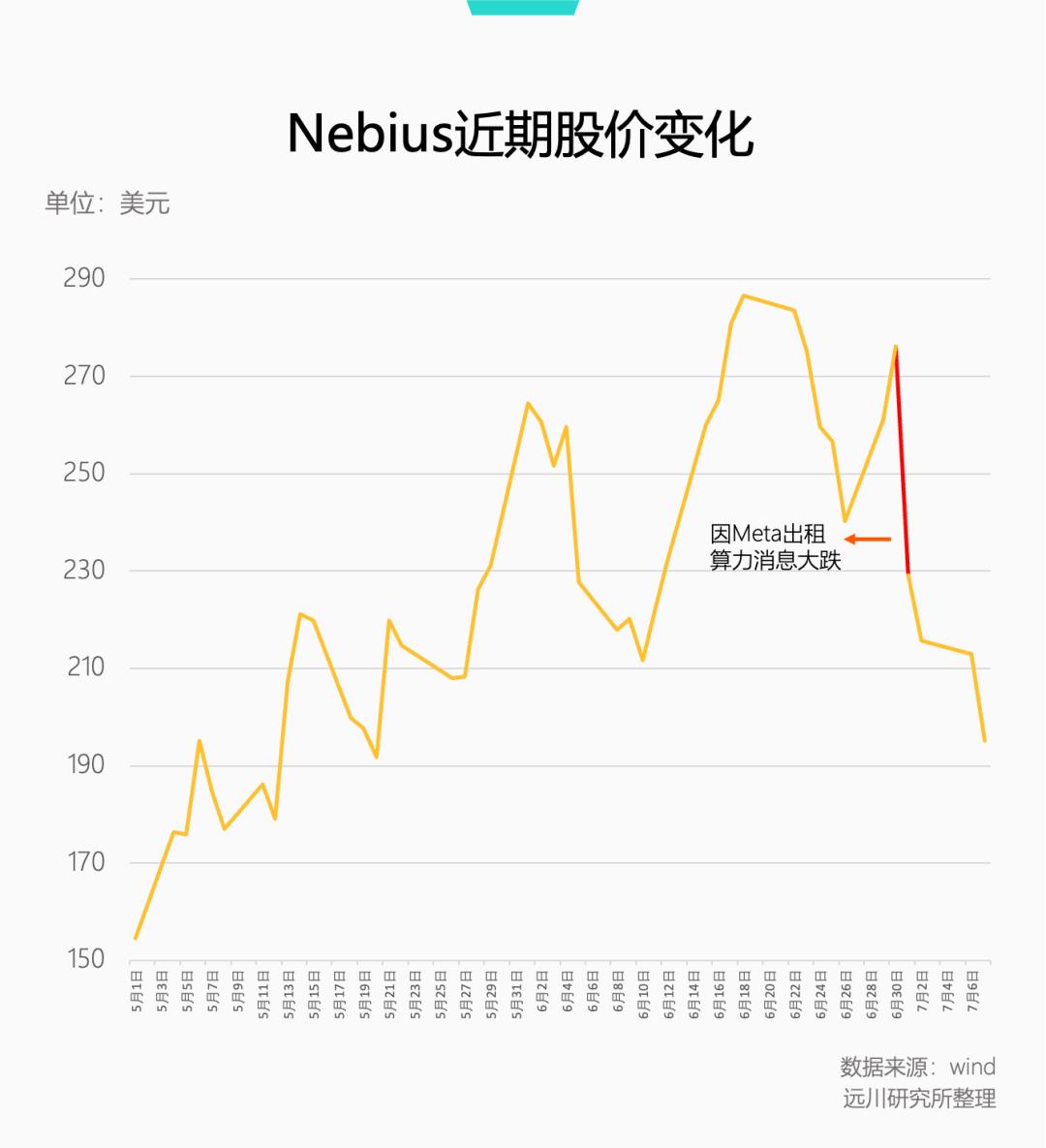
The reason for such a huge impact is first because Meta occupies a special position in the industry ecosystem.
Although Meta is one of the five major hyperscalers, unlike Amazon, Microsoft, and Google that can use cloud service revenue to amortize data center expenses, all of Meta's self-built data centers serve its own business, and advertising accounts for almost all of its revenue.
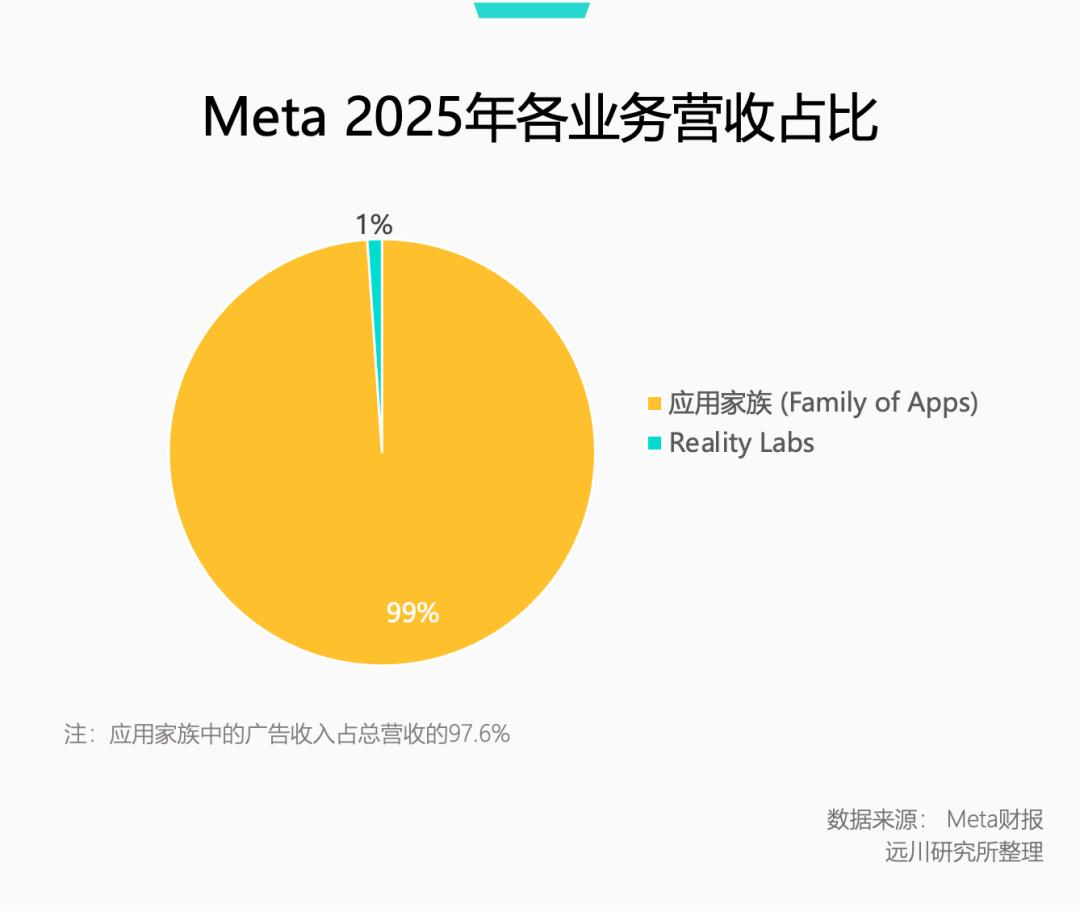
Therefore, Meta's business situation can more "dehydratedly" reflect the real supply and demand situation of the entire industry.
Meta's aggressive hardware investments over the past few years are well known. Jensen Huang once commented on this big customer, "No company has deployed AI on a larger scale than Meta." Now that this aggressive player wants to lie back and collect