Yu Jiahui hands in his paper, Meta MSL releases a series of image/video models
Zuck's Billion-Dollar Club Just Got a New Addition!
Following the Muse Spark launch back in April this year, MSL has unveiled its second major model update since its founding:
The image model Muse Image, led by Jiahui Yu, is officially released, with the video model Muse Video launching in preview simultaneously.
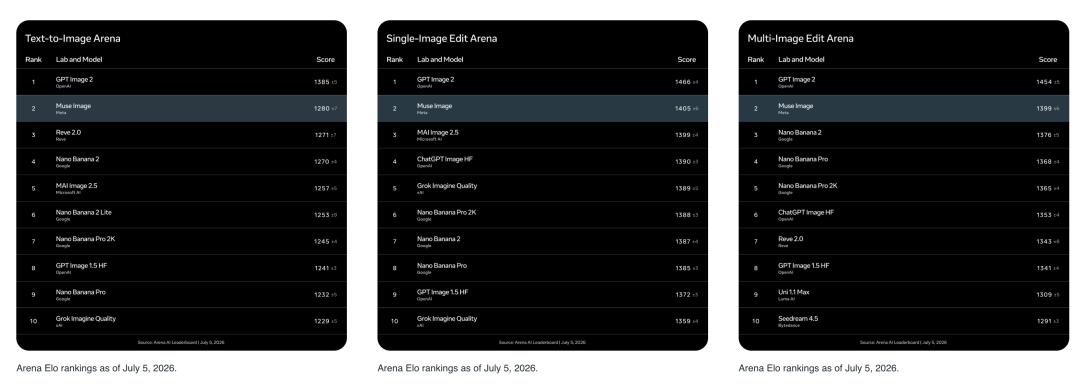
Looking at benchmark rankings, Muse Image took 2nd place in three Arena categories: text-to-image, single-image editing, and multi-image editing, outperforming Google's Nano Banana and landing right behind OpenAI GPT Image 2.
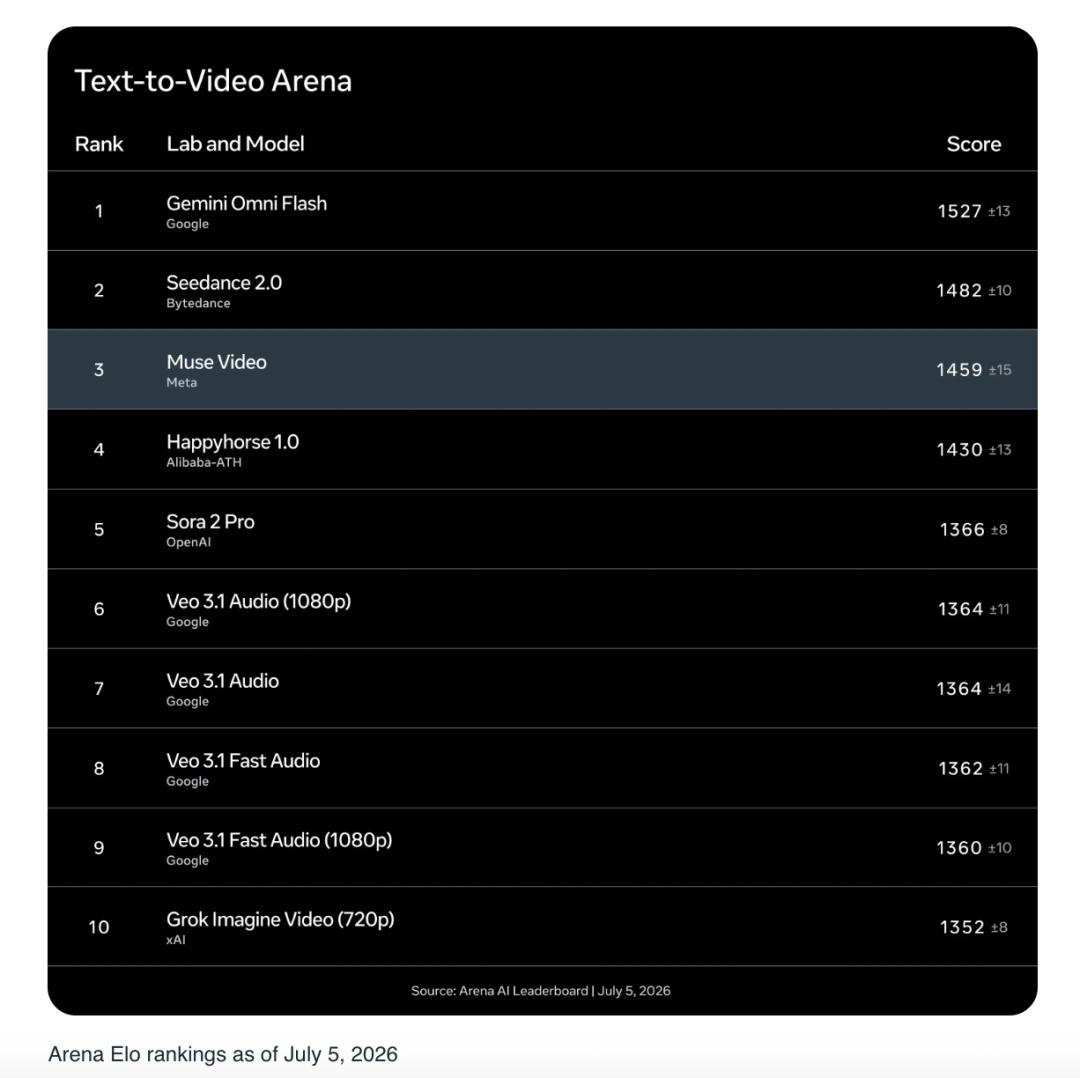
Muse Video landed 3rd on the text-to-video leaderboard, ranking behind Google Gemini Omni Flash and ByteDance Seedance 2.0, securing a spot in the top tier of the field.
For Meta's generative AI division, which had stayed relatively quiet for a while, this counts as a very high-profile comeback.
Draw Images Like an Agent
Muse Image follows a different approach from standard text-to-image tools on the market.
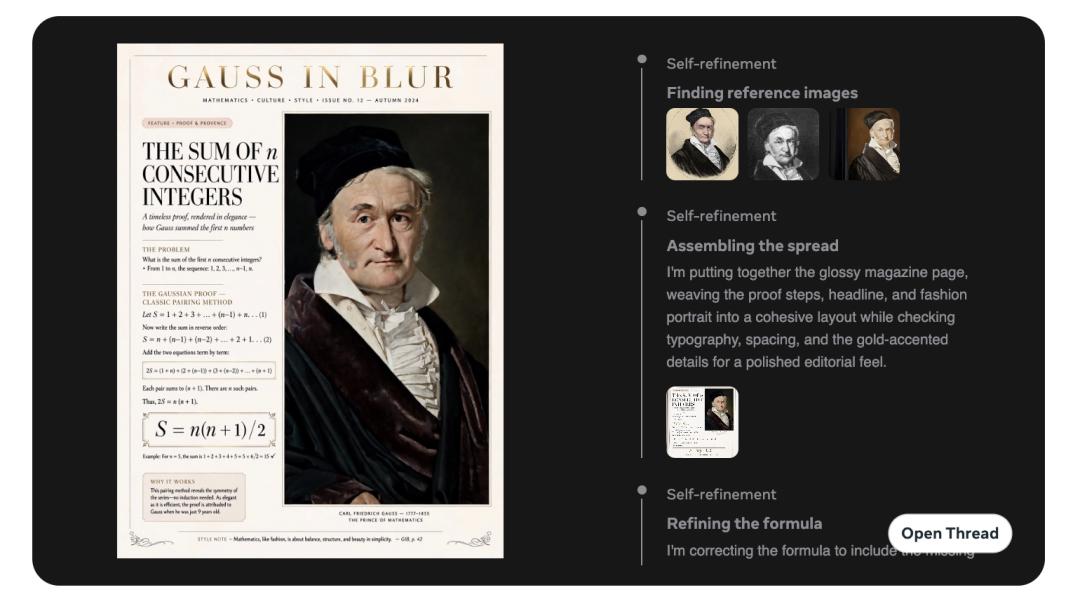
After receiving your request, it won't rush to generate a draft directly — instead, it first breaks down and organizes the full creative workflow.
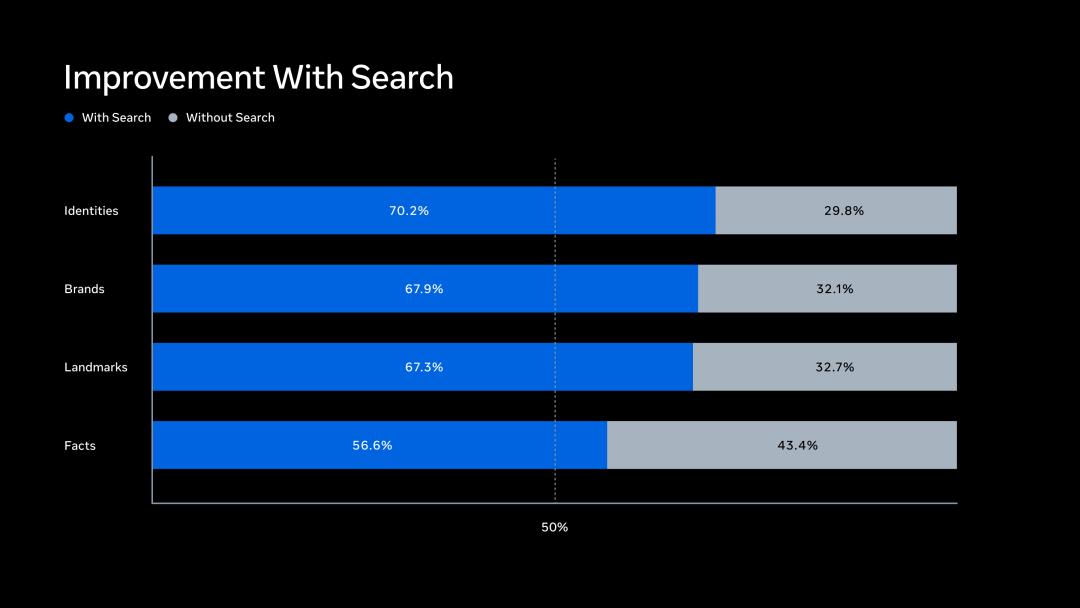
For content that cannot be accurately generated by the model's own reasoning, it will proactively call supporting tools for assistance. For example, if you ask it to "draw what Times Square in New York looks like today", it will actually access the internet to retrieve the latest real-world reference materials.
When handling visuals that require precise numerical presentation, such as charts and formulas, it can independently write code for calculation.
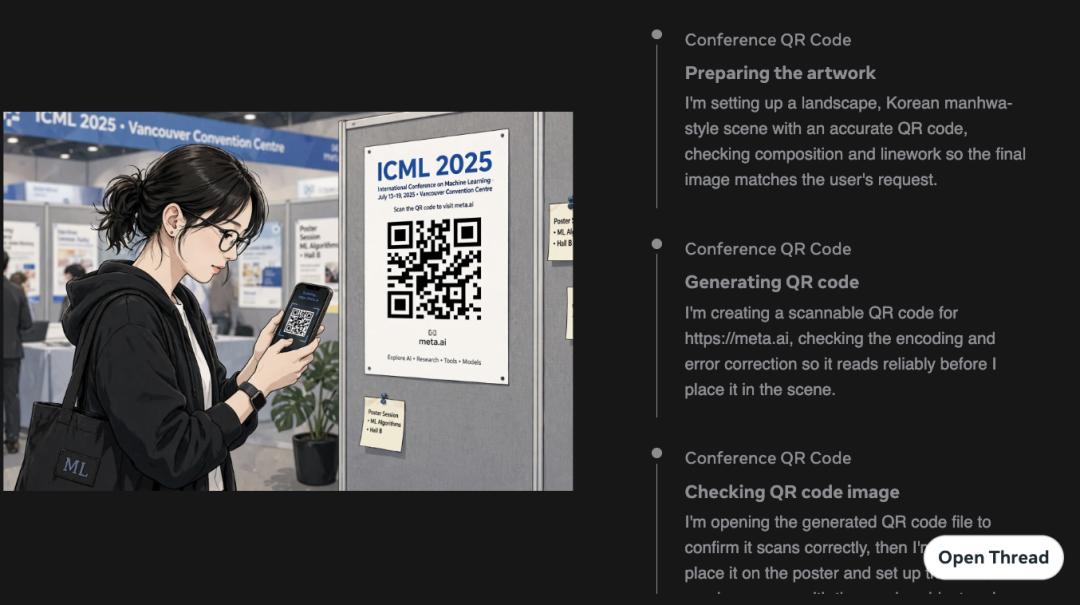
Even the QR codes it generates are fully functional and scannable in real use.
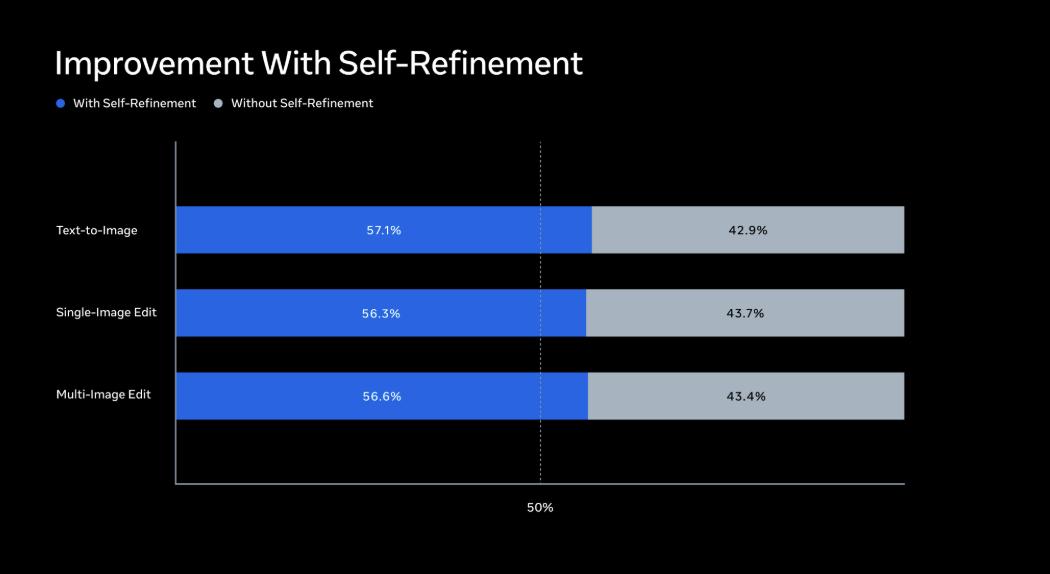
After the entire image is drafted, it will conduct a full review of all visual details, iteratively revise any inconsistent or flawed areas, and only deliver the final output once the image's logic and details meet full quality standards.
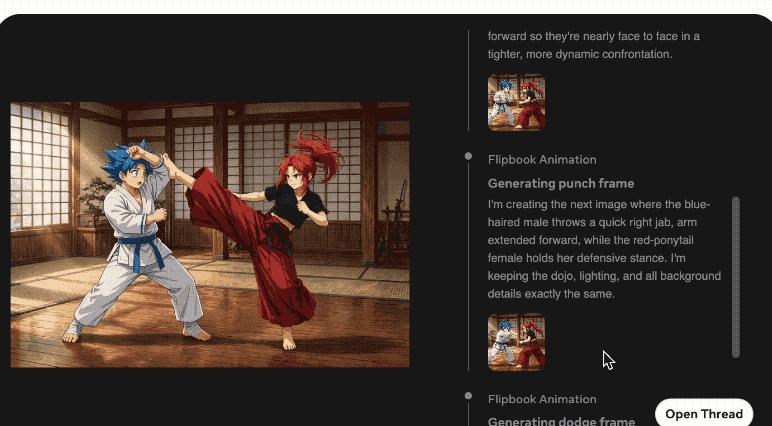
Meta calls this full workflow Agentic Image Generation.
This means it is far more than a regular image generation tool: Muse Image itself acts as a full-capability Agent.
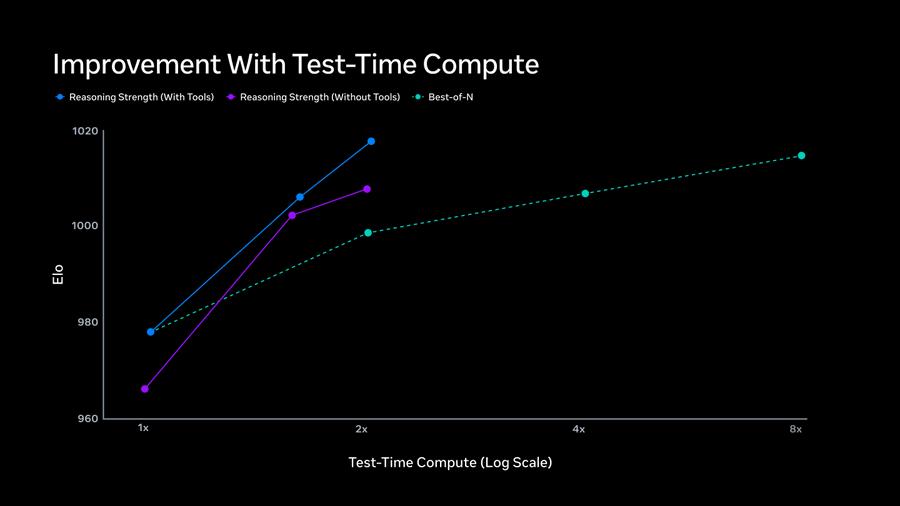
The Meta team also discovered a consistent pattern during internal testing:
The more sufficient reasoning and thinking time allocated to the model, the better the final visual quality of the generated image. Image quality continues to improve along a nearly log-linear curve.
The Muse Spark large language model launched a few months ago can also deeply integrate with Muse Image, sharing the full toolchain to collaboratively complete complex creative tasks.
For example, to build a small interactive game, the two models can divide work and cooperate: one writes web interaction code, while the other generates supporting visual assets, eventually outputting a complete web page with dynamic GIFs and embedded images, expanding the creative scope far beyond generating a single static image.
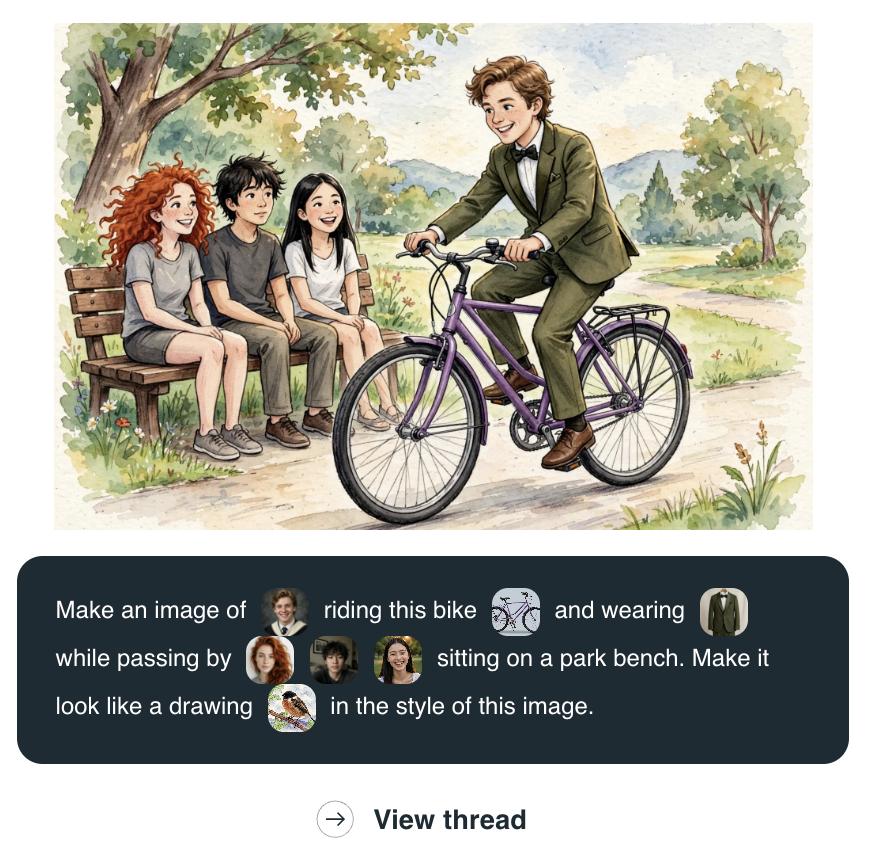
In daily use scenarios, Muse Image supports multi-reference image composition.
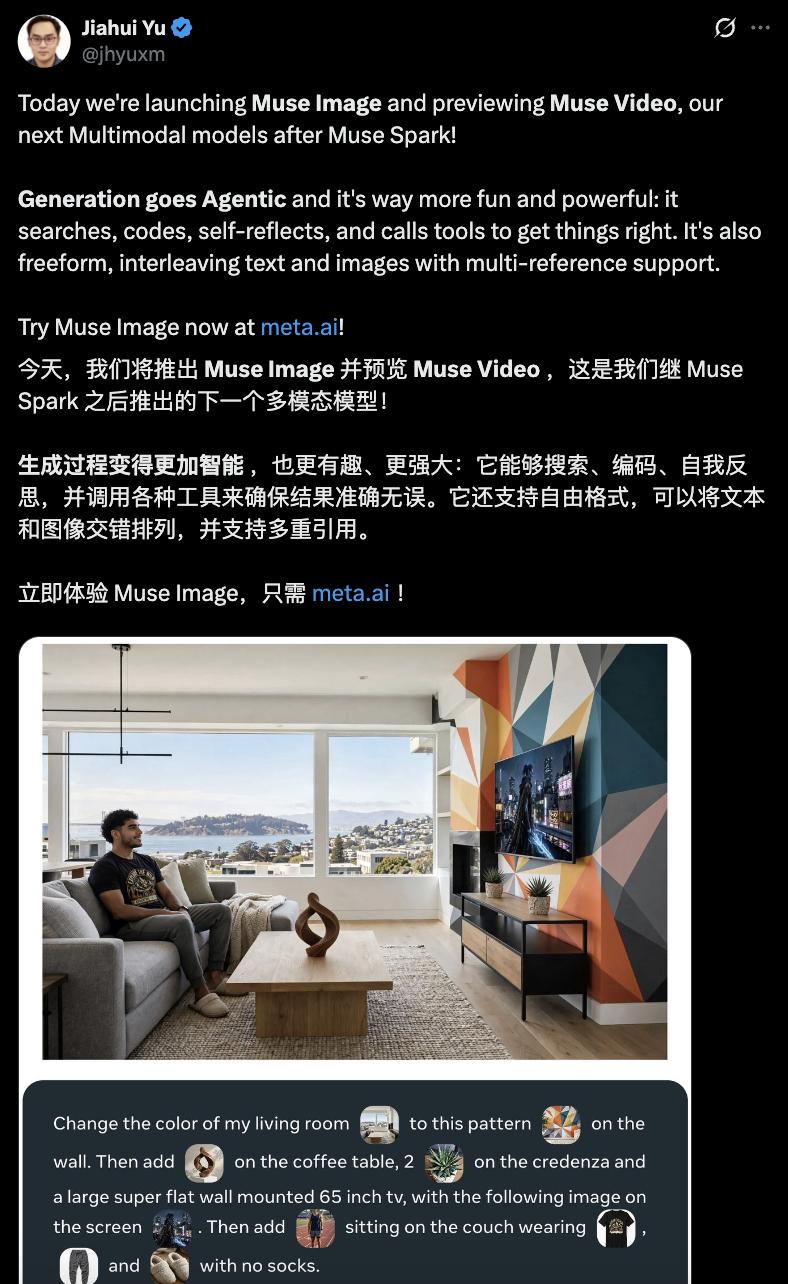
You can upload a personal photo, a landscape photo you like, and a reference outfit photo, and the model will place you in that landscape wearing the selected outfit.
The most impressive feature is that prompts support mixed text and image inputs, for example:
Draw a picture where the person in "this_person.jpg" is wearing the outfit in "this_clothes.jpg" and sitting at the location in "this_place.jpg".
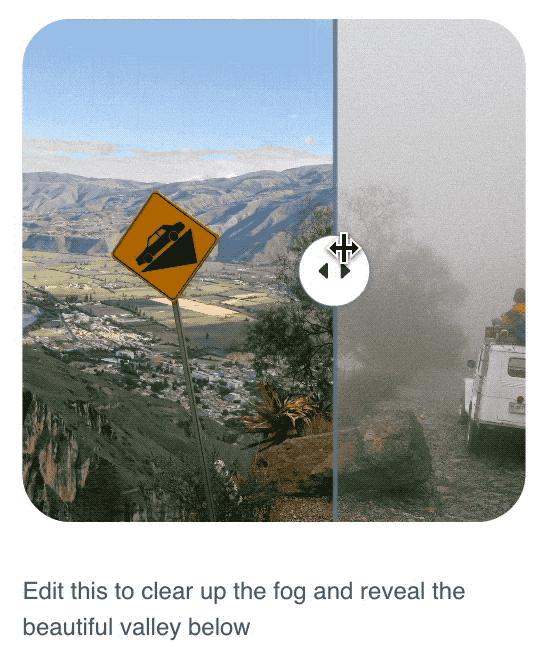
Its editing functionality is also robust, and multiple rounds of revisions will not make the output increasingly deviate from your original intent.
There is also a standout feature: you can @ your Instagram friends.
You can @ a friend with a public Instagram account in your prompt, and Muse Image will pull the publicly shared photos posted by that user.
Or you can @ small e-commerce merchants to quickly generate marketing visuals with a consistent brand style.
It also comes with built-in exclusive personalized creative templates that can be directly accessed with one click within Instagram without jumping to external apps, perfectly adapted for daily social media post images.
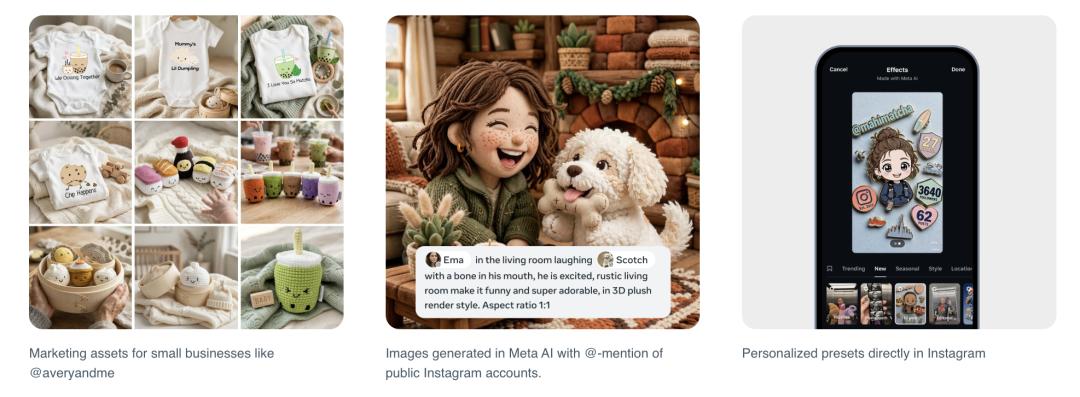
Meta calls this Native Social Context, which integrates the social graph directly into the image model architecture.
Of course, privacy concerns cannot be overlooked. Meta's solution ensures that any Instagram user can opt out in their settings, to prevent others from using their public photos for AI derivative creation.
Additionally, all AI-generated images are embedded with the Content Seal invisible watermark, which cannot be removed by cropping, compression, or screenshotting.
For Muse Video, the official has not yet released full details.
It is trained on the same foundational architecture as Muse Image, with high visual fidelity, native audio support, competitive prompt understanding, and strong temporal consistency performance.
Areas that still need improvement include audio-video synchronization and physical accuracy for high-speed motion scenes, with a full public launch scheduled for the coming months.
Team Introduction
The MSL vision team includes many talented Chinese researchers.
For example, Shengjia Zhao, MSL Chief Scientist and overall lead of the full Muse series foundational technology, earned his bachelor's degree at Tsinghua University and his Ph.D. at Stanford University.

After graduating in 2022, he joined OpenAI directly, and participated in the full pre-training process from the original ChatGPT to the o3 model.
He joined Meta in June 2025. In July, Mark Zuckerberg officially announced his appointment as MSL Chief Scientist, where he now oversees the technical roadmap for the full Muse series foundational models.
Jiahui Yu, the Multimodal Lead of Meta MSL, is an alumnus of the University of Science and Technology of China's Special Class for the Gifted Young, and earned his Ph.D. at UIUC.
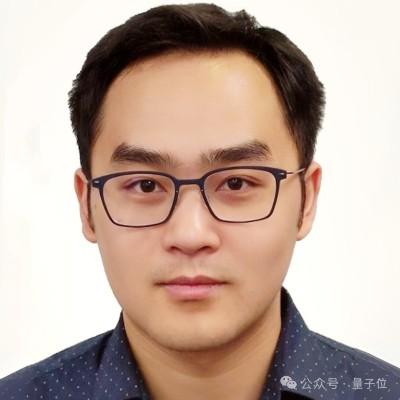
While at Google, he served as co-lead of Gemini's multimodal vision team. After joining OpenAI in October 2023, he worked as the Perception Team Lead, contributing to projects from GPT-4o to o4-mini, as well as the "image-based reasoning" research initiative.
He joined Meta alongside Shengjia Zhao in June 2025, and the newly released Muse Image and Muse Video are the R&D outcomes advanced by the team he leads.
This article is sourced from the WeChat Official Account QbitAI, written by Wen Le, and republished by 36Kr with official authorization.