Shunyu Yao and Hy3: Can They Cross the Paywall Threshold?
With the official release of Hy3, that conversation between Yao Shunyu and Tang Daosheng a month ago has resurfaced repeatedly in discussions related to Tencent's AI initiatives.
At the Tencent Cloud AI Industry Application Conference in early June, Tang Daosheng, Senior Executive Vice President of Tencent Group and CEO of Cloud and Smart Industries Group, held a stage dialogue with Yao Shunyu, Tencent's Chief AI Scientist.
When addressing external doubts about Tencent's AI development pace, Yao Shunyu said to Tang Daosheng, "It feels like this should be the question I ask you." What sounded like a joke at the time now appears, in hindsight, to be a public demonstration of the internal division of responsibilities within Tencent's AI ecosystem.
Yao Shunyu is tasked with delivering results on whether model capabilities can catch up; Tang Daosheng and more of Tencent's business teams must provide answers on whether these model capabilities can translate into industry integration, product value, and revenue.
Tencent did not start late with AI products, but its external recognition in the general large model space has long remained relatively weak, a situation that can be partially observed through its flagship product Yuanbao. In February 2025, Yuanbao integrated the full-power version of DeepSeek-R1, allowing users to switch between Hunyuan and DeepSeek-R1.
Since then, the Hunyuan team has generated some public attention, but it has mostly focused on image, video, and 3D generation. The Hunyuan Image, Hunyuan Video, and Hunyuan 3D series have seen discussions around benchmark rankings, open-source releases, and community download volumes, but this buzz has not naturally translated into a user perception that Tencent has strong general large model capabilities.
This lukewarm state of affairs was finally called out by Ma Huateng earlier this year.
At Tencent's General Meeting of Shareholders in May, Ma Huateng described Tencent's AI situation with the phrase, "We boarded the ship, only to later find it leaking; now we are standing on it, but not yet settled in." He acknowledged that Tencent's early foundational AI capabilities were not outstanding, and the company began openly admitting that it was playing catch-up.
It is against this backdrop that Yao Shunyu was pushed to the forefront.
At the end of last year, Tencent upgraded its large model R&D architecture, newly establishing the AI Infra Department, AI Data Department, and Data Computing Platform Department. Yao Shunyu was appointed as Chief AI Scientist in the "CEO/President's Office," while concurrently serving as head of the AI Infra Department and the Large Language Model Department.
This March, Tencent disbanded AI Lab, with some personnel reassigned to the Large Language Model Department to join the Hunyuan team and report to Yao Shunyu.
Hy3 achieved high scores in testing, but its practical performance remains to be observed in real-world applications. However, in the face of doubts about falling behind, Yao Shunyu and the Hunyuan team have at least helped Tencent AI secure its first layer of public positioning.
1
Hy3's submission first manifests as Tencent finally delivering model results that can be validated by its products.
Tencent disclosed that Hy3 has been integrated into products including WorkBuddy, CodeBuddy, Yuanbao, Marvis, and ima; since the preview launch, daily average token consumption has increased 20-fold.

On WorkBuddy, the number of users who voluntarily selected Hy3 preview increased 6-fold. In internal evaluations of Hy3 in WorkBuddy's office scenarios, task success rates rose from 72% to 90%, with average task duration reduced by 34%. After Yuanbao launched file delivery powered by Hy3, its common-sense error rate was cut in half, and hallucination rates dropped by more than half.
At Tencent Cloud's conference in June, Yao Shunyu noted when discussing the relationship between models and products that "practical value outweighs benchmark performance value." The official Hy3 version beginning to form feedback loops within the product ecosystem seems to be a true reflection of this statement.
ima and Marvis also provide similar supporting evidence.
Public reports show that ima's knowledge base Q&A reasoning quality has improved by nearly 19%, with its Agent system stability reaching 95.1%; Marvis's core scenario task completion rate has risen to 93.7%, and multi-Agent collaboration dispatch accuracy hits 92%.
Even in the earlier Hy3 preview version, some evaluations had already revealed the design philosophy behind the Hy3 series.
A technical blog post on the Hugging Face community tested Hy3 preview within the WorkBuddy scenario. The assigned task required the model to process a technical manual exceeding 100 pages, first extracting structured knowledge from the long document, then automatically designing 10 in-depth test questions, and finally packaging the questions, scoring system, and answer explanations into a single-file HTML game.
In long-text understanding and code generation tasks, Hy3 preview processed information quickly, could comprehend complex instructions, and break down complex tasks into clear steps. During the text extraction phase, it accurately captured key information from long documents; in the code generation phase, the generated results were bug-free and ran successfully on the first attempt.
This evaluation case explains why the Hy3 series is better suited for observation in long-chain office tasks like those in WorkBuddy.
At the June conference, Yao Shunyu explained his reason for joining Tencent by stating that the company has "many meaningful problems and many products." In his view, after pre-training and post-training, the ultimate answer to where models should be applied and what value they create must come from products.
The official Hy3 release represents the first centralized validation of this judgment, as well as the first major public achievement following the restructuring of Tencent's Hunyuan team.
A month ago, Tang Daosheng asked Yao Shunyu at the conference what specific changes Hy3 preview, his debut project at Tencent, had implemented.
Yao Shunyu replied: "Three main points: First, rebuilding the infrastructure for both pre-training and reinforcement learning; second, overhauling data and evaluation, redefining more realistic problems, enriching the data taxonomy, and improving data quality; third, many decisions are taste-driven, with no clear-cut formula."
Yao Shunyu's mention of "defining realistic problems" — as evidenced by extensive feedback from real-world task scenarios released for Hy3 — shows that the focus of this generation of model updates is enabling model capabilities to support real tasks, an area where Tencent previously had relatively poor alignment.
Yao Shunyu also mentioned at the conference that the team had dispatched their "strongest post-training backbone" to assist Yuanbao with post-training work.
He noted that pre-training was not yet ready at the time, and many algorithm engineers did not understand the decision. But in hindsight, this move made the product team realize that the model team was genuinely invested in product success, and played a crucial role in the launch of Hy3 preview on Yuanbao.
He then added: "Technical discussions are possible, but the hardest part is building trust and practicing empathy."
This detail, to some extent, gives the external world a clearer image of the top leader of a large corporation's model team: this leader is not only a technical expert but must also drive collaboration between the model team and product teams.
Tencent, which has placed its full support behind Yao Shunyu, has also spared no effort to amplify his external influence.
In January, Yao Shunyu attended the award ceremony for Tencent's Qingyun Scholarship to present awards to young researchers. The inaugural Qingyun Scholarship provided 15 young scholars with total support valued at 500,000 RMB, including 200,000 RMB in cash and 300,000 RMB in cloud heterogeneous computing resources.
In June, Tencent launched the 2026 Qingyun Program, setting technical research topics in directions including large AI models, foundational architecture, and high-performance computing, to support young talents in participating in cutting-edge projects for Hunyuan, WeChat, and Tencent's game business.
The first layer of public positioning that Yao Shunyu has established for Tencent AI is the image of a team dedicated to meticulously refining the model foundation. The birth of Hy3 finally gives Tencent AI a verifiable phased achievement.
2
For Tencent, Hy3 is clearly a much-needed answer. But within the broader large model industry, there are still several shortcomings that need to be addressed.
In particular, Yao Shunyu himself once proposed the concept that "only the strongest models will generate paying users."
In January this year, at the AGI-Next Summit hosted by Tsinghua University, he stated when discussing the To B market: "Higher intelligence represents higher productivity, and greater premium potential."
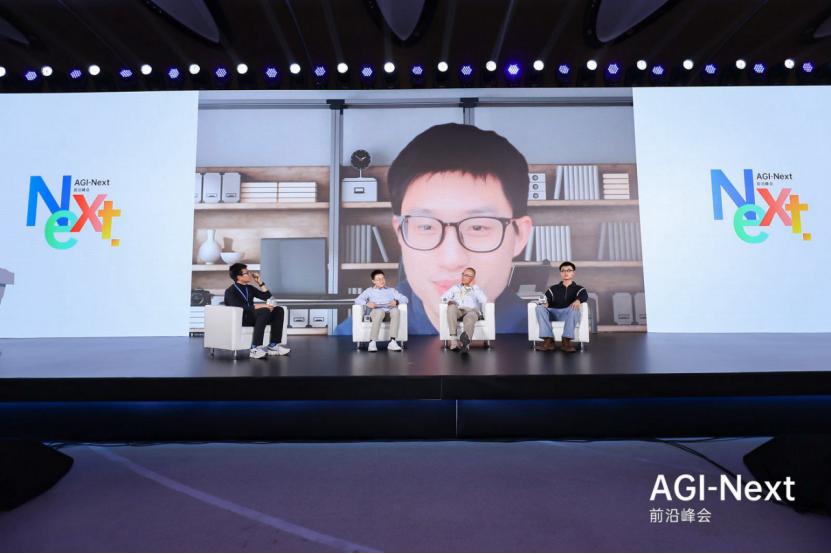
Tencent's Chief Scientist noted that enterprise market willingness to pay for model capabilities follows a top-heavy distribution. Weaker models introduce debugging and monitoring costs in high-frequency productivity scenarios such as programming, with hidden costs potentially exceeding the price difference between models.
Looking back today, this statement has conversely become a source of pressure for Hy3.
In Tencent's blind evaluation of 270 experts performing real work tasks, Hy3 scored an average of 2.67/4, higher than GLM-5.1's 2.51/4. This result demonstrates Hy3's progress, but the comparison target is the previous-generation model of a competitor.
GLM-5.1 is no longer Zhipu's latest flagship product; the current GLM-5.2 features a 1M context window, as well as stronger capabilities in coding, Agent operations, and long-range tool invocation.
In other words, Hy3 proves Tencent has made some headway in catching up, but there remains a gap to the top tier of domestic models.
At the June conference, when discussing cost-effectiveness, Yao Shunyu also prioritized performance as the primary standard. He noted that many users eventually find that using high-performance models like Opus is more cost-effective than using weaker alternatives, as they complete tasks correctly faster and save human effort.
He further elaborated that cost-effectiveness first depends on "performance": if performance is poor, cost-effectiveness cannot be achieved, and cost only comes second.
This statement can also be used to evaluate Hy3: low pricing and low activated parameters are certainly key to attracting mass users, but enterprises ultimately pay for the ability to get tasks right on the first attempt.
On this point, Hy3 still needs validation in more real-world B2B scenarios.
The second capability boundary of Hy3 is the absence of native multimodality, an issue that has long been discussed across iterations of the Hy general-purpose model series.
As an Agent capability foundation focused on office scenarios, users in real life do not always provide text-only inputs. Scenarios include PPT layout modifications, Excel chart recognition, and various icon statuses on web backend interfaces.
If Hy3 cannot directly understand visual inputs, it must rely on collaboration with the Hunyuan multimodal model or other OCR tool layers.
This shortcoming is particularly sensitive in Tencent's application scenarios, especially since Hy3 may also be integrated into C-end user scenarios such as WeChat. The materials users provide to AI are often not clean text, but even screenshots.
Meanwhile, Tencent's competitors in the Hunyuan ecosystem have long invested in native multimodal solutions.
A few weeks ago, Volcano Engine released Doubao 2.1 Pro. Public reports indicate it has been upgraded in three key areas: coding, Agent operations, and VLM. The launch event also showcased an RTL test case for chip design, where the model ran continuously for nearly 18 hours, completing 9 iterations and successfully passing simulation, testing, and comprehensive checks.
In a 3D virtual city case, powered by Doubao 2.1 Pro, over 500 intelligent Agents operated in sync, completing thousands of tool invocations and generating more than 100 buildings.
Meanwhile, Alibaba's recently updated Qwen3.7-Plus continues the multimodal Agent model that unifies vision and language, supporting image, video, screen, webpage, and text inputs, as well as task execution in GUI, command line, and tool environments.
In comparison, Hy3 can only be described as a language model submission.
Again at the June conference, when discussing the future of AI, Yao Shunyu stated that AI is a long-term game, with "the second half only just beginning." He also mentioned that coding Agents, multimodality, and embodied intelligence will continue to evolve.
However, based on the capabilities Hy3 currently demonstrates, Tencent has obtained a ticket to enter the second half, but not yet the final answer.
In the competitive landscape of the AI industry, models serve as the foundation for all capability boundaries, but they cannot address every challenge a company faces in developing its AI business.
3
Yao Shunyu has delivered Hy3 as a phased submission, but whether Tencent AI has truly accelerated its pace will depend on how Tencent as a whole amplifies the capability advantages of this generation of models.
Looking back, Yao Shunyu's line "It feels like this should be the question I ask you" was not only directed at Tang Daosheng. It was also posed to Ma Huateng, to the WeChat team, and to all business lines eager for AI empowerment. Whether the application layer can make users perceive tangible changes is more important than releasing technical parameters.
Yao Shunyu once wrote in *The Second Half* that the second half of AI will shift from "solving problems" to "defining problems." Applied to Tencent, this raises another question: Tencent has a massive business ecosystem spanning WeChat, games, advertising, office productivity, and cloud services — what AI problems do these businesses need to define?
Over the past three months, Tencent has accelerated development simultaneously in both B2B and C2C segments.
In June, the Tencent Cloud AI Industry Application Conference released an intelligent efficiency agent toolkit. For individual users, it upgraded QClaw, WorkBuddy, Yuanbao, ima, and Tencent Docs; for enterprise users, it launched the enterprise version of WorkBuddy and upgraded ClawPro, ADP, and Tencent Marketing Cloud.
With the launch of Hy3, all these products now have access to a new-generation foundational model.
Hy3 has already begun integrating into some of Tencent's business scenarios. In dedicated evaluations for WeChat Official Accounts' AI avatar and customer service functions, intent recognition accuracy rose to 98.94%; WeChat Read's tag labeling accuracy improved by 14.1% compared to the Hy3 preview version; after integrating Hy3, the AI game assistant for *Path of Exile: Ascension* on WeGame saw its comprehensive success rate for multi-round reasoning and tool scheduling rise to 92%, with hallucination rates dropping from 4.5% to 2.8%.
These figures show that Hy3 is beginning to spill over into Tencent's core ecosystem, but this is not yet sufficient. Whether WeChat, games, advertising, and enterprise services can turn Hy3 into high-frequency use cases will determine if Tencent AI can evolve from a phased achievement to a long-term competitive positioning.
At the May shareholders' meeting, Ma Huateng noted that Tencent has already "stood on the ship" but has not yet "settled in." The inability to settle in is not solely due to insufficient model performance. A more practical issue is whether the application layer can translate model capabilities into new user experiences and incremental business value.
Meanwhile, competition in the AI cloud market where cloud providers directly face off has grown increasingly intense.
ByteDance's Volcano Engine previously disclosed that daily average token invocations for its Doubao large model have exceeded 180 trillion, growing more than 10-fold over the past year. IDC data shows Volcano Engine holds 49.5% of China's public cloud MaaS market share, with model invocation volume now a core part of market perception.
According to Omdia's *China AI Cloud Market Share 2025* report, China's AI cloud market reached approximately 56.7 billion RMB in 2025. Alibaba Cloud ranks first with a 38.1% share, Volcano Engine second at 20.4%, followed by Baidu Cloud, Tencent Cloud, and