Don't worry about AI taking your job. Your boss might find you a better deal after crunching the numbers.
Here's some good news: for now, you don't need to worry too much about losing your job to AI.
Because once bosses run the numbers, they'll realize you might deliver better value for money.
Back in March this year, Jensen Huang dropped a line: "If an engineer making $500,000 a year doesn't consume at least $250,000 worth of Tokens annually, I'd be deeply troubled." That single remark pushed the world's absurdity to a whole new level.
Companies began encouraging employees to burn as many Tokens as possible, and even baked Token consumption into their performance KPIs.
Two months ago, an employee at a major Chinese tech firm shared a post on Xiaohongshu, showing off his department's March Token consumption leaderboard. He also mentioned that future employment confirmation after probation, year-end performance bonuses, and promotions would all be tied to Token usage metrics.

Overseas companies are just as crazy.
Silicon Valley tech firms have embraced the internal "Tokenmaxxing" culture. At Meta, for example, employees built a "Claudeonomics" dashboard to track Token consumption across the company's roughly 85,000 workers. Data showed that in just 30 days, the entire company burned through over 60 trillion Tokens.
Even Disney, a company that rarely touches tech, launched an AI Adoption Dashboard on its internal network to track employee AI usage.
Gradually, this trend took a weird turn. Token consumption even became a social status threshold: if you didn't use enough, you couldn't get into the "in crowd".
Everyone got swept up in this race.
It seemed like everyone assumed from the start that AI was a perfect tool for cutting costs and boosting efficiency, so they went all in without a second thought.
Then the bill arrived, and they realized it wasn't working out that way... "Cutting costs and boosting efficiency" turned into "cutting costs and causing amusement".

Recently, per Bloomberg, Uber implemented a new rule: when employees use AI coding tools like Anthropic's Claude Code or Cursor, the monthly spending cap per person per tool is set at $1,500.
The key point isn't the number itself, but that Uber is actively imposing restrictions.
Back in December last year, to keep up with the trend, Uber generously granted Claude Code access to all 5,000 of its engineers and even set up an internal leaderboard to track usage.
The original goal was to get everyone to embrace the new era. But before they could even settle in, Uber's CTO revealed that the company burned through its entire annual Claude Code budget in just four months.
So Uber had to take emergency measures to hit the brakes. Only special business scenarios approved through multiple layers of review can now exceed the $1,500 limit.
At the same time, Microsoft is also taking action.
They're busy recalling Claude Code licenses from employees in the E+D (Experiences and Devices) department. Before June 30, everyone must switch over to Microsoft's own GitHub Copilot CLI.
Officially, they're framing this as a platform integration, noting that Claude models will still be accessible via GitHub Copilot. But a The Verge report cited sources saying financial considerations played a big part in the decision.

Because after June 30, Microsoft kicks off its new fiscal year.
Beyond Microsoft and Uber, Axios broke an even bigger story: one company that didn't set usage caps on employee Claude licenses burned through $500 million in a single month.
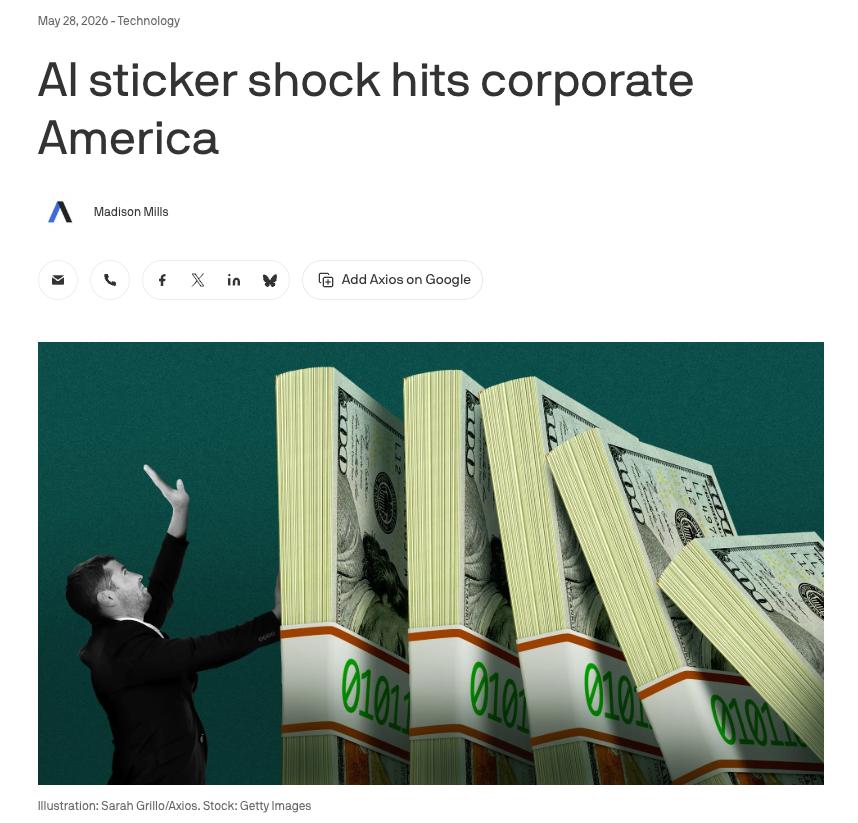
While no specific company was named, the massive scale of this Token consumption immediately pointed fingers at big Silicon Valley tech giants.
Coincidentally, the day after Axios published the story, Amazon shut down its internal "Kirorank" AI leaderboard, with executives declaring "Don't use AI just for the sake of using AI".
It's hard not to suspect they're the ones who dropped $500 million in a month. Amazon was previously extremely aggressive, requiring over 80% of its developers to use AI weekly, which led employees to pull off all kinds of meaningless stunts to hit the numbers.
It's the classic Goodhart's Law: when a metric becomes a target, it ceases to be a good metric.
Fortunately, this farce of Token worship didn't last very long.
Once the bills came out, everyone snapped back to reality and started asking a more fundamental question: Is all this money being spent on Tokens actually worth it?
It's undeniable that companies initially letting employees burn Tokens freely was partly an experiment.
No one really knew how much value AI could deliver, so if it showed real results, spending some money on it seemed reasonable.
But the reality is often that Tokens flow like water from a faucet, yet there's no tangible business value to show for it — or at least no clear way to measure that value.
Even Uber COO Andrew Macdonald said in an interview that it's hard to find a correlation between "higher Token consumption" and "new feature launches".
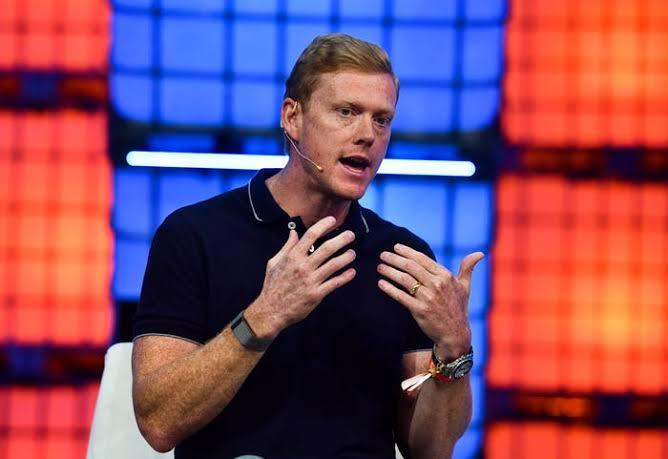
In other words, Token consumption can't be directly equated to actual output value.
AI reading your request, understanding it, thinking through it, and generating the content you want all consume Tokens. That means every interaction burns Tokens, but the output isn't always useful.
Once you realize that, chasing a "Token consumption leaderboard" starts to look pretty silly.
It's like a newsroom where word count is the main KPI. Reporters could just ramble on with endless filler text to hit their targets.
To meet performance requirements, employees could easily ignore their real work and instead get AI to spit out useless, bloated code, or use AI for tasks that humans could do faster.
At the end of the day, the Token consumption numbers are off the charts, but no real business progress has been made.
miHoYo once ran a multi-agent collaboration project where 13 AI agents did absolutely nothing useful for 13 hours — they just kept calling each other, chatting nonstop, and burned through 2 million RMB overnight.
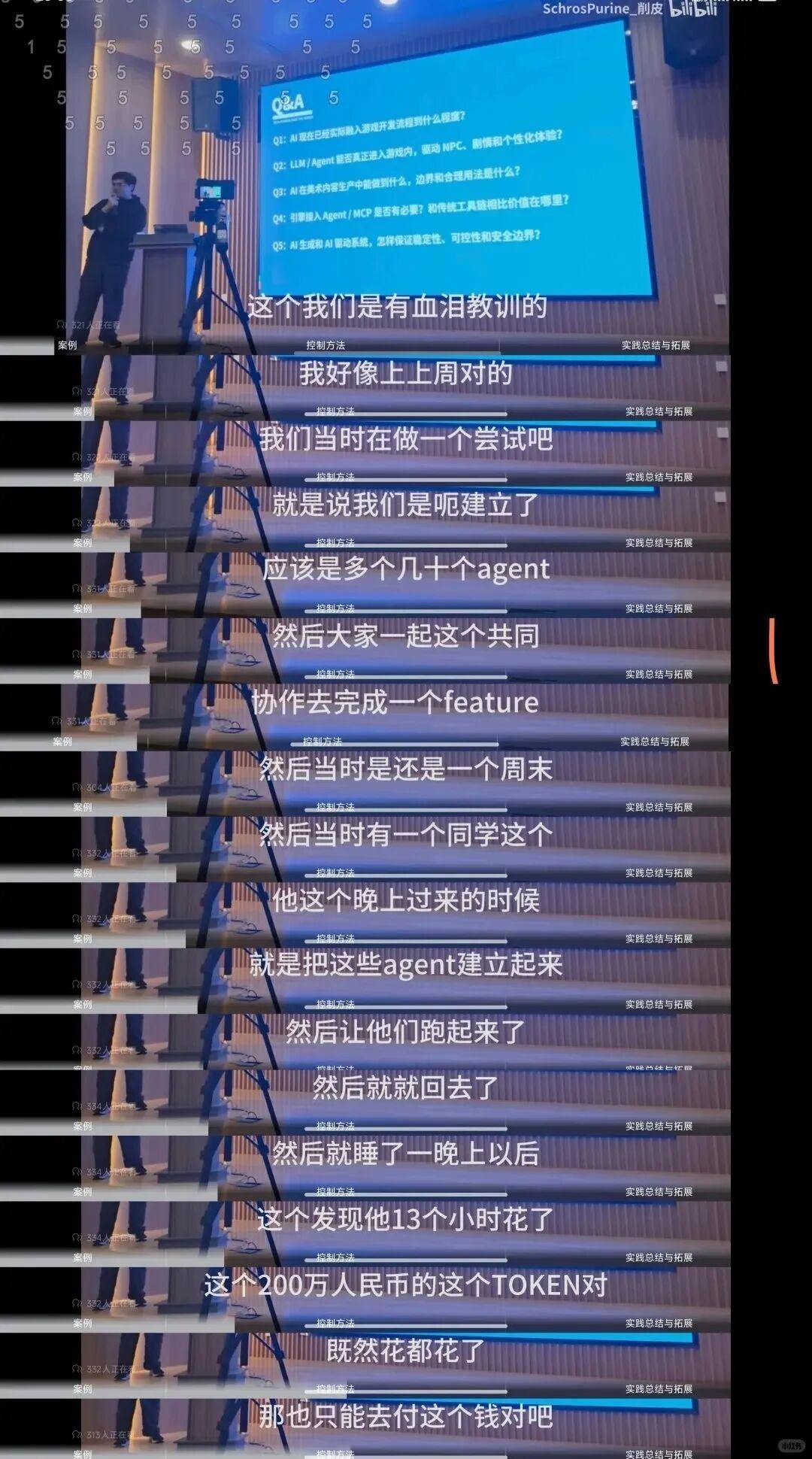
And it's not just at the corporate level. In developer and everyday user circles, showing off how many Tokens you've burned has become a trend. It's like the bigger the number, the more skilled and "geeky" you seem.
But honestly, I've seen a lot of people brag about their massive Token usage, yet rarely seen any real results to show for it.
Not long ago, Peter Steinberger, the developer of OpenClaw, shared a bill showing his team burned through $1.3 million in a month — and got called out online for not delivering anything substantial.
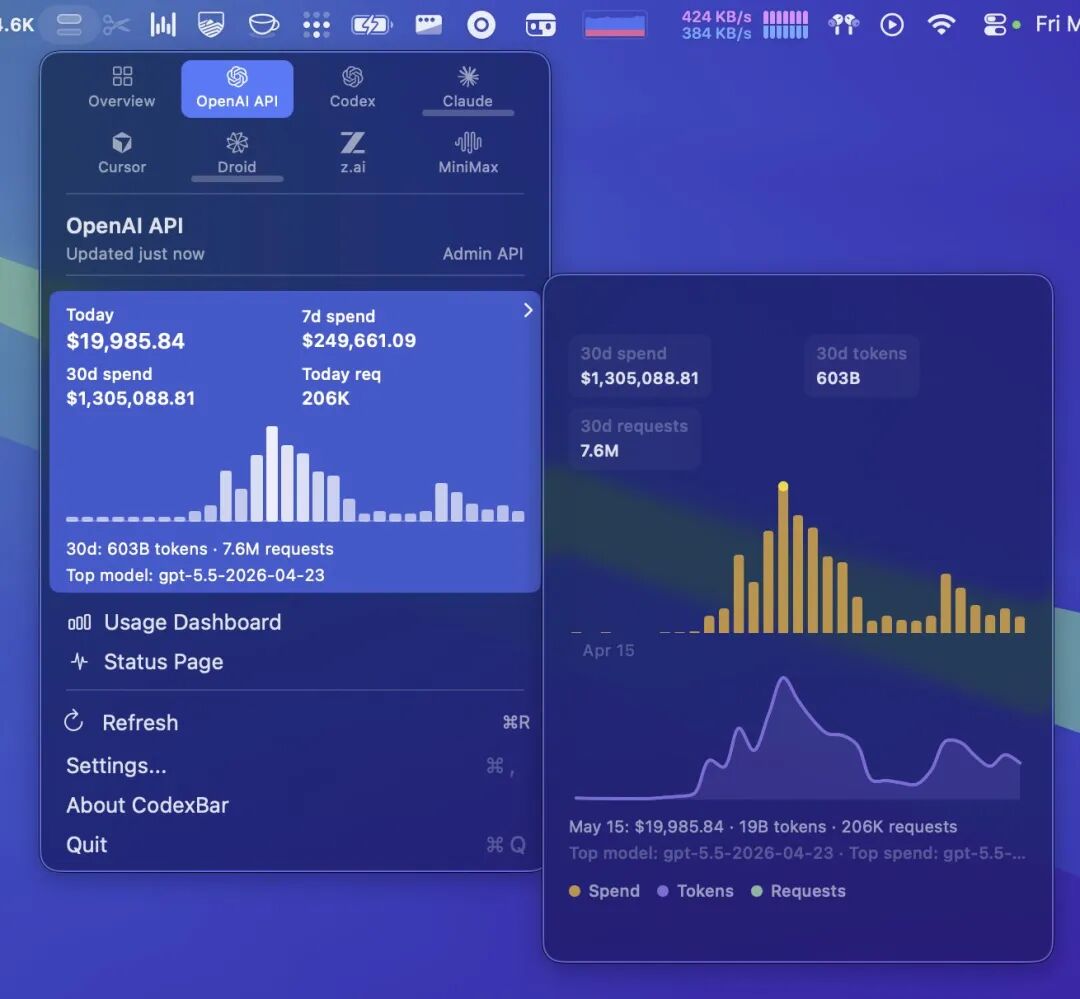
While Peter insisted all that spending went toward OpenClaw, I can't help but notice that the product hasn't exactly dropped any earth-shattering new features lately.
The awkward truth about Token consumption right now is that it only proves the LLM is working — not that you're using it productively.
It's like how people once criticized GDP for not fully reflecting real economic conditions, so economists later developed supplementary metrics to fill the gaps.
So until we clarify the link between Token consumption and actual output — or find a way to accurately quantify the real value of AI's work — blindly forcing employees to use AI is just throwing money at LLM vendors.
Even without extreme cases like miHoYo's 2 million RMB burn, the math still doesn't add up.
Because AI can't fully replace humans right now; it's still just a supporting tool. That means the real cost of adopting AI for a business is "employee salary + AI compute cost".
The real workflow often becomes: an employee submits a request, AI generates some rough draft content, then the employee spends ages re-trying and fixing errors. Tokens keep burning nonstop through this process, and in the end, it might even be more expensive than just hiring two interns.
When you do the math, it's not clear whether cutting staff or using AI saves more money.
Goldman Sachs predicts that by 2030, global monthly Token consumption will surge 24 times from 2026 levels, reaching 1,200 quadrillion.
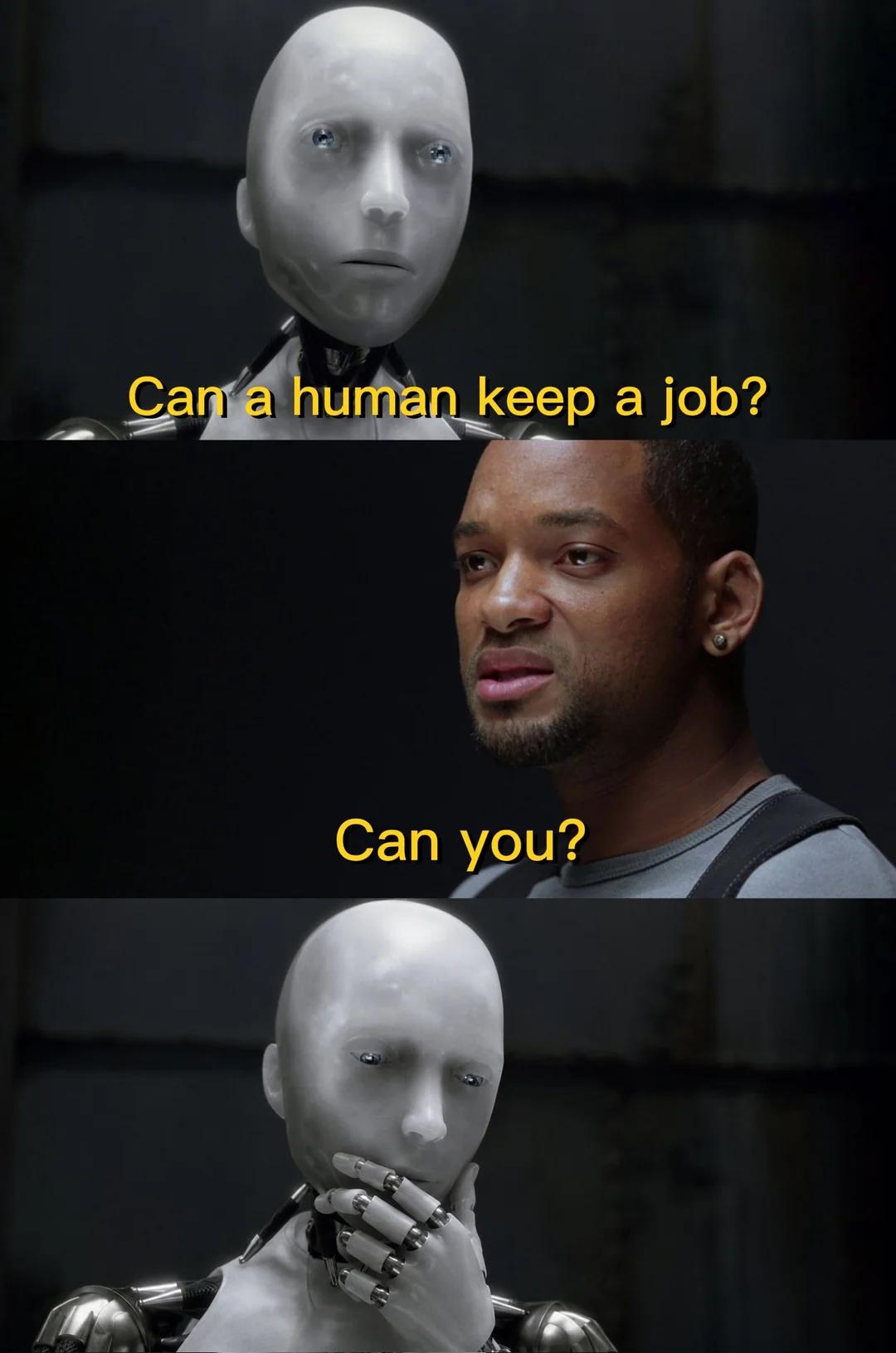
We used to think AI would replace highly repetitive low-end jobs, but from a cost perspective, these low-end positions are actually the safer ones right now.
Overall, the industry is starting to regain its senses, moving away from mindlessly chasing high Token consumption.
Major Chinese tech firms like Tencent are reportedly already setting limits on employee Token usage. After their initial experiments, companies are realizing that Token usage needs to be tied more closely to actual output.
At the same time, some SaaS companies are changing their pricing models.
For example, marketing platform Hubspot revised its pricing in April, shifting from per-Token charging to performance-based billing.
Recently, I attended an event in Suzhou where Dong Wang, Vice President of Kingsoft Office, shared a thought-provoking point: Enterprise AI deployments should focus on "dual-high scenarios" — high-value and high-difficulty use cases.
In plain terms: use your best tools where they're needed most.
In the end, this Token worship fad came and went fast, but it still leaves me with mixed feelings.
Because Tokens are so expensive, people joke online: "When you make your employees work overtime, you don't always have to pay them extra. But when you make AI work overtime, every cent of that bill is non-negotiable."
One day, if capitalists realize that hiring humans is more cost-effective than using AI — won't that be a kind of sad irony for us?
Image and source credits:
X (Twitter), Bloomberg
Xiaohongshu user: @Shou Man
Axios: AI sticker shock hits corporate America
Tech Insider: Burning 2 million RMB worth of Tokens in one night — miHoYo learns a costly lesson
Some images sourced from the web
This article is from WeChat official account "X.PIN", written by Xixi, edited by Jiang Jiang & Mian Xian, republished with authorization from 36Kr.