The first domestically developed card-training and inference trillion-parameter large model in China, open source
Reported by Zhidx on July 6, Meituan today announced the open-source release of its trillion-parameter large model LongCat-2.0, alongside the simultaneous opening of inference code deeply optimized for domestic computing chips. This model boasts a total parameter count of 1.6 trillion with an average activation of approximately 48 billion parameters, making it the industry's first trillion-parameter model to complete full-process training and inference on a 50,000-card domestic computing cluster.

▲ LongCat-2.0 Open-Source Release (Image Source: GitHub)
According to officially published data, LongCat-2.0 demonstrates strong comprehensive capabilities. It scores 59.5 on SWE-bench Pro, which assesses deep engineering capabilities, outperforming Gemini 3.1 Pro (54.2), GPT-5.5 (58.6), and Claude Opus 4.6 (57.3); it scores 77.3 on SWE-bench Multilingual for programming language evaluation, on par with Claude Opus 4.6 (77.8); and it achieves a score of 70.8 on the real-terminal instruction interaction benchmark Terminal-Bench 2.1.
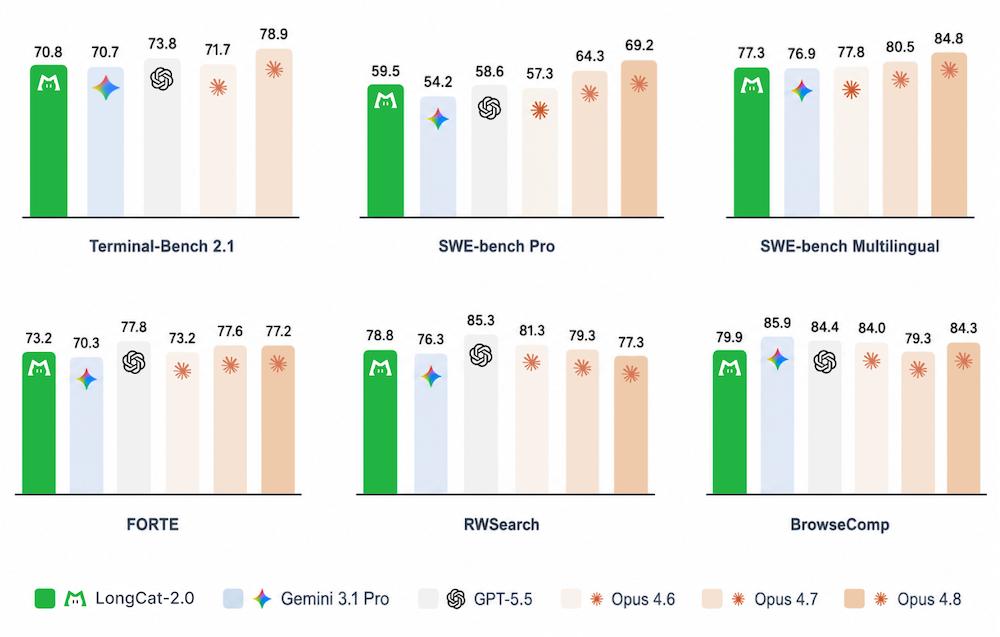
▲ Score Comparison Between LongCat-2.0 and Other Models (Image Source: LongCat)
In terms of real-world task performance, LongCat-2.0 scores 78.8 on the search agent benchmark RWSearch, 73.2 on the productivity scenario evaluation FORTE, and 79.9 on BrowseComp — all reaching or approaching the performance levels of cutting-edge closed-source models.
Based on practical testing by Zhidx, LongCat-2.0 demonstrates strong understanding of user intent during long-text generation, and can produce readable extended content as requested. In programming tasks, the model generates code relatively quickly, though occasional instability and visual rendering issues may occur.
Additionally, the model exhibits excellent creative capabilities and 3D animation scene generation performance, enabling it to quickly comprehend user requirements and deliver immediate responses. LongCat-2.0 also possesses robust logical reasoning abilities, presenting clear and concise solution steps when working through reasoning problems.
LongCat-2.0 adopts a Mixture-of-Experts (MoE) architecture, with native support for ultra-long context inputs of up to 1 million tokens. The model is specifically designed for Agentic Coding tasks, with targeted enhancements in code understanding, generation, and execution capabilities.
LongCat-2.0 features three core innovations: First, the LongCat Sparse Attention (LSA) mechanism optimizes traditional squared computational overhead to linear complexity, effectively accelerating training and inference for million-token long contexts. Second, beyond the MoE experts, it introduces N-gram Embedding as a new parameter expansion path. Third, during the post-training phase, the model employs multi-teacher online distillation, categorizing experts into three groups — Agent, Reasoning, and Interaction — which respectively focus on core capabilities including autonomous execution, adaptive reasoning, and safety alignment.
Zhidx conducted practical testing of LongCat-2.0 across two key dimensions: real-world task execution and high-difficulty reasoning.
Open-Source Links:
Model Weights:
HuggingFace:
https://huggingface.co/meituan-longcat/LongCat-2.0
Github:
https://github.com/meituan-longcat/LongCat-2.0
ModelScope:
https://www.modelscope.cn/collections/meituan-longcat/LongCat-20
Inference Code:
GPU:
https://github.com/sgl-project/sglang/pull/30042
NPU:
https://github.com/meituan-longcat/SGLang-FluentLLM/tree/npu
API Platform:
https://longcat.chat/platform/product
01.
Writing Long-Form Online Novels, Solving Official AIME Problems
Generating 3D Pixel Worlds in One Go
In terms of real-world task execution, we first tested the model's long-text generation capabilities and context consistency, asking it to create a full "farming-themed" web novel with character profiles, a 100-chapter outline, and opening prologue, totaling nearly 30,000 words.
The model demonstrated no deviations in task understanding: it accurately captured character settings, worldbuilding, and properly arranged key plot points and climax moments. The opening content was highly engaging, immediately starting with the protagonist's time-travel scenario where they face the risk of being sold — a structure that quickly draws readers in and aligns perfectly with standard web novel writing conventions.

▲ Long-Form Content Generated by LongCat-2.0
Next, we conducted practical testing on the model's creative and logical reasoning capabilities, tasking it with developing a children's training game. When generating the reaction-training game "Click to Pop Bubbles" for the first time, while the resulting game was playable, visual rendering errors appeared with misplaced blocks and question marks displayed incorrectly.
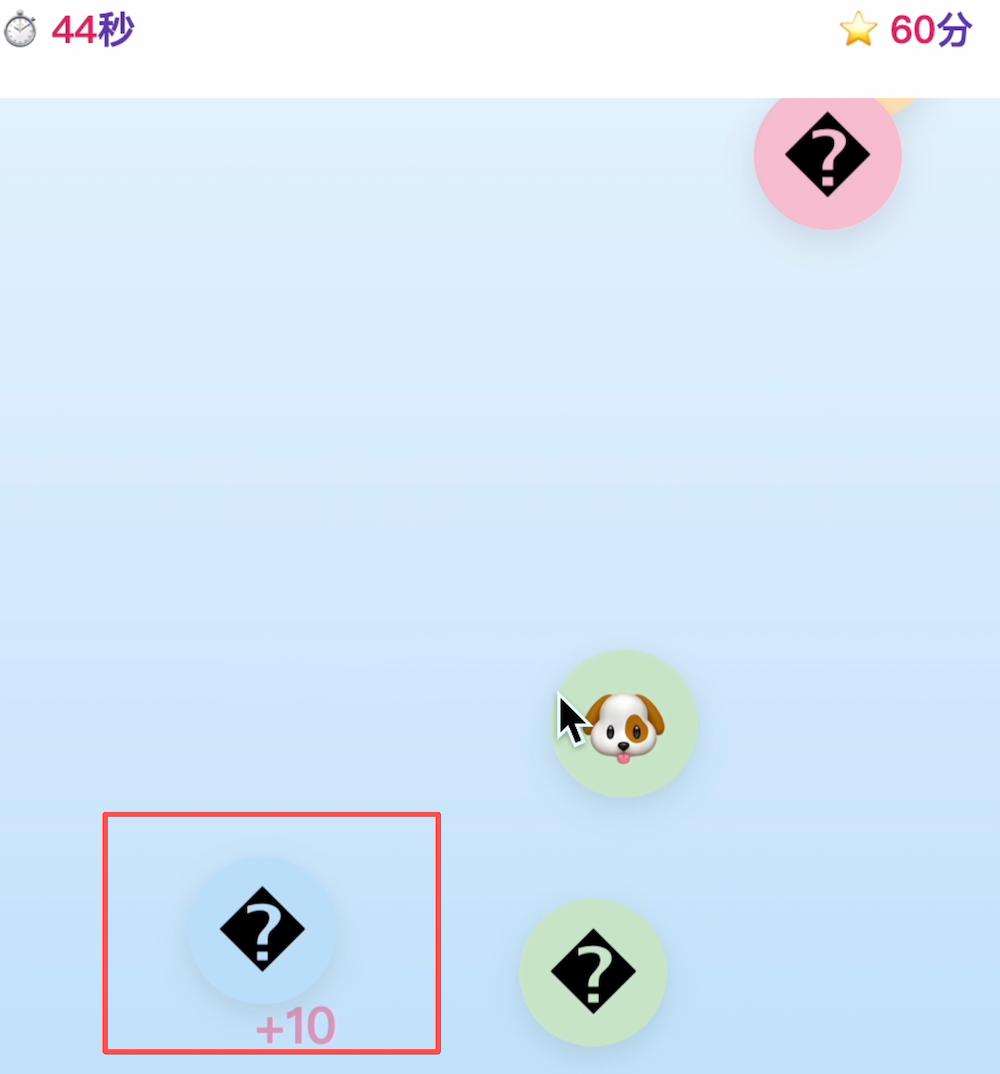
▲ The Buggy "Bubble-Popping" Game Generated by LongCat-2.0
On the second attempt, the model generated the puzzle game "Number Sliding Puzzle". During this test, it produced the full code quickly in a single generation. The game operated smoothly with clear visuals, with no lag or other errors observed throughout the testing process.
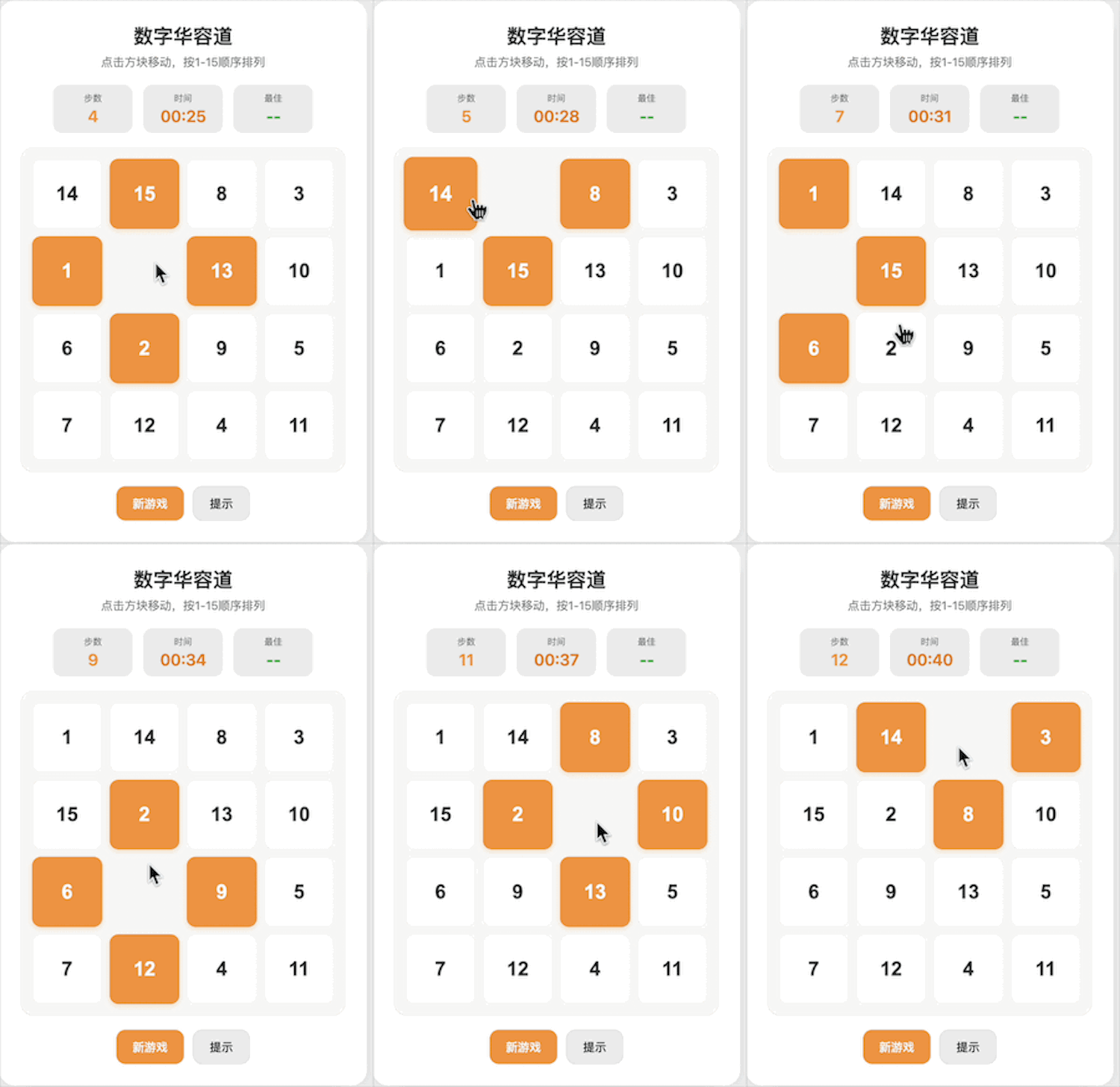
▲ The "Number Sliding Puzzle" Game Generated by LongCat-2.0
We also evaluated the model's 3D scene creation capabilities, asking it to produce a 3D pixel art piece depicting "a child playing with a pinwheel on a park bench". The model showed excellent comprehension, successfully constructing the complete 3D pixel art scene on its first attempt, with all required elements including the sky, trees, park bench, pinwheel, and child fully rendered.

▲ 3D Animated Scene Generated by LongCat-2.0
To verify its logical reasoning performance, we selected an official 2026 AIME problem. The problem is presented as follows:
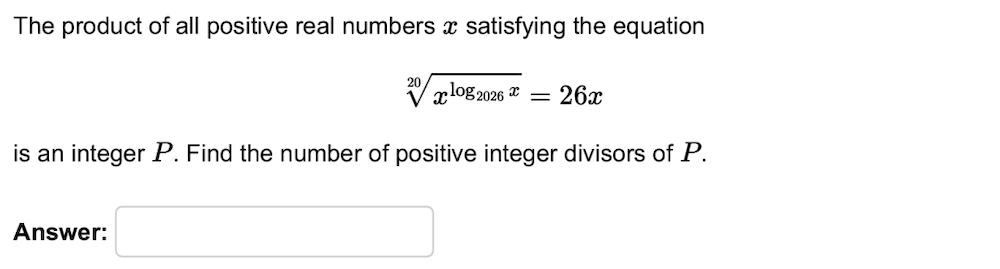
▲ Official 2026 AIME Problem
This problem tests logarithmic reduction, exponential equations, root-coefficient relationships, and prime factorization — making it ideal for evaluating model reasoning capabilities. LongCat-2.0 completed its reasoning process in under 1 minute, solving the problem in four clear steps to arrive at the correct answer of 441. The model performed extremely stably in this case, demonstrating that its reasoning pipeline and computational execution for standard math competition problems are highly reliable.
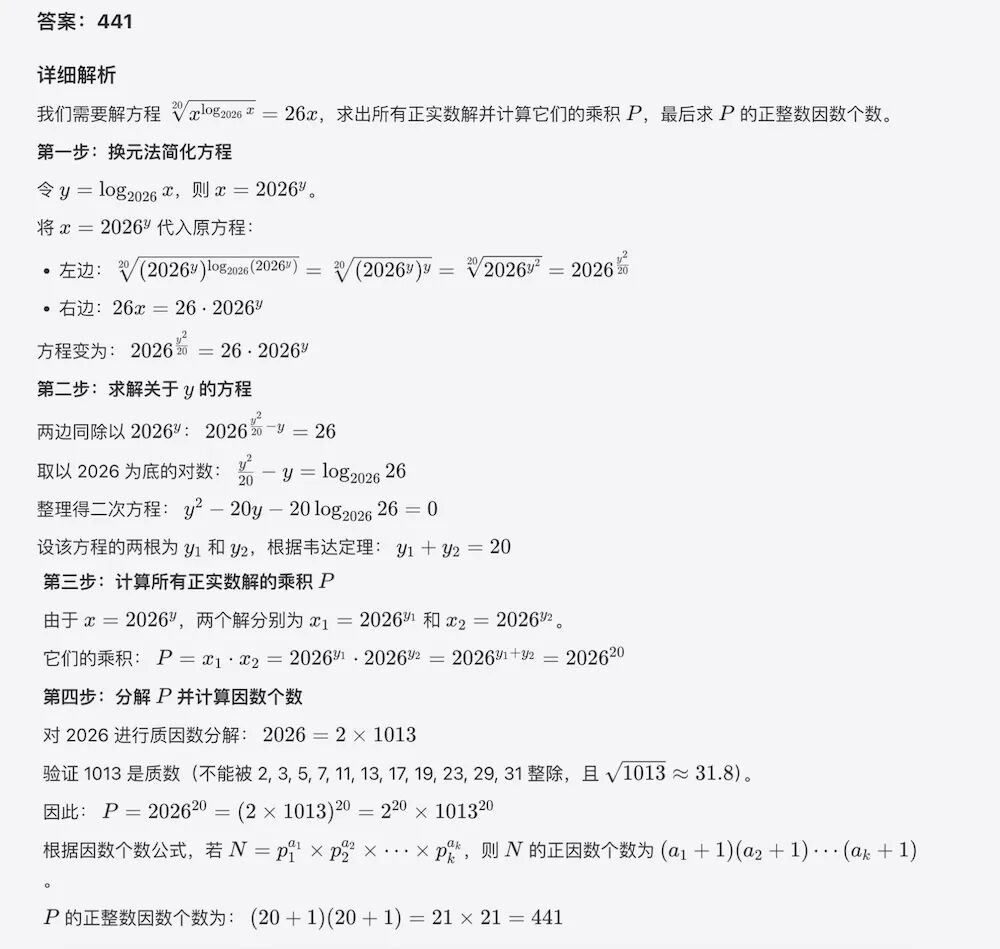
▲ LongCat-2.0's Solution Steps for the AIME Problem
02.
Data Querying, Code Migration, Game Development
3D Demonstrations and Novel Creation — All Handled by One Single Model
During the official internal testing phase, Meituan collected a large volume of task requirements from frontline users, and LongCat-2.0 demonstrated complete closed-loop delivery capabilities across multiple practical scenarios:
Building an AI SQL Agent with LongCat-2.0: Business personnel can directly query data using natural language. LongCat-2.0 automatically completes the full end-to-end closed loop, including understanding user intent, planning query steps, and converting raw data results into clear, actionable business insights.
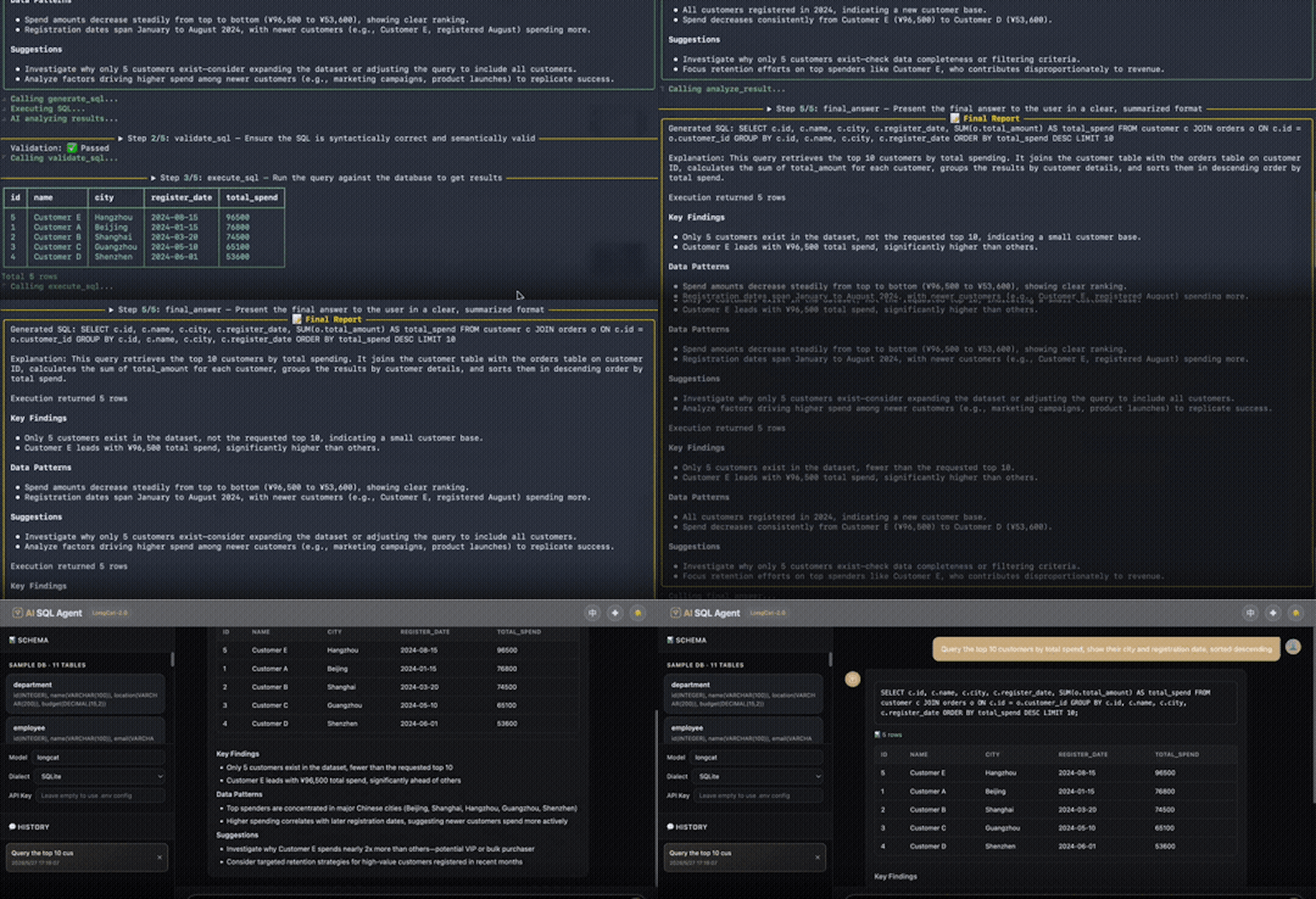
▲ LongCat-2.0 Internal Testing (Image Source: LongCat)
Code Repository Migration: Given the old version of a plugin codebase and new SDK documentation, LongCat-2.0 can independently analyze the architecture, sort out logical workflows, and refactor the entire plugin to implement new APIs — preserving all original functionality, resolving hidden issues, and passing compilation on the first attempt.
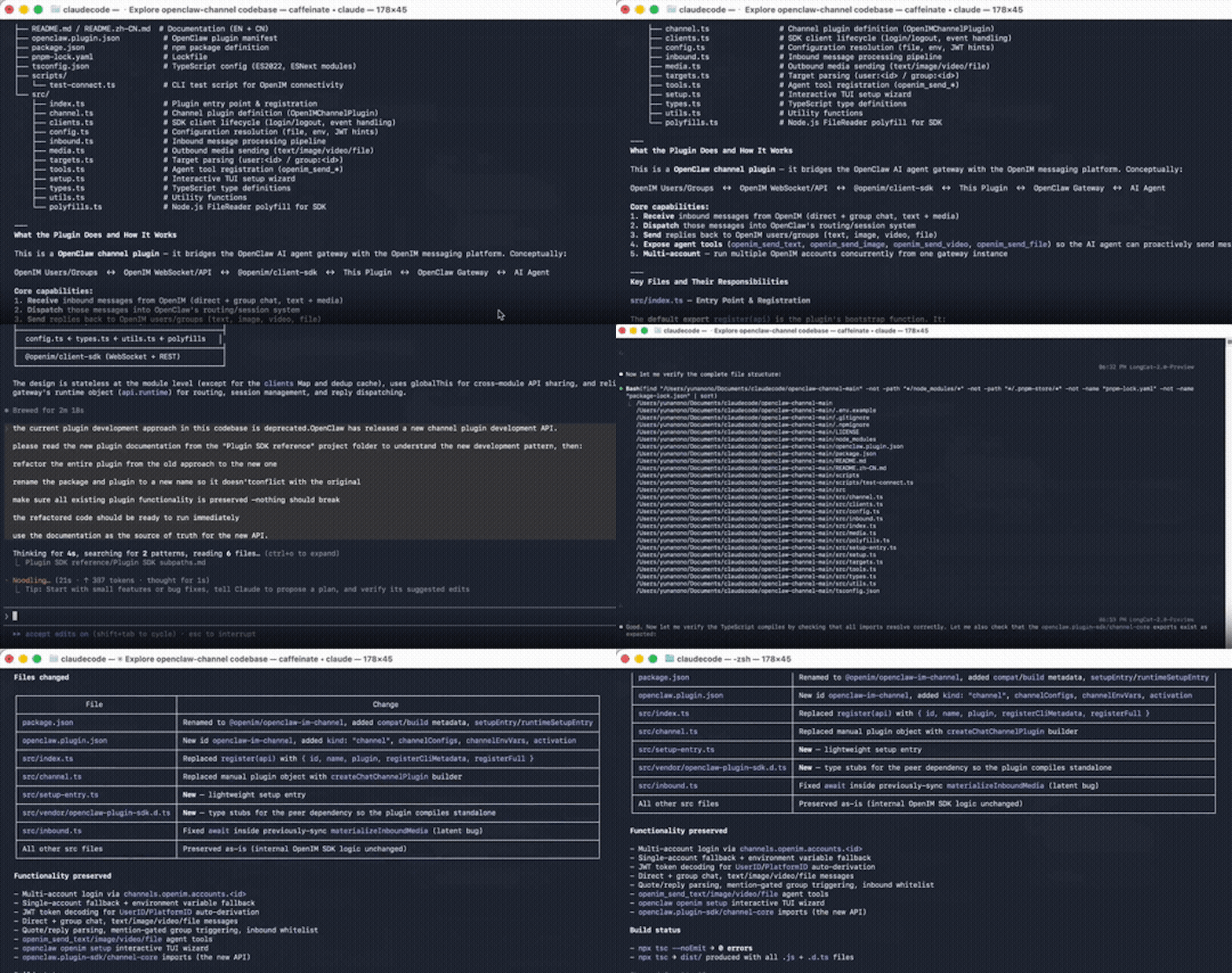
▲ LongCat-2.0 Internal Testing (Image Source: LongCat)
Full Application Development: After inputting the creative concept "Children's AI Game Training Ground" into the model, LongCat-2.0 sequentially generates technical stack selections, page architecture designs, game logic, and visual details — producing the complete code for the homepage and three fully playable games in a single generation.
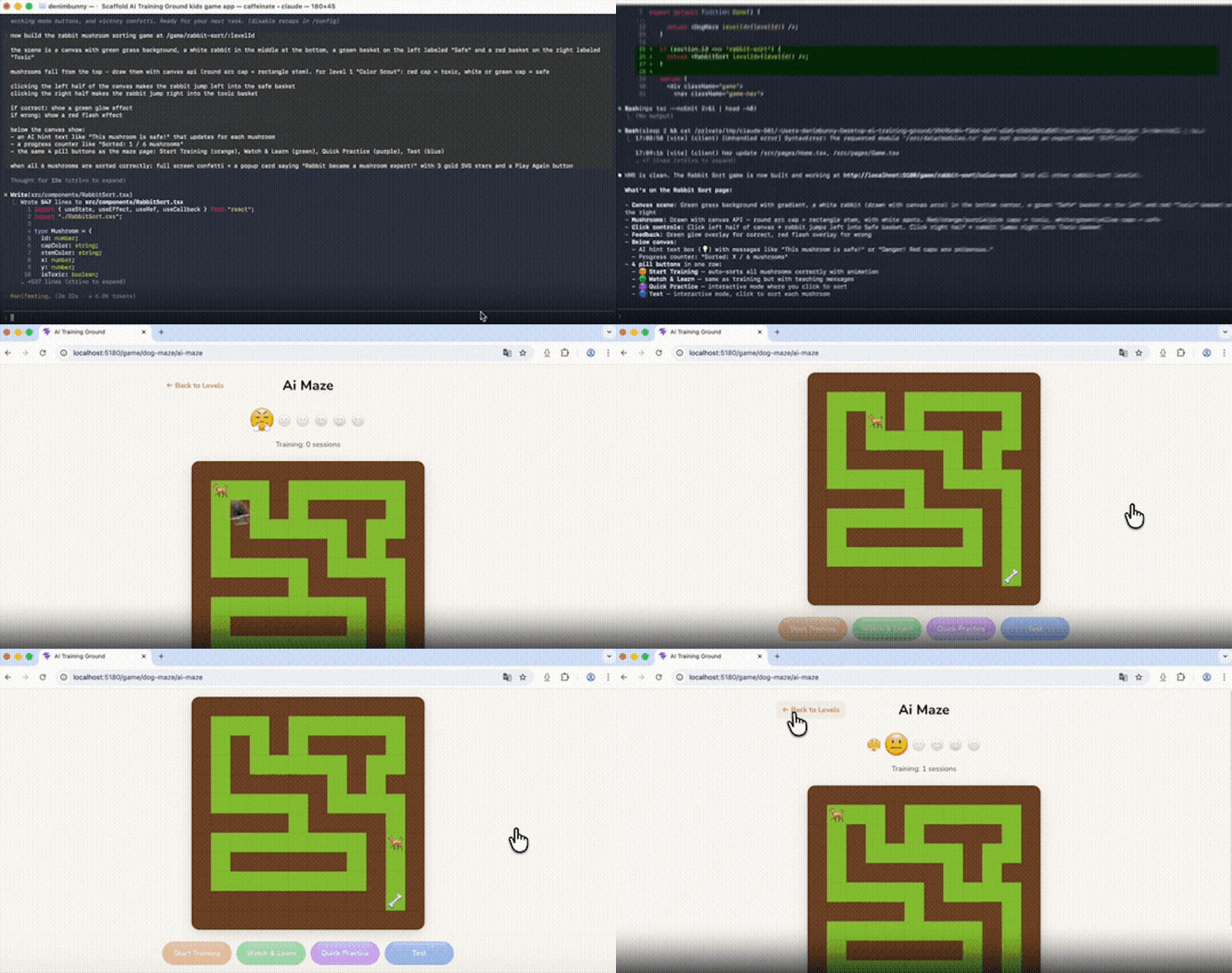
▲ Children's Training Game Generated by LongCat-2.0 During Internal Testing (Image Source: LongCat)
3D Interactive Demonstrations: With a single sentence description, LongCat-2.0 can generate a complete Three.js 3D demonstration, featuring fully interactive elements including transparent flasks, fluorescent liquids, foaming effects, and dynamic liquid level changes — with all code encapsulated in a single HTML file.
AI Novel Factory: Built on LongCat-2.0, a multi-agent writing pipeline automatically completes worldbuilding, parallel chapter generation, quality assessment, and iterative revisions after receiving creative inputs. Leveraging its long-context capabilities to maintain consistency across million-word settings, the generated content can be automatically adapted for multi-platform publishing, enabling sustained and stable serialized content output.
03.
Sparse Attention, N-gram Embeddings
Three Parallel Optimizations with Multi-Teacher Distillation
LongCat-2.0 inherits the overall design of LongCat-Flash, with three key optimizations targeted at long-context, code, and agent scenarios:
For agent tasks involving ultra-long inputs of up to millions of tokens, LongCat-2.0 introduces the LongCat Sparse Attention (LSA) mechanism. Through three strategies — stream-aware indexing, cross-layer indexing, and hierarchical indexing — it effectively reduces fragmented memory access and redundant computation, significantly boosting training and inference speeds for million-token long contexts without compromising model quality.
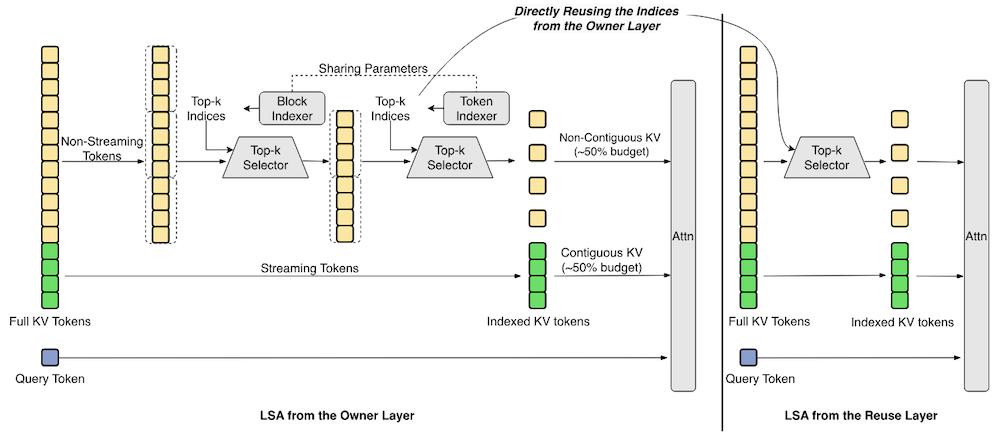
▲ Overview of LongCat Sparse Attention Design (Image Source: LongCat)
Beyond its MoE experts, LongCat-2.0 adds an entirely new parameter expansion path: N-gram Embedding. This design choice was made because the model's MoE sparsity had already reached nearly 97%, leaving very limited marginal gains from simply adding more experts. By contrast, allocating 135 billion parameters to N-gram Embedding delivers far higher performance returns. This module accounts for less than 10% of total parameters, achieving an optimal balance between parameter efficiency and structural stability.
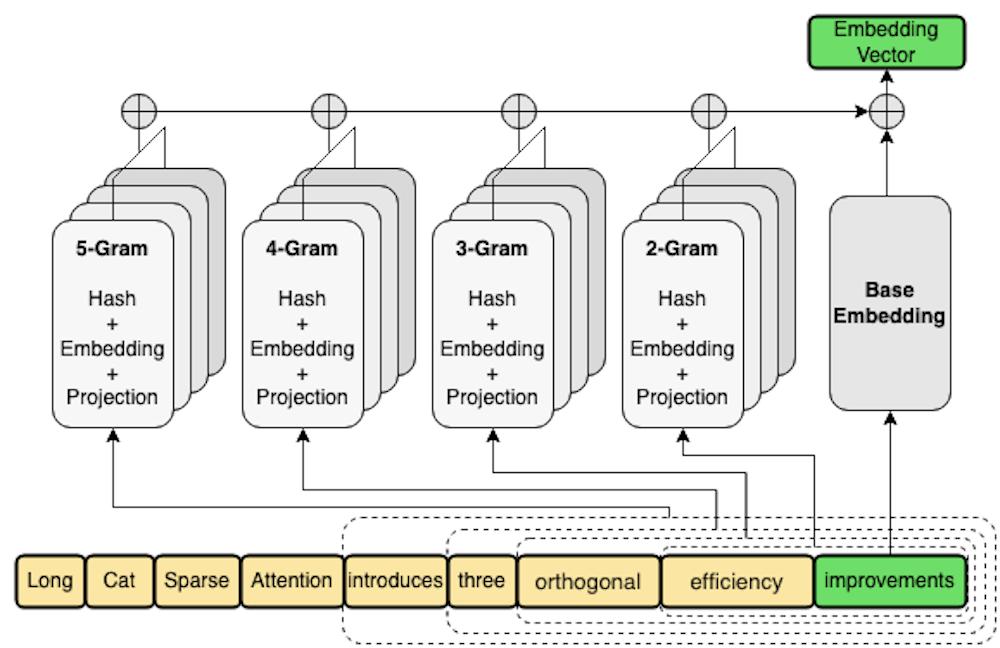
▲ Overview of N-gram Embedding (Image Source: LongCat)
During the post-training phase, LongCat-2.0 uses multi-teacher online distillation to categorize experts into three dedicated groups: Agent, Reasoning, and