Chinese enterprises step in, and Europe reaps the benefits
At the end of June this year, Jureczak, a programmer based in Vienna, Austria, became an internet sensation.
In order to get his hands on a Chinese air conditioner, he spent two days browsing every major e-commerce site, but still couldn't secure a unit. Eventually, he simply set up three AI agents to monitor stock levels around the clock on his behalf.
One early morning, the AI agents suddenly sent an alert: a store in Linz, Austria, had the very last unit left in the entire country. Without hesitation, he placed the order, and the next morning, he drove 200 kilometers to get there. When he arrived at the store, he finally purchased it for 749 euros.
After successfully installing the air conditioner, he excitedly shared his entire experience on social media.
The question is: why is it that this European programmer went to such extreme lengths specifically for a Chinese air conditioner?
01
A Long-Standing Headache
There is no shortage of Europeans who have been frantically snapping up air conditioners just like Jureczak, the Austrian programmer.
This summer, Europe is being hit by an extremely rare heatwave. At the end of June, temperatures reached 43.8°C in Palleau, western France, 41.5°C was recorded in eastern Germany, and 40.6°C was registered in the Czech Republic—all breaking local historical records for the same period.
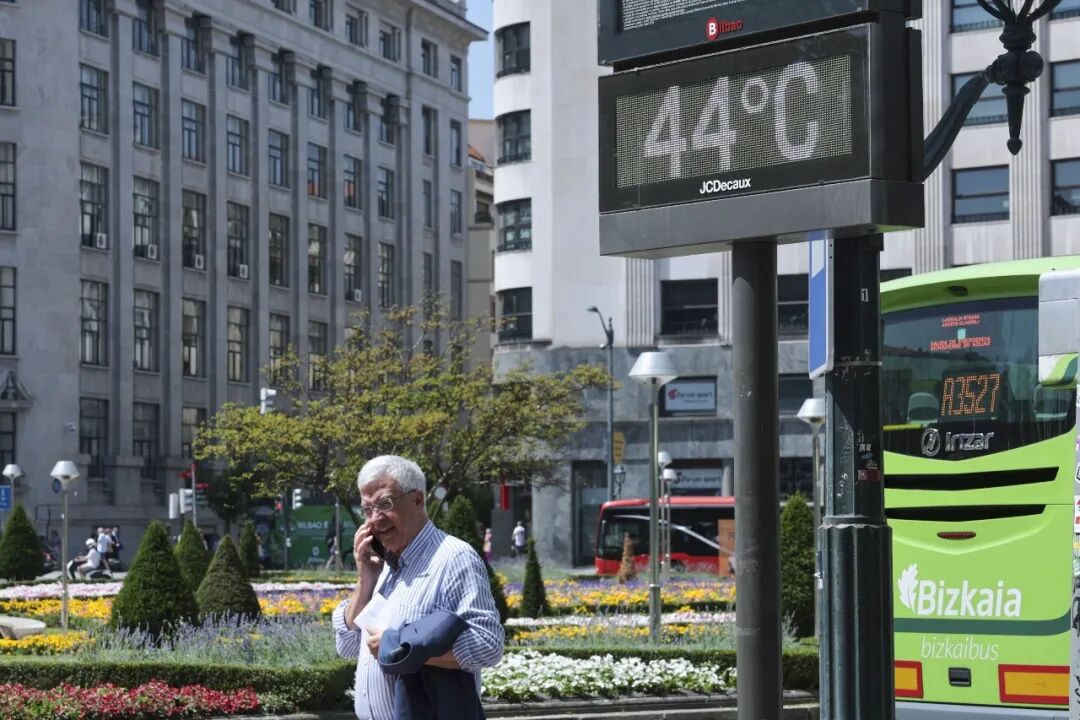
▲ On June 24, a temperature sign on a street in Bilbao, Spain, shows the temperature reaching 44 degrees Celsius. Source: Xinhua News Agency
In France, the number of drowning deaths caused by high temperatures has reached 55. Schools in multiple countries have suspended classes due to the heat, and railway operations and flight services have also been disrupted.
Amid the heatwave, household air conditioners, long regarded as non-essential items by Europeans, have suddenly become a necessity. Yet a curious phenomenon persists: the proportion of Europeans with air conditioners installed in their homes has remained extremely low.
Data from the International Energy Agency shows that the overall penetration rate of air conditioners in EU households is only around 20%. Among these, countries in southern Europe such as Spain and Italy have a penetration rate of roughly 40% to 50%, while in northwestern European countries like Germany and the UK, the figure is generally below 8%, with some regions recording rates as low as 3% to 5%.
In comparison, the penetration rate of air conditioners in US households exceeds 90%, and it has reached 91% in Chinese urban households. Europe has long remained one of the world's major markets with the lowest air conditioner penetration rates.
You might wonder: can Europeans not afford them? In reality, it is not that they cannot afford them, but that they cannot get them installed.
In Europe, installing an air conditioner has always been a troublesome task. A large number of old buildings do not have pre-installed pipes for air conditioners, and historical preservation regulations strictly restrict modifications to building facades. Take the many Haussmann-style buildings in Paris as an example: many residences are prohibited from drilling holes in exterior walls. To install a traditional split air conditioner, one usually has to first submit an application for approval, and then make an appointment with a certified engineer to carry out the work.
In Italy, violations of installation regulations can result in a maximum fine of 100,000 euros. In some regions of France, not only do people face heavy fines, but non-compliant equipment may also be ordered to be dismantled.
An even more practical issue is cost. A standard split air conditioner itself costs around 600 to 800 euros, but the certified installation fee can be as high as 1500 to 2000 euros—two to three times the price of the unit. If the renovation of the old building's electrical circuit is required, additional fees will apply. In summer, certified installation workers are often in short supply, and the waiting time for an appointment can even stretch for several weeks.
At the same time, roughly 30% of the European population rents housing long-term, and in countries such as Germany and Switzerland, the rental rate even exceeds 50%. For a large number of tenants, they simply do not have the authority to modify the structure of the property, so traditional split air conditioners have shut out this group of users from the very beginning.
In the past, mild summers made "not installing air conditioners" gradually become part of Europe's architectural design and lifestyle. However, starting from 2022, Europe has been hit by successive extreme heatwaves. In 2024 and 2026, record-high temperatures kept being broken, completely changing people's perception of air conditioners.
But the reality is that what Europeans truly need is not an ordinary air conditioner, but a model that requires no drilling, no approval, and can be installed by ordinary people on their own.
Surprisingly, the first enterprise to make this a reality is a company from China.
02
Uncovering New Opportunities
The most representative brand in this regard is Midea.
Several years ago, Midea's European R&D center based in Stuttgart, Germany, was the first to identify the structural contradiction faced by local residents: they could afford air conditioners, but could not get them installed.
After pinpointing this pain point, instead of directly launching its mature domestic products in the European market, Midea decided to develop an entirely new product from scratch. The challenge then became: how to ensure that this new product could meet the complex regulatory requirements across different European countries?
To achieve this, Midea mobilized R&D teams in China, Germany and Italy, and spent three years refining the product through repeated iterations. Eventually, it launched a portable split air conditioner called PortaSplit.
The most prominent feature of this product is that it has bypassed almost all the barriers to air conditioner installation in Europe.
It adopts a design of "light outdoor unit, heavy indoor unit", with the outdoor unit weighing only around 10 kilograms. Ordinary people can complete the installation without professional tools and without drilling any holes. According to the regulations of many European countries, it is classified as an indoor electrical appliance, so no application for exterior wall renovation approval is required.
In addition, the refrigerant charge of this air conditioner is precisely controlled at 1.99kg, which is below the 2kg mandatory testing threshold in France. Its 35-decibel silent mode meets Germany's nighttime noise standards, and its energy efficiency ratio of 6.1 satisfies Switzerland's A++ energy efficiency requirements.
After its launch in 2024, PortaSplit quickly became a hit in the European market, selling out in Germany for two consecutive summers, and was selected into Time magazine's "Best Inventions of the Year" list in 2025.
The Austrian programmer mentioned at the beginning of this article used three AI agents to snap up exactly this model of air conditioner.
In June this year, a German programmer even built a dedicated website to aggregate real-time stock information from thousands of stores across Germany, helping local consumers find PortaSplit units.
In 2026, the shipment volume of this product in the European market has exceeded 200,000 units, with sales doubling compared to the previous year. In countries including Germany, France and Spain, it has repeatedly sold out, and the highest premium on the second-hand market has reached 6 times the original price, making it one of the hardest-to-find air conditioners in Europe this summer.
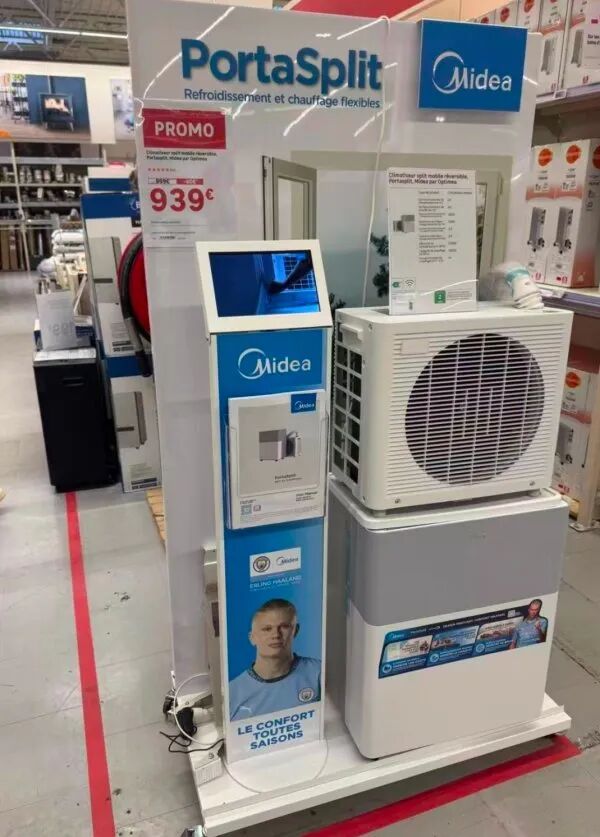
▲ Midea's PortaSplit air conditioner on display at a German home appliance store. Source: Finance World Weekly
More importantly, this is not just a success for Midea alone, but a collective breakthrough achieved by China's entire air conditioner industry in the European market.
In addition to Midea, Chinese brands including Haier, Gree, Hisense, TCL and Changhong have continued to innovate in different directions such as easy installation, high energy efficiency, mobile cooling and AI energy conservation, jointly driving the rapid rise of Chinese air conditioners in the European market.
To address the high installation cost issue in Europe, Haier launched the Expert series, which features "easy cleaning, easy disassembly and easy maintenance", directly cutting the installation time by 50%. In 2026, Haier's market share in Eastern Europe reached 34%, firmly ranking first, while its market share in Western Europe hit 9%, taking the second place.
Gree has focused on the layout of mobile air conditioners and high-energy-efficiency wall-mounted units. In the first half of 2026, Gree's terminal sales in France increased by 50% year-on-year. The installation schedule for some of its wall-mounted products has been delayed to the end of August, and the inventory in European sales channels has been almost completely sold out.
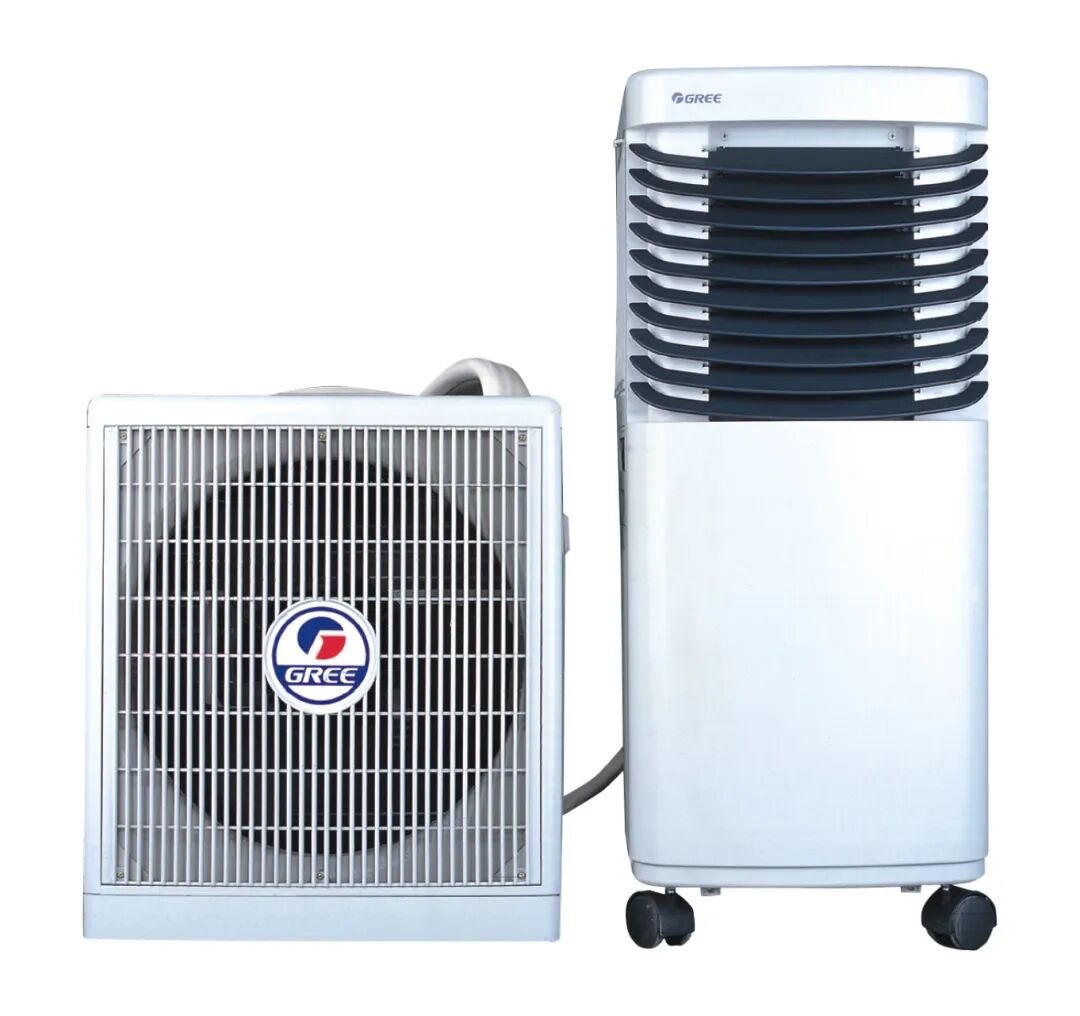
▲ Source: CCTV Finance
Hisense launched the U6 series optimized for the pre-installed pipe scenarios in Europe, boosting installation efficiency by 35%. Its sales volume in Europe in the first half of the year increased by 117% year-on-year.
TCL, relying on its European channel system of "deep direct sales + extensive agent coverage", focuses on products with AI energy conservation, easy installation and low noise. In the second quarter of 2026, its sales in the Western European market increased by more than 27% year-on-year, Spain saw a 100% year-on-year growth, and the French and Nordic markets recorded a year-on-year increase of over 300%.
Data from China Customs shows that in the first half of 2026, China's export value of air conditioners to the EU reached 3.76 billion US dollars, a 43.2% year-on-year increase and a record high.
The market share of Chinese brands in Europe has also risen from 27% in 2023 to 41% in 2025, surpassing Japanese, South Korean and local European brands for the first time, and becoming the largest supplier of air conditioners in Europe.
03
China's New Paradigm
Under the European heatwave, almost all major Asian air conditioner manufacturers have seen a surge in orders.
Samsung Electronics stated that in the first half of 2026, it achieved double-digit growth in core markets including Italy, Spain and France. Mitsubishi Electric also reported a sharp increase in orders from countries such as France, Spain, the UK and Germany. LG Electronics revealed that the air conditioner production lines at its South Korean factory have been operating at full capacity since April.
However, what truly deserves attention is why only Chinese brands have experienced explosive growth.
For a long time, local European brands have been more focused on heating and heat pumps. Enterprises such as Bosch and Vaillant have long been deeply engaged in fields like whole-house heating and heat pumps, and household cooling is not their core business. Turkey's Arçelik (Beko) holds an advantage through its local channels and installation system. Its "equipment sales + installation services" model is already a mature business, so there is little incentive to proactively reshape product forms.
Although Japanese and South Korean brands also offer mobile air conditioners, in the European market, the main products of Japanese brands such as Daikin and Mitsubishi Electric are still concentrated on traditional split air conditioners, VRV central air conditioners and heat pump systems, emphasizing high energy efficiency, low noise and professional installation. South Korean brands including LG and Samsung, on the other hand, focus more on smart home ecosystems, building management systems and central air conditioning solutions.
In other words, it is not that European, Japanese and South Korean companies lack the technical capabilities, but that their focus remains on their existing tracks.
Yet the "no-installation air conditioners" most needed by European renters and users of old buildings have long been neglected by serious development efforts. This has precisely created a huge opportunity for Chinese enterprises.
However, the success of Chinese brands in breaking through the market is not just because their products have solved the pain points of European users. There are two deeper layers of industrial support behind this achievement.
First, there is the support of the world's most complete industrial chain. At present, China's air conditioner output accounts for around 80% of the global total, and the output of compressors (the core component) accounts for about 90% of the global total. A highly coordinated and complete industrial chain has taken shape, covering everything from R&D innovation and component supply to large-scale production, rapid order fulfillment and global distribution. This advantage has long gone beyond just cost competitiveness, and has evolved into an ultimate level of response speed.
After the European heatwave broke out, Haier launched coordinated production across its global manufacturing bases. Midea's factories arranged extra shifts to ramp up production, and shortened the delivery cycle to 15-25 days via the China-Europe Railway Express. Gree worked with overseas agents to speed up restocking to ensure market supply.
Second, there is the increasingly mature global R&D capability. In the past, when Chinese enterprises developed overseas markets, they mostly sold their domestic products abroad. Today, R&D activities are getting closer and closer to the front line of the market. Both Haier and Midea have placed their European R&D teams in core markets such as Germany and Italy. Hisense, leveraging its acquisition of Gorenje, has established a Europe-wide R&D system in Slovenia. TCL is also continuously advancing localized technology R&D in Poland.
Products represented by PortaSplit are exactly the results of a process where demands are identified in Europe, product definitions are made in Europe, and then the global R&D system collaborates to complete the development. This "Local for Local" R&D model is becoming a key direction for leading Chinese home appliance enterprises to expand overseas.
In the past, the factors that determined success or failure were brands, channels and technical standards. Today, what truly sets different players apart has become who better understands users, who can more precisely define products, and who can deliver products to users faster.
This time, what Chinese manufacturing has opened up is not just the European air conditioner market, but a brand new way of global competition.
References
[1] "Haier, Midea and Gree Respond to Surge in European Air Conditioner Demand: Short Supply Leads to Urgent Restocking, Easy-to-Install Models Become Mainstream Choice" Red Star News
[2] "With Premium Reaching 6 Times the Original Price, Chinese Air Conditioners Are Selling Extremely Well in Europe" Finance World Weekly
[3] "Europe Experiences Hottest Heatwave in History, Midea's 'Game-Changing' Air Conditioner Is Snapped Up, Second-Hand Premium Once Reached 2-3 Times the Original Price" Wall Street CN
This article is from the WeChat Official Account "Huashang Taolue" (ID: hstl8888), written by Huashang Taolue, and published with