From a national snack to a "wallet pricker", is the upgrading of malatang a pseudo-proposition?
01
A Market Size of 160 Billion
The Number of Malatang Stores Drops to 134,000
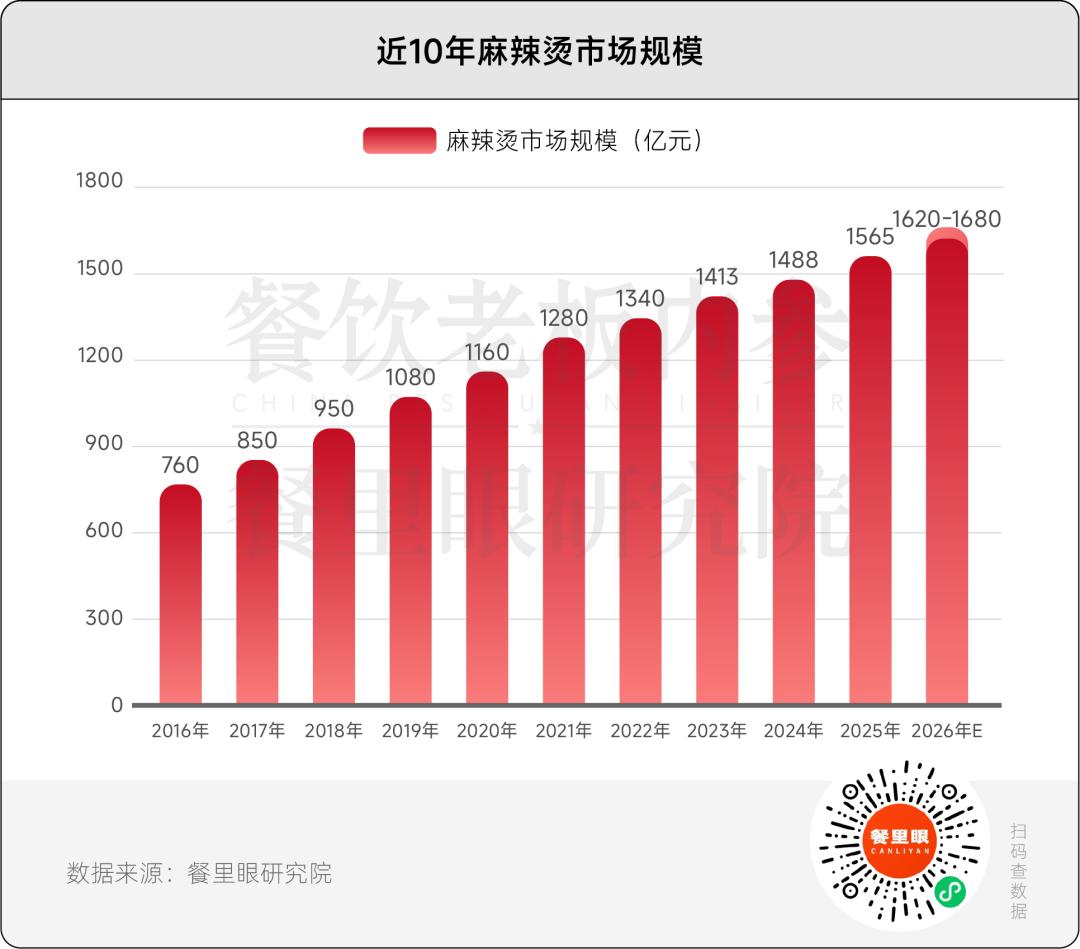
Over the past decade, the malatang industry has shown a steadily upward - trending curve, with its market size continuously growing.
In 2016, the market size of the malatang category was 76 billion yuan. Since then, it has been increasing at a rate of about 10 billion yuan per year. In 2019, it exceeded 100 billion yuan, reaching 108 billion yuan. In 2025, the market size of the malatang category exceeded 150 billion yuan. It is estimated that in 2026, the market size of malatang will exceed 160 billion yuan, ranging from 162 to 168 billion yuan.
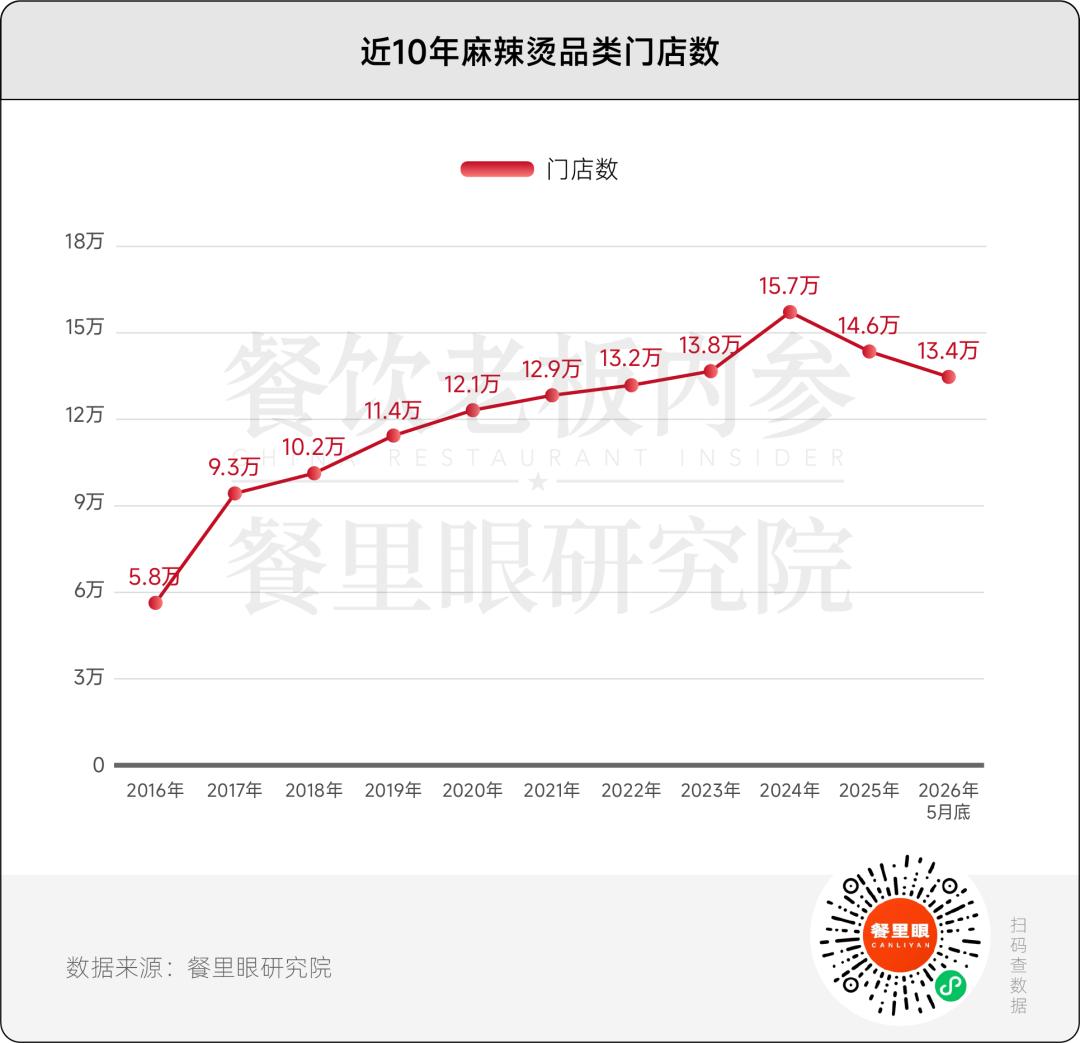
Although the market size has been growing steadily year by year, the number of stores in the category has fluctuated significantly.
After the number of malatang stores across the country rapidly increased from 2023 to 2024 and reached a phased high, it began to decline. At the beginning of 2025, the number of malatang stores was about 150,000, and by the end of the same year, it dropped to about 146,000. In 2026, the downward trend of the number of malatang stores became more obvious. As of the end of June 2026, the total number of malatang stores across the country was about 134,000. In the past five years, the overall trend has been stable at first, then increasing, and finally declining.
Overall, with the contraction of the number of stores and the expansion of the market size, the entire malatang industry is shifting from a stage of "pursuing scale" to a market state of "stabilizing the existing volume".
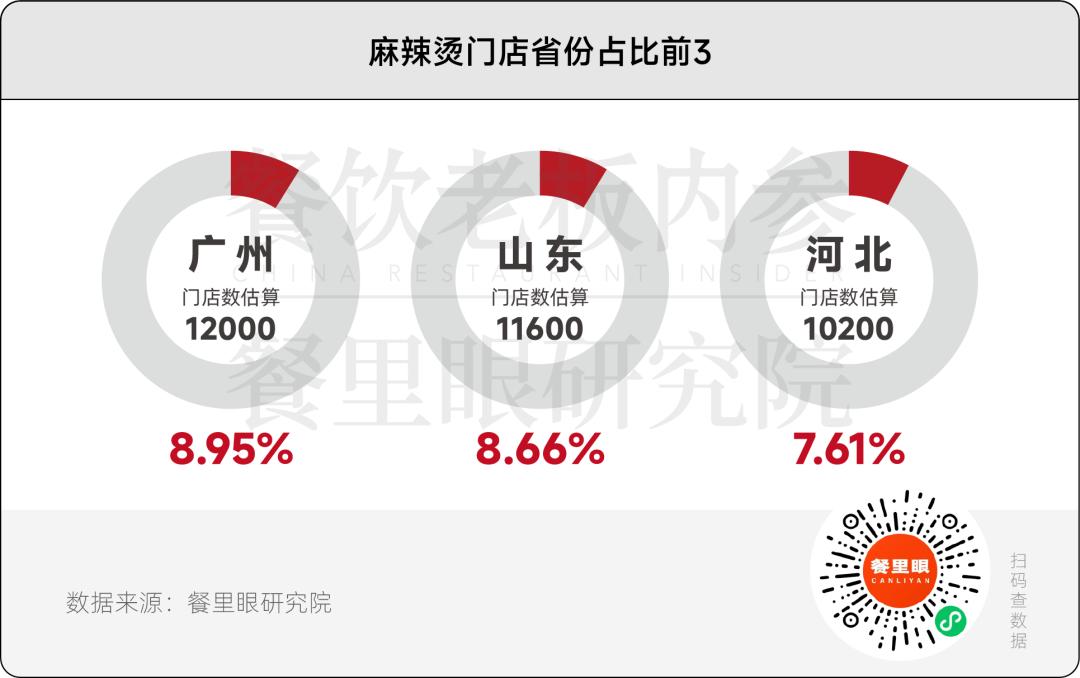
Interestingly, among provincial - level administrative regions, Guangdong, Shandong, and Hebei have the top three numbers of malatang stores. Among them, Guangdong, with its large consumer base, has become the largest malatang market in the country. This proportion even exceeds that of the three northeastern provinces, where the number of malatang - related enterprises accounts for nearly 30% of the national total.
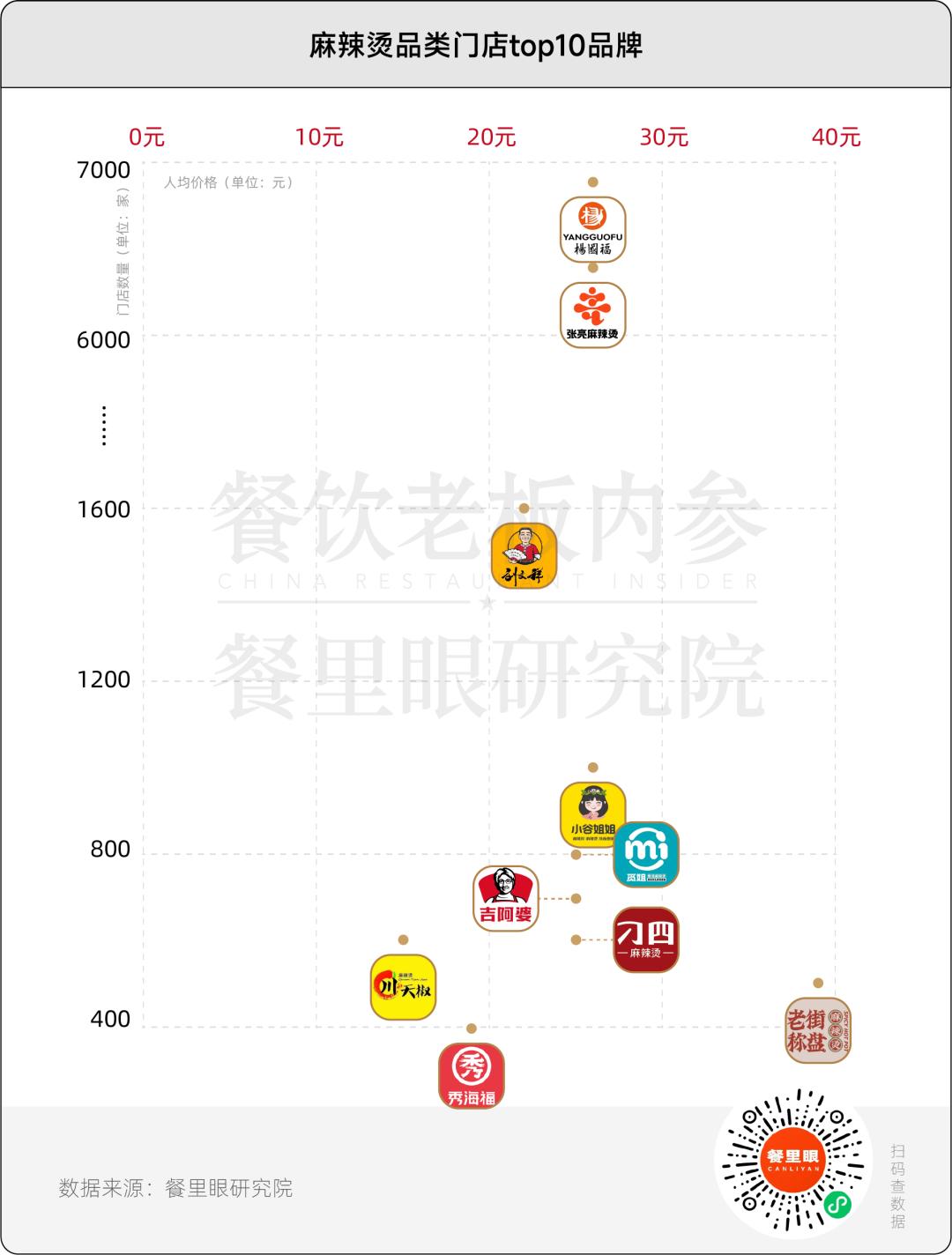
In terms of the brand landscape: two leading brands are firmly established and far ahead, but the market is highly fragmented.
Currently, malatang brands with 500 - 1000 stores or more than 1000 stores account for only about 1%. About 96% of malatang brands have less than 100 stores, and among them, as many as 78% have less than 10 stores. This means that despite the long - term development of the category and the steady increase in the market size, in the highly fragmented malatang market, a large number of small - scale regional chains and family - run stores are the mainstay of the malatang industry.
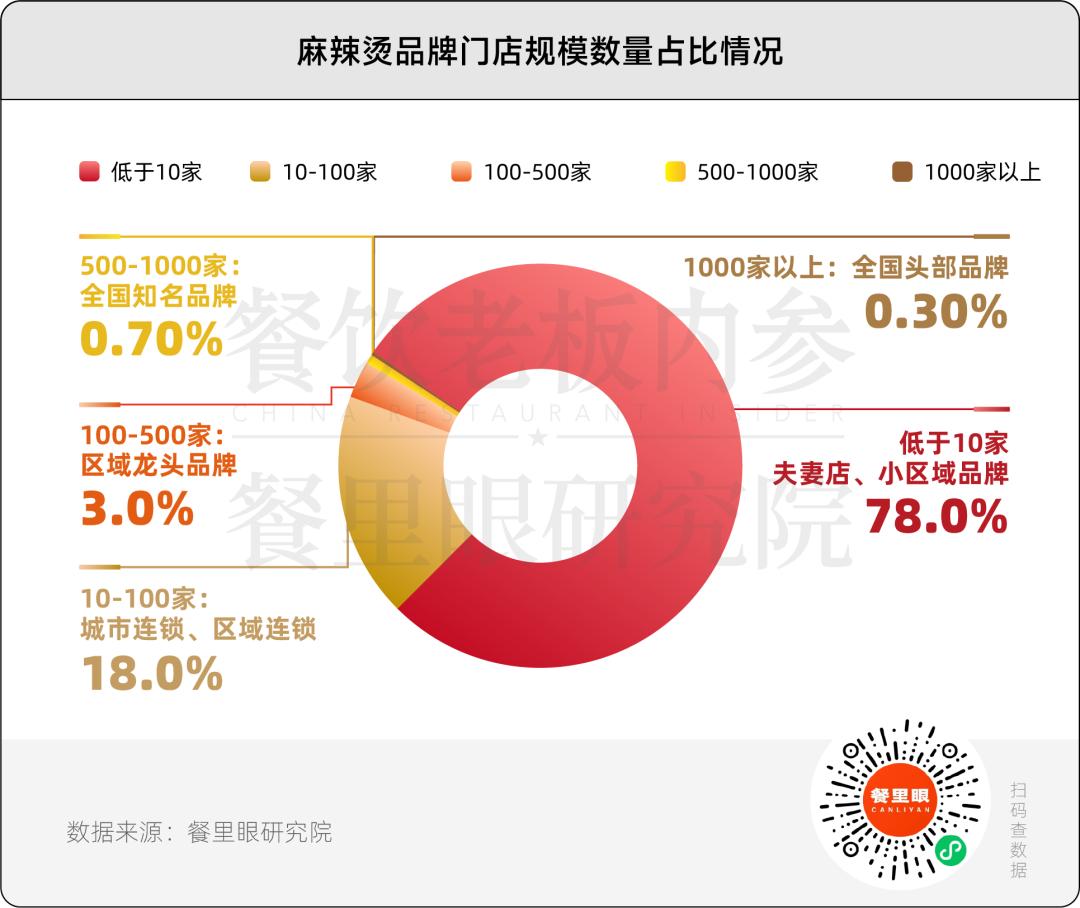
However, the influence of the top 1% of malatang brands cannot be ignored. Yang Guofu Malatang and Zhang Liang Malatang, both with more than 6000 stores, together account for nearly 10% of the total number of malatang stores, far exceeding other malatang brands. The dominance of these two leading brands has lasted for many years and is difficult to shake in the short term. The top five malatang brands with about 1000 - store scales together account for about 12.5% of the total number of malatang stores.
02
460 Million Consumers per Year,
Middle - aged Customers Are the Core
In terms of the number of consumers, the annual number of malatang consumers has increased from 380 million in 2021 to an estimated 460 million in 2026, showing a continuous growth trend. Among them, consumers who eat malatang 1 - 2 times a week account for 23%, and those who eat 2 - 3 times a month account for 33%, making it a high - frequency consumption category.
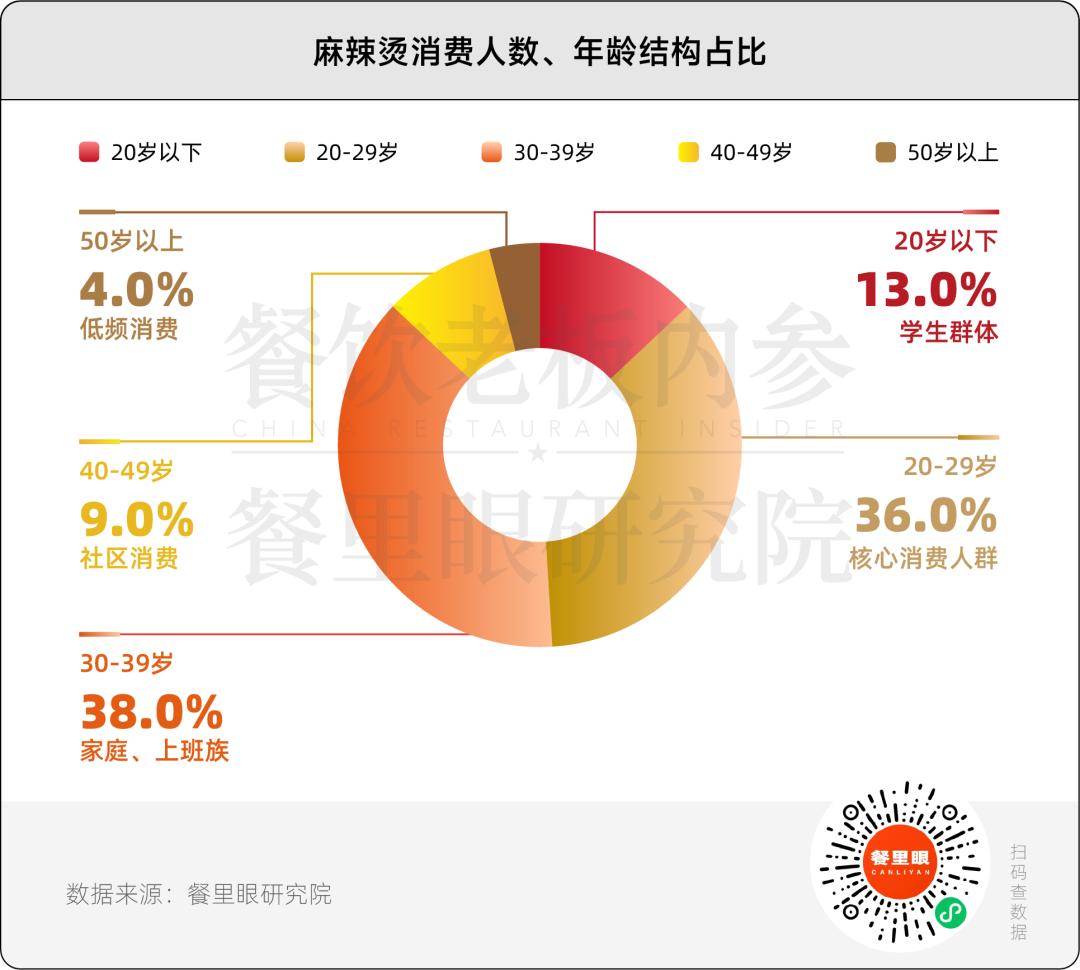
In terms of age structure, consumers aged 20 - 29 account for 36%, while those aged 30 - 39, including family consumers and office workers, account for 38%. The main consumer group of malatang is concentrated between the ages of 20 and 40, while consumers over 40 are low - frequency consumers.
Interestingly, the proportion of the 30 - 39 age group is higher than that of the 20 - 29 age group. This also shows that with the upgrading of the category, malatang is no longer just an "addictive snack" favored by young people. More and more "middle - aged consumers" are starting to pay attention to this category. Their participation has further promoted the acceleration of category upgrading and segmentation.
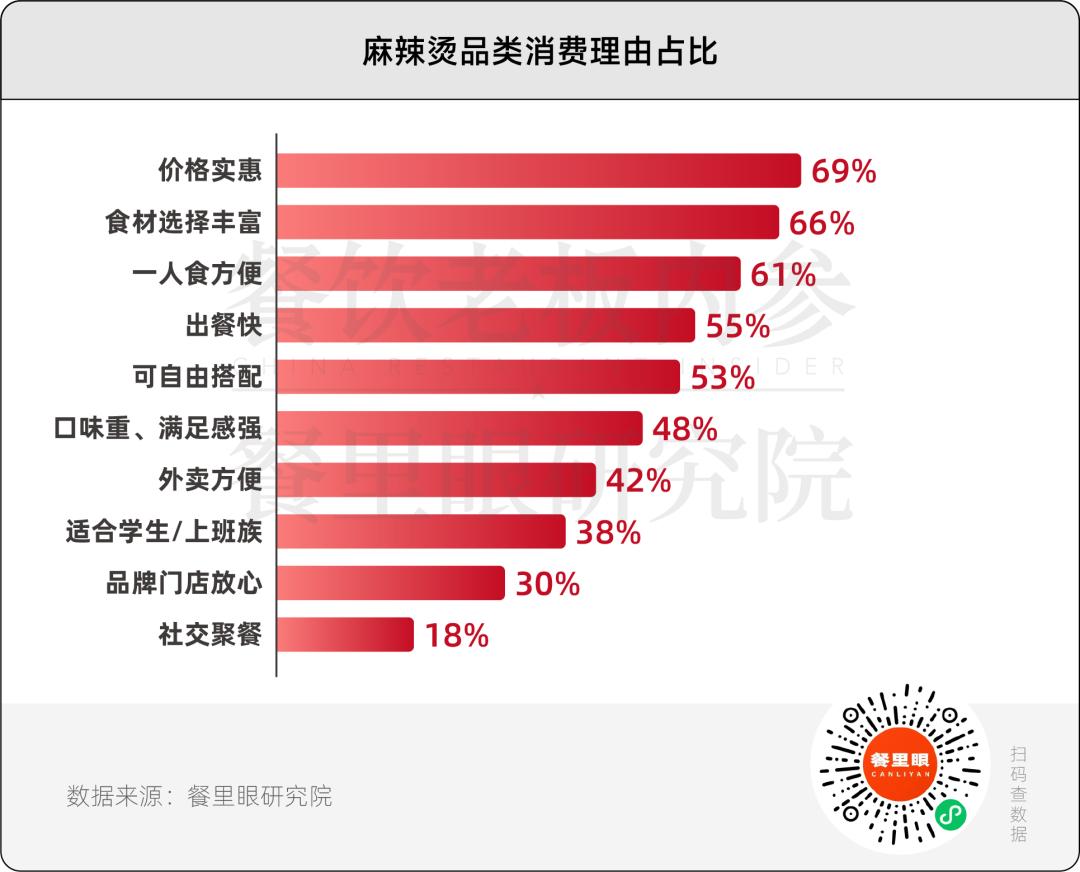
In the chart of "Proportion of Consumption Reasons for the Malatang Category", the top three reasons for consumption are affordable prices, a wide variety of food choices, and convenience for solo dining.
The connection between malatang and the "solo - dining economy" is essentially a deep integration of category genes and consumption trends. Malatang is naturally suitable for solo dining scenarios and has long been called "a person's hot pot" or "a simplified version of hot pot". The explosion of the "solo - dining economy" has provided continuous growth momentum for the malatang market.
In China, the rise of the solo - dining economy has a solid population foundation. The number of single people in China has exceeded 240 million. In 2025, the market size of the "solo - dining" economy exceeded one trillion yuan, with a compound growth rate of about 22%. Compared with traditional hot pot, which requires multiple people to sit around and has a strong social attribute, malatang naturally eliminates this sense of embarrassment: there is no need to gather a group, no need to share, and consumers can choose according to their own preferences.
03
From a National Snack to a "Wallet Assassin"
Is the Upgrading of Malatang Facing an "Inevitable Lesson"?
In terms of category advantages, the success of malatang lies in its combination of the efficiency logic of the catering industry and consumers' freedom of choice, which is mainly reflected in four dimensions:
Extreme standardization without chefs (supply side)
Autonomy in pricing according to one's own preferences (consumer side)
Addictive flavors and strong - inclusive improvements (taste side)
Full - time coverage and extreme efficiency (scenario side)
Generally speaking, malatang allows merchants to earn money through standardized efficiency and enables customers to obtain a sense of customization. This "win - win" category gene is the fundamental reason for its long - standing popularity. Against the background of "consumption upgrading", malatang, which is striving to improve, has also witnessed a series of controversial changes.
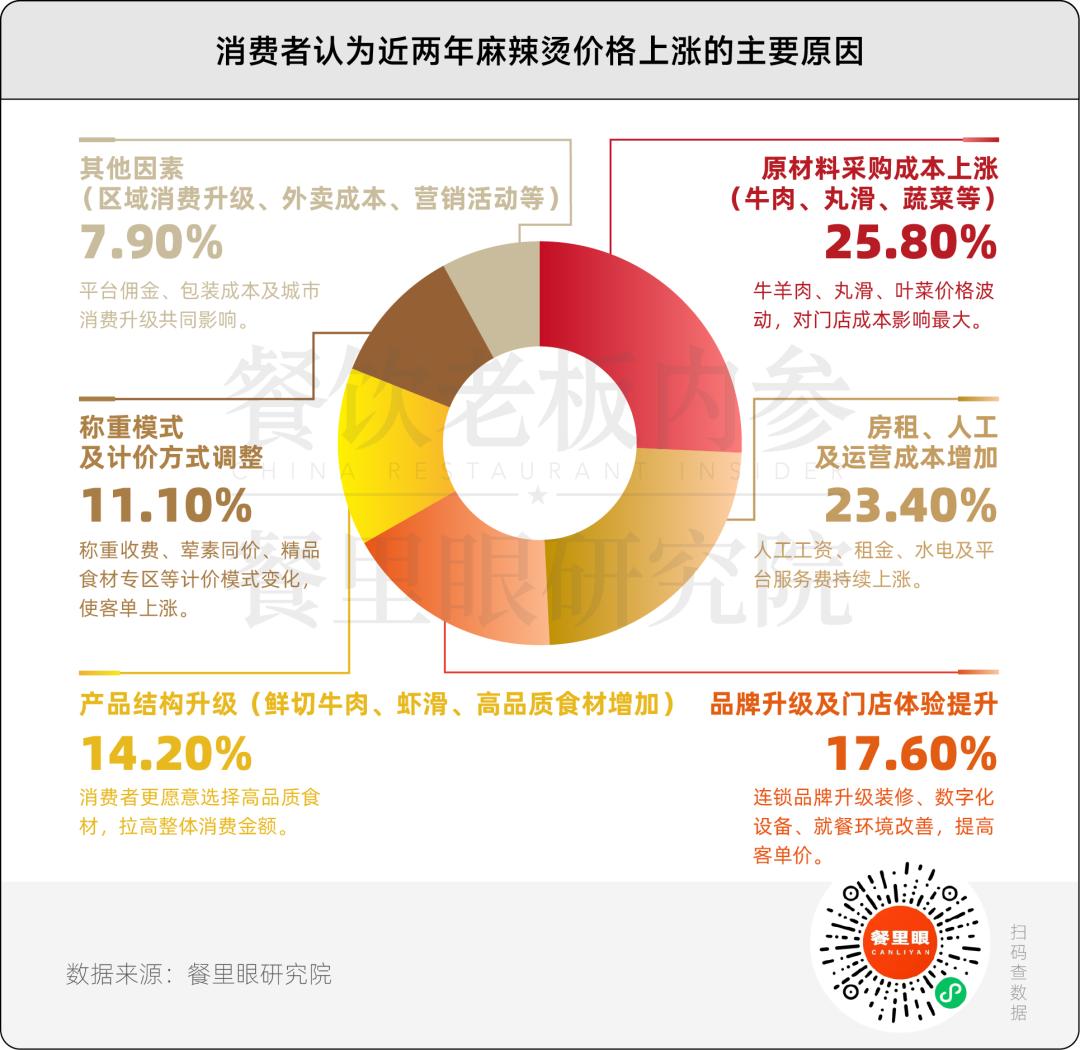
In the past two years, malatang, as a "new - type assassin", has continuously sparked discussions, such as "Can't afford malatang with a monthly salary of 20,000" and "Spending more than 50 yuan just by casually picking some ingredients". This is very different from the affordable and cheap malatang in many people's memories. When malatang has shifted from the "15 - yuan freedom" to the "30 - yuan caution" and when a basic meal makes people hesitate when picking ingredients, it indicates that this is not the pricing strategy of a single brand or store.
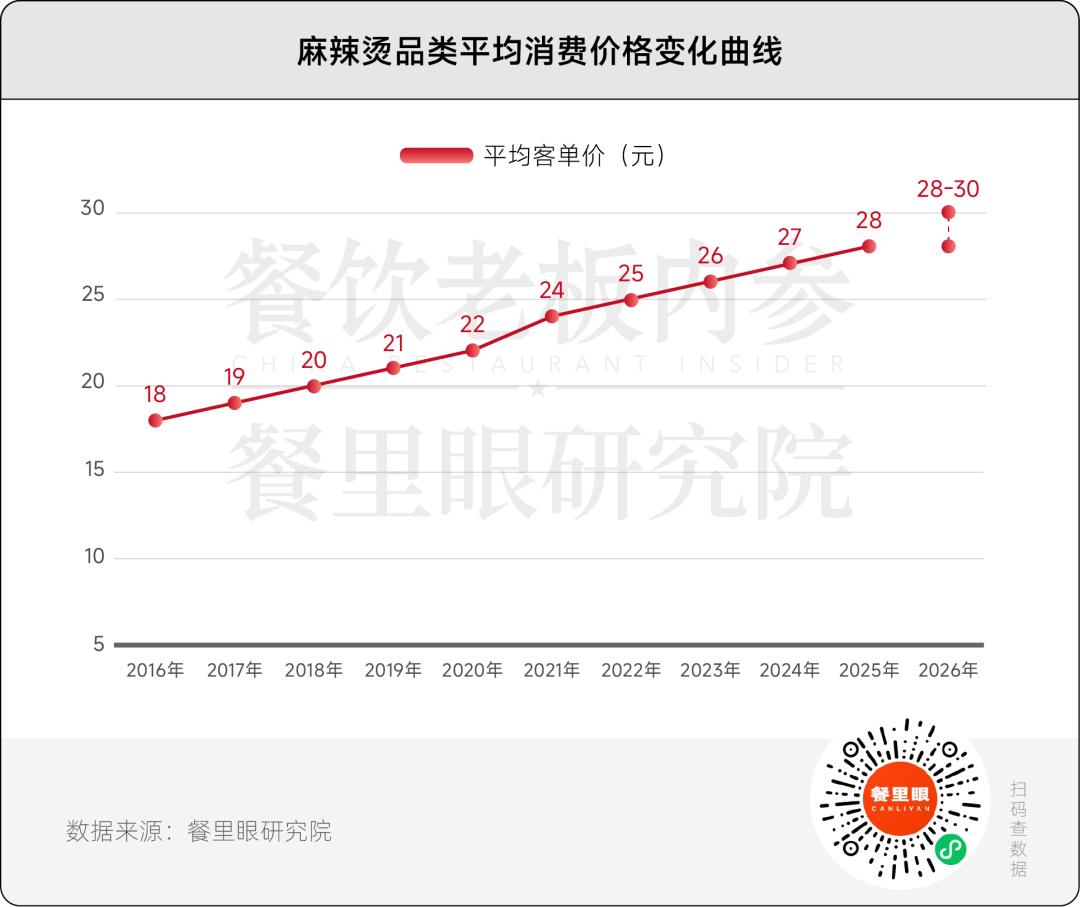
There are mainly three reasons behind the increase in the price of malatang:
Firstly, the sales form has changed. In the early days, malatang was mainly priced by skewers or bundles. Later, it gradually changed to the self - service weighing mode. This change allows merchants to save calculation time and improve store operation efficiency. However, it also creates a psychological illusion for consumers, reducing their price sensitivity, and customers are likely to pick more ingredients unconsciously.
Secondly, with the entry of capital, some new - style malatang brands have continuously reshaped the category differences in terms of ingredients, flavors, service experiences, scenarios, and concepts. For example, in the past two years, the combination of malatang and innovative scenarios, such as hot - pot skewers around a stove, which features an open - style social scenario; the upgrading of the malatang model, with some Sichuan - Chongqing - flavored malatang using weighing pans or basins for ingredient selection, has set off a trend in the category; the addition of various toppings to malatang, including Sichuan, Hunan, Guangdong, and Shandong flavors, has brought innovation in taste.
Thirdly, with the improvement of the industry's standardization level, various costs have changed accordingly. The standardization of store management has become an important part of enterprise cost expenditure. Coupled with the increase in operating costs such as labor and rent, the price of malatang has naturally risen.
In fact, the emergence of the term "assassin" is, of course, due to the "lack of sincerity" or "tricky marketing" of some merchants. However, it also reflects the inevitable painful stage in the upgrading of the malatang category from street stalls and family - run stores to brand - oriented and scenario - based models.
True category upgrading is not just about raising prices but also about value equivalence. In the long run, leading brands use "transparency, upgrading, and quality" to prove their worth and raise the threshold. When upgrading becomes the standard for major brands, those "assassin stores" that rely on information asymmetry to overcharge customers will be easily recognized by consumers, and their living space will be squeezed.
04
Being Squeezed by Similar Categories, the "Middle Ground" of the Category Narrows
Traditional and New - style Brands Seek Breakthroughs
Currently, malatang stores in the market are becoming increasingly similar in terms of soup base flavors, popular products, ingredient choices, and billing models. Even when consumers enter any malatang store, the menu combinations are almost the same, making it difficult to form significant brand differentiation.
This serious homogenization of products has directly led to intensified price competition. Consumers are reluctant to pay a higher premium for products that "seem to be the same". In the current situation where bone broth, sesame paste, and self - service weighing have become the standard features of the malatang category, price seems to be the only competitive factor for brands. And "price assassins" have become a key factor for more and more consumers to avoid.
Meanwhile, there is a high degree of similarity among small hot - pots, maocai, Chuanchuanxiang, and malatang. The malatang category is facing direct squeezing from these "similar" categories.
More notably, since 2025, major hot - pot brands and fast - food brands have successively launched malatang sub - brands, introduced malatang products, or launched the "small hot - pot" category, targeting the lunch needs of white - collar workers. The entry of hot - pot giants like Haidilao into the lower - end market has also put malatang brands in a more severe market competition situation.
With cross - category giants penetrating downwards and similar categories approaching upwards, malatang is caught in the "middle ground", and its living space is getting narrower.
From the "traditional malatang" to the current diversity, selectivity, and innovation, malatang has reached a new level of competition. Currently, the most - concerned segmentation directions are mainly concentrated in two dimensions: new forms and new regions:
In terms of form, malatang has undergone a transformation from "a bowl of soup" to "diverse eating methods". The Sichuan - style dry - mixed malatang with red oil and the Northeast - style sticky malatang with sesame paste are growing in parallel. These forms do not limit malatang to being served in a bowl. Instead, it can be served on weighing pans, etc. At the same time, it is less likely to spill, making it more suitable for take - out and adaptable to more consumption scenarios.
In terms of region, some characteristic regional malatang varieties are very popular. For example, Tianshui malatang, Northeast sticky malatang, Thai - style malatang, and the Guizhou - flavored malatang that has emerged in the past two years. After the rise of regional flavors, the competition in the malatang category has shifted to the exclusivity of characteristic ingredients, such as Gangu peppers and