Conversation with XU Zhenhua, Founder of Ocean Shark: When Sci-Fi Mecha Becomes Outdoor Gear, How Do Exoskeletons Redefine Human-Machine Relationships?
The future human scenarios in the movie "The Wandering Earth 2" and the game "Death Stranding", where the protagonists walk in exoskeletons, are becoming real equipment for outdoor enthusiasts.
On July 4th, in Yangcheng Lake Peninsula Tourist Resort, a dozen people were hiking by the lake in "mecha suits". They were wearing the Viatrix Extended - Range Powered Exoskeleton Robot by OSSUR. After walking a few steps, their steps quickly became lighter. This is because the exoskeleton learns their walking postures and adds a certain thrust at the moment of lifting the leg, making the 6 - kilometer hike feel more like a leisurely City walk.
The mecha hiking event that day was jointly planned by OSSUR and the outdoor platform Yizhangzhidi. The route connected the lakeside promenade, vacation spaces, and ecological parks. Multiple viewing and dressing - up points were set up along the way, integrating cutting - edge technology, outdoor aesthetics, and lakeshore scenery. It allowed participants to immerse themselves in the new way of human - machine collaborative hiking and experience the relaxation and sense of exploration in hiking.
As an extension of human physical strength, exoskeleton robots represented by OSSUR are gradually moving from factory assembly lines and hospital rehabilitation departments to the outdoors, evolving the ability to break through human movement and physical limitations into a new way of travel and exercise through human - machine collaboration.
OSSUR was founded in Shanghai in 2018. The predecessor of the team started with the research and development of medical rehabilitation exoskeletons and soon entered the industrial application field, being applied in a large number of industrial logistics scenarios such as emergency fire - fighting and power line inspection. Its overseas business covers 25 countries and regions including the United States and Japan. As technologies such as lightweighting gradually matured, in 2025, OSSUR began to enter the consumer - grade exoskeleton market. Its consumer - grade brand Viatrix won the CES 2026 Innovation Award and the Silver Award of the 10th China Design Intelligence Award with its original Float360 floating hip joint architecture and AI motion deployment.
"Making consumer - grade exoskeletons is our core goal. We will also continue the research and development in industrial scenarios, forming a dual - wheel drive of 'industrial foundation + consumer - driven growth'," said Xu Zhenhua, the founder of OSSUR.
1. Making Lighter and Smarter Consumer - Grade Exoskeletons
It wasn't extreme athletes and professional trail runners who were initially interested in OSSUR's consumer - grade products, but ordinary people who "sit in the office for a long time, have average physical fitness but want to go out and see the world". Xu Zhenhua found that there were especially many men aged 30 - 50 among them.
The number of female users is relatively small because current exoskeleton products are still relatively bulky overall, and the wearing coordination and photo - taking effects are relatively limited. "So we are also continuously researching and developing in terms of materials and system design to make the exoskeleton lighter and more beautiful," Xu Zhenhua said. Lightweighting and intelligence are the inevitable trends for consumer - grade exoskeleton products. Becoming lighter not only improves the comfort of use but also reduces kinetic energy loss, making the device more power - efficient. In turn, it allows the battery to be made smaller and lighter.
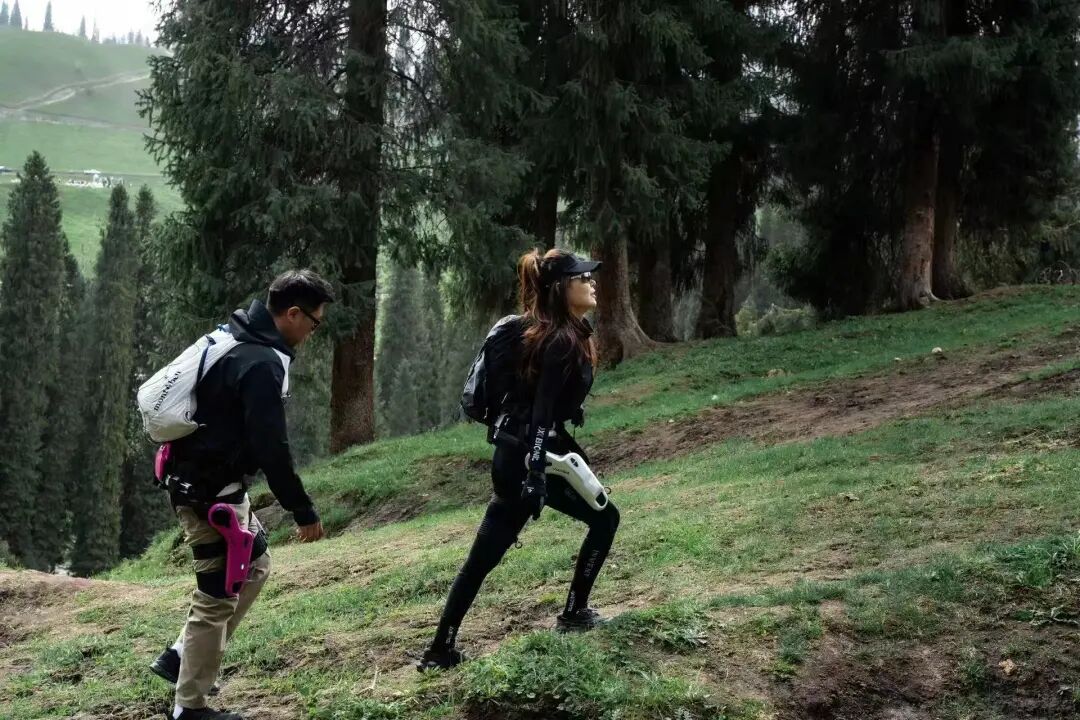
OSSUR Exoskeleton Robot
Intelligence is the technological foundation for exoskeletons to be truly applied in outdoor scenarios. A few years ago, some exoskeleton brands launched a round of market promotion, but they didn't achieve market success in the end. Xu Zhenhua analyzed that the key reason behind this was that the exoskeletons at that time lacked AI capabilities and could only do motion planning. Since everyone has different exercise habits and walking gaits, it was difficult for them to highly integrate with the user's real movements in uncertain environments such as climbing stairs and walking on mountain paths.
Now, with the addition of AI capabilities, exoskeletons have truly achieved a leap from preset programs to real - time learning. "After the device is turned on, as long as the user walks a few steps, the AI can automatically provide assistance based on the gait. During the movement, it will continuously collect data for correction, making the device more and more integrated with the user," Xu Zhenhua introduced. The self - developed vehicle - grade responsive motor of Viatrix can output power precisely in milliseconds, and the total 46Nm of power on both legs combined with the AI gait algorithm brings an improvement in leg strength.
2. From a Single Hike to an Ecosystem
OSSUR's introduction of exoskeletons into the mountains and fields didn't start in Yangcheng Lake. After the mecha hiking event planned by OSSUR in Qiandao Lake ended, this route also became a regular one. OSSUR also jointly set up outdoor scene rental and sales experience points in the scenic area with Yizhang Camplus, providing hiking experience services with exoskeleton rentals for subsequent tourists and creating a characteristic space integrating outdoor scenes, theme activities, and in - depth experiences.
From Qiandao Lake to Yangcheng Lake, so far, OSSUR has established 20 cultural and tourism ecological cooperation outlets across the country. It first validates the routes, accumulates content, and penetrates the core group through activities, and then transforms the experience into rental and sales points that can be repeatedly operated, allowing users to experience wearing the exoskeletons in real outdoor scenes before deciding whether to purchase.
Xu Zhenhua said that this operation model of the "technology + cultural and tourism" ecosystem not only helps to dispel the decision - making concerns of potential users but also can feed back the product iteration through the actual measurement data of users, forming a positive cycle of "experience - verification - conversion - iteration".
In addition to going into the mountains, OSSUR has also entered the offline stores of Haglöfs in the city. "Most domestic exoskeleton companies lack more than 10 years of outdoor experience," Xu Zhenhua said. OSSUR chose to learn from the brands that know the most about the outdoors. "Learning from the century - old and experienced outdoor brand companies can help us understand customers and scenarios more accurately and iterate and adjust our products." At the same time, as an exoskeleton technology company with product R & D as its core ability, the vision of OSSUR Viatrix is to jointly build the next - generation outdoor technology equipment with the ecological partners in the outdoor industry through technological empowerment.
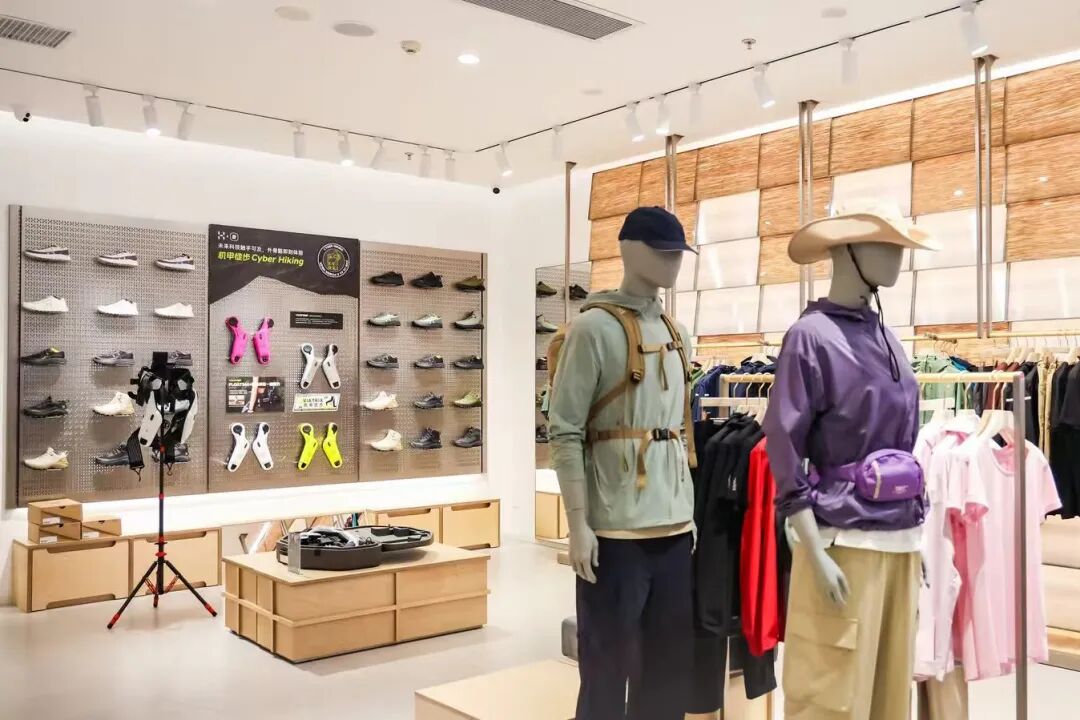
OSSUR Offline Store
From a one - time experience to a sustainable outdoor lifestyle, from traditional retail terminals to in - depth experience network nodes, OSSUR uses this replicable and expandable model to build a systematic layout from occupying the category mindset to constructing a business closed - loop.
3. Not Replacing Humans, but an Extension of Human Strength
"Is it cheating to climb mountains in an exoskeleton?"
Xu Zhenhua is no stranger to this question: "The exoskeleton responds in milliseconds according to human movements and instructions and amplifies the mechanical force, ensuring that users can still maintain ideal technical movements when their physical strength reaches the limit."
In other words, the exoskeleton doesn't make decisions for people. Instead, it saves people's overall physical strength through "extended - range power", making it easier to complete correct movements and thus extending the duration of extreme endurance. That is to say, with the same physical limit, people can walk farther, and their physical functions are also fully exercised.
In addition, the floating 360 - degree joints currently used in OSSUR exoskeletons can better match the overall flexibility of human movement, avoiding falls and unnecessary movement restrictions during hiking.
Xu Zhenhua clearly distinguishes the boundaries between consumer - grade and medical - grade exoskeletons. In his opinion, the boundary between the two is not a decrease in technical ability but a fundamental difference in product logic. The latter needs to be deeply combined with doctors' clinical diagnoses, involving complex rehabilitation evaluations and risk control.
However, at the consumer end, the boundaries between these two types of products are often blurred for ordinary users. "Many people can't clearly distinguish the actual functions of exoskeletons, what is for medical use and what is for daily wearing," Xu Zhenhua said. OSSUR attaches great importance to proactive pre - sales explanations and provides clear guidance and instructions to users during the consultation process. "If users have problems such as hemiplegia or stroke, we will clearly not recommend them to use consumer - grade exoskeletons. For older users, we will also ask them to shoot a walking video and make some pre - sales predictions based on their walking conditions."
Behind this restraint of "knowing what not to do" is a clear understanding of the technical boundaries of exoskeletons. Fortune Business Insights predicts that the global market size of wearable robot exoskeletons will be $2.49 billion in 2025, and the popularity of the track is further escalating. Many brands including OSSUR have completed multiple rounds of financing. However, Xu Zhenhua remains rational about the current "boom" in the industry: "Exoskeletons won't have a sudden change like the 'iPhone 4 moment'. Instead, they will continue to climb for a longer time and finally cultivate user habits with good product capabilities."
The rapid evolution of exoskeletons also poses another question to people: When technology can help people go farther, what defines a person's physical "boundaries"? In Xu Zhenhua's view, different from humanoid robots that aim to replace humans, exoskeletons pursue cooperation with humans, aiming to give people stronger strength and greater freedom while maintaining human subjectivity.