Microsoft, ByteDance, and Ford are all offering high salaries to recruit talents, as AI has spawned a brand-new job position.

The whole internet is talking about AI replacing human labor, but the reality is that big tech companies are frantically hiring people.
Just as Microsoft was rumored to lay off thousands of employees, it invested $2.5 billion to establish the Frontier Company, integrating about 6,000 engineers, technical consultants, and sales teams and deploying them to the sites of corporate clients such as Unilever and Novo Nordisk. Ford went even further. After spending a large sum of money to re - hire 350 veteran engineers, because the AI automated design system made a lot of mistakes, and the quality declined to the point where manual rework was necessary.
Isn't AI supposed to replace human labor? Why is it that the more we use it, the more we rely on humans?
Microsoft invests $2.5 billion and shifts from "selling CDs" to "on - site installation service"
Microsoft deployed 6,000 people on - site, directly transferred from the existing teams. Judson Althoff, the president of the commercial business, publicly admitted in June that "it was a mistake to only tie up with the OpenAI model when developing Copilot three years ago." Now, it is promoting the platform - neutral Frontier Company to help customers "flexibly switch between different large models."
Althoff's core point is actually quite simple: previously, when selling Copilot licenses, enterprises thought they could use them on their own after purchasing, but in the end, they found they couldn't use them at all.
The ideal of software companies is to "sell CDs," and customers can install the software themselves after purchasing, which is also the traditional thinking of SaaS. Now, Microsoft sends people to customers' sites for installation, debugging, and training, indicating that the productization of AI tools has not been fully achieved. Since customers don't know how to use, are afraid to use, or can't use the tools well, software vendors have to send people to the sites. The $2.5 billion is the initial capital, covering salaries, travel expenses, platform construction, and operation, to support this team, and the scale is considerable.

Palantir started doing this twenty years ago, but Palantir has a consulting - company background. The fact that a pure software giant like Microsoft is also getting involved shows that the self - service level of AI products is far lower than expected. Enterprises find it difficult to integrate AI into business processes, connect it with legacy systems, and calculate the return on investment. As a result, the goal of improving efficiency becomes illusory. Licenses become useless, and naturally, enterprises won't renew them.
Domestic big tech companies are also moving in the same direction. ByteDance offers a monthly salary of 35,000 to 70,000 yuan for "Frontline Deployment Engineers" (FDE), with 15 months' salary a year, and the maximum annual salary can reach 1.05 million yuan. Alibaba Cloud Intelligence offers a monthly salary of 20,000 to 50,000 yuan for FDEs, with 16 months' salary a year. The LinkedIn 2026 Labor Report shows that from 2023 to 2025, the number of global FDE recruitment positions increased by 42 times, based on the number of job postings. The base number was relatively low because this is an emerging position. During the same period, the number of AI engineer positions only increased by 13 times.
Big tech companies are not competing for programmers but for "translators." The core ability of FDEs is not programming but on - site diagnosis. When a customer says "I want to implement AI," FDEs need to figure out: whether your data can be used, where in the business process AI can be applied, and how to calculate the return. They must be on - site, understanding both the technology stack and the customer's business, and be able to translate the customer's request like "I want this button to be red" into a system architecture on the spot.
On June 30, AWS announced an investment of $1 billion to establish a similar front - line deployment engineering department. OpenAI and Anthropic also established their respective deployment joint - ventures earlier. Several big tech companies are doing the same thing, and the major source of revenue from enterprises' AI purchases has shifted from interface usage fees to the service fees of "sending people to the sites."
Ford re - hires 350 veteran engineers to fix AI issues
While Microsoft is sending people out, Ford is bringing people back.
On June 25, Ford executives publicly admitted that the AI automated design system had led to a decline in quality, and they had to recall more than 350 senior engineers to fix the mistakes. VP Charles Poon's exact words were: "We wrongly assumed that as long as we introduced AI, we could produce high - quality products."
After the veteran engineers left, AI was left with nothing but blanks. The experience that was not documented, such as "why did the veteran engineer weld one more circle on this weld," was not in the database, so AI was like an intern making blind guesses. Ford also added 100,000 AI automated tests and a 40 - person QA team, and the quality ranking significantly improved.
Ford has not given up on AI; it is making up for the deficiencies. The effectiveness of AI depends on the quality of training data. If the data lacks the implicit knowledge of veteran engineers, the output will be useless. AI can write perfect code and draw beautiful design drawings, but it doesn't understand the unspoken rules like "this legacy system cannot be modified."
To put it bluntly, the well - digger is more valuable than the water - seller
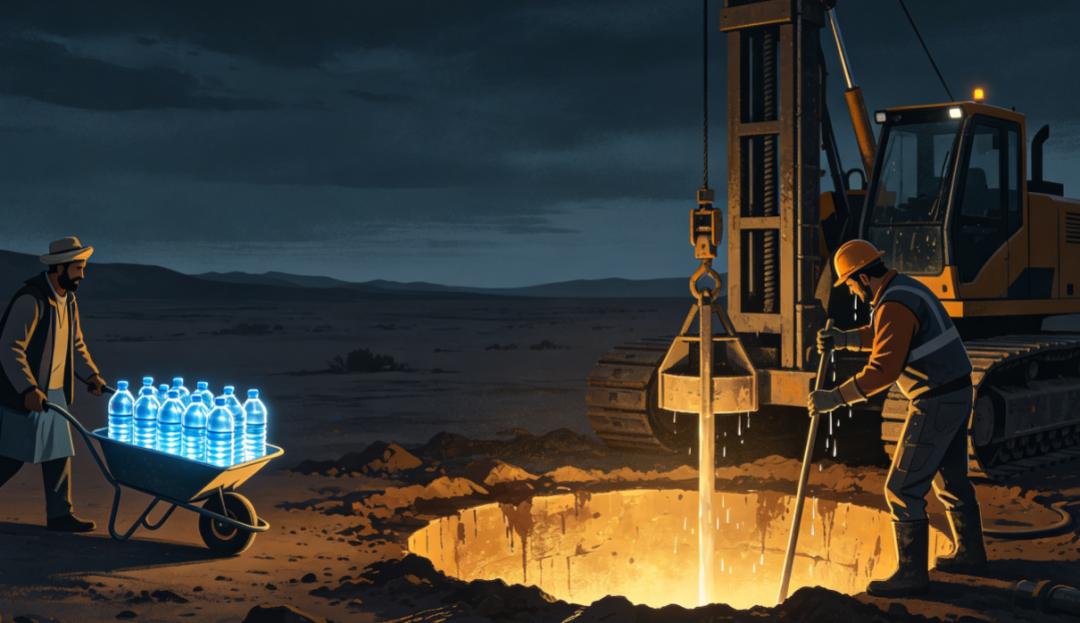
According to Deloitte's "2026 China Manufacturing AI Implementation White Paper," the survey sample covered 200 large - scale manufacturing enterprises, and 91% of them did not meet the expectations. Manufacturing is a tough nut to crack for AI implementation, and this proportion is quite telling.
When enterprises get an AI interface, it's like getting a Swiss Army knife with many functions, but they don't know which screw to turn first. After purchasing the interface, they need to clean the data, adjust the prompts, connect to internal systems, modify business processes, and train employees. These tasks cannot be done by the interface; they rely on humans.
This also explains why recently, companies such as Citigroup and Adobe have restricted their employees from using flagship large models. The computing power cost can be saved by downgrading the model, but the labor cost of on - site services cannot be saved at all. The total cost of AI has never been just the token bill, but many enterprises haven't calculated this cost before.
Some people will definitely say that this is just a temporary phenomenon in the early stage of AI. In the future, when intelligent agents are more mature and products are more user - friendly, there won't be a need for so many people.
This statement is only half - right. Standardized and generalized scenarios will indeed be gradually solved through productization. However, the core pain points in enterprise - level scenarios have never been that the models are not powerful enough, but that each company has its own legacy systems, business unspoken rules, and undocumented historical experience. These things cannot be fully learned or standardized by AI.
Human positions will be upgraded from "execution positions" to "translation positions, debugging positions, and management positions." Humans will always be the last mile between AI and real - world business.
Microsoft sends 6,000 people to customers' sites, ByteDance and Alibaba are competing for "translators" with million - yuan annual salaries, and Ford re - hires veteran engineers to fix AI. These three companies are far apart, but they are calculating the same thing: the cost of AI in the B2B market cannot be calculated based on interface usage fees; it has to be calculated based on "person - days."
The interface itself is not valuable; the valuable ones are the people doing the ground - work. Those who claim that "AI will replace humans" are mostly tool - sellers, while those who are actually using AI are still busy hiring people.