"American Dolls Playing the Stock Market" officially kicks off on July 4, Trump publicly calls on Musk to donate stocks, and Micron makes a bold investment of 250 million US dollars
According to reports from multiple foreign media outlets, an investment account for children with tax incentives, known as the Trump Account, will be officially launched on July 4th, and various entities can deposit funds into this account.
Recently, companies such as Micron Technology, Intel, JPMorgan Chase, and Wells Fargo have stated that they will contribute $1,000 for the eligible children of their employees. However, this account has also sparked heated discussions. Some research institutions are worried that this policy will further exacerbate wealth disparity.
Micron to Invest $250 Million
According to The New York Times, U.S. President Trump said on July 1st (local time) that Micron Technology has promised to invest $250 million in the Trump Account.
Trump posted on a social platform that this is the largest investment of its kind.
Micron Technology stated that this $250 million will be implemented through an employee matching program: the company will match up to $1,000 in deposits for each employee's children under 18 years old.
In addition, Micron Technology also plans to make a one - time deposit of $250 into the Trump Accounts of children in states such as Idaho, New York, Virginia, California, Colorado, Minnesota, and Texas. Micron said that the number of children covered by this contribution could reach up to 1 million.
As early as December 2024, the U.S. Department of Commerce issued a direct subsidy of up to $6.165 billion to Micron Technology under the CHIPS Act. In June 2025, Micron Technology announced a plan to invest $200 billion in semiconductor manufacturing and research and development in the United States, covering Idaho, New York, and Virginia. This investment is accompanied by an additional direct subsidy of up to $275 million.
Meanwhile, Trump himself has also repeatedly supported Micron and has bought Micron Technology stocks.
Documents disclosed by the U.S. Office of Government Ethics on May 14th show that in March this year, the day after Trump bought Micron stocks, he said on Fox News, "I just met with the head of Micron. It's one of the hottest companies."
When Trump was interviewed by CNBC on July 2nd, he also called out to Elon Musk. He believes that Musk will donate SpaceX stocks to the Trump Account.
"I think he will do it. Micron, this great company, just completed it," he added.
In addition to Micron Technology, many other companies, celebrities, and billionaires have also joined this program.
According to USA Today on June 29th, JPMorgan Chase, Robinhood, Russell Investments, BlackRock, Bank of New York Mellon, and Wells Fargo have all stated that they will contribute $1,000 for the eligible children of their employees. Intel said that for the children of eligible employees born between 2025 and 2028, it will match the $1,000 startup funds provided by the government on an equal basis.
Visa said that after the 530A Clause Account (the official name of the Trump Account) is officially launched, it will be included in the U.S. employee benefit system. Mastercard and Uber have both said that they will participate in the Trump Account matching program, but the specific details have not been announced yet.
Hedge - fund billionaire Ray Dalio and his wife Barbara have promised to provide an additional $250 for each of about 300,000 eligible children in Connecticut.
A report published by Bloomberg on July 1st believes that the successive funding commitments from companies and wealthy donors reflect that major companies and business leaders are actively and publicly supporting this policy, which Trump regards as a political achievement.
Newborns to Receive $1,000 "Startup Funds"
According to the official website of the White House, the 530A Clause Account is a tax - deferred savings account for minors under 18 years old.
The funds in the account can grow in value over the long term through investment returns. After the child reaches adulthood, the account will basically operate according to the rules of a traditional Individual Retirement Account (IRA). Before the child reaches 18 years old, the account needs to be opened and managed by parents or guardians.
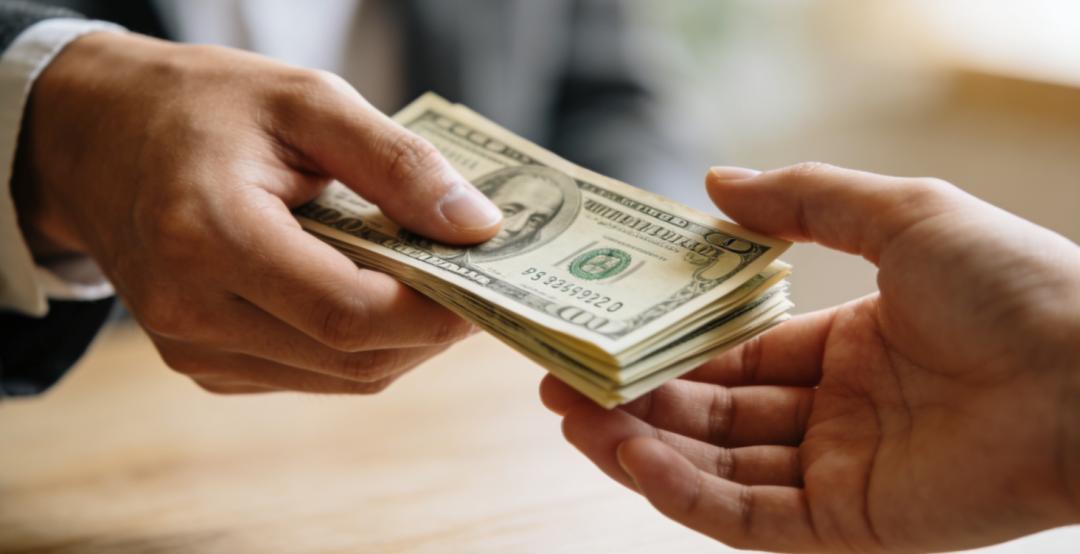
According to regulations, the U.S. Treasury Department will inject a one - time $1,000 startup fund for U.S. infants born between 2025 and 2028.
In addition, the Trump Account can also receive deposits from multiple sources. Among them, the child, parents, guardians, and other relatives can deposit a maximum of $5,000 in after - tax income per year in total. Employers can deposit a maximum of $2,500 for each employee per year. This amount is included in the aforementioned $5,000 annual total limit and is not included in the employee's taxable income.
In addition, qualified charitable organizations and government agencies at all levels can make unified deposits for all eligible children, and this fund is not subject to the $5,000 annual deposit limit.
According to legal requirements, the Trump Account can only invest in broad - based stock index funds covering the entire U.S. stock market (such as the S&P 500 index fund); the products cannot use leverage, and the annual fee rate is capped at 0.10%.
According to Reuters, the U.S. Treasury Department announced the list of investment products for the Trump Account on Wednesday, which includes several exchange - traded funds under State Street, BlackRock, and Vanguard.
The U.S. Treasury Department said that all funds deposited in the Trump Account will be invested in the State Street SPDR Portfolio S&P 500 ETF (SPYM), which will be the default investment option at the start of the program.
The U.S. Treasury Department has also selected the iShares Core S&P 500 ETF (IVV) and iShares Core S&P Total U.S. Stock Market ETF (ITOT) under BlackRock, the State Street SPDR Portfolio S&P 1500 Composite Stock Market ETF (SPTM), and the Vanguard Total Stock Market Index ETF (VTI).
However, not all U.S. children under 18 can receive the $1,000 startup fund. According to CNBC on July 1st, children born between 2016 and 2024 cannot apply for this $1,000 subsidy; but if the median household income in their place of residence is no higher than $150,000, they can receive a $250 subsidy. This fund comes from a special fund of $6.25 billion promised by Michael Dell, the founder of technology giant Dell, and his wife Susan.
According to the regulations of the U.S. Internal Revenue Service, children cannot withdraw funds from the account before they reach 18 years old. Early withdrawal is only allowed in a few cases, such as the death of the account holder, refund of excess contributions, and specific account conversions.
If an individual withdraws funds before the age of 59 and a half, they need to pay income tax and a 10% penalty; however, there are also some situations where the penalty is waived, such as paying for higher - education tuition or purchasing a first - home.
Widening the Wealth Gap?
Whether the Trump Account will widen the wealth gap has also become a hot topic of discussion.
According to the aforementioned CNBC report, some believe that investing in the U.S. stock market can create a wealth - accumulation channel for children from all income levels.
However, the non - profit research institution Urban Institute pointed out that related research shows that the overall participation rate of this account may be low, especially among low - income families, and there will be a huge gap in the amount of funds deposited by families according to their income levels. In the long run, this program will benefit more high - income families, thus further exacerbating wealth disparity.
Bloomberg pointed out that many believe that the prototype of the Trump Account is a proposal by the government to set up a children's trust fund, which is also known as the "baby bond" program in academia. This concept was first proposed by Darity Hamilton, a professor and economist at the New School for Social Research in New York, with the original intention of helping low - income groups accumulate assets and narrow the wealth gap.
Currently, many states in the United States, such as Connecticut, have launched or are preparing local "baby bond" projects. However, Hamilton is skeptical about the Trump Account, calling it "a cheap way to solve the problem of wealth disparity."
Critics warn that the main beneficiaries of such tax - advantaged savings accounts are wealthy families with idle funds and the ability to make continuous contributions. A report from the McKinsey Institute for Economic Mobility points out that to truly improve the ability of upward social mobility, the policy coverage must be expanded to allow all income levels to enjoy the benefits equally.
The views in this article are for reference only and do not constitute investment advice. Investment involves risks, and you should be cautious when entering the market.
This article is from the WeChat official account "China News Service - Jingwei" (ID: jwview), written by Wei Wei, edited by Li Xiaoxuan, and the chief editors are Xue Yufei and Li Zhongyuan. It is published by 36Kr with authorization.