Physical AI is heating up, and Robotaxi is entering the "automaker era"
The narrative of Robotaxi is giving way to the imaginative high - ground of embodied intelligence.
According to incomplete statistics, in 2025, there were only 3 public financing events in the Robotaxi track, with a cumulative amount exceeding 5.7 billion yuan. In contrast, the financing in the embodied intelligence track was booming, and the financing scale during the same period had exceeded 50 billion yuan.
Technological concepts are always more likely to obtain a premium during the "ascending period". As revealed by Amara's Law, people tend to overestimate the short - term progress of a technology but underestimate its long - term impact.
However, the shift of the capital narrative does not mean the cooling of the technology itself. On the contrary, when Robotaxi moves from concept verification to fleet operation on real roads, it truly enters the stage where "accounting" is needed.
This is an inevitable step when new technologies move towards large - scale application.
It is worth mentioning that at the current stage, most mainstream players in the Robotaxi field hold the identity cards of intelligent driving enterprises and operation platforms. Automobile manufacturers are more participants rather than the dominant narrators.
For a long time in the past, only Tesla led the Robotaxi narrative as a complete vehicle manufacturer and entered the mass - production and operation stage.
But now, XPeng and Geely have officially joined the game of automobile manufacturers leading Robotaxi in two completely different ways.
So far, the narrative of automobile manufacturers building Robotaxi has changed from "Tesla's solo show" to "three different approaches" competing on the same stage.
Three paths and three logics reveal the in - depth expression of automobile manufacturers leading Robotaxi in the era of physical AI.
What do automobile manufacturers aim for when leading the development of Robotaxi?
It is actually not mainstream for automobile manufacturers to lead the development of Robotaxi.
Even during the hottest period of Robotaxi, automobile manufacturers generally took one of two stances: either including it in their PPTs to follow the concept trend, or serving as the manufacturer in the "Golden Triangle Model", only responsible for providing pre - installed mass - produced vehicles.
From new - energy vehicle startups to traditional giants, most of them just dabbled in the field, and only a few dared to venture into the deep water.
After all, it is not easy for automobile manufacturers to take on the entire Robotaxi business.
In fact, for automobile manufacturers, Robotaxi is a "narrow path", while embodied intelligence is a "broad path".
The imaginative narrative of Robotaxi lies in transforming the vehicle into an operational service, forcing technological iteration through the most challenging scenarios, and seizing the entrance to the travel ecosystem. Essentially, it revolves around the definition of "vehicle".
The imagination of embodied intelligence is much broader.
Automobile manufacturers can apply robots in a wide variety of scenarios:
BYD plans to use humanoid robots as store guides in the future. Li Auto can extend the concept of "family mobile space". The vehicle is a "mobile home", and the robot can continue the same service logic in a "fixed home". In addition, many automobile factories themselves are the most ready - made application scenarios for industrial robots.
You can see that Robotaxi shares the "vehicle + intelligent driving technology", while embodied intelligence shares the "AI brain + industrial production logic". The former is more specific, and the latter is more abstract.
It is precisely this difference that makes the brand risks of the two worlds apart.
If a Robotaxi has an accident, users will associate "this Robotaxi has a problem" with "whether this brand of vehicles can be trusted".
Because in essence, Robotaxi is still a "vehicle". It shares the same brand logo, the same technology system, and the same trust asset pool with the mass - produced vehicles sold by automobile manufacturers to users.
If a humanoid robot malfunctions in a store, users will not deny the safety of the vehicles manufactured by this automobile manufacturer. Because the robot is "another business line", and users naturally do not equate the robot's malfunction with the vehicle's quality.
Furthermore, at present, Robotaxi has moved towards real - road verification, while most of the embodied intelligence is still in the technological concept stage. The imagination space of the latter can be infinitely expanded, while the error - tolerance space of the former is firmly restricted by reality.
But even so, why did Tesla, XPeng, and Geely choose to firmly layout in the Robotaxi field?
The reason is that Robotaxi happens to fall on the main narrative lines of these three automobile manufacturers.
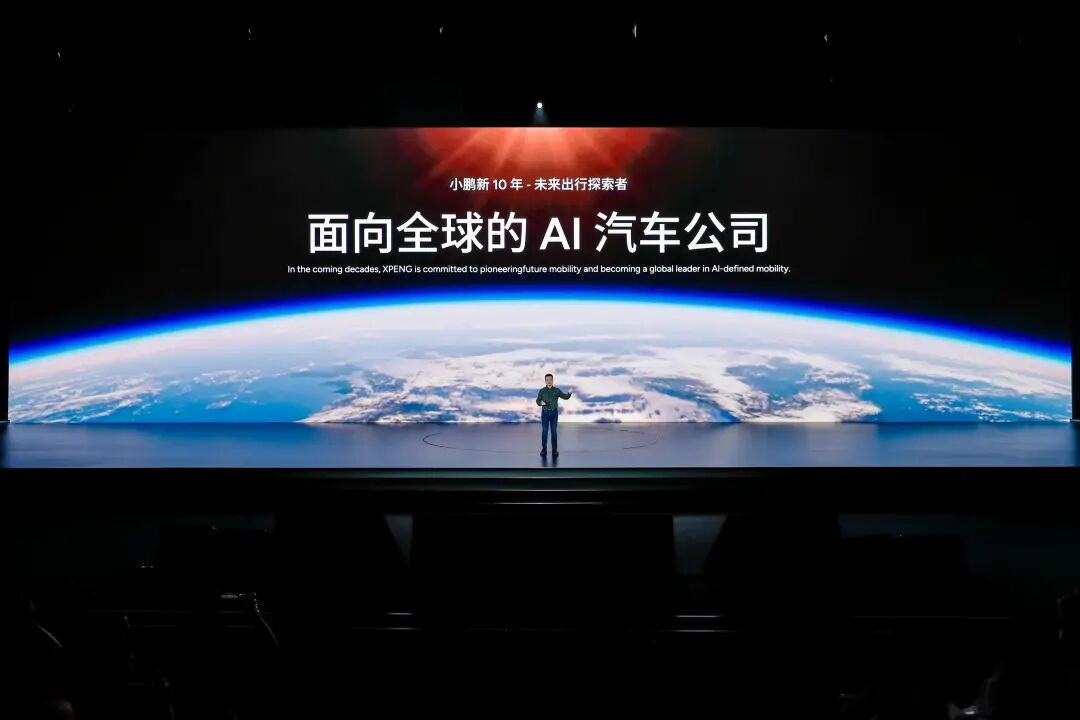
After all, Robotaxi is the "ultimate test field" for intelligent driving capabilities.
L2+ allows for "occasional failures" with takeover space, but Robotaxi requires "almost never failing". The density of corner cases encountered by a Robotaxi on the road far exceeds that of any mass - produced vehicle test.
For automobile manufacturers that have been deeply involved in the L2+ level, Robotaxi means that their intelligent driving capabilities have reached the boundary of unmanned driving and can stand at the high point of the data closed - loop of physical AI.
This is the case for all three companies:
FSD is the core anchor point for Tesla's valuation, and Robotaxi is the ultimate verification of the upward breakthrough of FSD capabilities.
XPeng has completed the identity transformation from an "automobile company" to a "physical AI company". Robotaxi is the high point of the physical AI data closed - loop.
Geely has entered the era of full - domain AI 2.0. Robotaxi is a key application scenario in this ecosystem.
In addition to proving the technological upper limit, when these three companies bet on Robotaxi, they are also betting on the turning point of future business models.
Robotaxi charges by mileage, continuously generates income, and has a decreasing marginal cost. Once it achieves large - scale operation, it will be a stable and high - margin "toll".
Today, the valuation multiples that the capital market is willing to give to "travel service providers" are still higher than those for "automobile manufacturers". Therefore, the transformation from selling hardware to selling services is the most core grip for future business transformation and is also the common strategic card of these three automobile manufacturers.
Three positions, three "ways of handling" Robotaxi
Although XPeng, Geely, and Tesla all regard Robotaxi as a must - answer question in the field of physical AI, their ways of implementation are completely different.
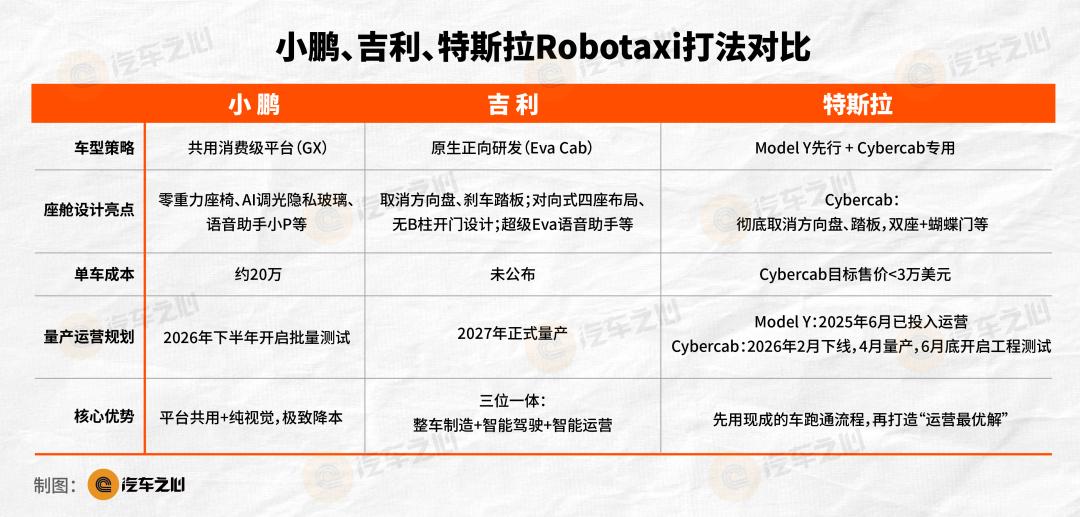
XPeng builds Robotaxi with a "fast knife".
The first Robotaxi is not independently developed but is based on the shared platform of the flagship SUV GX. It is equipped with 4 self - developed Turing chips with a total computing power of 3000 TOPS. Based on the VLA 2.0 pure - vision solution, it is planned to start demonstration operation with safety drivers in the second half of this year.
The car - building logic of "killing multiple birds with one stone" and the large - scale cost reduction brought by platform sharing make this fast knife sharp in terms of quick implementation, low cost, and accurate targeting.
However, the other side of the blade is also equally sharp. The GX is positioned as a flagship luxury SUV, while the Robotaxi is an operational vehicle. There is a natural contradiction in brand tonality between the two.
If users find that the car they bought at a high price is the same as the online car - hailing vehicle on the road, the premium space of the high - end brand will be diluted. This is a problem that XPeng must face.
Especially in the interior, XPeng GX is full of luxury features: leather seats, zero - gravity seats, AI - dimming glass, in - car refrigerator, 33 - speaker audio system, plus a 17.3 - inch central control screen and a 21.4 - inch ceiling screen.
Putting the entire set of configurations into the Robotaxi without any changes would result in too high costs, too complex maintenance, and a drag on operational efficiency for an operational - level model.
Judging from the official information, XPeng has taken two measures:
One is to simplify the configuration around the "operational" attribute. The Robotaxi version is standard with privacy glass. The rear - seat entertainment large screen automatically retracts. Passengers can open the zero - gravity seats and adjust the in - car temperature through the voice assistant. Other configurations are not mentioned.
But even after making these simplifications, this set of configurations is still far superior to most Robotaxis on the market. This leads to the second point.
That is, position it as a premium car service and use high - end models as the premium channel for Robotaxi.
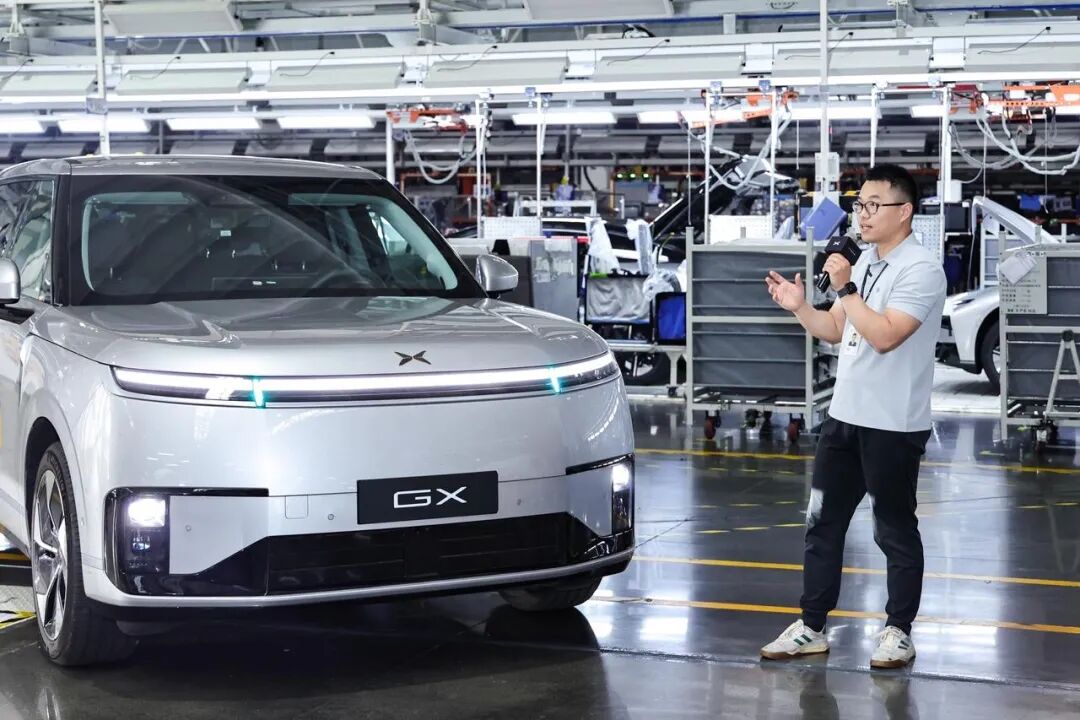
XPeng's plan might be: This Robotaxi will not be deployed in the ordinary online car - hailing market but will target business travel, high - end shuttle services, and other scenarios. Match the "luxury service" with the brand tonality of the "luxury model". Let the Robotaxi be an extension of the brand power of the flagship model rather than a dilution.
In this way, the high - end image of the GX can endorse the Robotaxi, and the operational scenarios of the Robotaxi can also enhance the technical perception of the GX. If a balance can be found between "speed" and "accuracy", the two can support each other.
It is worth mentioning that XPeng will also launch two other Robotaxi models in the future, which means that there are indeed different high - low positioning distinctions among different models.
In contrast, Geely uses a "heavy knife".
Different from XPeng's model reuse, Geely chose to start from scratch and developed a native model, the Eva Cab, specifically for Robotaxi.
This vehicle is completely designed based on the autonomous driving operation scenario, integrating Geely's vehicle manufacturing capabilities, the Qianli Haohan G - ASD L4 intelligent driving system, and ten - year operation data and service insights from Caocao Chuxing.
In terms of technology, the Eva Cab integrates NVIDIA Thor U and Qualcomm Snapdragon 8797 flagship chips, with a total computing power of over 3000 TOPS. In terms of perception, it is equipped with the world's first mass - produced 2160 - line digital lidar. The cockpit and intelligent driving can be unified and scheduled through the "central brain".
In terms of design, the Eva Cab boldly eliminates the steering wheel, accelerator, and brake pedal and adopts a four - seat layout facing each other, incorporating oriental aesthetic elements such as the Galaxy Sky Curtain and Star River Rafting door panels.
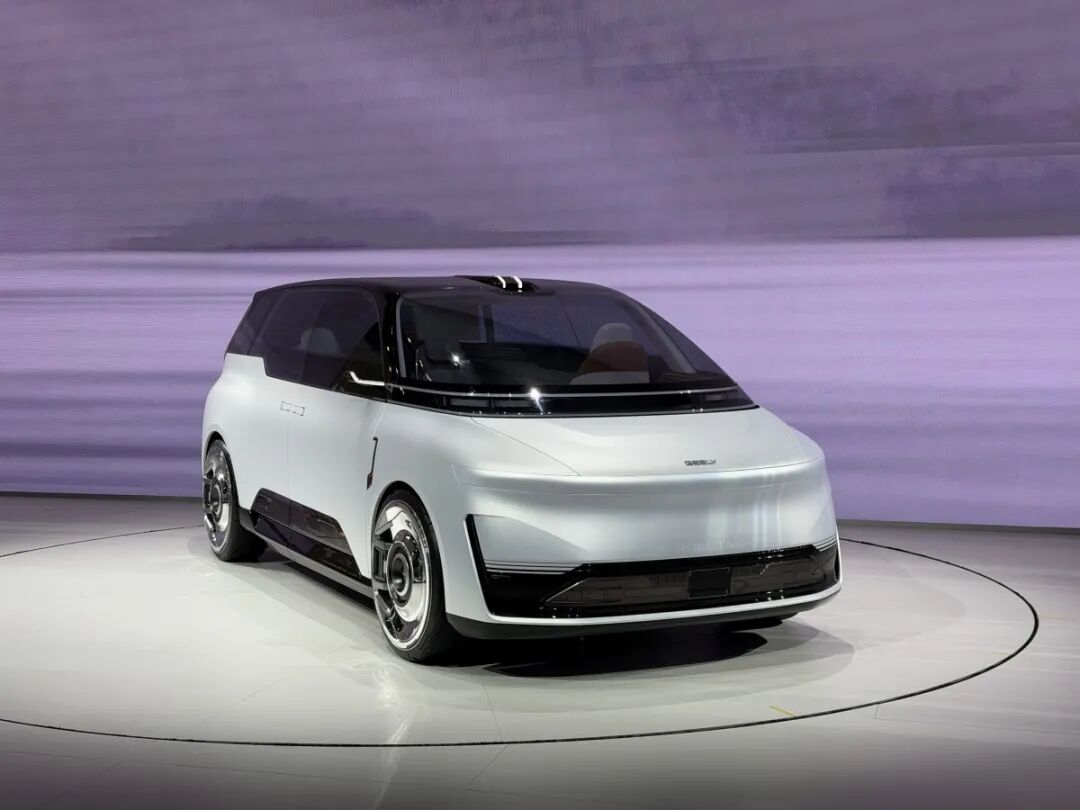
The native architecture means higher manufacturing costs and a longer development cycle, but it also leaves sufficient redundant space for avant - garde design.
In addition, in terms of operation, Caocao Chuxing under Geely can directly serve as the main operation force, while XPeng still needs to cooperate with Gaode to build an operation network. In essence, Geely chooses to build a full - stack moat for Robotaxi in a systematic way.
However, the bold vehicle design also means that the mass - production pace will not be fast. The Eva Cab is planned to be officially mass - produced in 2027, and Caocao Chuxing aims to deploy a cumulative total of 100,000 vehicles by 2030.
Tesla uses "two knives" simultaneously.
The first line: Let the Model Y "run first".
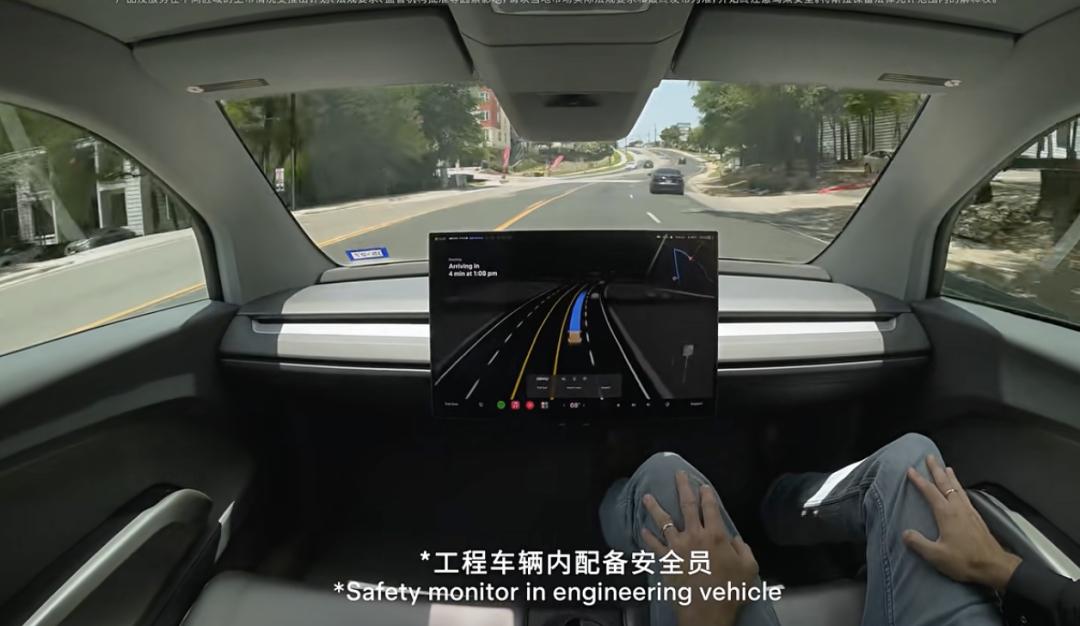
In January 2026, Tesla launched a trial operation of the Model Y as a driverless Robotaxi in Austin without a safety driver on board.
The Model Y is an existing mass - produced vehicle, and there is no need to redesign the production line. It can be directly used to verify the performance of FSD in real - world operation scenarios. After the new regulations in Texas took effect on May 28, 2026, Tesla self - certified its Robotaxi as L4 - level, which means that the path from L2 to L4 has been opened up.
The second line: The Cybercab "changes lanes to overtake".
The latest news is that the mass - produced version of this vehicle, which completely eliminates the steering wheel, accelerator, and brake pedal, has started open - road testing in Austin.
Compared with the Model Y, which verifies FSD capabilities, the Cybercab emphasizes operational efficiency more. It has front - wheel drive, a 163kW single motor, a 48kWh battery, and a curb weight of 1412kg. The lightweight route allows the Cybercab to achieve a faster charging cycle, simpler maintenance, and less consumable consumption while maintaining a certain range.
The differences in the strategies of the three companies ultimately lie in their different resource endowments and strategic priorities.
XPeng's capital reserve is far less abundant than that of Tesla and Geely. At the same time, it also needs to allocate resources to the humanoid robot business. Choosing to share the platform means "spending money where it counts". Using the GX platform to "kill multiple birds with one stone" is the most reasonable and practical choice at this stage.
Geely's industrial ecosystem gives it the confidence to complete forward - looking R & D. It can be understood that the goal of the Eva Cab is to define the optimal form of Robotaxi and become the optimal solution for operation.
Tesla chooses to advance on two fronts, and its core intention is to ensure that the rhythm of compliance verification does not stop and not to miss the current market access opportunities during the window period of stricter regulatory environment.
The paving of the Model Y is essentially a "soft landing" for the mass - production of the Cybercab. By the time the Cybercab is officially launched, the FSD capabilities will have been verified, and the regulatory adaptation will also be moderately relaxed. The only thing to do is to replace it with a more efficient vehicle.
These three "ways of handling" have no absolute superiority or inferiority. In essence, they are different strategies of each automobile manufacturer based on different resource applications.
From 0 to 1, latecomers "win by surprise"
In the Robotaxi track, automobile manufacturers are latecomers, and there is no need to avoid this fact.
In China, Luobo Kuaipao, Pony.ai, and WeRide have become the leading players. In North America, Way