Who is stifling the development of dexterous hands?
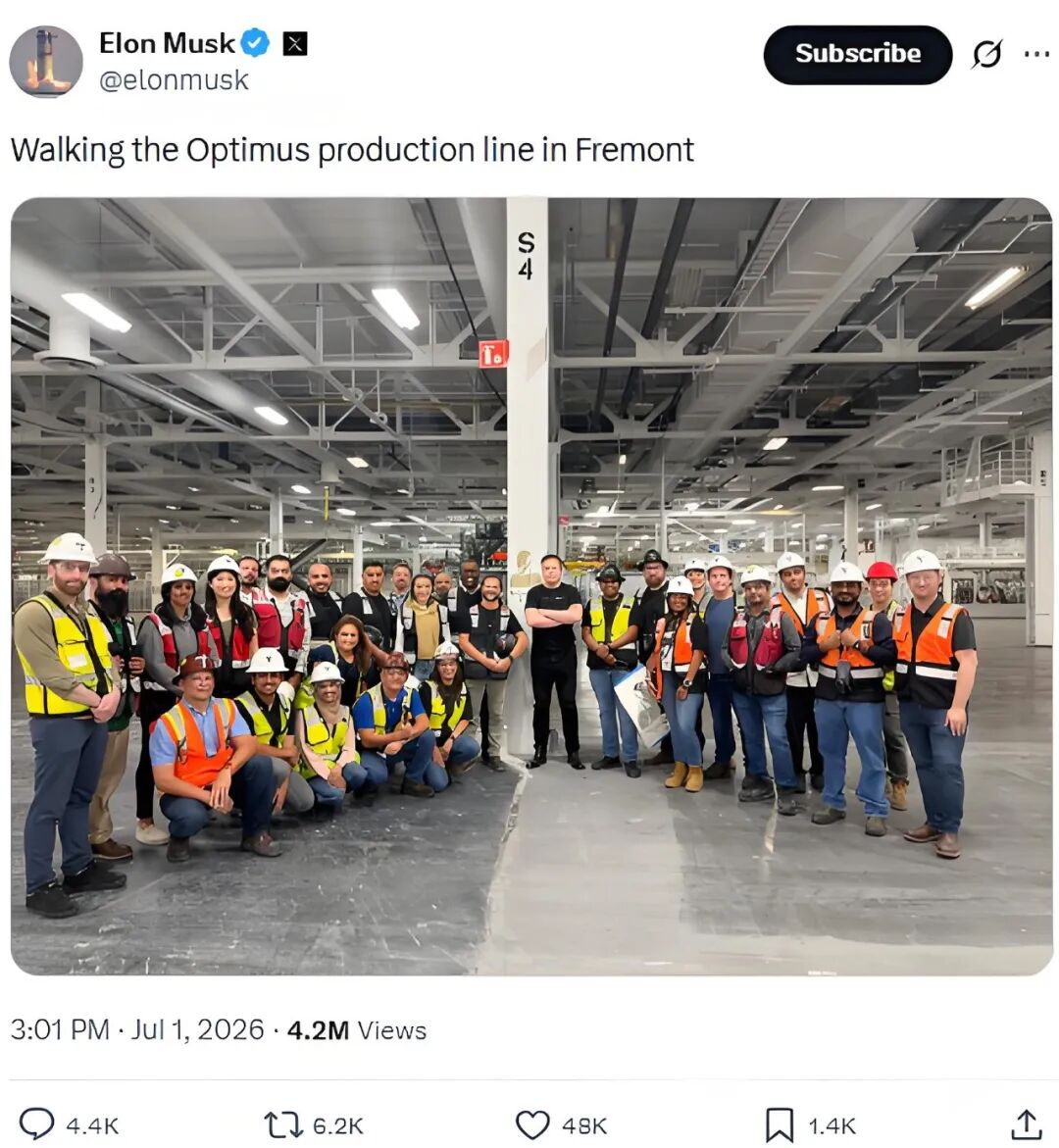
"The more you study the human hand, the more incredible you'll find it," mused Elon Musk, the world's richest man, during an earnings call.
In March 2025, Musk vowed to produce 5,000 Optimus robots. However, seven months later, during a conference call, he retracted his promise because the hands for Optimus couldn't be manufactured.
The engineering difficulty of hand design far exceeded expectations. Tesla was forced to suspend some production lines, and a large number of semi - finished products of armless robots piled up in the factory. Musk admitted that the problem lay in the combined module of the hand and forearm.
However, this doesn't stop Ubtech from selling robot companions.
At the 2026 Global Launch Event, Ubtech introduced the full - size, highly anthropomorphic humanoid robot "U - World" U1 series. More than 50 models were unveiled at once. The male models are 183 cm tall, and the female models are 168 cm tall. Their skin replicates pore and fingerprint textures. They can blink, smile, and even dance the waltz with a partner.
Subsequently, the official announced that the pre - order volume had exceeded 13,000 units. This figure is approximately 70% of the global humanoid robot shipments in 2025. Ubtech's stock price soared by over 18% during intraday trading.

Ubtech's humanoid robot. Image source: Ubtech's official WeChat account
However, when these human - faced robots took the stage and started walking, the scene changed. Not only was the mechanical feeling very obvious during walking, but their facial expressions were stiff, and there was also a slight delay in conversations.
Some netizens joked that "it's so fake, like an inflatable doll equipped with AI." The robot companions, which were originally highly anticipated, revealed another side in the actual demonstration. There was a significant gap between the appearance and the ideal image in the promotion. Netizens exclaimed that "it's completely different from the promotional video."
Among the 88 degrees of freedom, only 24 are active, and 64 are passive. Moreover, the walking ability, which truly determines the companionship experience, is only available in the top - end models priced at 990,000 yuan or 880,000 yuan. Even more embarrassingly, the official clearly stated that the U1 series does not undertake any household chores.
On one hand, Musk is stumped by a pair of working hands. On the other hand, Ubtech has already received over 10,000 pre - orders for its robots. How come they haven't even figured out the dexterous hand, yet they're already selling "robot wives"?
Who is really holding back the development of dexterous hands? Taking a look at the supply chain, we'll find that the answer is far more complicated than just being unable to buy a certain part.
I. Fingertips Monopolized by Giants
The fate of the dexterous hand industry is largely in the hands of Maxon and STMicroelectronics. It's the same principle as when the photovoltaic industry was restricted by the price of silicon materials and the power battery industry was constrained by lithium mines.
To understand why dexterous hands are difficult to develop, we first need to take them apart and see what's inside.
Essentially, any dexterous hand consists of three systems: the drive system provides power, the transmission system converts power into joint movement, and the perception system gives fingers a sense of touch. These three systems compete for space in a space smaller than a human hand and account for over 80% of the cost of the entire hand.
Following the working path of a hand from generating power, executing actions, to sensing feedback, we can clearly see three chains.
The starting point of power is the motor. To enable fingers to perform delicate operations such as screwing and picking up soft objects, a dexterous hand needs to have a special micro - motor, namely a coreless motor, in each finger. The coreless motor uses a self - supporting cup - shaped coil and can have a diameter of only a few millimeters. It has a small volume, fast response, and high energy conversion efficiency, which is the physical prerequisite for a dexterous hand to achieve precise operations.
However, the supply channel for this "fingertip heart" is extremely narrow. Three companies, Maxon from Switzerland, Faulhaber from Germany, and Orbray from Japan, occupy 70% to 80% of the global high - end market. The import unit price is as high as $50 to $80, and the procurement cycle can last for months or even a year.
In 2026, the order schedules of Maxon and Faulhaber had exceeded 12 months. Domestic manufacturers not only have to wait but also accept the prices and delivery terms set by these foreign companies when making purchases.
The power generated by the motor is high - speed rotation, while the finger joints need low - speed and high - torque. If the high - speed rotation of the motor is directly transmitted to the fingers, it will either cause twitching or be unable to pick up a paper cup due to insufficient torque. The intermediate component to solve this contradiction is the reducer.
In the context of dexterous hands, the reducer is not just a single part but a necessary path for power to be transmitted from the motor to the fingertips to complete actions.
It converts the high - speed rotation of the motor, which can reach tens of thousands of revolutions per minute, into the slow and powerful rotation of finger joints. Without it, even the best motor will just spin idly and cannot generate real grasping force.
There is also a strong import dependence in this link. Japan's Harmonic Drive Systems occupies over 80% of the global harmonic reducer market thanks to its full - chain patent protection from tooth profile design, material formulation to precision machining.
After the power is transmitted to the fingertips, there is still a problem to be solved: After the robot's fingers grasp an object, how does it know that it has grasped something? Is it an egg or a stone? Is the force appropriate or will it crush the object?
Most existing dexterous hands rely on position encoders and torque sensors to sense their own states. This belongs to proprioception. The robot knows the position of its fingers but doesn't know whether the object it has grasped is soft or hard, smooth or rough.
Fingertip tactile sensation remains the biggest shortcoming of dexterous hands. The inability to feel while grasping directly limits the commercialization potential in scenarios such as industrial precision assembly and household services.
Tactile sensors are designed to solve this problem. Five years ago, the domestic tactile sensor market was almost non - existent, and the import price per chip once exceeded 100,000 yuan.
It wasn't until startups like Pacini Perception Technology redesigned from the underlying principles, bypassed overseas patents, and developed the 6D Hall array - type tactile sensing technology that 100% domestic production was achieved, and the selling price dropped sharply to 199 yuan.
However, the value of domestic production varies greatly in different links. Breakthroughs in packaging and algorithms have solved the cost problem, but the core components inside the sensors, such as high - precision ADC chips and signal processing circuits, still rely on imports.
Installing the sensor and manufacturing the components inside the sensor are two tasks of completely different levels of difficulty. There are still gaps with overseas products in terms of flexibility, resolution, and durability.
If any one of the three serial links breaks, the whole hand won't work. And fitting all these components into a space not much larger than a fist is in itself an extremely difficult physical problem.
This problem is under pressure from several dimensions simultaneously: The higher the degrees of freedom, the more parts are needed; the more parts, the larger the volume; as the volume increases, it won't fit into a space the size of a human hand. If the size of the parts is reduced to fit, the power and lifespan will decline. So far, no one has found a solution to this physical problem.
II. Why Can't Economies of Scale Reduce Costs?
After sorting out the bottlenecks in the component layer along the chain, it's easy to have an illusion: As long as each part is domestically substituted and the price drops, the problem of dexterous hands will be solved. However, a deeper look into the manufacturing process reveals that things are far from that simple.
In the manufacturing industry, there is an almost iron - clad rule: The larger the scale, the lower the cost. Doubling the production volume, enhancing the bargaining power in raw material procurement, and improving the automation level of the production line will spread the fixed costs, and naturally, the unit cost will decrease.
This is true for the photovoltaic industry, the power battery industry, and most industrial products.
But dexterous hands are an exception.
After tracking several dexterous hand production lines, researchers at Physical Intelligence reached a conclusion that overturns industry intuition: The precision assembly of dexterous hands may be a rare category in the manufacturing industry where "increasing scale cannot spread costs."
What does this mean? Why is the unit cost of making ten thousand dexterous hands not much lower than making a hundred?
This is the physical problem mentioned earlier. Taking Tesla's Optimus solution as an example, each finger needs to be fitted with a micro - motor, a reduction gear, a tendon rope, and a sensor. The diameter of these parts is measured in millimeters, and the smallest transmission part has a diameter of only 3.4 millimeters.
And it takes human hands to install these rice - grain - sized parts one by one into the finger joints. So far, most of the precision assembly work of dexterous hands still relies on manual labor.
It's not that factories don't want to use machines, but that existing automated equipment can't do the job. Machine vision can't identify the tiny deviations of millimeter - sized parts, and robotic arms can't perform multi - angle precision fitting in a millimeter - level space. The only tools capable of this work are the human eye and finger.
During an interview with an engineer by Zhixie Island, it was learned that workers would use tweezers to pick up a micro - bearing not much larger than a sesame seed, align it under a microscope, and gently press it into place. If the angle deviates by a fraction of a millimeter, the bearing will get stuck, and the entire finger's transmission system will be scrapped.
It should be noted that if one part is installed incorrectly, it will also damage the upstream components worth hundreds of yuan.
Meanwhile, a 5% deviation in the tightening torque of a screw may not matter much for an ordinary robotic arm. But in the transmission system of a dexterous hand, this deviation will cause a 30% decrease in the flexibility of the entire finger. To eliminate these deviations, repeated testing, fine - tuning, and rework are required during the assembly process.
The assembly process of each hand is an independent manual customization and cannot be mechanically repeated. This is what is meant by "economies of scale cannot spread costs": As the production volume increases, the rework rate won't automatically decrease; as the production volume increases, the assembly speed of workers won't automatically increase; as the production volume increases, the consistency of products won't automatically improve.
Everything depends on the accumulation of human experience, and experience cannot be accumulated through expanding production. Therefore, the daily output of each workstation is extremely limited, and it's easy to imagine how long it takes to train a skilled worker for this kind of difficult job.
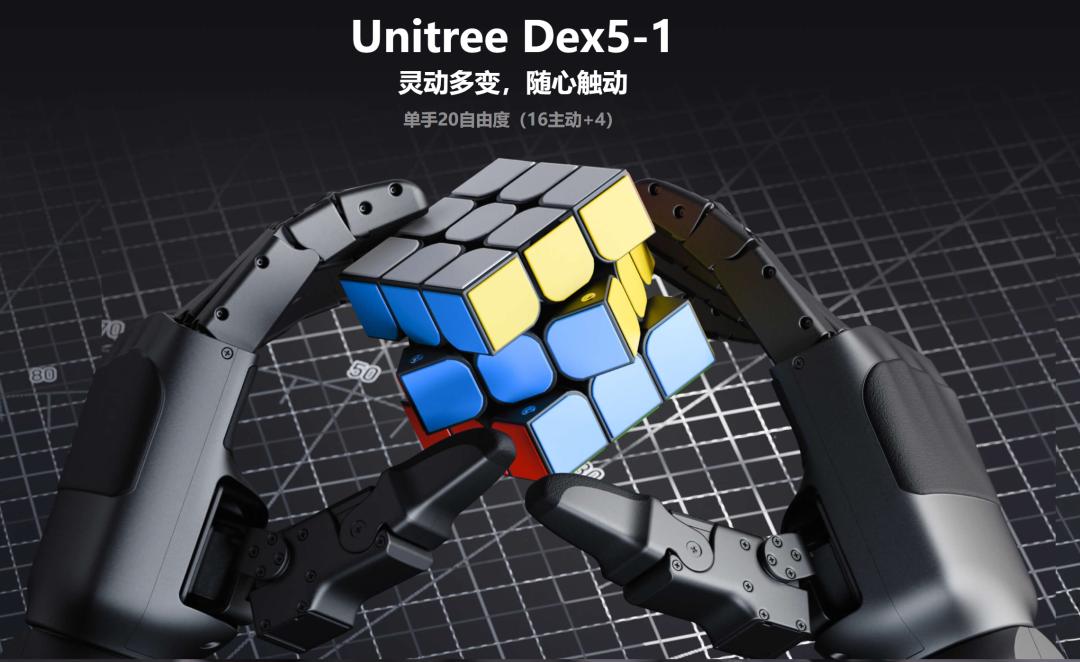
Unitree Dex5. Image source: Unitree's official website
Beyond the manufacturing challenges, there is an even tougher problem: The transmission technology route has not yet converged.
Tesla's Optimus uses a tendon rope solution, which uses ropes similar to human tendons to pull the fingers. The advantage is high biomimicry, light weight, and the ability to achieve multiple degrees of freedom in a small space. The disadvantage is that the tendon ropes are prone to creep, elongation, and wear after repeated bending. In a previous sorting test, the actual service life of Tesla's dexterous hand was only six weeks.
Unitree's Dex5 chooses a gear solution. It has high structural rigidity and large transmission torque, but its flexibility is limited, and the fingers cannot make complex lateral movements like a human hand.
Yinshi Robotics follows a linkage route. It has a stable structure and long service life, but the transmission chain is long, and the accuracy decay is obvious, making it difficult to achieve precise operations. Companies like Lingjiedian bet on the direct - drive solution, which offers precise control and fast response. However, the motor must be placed inside the finger, which requires extremely high motor power density and small volume, resulting in high costs and weak impact resistance.
Different solutions result in completely different interfaces, protocols, and testing methods for dexterous hands. The hand of Company A can't be installed on Company B's robot. Each company is reinventing the wheel.
Without a unified standard, there is no cross - manufacturer generalized design and no large - scale supply - chain collaboration. The entire industry is divided into several small markets, with only a handful of players tentatively moving forward in each market.
If the first chain is "dependence on imported core components," then the second chain is "dependence on manual labor in manufacturing processes and lack of consensus on technology routes." The former has a clear target to catch up with, which is to replace imports with domestic products. The latter has no ready - made answer and can't be solved by simply changing a supplier. It requires the entire industry to find a new balance in design and manufacturing paradigms.
This hurdle is even more difficult to overcome than the component issue.
III. End - User Manufacturers Start Making Their Own Hands
Faced with the predicament of being restricted by components and relying heavily on manual labor in manufacturing processes, the downstream humanoid robot end - user manufacturers can't sit still. They have reached a highly consistent consensus: Instead of waiting for others to make a suitable pair of hands, it's better to do it themselves.
Why do end - user manufacturers want to make their own hands? The answer is actually quite simple: There are no suitable hands available on the market.
A dexterous hand with high degrees of freedom involves multiple cutting - edge fields such as motors, reducers, sensors, and control algorithms. The number of third - party suppliers that can do all these well can be counted on one hand.
Even if there are such suppliers, the prices are exorbitant, the delivery cycle often starts from six months, and the technical parameters may not be suitable for their own robots.
For end - user manufacturers, there are several insurmountable problems when purchasing dexterous hands externally: The interfaces don't match, so the purchased hands can't be installed on their own robots; even if they can be installed, the coordination efficiency is far lower than that of deeply customized hands; and the supply chain is in the hands of others, which may be restricted at any time.
Making their own hands has at least three obvious advantages: deep adaptation, self - sufficiency in the supply chain, and control over the definition. By mastering the design right of the hands, they can control the core aspects of the performance and cost of the whole machine.
Thus, a movement of end - user manufacturers making their own hands has begun. The collective participation of end - user manufacturers in making hands is reshaping the entire dexterous hand industry landscape.
