The Most Hyped Angel Round for Brain-Computer Interface, Unveiling of the Shanghai Headquarters
Investment Circle has learned that Gestala Technology (Gestala) has completed a Series Angel+ financing of 420 million yuan.
It was led by Huaying Capital, with follow - on investments from C Capital, Sequoia China, Lens Technology, CEEC Health Fund, Sinovation Ventures, Lingang Science and Technology Investment, Fudan Furuong Capital, Guotai Venture Capital, etc. Old shareholders such as Daotong Investment, Yunshi Capital, Qingsong Capital, and Gobi Partners continued to increase their investments significantly.
So far, including the 150 million yuan angel round completed in March, Gestala Technology has raised a total of 570 million yuan.
Behind it is a serial entrepreneur, Peng Lei, who straddles the fields of the Internet and life sciences. He graduated from the University of Science and Technology of China (Bachelor of Precision Instruments and Precision Machinery), the Hong Kong Polytechnic University (Master of Computer Science), and the Institute of Brain - like Intelligence Science and Technology of Fudan University (Doctor of Neuroscience). He co - founded Gestala Technology on January 1st this year, which is the first domestic hard - technology enterprise focusing on non - invasive ultrasonic brain - computer interfaces.
Today, the Shanghai headquarters of Gestala Technology was officially inaugurated, located in the "Brain and Intelligence World" in Minhang, Shanghai, thus forming a dual - headquarters strategy of "Chengdu + Shanghai".
Fudan Doctor Leads the Team, Gestala Raises Another 420 Million
Let's start with the founding team.
CEO Peng Lei has an impressive resume. Graduating from USTC as an undergraduate and obtaining a doctorate from Fudan's Institute of Brain - like Intelligence, he has long been engaged in cross - research on brain - computer interfaces, neuroscience, and artificial intelligence, and studied under Professor Feng Jianfeng, the dean of Fudan's Institute of Brain - like Intelligence and an internationally renowned computational neuroscientist.
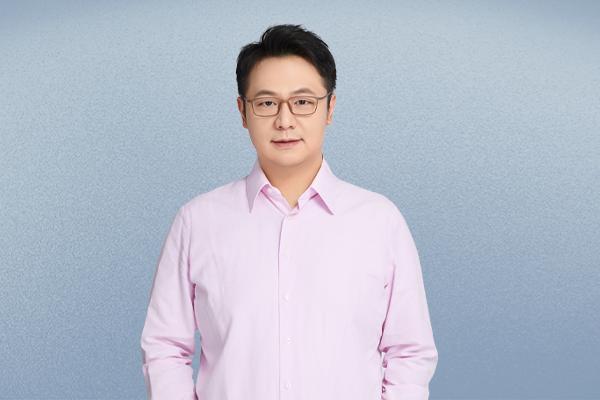
Gestala Technology is Peng Lei's sixth entrepreneurial venture. Previously, he successfully founded Onion and Brain Tiger Technology. Onion is a catering SaaS company, which was later acquired by Alibaba. Brain Tiger Technology was founded in 2021, focusing on implantable flexible brain - computer interfaces and has become a leading company among domestic brain - computer interface companies.
During this period, Peng Lei gradually realized that invasive brain - computer interfaces rely on local electrodes and can only record "point - like signals", unable to capture the whole - brain coordination mechanism. The brain has a huge and complex neural network, and its complex functions depend on the coordinated work of "neural circuits" across brain regions.
He believes that the brain is an existence where "the whole is greater than the sum of its parts". This is also the core view of Gestalt psychology. Thus, on January 1st this year, Gestala Technology was officially established, becoming the first domestic company focusing on ultrasonic brain - computer interfaces.
Compared with the traditional electrical invasive approach, the ultrasonic approach has advantages such as non - invasiveness, whole - brain "reading and writing", and multi - target neural circuit regulation. It targets indications such as chronic pain, depression, Alzheimer's disease, Parkinson's disease, stroke rehabilitation, and epilepsy, which are closer to clinical needs, cover a wider patient population, and have a larger market space.
Investors voted with their feet. Just two months after its official announcement, Gestala Technology completed a 150 million yuan angel round of financing, attracting investments from Guosheng Capital, Daotong Investment, Qingsong Capital, Gobi Partners, Fourier, Liepin, Yunshi Capital, etc., setting a new record for the highest angel - round financing in the Chinese brain - computer interface field at that time. With the latest announced 420 million yuan financing, Gestala Technology has raised 570 million yuan within half a year of its establishment, which is extremely popular.
Today, the Shanghai headquarters of Gestala Technology, located in the "Brain and Intelligence World" in Minhang District, Shanghai, was officially inaugurated. The "Brain and Intelligence World" is a future industrial cluster area for brain - computer interfaces key - built by Shanghai. Gestala Technology is not only one of the first batch of enterprises to settle in but also the first headquarters enterprise to be officially put into operation in the park.
So far, Gestala Technology has formed a dual - headquarters strategy of "Chengdu + Shanghai". At the end of June, the global headquarters of Gestala Technology and the first - phase project of the world's first ultrasonic brain - computer interface super - factory were officially completed and put into use in Chengdu, with a total construction area of over 16,000 square meters.
In terms of division of labor, the global headquarters in Chengdu is positioned as a research and production center, focusing on the research and development of core technologies for ultrasonic brain - computer interfaces, clinical transformation, and device production. The Shanghai headquarters is positioned as a NeuroAI innovation center, focusing on the research and development of AI brain basic models and the integration of global innovation resources, continuously connecting with global brain science and artificial intelligence innovation resources.
Brain - Computer Interface: The Journey to the Cyber World
This is a true portrayal of the booming brain - computer interface industry.
Significantly, the 14th Five - Year Plan Proposal clearly lists brain - computer interfaces as a future industry for forward - looking layout. Local governments quickly responded. Shanghai has successively issued the world's first registration certificate for invasive brain - computer interfaces, the country's first medical device standard for brain - computer interfaces, and the country's first future industrial cluster area for brain - computer interfaces, the "Brain and Intelligence World".
Statistics show that since the start of the construction of the "Brain and Intelligence World" one year ago, 61 brain - computer interface innovation enterprises have been established in the whole area of Minhang, accounting for nearly 30% of the domestic market and more than 60% of the total in Shanghai. The total financing has exceeded 1 billion yuan, and the total valuation of core enterprises has exceeded 5.5 billion yuan.
The track is becoming visibly crowded. At the beginning of the year, Strong Brain Technology completed a Series B+ financing of about 2 billion yuan, setting a new record for the largest single - financing in the domestic brain - computer interface field, with a post - investment valuation of 1.3 billion US dollars. Then in March, Ladder Medical received another 500 million yuan in strategic financing, which is the first investment by Alibaba and Tencent in the brain - computer interface field.
After that: Jialiang Brain Science received hundreds of millions of yuan in Series C financing, with a post - investment valuation approaching 1 billion US dollars; Nuoxinjia, focusing on the global visual brain - computer interface track, completed a 300 million yuan strategic financing; Huachao Shenkong, an ultrasonic brain - computer interface company, completed a series of angel - round financings in the hundreds of millions; Sisheng Technology completed a seed - round financing of tens of millions of yuan; Xinsheng Vision, an invasive brain - computer interface company, completed a seed - round financing of nearly 100 million yuan.
According to incomplete statistics, in the first five months of 2026, there were more than 30 financing events in the Chinese brain - computer interface field, with a total financing amount exceeding 4.5 billion yuan, far exceeding the scale of the whole year in 2025. "Almost all directions can raise funds," sighed an investor who pays attention to this field.
On the other side of the boom, IPOs are getting closer.
In March this year, the invasive brain - computer interface system of Borui Kang was approved for listing, which is China's first registration certificate for invasive brain - computer interface medical devices. Soon after, in June, Borui Kang's IPO application on the STAR Market was accepted, planning to raise 2.5 billion yuan. It is rumored that Strong Brain Technology has submitted a confidential IPO application on the Hong Kong Stock Exchange, and Hangzhou Jialiang Brain Science also plans to go public next year. The competition for the "first brain - computer interface stock" has begun.
The brain - computer interface is curing neurological diseases and opening a door to the unknown. "The brain - computer interface is not a money - making opportunity. Investing in the brain - computer interface is a long - term and patient thing." Amid the excitement, the reminder of a venture capital tycoon still rings in our ears.
As we can see, society's expectations for the brain - computer interface have outpaced the technology - "people think it will be commercially available soon", but in fact, the industry still faces many common challenges, and it will take a long time before it can be truly widely applied. After the boom, the industry will inevitably face differentiation and adjustment. Only companies that can truly turn technology into products and send products to hospitals will be the final winners.
This is destined to be a long road.
This article is from the WeChat official account "Investment Circle" (ID: pedaily2012), written by Zhou Jiali and published by 36Kr with authorization.