Those "just bear it" moments for users are all "must-pass tests" in the Dreame floor washer laboratory.
The floor scrubber industry has been booming for several years, with a dizzying array of function iterations: high - temperature sterilization, three - side edge - fitting, zero hair entanglement... The parameter list keeps getting longer, but consumers always have a common question in mind: It works smoothly when it's newly bought. Will the suction power decline and will there be water leakage or abnormal noises after a period of time? How many years can this several - thousand - yuan household appliance really serve us well?
In response to this common "durability anxiety", Dreame has provided an answer with data. In the past five years, Dreame floor scrubbers have entered more than 120 countries and regions around the world, with a cumulative shipment volume exceeding ten million units. It has been leading the domestic high - end market and markets in many countries globally.
Behind this huge set of growth figures, there actually lies an iron law of hardware manufacturing: The real competition is often decided before the product hits the market. Physical hardware cannot be "patched" through later online upgrades like software. All quality hidden dangers related to lifespan and user experience must be discovered in advance, verified proactively, and completely resolved during the R & D stage.
The Dreame floor scrubber laboratory located in Suzhou, Jiangsu, is precisely the "gatekeeper" guarding this quality lifeline.
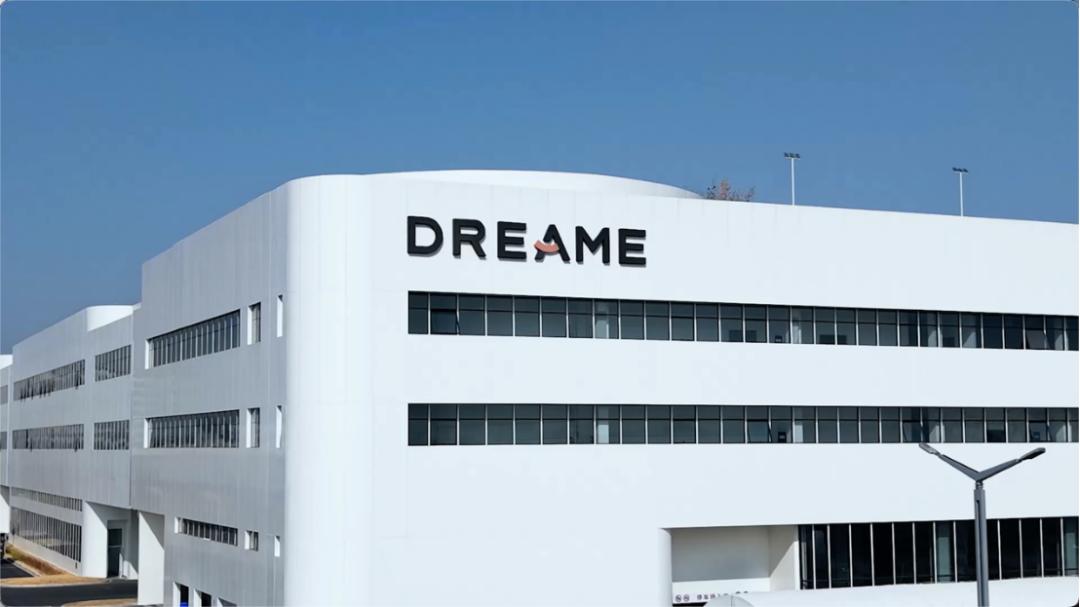
From the reliability of the whole machine to the lifespan of core components, from micron - level high - precision measurement to the simulation of global household environments, every key link in the product lifecycle has to undergo tens of thousands or even hundreds of thousands of extreme verifications here.
Before it is officially launched, a floor scrubber has already gone through the usage tests of the next few years or even a decade in advance, pre - enacting the problems that users may encounter in the laboratory.
Every daily mopping action is repeated tens of thousands of times here
For a high - frequency household appliance like a floor scrubber, every turn while mopping, every collision with a corner, and every pass over a threshold is a form of wear and tear on the machine's structure and components. These trivial daily actions are precisely the key to determining the machine's durability.
In the Dreame floor scrubber laboratory, all the scenarios that users may encounter in daily life have been broken down into a series of special tests.
The extremely core whole - machine lifespan test directly determines the basic service life of a floor scrubber. Currently, the industry's standard test requirement is that the floor scrubber should work for no less than 300 hours in total, corresponding to the usage intensity of an ordinary household for about two to three years.
At Dreame, the standard for this test has been raised to 500 hours, nearly twice the industry's regular standard.
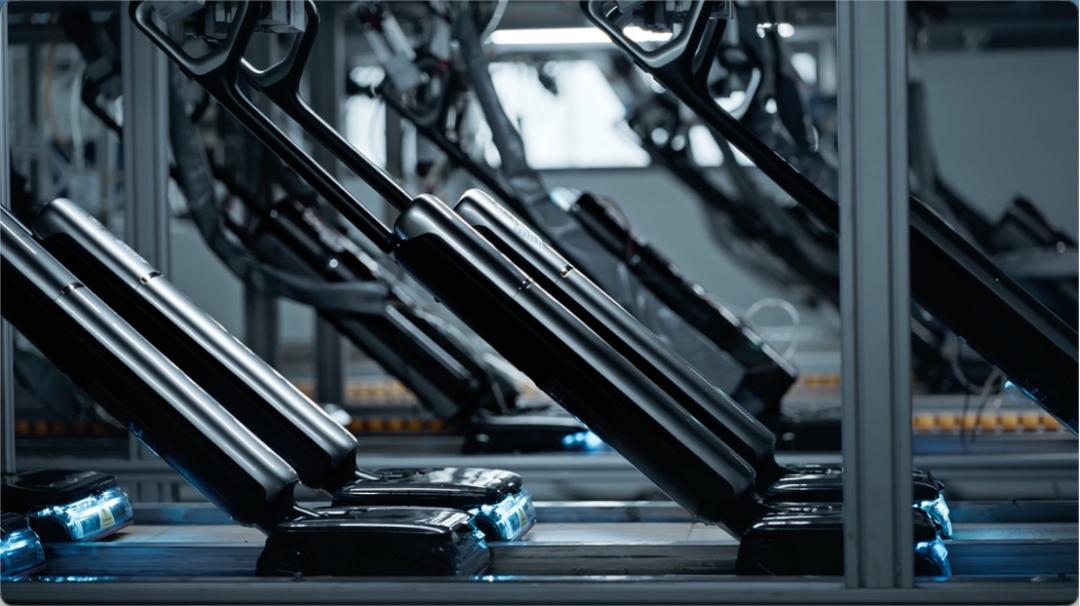
This test is not simply making the floor scrubber run idle. In the laboratory, it will repeatedly switch between different floor surfaces such as tiles, wooden floors, and short - pile carpets; test water of different hardness levels will simulate the different water - using environments in various places; even the water volume in the sewage tank is set according to the heavy - use state of a household.
In other words, what a floor scrubber experiences in the laboratory is not a "test", but a highly concentrated version of family life.
Engineers will conduct inspections several times a day, continuously recording subtle changes such as current fluctuations and signal abnormalities. After the test, each prototype will be completely disassembled: how much the motor has worn, whether the gears are stably engaged, whether the seals have aged, and whether there is scale in the waterways will all be checked item by item.
Through the laboratory, the problems that users may encounter five or six years later are detected and eliminated before the product is launched.
If the whole - machine lifespan test is a marathon, then the automated test area is more like repetitive practice for every daily action.
The test robots in the laboratory will keep repeating the actions that people are used to in daily use.
What if the machine body needs to be constantly twisted when turning? The torsion test will be carried out 160,000 times; what if it accidentally hits a corner or a table leg? The impact test will be carried out 30,000 times; can it smoothly pass over the thresholds in the bathroom, kitchen, and balcony? The machine has to cross thresholds of different heights 12,000 times repeatedly. Even the bumps and drops that may occur during transportation will be simulated in advance.
Those "small accidents" in the eyes of users have become "must - answer questions" in the laboratory.
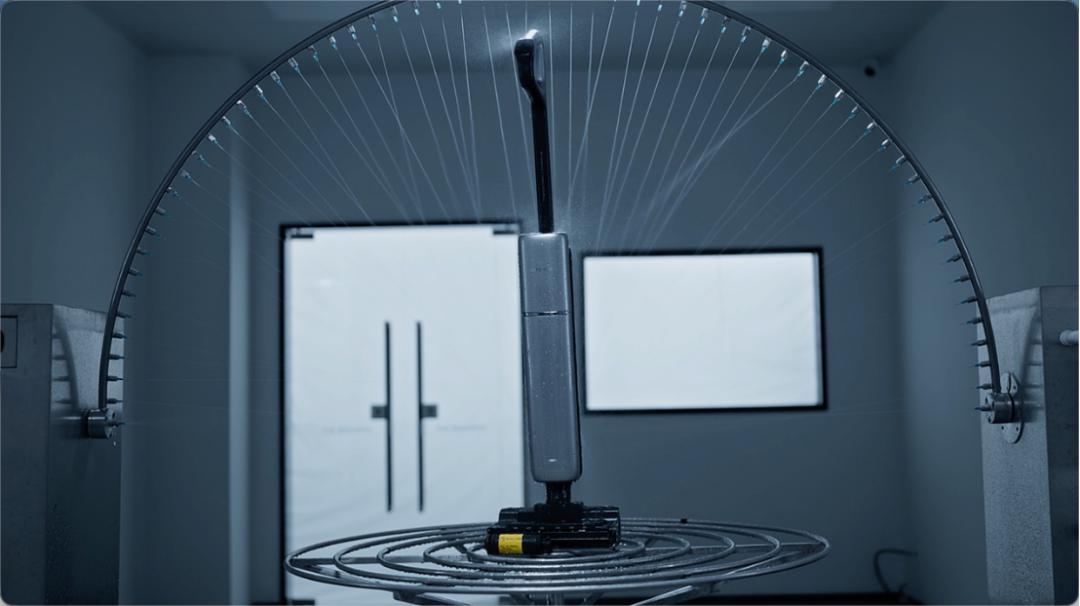
For core components, the test standards are even stricter.
The motor of the floor brush needs to complete 300,000 start - stop cycles, the main motor needs to run continuously for 800 hours, and the lifespan of the hub motor should reach 800,000 cycles. The EdgeHunter edge - cleaning arm equipped in the T70 Ultra series also needs to complete 250,000 lifting and expanding actions.
That is to say, before being installed into the whole machine, each high - frequency core component has already undergone tests far beyond the daily usage intensity on its own.
The answer to the high - end development of floor scrubbers lies in the micron - level manufacturing system
If the lifespan test determines whether a floor scrubber can be used for a long time, then precision control determines whether it can maintain a high - end user experience in the long run.
This experience essentially comes from a basic ability that has been long ignored - precision control. A deviation of dozens of microns is almost imperceptible in a single part, but once it enters the whole - machine system, it may be magnified into structural gaps, assembly misalignments, and operational clearances. There may be no obvious feeling in the short term, but these problems will accumulate over time and ultimately be reflected in the decline of the user experience. The more complex the structure, the higher the requirement for precision. This is also the fundamental reason why many products dare not make complex integrations.
In the Dreame floor scrubber laboratory, precision is regarded as the underlying standard throughout the R & D and manufacturing processes.
From the curved surface of the machine body to the edge of the floor - brush scraper, from the angle of the core structure to the cooperation of tiny parts, every dimension is strictly aligned with the design standard and controlled within the micron - level tolerance range. Even small components such as buckles and seals must pass precise inspections to ensure that every connection is in a controllable state.
These seemingly abstract precision controls will ultimately be transformed into real user experiences:
The water tank fits perfectly with the machine body, without leakage even after long - term use; the gap between the rolling brush and the cavity remains stable, reducing entanglement and performance decline; the edge - cleaning mechanical arm runs smoothly, and the edge - cleaning performance remains consistent and does not degrade over time.
For high - end floor scrubbers, precision is not an "extra point", but a prerequisite for the long - term viability of all complex functions.
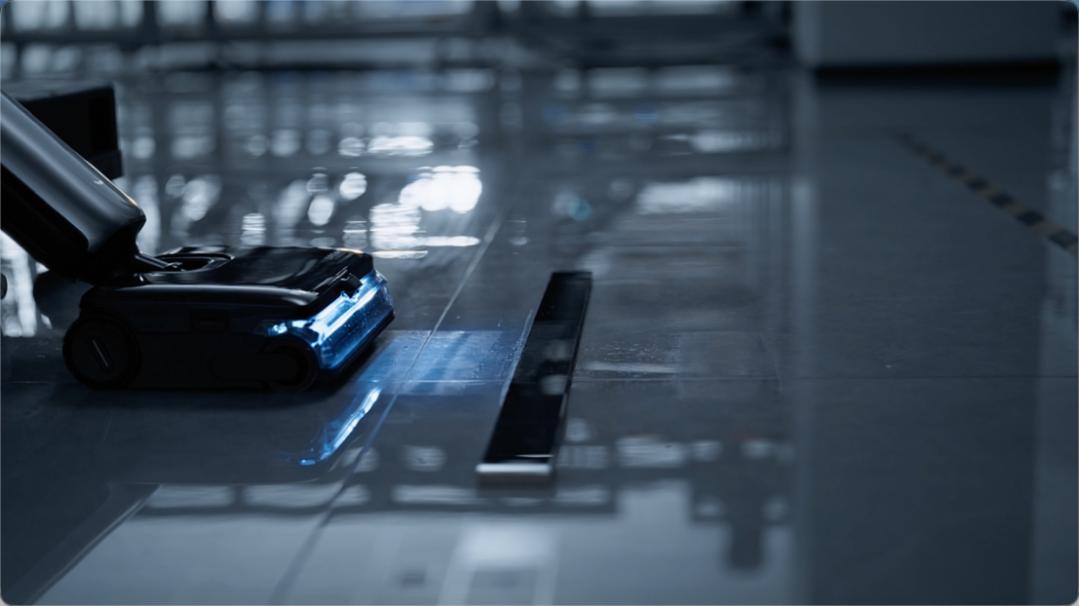
More importantly, this micron - level standard does not stop at the laboratory but runs through the mass - production system. The Suzhou Intelligent Manufacturing Base not far from the laboratory is responsible for the large - scale production of high - end models. From the assembly of components to the shipment of the whole machine, every process is consistent with the laboratory standards.
From the assembly of the core motor to the performance test of the whole machine, a floor scrubber has to go through more than a hundred process verifications and multiple - scenario re - tests before leaving the factory to ensure that the stability achieved in the laboratory can be completely reproduced in actual production.
Ultimately, the high - end competition in the floor scrubber industry is not about function stacking, but about the certainty of reliability after years of use.
And this certainty lies in every micron - level tolerance, in the standard system that is completely consistent between the laboratory and the production line, and in the engineering choices that do not compromise on the long - term user experience.
Before entering 120 countries, adapt to the global water quality and climate first
To date, about 50% of Dreame's floor scrubber revenue comes from overseas markets, and its products have entered more than 120 countries and regions. However, truly entering the global market is not simply about product export, but about pre - adapting to different household environments.
Globally, there are significant differences in household usage scenarios:
In some parts of Europe, the water has a relatively high hardness, which can easily lead to scale formation after long - term use; Southeast Asia has a long - term high - temperature and high - humidity climate, which poses challenges to the stability of electronic and structural components; there are also obvious differences between European and American households and domestic households in terms of floor materials, carpet coverage, and dust types.
This means that a truly global floor scrubber must first "understand" global households.
This has been systematically pre - completed in the Dreame floor scrubber laboratory.
For example, in the water - quality adaptation test, the laboratory will prepare a variety of test water sources from soft water to highly hard water to simulate the real water - using environments in different countries. After long - term operation, the equipment will be disassembled to check the scale deposition inside the waterways and heating modules, and the waterway structure and material solutions will be continuously optimized accordingly to ensure stable long - term operation in areas with highly hard water.
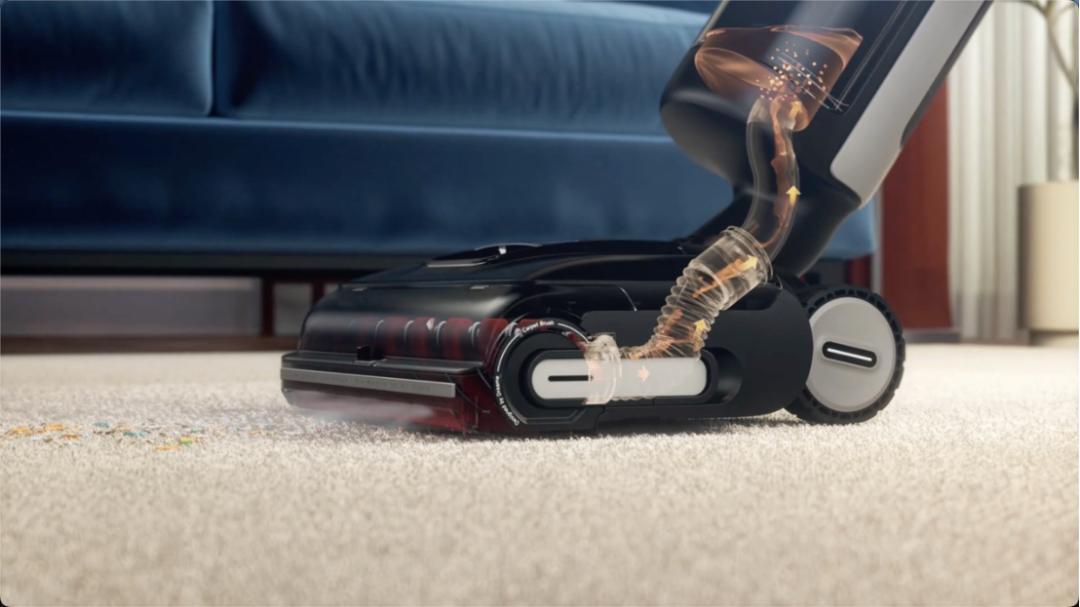
H15 Pro Carpetflex designed for carpet cleaning in North America
Different climate environments are also reproduced one by one. For the high - humidity and high - salt coastal environment, the laboratory will conduct a salt - spray test to verify the corrosion resistance of metal parts and electronic components; for the tropical climate, a long - term power - on test will be set up in a high - temperature and high - humidity environment; the low - temperature start - up and operation performance in cold regions will also be verified through a dedicated test.
Even the cross - border transportation process is included in the test scope. The packed whole machine is fixed on a vibration table to simulate various bumpy road conditions that may be encountered during sea and land transportation. After the test, the machine will be unpacked to check the structure and performance. This ensures that when the product reaches the user's hands after traveling tens of thousands of kilometers, the shell is not cracked, the parts are not loose,and the performance is stable.
Because Dreame has "stepped on all the mines" for global users before the product leaves the factory, it has a clearer idea of what the next - generation good - to - use floor scrubber should be like. This is also why they have the confidence to accelerate the pace of technological iteration in the industry.
The floor scrubber industry is never short of dazzling new concepts, but what the market and consumers ultimately examine is whether a machine can work stably and reliably in various household environments for many years. Those boring tests that are difficult to turn into marketing selling points are precisely the core basic skills for Dreame to go global and stand firm in the high - end market.
Dreame invests more than 7% of its annual revenue in R & D and adheres to the three - generation R & D model of "mass - producing one generation, developing one generation, and pre - researching one generation". This is not only for new functions and technologies but also for building this pre - set and systematic verification system.
Many benchmark technologies well - known in the industry, such as high - speed digital motors, mechanical arm technology, and the Lingyu ultra - thin and light system, were all born in the Dreame floor scrubber laboratory.
The achievement of ten - million - unit shipments and entry into the markets of hundreds of countries never happens suddenly. It first happens in the non - stop testing and operation in the laboratory, in the strict control of more than a hundred processes on the production line, and in the repeated refinement of the real needs of global users.