From short-term arbitrage to long-term consumption transformation: the new logic of Chinese home furnishing going global under the European heatwave!
In June 2026, the extreme heatwave that hit the European continent suddenly unleashed a long - held demand locked by institutional costs: household air conditioners (see details in "Scrambling for Air Conditioners, Ice Makers, and Fans! Amid the European Heatwave, Chinese Cooling Products Are in Short Supply"). New Paradigm of Home Furnishings found while continuously tracking changes in the global home furnishings industry chain that this was not just a simple seasonal sales boom, but a deep - seated interaction between the global supply - chain division of labor and local institutional logic.
On one hand, the French health system placed an emergency order for 30,000 units as the room temperature in public hospital wards approached 40°C. On the other hand, Chinese - made mobile split - type air conditioners were constantly out of stock on Amazon's European sites, and the premium in the second - hand market was about twice the original price. To understand the role of the Chinese supply chain in this round of market trends, one needs to break away from the single - product perspective and examine it from a spatial logic.

© In June this year, a sign in a French pharmacy showed the temperature was 41 degrees Celsius
01
Single - Product Breakthrough: "Non - Invasive" Transformation Bypassing Institutions
In major European cities, installing a traditional split - type air conditioner involves complex administrative procedures and high labor costs.
Due to the restrictions of building protection laws, drilling holes in the exterior wall usually requires a long administrative approval process. Meanwhile, the installation involving refrigerant operation must be carried out by professional personnel with EU F - Gas qualifications. These two thresholds have pushed up the installation cost of air conditioners to several times that of the equipment itself, resulting in the long - term air - conditioner penetration rate in Western and Northern Europe remaining at around 20%.
The popularity of Chinese mobile split - type air conditioners lies in their provision of a "non - invasive" technical path. Taking Midea PortaSplit as an example, it suspends the outdoor unit through a window frame bracket, avoiding the need to modify the exterior wall structure as required by building protection laws. The pre - sealed refrigeration circuit at the factory has downgraded the installation from a "HVAC project that requires the intervention of licensed engineers" to a "household appliance operation that users can plug in themselves."
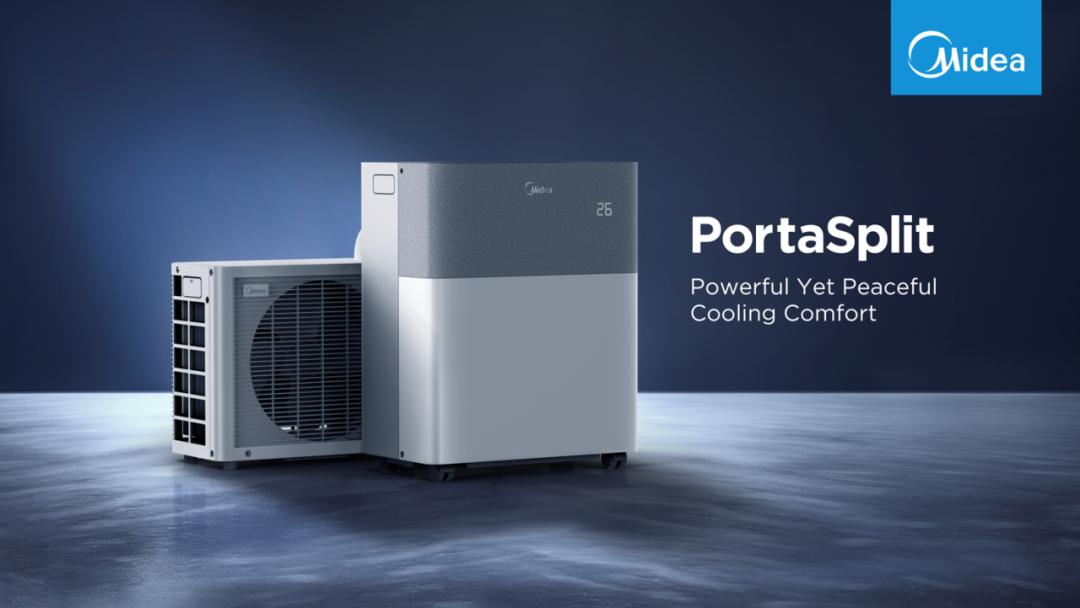
New Paradigm of Home Furnishings believes that the emergence of this "non - invasive" path marks that Chinese home appliance manufacturing is shifting from simple "product output" to "solution output," with the core being the precise calculation of institutional costs in the destination market.
Driven by product compliance and the local high - temperature situation, Chinese cooling products have been selling well in Europe since this year. It is reported that in the first six months of this year, Hisense's air - conditioner sales in the Western European market increased by more than 20% year - on - year, with an increase of more than 100% in the French market. In addition, Hisense's mobile air conditioners have been selling well in many European countries such as Germany and France, and there has been a shortage of products at the retail end.
In June this year, the sales volume of ice makers in the UK market increased tenfold year - on - year, and the sales of cooling appliances such as mobile air conditioners and electric fans also increased significantly in European markets such as Germany and France.
02
The Trump Card of the Supply Side: The "Dry - Method Revolution" in 3,779 Patents
Data from Qichacha shows that there are currently 140,400 domestic air - conditioner - related enterprises (including complete machine manufacturing and upstream and downstream supporting industries), of which nearly 70% are concentrated in East and South China. More crucial structural data lies in the patent composition: there are a total of 3,779 patents related to mobile air conditioners, among which utility models account for 48.06%, design patents account for 31.46%, and invention patents only account for 8.12%.
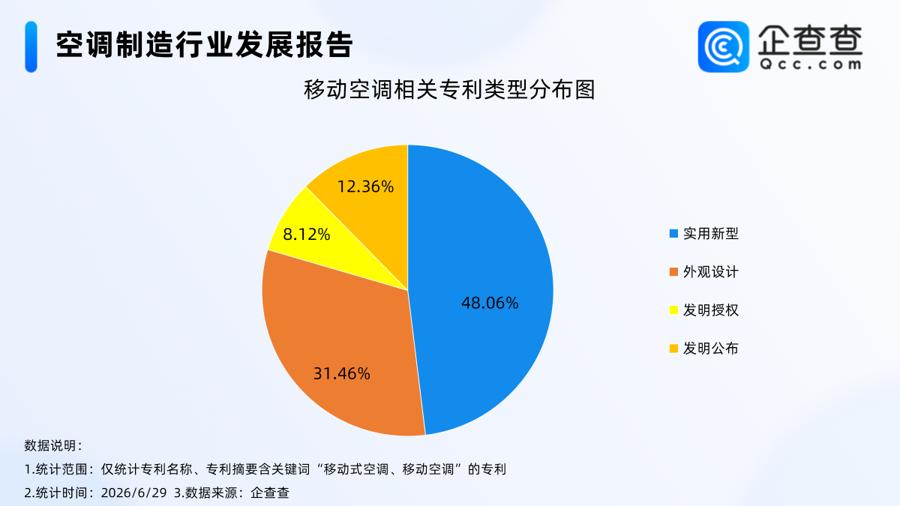
This data distribution reveals the transformation of the logic of Chinese manufacturing going global. The focus of competition has shifted from basic parameters such as "compressor cooling and heating efficiency" to application - layer innovations such as "installation friendliness" and "scenario adaptability." The industry summarizes this trend as the "dry - method revolution," which replaces traditional drilling, welding, and wet operations with physical connection methods such as buckles, brackets, and adhesives.
This logic is feasible for cross - category migration. According to the average data in the EU Statistics on Income and Living Conditions (EU - SILC) 2024 housing stock report, 40% of European residences were built before 1970, and the labor cost of masons remains high. This provides market space for fast - installation products such as prefabricated shower rooms, smart toilet lids, and snap - on floors that can be installed in half a day (depending on the flatness of the house type).
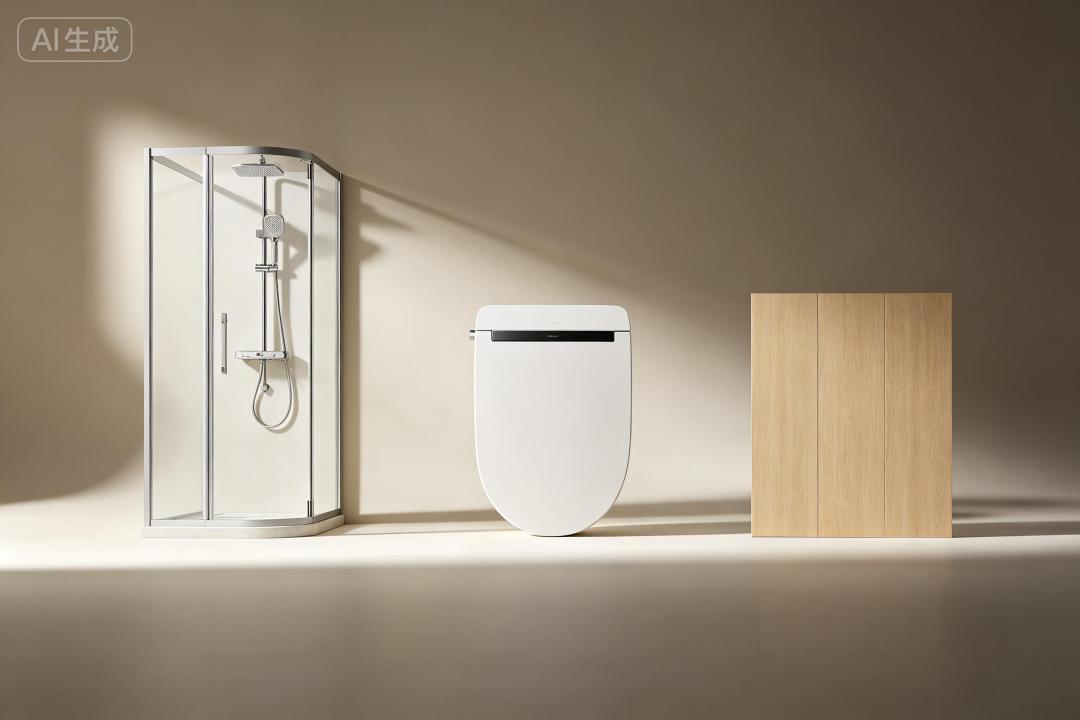
"Non - invasive transformation" is not just a simple product selling point, but a systematic adaptation to the institutional constraints of the European existing housing market. The formation of this adaptation ability is not an overnight achievement, but the survival instinct evolved by the Chinese home appliance industry cluster in the stock competition in the past five years.
03
Spatial Logic: The Interaction between Regional Clusters and Institutional Gaps
If we expand our observation from a single product to the industrial geography, this outbreak is not accidental, but an interaction between Chinese regional manufacturing clusters and the institutional gaps in Europe.
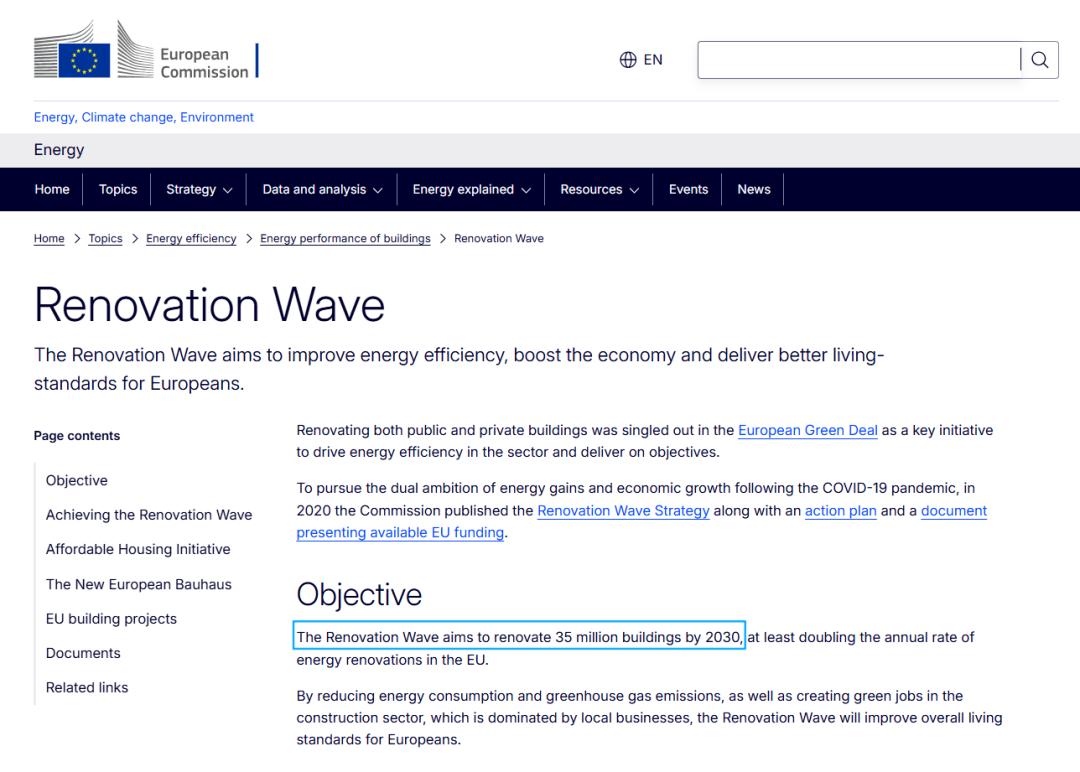
The European Commission's Renovation Wave plan requires the renovation of 35 million buildings by 2030, which means a huge demand for existing housing renovation. However, European home appliance brands have long focused on energy - efficiency improvement and industrial design, and their R & D paths have not been specifically optimized for local pain points such as "dust - free installation" and "installation without qualifications."
In contrast, the industrial clusters in South and East China - places like Shunde, Foshan, Shaoxing, Taizhou, and Yiwu - have evolved a micro - innovation ability to solve overseas "local deadlocks" in the stock competition in the past five years. For example, in response to the pain point that most old European houses lack fresh - air ducts, enterprises in the Pearl River Delta have launched wall - mounted fresh - air dehumidifiers. In response to the facade control along the street, the Shaoxing industrial cluster has produced non - drilling sun - shading fabrics and window films.
For categories locked by "engineering - level" qualification thresholds in the European market, the Chinese supply chain tends to adapt through "home - appliance - level" standardized solutions. This path is not a pre - designed strategic plan, but the result of industrial competition evolution: to find the best fit between technical parameters and institutional boundaries within the established rule system.
04
Conclusion
EU legislation has inherent lag. However, there are precedents for retroactive supervision of emerging categories, such as electric bicycles and cross - border e - commerce VAT. Once the market stock of "installation - free" products reaches a certain scale, new regulations regarding the bearing standard for outdoor unit suspension or the definition of installation responsibility are likely to be introduced.
In the view of New Paradigm of Home Furnishings, for the Chinese home furnishings industry, this round of market trends indicates a certain trend - simple production - capacity output has reached its ceiling, and adaptive innovation based on the institutional framework of the destination country will become the core of competition in the next stage.
Against the backdrop of climate fluctuations and the reconstruction of trade rules, the ability to provide solutions that "solve problems without changing the existing living paradigm" itself constitutes a scarce pricing power. This is not only a commercial consideration, but also an inevitable result of the refinement of the global supply - chain division of labor. What the Chinese home furnishings industry needs to do is no longer to try to change Europe, but to learn to survive within others' rules.
This article is from the WeChat official account "New Paradigm of Home Furnishings", written by Jiamu, and is republished by 36Kr with permission.