All U.S.-listed chip stocks plummet across the board: The AI narrative shifts from "capability competition" to "monetization battle"
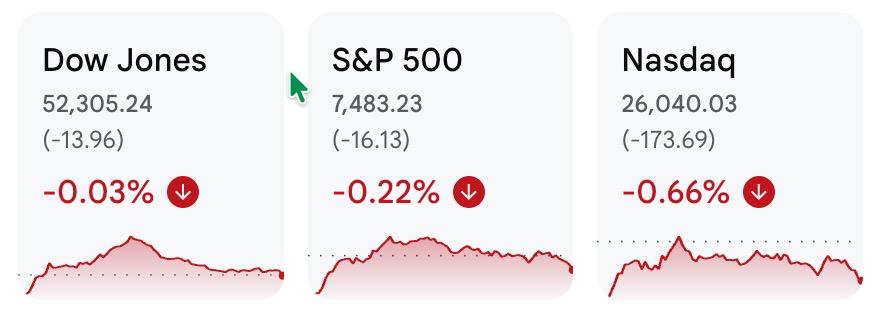
On Wednesday, Eastern Time, from an index perspective, the U.S. stock market seemed to hold up "decently": the Dow Jones Industrial Average closed almost flat, the S&P 500 edged down about 0.2%, and the Nasdaq Composite fell about 0.7%.
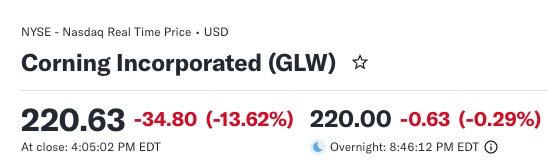
However, beneath the surface of the market, the semiconductor and optical communication sectors underwent a significant re - evaluation of value. The Philadelphia Semiconductor Index tumbled more than 6%. Micron and SanDisk both plunged over 10%, and Corning's decline was more than 13%.
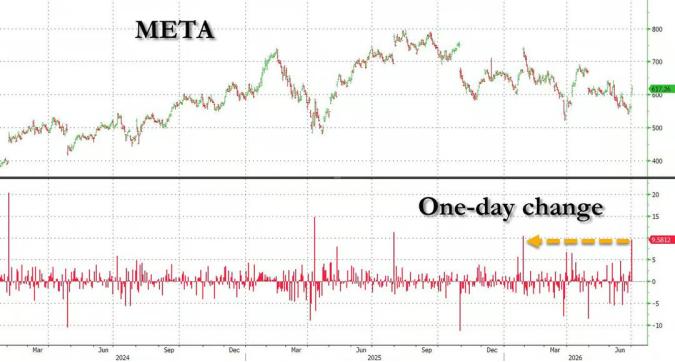
In sharp contrast, Meta soared 8.81% to $612.91, hitting its highest closing level since June 4.
Behind this stark difference is a chain reaction triggered by a pre - market report:
Meta is planning to launch a cloud infrastructure business and intends to sell its excess AI computing power externally.
This hyperscale company has become the first major player to publicly "step on the brakes" on the frenzied AI capital expenditure.
Meta's "Calculations"
To understand this sharp decline, we first need to figure out Meta's investment account.
In 2026, the combined capital expenditure of the world's four major technology giants - Meta, Microsoft, Alphabet, and Amazon - is about $725 billion, a 77% increase from about $410 billion in 2025. Among them, Meta has raised its CapEx guidance to between $125 billion and $145 billion.
In addition to building its own data centers, Meta has also signed a number of sky - high external contracts this year:
It reached a five - year strategic agreement worth $60 billion with AMD to purchase 6 gigawatts of custom Instinct GPUs;
It signed a $21 billion AI computing power infrastructure contract with CoreWeave;
It inked a computing power procurement agreement with Nebius worth up to $27 billion.
The total value of these three external orders alone exceeds $100 billion.
However, there is a fundamental difference between Meta and the other three technology giants: Microsoft has Azure, Google has GCP, and Amazon has AWS - their huge capital expenditures are directly hedged by mature cloud service revenues.
Meta doesn't have such a revenue stream. Every penny it has previously invested in infrastructure has been a pure cost item, all used to serve its own advertising recommendation system and AI applications.
This explains a seemingly counter - intuitive phenomenon:
Meta exceeded Wall Street's profit expectations for two consecutive quarters in 2026, but its stock price has still fallen about 7% since the beginning of the year.
The core question from the market:
Spending $135 billion a year to build data centers, where is the return?
The answer given by Mark Zuckerberg is essentially buying himself a "put option".
He laid the groundwork at the annual shareholders' meeting. When asked if Meta would compete with AWS and Azure, he clearly responded, "It's definitely on the table."
He also revealed a detail: "Almost every week, external companies approach us, either asking if we can open an API or if they can pay a premium to buy Meta's computing power."
Two phrases in his original statement are particularly crucial - "If we have overbuilt" and "Partially what gives us confidence".
An in - depth analysis by the U.S. Stock Investment Network shows that this is a strategic hedge:
If AI monetization within the company is successful, all the computing power will be used internally;
If the internal consumption of computing power falls short of expectations, the excess computing power won't just depreciate on the books but can turn into revenue.
If the bet pays off, it's a great innovation; if it fails, it can still earn rent. This return to "financial discipline" has directly sent Meta's stock price soaring.
The Dispute between Two Narratives
Currently, there are two completely different interpretations in the market regarding Meta's move:
The pessimistic camp believes that the inflection point of the growth rate of AI capital expenditure has arrived. Meta's statement is interpreted as a sign that the "super - trend demand" may not be sustainable in the long run. Goldman Sachs previously pointed out that if hyperscale companies cut their spending first, the valuation logic of the entire AI computing power industry chain will need to be re - constructed.
The optimistic camp believes that the market has overreacted.
Firstly, Meta's move is to revitalize resources and find a monetization outlet for its huge expenditures, rather than giving up on basic model research and development.
Secondly, the semiconductor sector had accumulated huge gains before, and there was already a strong need for a correction. Meta's news is more like a trigger.
Thirdly, the actual growth of inference demand far exceeds expectations - for example, Anthropic's annualized growth rate of token consumption once reached 80%, which continuously supports the underlying demand for computing power.
The AI Narrative Shifts from "Capability Competition" to "Monetization Dispute"
Rich Privorotsky, the head of Goldman Sachs' One - Delta trading desk, once pointed out that the narrative of the AI industry is shifting from the early "capability competition" to the "monetization dispute".
There is a notable structural contradiction at present: hyperscale cloud providers continue to invest huge amounts of capital, but their recent stock price performance has been relatively modest; while some hardware suppliers have accumulated strong correction pressure during this period due to the rapid growth of their valuations in the first half of the year.
Take NVIDIA as an example. Its stock price performance since 2026 has clearly lagged behind some storage and optical communication stocks in the sector. This divergence reflects the market's re - evaluation of the pricing power and valuation anchors of different segments when facing the industry cycle transition.
Meta's decision can be seen as an embodiment of this contradiction. When the market starts to shift from "pursuing scale" to "verifying return on investment (ROI)", the segments in the AI industry chain whose valuation increases exceed the support of their performance will inevitably face more stringent scrutiny. For investors, they need to focus on the actual cash flow generation of AI application ends and the matching degree between infrastructure investment and business output in the future.
This article is from the WeChat official account "U.S. Stock Investment Network" (ID: tradesmax), written by StockWe.com, and is published by 36Kr with authorization.