Former employees of Tencent and NetEase teamed up to cut the cost of the AI world that Cai Haoyu has bet on by 80%
Not long ago, Anuttacon, an AI company founded by Cai Haoyu, publicly announced a research project called Agentopia.
The research team built several virtual scenarios and let 100 agents live in them for a full 10 simulated years.
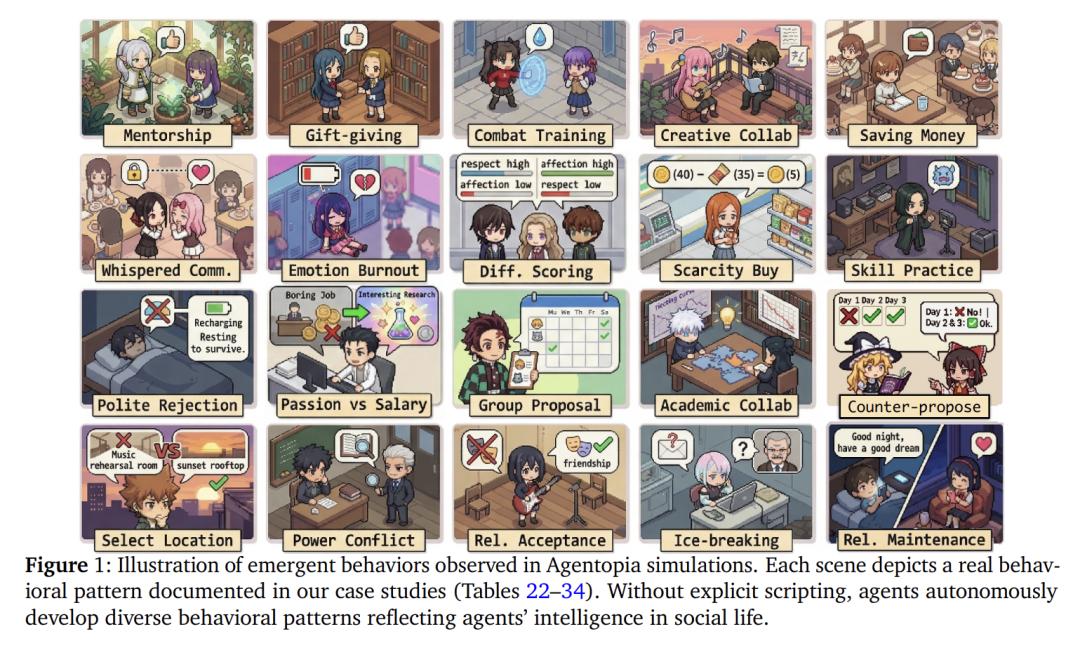
Over these 10 years, the agents would make friends, change jobs, receive psychological counseling, and engage in similar social behaviors. Researchers would then select the "life experiences" of better - performing agents to train the model's role - playing ability.
The purpose of building such an AI world is, of course, to have NPCs in future games that are more intuitive and natural - looking.
However, if this research is to be translated into games, a real - world issue looms large: How much does it cost for an NPC to plan its weekly life? How many Tokens are consumed when it summarizes its memories every night? Can the resulting fun cover the underlying model costs? And more importantly, these costs will increase as players engage in long - term gameplay.
This is almost a common accounting problem for currently commercialized AI games. But recently, a domestic AI game team presented two rather astonishing figures.
Members of the AutoGame team revealed to Coreesports that in the latest version of their game "Maggie's Garden", the overall AI - related Token costs of the game have been reduced by approximately 80% compared to the past; in specific operations such as item generation and level generation, the costs have been reduced by up to about 96%.
From the first three days before the New Product Festival (June 12th) until today, nearly a month has passed. Around 10,000 players have downloaded and experienced the game, and "Maggie's Garden" has spent less than $200 on large - model services - this might even be cheaper than the development of some small - scale Vibe Coding games.
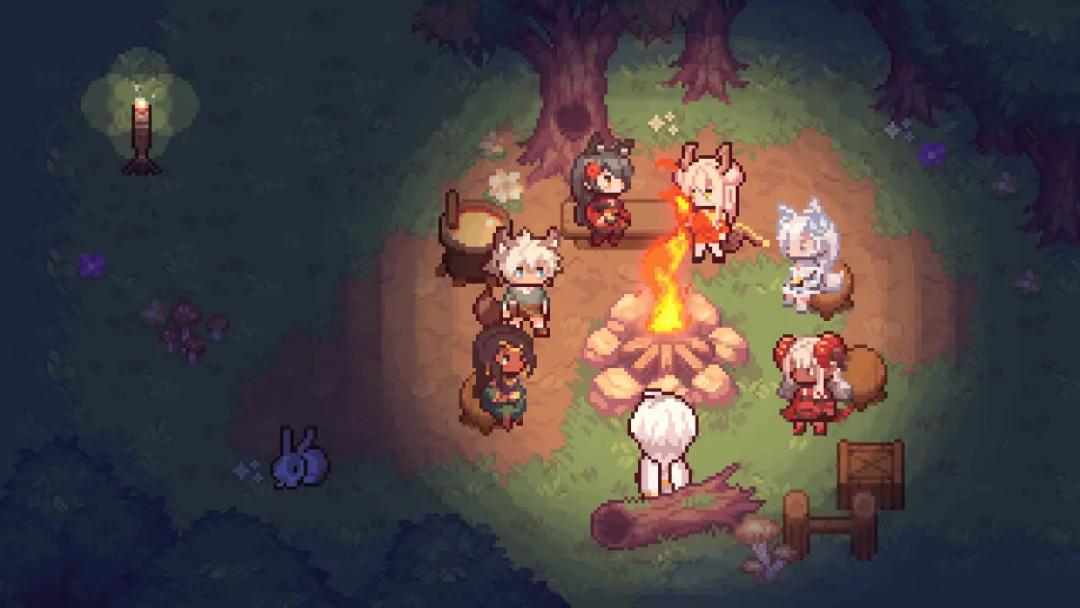
If we look for a domestic commercial game that is similar to the Agentopia concept among the publicly available ones, "Maggie's Garden" is one of the candidates.
The AutoGame team currently consists of about 13 people. Some members come from game companies such as Tencent, NetEase, Gibit Networks, and Glaciers, and have participated in projects with billions in revenue. Some members also have experience in algorithms and AI.
The development of "Maggie's Garden" started at the end of 2023, and the team has completed three rounds of financing since then. After the concept of Stanford Town emerged, it should be regarded as the earliest, most complete, and most likely product to be commercially realized in China at present. Some time ago, the game participated in the Steam New Product Festival for the first time. Coreesports also took the opportunity to play the latest version and talked to the team members to see how far this star - level product "Maggie's Garden" has come.
A Rainy Day Costs Six Dollars
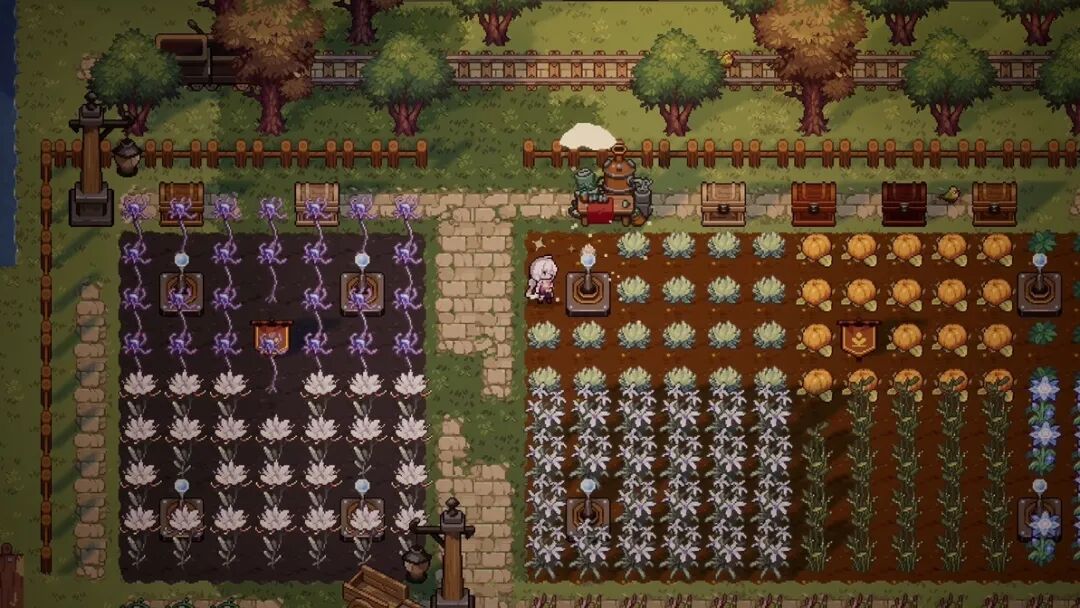
If you turn off the AI for now, "Maggie's Garden" is first and foremost a pixel - style sandbox adventure game, and its basic gameplay is somewhat similar to "Stardew Valley" or "RimWorld".
Players play as a retired hero, building a camp, farming, collecting resources, and making equipment on the Oz continent. They can also explore and fight in mines and different ecological areas. It has a relatively traditional resource - cycling and adventure framework and supports multiplayer online play for up to four people.
AI is used in character, mission, and content generation. Players can recruit an AI partner in the tavern by providing a text description or uploading a picture. In addition to its appearance, players can also set its personality, occupation, and backstory. After recruitment, these characters will join the team, participate in battles, and can be assigned to chop trees, collect resources, and handle daily tasks in the camp.
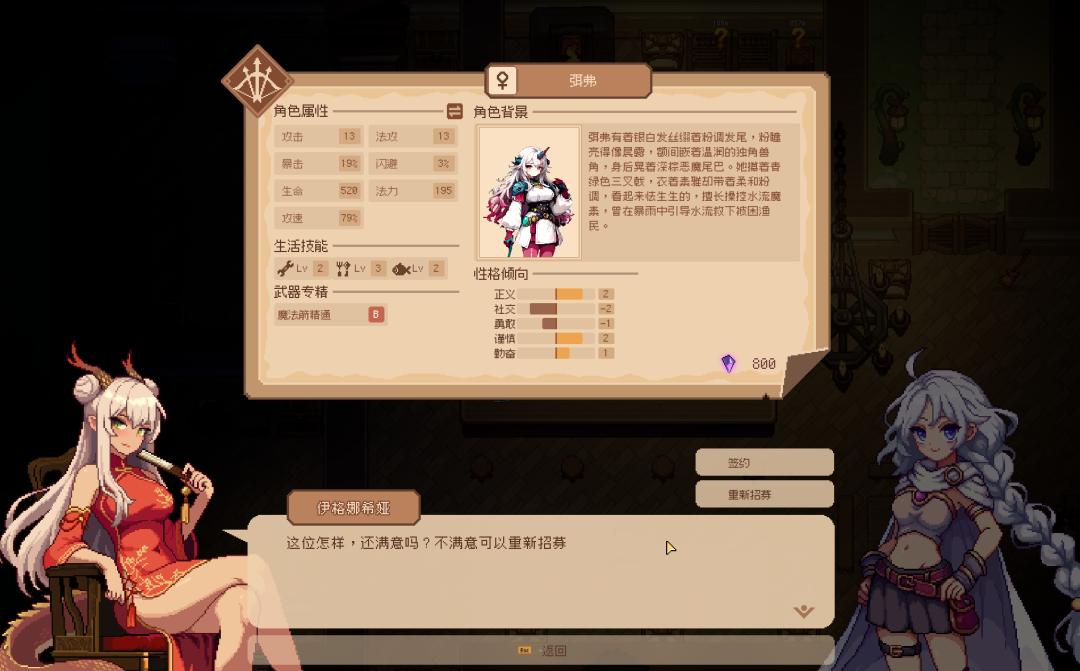
As the relationship develops, they may propose new missions based on their backstories and further generate mission locations, storylines, and items.
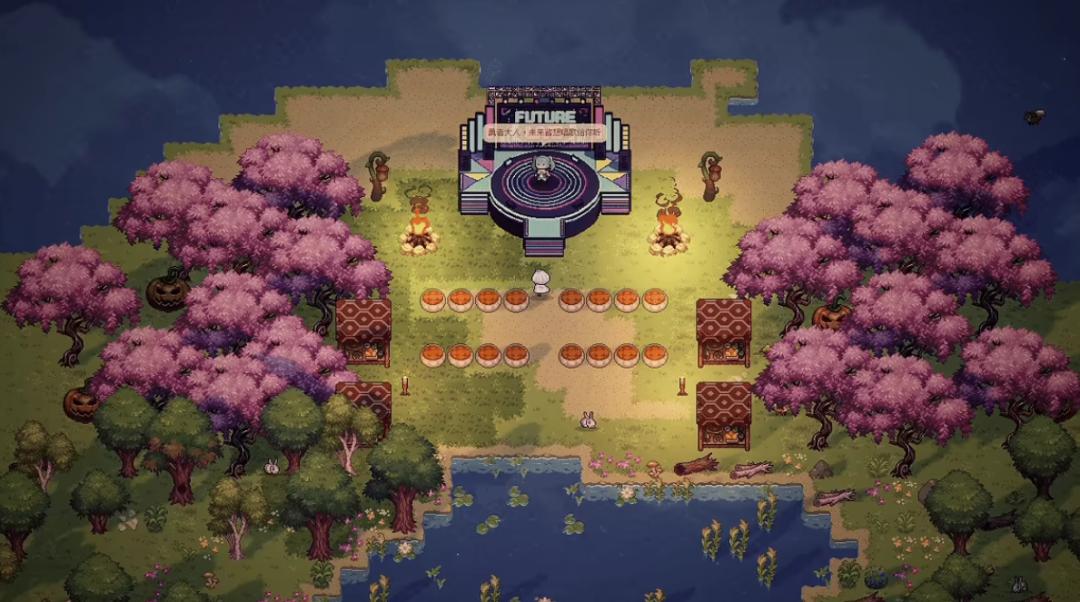
In the official demonstration, a stage - singing storyline generated based on the backstory of a singer
These capabilities are not just in the promotional text. As early as last year's test, players could create characters, have them participate in battles and production, and trigger new missions and stories after long - term interaction. Now, the game can still be downloaded on Steam for players who want to participate in the test.
However, after truly putting AI characters into players' hands, the problems faced by AutoGame have changed.
As more players joined, their requests to NPCs began to exceed the scope originally defined by the team. Some players would directly ask roadside NPCs to cook, while others would directly inquire about the direction of a certain item. At this time, NPCs not only need to understand the language but also read the surrounding environment, assess their own abilities, and translate a response into actual actions.
If cost is not considered at all, these problems are not insurmountable. According to the team, as long as more game data is provided to the model, more complete environmental perception, action planning, and path - finding capabilities are enabled, and a powerful enough model is used, the desired effect by players can always be approximated through brute - force methods.
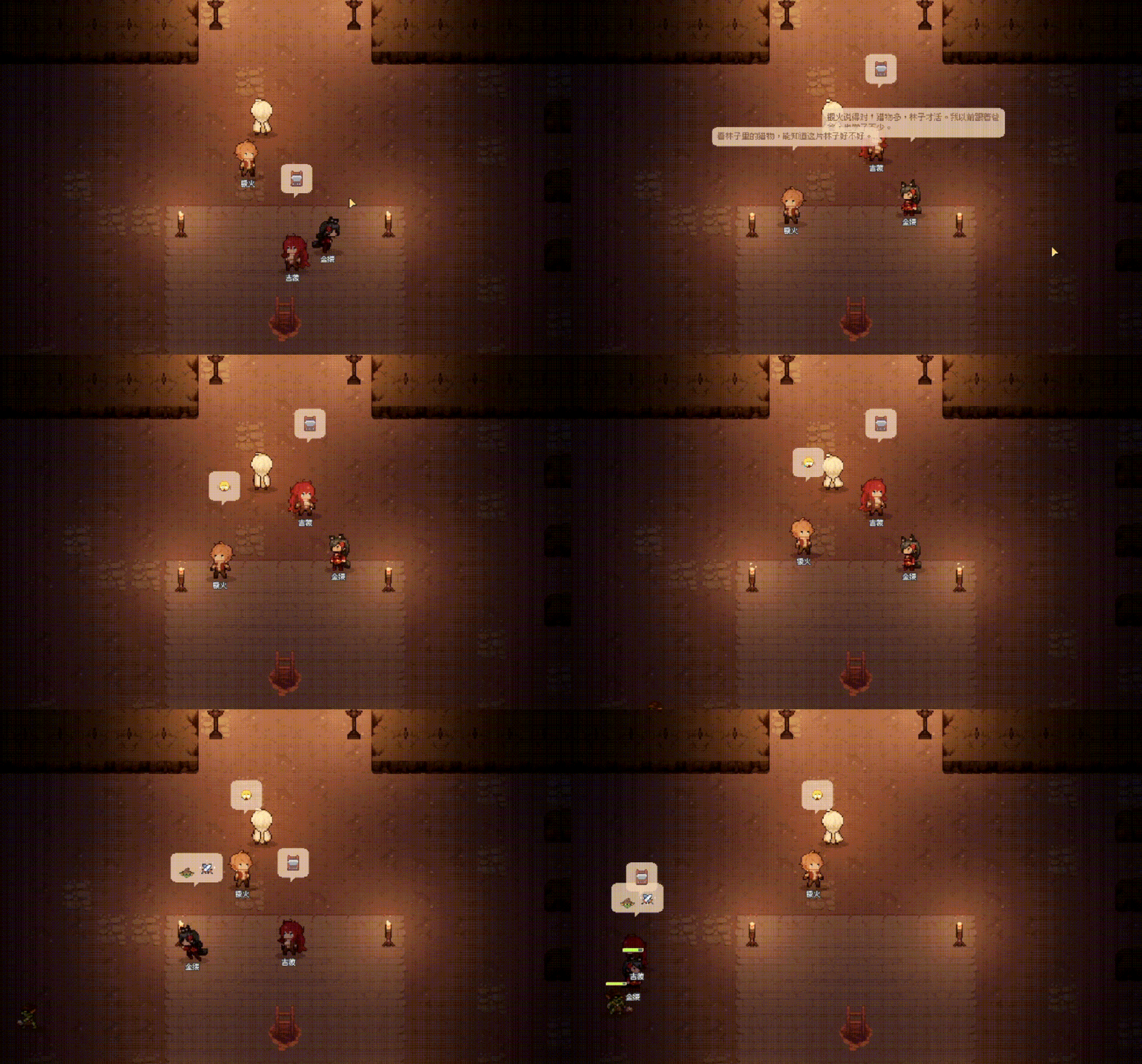
However, in a commercial game targeting a large number of users and aiming for long - term operation, this approach is clearly unsustainable. Every additional piece of information an NPC perceives and every additional judgment it makes may lead to new model calls. As the number of players and gameplay time increase, the seemingly non - exaggerated consumption per instance will quickly accumulate into a significant cost.
AutoGame once tested a more complex and illustrative design internally: If a certain area experiences long - term rain or drought, NPCs will observe the weather changes, predict that the price of a certain type of item may rise, automatically generate an item as a commodity, and then actively approach players to promote it.
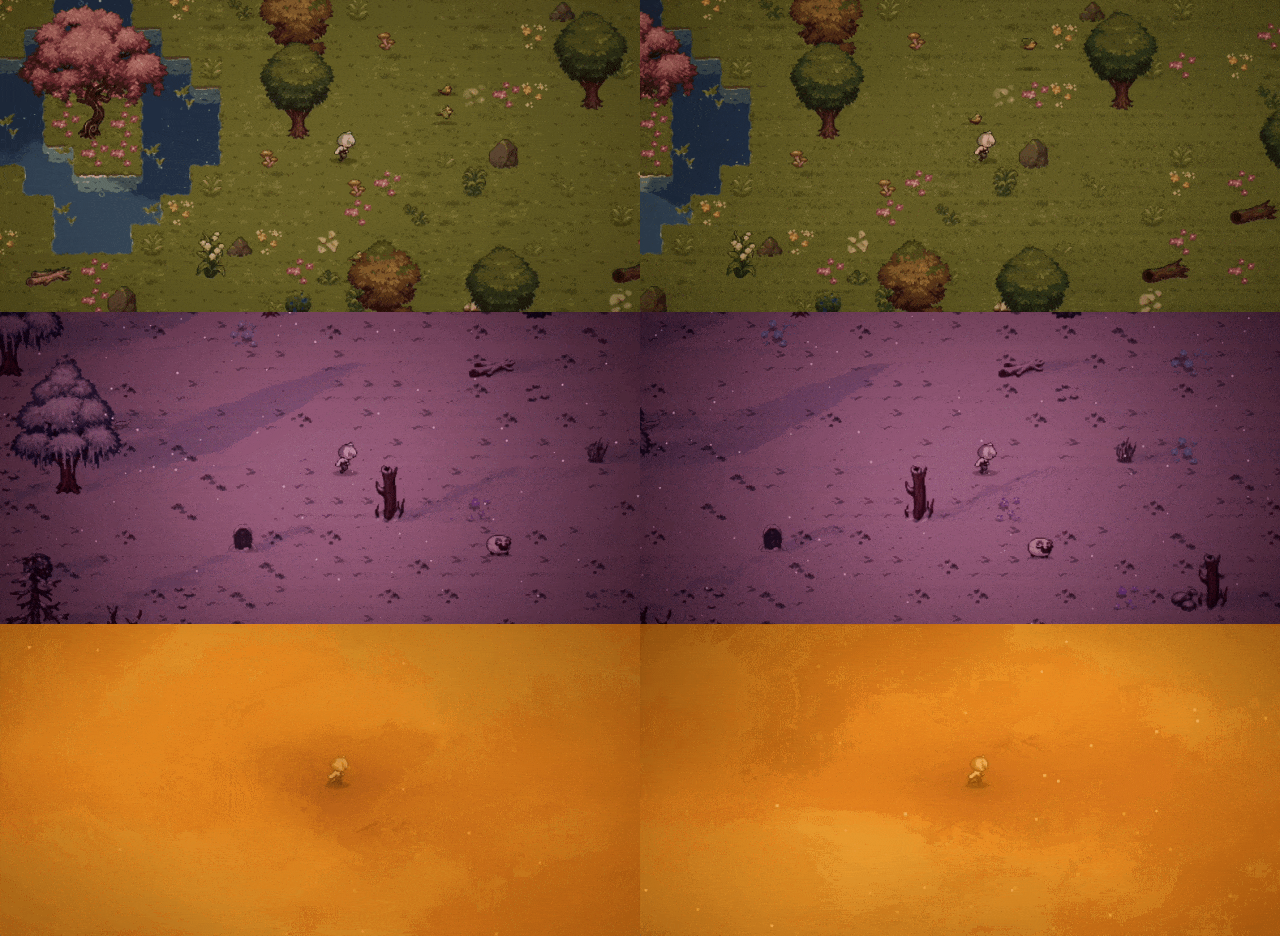
The weather, economy, and NPC behaviors are thus interconnected. NPCs make their own judgments based on the state of the world, which is exactly what many people imagine an AI world to be. Logically, this is not far from the agent society in Agentopia: characters continuously read the environment, make judgments based on their situations, and then translate these judgments into specific actions. The difference is that research projects only need to prove that this phenomenon can occur, while commercial games have to pay for every occurrence.
So when they further calculated the cost, they found that completing this entire event chain might cost about $6 in large - model expenses, and the large model would continuously generate a large amount of useless information during this process.
Players may not be willing to bear this cost, so there is only one solution left.
How to Reduce Costs
For AutoGame, the solution clearly cannot be to continue increasing the budget and using a stronger model as in a laboratory environment. In the past few months, they have done the opposite: they re - disassembled the AI functions already implemented in "Maggie's Garden" to determine which parts really need to call the large model and which results can be achieved through engineering pipelines, game rules, and code fallback.
This work was carried out by four members for about four months, involving model optimization, pipeline adjustment, result screening, etc. The final results are the two figures mentioned at the beginning.
This disassembly ability is somewhat related to the fact that the AutoGame team is mostly composed of former employees of large companies. They also have a relatively far - reaching vision in AI. Instead of regarding the large model as a black box that can handle all functions, the members of the production team tend to view AI as a module in game engineering and then determine what problems the model, program, and planning should handle respectively.
Although we don't know exactly what they did, Kuding, the lead designer, gave us an example: Most AI developers can recognize the advantages of certain large models during the development process, such as which model has a stronger "human touch" and which is better at handling data. In the laboratory or prototype development stage, it is reasonable to choose these more expensive models.
However, considering commercial factors, a good - performing model may be taken off the market, and the game naturally wants to minimize the impact of changes in model providers. As models are iterated, the capabilities of a cheaper model may change. If the product's advantage lies in the model provider, the team can only switch to a newer, stronger, and more expensive version to maintain the original quality.
Therefore, their approach is actually not complicated. They figure out how a certain type of character should be presented and what kind of feedback players need, and then they can reproduce a similar effect on a cheaper model through prompts, character backstories, rules, and code fallback.
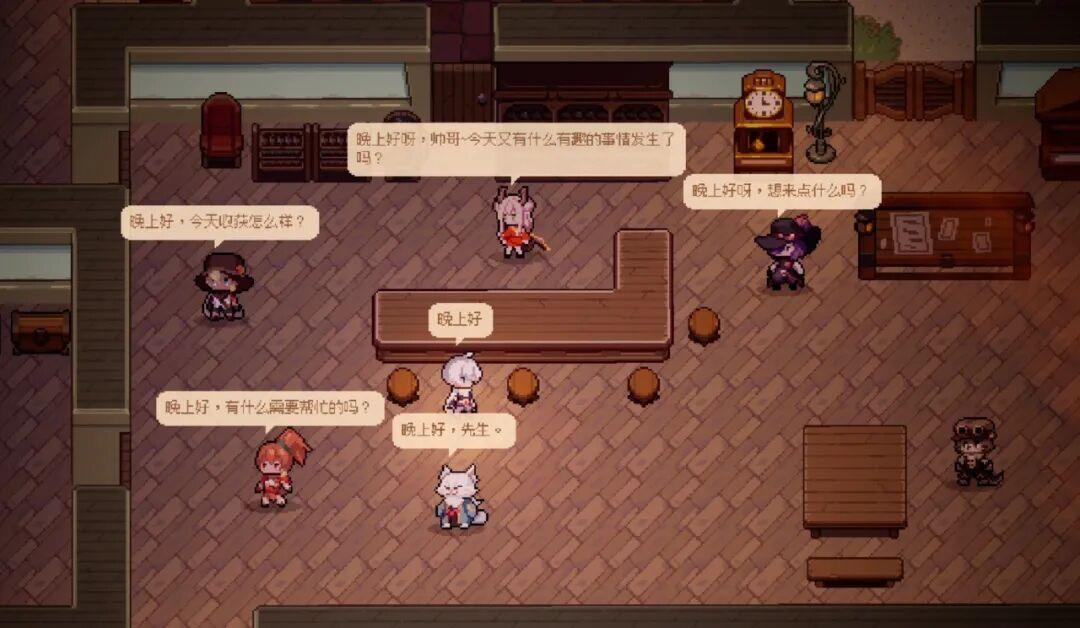
What the team needs to optimize is not an abstract "AI intelligence" but specific problems in the game: How should a taciturn NPC speak? How angry should a character appear after being rejected? What information must an item generated based on a mission experience contain to continue participating in subsequent gameplay?
After these problems are disassembled clearly enough, not every function requires the most powerful model. This requires the team to not only understand the differences in the capabilities of various models but also have the ability to define the player experience.
This work has become even more important today because the functions that AI games in the market hope to achieve are growing at a quite rapid pace.
Early products might only need to send a player's text to the model and receive a response. Nowadays, just enabling free chat is no longer a strong enough selling point for a product. In most works, in order to make characters truly participate in the game, the model also needs to read the character's background, long - term memory, team relationships, environmental status, and current tasks, and then hand the generated results to the game system for execution.
Games like "AI2U" or "Project: Black Box" reported by Coreesports are all trying to use AI to implement more functions in the game.

Since each additional ability brings more context, longer outputs, and more model calls, even if the price of a single Token continues to decline, the number of Tokens consumed in a complete gameplay may still increase. This also explains a seemingly contradictory phenomenon: Although the Tokens of model providers are getting cheaper, an AI game that truly tries to make characters participate in the world operation is still expensive.
At this stage, what AI games are competing for is not just the ability to access models. The key to the long - term operation of a product may be who can provide the intelligent effects that players really need in a cheaper and more stable way.
However, even if 80% of the costs have been cut, someone still has to pay for the remaining 20%.
Open the Black Box
Kuding said that they believe there are roughly three ways for current AI games in the market to handle model costs.
The first is to charge based on conversations, rounds, or Token consumption. "Historical Simulator: Chongzhen" adopts this model. It is closest to the billing method of model providers themselves. Players pay according to their usage, and the team doesn't have to bear excessive long - term costs. However, the problem is obvious. Nowadays, this continuous - payment model is similar to the early time - card model, and most current players are used to the free - to - play or buy - to - play experience.

"Historical Simulator: Chongzhen" encountered public - opinion issues after its release, and the AI emotional - companion product "EVE" also ran into similar problems to some extent.
The second is to offer AI capabilities for free or use a one - time purchase model, and then have the development team's other businesses and revenues subsidize the subsequent costs. This approach is the most user - friendly, but it is difficult to scale with the growth of the user base. The more popular the game is and the longer players play, the higher the model costs the team has to bear.
The third is to package the model consumption into specific products that players can understand. AutoGame is trying this approach.
The principle behind this approach is that players won't pay for Tokens themselves but will pay for the game content they can perceive.
"Recruiting an AI NPC" is a relatively easy - to - understand concept. Players write the character's backstory, set its personality, occupation, and speaking style, and finally get a partner that can participate in battles, production, and daily life. This character may also continue to generate missions, stories, and items and can be shared with other players through a unique identification code.
Therefore, "Maggie's Garden"