Pour cold water on OpenAI's first hardware: AI hardware doesn't need more keys, is the macro keyboard doomed?
I believe everyone has seen that OpenAI's first hardware product has made its appearance.
However, it's not the AI phone that everyone was expecting, nor is it the mysterious device in the so - called "post - smartphone era" rumored to be designed by Jony Ive. Instead, it's something that looks like a mini keyboard.
From the public information, this product is jointly developed by OpenAI and the peripheral manufacturer Work Louder and will be officially released on July 15. The teaser message OpenAI posted on X is quite straightforward: "Your favorite Codex shortcuts are getting an upgrade."
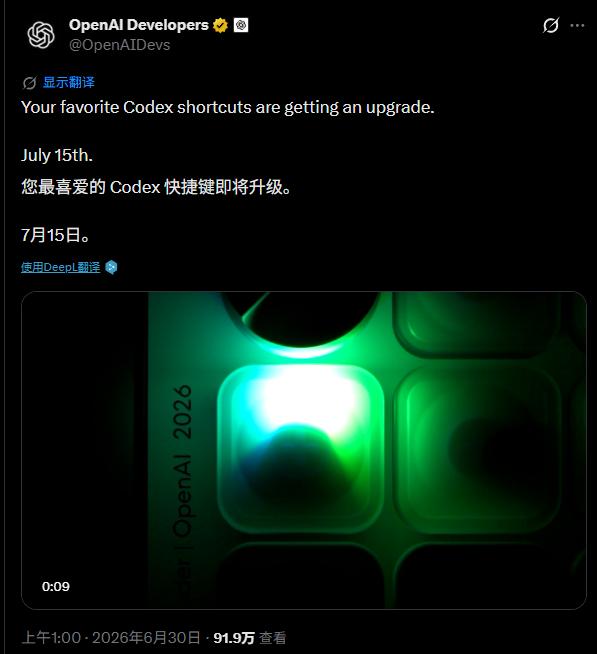
Image source: X
Judging from the teaser video, it's most likely a physical shortcut keyboard for Codex users, with an appearance similar to Work Louder's Creator Micro 2: a small square body, multiple mechanical keys, a joystick, and a touch strip. Users can map different keys to different shortcut operations.
However, under OpenAI's post, many netizens expressed their doubts: It's okay that GPT - 5.6 was released but not available for use, and now they're releasing this? Where is the AI terminal we were expecting? To be honest, it's not strange for netizens to have such a reaction because people have really high expectations for OpenAI's hardware.
First, OpenAI acquired the team founded by former Apple design chief Jony Ive. Then, it said externally that "only by combining the model's capabilities with top - notch industrial design can AI become a truly daily product." Later, it also released a video saying that "this product" is "the coolest technology the world has ever seen."
As a result, everyone was waiting for a truly AI - native new device. Instead, what's presented first is a macro keyboard with a geeky attribute. When your AI company makes hardware, why is your first thought to make me buy an extra controller?
The macro keyboard is useful, but it doesn't count as "hardware for the AI era"
If we simply regard Codex Micro (unofficially named) as a co - branded peripheral, it's actually not bad.
Because Work Louder is originally good at making such products. It previously co - branded a macro keyboard with Figma, which pre - set the most commonly used shortcuts and was equipped with corresponding icon keycaps. It was quite popular in the forum.
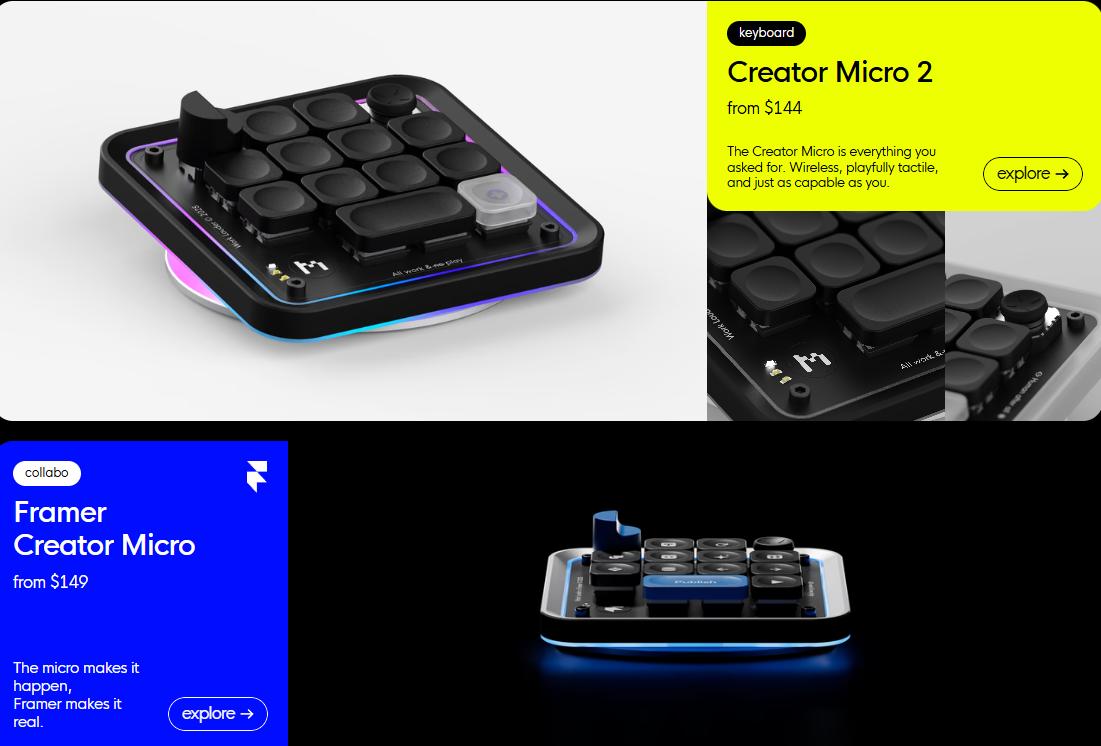
Image source: Lei Technology
Moreover, there are actually quite a few usage scenarios in Codex. For example, you can record some operations to achieve one - click sending of common instructions, one - click fixing of selected errors, one - click switching of workspaces, etc. Compared with clicking the mouse back and forth, pressing physical keys is indeed more convenient.
But this is also the most frustrating part of Codex Micro: It solves the problem of shortcut operations, not the problem of AI interaction. The essence of a macro keyboard is to move the existing commands in software to the desktop. It improves the calling efficiency, not the task - handling ability, which is exactly the opposite of the direction of AI hardware that people are expecting.
What really excites users about AI hardware should not be "I have 13 more keys to operate AI faster," but rather "AI knows what I'm going to do now, so I don't need to operate so much." So from the product logic, Codex Micro is more like a "transitional control panel" that OpenAI gives to heavy users before AI Agents are fully mature. It's understandable, but it's really hard to make netizens happy.
This is also the core reason for people's disappointment. Many people aren't unfamiliar with macro keyboards; they just think that since OpenAI is at the center of the AI wave, its first hardware is just a brand peripheral. Some people mock it as just a "shortcut keyboard with a logo," and some think that "if AI still needs so many buttons, it means the interaction hasn't evolved." Some people compare it with the Jony Ive project and think the gap is too large from the imagination of "reinventing computing devices."
This criticism is quite on point. Because if it were an ordinary company selling a co - branded peripheral, choosing a macro keyboard would of course be okay. But if it's a company selling the future of AI, then this product seems a bit too "backward."
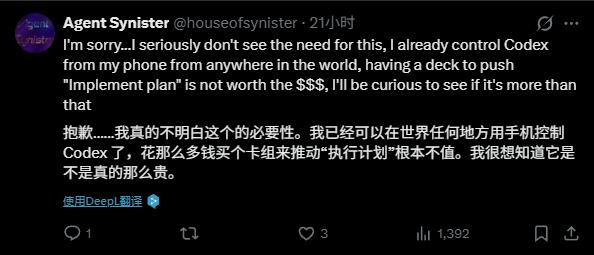
Image source: X
Especially for most users, achieving a similar effect isn't difficult. You can buy a keyboard or numpad that supports VIA/QMK mapping, configure a few shortcuts yourself, and then cooperate with system automation tools. You can basically achieve the experience of "pressing a button to trigger a certain AI operation," and it's much cheaper.
All we can say is that we hope OpenAI can bring us surprises later. At least, it shouldn't just be a keyboard with pre - set Codex shortcuts. However, judging from the promotional video, the possibility is very low.
What users expect from AI hardware is actually "keyboard - free"
Comparing the current AI hardware on the market, we can find a very obvious trend: Products truly designed for future AI needs are trying to reduce user operations, not increase them.
For example, Alibaba's DingTalk A1 has a very simple product logic: Users don't want to listen and take notes during meetings and then organize the minutes after the meeting. So, Alibaba designed a card - style voice recorder that can be magnetically attached to a mobile phone. After pairing with DingTalk, it can intelligently handle the recording work.
As a loyal user of DingTalk A1, Xiao Lei has used this product in many places. Its operation is so simple that you only need to press the power button, and after the meeting ends, you can get various manuscripts such as full - text summaries, complete transcriptions, and segmented summaries, directly meeting your different needs.
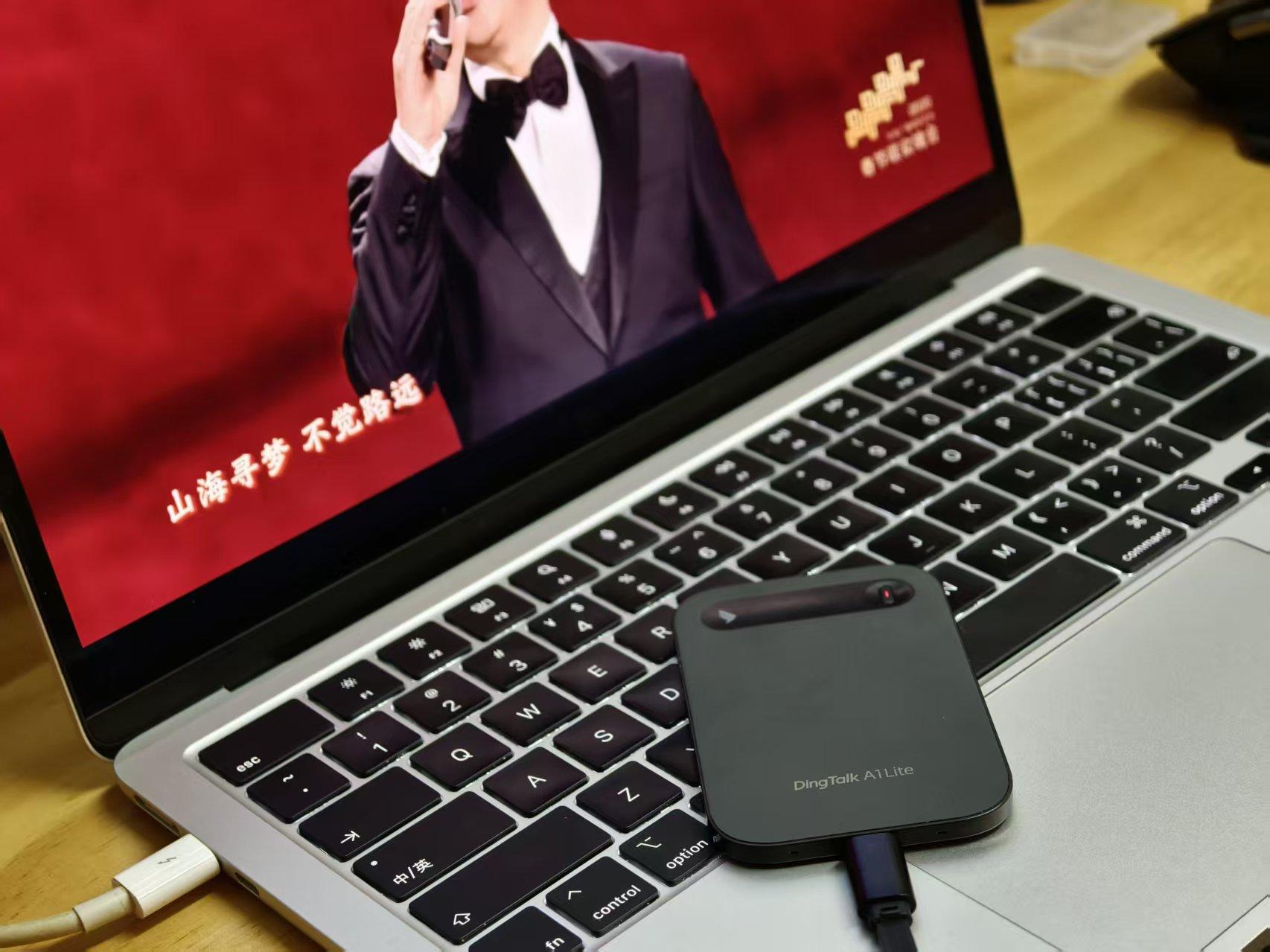
Image source: Lei Technology
So, the task of DingTalk A1 is to let users press fewer keys and even eliminate the need for "post - meeting organization." Although such devices are unassuming, they can well reflect the hardware design direction of the AI era. For people who need to attend meetings and talks frequently, they can immediately understand its function at a glance.
In addition to vertical AI hardware like DingTalk A1, the AI glasses being promoted by Meta, Alibaba Qwen, Google, etc. represent another route - general - purpose.
For example, Meta's Ray - Ban Display adds new functions such as lens display and a neural wristband on the original basis. It can directly present various information such as messages, translations, navigation, shooting, and AI Q&A in front of your eyes. It allows you to meet 80% of your needs without taking out your phone.
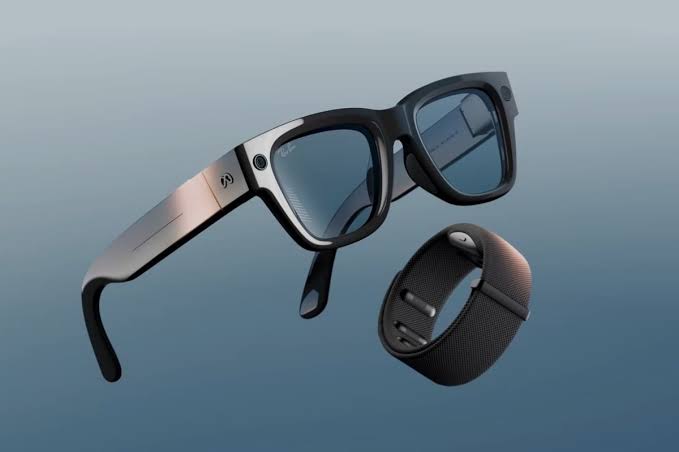
Image source: Meta
Google's upcoming Android XR glasses emphasize letting Gemini understand the real world with you. For example, it can recognize the objects in front of you, translate foreign texts in front of you, and determine the navigation direction. It makes the large AI model your personal secretary and hopes to use AI to replace specific apps.
Alibaba's Qwen AI glasses choose a lighter but more achievable route. Taking advantage of Alibaba's advantages in the local life and service ecosystem, it integrates various daily capabilities such as shooting, navigation, payment, and shopping into smart glasses and sells them to you at a price that most people can accept.
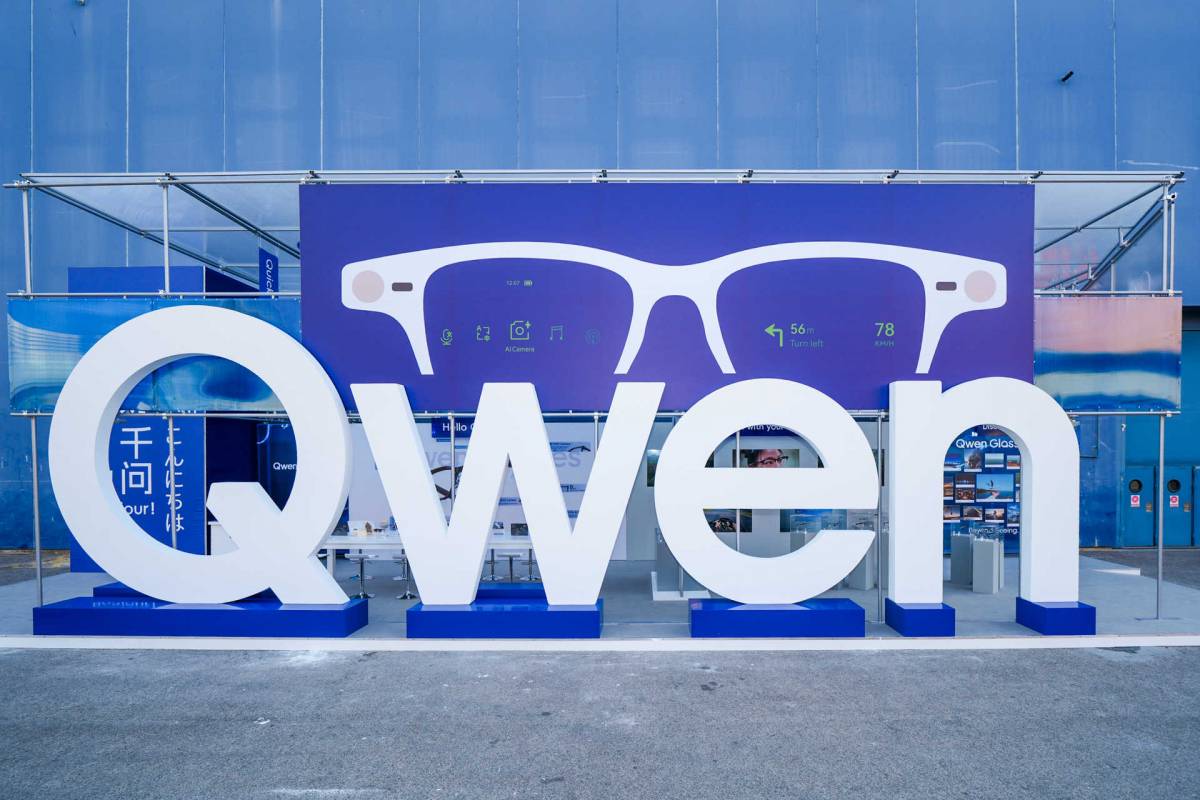
Image source: Alibaba
Regardless of which solution, in essence, they all point to the same route: reducing the frequency of user - device interaction and letting AI perform those operations on your behalf.
In the view of Lei Technology, this is also the core value of AI hardware : "Eliminating the threshold for product use."
From this perspective, although Codex Micro can't be said to be completely valueless, it's more like an efficiency - enhancing hardware on developers' desktops rather than a new answer for AI hardware.
What's more embarrassing is that OpenAI itself actually knows that the real answer isn't here. The mysterious device it's promoting with the Jony Ive team is generally believed by the outside world to follow a route of being screen - less, environment - sensing, low - interference, and AI - companion - like.
Regardless of whether its final form is a desktop device, a pocket device, an audio device, or a completely different new species, it at least points to one direction: Let AI become the underlying assistant in life and work, rather than a tool that you need to keep clicking, summoning, and configuring.
So the problem with Codex Micro isn't that "the macro keyboard is useless," but that it doesn't match OpenAI's grander hardware narrative, giving people a feeling of a disappointing ending.
Continuous hype - does even OpenAI have "traffic anxiety"?
In the view of Lei Technology, there will probably still be people buying Codex Micro. For a small number of heavy Codex users, keyboard enthusiasts, and peripheral collectors, it may be quite fun. The pre - set shortcuts, co - branded design, mechanical keys, and the binding with the Codex workflow can indeed bring a little efficiency improvement. Especially since developers like to tinker with keyboards, shortcuts, and automation scripts, this little thing won't lack an audience.
But for most people, it's really a bit "useless." Because a similar experience can already be achieved with a macro keyboard that supports VIA drivers or QMK mapping. There's no need to specifically spend at least two hundred dollars to buy a separate small keyboard.
More importantly, this teaser somewhat exposes OpenAI's recent "traffic anxiety." From the launch of GPT - 5.6 without opening it for use, to the appearance of Jalapeño without actual parameters, and then to the mysterious release of a keyboard, OpenAI has had several consecutive releases without bringing us substantial products, giving people a feeling of "releasing for the sake of releasing."
Of course, it's not just OpenAI. Gemini also occasionally "re - heats old food," re - "releasing" functions that were launched one or two months ago. Anthropic keeps hyping up AI crises and various threats. We have to say that when a large amount of capital floods into the AI industry, these leading companies in the AI industry must constantly come up with new things to maintain the industry's and investors' expectations for them.
However, as the saying goes, if the first hardware debut gives people the feeling of "waiting for so long, and it turns out to be just a macro keyboard," it will actually weaken the market's trust in OpenAI's real hardware plans. People will start to wonder: Will the rumored device designed by Jony Ive, which aims to redefine AI interaction, ultimately turn out to be just an ordinary product?
All we can say is that we hope OpenAI can hand in a good answer sheet at that time.